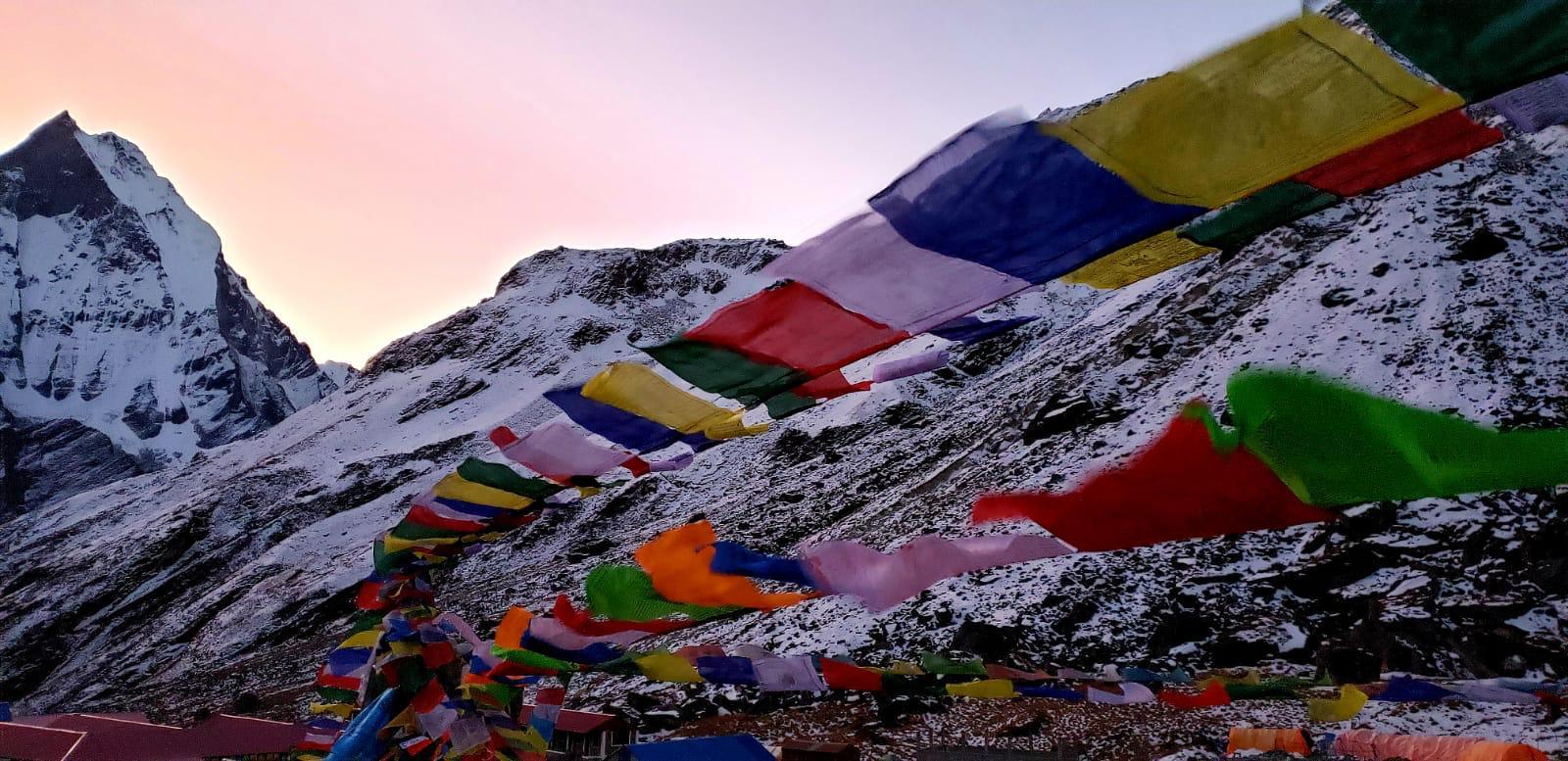


Visit Nepal Safely: Why Tourism Is Vital to the Country is a timely question for travelers considering a journey to the Himalayas, particularly following the devastating flood disaster that affected parts of Nepal in August 2026.
Nepal is a country that knows how to endure. From earthquakes and landslides to extreme weather and other challenges, the Himalayan nation has repeatedly demonstrated remarkable resilience. Yet Nepal continues to welcome travelers with the same warmth, extraordinary landscapes, ancient cultures, and adventurous spirit that have made it one of the world’s most remarkable travel destinations.
The question many travelers are asking today is understandable: Is Nepal safe to visit after the recent flood disaster?
The honest answer is that safety depends on where you are traveling, current weather conditions, and the specific route you plan to take. The devastating floods and landslides of August 2026 caused enormous loss of life and significant damage in parts of the country. Some communities and infrastructure were severely affected, while many other destinations continue to operate normally.
This tragedy should never be minimized. Communities have lost loved ones, homes, businesses, roads and vital infrastructure, and recovery will take time.
At the same time, a disaster affecting specific areas does not mean that the entire country has become unsafe or inaccessible. Nepal is geographically diverse, stretching from the subtropical Terai plains through the middle hills and into the high Himalayas. Conditions can differ dramatically from one region to another.
For travelers considering Nepal, the most responsible approach is not simply to say that the country is completely safe or unsafe. Instead, travelers should stay informed, choose their destinations carefully, monitor weather and route conditions, and travel with experienced local operators.
There is also another important reason to consider traveling to Nepal when conditions allow: tourism is not simply an industry here. It is a vital source of income for communities throughout the country.
A visitor’s journey can support guides, porters, hotel employees, drivers, restaurant owners, teahouse operators, farmers, artisans and countless other people whose livelihoods are connected to tourism.
Nepal needs recovery, and responsible tourism can be part of that recovery.
The following ten reasons explain why travelers can still consider Nepal, while emphasizing the importance of informed and responsible travel.
Here are 10 powerful reasons to visit Nepal safely and responsibly.
1. Nepal Is a Large and Geographically Diverse Country – Visit Nepal Safely
One of the biggest misconceptions following a natural disaster is that an entire country is affected equally.
Nepal may look small on a map, but its geography is remarkably diverse. The country stretches from the Terai plains in the south through the middle hills and into the Himalayan region in the north.
That means conditions in one district can be completely different from those in another.
The recent flood disaster had an especially severe impact along particular river valleys and infrastructure corridors. The devastation around the northern border and parts of the Trishuli/Bhote Koshi region was immense, with roads, bridges, settlements and hydropower infrastructure damaged or destroyed.
But this does not mean that Kathmandu, Pokhara, Chitwan, Lumbini, the Annapurna region or every trekking destination has experienced the same impact.
This distinction matters.
Nepal should be understood destination by destination, not as one single disaster zone.
Before traveling, check the current status of your specific destination and route rather than relying solely on headlines.
2. The Recent Flood Was Catastrophic but It Does Not Define Nepal – Visit Nepal Safely
Nepal has just experienced one of the most devastating natural disasters in its recent history.
On 26 August 2026, a glacier collapse triggered a massive flood and debris flow in the Himalayan region. The resulting destruction affected communities and infrastructure across parts of northern Nepal and neighboring areas. Thousands of people were killed or remain missing, while homes, roads, bridges and major infrastructure were damaged.
The scale of the tragedy is impossible to ignore.
But Nepal has a long history of rebuilding after disasters.
Following the 2015 earthquake, for example, communities rebuilt homes, heritage sites, businesses and tourism infrastructure. Visitors eventually returned, and tourism became an important part of the country’s recovery.
The same principle matters today.
Nepal needs recovery, not abandonment.
Of course, visiting does not mean ignoring affected communities or traveling into damaged areas. Responsible tourism means respecting restricted areas, following local advice and choosing routes that are operating safely.
3. Tourism Is Vital to Nepal’s Economy – Visit Nepal Safely
Tourism has an unusually broad economic reach in Nepal.
When an international traveler books a trekking trip, the money does not only go to a trekking agency.
It can reach:
- Local guides
- Porters
- Teahouse owners
- Hotel staff
- Drivers
- Restaurants
- Airlines
- Domestic transport operators
- Farmers and food suppliers
- Handicraft producers
- Souvenir shops
- Mountain communities
- Photographers
- Equipment rental businesses
- Local entrepreneurs
Tourism contributed an estimated 7–8% of Nepal’s GDP in 2025 and supported more than one million jobs, according to recent industry reporting.
This is why the return of responsible travelers matters.
When tourism slows dramatically, the effect is not limited to hotels in Kathmandu. It can reach people living hundreds of kilometers away who depend on trekkers and visitors for their income.
A traveler spending money responsibly can become part of Nepal’s recovery ecosystem.
4. Traveling to Nepal Supports Mountain Communities – Visit Nepal Safely
Some of Nepal’s most spectacular destinations are located far from major cities.
Places such as the Everest region, Annapurna, Langtang, Manaslu and other mountain areas depend heavily on tourism.
A trekking season can determine whether a family-owned lodge has enough income to sustain itself through the quieter months.
A guide’s income can support an entire household.
A porter may use seasonal earnings to pay for children’s education.
A teahouse may purchase vegetables, eggs and other supplies from nearby farmers.
This creates a chain of economic activity that reaches deep into rural communities.
That is one of the most powerful reasons to continue traveling responsibly when conditions allow.
Your trip can be much more than a holiday.
It can be a direct contribution to someone’s livelihood.
5. Nepal’s Major Tourist Destinations Are Not All the Same – Visit Nepal Safely
Another important point for prospective travelers is that Nepal offers far more than one trekking region.
If one route is temporarily affected by floods, landslides or damaged infrastructure, alternative destinations may still be available.
Travelers can explore:
Kathmandu Valley
Ancient temples, courtyards, monasteries, traditional neighborhoods and UNESCO-listed heritage sites provide an extraordinary introduction to Nepalese culture.
Pokhara
With its lakes, mountain views, cafés, paragliding and access to several trekking routes, Pokhara remains one of Nepal’s most popular destinations.
Chitwan
For travelers looking for something completely different from the mountains, Chitwan offers jungle safaris, wildlife and Tharu culture.
Lumbini
The birthplace of Gautama Buddha provides a completely different cultural and spiritual experience.
Himalayan trekking regions
Depending on current conditions, trekkers can consider routes such as Everest, Annapurna, Langtang, Manaslu and other destinations after checking the latest local advisories and trail conditions.
The key is simple:
Do not assume that because one part of Nepal is affected, every destination is affected.
6. Nepal’s Tourism Industry Is Built Around Safety and Local Knowledge – Visit Nepal Safely
Trekking in the Himalayas has inherent risks.
Altitude, rapidly changing weather, difficult terrain, landslides and remote locations all require preparation.
This is why travelers should avoid treating Nepal like a destination where you can simply arrive and improvise everything.
A reputable local trekking company can provide valuable assistance with:
- Route selection
- Weather monitoring
- Local trail conditions
- Accommodation
- Transportation
- Licensed guides
- Porter arrangements
- Emergency communication
- Contingency planning
- Route changes when necessary
Local knowledge is especially important after a natural disaster.
A route that was perfectly accessible a month ago may require a change because of a damaged bridge or road.
Flexibility is part of responsible Himalayan travel.
7. Traveling Responsibly Is Better Than Avoiding Nepal Entirely – Visit Nepal Safely
There is a major difference between reckless travel and responsible travel.
Responsible travel means:
- Checking current travel advisories
- Avoiding disaster-affected areas
- Following instructions from local authorities
- Checking road and trail conditions
- Allowing extra time for transportation
- Using established local operators
- Having travel insurance
- Monitoring weather forecasts
- Keeping emergency contacts available
- Being prepared to change an itinerary
It also means understanding that Himalayan conditions can change quickly.
If a road is closed, take another route.
If a trekking trail is unsafe, postpone or change the trek.
If authorities restrict access to an area, respect the restriction.
The goal is not to prove that Nepal is risk-free. No mountain destination is. The goal is to travel intelligently.
8. Visiting Nepal Can Help the Country Rebuild – Visit Nepal Safely
After a disaster, the instinct of many people is understandably to stay away.
But when an entire tourism industry loses visitors for an extended period, the economic consequences can become another crisis.
Hotels lose bookings.
Guides lose work.
Drivers lose passengers.
Restaurants lose customers.
Mountain lodges lose trekkers.
Local suppliers lose orders.
This is why tourism can play an important role in recovery.
Nepal’s tourism sector was already recovering from the pandemic and other disruptions before the latest disaster. Recent tourism figures show that international arrivals had returned to more than one million annually, demonstrating the sector’s importance to the economy.
When it is safe to travel, coming to Nepal can be a meaningful way of supporting its recovery.
9. Nepal Still Offers Experiences That Cannot Be Replaced – Visit Nepal Safely
Safety is important, but Nepal is also worth visiting because of what makes it unique.
Where else can you combine?
- Himalayan trekking
- Ancient Hindu and Buddhist temples
- Everest
- Traditional mountain villages
- Jungle safaris
- Buddhist monasteries
- Sherpa culture
- Newari architecture
- Himalayan cuisine
- White-water rivers
- High-altitude landscapes
- Warm village hospitality
Within one relatively compact country?
Nepal’s appeal isn’t simply its mountains.
It is the relationship between people, landscape and culture.
You can spend a morning walking through the historic streets of Kathmandu, travel toward the hills in the afternoon and wake up surrounded by Himalayan peaks the following day.
That combination remains extraordinary.
10. Nepal Needs Visitors Who Travel With Understanding – Visit Nepal Safely
Perhaps the most important reason to visit Nepal now is also the simplest:
Nepal needs informed travelers not careless travelers.
The country is recovering from a devastating disaster. Communities need time, resources and support.
That means tourism should be approached differently.
Choose locally owned businesses where possible.
Hire local guides.
Stay in locally operated accommodation.
Eat at local restaurants.
Buy local handicrafts.
Respect affected communities.
Don’t turn disaster zones into tourist attractions.
And above all, listen to local advice.
Traveling responsibly can allow visitors to experience Nepal while also contributing directly to the people whose livelihoods depend on tourism.
Is Nepal Safe to Visit After the Floods?
This is the question at the heart of the discussion.
The most responsible answer is:
Nepal is not uniformly unsafe because of the recent floods, but travelers should assess their specific destination and route before traveling.
The August 2026 disaster was extremely serious, particularly in affected northern areas. Rescue and recovery operations have continued, and significant infrastructure damage has occurred.
At the same time, Nepal is a large country with many destinations outside the directly affected areas.
Travelers should therefore avoid making decisions based on a single headline or a social-media post.
Instead, ask:
Where am I going?
Is my route currently operating?
Are roads, bridges and trails open?
What are the current weather conditions?
What does my local travel operator recommend?
Those questions provide a much more accurate picture of travel safety.
The Floods Also Highlight a Bigger Global Issue
There is another story behind Nepal’s recent disaster.
The Himalayas are particularly vulnerable to climate change.
Glaciers and high-altitude environments are changing rapidly, while communities living downstream can face enormous consequences when extreme events occur.
Nepal contributes only a very small share of global greenhouse-gas emissions, yet it is among the countries highly exposed to climate-related risks. The recent disaster has renewed international discussion about climate adaptation, glacier monitoring, infrastructure resilience and financial support for vulnerable countries.
For travelers, this is an important reminder.
The mountains we visit are not static.
Climate change is changing the Himalayas themselves.
That makes responsible tourism increasingly important.
Travelers should respect the environment, minimize waste, support conservation efforts and recognize that the communities living in these mountains are on the front line of environmental change.
How to Travel Responsibly in Nepal Right Now
If you are planning a Nepal trip, a few simple practices can make a significant difference.
Before you arrive
Check the latest:
- Weather forecast
- Government travel advisories
- Road conditions
- Trekking-route updates
- Flight information
- Local destination conditions
During your trip
Choose local businesses.
Your spending can directly support Nepalese workers and families.
Be flexible.
Mountain travel rarely goes exactly according to plan.
Respect restrictions.
If an area is closed because of flooding, landslides or reconstruction, don’t attempt to enter.
Travel with adequate insurance.
Make sure your policy covers the activities you plan to undertake.
Use experienced local guides for trekking.
Local knowledge is particularly valuable when conditions change.
Respect affected communities.
Disaster areas are places of loss and recovery, not sightseeing attractions.
Nepal’s Story Is Bigger Than One Disaster
The recent floods have left an enormous scar on Nepal.
There is no responsible way to pretend otherwise.
Families are grieving. Communities are rebuilding. Roads and bridges need reconstruction. Businesses have been destroyed. Thousands of people are still waiting for answers about missing loved ones.
But Nepal is not defined by this tragedy.
It is also defined by resilience.
By the guide who wakes before sunrise to lead trekkers toward the mountains.
By the lodge owner preparing breakfast for another group of hikers.
By the driver navigating winding mountain roads.
By the farmer supplying vegetables to a teahouse.
By the artisan creating traditional handicrafts.
By the family welcoming a visitor into their home.
By communities rebuilding after another difficult chapter.
This is the Nepal traveler’s encounter.
Final Thoughts: Visit Nepal, But Visit Responsibly
Nepal does not need travelers to pretend that nothing happened.
It needs travelers to understand what happened and then make informed decisions.
If your chosen destination and route are operating safely, traveling to Nepal can be both an extraordinary personal experience and a meaningful economic contribution.
Tourism provides employment, generates foreign currency and supports businesses across the country. It connects international visitors with communities that often have few alternative sources of income.
So, should you cancel your dream of visiting Nepal?
Not necessarily.
Instead, check the facts, understand your destination, use reliable local operators and travel responsibly.
The Himalayas will still be here.
The temples will still be here.
The trails will still be waiting.
And the people of Nepal will be ready to welcome travelers again not because Nepal is without risk, but because Nepal has always been a country that rises, rebuilds and welcomes the world.
Nepal is more than a destination. It is a community, an economy and a country rebuilding its future. And responsible tourism can be part of that future.
Travel conditions can change quickly following natural disasters. Always check current government advisories and obtain destination-specific updates from your local trekking or travel operator before departure.


