

7 Unforgettable Experiences on the Langtang and Tamang Heritage Trek. The Langtang Valley and Tamang Heritage Trek is more than a journey through the Himalayas. It is an immersive adventure where dramatic mountain landscapes, ancient traditions, peaceful villages, Buddhist culture, forests, and warm Himalayan hospitality come together.
Unlike some of Nepal’s more crowded trekking routes, this journey allows you to experience the mountains at a more intimate pace. You walk through communities where culture remains an important part of everyday life, while the scenery gradually changes from green hills and forests to rugged high-altitude landscapes.
If you’re looking for a trek that combines natural beauty, authentic culture, adventure, and meaningful encounters, here are 7 unforgettable experiences that make the Langtang Valley and Tamang Heritage Trek special.
7 Unforgettable Experiences on the Langtang and Tamang Heritage Trek
1. Walking Through the Authentic Langtang and Tamang Heritage Trek
One of the most memorable parts of the trek is the opportunity to walk through traditional Tamang villages.
The Tamang Heritage Trail takes you through settlements where traditional stone houses, Buddhist prayer flags, mani walls, chortens, and mountain views form part of everyday life.
Villages such as Gatlang, Tatopani, Thuman, and Briddim offer opportunities to experience local traditions and hospitality away from the busier trekking routes.
Instead of simply passing through the landscape, you get a chance to connect with the communities that have called these mountains home for generations.
2. Watching the Himalayas Reveal Themselves Along the Langtang and Tamang Heritage Trek
The scenery changes dramatically as you enter the Langtang Valley.
The trail winds through forests and alongside rushing rivers before opening into increasingly dramatic Himalayan landscapes. Snow-covered peaks begin to dominate the horizon, creating spectacular views as you approach the upper valley.
One of the major highlights is the sight of Langtang Lirung, rising to approximately 7,227 meters.
The surrounding peaks, glaciers, cliffs, and alpine terrain create a completely different atmosphere from the lower forested sections of the trek.
Every bend in the trail seems to offer another reason to stop, breathe, and take in the mountains.
3. Experiencing Genuine Himalayan Hospitality – Langtang and Tamang Heritage Trek
A trek through Langtang and Tamang Heritage is also a journey through local hospitality.
Teahouses and homestays provide a place to rest after long days on the trail. In Tamang Heritage villages, staying with local families can make the experience particularly personal.
Sharing meals, talking with hosts, learning about their traditions, and experiencing daily life in the mountains can become some of the most treasured memories of the trek.
Sometimes, the most unforgettable moment isn’t reaching a viewpoint—it’s sitting beside a warm stove in a mountain home while snow-covered peaks disappear behind the evening clouds.
4. Relaxing in Natural Himalayan Hot Springs -Langtang and Tamang Heritage Trek
After several days of trekking, few experiences are more rewarding than soaking in a natural hot spring.
Tatopani, whose name means “hot water” in Nepali, is famous for its natural thermal springs.
The opportunity to rest your tired muscles in warm mineral-rich water while surrounded by Himalayan scenery creates a memorable contrast between adventure and relaxation.
It is one of those simple experiences that can make the trek feel even more special.
5. Discovering Buddhist Culture and Spiritual Landscapes -Langtang and Tamang Heritage Trek
Buddhist traditions are deeply connected with life in the Langtang and Tamang regions.
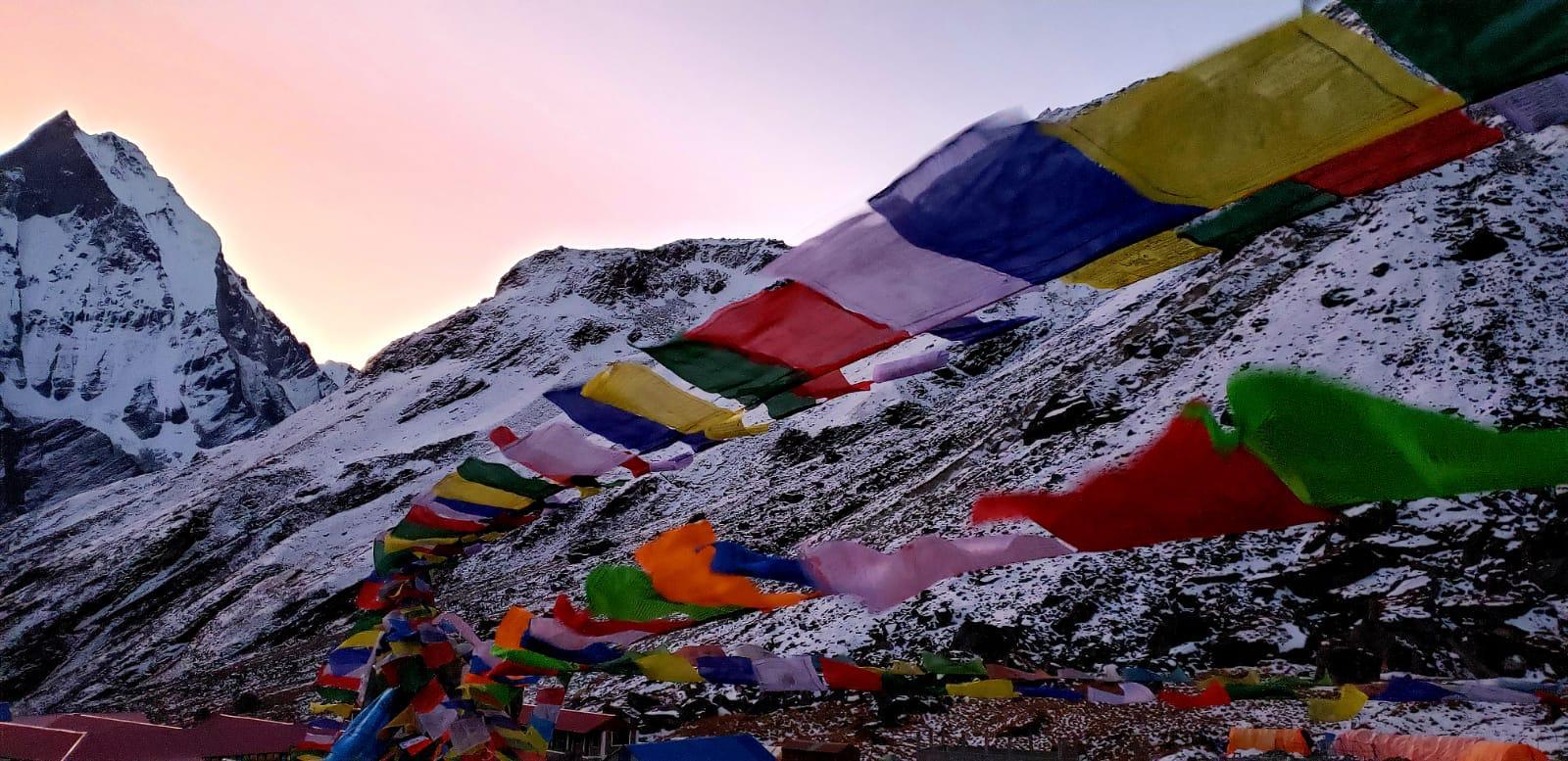
Throughout the trek, you encounter prayer wheels, mani walls, chortens, monasteries, and colorful prayer flags decorating the trail and villages.
Reaching Kyanjin Gompa is particularly meaningful. Situated at around 3,870 meters, the settlement is surrounded by spectacular mountain scenery and represents an important cultural and spiritual point within the Langtang Valley.
Walking past prayer flags fluttering in the mountain wind and hearing prayer wheels turn as you follow the trail creates an atmosphere that is difficult to experience anywhere else.
6. Reaching the High Himalayan World Around Kyanjin Gompa – Langtang and Tamang Heritage Trek
The journey to Kyanjin Gompa marks one of the great highlights of the Langtang section.
As you climb higher, forests gradually give way to alpine terrain. The landscape becomes more rugged, the air thinner, and the surrounding mountains increasingly impressive.
Kyanjin Gompa also provides an opportunity for optional acclimatization hikes.
Trekkers can explore viewpoints such as Kyanjin Ri or attempt Tserko Ri, depending on their itinerary, fitness, weather conditions, and acclimatization.
Standing above the valley with panoramic Himalayan views is a powerful reminder of how far you’ve traveled from Kathmandu.
7. Experiencing Two Different Sides in One Trek – Langtang and Tamang Heritage Trek
Perhaps the greatest advantage of combining the two routes is the diversity of experiences.
The Tamang Heritage Trail introduces you to traditional villages, local culture, homestays, forests, hot springs, and rural Himalayan life.
The Langtang Valley then takes you deeper into the mountains, with spectacular peaks, glaciers, alpine landscapes, and high-altitude trekking around Kyanjin Gompa.
Together, they create a journey that feels much more complete than experiencing either trail alone.
You don’t simply trek toward a destination—you experience the people, culture, landscapes, and mountains of the Langtang region along the way.
Why Combine Langtang Valley and Tamang Heritage Trail?
Combining the two routes is ideal for travelers who want more than just mountain views.
The journey offers a unique balance of:
Dramatic Himalayan scenery
Traditional Tamang villages
Buddhist culture and monasteries
Beautiful Himalayan forests
Natural hot springs
Local homestay experiences
Authentic trekking away from heavily crowded routes
High-altitude landscapes around Kyanjin Gompa
It is particularly appealing to trekkers who want to experience both the cultural and natural sides of Nepal’s Himalayas.
Best Time for the Langtang Valley & Tamang Heritage Trek
The best seasons are generally spring and autumn.
March to May brings warmer temperatures, blooming rhododendrons, and beautiful mountain scenery. Spring can be particularly rewarding for photographers and nature lovers.
September to November is another excellent period, with generally clear skies, good mountain visibility, and comfortable trekking conditions.
Winter can bring cold temperatures and snow at higher elevations, while the monsoon months can bring rain, clouds, and slippery trails.
Choosing the right season can significantly improve your trekking experience.
How Difficult Is the Trek?
The Langtang Valley and Tamang Heritage Trek is generally considered a moderate trek, but the combination is more demanding than a short Langtang Valley itinerary because of its longer duration and varied terrain.
You should be prepared for several hours of walking each day, including uphill and downhill sections.
Altitude is another important consideration, particularly as you approach Kyanjin Gompa and undertake optional hikes to higher viewpoints.
Good physical preparation, gradual acclimatization, adequate hydration, and a sensible itinerary are essential for enjoying the trek safely.
A Trek That Goes Beyond the Mountains
The most remarkable thing about the Langtang Valley and Tamang Heritage Trek is that the mountains are only part of the story.
You remember the snow-covered peaks, but you also remember the smile of a local host.
You remember the long days on the trail, but you also remember the warmth of a village teahouse.
You remember reaching Kyanjin Gompa, but you also remember turning a prayer wheel, crossing a suspension bridge, walking through rhododendron forests, and relaxing in the hot springs at Tatopani.
These experiences transform a trekking itinerary into a genuine Himalayan adventure.
Final Thoughts
The Langtang Valley and Tamang Heritage Trek is an excellent choice for travelers searching for a Himalayan journey that combines spectacular scenery with authentic culture and meaningful experiences.
From traditional Tamang villages and natural hot springs to Buddhist monasteries and the towering peaks surrounding Kyanjin Gompa, every section of the trek offers something different.
If you want to experience Nepal beyond the classic trekking routes, this journey deserves a place on your adventure list.
The mountains may be what bring you to Langtang but the people, culture, and unforgettable moments are what stay with you long after you leave.


