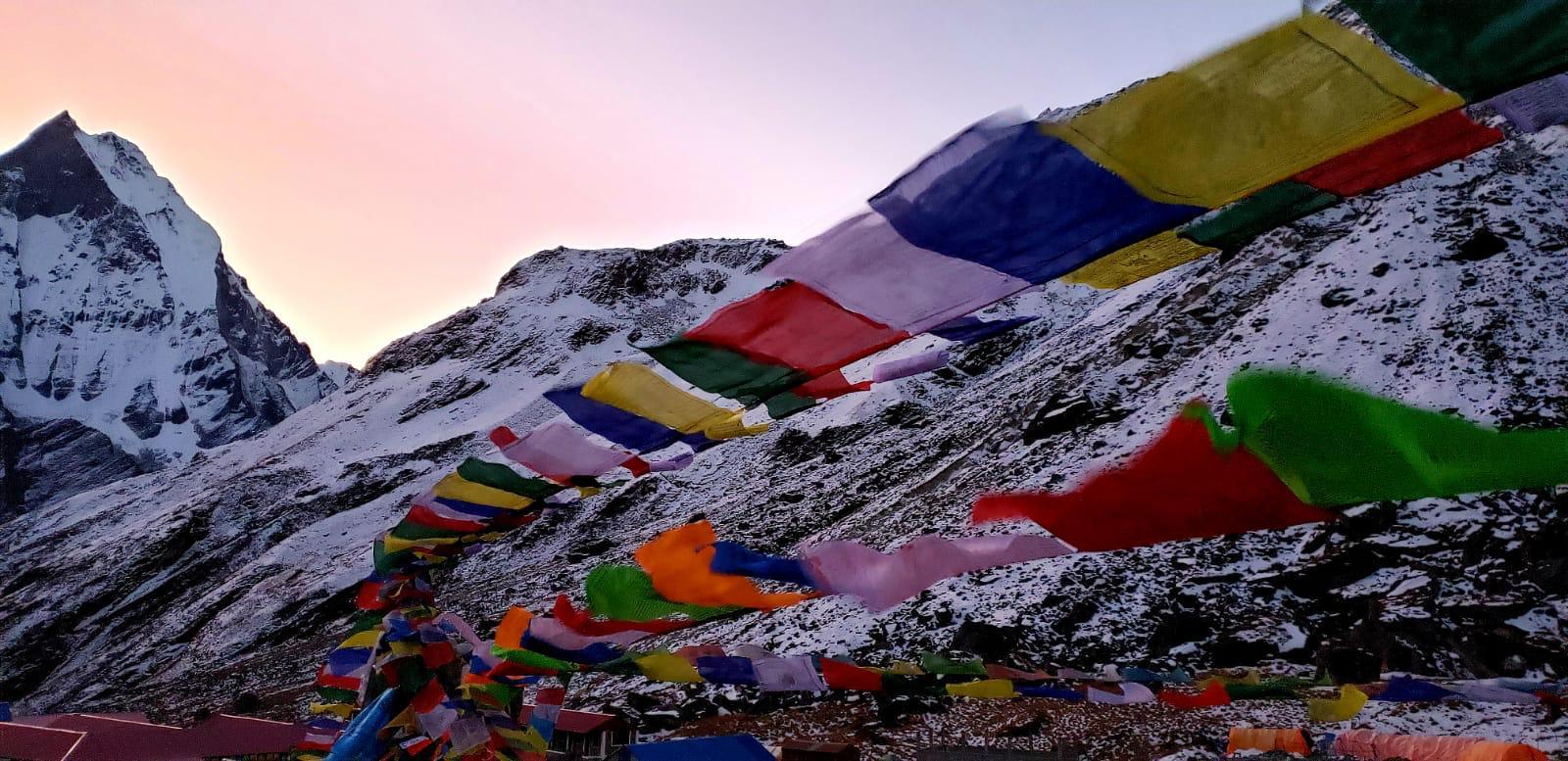


Planning a Himalayan adventure? Teahouse trekking in Nepal is one of the most rewarding ways to explore the country’s breathtaking mountains, experience authentic local hospitality and discover traditional mountain life.
Imagine waking up to breathtaking Himalayan views, enjoying a warm breakfast surrounded by snow-capped mountains, and spending the evening beside a cozy dining-room stove after a rewarding day on the trail. This is the beauty of teahouse trekking in Nepal.
Teahouse trekking is one of the most popular ways to explore the Himalayas. From the famous Everest Base Camp and Annapurna Circuit to the beautiful Langtang Valley and Manaslu Circuit, trekkers can experience remote mountain landscapes without carrying camping equipment or setting up tents every night.
However, if this is your first Himalayan adventure, you may have plenty of questions. What are the rooms like? Is the food good? Are toilets clean? Can you take a hot shower? Is Wi-Fi available at high altitude?
The good news is that teahouse trekking in Nepal is generally more comfortable than many first-time trekkers expect. Although facilities become more basic as you climb higher, mountain lodges offer the essential services needed for an enjoyable journey.
In this guide, we explain 12 important things to expect on a teahouse trek in Nepal so you can prepare confidently and enjoy every moment of your Himalayan adventure.
1. Comfortable but Basic Mountain Accommodation
Teahouses in Nepal range from simple family-run lodges to relatively comfortable mountain hotels. The facilities depend on the trekking region, altitude, location and season.
Most standard teahouses offer twin-sharing rooms with two single beds, mattresses, pillows and blankets. Some lodges also provide private rooms, attached bathrooms and additional amenities, particularly in lower-altitude villages.
However, do not expect luxury hotels throughout your trek. As you gain altitude and move into more remote areas, accommodation becomes increasingly basic.
For example:
Namche Bazaar offers a variety of comfortable lodges, while accommodation becomes simpler around Dingboche, Lobuche and Gorakshep.
Villages along the Annapurna Circuit and Annapurna Base Camp routes offer a wide range of teahouses, with facilities varying from village to village.
You will find traditional mountain lodges with basic but welcoming rooms.
Manaslu Circuit:
Accommodation is generally simpler in remote villages, especially at higher elevations.
One of the best parts of teahouse trekking is the hospitality of local families. Many lodges are family-operated, giving trekkers an opportunity to experience the warmth of mountain communities.
Travel tip: During peak trekking seasons (March–May and September–November), popular villages can become crowded. Booking accommodation in advance through your trekking company can help secure suitable rooms.
2. Delicious Food Options Throughout the Trek
Worried about what you will eat during a multi-day trek in Nepal? You will be pleasantly surprised by the variety of food available.
Most teahouses have a menu offering traditional Nepali meals, Tibetan-inspired dishes and familiar international options.
Some popular meals include:
Dal Bhat: The traditional Nepali meal of rice, lentil soup, vegetables and pickles. It is one of the best choices for trekkers because it provides energy for long walking days.
Momo: Delicious steamed or fried dumplings filled with vegetables, chicken or other available ingredients.
Fried Rice and Noodles: Convenient and filling meals for lunch or dinner.
Pasta and Macaroni: Popular options in many trekking regions.
Sherpa Stew: A warm, hearty mountain dish, particularly enjoyable in colder weather.
Tibetan Bread: A traditional fried bread often served with eggs, honey or jam.
Porridge and Pancakes: Common breakfast choices.
Tea, coffee, hot chocolate and other warm drinks are also widely available.
Food menus are generally more extensive in lower villages and popular trekking destinations. At higher elevations, the selection may become limited because supplies need to be transported by porters, mules or other available means.
Our recommendation: Dal Bhat is an excellent trekking meal. It is filling, nutritious and often comes with additional servings. Eating enough carbohydrates and staying hydrated are important when trekking at high altitude.
3. Toilets: Western and Squat Options
Toilet facilities are one of the most common concerns among first-time trekkers.
The good news is that many teahouses have Western-style toilets, particularly in popular trekking destinations and lower-altitude villages. However, squat toilets are also common, especially in remote and higher-altitude locations.
Depending on the lodge, you may find:
- Western-style toilets with flush systems.
- Traditional squat toilets.
- Shared bathrooms outside your room.
- Private attached bathrooms in selected lodges.
In remote mountain areas, water availability can be limited, so some toilets use manual flushing systems or traditional facilities.
Toilet paper is not always provided, so carrying your own is highly recommended. It is also useful to bring hand sanitiser and a small packet of tissues.
Important: Avoid flushing toilet paper where the lodge requests that it be placed in a designated bin. This helps prevent plumbing problems.
4. Hot Showers Are Available, but Not Everywhere
After walking for five to seven hours through mountain trails, a hot shower can feel like a luxury!
Many teahouses offer hot showers, but availability depends on the location and lodge facilities.
Common heating methods include:
- Solar-powered water heating.
- Gas-powered showers.
- Electric water heaters.
- Traditional water heating systems.
In lower-altitude villages, hot showers are generally easier to find. At higher elevations, facilities may be limited, and hot showers often come at an additional cost.
During winter or periods of cloudy weather, solar-powered systems may not provide enough hot water.
At very high-altitude locations, such as Lobuche and Gorakshep on the Everest Base Camp route, shower facilities can be extremely limited.
Our advice: Take advantage of a hot shower whenever it is conveniently available, but do not depend on having one every day. Wet wipes and a small personal hygiene kit can be useful alternatives.
5. Wi-Fi and Internet Connectivity in the Mountains
Can you stay connected while trekking in Nepal? Yes, but internet availability and quality vary considerably.
Many teahouses in popular trekking regions provide Wi-Fi, usually for an additional charge. Some lodges offer free Wi-Fi, while others charge depending on the location and service.
Connectivity is generally better in larger villages such as Namche Bazaar, Manang and Kyangjin Gompa.
At higher elevations and in remote locations, the connection may be slow, unstable or unavailable.
Some trekking regions also have mobile network coverage through local providers, but signals can be unreliable in mountain valleys.
Keep in mind:
- Wi-Fi may not support video calls or large downloads.
- Internet speeds can become slower when many trekkers connect simultaneously.
- Weather conditions and power interruptions can affect connectivity.
- Mobile network coverage varies depending on your route and provider.
Travel tip: Download offline maps, important documents, trekking itineraries and entertainment before leaving Kathmandu. Inform your family that internet access may be limited during certain sections of the trek.
6. Charging Your Phone, Camera and Other Devices
You do not need to leave your electronic devices behind when trekking in Nepal. Most teahouses provide charging facilities, either in individual rooms or shared dining areas.
However, charging is not always free.
In lower villages, electricity is generally more accessible. In higher and remote locations, lodges may rely on solar panels or alternative power systems.
You may need to pay an additional fee to charge your phone, camera batteries or power bank.
For a comfortable trekking experience, we recommend carrying:
- A high-capacity power bank.
- Spare camera batteries.
- A universal travel adapter.
- Charging cables for all essential devices.
A fully charged power bank is particularly useful on longer trekking days when electricity is unavailable.
Pro tip: Keep your phone and power bank inside your sleeping bag or close to your body during extremely cold nights. Cold temperatures can reduce battery performance.
7. Drinking Water: Safe Hydration at High Altitude
Staying hydrated is essential during a Himalayan trek, particularly as you gain altitude.
Teahouses generally provide boiled drinking water, bottled water and refills, depending on the location.
Common options include:
- Boiled water.
- Bottled mineral water.
- Filtered or purified water.
- Refilling your reusable water bottle.
Bottled water is widely available in many trekking areas, but prices increase with altitude because transportation becomes more difficult.
For environmental reasons, we encourage trekkers to avoid relying on single-use plastic bottles.
Instead, carry a reusable water bottle and a reliable water purification method, such as purification tablets or a suitable filter.
Important: Do not assume that clear mountain water is automatically safe to drink. Always use an appropriate treatment method unless the water has been confirmed safe.
8. Warm and Cozy Dining Rooms
The dining room is often the heart of a mountain teahouse.
After a long day of trekking, this is where travelers gather, enjoy warm meals, share stories and relax with other trekkers.
Most dining rooms have a central stove or heating system. In many traditional lodges, the stove burns wood, yak dung or other locally available fuel.
The dining area is usually warmer than the bedrooms, making it a popular place to spend the evening.
You may find trekkers:
- Enjoying a cup of hot tea.
- Playing cards or board games.
- Reading books.
- Sharing trekking experiences.
- Planning the next day’s adventure.
The atmosphere is one of the most memorable parts of teahouse trekking. You may arrive as strangers but leave with new friends from different parts of the world.
Travel tip: Bring a book, a deck of cards or downloaded entertainment to enjoy during your evenings in the mountains.
9. Limited Heating in Bedrooms
Although dining rooms are often heated, bedrooms usually do not have individual heating systems.
This is particularly noticeable at higher elevations, where nighttime temperatures can drop significantly below freezing.
Most teahouses provide blankets, but bringing a suitable sleeping bag is strongly recommended.
A sleeping bag with an appropriate temperature rating for the season and altitude will help you stay warm and sleep comfortably.
Other useful items include:
- Thermal base layers.
- Warm sleeping socks.
- A fleece jacket.
- A down jacket.
- A warm hat and gloves.
You can also ask your lodge for additional blankets if needed.
Remember: Staying warm at night is important for recovery, comfort and enjoying the following day’s trek.
10. What Does a Teahouse Trek Cost?
One of the advantages of teahouse trekking is that you do not need to carry camping equipment or arrange a full expedition-style support team.
Accommodation and meals are generally available along the trekking routes, making teahouse trekking a convenient option for independent trekkers and guided groups.
However, prices vary depending on:
- Trekking region and altitude.
- Season and demand.
- Type of accommodation.
- Food and drink choices.
- Availability of electricity, hot showers and Wi-Fi.
In some trekking packages, accommodation and meals are included in the overall price. In other arrangements, trekkers pay for meals and accommodation separately.
It is also worth remembering that hot showers, Wi-Fi, device charging, bottled drinks and snacks may involve additional expenses.
If you are trekking with a registered trekking company, ask clearly which services are included in your package and which expenses you should cover independently.
Budget tip: Carry enough Nepalese cash for personal expenses. ATMs are available in some larger villages, but you should not depend on finding one throughout your trek.
11. Local Culture and Mountain Hospitality
Teahouse trekking is not only about reaching a mountain viewpoint or crossing a high-altitude pass. It is also an opportunity to experience Nepal’s rich mountain culture.
Depending on your trekking region, you may encounter Sherpa, Gurung, Tamang, Thakali and other Himalayan communities.
You can experience:
Traditional mountain architecture.
Buddhist monasteries and prayer flags.
Local food and hospitality.
Traditional customs and festivals.
Everyday life in remote Himalayan villages.
Most teahouses are family-run businesses, and supporting them contributes directly to the local economy.
A little cultural awareness goes a long way. Greet people politely, ask permission before photographing individuals, respect religious sites and follow local customs.
Learning a few simple Nepali greetings, such as “Namaste”, is also a lovely way to connect with local people.
12. Different Facilities at Different Altitudes
One of the most important things to understand about teahouse trekking in Nepal is that facilities change as you gain elevation.
The higher you go, the more challenging it becomes to transport food, fuel, construction materials and other supplies.
Here is a general idea of what to expect:
Facility
Lower-altitude villages
Higher-altitude villages
Rooms
More comfortable options
Basic rooms
Toilets
Western and squat options
Squat toilets more common
Hot showers
Generally available
Limited availability
Wi-Fi
More accessible
Limited or unreliable
Charging
Generally accessible
Often additional cost
Food
Wider menu
More limited menu
Heating
Dining room heating
Limited heating
These are general patterns rather than fixed rules. Facilities vary between individual lodges, even within the same village.
For example, accommodation in Namche Bazaar can be significantly more comfortable than in Gorakshep. Similarly, facilities in popular Annapurna villages may differ from those in more remote sections of the Manaslu Circuit.
Being flexible and keeping realistic expectations will make your trekking experience much more enjoyable.
What Should You Pack for a Teahouse Trek in Nepal?
You do not need to carry everything from home, but a few essential personal items can make a big difference.
Here is our recommended teahouse trekking checklist:
- Personal hygiene
- Toothbrush and toothpaste.
- Quick-drying towel.
- Hand sanitizer.
- Wet wipes.
- Toilet paper and tissues.
- Personal toiletries.
- Sleeping and clothing
- Suitable sleeping bag.
- Thermal base layers.
- Warm fleece or down jacket.
- Comfortable trekking clothes.
- Warm socks.
- Sleeping clothes.
- Electronics
- Power bank.
- Phone and charger.
- Camera and spare batteries.
- Universal travel adapter.
- Headlamp.
- Health and safety
- Personal first-aid kit.
- Personal medications.
- Water purification tablets or filter.
- Sunscreen and lip balm.
- Reusable water bottles.
You should also carry a small amount of Nepalese cash for additional services and personal purchases along the route.
Frequently Asked Questions About Teahouse Trekking in Nepal
1. Do I need to book teahouses in advance?
During peak trekking seasons, booking ahead is recommended, particularly in popular destinations such as Everest Base Camp and Annapurna Base Camp. If you are travelling with a trekking company, your guide can help arrange suitable accommodation along the route.
2. Can I get a private room during a teahouse trek?
Yes, private rooms are available in many villages. However, availability becomes limited at higher elevations and during busy trekking seasons. Twin-sharing rooms are the standard arrangement in many mountain lodges.
3. Is vegetarian food available during Nepal treks?
Yes. Most teahouses offer vegetarian options, including dal bhat, vegetable noodles, fried rice, soups, potatoes and other local dishes. Vegan and special dietary requirements should be communicated in advance.
4. Are teahouses clean and hygienic?
Most established teahouses maintain basic cleanliness standards, but facilities vary. In remote areas, bathrooms may be shared and basic. Carrying hand sanitiser, tissues and personal toiletries is recommended.
5. Can I use my credit card at mountain teahouses?
Some larger lodges and businesses in popular villages accept card payments, but most remote teahouses primarily accept cash. Carry sufficient Nepalese rupees for your personal expenses.
6. Is there mobile network coverage during the trek?
Mobile coverage is available in some trekking villages, but it varies by location, provider and terrain. Do not expect uninterrupted connectivity throughout the trek.
7. Can I charge my power bank during the trek?
Yes, many teahouses offer charging facilities for power banks. However, charging may involve an additional fee, and electricity may be limited in remote locations.
8. Is teahouse trekking suitable for beginners?
Absolutely! Teahouse trekking is suitable for beginners who choose an appropriate route and prepare adequately. Routes such as Ghorepani Poon Hill and shorter sections of the Langtang Valley are popular options. However, physical preparation, gradual acclimatization and proper guidance are important, particularly at higher elevations.
Final Thoughts: Experience the Real Beauty of Himalayan Teahouse Trekking
Teahouse trekking in Nepal offers much more than a place to sleep between walking days. It brings together breathtaking mountain scenery, warm local hospitality, delicious traditional food and unforgettable cultural experiences.
You may not find luxury facilities in every mountain village, but you will discover something far more meaningful: the simplicity of mountain life and the incredible hospitality of the people who call the Himalayas home.
Whether you are planning to trek to Everest Base Camp, explore the Annapurna Circuit, discover the beautiful Langtang Valley or take on the remote Manaslu Circuit, understanding what to expect from teahouse accommodation will help you prepare for a smoother and more rewarding adventure.
Ready to experience the Himalayas?
At Treks Planner Nepal, we help trekkers explore Nepal with experienced local guides, carefully planned itineraries and reliable accommodation arrangements. Whether you are a first-time trekker or an experienced Himalayan adventurer, we can help you find the right trekking experience.
Explore our trekking packages or contact our team to start planning your next adventure in Nepal.