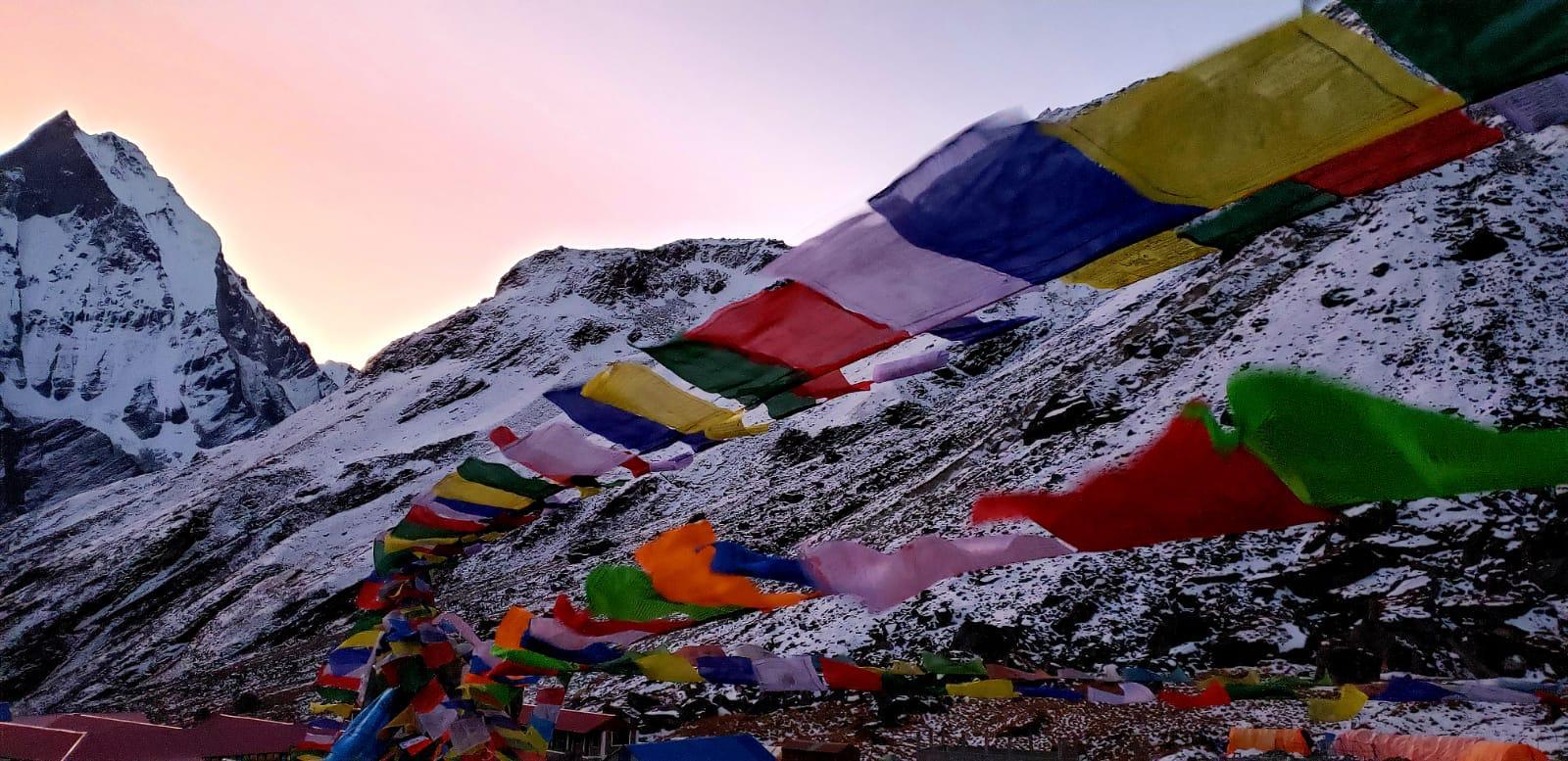
Everest Base camp Weather and Temperature

A Complete Guide To Everest Base Camp Trek

Everest base camp weather

The climate and atmosphere of Mount Everest is really amazing to deliberate about. Without any doubt, Mount Everest lies 28° north of the equator and is liable to a typical northern side of the equator seasonal. Ultimately, information of temperature and weather are displayed below framing entire four seasons and twelve months.

Temperature by month

January

During 1st month of the year temperature remains at any point from 3°C to -18°C which brings developing breezes, chilly temperatures and starts snowfall occasionally. Woolen thick and warm clothes along thick sleeping bag are required because at the night hours temperature also falls below 4°C.

Check Everest Base camp Trekking Package

February:

During this month of the year temperature remains at any point from 2°C to -16°C where chilly cold and snow falls will develop with high rate. Day temperatures are cold but agreeable while in spite of the fact night time remains below -10°C so time to stay warmer.

March:

During month of March, temperature remains at any point from 7°C to -12°C starting of spring season. The day weather develops to warmer with open and clear weather for glimpsing landscapes but night remains moderate cold with twinkling stars above.

April:

During month of April, is considered as the king among the months for high elevation trekkers while temperature remains at any point from 10°C to -5°C.  Excellent temperature, wild flowers blooming throughout trail with good visibility offers to wear wind cheaters during day and warm at night.

Check Everest Base camp Trekking Package

May:

During month of May, temperature remains at any point from 15°C to 0°C where days starts to get windy but crystal clear offering breathtaking landscapes. Warm day temperature recommends for warm and wind proof wears likewise night time remains cold but remains above freezing point.

June:

During month of June, temperature remains at any point from 17°C to 6°C and welcomes monsoon seasons steadily. Beginning of monsoon season doesn’t give actual prediction of weather so raincoats with both warm and light wears are essential.

July:

During month of July, temperature remains at any point from 17°C to 8°C and can rain at any point of time. It doesn’t rain all day, but it does rain every day, so trails are muddy and the landscapes along disturbed with thick cloud. Light and warm cloths including raincoat are recommended to trekkers.

August:

During month of August, temperature remains at any point from 16°C to 5°C likewise temperate and weather remains similar to July with muddy trail and foggy landscapes. Being similar, bag packs and wears are recommended to follow the same to month of July.

Check Everest Base camp Trekking Package

September:

During month of September, in wake of concluding monsoon temperature remains at any point from 16°C to 2°C. September is the months of major festival Dashain in Nepal so you can also experience unique along light and warm clothes are recommended for trekking during this month.

October:

 During month of October, temperature remains at any point from 12°C to -7°C. Likewise, October also holds the next major festival Tihar in Nepal to attain while days are warmer and nights are usually beginning chilly temperatures so thick cloths are suggested.

Check Everest Base camp Trekking Package

November:

During month of November, temperature remains at any point from 7°C to -12°C. Though, chilly cold develops more comparing to October daytime remains warmer and clear to glimpse landscape anyway snow doesn’t disturb this month so normal warm clothes are adequate for this month.

December:

During month of December, temperature remains at any point from 4°C to -16°C and chilly cold is high. Though it doesn’t snow, it’s near to the start of snowfall while night temperate starts to fall below freezing point. Woolen thick and warm clothes along warm sleeping bag are equitable.

I’m Interested Send Me Free Package Details

Everest Base Camp Trek Difficulty – How Difficult is the Everest Base Camp Trek?

Everest Base Camp Trek Difficulty
everest base camp difficulty

Everest Base Camp Trek Difficulty, trekking to Everest base camp is a lifetime adventure and life changing for many people. Just because you are not stepping foot on the summit of Mount Everest does not mean the Everest Base Camp Trek is easy. It is achievable for most people, but it is not simply a tourist walk. The trek demands respect, preparation, proper training, and determination.

There will be moments when you question your sanity and wonder why you ever decided to take on this challenge. But those thoughts quickly disappear when you witness the majestic Himalayan scenery. The landscape changes dramatically from lush green forests, dense woodlands, glistening blue rivers, and waterfalls to barren alpine terrain, glaciers, and icy lakes. By the end of the journey, you’ll realize it was one of the best decisions of your life.

The Everest Base Camp Trek is one of the hardest physical and mental challenges many people will ever undertake. However, once you reach Everest Base Camp, every difficult step turns into one of your proudest and most unforgettable achievements.

There are several key factors that contribute to a safe, successful, and enjoyable journey through the Khumbu Valley, including proper acclimatization, trekking in low-oxygen environments, and following a well-planned itinerary.

Check Everest Base Camp Trekking Package

Everest Base Camp Trek Difficulty – How Difficult is the Everest Base Camp Trek?

The Everest Base Camp Trek is one of the most exciting, adventurous, challenging, and rewarding treks in the Khumbu region of Nepal. Reaching the base of the world’s highest mountain and experiencing its incredible beauty is a truly unforgettable experience.

For those planning this incredible journey, one of the most common questions is: How difficult is the Everest Base Camp Trek?

The main factors that determine the difficulty of the trek include:

  • Physical fitness
  • Altitude
  • Trek duration
  • Trail conditions
  • Proper training and preparation
  • Physical Fitness Required for Everest Base Camp Trek

Good physical fitness is essential for successfully completing the Everest Base Camp Trek. If you have existing health issues or poor fitness, the trek can become much more difficult and may even become dangerous.

The fitter you are, the more you will enjoy the trek.

Generally, if you can comfortably walk for 4–5 hours a day while carrying a light daypack, you should have no major fitness concerns.

Check Everest Base Camp Trekking Package

Altitude – The Biggest Challenge of Everest Base Camp TrekEverest Base Camp Trek Difficulty –

Altitude is undoubtedly the most difficult and underestimated aspect of the Everest Base Camp Trek.

If it weren’t for the altitude, the trek itself would be relatively straightforward. Unfortunately, altitude is something you cannot train for completely.

At Everest Base Camp (5,364m), there is approximately 50% less oxygen than at sea level, making every step more physically demanding.

Altitude sickness should never be underestimated, especially at the elevations reached during the trek.

The journey begins at Lukla (2,860m), which is already high enough for some trekkers to experience symptoms of altitude sickness. From there, the trail gradually ascends through the Khumbu Valley until reaching Everest Base Camp. On the return journey, most trekkers climb Kala Patthar (5,545m), the highest point of the trek and the best viewpoint for Mount Everest.

The key to successful high-altitude trekking is proper acclimatization. To reduce the risk of altitude sickness:

  • Walk at a slow and steady pace.
  • Follow a well-designed itinerary.
  • Gain altitude gradually.
  • Take scheduled acclimatization days.
  • Eat nutritious food.
  • Drink plenty of water.
  • Get enough rest.

Although the distance from Lukla to Everest Base Camp can technically be completed much faster, doing so significantly increases the risk of altitude sickness. A slower itinerary is both safer and more enjoyable.

The Everest Base Camp Trek is only dangerous if trekkers ignore acclimatization guidelines or travel without experienced guides. A knowledgeable guide ensures proper pacing, adequate rest days, hygienic food, safe drinking water, and monitors trekkers for symptoms of altitude sickness. Unlike technical mountaineering, there are no exposed climbing sections or ropes involved on the standard Everest Base Camp trail.

Cost Increases with AltitudeEverest Base Camp Trek Difficulty

Altitude also affects your budget.

As you trek higher into the Himalayas, the cost of food, accommodation, and other services increases significantly because supplies must be transported by porters, yaks, or helicopters.

Prices don’t just double, they often triple.

It is advisable to carry some energy snacks and enough extra cash for personal expenses during the trek.

Trek Distance and Trail ConditionsEverest Base Camp Trek Difficulty

The Everest Base Camp Trek covers approximately 130 km (round trip).

Although this sounds like a long distance, most guided itineraries spread the trek over around 9 trekking days, averaging approximately 15 km per day.

However, this is not a flat walk.

The trail consists of:

  • Rocky paths
  • Stone staircases
  • Uneven terrain
  • Snow-covered sections (depending on the season)
  • Continuous ascents and descents

Combined with increasing altitude and changing temperatures, these conditions make the trek much more demanding than the daily distance alone suggests.

Fortunately, most trekking companies provide porters to carry your main luggage, allowing you to hike comfortably with only a light daypack.

Training for Everest Base Camp TrekEverest Base Camp Trek Difficulty

The Everest Base Camp Trek is considered one of the most challenging trekking adventures in Nepal.

It is not something most people can complete without preparation.

However, with basic training, even first-time trekkers can successfully reach Everest Base Camp.

Walking for 4–6 hours several times a week for 5–8 weeks before the trek is highly recommended.

Additional training such as stair climbing, hiking, strength exercises, and cardiovascular workouts will make the trek much more enjoyable.

With proper preparation, the Everest Base Camp Trek becomes a challenging yet achievable adventure.

Is the Everest Base Camp Trek Worth It?Everest Base Camp Trek Difficulty

Despite all its challenges, the Everest Base Camp Trek remains one of the most famous trekking adventures in the world, attracting thousands of trekkers every year.

The journey is physically demanding, mentally challenging, and often exhausting.

Yet every difficult step becomes worthwhile when you finally stand beneath the world’s highest mountain.

The breathtaking Himalayan scenery, the unique Sherpa culture, and the overwhelming sense of achievement make every hardship worthwhile.

As the saying goes, the sweetest pleasure often comes after overcoming the greatest challenge. Reaching Everest Base Camp is an accomplishment that fills you with pride and creates memories that last a lifetime.

Trek with Confidence

At Treks Planner Nepal, our expert mountain guides have maintained a 100% successful trek completion rate with zero casualties by prioritizing safety, proper acclimatization, and personalized care throughout every expedition.

If you’re planning your Everest Base Camp adventure, contact us today for a free consultation. We’ll help you prepare for a safe, enjoyable, and unforgettable journey to the foot of the world’s highest mountain.

History of  zero % casualties track record with  Expert Mountain guides makes us different from other companies, Do Inquire us for details, don’t hesitate, its FREE 

Contact Us For Package Details, Price, Available dates and any other use full information


QUICK INQUIRY