Top Attractions in Namche Bazaar Everest Region

Everest Base Camp

Top Attractions in Namche Bazaar, Everest Region. A famous destination on the Everest Base Camp trek is Namche Bazaar. It appears more like a town than a village cut into the side of a mountain. Being the hub of the Khumbu Valley’s economic heart, Namche is the capital of the Sherpa homeland. Except for roads, this mountain town has everything a tourist might want: stores, lodging, dining options, cafรฉs, pharmacies, banks, ATMs, excellent Himalayan views, and superb phone and internet access. Villagers from as far away as Tibet gather to barter and shop in the town’s biggest weekly open-air market in Khumbu.

To relax and acclimate, trekkers and mountaineers typically spend an additional day at Namche Bazaar. There are several things to do in the town to keep one busy while there. Museums, bars, internet cafรฉs, snooker halls, spas & wellness facilities, bakeries, and more may be found here. For day treks and quick outings, the villages and hills around Namche provide excellent destinations.

Although Namche Bazaar is frequently visited by trekkers in the Everest Region, it is also a stand-alone attraction. Here, visitors may take in the Himalayas’ stunning natural splendor and get fully immersed in its vibrant culture. What is there to do in Namche, then? Some of the best things to do in Namche Bazaar are listed below.

Hike to Shyangboche

There are expansive views of Mount Everest and other mountains from Shyangboche. One must ascend a steep staircase above Namche to reach Shyangboche. Shyangboche features an STOL airstrip and is situated on a level grassland field. The only activity at the airport is helicopter landings. Nonetheless, the location has been utilized for the Everest Skydive event since 2008. When Everest Skydive, billed as the world’s highest skydiving event, took place at the Shyangboche airport in 2008, it brought the airport into the public eye. Commercial skydiving activities continue to take place at the location.

Sherpa Museum

Directly above the hamlet is the Sherpa Museum. Here, you may view Sherpa traditional attire and old relics. The documentation of climbers who have climbed Mount Everest is the focus of one area of the museum. Old photos of Sherpa villages, their inhabitants, and their traditional Buddhist art may be seen in the Sherpa Culture Gallery and Sherpa Himal Art. It is a pleasure to view the extensive collection of Thangka paintings at the museum.

One can explore traditional architecture when visiting the museum, which is situated in a typical Sherpa dwelling.

Visit Sagarmatha Next to learn more about sustainable tourism.
One of the newest attractions in Namche Bazaar, Sagarmatha Next is a garbage management facility, museum, and art gallery. In addition to encouraging eco-friendly travel, the center seeks to implement a sustainable approach to mountain trash management and disposal. The facility has a shop, a cafรฉ, a waste lab, an art gallery, and a tourist learning center.

Waste materials from the Everest trails are used to produce sculptures, artwork, and digital exhibitions. As part of the center’s crowdsourcing project, Carry Me Back, visitors may return one kilogram of pre-packaged trash when they leave Khumbu.

The center provides a venue for innovative and creative artists to produce artwork using trash gathered from Mount Everest and the Khumbu hiking routes. Those who care about the environment and want to make it better should go there. Sagarmatha Next is situated above Namche Bazaar in Shyangboche at an elevation of 3775 meters.

Hike to Sherpa village

The nearby villages of Thame, Kunde, and Khumjung are excellent places to go on quick walks. A few hours’ walk will get you to these settlements, which are rather near to Namche Bazaar.

It is commonly known that the first school in the Solu Khumbu Region was located in the hamlet of Khumjung. The Himalayan Trust, owned by Sir Edmund Hillary, founded the school in Khumjung. In 1961, the school was founded with only two classrooms and a small number of Sherpa pupils. The school currently includes 17 buildings, 300 pupils, and a dormitory for students from far-off towns. Despite the opening of other schools in nearby Khumbu villages, the Khumjung school is still the only one providing higher education (up to the matriculation level).

The institution has seen several changes since it was initially founded. The infrastructure of the school has been developed with assistance from foreign donors and international relief groups. The Sir Edmund Hillary Visitors Center is located in the original school building, which was constructed to house the first group of Sherpa pupils.

The Khumjung Monastery, which displays a glass box containing a scalp thought to belong to the Yeti, the Abominable Snowman, is another point of interest in the hamlet. By paying a certain sum to the custodian at the monastery, one can view the scalp.

Khumjung is not far from Kunde village. Sir Edmund Hillary selected Kunde as the location for Khumbu’s first health clinic. Sir Edmund Hillary sought to assist the impoverished Sherpas, who were living a challenging existence without access to basic healthcare and education, after his historic summit of Mount Everest. He therefore made the decision to construct a medical facility in Kunde and a school in Khumjung. Volunteer medical staff from Canada and New Zealand worked at the medical facility. However, the hospital’s management was taken over by residents after 2013. The hospital employs lab techs, nurses, and two resident physicians. With 12 beds, the Kunde Hospital is the biggest in the region and provides healthcare to the residents of Namche, Kunde, Khumjung, Phortse, Thame, and other nearby villages.

Tucked away from the well-traveled hiking trails is Thame, one of the Khumbu’s least visited Sherpa communities. The historic settlement has maintained its rustic beauty since so few hikers pass by it. The village of Thame is quieter, smaller, and more serene than Namche Bazaar. Overlooking the town is a monastery worth seeing.

Trip to the Everest View Hotel

A must-see whilst in Namche Bazaar is Hotel Everest View. For sweeping views of Mount Everest, Ama Dablam, Nuptse, Lhotse, and other peaks, the majority of trekking parties climb to the hotel. Takashi Miyahari, a Japanese tourist and businessman who subsequently renounced his Japanese citizenship to become a Nepali citizen, founded the hotel in 1971. At the time, it was the highest luxury hotel in the world, earning the Guinness World Record. Constructed with timber, glass, and stone, the hotel’s tasteful yet understated architecture perfectly complements the stunning surroundings.

It takes around two or three hours to climb from Namche to Hotel Everest View. To reach the hotel, one first ascends to Shyangboche and then continues on a mildly inclining path via a lush meadow. The hotel provides breathtaking views of Ama Dablam, Khumbila, Kantega, Thamserku, Mount Everest, Nuptse, Lhotse, and other locations, and is surrounded by fir and pine trees. The hotel’s porch is a great place to enjoy a nice cup of coffee and the scenery.

Check out the local market.

Namche Bazaar’s Saturday Market is a major event. It is the largest market in this area, and traders come from as far away as Tibet and the lower villages to sell and exchange goods. To get to this market, Tibetans on the other side of the border must travel a challenging distance past the Nangpa La. They bring with them handcrafted handicrafts and Chinese goods that they may sell to the Sherpas or barter for.

This market is an excellent spot to see the locals and gain more knowledge about the local economy because it is where the majority of the Khumbu villagers gather to purchase and sell. This market sells a wide range of goods, including fresh meat, organic vegetables, cutlery, clothing, shoes, groceries, yak meat, cheese, and more. Only Saturdays are used for the market. Therefore, you must schedule your trip to Namche for the weekend if you want to explore this local market.

The main Namche market is open seven days a week, however, the Saturday market is only conducted on Saturdays. Shops in the daily market provide food, clothing, souvenirs and artwork, trekking gear and equipment, and more. However, keep in mind that because everything must be flown in or carried by mules or porters, the prices are far higher here than in the metropolis.

Relax in cafรฉs and bars.

At 3,000 meters above sea level, Namche Bazaar has some of the greatest cafรฉs, bakeries, and bars you will ever come across. It is the final location where you may genuinely have a satisfying dinner and a strong cup of coffee before continuing on into the high-altitude wilderness. Therefore, you may visit cafรฉs, restaurants, and pubs in Namche to get your fill of “feel-good” food.

The town also has some of Khumbu’s greatest cakes (carrot cake, cheesecake, etc.), brownies, apple pies, and muffins. Some of the most well-liked restaurants in Namche that are visited by hikers include the German Bakery (Hermann Helmar’s), Namche Bakery and Cafรฉ, Illy Espresso Bar, Sherpa Barista, and Tomodachi Japanese Restaurant.

While it is not advised to consume alcohol while traveling to EBC or any high-altitude location, you can celebrate your trip’s success with a few drinks on your way out. Guinness, Ireland’s national beer, and Jameson Whiskey are served in the Irish Pub. Additionally, there is a pool table where you may play snooker. Another excellent spot to relax in Namche is Cafรฉ Danphe. Along with free wi-fi and charging stations, the cafรฉ serves a large selection of food and beverages. T-shirts bearing the signatures of Mount Everest expedition groups adorn the cafรฉ. This cafรฉ offers free screenings of Everest documentaries and films.

Activities to do before departing Namche Bazaar

The following should not be overlooked if you are traveling to Gokyo Valley, the Three High Passes, Everest Base Camp, or any other high-altitude location:

  • Examine and stock up on life-saving medications (Diamox, anti-cold tablets, etc.).
  • If you are short on cash, get some at the ATM.
  • If you arrive in Namche without the necessary equipment, purchase or rent warm gear.
  • Get plenty of snacks.
  • Make contact with your loved ones and send that crucial email. The internet and phone connections will get shoddy as you leave Namche.

Contact us for more details

How to Plan Your Manaslu Circuit Trek: Key Information and Highlights

How to Plan Your Manaslu Circuit Trek: Key Information and Highlights. An intriguing trip across the isolated and breathtaking Himalayan landscapes, the Manaslu trekย provides trekkers with a distinctive and less-traveled option to popular routes like Everest or Annapurna. The eighth-highest peak in the world, Mount Manaslu, is encircled by this path, which offers stunning mountain vistas, fascinating cultural experiences in traditional Tibetan settlements, and a variety of habitats.

The trip blends cultural immersion with adventure, from traversing the difficult Larkya La Pass to finding secret monasteries. This blog includes the ideal times to go, necessary permits, must-see places, and helpful advice to help you organize and make the most of your Manaslu Trek. This trip guarantees an amazing Himalayan experience, regardless of your level of trekking expertise.

These include more specialized issues like the level of physical condition needed for the hike, the possibility of altitude sickness and how to avoid it, several trekking routes in the Manaslu region, and the availability of tea shops and accommodation along the way. The best ways to prepare for the weather, which can change dramatically throughout the trek, local traditions and etiquette in the isolated communities, and ways to get to and from the trailheads are other common questions asked by trekkers.

In addition, issues like the expense of hiring a guide or porter, trekking insurance, and the Manaslu region’s environmental conservation measures are frequently brought up. These extra factors provide hikers a more thorough grasp of the trip and guarantee that they are ready for all of the difficulties and perks of the Manaslu Circuit Trek.

1. Teahouses

Teahouses on the Manaslu Trail provide internet and electricity to their wifiย for a charge. Along this route, the coverage of the NTC (Nepal Telecom) SIM is superior to that of Ncell. But the higher you go, the weaker the signals are, and you can only send messages with your phone. Internet access is limited to Samagaon. Internet access is available at Dharapani after crossing the Larkya La.

    The route has access to electricity. The hamlets at higher elevations rely on solar power or micro-hydroelectric projects for their power supply, while the communities at lower elevations are linked to the national grid. At higher elevations, poor voltage and power outages are to be expected. Those teahouses that rely on solar energy could not have any electricity if the weather stays cloudy. As a result, it is advised that you trek with a power bank or a portable solar power charger. In most cases, teahouses charge $3 or $4 per hour for wifi and electrical device charging.

    2. Transportation

    The trailhead is reachable by road from Kathmandu. This removes the concern of having to fly across the mountains in a small airplane, which is dangerous, to reach the trailhead. To travel to the trailhead, you can take a shared Jeep, a private cab, or a public bus. It takes around seven or eight hours to drive from Kathmandu to the trail.

    3. Food and Water

    Simple dishes like momo (dumplings), chowmein (friedย noodles), Tibetan bread, Indian flat bread or chappati, bread toast, oatmeal, and the Nepali staple daal-bhaat (rice, lentil soup, vegetable curry, and pickles) are served in teahouses. If you pay more, you could get boiling or hot water. The majority of food products on the trek are costly since they must be carried by mules or porters from cities located far from the trail. You may buy bottles of mineral water at the teahouses. However, the original retail price may be four or five times more than this.

      You may bring a reusable water bottle with a filtration device, such as the Steripen, for drinking water. Alternatively, you may purchase some water purification tablets and use them to clean the local water. Direct consumption of water from open sources, such as rivers and streams, is not advised. Make sure your water is adequately filtered before drinking it.

      4. Costs and Methods of Payment at Teahouses

      The Manaslu Trail is located in a secluded area of the country. Most of the time, when trekking, you will be isolated from contemporary society. There are no large businesses or shops along the way, nor are there any banks or ATMs. You will only be able to spend money on meals, beverages, and snacks at teahouses. To purchase anything on the trail, you must have local cash on hand because teahouses do not take credit cards or international currencies.

      Local cash or Nepalese rupee is the only currency accepted at teahouses and shopsย along the path. Therefore, be sure you withdraw enough local cash from any ATM operated by the local bank (30 to 40 thousand would suffice) before departing Kathmandu. Visa, Mastercard, and American Express cards are often accepted at ATMs in Nepal. You will need local money to pay for hot showers, tipping the porter and guide after the trip, mineral water, charging your electronic equipment (phone, camera batteries, power bank, etc.), and other expenses in addition to buying food and beverages that are not covered by your trekking package.

      5. Packing Lists

      A detailed list of all the gear and equipment you will need for your journey will be sent to you by the organization you book it with. Remember to bring your paperwork (passport, Nepal visa, permits, etc.) along with weather-appropriate attire and equipment. There are several stores in Kathmandu where you may buy and rent trekking gear. If you are unsure about the quality of the items available in Nepal, you can carry your kit from home.

      You will undoubtedly need crampons and gaiters to traverse the snow-covered pass to cross Larkya La. Because the teahouse facilities are sometimes basic and lack indoor plumbing, you should also remember to include a couple of rolls of toilet paper when you prepare for your hike.

      6. Insurance for Travel

      This hike requires travel insurance. You have to purchase insurance that will pay for rescue and evacuation expenses at high altitudes. You should carefully read the small print before purchasing travel insurance, since some plans may not cover evacuation services or injuries at high altitudes. One that provides coverage for high-altitude rescue and evacuation over 5000 meters is the one you should pick.

        Detours & Interesting Places on the Manaslu Circuit

        Tsum Valley

        One of the undiscovered treasures of the Nepal Himalaya is Tsum Valley, which may be reached as a side excursion from the Manaslu journey. Tsum remained completely secluded because the Nepali government forbade people from entering in order to preserve the valley’s delicate ecosystem and culture. Only in 2008 was the Tsum Valley opened to tourists. Even the unrestricted flow of Nepalese nationals from other areas into the region used to be restricted.

        The atmosphere of Tsum Valley, which is close to Tibet and the Ganesh Himal mountain, seems to be timeless. Old Buddhist monasteries and nunneries that house the wisdom and culture of old Tibetan Buddhism may be found in the Tsum Valley. Because of the valley’s delicate cultural past and its proximity to Tibet, the authorities have chosen to designate the area as a restricted zone in order to prevent outside influences.

        There are two distinct areas in the Tsum Valley: Upper Tsum and Lower Tsum. The valley is home to thirty-three communities in all. The valley’s residents speak a dialect known as Tsumke or Tsumba. The Tsum Valley is unique in that all creatures, including birds and insects, are safeguarded and permitted to coexist without human intervention. There are numerous fascinating, valley-specific Buddhist customs observed by the valleyโ€™s thirty-three communities. For instance, the culture of’shyagyaโ€™.

        The “Shyagya” culture is followed by the inhabitants of Tsum. As a Buddhist practice, they have adopted “shyagya,” which translates to “a tradition of non-violence.” According to the “shyagya” culture, it is illegal to hunt and kill wild animals, gather honey, trade animals or their parts, remove trees and burn forests, and catch or kill insects, birds, or animals in the valley. According to the locals, Tsum Valley is a beyul, a hallowed place where all living things are allowed to remain and have been blessed by Guru Rinpoche.

        Tsum Valley’s cultural attractions include Mu Gompa, Rachhen Gompa, Piren Phu, and Milarepa Cave. You may incorporate a trip to Tsum Valley into your Manaslu Trek itinerary if you want to see this intriguing location.

        Valley of Nubri

        The culturally diverse Nubri Valley is traversed by the Manaslu trek. Similar to the Tsum Valley, Tibetan Buddhist culture and customs are well embedded in the Nubri Valley. The Nubri Valley is home to several of the region’s oldest monasteries. The villages of Bhi, Samagaon, Prok, Tsak, Samdo, Lhi, Li, Sho, Shayala, Namrung, Ghap, Shak, and Gyayul are all included in the valley. The Nubri Valley is believed to have formerly been a part of Western Tibet’s Ngari kingdom.

        The residents of the Nubri Valley have a distinctive custom of permitting lamas to be married, as they adhere to the Nyingmapa school of Tibetan Buddhism. Married lamas, known as Ngakpas, are permitted to serve as priests in both their houses and the monastery.

        One of the oldest and most significant monasteries in the Nubri Valley is the Pungyen Gompa, which is situated at an elevation of 4050 meters. The monastery is situated between Samagaon and Shayla, two Nubri villages. The first people to settle in the Nubri Valley constructed the monastery, which is almost 400 years old. The Nubri name for Mount Manaslu is the source of the monastery’s name, Pungyen. Manaslu, Pungyen, or Kutang are the names given by the people of Nubri Valley.

        Residents of the Nubri Valley periodically go to Tibet for supplies and for trade. The peasants find it simpler to obtain goods from the other side of the border because Tibet is closer to their hamlet than Nepal’s towns and cities. Yak caravans are used to carry goods from Tibet to the Nubri Valley.

        Rui La, Birendra Taal, and Manaslu Base Camp

        The Manaslu Trek allows you to climb to the foot of Mount Manaslu. Manaslu is the eighth-tallest peak in the world and one of the fourteen-eight thousanders, standing at 8,163 meters above sea level. A short ascent from Samagaon’s old town takes you close to Manaslu Base Camp (4,900 m), where you may see the stunning view of the snow-capped summit.

        Mount Manaslu, popularly referred to as the “Spirit Mountain,” is revered by the locals as a protective god. Killing or harming any living creature, including insects, birds, or animals, is strictly prohibited among the villages residing at the mountain’s foot since doing so would contaminate this hallowed space and call out the mountain deity’s wrath.

        The magnificent alpine lake, Birendra Taal, is encountered on the way to the Manaslu Base Camp. The blue lake is surrounded by snow-capped mountains. It is stunning to see the turquoise lake surrounded by snow-capped mountains.

        During the busiest climbing season, mountaineering participants trying to reach the top of Mount Manaslu set up tents near the base camp. Even though Mount Manaslu is not as big as Mount Everest, seasoned climbers say it is far harder and complex to reach the summit. From the Manaslu Base Camp, you can also see Himalchuli, Naike Peak, Ganesh Himal, and Shringri Himal, which are all nearby mountains.

        Rui La (4998 m), a difficult mountain pass along the Nepal-Tibetan border, is another great destination for day hikers. Samdo hamlet is where the trek to Rui La pass starts. There are no communities for miles along the Rui La Pass track, making it a secluded and desolate route. Yaks and yak herders are the only inhabitants of the desolate mountaintop. Yak caravans are seen moving back and forth from the border region, and Rui La also denotes the commercial route.

        A stone at the top of Rui La Pass marks the border between Nepal and the Tibet Autonomous Region of China. Rui La Pass is around a day’s trek from the closest Tibetan settlement. One will arrive at one of Tibet’s roadways after two days of walking.

        Annapurna Conservation Area and Manaslu Conservation Area

        You will traverse two natural conservation zones along the Manaslu trekking path, which are abundant repositories of Himalayan flora and fauna. The Manaslu Conservation Area is a conservation area that spans 1663 square kilometers. Among other species, the Manaslu Conservation Area safeguards the habitats of the Himalayan tahr, Himalayan marmot, snow leopard, blue sheep, black bear, lynx, and musk deer.

        The protected area is home to more than 100 bird species and more than 2,000 plant species. It has six distinct climatic zones (arctic, subarctic, temperate, tropical, and alpine) and eleven different types of wood. Because of the temperature variation, this region is one of the Himalayas’ hotspots for the greatest biodiversity.

        The Annapurna Conservation Area Project in the Annapurna Region spans 7629 square kilometers. There are 105 animal species, 518 uncommon bird species, and 1226 wildflower species in the protected area. High on the slopes of the Annapurna Range, this nature conservation area is home to the biggest rhododendron forest in the world.

        Conclusion

        The Manaslu Trek is the ideal way to combine trekking in the Himalayas with taking in the splendor of culture. You enter a wild setting with lush forests and high mountain passes along the trip. You may go through old villages that are populated by ethnic groups that haven’t interacted with outsiders much. You will surely remember the pristine landscape, vibrant culture, difficult hike, and intriguing encounters with the native mountain people.

        The Manaslu Trek is the greatest choice if you want to discover authentic culture and the pristine Himalayan scenery. The hike is less crowded and touristic as well. There are indigenous groups that still live the way their forefathers did. Another incentive to pick this journey is the breathtaking vistas of Himalchuli, Ganesh Himal, Singri Himal, and Manaslu, the eighth-highest peak in the world. We strongly advise you to go on the Manaslu Trek if it is on your bucket list. The information above should be useful to you while organizing a Manaslu Trek in Nepal.

        Contact US for more Information:

        How Mountain Climbing Can Improve Your Other Skills

        Winer Mountain Climbing

        How Mountain Climbing Can Improve Your Other Skills. When winter arrives, many climbers prepare to put away their equipment and wait for better weather. Winter climbing, however, presents the ultimate test of strength, determination, and adventure for those who dare. Climbers are pushed to their limits as the mountains change into a new realm of solitude, stillness, and harsh conditions.

        Please reconsider if you have ever considered putting off your goals till spring. Not only can cold-weather climbing help you stay alive, but it can also help you retrain your body, refine your abilities, and gain mental and physical power that summer climbs can’t match.

        What Makes Winter Climbing So Worth Taking?

        The Unspoken Advantages of Winter Treks

        The difficulty of winter ascents attracts most climbers, but the true advantages extend far deeper to the cellular level. Your body gets reset by winter climbing, becoming stronger, leaner, and better equipped to withstand harsh conditions.

        1. The Final Skill and Grit Test

        Winter mountain climbing is a whole different game fromย summer mountain climbing. Every step is a strategic one because of the intense cold, tricky ice portions, unexpected avalanches, and constantly shifting weather. Sharper navigation, skilled route-finding, and an unbreakable mentality are all needed for winter climbing. Winter ascents need greater self-sufficiency than the well-worn paths and routes seen during the busiest climbing season. Success is made more satisfying by the untamed, merciless, and raw nature of the mountains.

        2. More Adventure, Fewer Crowds

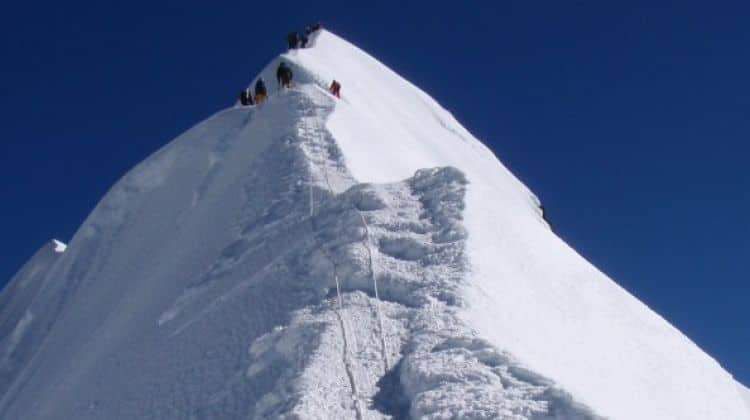
        Island Peak or Mera Peakย may be overrun with climbers during the busiest time of year. During the winter, you encounter very less climbers. A true, unbroken link to the mountains is provided by the unparalleled solitude.

        3. This is What Your Body Is Made For

        The way your body adjusts to harsh conditions is among the most intriguing features of mountaineering’s cold exposure. Brown fat enters the picture here. Brown fat produces heat instead of storing energy like regular fat does. It helps you keep your body temperature stable without experiencing excessive shivering since it is concentrated around your spine and collarbones and activates when exposed to cold.

          Spending more time in colder climates teaches your body to cope with stress, burn more calories, and keep warm on its own. In extremely low temperatures, seasoned winter mountaineers frequently feel more at ease due to their brown fat being completely active.

          The Best Way to Get Your Body Ready for Winter Mountaineering

          Adaptation to the cold takes time. Before embarking on a difficult winter ascent, you need to prepare your body to withstand harsh circumstances.

          Use Cold Exposure Training Before Climbing

          • For training treks, forego the extra layers to increase tolerance.
          • Brown fat can be activated by cold showers or ice baths.
          • To assist in training your body’s natural heat regulation, sleep in a more comfortable, cooler area that is about 65ยฐF.
          • Test your layering method by working out outside while wearing cold clothing.

          Master Your Layering Skills for Winter Travel

          • It’s a science to dress for winter treks at high elevations. In severe weather, wearing inappropriate clothes can result in freezing or overheating, both of which are hazardous. Base Layer: Synthetic or moisture-wicking merino wool
          • Mid Layer: For warmth, use synthetic or down insulation.
          • External Layer: Windproof and waterproof shell
          • Extremities: Double-layered socks, balaclavas, and insulated gloves

          Feed Your Body with Cold-Resistant, High-Calorie Foods

          Your calorie requirements rise dramatically during winter climbing due to the cold and greater exercise. Maintaining body temperature and energy levels requires regular eating.

          Get Ready for Snow and Ice Navigation

          Climbing in the winter requires navigating avalanche-prone slopes, icefalls, and glaciers. Before leaving, polish your technical abilities: Ice climbing: Learn how to use crampons and an ice axe on difficult terrain.
          Crevasse rescue instruction: Rope methods have the potential to save lives.
          Avalanche safety: Understand how to use a beacon and read the snow conditions.

            Reasons to at least try a Winter Ascent Once

            Winter mountaineering is about pushing oneself above your comfort zone and achieving new heights. Every obstacle, from extreme cold to complex ice climbing, pushes you to grow as a person, a climber, and your awareness of the natural world.

            Contact us for more details:

            30 Days of Visa-Free Travel to China

            30 Days of Visa-Free Travel to China. Normal passport holders from 38 nations are permitted entry and remain in China for up to 30 days for transit, business, tourism, family visits, and exchange visits under China’s unilateral visa-free policy. For up to 30 days, citizens of certain countries can now enter China without a visa. This simplified procedure makes it possible to get permits and visas quickly and easily. If you’re from one of these qualifying nations, you can go to Kathmandu and get set for your Kailash trip without having to wait around for a long time.

            This visa-free program runs from November 30, 2024, through December 25, 2025. After landing in Kathmandu, citizens of non-listed countries ought to schedule 4โ€“5 days for the processing of their visas and permits.

            The following is a list of countries that are eligible for the China visa-free pass:

            • Andorra
            • Australia
            • Austria
            • Belgium
            • Brunei
            • Bulgaria
            • Croatia
            • Cyprus
            • Denmark
            • Estonia
            • Finland
            • France
            • Germany
            • Greece
            • Hungary
            • Iceland
            • Ireland
            • Italy
            • Japan
            • Latvia
            • Liechtenstein
            • Luxembourg
            • Malaysia
            • Malta
            • Monaco
            • Montenegro
            • Netherlands
            • New Zealand
            • North Macedonia
            • Norway
            • Poland
            • Portugal
            • Romania
            • Slovakia
            • Slovenia
            • South Korea
            • Spain
            • Switzerland

            You can avoid waiting for a visa in Kathmandu if your country is on the list. China is accessible without delays at any moment.

            Mount Kailash and the Saga Dawa Festival: A Spiritual Journey

            Mount Kailash

            Mount Kailash and the Saga Dawa Festival: A Spiritual Journey. A sacred mountain in the isolated area of western Tibet, Mount Kailash is very important to Buddhists, Bon practitioners, Jains, and Hindus. The Saga Dawa Festival is a spiritual festival that features various rituals that take place beneath the shadow of this revered mountain. Thousands of pilgrims from all over the world come here every year to celebrate the teachings of Lord Buddha and take part in devotional activities that are extremely significant both religiously and culturally.

            About Saga Dawa Festival:

            Tibetan Buddhists celebrate Saga Dawa, also called the “Month of Merits,” for a whole month. The name of the event comes from the Tibetan lunar calendar, where “Dawa” means month and “Saga” refers to a notable star that was visible during that time. The Tibetan calendar’s fourth month, which often falls between May and June, is when Saga Dawa is celebrated. The event reaches its peak on Saga Dawa Duchen, the fifteenth day of this month. The three most important occasions in Lord Buddha’s lifeโ€”his birth, enlightenment, and parinirvana (death)โ€”are remembered on this day.

            Saga Dawa offers followers a chance to partake in spiritual activities, accumulate merit, and consider the core ideas of Buddhism. Immersed in the mystical aura of this age-old festival, pilgrims go around Mount Kailash, burn butter lamps, and carry out charitable deeds.

            The Significance of Mount Kailash in Saga Dawa

            Mount Kailash is a spiritual center in addition to being a geographical wonder, rising 6,638 meters (21,778 feet) above sea level. This pyramid-shaped summit is revered by Bon practitioners as a sacred mountain, by Buddhists as the axis mundi (center of the world), by Jains as the place of liberation, and by Hindus as the home of Lord Shiva. The mountain’s mystical aura gets stronger during Saga Dawa, attracting pilgrims to its base from all over the world.

            The celebration revolves around the “Kora,” or the rite of circumambulating Mount Kailash. It is said that walking the 52-kilometer (32-mile) circle will atone for sins, promote spiritual development, and bestow rewards for subsequent lifetimes. Since Saga Dawa is seen as an opportune period to increase one’s positive karma, many people find that the Kora has additional meaning during this month.

            Saga Dawa’s Religious Significance

            The deep religious significance of Saga Dawa stems from its association with the life of Lord Buddha. Birth, enlightenment, and parinirvana are the three occasions celebrated throughout the festival, and each represents a fundamental principle of Buddhism:

            Buddha’s Birth:

            Siddhartha Gautama’s birth in Lumbini represents the enlightened potential inherent in all living things. In observance of this day, pilgrims participate in ceremonies that respect the potential and purity of human life.

            Enlightenment:

            Buddha’s achievement of enlightenment beneath the Bodhi tree at Bodh Gaya serves as a reminder of the value of mindfulness, meditation, and the quest for knowledge. In addition to deepening their meditation techniques, practitioners frequently dedicate merit to all sentient beings on Saga Dawa.

            Parinirvana:

            The ultimate release from the cycle of birth and reincarnation is symbolized by the Buddha’s entry into Nirvana. Pilgrims consider the transience of life and the value of kindness, charity, and moral behavior.

            The Celebration of the Saga Dawa Festival

            A variety of spiritual and cultural events are held during the Saga Dawa Festival to promote devotion, spiritual enlightenment, and a sense of community:

            Raising the flagpole of Tarboche

            Near Darchen, a little community at the foot of Mount Kailash, the Tarboche flagpole is ceremoniously raised as one of the most recognizable events of Saga Dawa. The link between heaven and earth is symbolized by the flagpole, which is decked up with vibrant prayer flags. To make sure the pole is aligned correctly, monks and pilgrims congregate to recite prayers and carry out ceremonies. When a flagpole is raised correctly, it is said to bless the area and its people.

            Kora (circumambulation).

            During Saga Dawa, thousands of pilgrims travel the challenging Kora around Mount Kailash. While some Jains and Bon practitioners walk counterclockwise, Buddhists and Hindus often complete the round in a clockwise way. The strenuous trek, which often takes two or three days, goes past revered locations like the 5,636-meter (18,500-foot) Dolma La Pass.

            Lighting the butter lamps

            During Saga Dawa, lighting butter lamps is a significant tradition. These lights, which represent the illuminating of wisdom and the banishing of ignorance, are offered by pilgrims to monasteries and shrines. Devotees are encouraged to consider their spiritual journey by the calm and reflective ambiance created by the flashing lights.

            Generous Acts

            Giving is a key Buddhist virtue, and Saga Dawa is a time to practice it. Pilgrims give charity to beggars, feed animals, and donate to monasteries. These deeds of kindness not only accumulate merit but also make everyone involved happier and more compassionate.

            Meditation and Chanting

            The rhythm of meditation exercises and the sound of chanting fill Tibetan monasteries throughout the month. Monks create a spiritually charged environment by leading pilgrims in prayers, reciting texts, and performing rituals.

            Saga Dawa’s Cultural Significance

            Beyond its religious significance, the Saga Dawa Festival is a thriving cultural occasion that highlights Tibetan society’s varied customs. By uniting disparate groups, the event promotes a feeling of solidarity and one purpose. An important part is played by traditional dance, music, and art, which give the festivities color and energy.

            Saga Dawa provides a rare chance for foreign tourists to have a firsthand look at Tibetan culture. Visitors may take part in ceremonies, observe pilgrims’ dedication, and take in the stunning scenery of the Mount Kailash area. Visitors must, however, approach the celebration sensitively and with respect, acknowledging its spiritual character.

            Best Practices for Saga Dawa Festival Participants

            Here are a few suggestions for ensuring a fulfilling and joyful experience if you intend to visit the Saga Dawa Festival in Mount Kailash:

            Plan Ahead:

            Since a lot of pilgrims attend the event, it is crucial to reserve your lodging and transportation well in advance.

            Be Ready for High Altitude:

            The Kora requires a lot of physical effort, and Mount Kailash is situated at a high elevation. Before starting the trip, make sure you are adequately acclimated and speak with your doctor.

            Dress Modestly:

            Be Sure to dress modestly by covering your knees and shoulders. The Kora must wear strong, comfortable shoes.

            Respect Local traditions:

            When visiting monasteries and other places of worship, pay special attention to local traditions and regulations. Don’t take pictures of individuals or ceremonies without their consent.

            Bring the following necessities:

            Make sure you have enough food and drink, warm clothes, and a high-quality sleeping bag. Additionally useful are portable oxygen canisters and trekking poles.

            Talk to Locals:

            Spend some time conversing with other pilgrims and learning from local guides. Their observations can help you better appreciate the significance of the celebration.

            A significant celebration of spirituality, devotion, and cultural legacy, the Saga Dawa Festival takes place in Mount Kailash. It allows pilgrims and tourists to consider Lord Buddha’s teachings, engage with Mount Kailash’s spiritual energy, and take part in rites that cut across religious lines. Attending Saga Dawa promises to be a life-changing event that will leave you with memories and insights that will last a lifetime, regardless of whether you are a devoted disciple or an inquisitive tourist.

            Saga Dawa Festival Itinerary 2025:

            June 08, 2025: Day 1: Travel from Kathmandu to Kerung, Tibet
            Journey through the stunning landscapes of Langtang National Park. Witness the natural beauty that bridges the lush greenery of Nepal with the stark, rugged vistas of Tibetan Plateau.

            ยท Elevation: 2,700 meters (8,858 feet)
            ยท Travel Time: 7-8 hours
            ยท Activities: Drive to Kerung Border, cross immigration, continue to Kerung Town.
            ยท Accommodation: Hotel
            ยท Meals: Breakfast/ Bed

            June 09, 2025Day 2: Acclimatization in Kerung
            Use this day to gently acclimate to the higher altitude. Explore the vibrant town of Kerung, where the pulse of Tibetan life can be felt through its bustling markets and friendly locals.

            ยท Elevation: 2,700 meters (8,858 feet)
            ยท Activities: Light walks and cultural exploration.
            ยท Accommodation: Hotel
            ยท Meals: Breakfast/Bed

            June 10 ,2025 Day 3: Drive to Saga
            Cross vast and mesmerizing landscapes that define the Tibetan plateau. The journey through Thong La and La Lung passes provides breathtaking views of the surrounding peaks and valleys.

            ยท Elevation: 4,640 meters (15,223 feet)
            ยท Travel Time: 5-6 hours
            ยท Accommodation: Hotel
            ยท Meals: Breakfast/ Bed

            June 11, 2025: Day 4: Drive to Lake Mansarovar ( full Moon night )
            Arrive at the sacred Lake Mansarovar, a place of pilgrimage attracting thousands of devotees annually. Its crystal-clear waters reflecting the Himalayas create a perfect setting for spiritual reflection and meditation.

            ยท Elevation: 4,590 meters (15,059 feet)
            ยท Travel Time: 6-7 hours
            ยท Accommodation: Guest House
            ยท Meals: Breakfast/ Bed

            June 12, 2025 :Day 5: Drive to Darchen, Prepare for Kora
            Darchen serves as a gateway to the spiritual path of Mount Kailash. Spend the evening preparing for the Kora, surrounded by some of the most spectacular views of sacred mountains.

            ยท Full moon puja and drive to Darchen from Manasrover
            ยท Elevation: 4,670 meters (15,321 feet)
            ยท Travel Time: 2 hours
            ยท Accommodation: Hotel
            ยท Meals: Breakfast/ Bed

            June 13,2025: Day 6: First Day of Kailash Kora - Reach Dirapuk and Kailash Charan Sparsh
            Darchen to yamdar ( Tarboche) and is also known as the valley of Gods,Yamadwar ,the entrance (Gateway) of the God of Death. by drive 30 minutes after start the Kailash Kora, a journey through dramatic landscapes with a profound spiritual essence. Reach Dirapuk and engage in the sacred act of touching Kailash Charan Sparsh, believed to cleanse the soul and bring blessings.

            ยท Elevation: 5,210 meters (17,093 feet)
            ยท Travel Time: 4-5 hours trekking with Charan sparsh 7-8hours
            ยท Accommodation: Guest House
            ยท Meals: Breakfast/ Bed

            June 14, 2025: Day 7: Second Day of Kora - Zuthulpuk via Drolma La Pass
            Challenge yourself on the trek to Drolma La Pass, the highest and most sacred point of the journey. Experience a sense of accomplishment and spiritual renewal as you descend towards Zuthulpuk, surrounded by the serene beauty of the Himalayas.

            ยท Elevation: 5,634 meters (18,484 feet) at Drolma La Pass
            ยท Travel Time: 8-9 hours trekking
            ยท Accommodation: Guest House
            ยท Meals: Breakfast/ Bed

            June 15, 2025 : Day 8: Complete Kora and Return to Saga
            Conclude your Kora with a profound sense of achievement and enlightenment. The return journey offers time for reflection on the spiritual insights and personal transformations gained.

            ยท Elevation: Return to 4,640 meters (15,223 feet)
            ยท Activities: Finish Kora, drive back to Saga.
            ยท Accommodation: Hotel
            ยท Meals: Breakfast/ Bed

            June 16,2025 Day 9: Return Drive to Kerung
            As you retrace your route back to Kerung, take in the tranquil landscapes one last time, carrying with your memories of a journey that transcends mere travel.

            ยท Elevation: 2,700 meters (8,858 feet)
            ยท Activities: Drive back to Kerung, rest and explore.
            ยท Accommodation: Guest House
            ยท Meals: Breakfast/ Bed

            June 17, Day 10: Return to Kathmandu via Syabrubensi
            Descend through the lush landscapes of Nepal, reflecting on the transformative experiences of your trek. The journey through the valleys offers a peaceful transition as you prepare to re-enter the bustling city life of Kathmandu.

            ยท Elevation: 1,310 meters (4,297 feet)
            ยท Travel Time: 7-8 hours
            ยท Accommodation: Hotel
            ยท Meals: Breakfast/ Bed

            SOUND HEALING THERAPY IN NEPAL

            Sound Healing Therapy in Nepal

            Sound healing therapy in Nepal. For centuries, peopleย have used sound therapy or healing. Gongs and singing bowls are among the unique instruments used for wellbeing. These devices provide energy therapy that is said to repair the body, mind, and soul’s damaged frequencies. The left and right sides of the human brain thus synchronize when these bowls are played because of the centering effect they provide. Because singing bowls have the therapeutic potential to lead listeners to calm and harmony, they are used in numerous activities including yoga and other types of meditation.

            The relaxation therapy of singing bowls reduces tension and restores balance to your body and mind. Many of us associate relaxing with dozing off in front of the television after an exhausting working day. However, this doesn’t lessen the adverse effects of stress. The body’s natural relaxation reaction must be triggered to properly battle stress. Restoring equilibrium to your neurological system Stress causes your nervous system to overproduce hormones that prepare your body for “fight or flight.” The stress response wears out your body when it is continuously triggered by the pressures of daily life, yet it may save your life in emergencies where you need to act swiftly.

            Ancient healing methods are quite popular in Nepal, a country known for its spiritual depth and stunning scenery. Singing bowl therapy is one of these traditions that is particularly distinctive and transforming. You may immerse yourself in this profound practice, where you can hear the melodic vibrations of singing bowls in their natural environment. Our courses are designed to accommodate all levels of interest and commitment, whether you’re looking for a day of rest or an immersed multi-day retreat.

            Singing Bowl Therapy: Its Fundamentals

            Using the resonating sounds and vibrations of metal bowls, singing bowl treatment is an age-old Tibetan therapeutic technique that enhances mental, emotional, and spiritual health. Each bowl, which is traditionally made from a combination of seven metals, is different and vibrates and makes a different sound. These bowls encourage the release of tension and stress by producing calming tones that can induce profound levels of relaxation and meditation when played.

            The Advantages of Singing Bowl Therapy

            Singing bowl treatment has advantages for several facets of wellbeing:

            • Stress Reduction: The soothing vibrations promote deep relaxation and calmness by reducing mental chatter and letting go of pent-up stress.
            • Emotional Balance: By facilitating the removal of emotional blocks, the treatment fosters internal harmony and balance.
            • Increased Focus and Clarity: The therapy’s induction of a meditative state might enhance mental clarity and focus.
            • Better Sleep: Following sessions, many participants report deeper, more restful sleep as well as better sleep habits.
            • Physical Healing: By regulating and harmonizing the body’s energy centers, or chakras, some people think that the vibrations can help with physical healing.

            To accommodate your requirements and schedule, different singing bowl therapies are available.

            One-Day Experience

            For people looking for a quick yet powerful introduction to singing bowl therapy, our one-day program is perfect. A customized session is part of the day to expose you to the therapeutic benefits of vibration and sound.

            Multi-Day Experience

            Our multi-day retreats offer a deeper dive into singing bowl treatment for a more thorough experience. These retreats provide you enough time to immerse yourself in the practice, strengthening your comprehension and bond with this age-old art. There are meditation classes, therapy sessions, and chances to experience Nepal’s diverse culture every day.

            Embark on a journey of healing and discovery with singing bowl therapy in Nepal. Treks Planner Nepal provides a unique opportunity to discover the significant advantages of this age-old practice, whether you opt for a single day of relaxation or an extensive retreat. Let the calming sounds of the singing bowls lead you to a state of inner peace and well-being. Make an appointment with us right now to start your life-changing journey.

            Contact us for more details:

            A Complete Guide to the Kailash Mansarovar Yatra for Indian Citizens in 2025

            Mount Kailash Mansarovar Yatra

            A Complete Guide to the Kailash Mansarovar Yatra for Indian Citizens in 2025. Over the years, Indians have contributed to making the Kailash Mansarovar Yatra a famous pilgrimage. Since Mount Kailash is believed to be the home of Lord Shiva and Goddess Parvati, the Kailash pilgrimage is a means for people to connect with Lord Shiva.

            The pursuit of Moksha, or liberation, is another important factor. Completing the Kailash Kora, or circumambulation of Mount Kailash, is thought to provide Moksha and break the cycle of birth and death. Similarly, taking a dip at Lake Mansarovar is believed to cleanse the soul.

            This Kailash Mansarovar yatra has played a significant role in Indian cultural and spiritual traditions for ages. However, reopening for Indian people and periods of pause have made the process difficult.

            Unfortunately, the COVID-19 pandemic caused the yatra to be stopped from 2020 to 2023. Due to many factors, the Yatra has now been made available to people other than Indians.

            By 2025, things are going to alter. In the summer of 2025, the Kailash Mansarovar Yatra will formally restart after discussions between China and India earlier this month.

            In 2025, would Indians be able to visit Kailash Mansarovar?

            Many people want to know if the Kailash Mansarovar Yatra is still available to Indian nationals in 2025. Yes, indeed! In 2025, the Kailash Mansarovar Yatra will be accessible to Indians. The yatra is expected to formally resume in the summer.

            Indian passport holders’ eligibility and permits for the Kailash Mansarovar Yatra

            Indian passport holders must fulfill specific conditions and secure the necessary licenses in order to participate in the Kailash Mansarovar trip in 2025.

            Requirements for the Kailash Mansarovar Yatra:

            Age restriction:

            Visitors to Kailash Mansarovar must be between the ages of 12 and 80.

            Health Conditions:

            Due to the great altitude of the area, visiting Kailash Mansarovar requires physical fitness. Therefore, you need a certificate of medical fitness.

            Required Paperwork for the Yatra of Kailash Mansarovar:

            • Travelers must have current passport-size pictures and a valid passport.
            • A Chinese visa and a Tibetan Autonomous Region (TAR) travel permit are required for visitors. According to the Indian Embassy in Kathmandu, the Chinese visa must be sought via the Chinese Embassy in New Delhi rather than the Chinese Embassy in Kathmandu.
            • A licensed tour operator is the only source of the military permit and the alien’s travel permit, which travelers need to get.

            The Kailash Mansarovar Yatra registration procedure:

            • Travelers must make their travel arrangements through a certified travel agency or tour operator because individual applications are not accepted.
            • Travelers should provide the required paperwork, including copies of their passports and photos when reserving the Kailash Mansarovar tour package.
            • On behalf of the tourists, the tour operator then applies for a Tibet travel permit.
            • The agency will apply for a Group Tourist Visa from the Chinese Embassy upon approval of the permission. Since it is forbidden to visit Kailash Mansarovar alone, visitors must go in groups that are planned by tour companies.

            Which is the best route for the Kailash Mansarovar Yatra from India?

            The Ministry of External Affairs, Government of India, organized two main routes for Indian tourists to travel to Kailash Mansarovar over the years: the Lipu Lekh Pass in Uttarakhand and the Nathu La Pass in Sikkim. In addition, it took between 21 to 23 days to do the Mount Kailash Pilgrimage using these routes, which made it a difficult trek for pilgrims and tourists.

            Thanks to the fast and easy routes from Nepal, Indian travelers no longer have to worry about the lengthy journey. There are several ways to get from Nepal to Kailash Mansarovar.

            Route between Simikot and Hilsa

            Only a small plane can fly from Nepalgunj to Simikot, a distant town in the Humla region of northwest Nepal. Similarly, visitors may take a helicopter to Hilsa, a border settlement in Humla that is located directly on the Nepal-Tibet border. It takes 16 to 20 days to do the Kailash trip on this route. It consists of a flight from Kathmandu to Nepalgunj to Simikot, followed by a drive to Kailash Mansarovar, where the Parikrama is completed, and a return trip. The trip gets stressful because it involves several transfers. Additionally, flights to Simikot and Hilsa are expected to be delayed due to weather conditions.

            Rasuwagadhi-Kerung Route

            About 125 kilometers north of Kathmandu, in the Rasuwa district, lies Rasuwagadhi, a border post that can be reached by car in 6โ€“7 hours. Similar to Rasuwagadhi, Kerung is a border town in Tibet, located close to the Nepal-Tibet border. Due to straight overland travel, this route is far smoother and quicker, requiring just 10 to 15 days to complete the journey.

            Helicopter route to Kailash Mansarovar

            Furthermore, a helicopter route to Kailash Mansarovar is available. This does not imply that you can fly over Mount Kailash directly. Why not, if you’re wondering? The Chinese authorities in charge of the area forbid helicopters from flying above the holy mountain. Taking a helicopter from Kathmandu to Timure, a tiny Nepalese town close to the Tibet border, is part of the helicopter route to Kailash Mansarovar. It’s an overland trip from there. For people who are time-constrained and dislike lengthy car trips, this helicopter option is ideal.

            Lucknow and Nepalgunj routes

            Travelers can also use the Lucknow and Nepalgunj routes to complete the Kailash Mansarovar Yatra. Travelers and pilgrims take this road, which takes four to five hours to drive from Lucknow, India to Nepalgunj, Nepal. From Nepalgunj, passengers fly to Simikot, then fly to Hilsa by helicopter, and then drive to Lake Mansarovar from Hilsa. This trip might be quicker, but it involves a lot of transfers, which can be very taxing.

            The cost of the Kailash Mansarovar Yatra for Indians in 2025

            The price of the Kailash Mansarovar Yatra for Indians varies according to the routes, means of transportation, and package that is chosen.

            For Indians, an overland tour from Kathmandu is expected to cost between INR 2 lakhs and 2.5 lakhs per person. It involves going via Kyirong on the way from Kathmandu. In the same way, a helicopter tour of Kailash Mansarovar from Kathmandu costs about INR 3 lakhs.

            It costs about INR 3.2 lakhs to travel via Nepalgunj and Simikot. The least expensive alternative is to use the Indian government-organized Lipulekh Pass route across Uttarakhand. This is expected to cost between INR 1.8 lakhs and 2 lakhs per individual. The cost of the Nathu La Pass route via Sikkim is little more than that of the Lipulekh Pass route. The price range is between INR 2.2 and 2.4 lakhs.

            The Ideal Time to Travel from India to Kailash Mansarovar

            Only seven months of the year, from April to mid-October, is Kailash Mansarovar open. Due to weather and climatic circumstances, travel is banned during other months. May through June or September through October are the ideal months to go from India to Kailash Mansarovar. The climate is pleasant and controllable throughout these months.

            Advice for Indian tourists visiting Kailash Mansarovar Yatra

            The following crucial advice can help Indian tourists have a smooth trip to Kailash:

            • To minimize crowds and overbooked facilities, schedule the Kailash Mansarovar Yatra between May and September, avoiding full moon days. However, be sure to make reservations in advance if you intend to visit during the full moon days.
            • Engage in activities like hiking, yoga, walking, running, and more three months before the trip.
            • Before beginning the Yatra, have a complete physical examination.
            • If you’re sick, don’t force yourself togo ahead Kailash Parikrama. For your own and your travel group’s safety, you can always skip the parikrama.
            • Develop the practice of researching the weather before you go. Avoid traveling while it’s raining a lot or when the weather is awful.
            • Make sure you get the Tibetan Autonomous Region (TAR) travel permit and Chinese visa from the travel agency or tour organizer.
            • For your protection, choose travel insurance that includes evacuation, emergency medical assistance, and high altitude illness coverage.
            • Remember to include any prescription drugs you may need, such as Diamox for severe altitude sickness.
            • To prevent altitude sickness, make sure you stay hydrated throughout the journey.
            • Bring enough cash because there won’t be any ATMs available while traveling. (The Chinese Yuan is required.)
            • Due to Tibet’s restriction on other applications, use a SIM card with international roaming and install WeChat.
            • Warm layers, windproof jackets, thermal clothing, gloves, wool socks, hiking shoes, trekking poles, sunscreen, toiletries, dried fruits, and energy bars are essentials to bring.
            • It is forbidden to dip directly into Lake Mansarovar. However, you are permitted to bathe with holy water that you have collected in a bucket from the lake.

            Contact us for more details:

            A Motorcycleย Road Trip to Upper Mustang

            Upper Mustang Motorbike Tour

            A motorbike Road Trip to Upper Mustang is a unique way to explore the region. With its breathtaking landscape and rich cultural legacy, the Upper Mustang region in Nepal, sheltered by the Dhaulagiri and Nilgiri mountains, enthralls tourists. The Kali Gandaki River, which shapes the Mustang Valley and leaves a trail full of hidden gems just waiting to be found, is one of the area’s most alluring attractions.

            This remote area of the trans-Himalayan mountains, which borders Tibet, has a Tibetan feel to its people and culture. As the arid landscape with high cliffs and rocks with odd shapes and colors. Kagbeni, the entrance to Upper Mustang, is where the trip begins. It then passes through a barren region in the shadow of the Dhaulagiri mountain range, reaching the Kingdom of Lo Manthang. Explore the gompa, monasteries, tunnels, and rock art to learn about the local way of life.

            The region was able to develop its own unique culture and rich traditions that are strongly linked to Tibet after being prohibited and isolated from the outside world for many years. In the Rain Shadow region of Nepal, this lesser-known destination offers breathtaking mountain beauty while traversing one of the driest parts of the country. Its distinct Tibetan Buddhist culture and unspoiled scenery have been preserved thanks to its closure to foreign tourists until 1992. Lo Manthang, the capital of the area, feels like a throwback to the past with its royal palace and monasteries that date back hundreds of years.

            Road Conditions and Terrain: A Rider’s Challenge

            Roads ranging from well-paved to rugged and unpaved will offer an exciting ride. You will travel:

            • Winding roads with hairpin twists in the mountains.
            • Rocky paths along the sides of cliffs.
            • Dry riverbeds and river crossings.
            • High mountain passes with breathtaking vistas and thin air.
            • Although this varied terrain requires skill and prudence, riders are rewarded with unmatched sights and a genuine feeling of adventure.

            Upper Mustang Attraction:

            Muktinath Temple
            A Motorcycleย Road Trip to Upper Mustang 14

            Muktinath Temple:

            Both Buddhists and Hindus consider the Muktinath Temple to be a holy place.

            Kagbeni:

            A quaint hamlet with winding lanes from the Middle Ages. Kagbeni’s Kag Chode Monastery.

            Jomsom:

            Aย is the charming village of Marpha, Dhumba Lake, and a tiny town on the Kaligandaki River.

            Lubra:

            An 800-year-old community in the lower Mustang, Lubra Village is a neighborhood close to Jomsom. There are several old caves and cliff houses scattered over the terrain.

            Chungsi Cave:

            For Buddhists in the region and throughout the world, Chungsi Cave is an extremely significant cave residence.

            Ghami:

            This historic community is renowned for its unique environment, architecture, and culture. At 3,510 meters above sea level, Ghami is situated in upper Mustang.

            Charang:

            The second-largest hamlet in the Mustang area is Charang, which is home to the Kings Palace of Charang monastery.

            Ghar Gompa:

            Ghar Gompa (Lo Ghekar Monastery), has a rich history that dates back to the ninth century.

            Lo Manthang:

            Lo Manthang is Upper Mustang’s walled city and cultural center.

            The Ideal Time to Go on a Motorcycle Adventure

            This journey is best taken between March and November, with May through August offering the finest weather. Although the area may get quite chilly during the winter months of December through February, tours can still be conducted with caution.

            Regulations and Permits:

            Special permission is needed to enter the Upper Mustang.

            The cost of the Annapurna Conservation Area Permit (ACAP), and Restricted  Area Permit (RAP), is about USD 500 for 10 days.

            Requirement for organized tours:

            You must make your reservation through a Nepal-based, authorized trekking organization.

            Group size: A restricted area permit requires a minimum of two individuals.

            Choosing Your Ride

            Consider the following for this difficult terrain:

            • For such trips, the Royal Enfield Himalayan was designed specifically.
            • KTM Duke 390: Lightweight and swift
            • Rent from reputable organizations in Pokhara or Kathmandu that offer well-kept motorcycles and the required replacement components.

            Getting Ready for the Trip

            Physical fitness:

            Increase your endurance for extended rides at high elevations.

            Altitude acclimation:

            To prevent altitude sickness, go slowly and drink plenty of water. Essentials to pack include a first aid kit, rain gear, warm layers, and basic tools.

            Seizing the Moment: Photography opportunities.

            • Every corner presents an entirely new view:
            • The Himalayan peaks are covered in snow.
            • Large, vibrant canyons.
            • Medieval towns preserved in time.
            • Prayer flags fluttering against the sky.
            • Don’t forget to get permission before taking pictures of residents or inside places of worship.

            Basic to decent accommodations are available:

            • Simple, tidy rooms are provided by teahouses in little communities.
            • More cozy guesthouses with modern amenities can be found in Lo Manthang.
            • For those looking for a rougher experience, camping is alsoย an option.

            Responsible Travel: Things to Remember while enjoyingย the beautiful region :

            • Be mindful of regional traditions and wear modest clothing.
            • Reduce waste and carry out what you carry in.
            • Purchase locally produced goods to help out your community’s businesses.
            • Water is a valuable resource in this arid area, so use it wisely.

            In conclusion

            More than just a ride, a motorbike tour to Upper Mustang is an adventure through culture, history, and some of the world’s most breathtaking scenery. You will make lifelong memories as you make your journey across the roof of the globe, past historic communities, and across high passes. So start your engine and prepare for an unforgettable journey in Nepal’s Upper Mustang.

            Dental Work in Nepal for International Travelers: A Comprehensive Guide

            Dental Work in Nepal

            Introduction

            Nepal is rapidly emerging as a premier destination for dental tourism, attracting international travelers seeking affordable, high-quality dental care. With state-of-the-art clinics, internationally trained dentists, and treatment costs significantly lower than those in Western countries, dental work in Nepal for foreigners offers an excellent combination of professional care and travel experiences in the Himalayas.

            Why Choose Nepal for Dental Treatment?

            1. Affordable Dental Care

            The cost of dental treatment in Nepal for international patients is a fraction of what it would be in countries like the USA, UK, and Australia.

            Comparative Cost of Dental Procedures

            ProcedureUSA ($)UK (ยฃ)Australia (AUD)Nepal (USD)
            Dental Implants3,000-5,0002,000-3,5004,000-6,000500-1,200
            Root Canal700-1,500400-900900-2,500100-300
            Teeth Whitening500-1,000300-700600-1,20050-200
            Veneers (Per Tooth)900-2,500500-1,5001,000-3,000150-400
            Dental Crowns800-1,500600-1,200900-2,500150-300

            2. High-Quality Dental Services

            Nepalโ€™s top dental clinics offer world-class services, maintaining strict hygiene and using cutting-edge technology to ensure the best patient care.

            3. No Long Waiting Periods

            Unlike in Western countries, where patients often face long wait times, Nepalese dental clinics provide quick and hassle-free appointments.

            4. English-Speaking Dentists

            Many top dentists in Nepal for foreigners are internationally trained and fluent in English, ensuring smooth communication with patients.

            5. Tourism & Recovery

            Nepal offers a unique opportunity to combine dental care with tourism, allowing patients to explore cultural heritage sites, natural landscapes, and adventure activities during their visit.

            Why International Patients Should Consider Dental Work in Nepal

            1. Significant Cost Savings

            Even with travel expenses, patients can still save up to 80% on dental treatments compared to prices in the USA, UK, and Australia.

            2. Advanced Facilities

            Many best dental clinics in Nepal use modern equipment, international sterilization standards, and innovative treatment techniques.

            3. Personalized & Holistic Care

            Nepalese clinics are known for their hospitality, patient-centric approach, and customized treatment plans.

            4. Stress-Free Recovery Environment

            Nepalโ€™s serene environment allows for a relaxing dental vacation while ensuring a smooth recovery process.

            5. A Full Range of Dental Services

            From basic checkups to complex procedures like dental implants in Nepal, a wide range of services are available at competitive prices.

            Best Cities for Dental Work in Nepal

            1. Kathmandu

            Home to the best dental clinics in Nepal, Kathmandu offers modern facilities, internationally trained dentists, and top-tier services.

            2. Pokhara

            With breathtaking landscapes, Pokhara provides quality dental treatment in Nepal in a relaxing environment.

            3. Chitwan

            Known for its rich wildlife, Chitwan also boasts reliable dental care for expatriates and international visitors.

            Types of Dental Treatments Available in Nepal

            1. General Dentistry

            • Dental checkups
            • Fillings and restorations
            • Extractions

            2. Cosmetic Dentistry

            • Teeth whitening
            • Veneers and laminates
            • Smile makeovers

            3. Restorative Dentistry

            • Dental implants
            • Crowns and bridges
            • Dentures

            4. Orthodontics

            • Braces and Invisalign
            • Retainers

            5. Endodontic Treatment

            • Root canal therapy
            • Apicoectomy

            Frequently Asked Questions (FAQs)

            1. Is dental work in Nepal safe?

            Yes, Nepalese dental clinics for international patients follow global safety and hygiene protocols.

            2. How much can I save on dental treatments in Nepal?

            Savings range from 50-80% compared to Western countries, depending on the procedure.

            3. Do Nepalese clinics accept international dental insurance?

            Some dental clinics in Nepal for foreigners accept insurance; confirm with your provider in advance.

            4. How do I find a reliable dental clinic in Nepal?

            Research top dentists in Nepal with international accreditations, positive patient reviews, and modern facilities.

            5. Are Nepalese dentists well-trained?

            Yes, many have trained in international institutions and undergo regular professional development.

            6. Can I get dental implants in Nepal?

            Yes, affordable dental implants in Nepal are available at high-quality clinics.

            7. How long does treatment take?

            Most procedures can be completed in one visit, but implants and major surgeries may require multiple visits.

            8. Are Nepalese dental clinics equipped with modern technology?

            Yes, many clinics use state-of-the-art dental technology similar to Western standards.

            9. Will I face communication barriers?

            No, most dentists and staff in Nepalese dental clinics for tourists speak fluent English.

            10. Can I combine dental treatment with a vacation?

            Absolutely! Many clinics offer dental tourism in Nepal packages.

            11. Whatโ€™s the best time to visit Nepal for dental work?

            Spring (March-May) and autumn (September-November) are ideal seasons with pleasant weather.

            12. How can I book an appointment?

            Most dental clinics in Nepal offer online bookings via their websites or direct contact.

            13. Are emergency dental services available in Nepal?

            Yes, many clinics provide 24/7 emergency dental care for tourists.

            14. Do I need a visa for medical tourism in Nepal?

            Yes, but visas on arrival are available for most countries, making travel hassle-free.

            15. What payment methods are accepted?

            Most clinics accept cash, credit cards, and international bank transfers.

            Tips for Dental Tourists in Nepal

            1. Research thoroughly: Choose top-rated dental clinics in Nepal based on patient reviews and accreditations.
            2. Plan your stay wisely: Consider recovery time when scheduling your trip.
            3. Carry relevant medical records: Previous dental history and prescriptions can help dentists tailor treatments.
            4. Check travel insurance coverage: Some policies include dental treatment abroad.
            5. Explore Nepal: Take advantage of your trip to experience Nepalโ€™s cultural and natural beauty.

            Dental tourism in Nepal is an affordable and high-quality option for international travelers. With top dentists in Nepal for foreigners, modern facilities, and breathtaking travel opportunities, Nepal offers a unique experience that blends professional dental care with tourism. Whether you need a routine checkup or complex dental procedures like dental implants in Nepal, you can expect world-class services at a fraction of the cost compared to Western countries.

            Hair Transplant in Nepal for International Guests: Affordable, Safe, and Effective Solutions

            Hair transplant in Nepal

            f youโ€™re considering a hair transplant abroad, Nepal is quickly becoming one of the top destinations for international guests. Offering affordable pricing, experienced surgeons, and state-of-the-art facilities, Nepal provides a cost-effective solution for those seeking high-quality hair restoration without breaking the bank. Whether you’re considering FUE (Follicular Unit Extraction) or FUT (Follicular Unit Transplantation), this article will guide you through why Nepal is the ideal choice for your hair transplant journey.

            Why Choose Nepal for a Hair Transplant?

            Nepal has earned a solid reputation as a premier destination for medical tourism, particularly for hair transplant procedures. Here are the top reasons why international patients flock to Nepal for their hair restoration needs:

            1. Affordable Hair Transplants

            The most significant advantage of choosing Nepal for your hair transplant is the affordable pricing. Compared to countries like the USA, UK, and Australia, the cost of hair transplants in Nepal can be up to 70-80% cheaper. On average, a hair transplant in Nepal ranges from $1,500 to $3,500, while similar procedures in Western countries can cost anywhere from $10,000 to $15,000 or more.

            2. Skilled Surgeons and High-Quality Care

            Despite the lower prices, the quality of care in Nepal is on par with the best clinics globally. Nepalโ€™s hair transplant surgeons are highly skilled and internationally trained. Many are members of the International Society of Hair Restoration Surgery (ISHRS), ensuring they follow global standards in hair restoration. With extensive experience, these surgeons can deliver natural-looking results that will restore your confidence.

            3. State-of-the-Art Facilities

            Top hair transplant clinics in Nepal are equipped with the latest technologies and adhere to international standards. Whether you opt for FUE or FUT, you can expect the procedure to be performed in modern, clean, and comfortable facilities. Many clinics offer advanced hair restoration techniques, ensuring high success rates and minimal scarring.

            4. Comprehensive Medical Tourism Packages

            For international guests, many clinics offer all-inclusive packages that include airport transfers, accommodation, and post-surgery care. These packages make it convenient for you to travel to Nepal, receive world-class treatment, and recover in a comfortable setting, all while enjoying the scenic beauty and culture of Nepal.


            Why Is Hair Transplant in Nepal Cheaper?

            Several factors contribute to the cost-effectiveness of hair transplants in Nepal compared to Western countries:

            1. Lower Labor Costs

            In Nepal, the cost of living is considerably lower than in countries like the USA or UK, resulting in significantly lower salaries for medical professionals and support staff. This directly impacts the cost of services, including hair transplants, which are more affordable for international patients.

            2. Lower Medical Supplies Costs

            The cost of medical supplies and equipment is also less expensive in Nepal. Despite using internationally approved equipment and maintaining high standards of hygiene and safety, the overall cost of materials remains more affordable, helping to reduce the final price for the patient.

            3. Favorable Exchange Rates

            The Nepali Rupee (NPR) has a favorable exchange rate compared to currencies like the US Dollar, British Pound, and Euro. This means that patients from Western countries benefit from exchange rate advantages, making the procedure even more affordable.

            4. Reduced Regulatory and Administrative Costs

            Unlike in many developed countries, Nepal has a relatively less bureaucratic healthcare system, which reduces the regulatory and administrative costs that can drive up the price of medical procedures elsewhere.


            Cost Comparison: Nepal vs. Other Countries

            For those comparing hair transplant costs across different countries, here’s a quick breakdown of the average costs:

            CountryCost per Graft (USD)Total Cost for 2,000 Grafts (USD)
            Nepal$1 to $2$1,500 to $3,500
            India$2 to $3$2,000 to $6,000
            Turkey$2 to $4$2,000 to $8,000
            United States$5 to $7$10,000 to $14,000
            United Kingdom$4 to $6$8,000 to $12,000
            Australia$5 to $8$10,000 to $16,000

            As you can see, Nepal provides the most affordable hair transplant services, often at a fraction of the cost compared to countries like the USA, UK, or Australia. Even when compared to India or Turkey, Nepal still offers excellent value for money, making it an attractive choice for international patients.


            What to Expect During Your Hair Transplant Journey in Nepal

            1. Initial Consultation

            Before traveling to Nepal, most clinics offer online consultations for international patients. During the consultation, the surgeon will assess your hair loss and recommend the best treatment plan. They will discuss your options, such as FUE or FUT, and provide an estimate of the number of grafts needed, along with the cost.

            2. Travel and Accommodation

            Once youโ€™ve decided on a clinic, many offer medical tourism packages that include airport pick-up, accommodation, and transport during your stay. This makes your journey hassle-free, allowing you to focus on the procedure and your recovery.

            3. The Procedure

            The procedure typically takes 4-8 hours, depending on the technique (FUE or FUT) and the number of grafts. Youโ€™ll be under local anesthesia during the procedure, ensuring minimal discomfort. The surgeon will carefully transplant hair follicles to areas of thinning or baldness.

            4. Post-Surgery Care

            After the procedure, youโ€™ll be provided with detailed instructions on how to care for your scalp. This includes guidelines on washing your hair, avoiding direct sunlight, and medications for healing. Follow-up consultations are often scheduled to ensure that the transplanted hair is growing correctly.


            Frequently Asked Questions (FAQs) About Hair Transplants in Nepal

            Q1: How long does it take to recover after a hair transplant in Nepal?
            Recovery time is typically 7 to 14 days, with most patients resuming normal activities within a week. However, you should avoid strenuous exercise for up to a month to ensure proper healing.

            Q2: Are there any hidden costs involved in a hair transplant in Nepal?
            Most clinics offer all-inclusive packages, which cover the procedure, accommodation, transportation, and aftercare. However, itโ€™s always good to ask for a detailed cost breakdown before booking to avoid unexpected charges.

            Q3: Can I get a hair transplant consultation online before traveling to Nepal?
            Yes, many clinics offer online consultations, allowing international patients to discuss their needs and receive a cost estimate before traveling.

            Q4: Is it safe to travel to Nepal for a hair transplant?
            Yes, it is safe, provided you choose a reputable clinic. Nepal’s medical tourism industry is growing, and many clinics cater specifically to international patients, offering services like airport transfers and accommodation to make your visit smooth and comfortable.

            Q5: How soon will I see results after my hair transplant?
            Initial hair growth typically starts to appear within 3 to 4 months, with full results visible after about 6 to 12 months. It takes time for the transplanted follicles to establish themselves and begin growing naturally.

            Q6: Will I need more than one hair transplant session?
            While most people achieve satisfactory results with one session, some individuals may opt for additional sessions depending on the extent of their hair loss and their desired level of density.

            Q7: How do I choose between FUE and FUT?
            The decision between FUE and FUT depends on your hair loss pattern and the amount of hair you need. FUE is ideal for those who prefer a minimally invasive procedure with no visible scars, while FUT is better for patients who need a larger number of grafts.


            Why Nepal is the Best Destination for Your Hair Transplant

            Nepal stands out as one of the most affordable and reliable destinations for hair transplant surgery. With experienced surgeons, modern facilities, and cost-effective pricing, Nepal offers international patients an excellent option for restoring their hair without the high costs associated with Western countries. Whether you choose FUE or FUT, Nepal’s top clinics provide a seamless experience with great results, making it the perfect choice for those seeking a high-quality hair restoration procedure abroad.