Annapurna Base Camp Trek: A Journey Through the Heart of the Himalayas

Annapurna Base Camp Trek in Nepal

Annapurna Base Camp Trek: A Journey Through the Heart of the Himalayas. If you’re dreaming of dramatic landscapes, cozy mountain lodges, and a trek that feels both accessible and awe-inspiring, let me introduce you to one of Nepalโ€™s greatest trekking gems: the Annapurna Base Camp (ABC) Trek.

Tucked into the heart of the Annapurna Sanctuary at 4,130 meters, this trek offers a perfect balance of natural beauty, cultural richness, and adventureโ€”without the extreme altitude of Everest. Whether you’re a first-time trekker or a seasoned hiker, the ABC trek promises an experience that lingers long after the trail ends.

WhatsApp Image 2025 03 10 at 15.35.15 f2e3be43
Annapurna Base Camp Trek: A Journey Through the Heart of the Himalayas 6

Overview

  • Location: Annapurna Region, Nepal
  • Altitude: Up to 4,130 meters (13,550 feet)
  • Duration: 7 to 12 days (depending on itinerary and pace)
  • Trek Difficulty: Moderate
  • Best Seasons: Spring (Marchโ€“May) and Autumn (Septemberโ€“November)

Where Is Annapurna Base Camp?

Located in North-Central Nepal, within the Annapurna Conservation Area, ABC lies directly below the majestic Annapurna I (8,091 m)โ€”the 10th highest mountain in the world. The trek typically begins from Pokhara, Nepalโ€™s beloved lakeside city, and winds through forests, rice terraces, and remote villages before reaching the glacier-ringed amphitheater known as the Annapurna Sanctuary.

The Route and Scenery of the Annapurna Base Camp Trek

IMG 630e07bca1b8eb7b38bed054abe99d43 V
Annapurna Base Camp Trek: A Journey Through the Heart of the Himalayas 7

The classic Annapurna Base Camp route typically begins from Nayapul or Jhinu Danda, winding through terraced fields, rhododendron forests, and quaint Gurung and Magar villages. As trekkers ascend, the landscapes transition from lush subtropical forests to alpine meadows and glacial moraines.

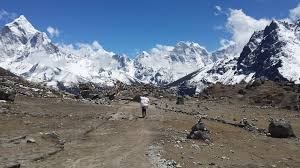
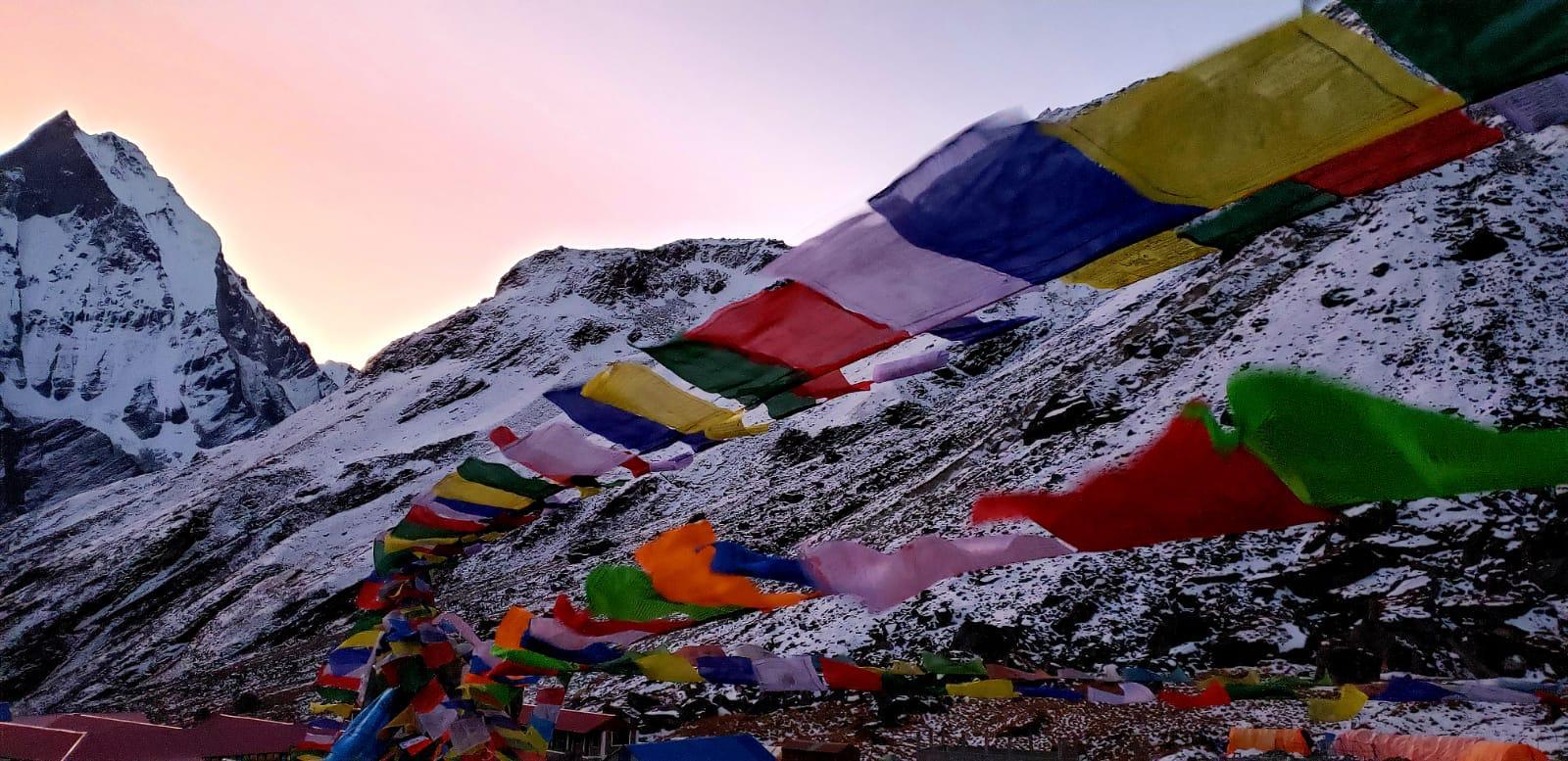
The highlight, of course, is reaching Annapurna Base Camp trek itselfโ€”a natural amphitheater surrounded by towering Himalayan giants like Annapurna I (8,091m), Machapuchare (6,993m), Hiunchuli (6,441m), and Annapurna South (7,219m). The 360-degree mountain panorama, particularly at sunrise, is both humbling and awe-inspiring.


Cultural Immersion

Beyond the natural beauty, the trek offers a chance to connect with Nepalโ€™s rich cultural fabric. Villages such as Chhomrong and Ghandruk are home to warm-hearted Gurung communities known for their hospitality and unique traditions. Teahouses along the trail offer simple yet cozy accommodations, often with delicious local food and an opportunity to engage with fellow trekkers from around the world.


Challenges and Preparation

While the ABC trek is considered moderate and does not require technical climbing skills, it does involve significant altitude gain and daily hikes of 5โ€“7 hours. Adequate physical preparation, proper gear, and a gradual ascent are essential to minimize the risk of altitude sickness. Hiring a local guide or porter can also enhance safety and provide deeper insights into the region.


Why Choose the Annapurna Base Camp Trek?

Moderate Difficulty, Maximum Reward

The ABC trek is moderately challenging, making it suitable for beginners with good fitness and equally rewarding for seasoned hikers. The altitude tops out at 4,130 mโ€”high enough for stunning mountain views, low enough to reduce altitude risk compared to Everest Base Camp.

Ever-Changing Landscapes

In a matter of days, youโ€™ll pass through:

  • Lush bamboo and rhododendron forests
  • Sparkling waterfalls and hot springs
  • Traditional Gurung and Magar villages
  • Snow-covered mountain valleys

Itโ€™s like walking through four seasons in one trek.

Rich Cultural Encounters

From sharing tea with local families to hearing Buddhist prayers whispered on the wind, the trek immerses you in Nepalโ€™s mountain culture, hospitality, and spirituality.

Annapurna Base Camp Trek Difficulty

Annapurna Base Camp trek is a moderate type of trek that is relatively easy even for unseasoned trekkers. It is an amazing walk through the diverse landscapes and unique culture, complete with rich mountain panorama, terrace fields, local Gurung villages, and a wide variety of flora and fauna. The trek takes you to the feet of the wonderful Annapurna Mountain. Annapurna Base Camp (4,310m) lies in the Annapurna Region in the northwestern part of Nepal.

Annapurna Base Camp Trek is one of the most popular trekking destinations in Nepal, where you can ensure a full adventure without technical ascent to the Himalayan region. Known for its diversified trekking trails consisting of both greens from the grassland and vegetation to whites from the Himalayan massifs, Annapurna is visited by hundreds of trekkers every year. Some cherish it for its diverse beauty, while some cherish it for the warm-hearted and welcoming locals.

The trek starts from Nayapul to Tikhedhunga in the hilly topography. You need to cross 3200 steps on the way to Ghorepani Poon Hill. These steps will test your ability on this trek. Next, you will cross several villages to reach a high elevation. The two-day trek at the high altitude will be a bit difficult for the trekker, but the majestic vista of this region will not even give you time to think about difficulties.

Considering the Annapurna Base Camp difficulty level, it is regarded as an easy trek.ย Since the Annapurna Base Camp Trek doesnโ€™t demand any advanced physical fitness level, a normal person with good health conditions can go for this trek. Trekkers still need to work on taking precautions, being aware of the current situation, and being prepared for the trek. In fact, this trek is not difficult.

It is accessible to all age groups, even for children and older people. Annapurna trekking is famous for a closer view of the high Himalayas above 7000meters. This trek is absolutely magnificent and quite easy in terms of the altitude, but the constant up and down in the Himalaya might be a challenge.

Annapurna Base Camp trek provides you with a 360-degree panorama of snowy mountains and Machhapuchhare (Fishtail) Base Camp, which is a bonus for this trek. This trek is one of the comfortable destinations for travelers. This moderate trek sometimes becomes strenuous for those who are not healthy and physically fit. An average amount of fitness and prior walking practice is needed to take full advantage of the trek. ย 

You can get local accommodations every few hours of hiking. Here, you can take a rest, and you can sleep if you are tired of walking. It takes about 5-6 hours of walking per day. However, the altitude climb is gradual, and the height of the base camp of Annapurna is only 4,130 meters, which allows a fairly easy acclimatization. The trek may be tiring, but itโ€™s a worthwhile experience. Just be slow and steady.

One must be aware of altitude sickness, which may occur at a certain altitude. Some people often experience headaches and nausea; the Sherpaโ€™s are available with you to help you out and guide you towards uphill over 3000 meters. Annapurna Base Camp trek is the perfect and amazing destination to experience a low-risk but life-changing adventure, full of unexplainable accomplishments.

Annapurna Base Camp Weather and Altitude Factor

Annapurna Base Camp is also quite a bit lower in elevation, 4,130m vs. 5,380 m or about 4000 feet difference, so if you anticipate problems with altitude, it might be the better trek. The Everest trek is also colder and drier because of the higher elevations. So, considering that the village of Nayapul, at the start of the Annapurna Sanctuary trek, is at 1060m and the highest point of the trek, Annapurna Base Camp, is at 4130m, you could expect an average temperature drop of around 19หšC or 10หšF. And that’s not accounting for more unpredictable weather at higher altitudes.

The altitude climb is gradual, and the height of the base camp of Annapurna is only 4,130 meters/13,549 feet, which allows a fairly easy acclimatization. A good Sherpa guide is far from essential for this trek. You will find a fantastic local Sherpa guide for this trek. You must also be aware of altitude sickness; it may occur at a certain altitude. Some people begin to experience headaches and nausea. If this happens, the Sherpa guide and staff will help you out until the symptoms subside.

It is important to follow the Sherpa guide’s advice & some steps uphill over 3,000 meters; the body often needs a little time to get used to it, and one should not ignore the symptoms of altitude sickness if they appear. To protect from high-altitude sickness, if tourists walk slowly and steadily with many breaks on the way to trek, they can acclimatize easily, and the trek will be easy.

The Annapurna region tends to get more snowfall, and because the trail to Annapurna Base Camp lies low in the canyon, it is susceptible to avalanches coming from the peaks above. Avalanches are not normally an issue, but itโ€™s certainly something one should be thinking of if youโ€™re visiting during a period of heavy snow. The weather in Annapurna Base Camp varies from one season to another.


During the spring (Mar-Apr), the day starts nice and clear but progressively gets windier and cloudier, which leads to frequent afternoon showers. The landscape seems to be newly designed and lush.

Monsoon seasons signal a grinding halt to the trekking sector of the Annapurna region, but in contrast, the wildlife is in full vigor. Wild flowers eagerly anticipate the monsoon, Himalayan Tahr get busy tending to their newborns, and Himalayan Monal work hard displaying to prospective mates. The whole land rejuvenates during the Monsoon season, which ends in September.

When September rolls around, the clouds leave their hold on the sky, creating a perfect backdrop of clear and blue skies. The mountains wake up from their deep slumber during the Monsoon season and display their full bloom of beauty. This makes for a perfect trekking season up until November, which is a bit crowded.

By December, winter is in full swing with occasional heavy snow. Since there are a lot fewer people and more wildlife, it is a perfect time to trek for the prepared. However, caution must be exercised to the fullest to prepare completely for the winter weather of the Himalayas.
It is possible to do this trek in all seasons; however, in the winter, the Base Camp can sometimes be closed due to the snow level. In springtime, the huge rhododendron forests are in full bloom, which gives the trek an extra appeal. Despite various difficulties, Annapurna Base Camp is a lifetime achievement and is full of unexplainable accomplishments.

Annapurna Base Camp Trekking Season

IMG cff50b86a6275979026d7f34ee77565f V
Annapurna Base Camp Trek: A Journey Through the Heart of the Himalayas 8

Nepal is a small country; a blessing of the creator is poured in this place. Nepal has four different seasons with different weather and climate. Those four seasons are spring, monsoon, autumn, and winter. The spring season holds from March to May, which is also known as the blooming season. The blooming wild flora, such as Rhododendron, and warm weather bring more trekkers during this period, but not as many as in the autumn season.

The daytime temperature is good, but it is common to freeze at night. This season makes Annapurna trekking comfortable with clear weather to view the beautiful sceneries of snow-capped mountains, glaciers, blooming wild flora, and many more. Monsoon season (summer) runs from June to August. This period contains rainy seasons with high warm temperatures and humidity compared to other seasons.

During this time, mountain regions are enveloped in clouds, and lower areas are muddy. This doesnโ€™t mean that the experience of trekking is impossible. It doesnโ€™t rain for a long time, and it doesnโ€™t rain every day, so we can trek being well prepared. Luckily, you can view all the scenery at this period also, and you can view greenery from the height, too, during the rainy season.

Those unique cultures, traditions, and lifestyles of this area are also offered for you. You can have wonderful and weather-challenging trekking in the monsoon season. The autumn season runs from September to November. This season carries a large number of trekkers in this period. This season offers clean and fresh weather with the best weather for trekking. Normally, at this time, the dust and smut are also cleared. Clear and warm days and cold nights are the favor of this season.

There are no more clouds roaming at this period for rainfall, so clear mountain views and scenery can be observed from the high elevations. The bright night sky is also really good at this time, and this is also the part to be amazed by. Because of the favorable weather and temperature, this season is the busiest period for trekking. Winter is triggered from December to February. This winter season is the coldest season. Normally, in the Annapurna region, the snow falls heavily at the top of the Annapurna region. The temperature decreases and goes towards minus.

Winter time is really cold, but it offers foggy mornings and cloudy days sometimes, but most of the days are clear to view the scenery of tall mountains. Trekking trails carry fewer trekkers at this time of year. Trekking to the Annapurna Base Camp is also challenging, but it is available to trek at this time. The trail is not crowded, and you can trek in a pleasing environment. Everest base camp trek, Annapurna base camp trek, Dhaulagiri trek, and many other trekking routes of the Himalayas are challenging and open at this time. At this time, you can also celebrate Christmas and the New Year in the Himalayas of Nepal with local people.

These are the weather and temperature in the Himalayan region of Nepal. Compared to all the climates and conditions, I prefer theย autumn season (September to November) to trek to Annapurna Base Camp. The clear sky, warm weather, and cool evenings are awesome offerings of this autumn season. This can help to view the best scenery of the giant mountains and clear sky at night. Rain and humidity are also prohibited. Some rain lovers love to trek in summer also, and many rain haters move towards northern trekking parts, which are very dry areas of Nepal, like upper Mustang and others but that doesnโ€™t mean Annapurna base camp trek is closed.

We can see many rain lovers trekking on the way towards Annapurna Base Camp. If cold does not bother you, then you can also trek in the winter season. The blooming season is also the best one. So, you need to have proper information and knowledge about different seasons and weather before heading on a trek towards the Himalayas of Nepal. If you wish to trek to the Himalaya Annapurna base camp, then, as I already defined all those seasons with their distinct features, you can just choose the time that you think is suitable for you. It is best to choose the Annapurna region because it is much drier compared to the Everest region.

You can get a real chance to know the beauty of nature by trekking on this trail. The great and beautiful places are offered by this trail. If you are interested in having a trekking journey on a trail, then donโ€™t rush; you can just go and visit the agencies for all the information and guidance. There are lots of agencies to select from so that you can collect the proper satisfaction, and also you may save some bucks too. Honestly, you can collect new experiences through the Annapurna Base Camp trek.

Enquire Now


Annapurna Base Camp Trek Itinerary (Standard Route)

Hereโ€™s a popular 10โ€“12 day ABC itinerary:

  1. Pokhara to Nayapul, trek to Tikhedhunga or Ulleri
  2. Trek to Ghorepani (great sunrise views from Poon Hill!)
  3. Trek to Tadapani, then Chhomrong
  4. Descend to Bamboo, then ascend through Deurali
  5. Reach Annapurna Base Camp via Machhapuchhre Base Camp
  6. Return via Bamboo, Jhinu Danda (hot springs!), and back to Pokhara

Total distance: ~70โ€“100 km (round trip)

Shorter and alternative routes are also available from Ghandruk or Phedi.

Tea House Trekking at Its Best

One of the best parts of the ABC trek? You donโ€™t need tents or heavy supplies. The trail is lined with well-managed tea houses offering:

  • Warm beds and hearty local meals
  • Charging stations (sometimes solar)
  • Hot showers (available for a small fee)
  • Welcoming smiles and stories from fellow trekkers

This makes the ABC trek comfortable, budget-friendly, and culturally immersive.


What Youโ€™ll Need to Pack

Essentials include:

  • Layered clothing (mornings are cold, days are warm)
  • Sleeping bag (rated to -10ยฐC recommended)
  • Waterproof hiking boots
  • Trekking poles (very helpful for steep sections)
  • Water purification tablets or a filter
  • Sunscreen, sunglasses, and a sunhat
  • Snacks (trail mix, energy bars, chocolate)

You can rent or buy most gear in Pokhara if needed.


Best Time to Trek Annapurna Base Camp

The two best seasons are:

Spring (Marchโ€“May)

  • Clear skies, blooming rhododendrons, pleasant weather

Autumn (Septemberโ€“November)

  • Stable weather, crystal-clear mountain views, moderate temperatures
  • Avoid the monsoon season (Juneโ€“August) due to slippery trails and leeches, and winter (Decโ€“Feb) unless youโ€™re prepared for snow and cold.

Is Altitude Sickness a Concern?

At 4,130 meters, the risk is lower than treks like Everest, but you should still acclimatize properly, stay hydrated, and listen to your body. Most itineraries naturally allow gradual elevation gain.


Sustainable Trekking

With increasing foot traffic, preserving the natural and cultural integrity of the Annapurna region is more important than ever. Trekkers are encouraged to follow Leave No Trace principles, use refillable water bottles, and support locally owned lodges and services.


How Much Does It Cost to Trek To Annapurna Base Camp?

Do you want to know how much it costs to trek to Annapurna Base Camp? Are you unsure whether or not hiring a guide is a viable option? Don’t worry; we’ll go over everything you need to know about the Annapurna Base Camp trip cost, including a full breakdown of the total cost.

The Annapurna Base Camp Trek is undeniably one of Nepal’s best treks. It is also undoubtedly less expensive than the most popular Everest Base Camp Trek due to its average trekking length. The Annapurna Base Camp trip (ABC) can cost somewhere between US$500 and US$2500, depending on the route, service, and trek operator. You may personalize the trip and add a luxury service like a helicopter ride from Base Camp to Pokhara.ย  As a result, the price of the Annapurna Base Camp trek is dependent entirely on the preferences of guests.

So, what factors determine the cost of the Annapurna Base Camp trek?

Cost Breakdown of Trekking to Annapurna Base Camp

It is crucial that you have a general understanding of the Annapurna Base Camp trek cost and the factors that affect it. From the international flight to the cost of a guide and porter, we’ll go over each component that contributes to the Annapurna Base Camp trek cost.

1. Pokhara Costs

The ABC Trek starts in Pokhara, and the cost of staying there includes airport transfer, hotel accommodations, and any additional sightseeing fees. Choose your hotel level to save costs on your trip, which ranges from $ 15-bed budget hotels to 5-star or luxury Heritage hotels that cost around US$450 to $500 per night or more. A day tour in your spare time could cost you around $50 to $100, depending on the services and activities you opt for.

2. Costs of Transportation

The cost of a round-trip flight from Kathmandu to Pokharaย is around $150ย per person. Private as well as local drive options are also available from Kathmandu to Pokhara. A private car can cost somewhere between USD 100 and USD 130. You can also get a tourist sharing coach, which may cost USD 10 per perso,n and for a local sharing vehicle, it may cost USD 6 per person.

3. Nepal Visa Fees

When entering Nepal, all foreign nationals (excluding Indian nationals) must provide a valid visa. Nepalese visas can be obtained at the individual countryโ€™s Nepalese embassy or upon arrival at Kathmanduโ€™s International Airport.

VISA FACILITY DURATION FEES

Visa FacilityDurationFees
Multiple Entry15 DaysUS$ 30 or equivalent convertible currency
Multiple Entry30 DaysUS$50 or equivalent convertible currency
Multiple Entry90 DaysUS$125 or equivalent convertible currency

4. Cost of a Trekking Permit

For the Annapurna Base Camp trek, you’ll need two permits: TIMS and ACAP

Permit TIMS (Tourist Information Management System) Card for the Annapurna Conservation Area Project (ACAP)
If you are trekking with a guide, the ACAP permit is Rs. 3000 (25 USD equivalent) per person, plus Rs. 1000 (9 USD equivalent) for a TIMS card.

5. Trekking equipment and gear

You must have all of the necessary trekking gear and equipment for the Annapurna Base Camp Trek. We’re certain you have at least a pair of trekking shoes, a trekking pole, a quality hiking bag, a water bottle, and some warm clothing. If not, you can buy or rent for as little as $1 per day in Kathmandu.

The Thamel area sells and rents many types of trekking gear and equipment, from trekking poles to down jackets. The streets are crowded with brightly colored businesses selling everything you need for a hiking or climbing trip.
You don’t have to spend a lot of money on equipment. You can purchase pretty much everything you don’t already have in Kathmandu or Pokhara.

So, how much would it cost you to buy all of the necessary gear and equipment for the ABC trek? That is debatable. If we had to give you a figure, it would be in the range of $200 to $500.

6. Miscellaneous expenses

Did you know you’ll have to pay for Wi-Fi on the trails? Although Wi-Fi is easily available almost everywhere, certain tea houses may charge a fee.
They are anticipated to charge a small fee (US$5) per day or hourly for Wi-Fi, which is affordable. Please don’t expect fast or consistent signals. In Ghandruk and Ghorepani, internet and Wi-Fi are not a problem on the trip to Annapurna Base Camp.

You will not be changing your clothes every day. A hot shower is, therefore, a gift for your body. However, you will have to spend between $5 and $10 on it.
You can charge your electrical devices for free, but don’t be surprised if you see a sign that says “US$5 for mobile charging.”

In terms of SIM cards, you can get them through NCell or Nepal Telecom in Kathmandu or Pokhara. For identification, you’ll need a passport-size photo and your passport. We recommend purchasing a Nepal Telecom SIM card for your trip to Annapurna Base Camp because it provides greater coverage.

Nepal Telecom sim card costs US$0.80.ย  Similarly, the Ncell SIM card costs roughly $1.

7. The cost of food and lodging on the ABC

You’ll go to the mountains after spending a few days in Kathmandu and Pokhara, where teahouses and lodges are the only places to stay. The facilities are really basic up there. Expect a wooden bed, a wooden table, a pillow, a blanket, and squat or western toilets, which are usually located outside the sleeping room.

The amenities, on the other hand, are surprisingly good in the lower part of the trail. You might find yourself in a tea house with a hot shower, flush toilet, and free Wi-Fi. The facilities grow more rudimentary as you rise higher, and you may have to pay extra for basic service.

In the Annapurna region, a tea house offers a variety of food and beverages. During the trek, the average cost of lodging and meals would be roughly US$20 to 30 per day.

The cost of a room and dal bhat differs from one place to another. Dal bhat may cost roughly US$4 in the lower stretch of the path, but it may cost up to US$6 farther up.

8. Guide and Porter Cost

The cost of a guide and porter for the Annapurna Base Camp trek is from US$20 to US$40 per day for the guide and US$20 to US$30 per day for the porter, respectively.

Throughout the trip, a guide will look after you and guide you. A guide with a thorough understanding of the trekking route and local culture will not only enhance your trekking experience. Hiring a guide means you’ll be helping to support the local economy as well as the guide’s livelihood.

A porter can also carry your extra luggage and equipment, which can weigh up to 25 kg, leaving you with only your light backpack. And this makes trekking much easier, especially at higher altitudes. By employing a porter, you are contributing to the local economy and assisting the porter in maintaining his livelihood.

9. Tips for Guides and Porters.

If your guide and porter provided excellent service and enhanced your trekking experience, feel free to tip them. When it comes to tipping your guide and porter, how much should you give? Although there is no set charge and tipping is not required, the common guideline is to tip the guide and porter at approximately 15% of the total cost.

However, it is entirely up to you; if you are completely delighted with your job, you can pay less/more. At the end of the trek, tips are usually given.

10. Travel Insurance Costs

The cost of your travel insurance would vary according to your age, country, and duration of the trek.

When visiting Nepal, you must have travel insurance, which should cover any expenses incurred as a result of medical illnesses or accidents. Traveling in the Himalayas is full of adventure; therefore, having a decent insurance policy is a good idea. When choosing an insurance policy, make certain that it covers all of these unforeseen expenses.

Your travel insurance must cover air ambulance, treatment charges, rescue and evacuation, product cancellation and refundable charges, airline delay, and cancellations. You should make sure that the policy you purchase provides adequate coverage, is familiar with your itinerary, and covers the activities you will be participating in.

Final Thoughts: A Trek That Touches the Soul

The Annapurna Base Camp trek is more than just a trailโ€”it’s a journey into the soul of the Himalayas. Itโ€™s where rugged terrain meets spiritual stillness, and where every sunrise over Annapurna feels like a private blessing from the mountains.

Whether you’re chasing your first Himalayan summit or returning for a second round of soul-refreshing scenery, ABC is the kind of trek that fills your cameraโ€”and your heart.


Pro Tip: For an extended adventure, consider combining ABC with the Poon Hill trek to enjoy even more panoramic sunrise views and cultural experiences.
QUICK INQUIRY

Everest Base Camp Trek for Senior Citizens

Everest Base Camp Trek for Senior Citizens

Everest Base Camp Trek for Senior Citizens: Adventure Has No Age Limit

Have you ever dreamed of standing in the shadow of the worldโ€™s tallest mountain? Thought about trekking through Sherpa villages, walking ancient trails, and seeing the snow-capped peaks of the Himalayas with your own eyes?

Are you a senior traveler with a sense of adventure and a lifelong dream of trekking in the Himalayas? Good news: the Everest Base Camp trek for senior citizens is not only possible, it’s a powerful and life-affirming experience for older adults who want to embrace nature and personal challenge.

In this complete guide, weโ€™ll cover everything you need to know to plan a safe, successful, and deeply rewarding trek to Everest Base Campโ€”no matter your age.

๐Ÿงญ Adventure Is Not Just for the Young

Trekking to Everest Base Camp isnโ€™t reserved for the young and restlessโ€”itโ€™s for the bold in spirit, regardless of age. In fact, more and more seniors in their 60s, 70s, and even 80s are making this iconic journey.

What they all have in common is not extreme athleticismโ€”but determination, good planning, and a passion for experiencing the world at its most awe-inspiring.

Why Senior Citizens Should Consider the Everest Base Camp Trek

Age is not a barrier to trekking in Nepal. In fact, many trekkers in their 60s and 70s complete the Everest Base Camp trek every year. Hereโ€™s why:

๐Ÿ”น 1. Age Brings Perspective

As a senior, youโ€™ll likely find more meaning in the journey than younger travelers. The slower pace, cultural immersion, and personal reflection make this a trek to remember.

๐Ÿ”น 2. Custom Trekking Itineraries for Seniors

Trekking agencies in Nepal offer senior-friendly Everest Base Camp itineraries that include:

  • Shorter walking days
  • More acclimatization days
  • Porter support
  • Comfortable tea house lodging
  • Optional helicopter return from Base Camp

These adjustments make the trek accessible without compromising the experience.

๐ŸŒ„ Why Choose the Everest Base Camp Trek Later in Life?

โœ… Deeper Appreciation

With age comes perspective. The Everest trek offers more than just viewsโ€”it offers silence, reflection, and a powerful connection to nature. Many older trekkers say they appreciated the journey more than they would have in their younger years.

โœ… Physical Fitness, Not Perfection

You donโ€™t need to be a triathlete. You just need to be in decent health, able to walk 4โ€“6 hours a day, and have a mindset that embraces the slow and steady path.

โœ… Customized for Comfort

Today, trekking companies offer senior-friendly itineraries with:

  • Extra acclimatization days
  • Shorter walking hours
  • Comfortable tea house accommodations
  • Porters to carry your backpack
  • Optional helicopter return from Base Camp for those who want to avoid the full descent

๐Ÿ—บ๏ธ What to Expect on the Everest Base Camp Trek for Senior Citizens

Hereโ€™s a brief outline of a typical senior-friendly EBC itinerary:

  • Day 1โ€“2: Arrive in Kathmandu, fly to Lukla
  • Day 3โ€“5: Trek to Namche Bazaar (rest and acclimatize)
  • Day 6โ€“9: Continue to Tengboche and Dingboche
  • Day 10โ€“13: Reach Lobuche and Everest Base Camp (5,364m)
  • Day 14+: Optional hike to Kala Patthar + helicopter return or slow descent

Total duration: 16โ€“18 days (with acclimatization)

Key stops: Namche Bazaar, Tengboche Monastery, Dingboche, Lobuche, Gorakshep, Everest Base Camp

Highlights include:

  • The thrilling flight to Lukla
  • Visiting Namche Bazaar, the Sherpa capital
  • Passing through rhododendron forests and Buddhist monasteries
  • Reaching the legendary Everest Base Camp (5,364 m)
  • Optional climb to Kala Patthar for panoramic sunrise views of Mount Everest

๐Ÿฅ Safety and Health Tips Everest Base Camp Trek for Senior Citizens

Staying safe and healthy is essential for older trekkers. Hereโ€™s how to prepare:

๐Ÿ”ธ Pre-Trek Preparation

  • Visit your doctor for a check-up
  • Train with light hikes, walking, and cardio
  • Consult about altitude medication (e.g., Diamox)

๐Ÿ”ธ On the Trek

  • Drink lots of water
  • Ascend gradually and rest when needed
  • Watch for altitude sickness (AMS) symptoms
  • Hire a guide and porter for support
  • Use trekking poles for balance

๐Ÿ”ธ Emergency Support

Choose a trekking agency that provides:

  • Oxygen cylinders
  • First aid-trained guides
  • Emergency evacuation insurance
  • Helicopter evacuation services (if needed)

Packing List for Everest Base Camp Trek for Senior Citizens

Bring high-quality, lightweight gear designed for cold and variable weather. Essentials include:

  • Down jacket (rated for -10ยฐC or colder)
  • Layered clothing (base, mid, and outer layers)
  • Warm hat, gloves, thermal socks
  • Trekking boots (well broken-in)
  • Trekking poles
  • Sleeping bag (rated -10ยฐC to -15ยฐC)
  • Personal medications + first aid kit
  • Sunscreen, lip balm, sunglasses

Donโ€™t carry a heavy backpackโ€”use a porter to make your trek more comfortable.


๐Ÿ”๏ธ Benefits of Trekking to Everest Base Camp in Your 60s or 70s

โœ… Boosts Confidence and Mental Wellness

Finishing the EBC trek later in life is a powerful personal accomplishment. It shows that adventure doesnโ€™t retire.

โœ… Opportunity for Cultural Immersion

You’ll engage deeply with Sherpa culture, visit monasteries, and stay in mountain villagesโ€”not just see them in passing.

โœ… Deep Connection with Nature

Few experiences match the spiritual beauty of the Khumbu Valley and the silence of the mountains.


๐Ÿ“† Best Time to Trek to Everest Base Camp Trek for Senior Citizens

The best seasons for the Everest Base Camp trek are:

  • Spring (Marchโ€“May): Mild temperatures and blooming rhododendrons
  • Autumn (Septemberโ€“November): Clear skies, great visibility, and cooler, dry air

Avoid winter (too cold) and the monsoon season (wet and slippery).

๐ŸŒŸ Final Thoughts: Itโ€™s Never Too Late

The Everest Base Camp Trek for Senior Citizens is not just a physical journeyโ€”itโ€™s a personal triumph. With the right preparation, a slow pace, and the support of experienced guides, older adventurers can safely reach the base of the worldโ€™s tallest mountain.

Donโ€™t let age hold you back. Let the mountains remind you that you’re still capable of greatnessโ€”at any stage of life.

The trail doesnโ€™t care how old you areโ€”it just asks that you keep moving forward.


Contact us for more details:

Top 5 Challenging Climbing Peaks in Nepal for Skilled Mountaineers

Top 5 Challenging Climbing Peaks in Nepal for Skilled Mountaineers

Top 5 Challenging Climbing Peaks in Nepal for Skilled Mountaineers Nepal, a country in the Himalayas, is well known around the world as the premier destination for high-altitude trekkingย and climbing. Nepal is home to mountain ranges that are ideal for climbing, for both novice and expert climbers, in addition to Mount Everest, the highest peak in the world. Several challenging climbing peaks in the country require skilled mountaineering skills, endurance, and a high degree of physical fitness.

As the name implies, technical climbing entails ice routes, rough terrain, and steep ascents. Specialized climbing gear, including crampons, ropes, ice axes, and protective gear, necessitates careful preparation. Mountaineers must maintain physical stamina and possess expert mountaineering and route-navigating abilities to navigate the climb’s many rock, snow, glacier, and ice portions.

The top 5 challenging climbing peaks in Nepal for skilled mountaineers are shown in this comparison chart. The selection of these summits is based on the ascent’s technical difficulties, topography, height, and difficulty.

PEAKALTITUDEREGIONDIFFICULTYCHALLENGES
Ama Dablam6,812 m / 22,349 ftKhumbuVery DifficultExposed ridges, ice, and rock
Pumori7,161 m / 23,494 ftKhumbuVery DifficultIce walls, avalanche risk
Cholatse6,440 m / 21,129 ftKhumbuDifficultSteep climbs, rock, and ice routes
Baruntse7,129 m / 23,389 ftMakalu regionVery DifficultIce cols, technical ridgelines
Kyajo Ri6,186 m / 20,295 ftKhumbuDifficultMixed rock/ice, remote access

Top 5 Challenging Climbing Peaks in Nepal for Skilled Mountaineers

Ama Dablam: The Jewel of the Himalayas

Top 5 Challenging Climbing Peaks in Nepal for Skilled Mountaineers
Top 5 Challenging Climbing Peaks in Nepal for Skilled Mountaineers 14

Ama Dablam, which is tucked up in the center of the Everest region, is more than just an ordinary mountain; it is a representation of power, elegance, and holy beauty. This famous mountain, which rises to 6,812 meters, is frequently called the “Matterhorn of the Himalayas” because of its jagged ridges and tall spire that elegantly defiantly pierces the sky.

Ama Dablam, which is situated along the major trekking route to the Everest Base Camp Trek, is a sight worth seeing. It is one of Nepal’s most photographed peaks because of its snow-covered top and jagged ridges, which create a picture-perfect silhouette against the azure Himalayan sky. However, despite its notoriety, Ama Dablam is not Everest’s adversary; rather, it is its artistic equivalent, a sculpture made of stone and ice.

Ama Dablam is not an easy climb. It requires a combination of rock, ice, and alpine climbing skills and is frequently regarded as one of Nepal’s most difficult climbs. Even for seasoned mountaineers, the peak’s cliffs, thin ridges, and exposed campsites make it a formidable challenge, despite its low height in comparison to the 8,000-meter giants. If the weather and winds are favorable, the classic Southwest Ridge route offers stunning views of Makalu, Lhotse, and Everest. It is both thrilling and challenging.

However, the routes that wind across the Khumbu region are the finest places for most visitors to observe Ama Dablam. The view of the peak is breathtaking from the settlement of Tengboche, which is home to the well-known monastery. It is especially breathtaking at daybreak, when the first light of the day hits the top with golden fire.

Ama Dablam is a mountain that captivates the imagination in every way. Whether viewed from a distance or reached with perseverance and sweat, it creates a lasting impression on everyone who sees it. It is a quiet, holy, and completely indelible presence rather than merely a peak.

Khangtega: The Hidden Saddle of the Himalayas

Rising quietly within Nepalโ€™s Everest region, Khangtega reaches a height of 6,782 meters (22,251 feet) and offers a striking presence in the Khumbu Valley. While it may not have the fame of peaks like Everest or Ama Dablam, Khangtega commands respect through its raw, untamed beauty and the mystique that surrounds it. Also known as “The Saddle Peak” due to its distinctive shape resembling a horseโ€™s saddle when viewed from villages like Tengboche or Pangboche, Khangtega is an essential part of the dramatic Himalayan skyline. Its snowy ridges and sweeping contours catch the eye of trekkers on the Everest Base Camp trail, offering a quieter, more solemn counterpart to the region’s more frequented giants.

Unlike many popular mountains in the Khumbu, Khangtega is rarely climbed, making it a more secluded and mysterious peak. First summited in 1963 by a New Zealand team, it has seen few ascents since, largely due to its steep, technical terrain and the wild conditions of the high Himalayas. This remoteness enhances its allure, preserving the mountainโ€™s untamed spirit.

For the local Sherpa communities, Khangtega is more than a geographic feature. Itโ€™s regarded with reverence โ€” a guardian peak standing watch over ancient villages such as Phortse and Pangboche. Seen through their eyes, the mountain is a sacred presence woven into the spiritual and cultural life of the region.

The scenery around Khangtega is just as captivating. Towering above river gorges and glaciers, it overlooks a landscape dotted with grazing yaks, alpine pastures, fluttering prayer flags, and ancient monasteries. In this setting, nature and faith coexist in quiet harmony.

Though not often sought by climbers, Khangtega speaks to those who appreciate solitude and subtle beauty. It doesnโ€™t announce itself loudly, but for those who take the time to notice, it offers a profound sense of stillness and wonder โ€” a true hidden gem of the Himalayas.

Pumori: The Graceful Guardian of the Khumbu

Nestled near the towering giant of Everest lies Pumori, a mountain admired for its striking beauty and dramatic silhouette. Standing at 7,161 meters (23,494 feet), Pumori may not reach the same heights as Everest, but it captivates with its elegance and prominence in the Khumbu region of Nepal.

The name โ€œPumoriโ€, meaning “Unmarried Daughter” in the Sherpa language, was coined by British mountaineer George Mallory, who saw in the mountainโ€™s pristine lines the likeness of a young, untouched maiden. Often affectionately called โ€œDaughter of Everest,โ€ Pumori sits just 8 kilometers west of Mount Everest, closely linked to the regionโ€™s grandeur both in geography and symbolism.

Pumori is highly visible to trekkers heading toward Everest Base Camp. From high vantage points like Kala Patthar, its pyramid-like form cuts sharply into the sky, often glowing with hues of gold and rose in the early morning light. This makes it one of the most photographed peaks in the area. Despite its relatively lower elevation compared to other Himalayan giants, climbing Pumori is no easy feat. Its steep, avalanche-prone slopes and technical climbing routes make it a demanding ascent even for seasoned mountaineers. The common route via the southeast ridge presents a series of challenges โ€” including ice walls, crevasses, and strong winds โ€” making preparation and caution essential.

Pumori also plays a starring role in countless photographs of Everest, often forming a dramatic foreground that adds depth and texture to the Himalayan landscape. For many on the trail, it becomes a familiar and comforting landmark, appearing at multiple stages of the journey through the Khumbu.

To the local Sherpa people, Pumori, like many Himalayan peaks, is sacred. Itโ€™s not just a mountain to be climbed or admired, but a spiritual presence โ€” part of the living soul of the land. Pumori is a peak of presence and personality, not defined by its height alone, but by the awe and respect it inspires. Remote, rugged, and refined, it remains one of the Himalayasโ€™ most graceful icons.

Cholatse: The Untamed Beauty of the Everest Region

Tucked away in the remote highlands of the Khumbu, Cholatse rises sharply into the sky at 6,440 meters (21,129 feet). Though it lacks the fame of Everest or the iconic shape of Ama Dablam, this striking peak has earned the admiration of serious climbers and Himalayan enthusiasts for its raw power and untouched majesty.

The name Cholatse is derived from Tibetan: โ€œChoโ€ meaning lake, โ€œLaโ€ for pass, and โ€œTseโ€ meaning peak โ€” a reference to its location between Gokyo Valley and the Chola Pass, one of the high mountain routes connecting two of the region’s major trekking trails. With glittering glacial lakes at its feet and dramatic ridgelines above, Cholatse blends geographical significance with stunning natural form. This mountain is particularly known for its challenging terrain and steep, ice-laden faces, which attract highly skilled alpinists seeking serious technical climbs. It wasnโ€™t until 1982 that Cholatse was successfully summited โ€” a testament to its demanding nature. Even today, it is regarded as one of Nepalโ€™s most difficult trekking peaks, reserved for those with experience and resolve.

From trekking routes near Dughla and Lobuche, Cholatse dominates the horizon. Its sharp profile and icy slopes reflect the morning and evening light, creating scenes of stark, chilling beauty. Shrouded in mist or gleaming in sunshine, it exudes both grace and intimidation โ€” a mountain that holds its own despite being less known. Unlike the busier peaks of the Khumbu, Cholatse remains remote and relatively untouched, offering a wilderness experience thatโ€™s increasingly rare in the Himalayas. It is perfect for climbers and trekkers who seek solitude, challenge, and an authentic connection to the mountains.

For the Sherpa communities, Cholatse, like all major Himalayan peaks, is sacred โ€” a living part of their cultural and spiritual world. Those who attempt to climb it often describe a deep sense of respect and humility, drawn not just by its difficulty, but by its character. Cholatse is a mountain for those who value solitude and skill, not headlines. With its steep ridges, raw power, and serene surroundings, it remains one of the Khumbu’s most impressive โ€” and underappreciated โ€” alpine wonders.

Baruntse: A Remote Jewel in the Makalu-Barun Wilderness

Tucked deep within eastern Nepalโ€™s untamed highlands, Baruntse stands tall at 7,129 meters (23,389 feet) โ€” a magnificent peak surrounded by Himalayan giants like Everest, Lhotse, and Makalu. Despite its impressive stature and location, Baruntse remains relatively under the radar, offering climbers a quieter, more solitary experience in the heart of the Makalu-Barun National Park. Baruntse is known for its classic pyramid shape and sweeping snow ridges. Set among vast glaciers โ€” including the Barun, Imja, and Hunku โ€” the mountain blends raw alpine beauty with a challenging ascent. Its remote setting means fewer visitors, making it a perfect destination for adventurers looking to escape the more crowded routes of the Everest region.

Climbers are drawn to Baruntse for its ideal mix of difficulty and accessibility. While not as high or technically extreme as the nearby 8,000-meter peaks, it still presents a serious test of skill and endurance. The south ridge route, the standard line of ascent, involves steep snow and ice, crevasses, and exposed sections that demand strong alpine experience.

The mountain is often chosen as preparation for higher climbs like Everest, but is rewarding in its own right due to the sense of wilderness it provides. Reaching Baruntse typically involves trekking through the isolated Hunku Valley or the Arun Valley, far removed from the busier Everest Base Camp route. Along the way, travelers pass through ancient alpine forests, cross high passes, and sleep beneath starlit Himalayan skies โ€” often in complete solitude.

To the local Sherpa communities, Baruntse is part of a sacred Himalayan world where each peak holds spiritual meaning. The quiet grandeur of the mountain and its surroundings invites deep reflection, making the journey as emotionally enriching as it is physically demanding. Baruntse offers a rare combination of adventure, isolation, and beauty. For those seeking a true Himalayan expedition off the beaten path, it stands as a powerful and serene presence in one of Nepalโ€™s most dramatic landscapes.

Above are the top 5 Challenging Climbing Peaks in Nepal for Skilled Mountaineers. Please feel free to reach out for more information.

Contact us to get a free itinerary consultation.

Ultimate Guide to the Manaslu Circuit Trek (2025 and 2026): Itinerary, Cost, Permits, Map & Insider Tips

Manaslu Circuit Trek

Ultimate Guide to the Manaslu Circuit Trek (2025 and 2026): Itinerary, Cost, Permits, Map & Insider Tips. If you’re looking for an off-the-beaten-path Himalayan experience filled with breathtaking scenery, rich culture, and fewer crowds, the Manaslu Circuit Trek is your perfect escape. Encircling the worldโ€™s 8th-highest peak โ€” Mount Manaslu (8,163m) โ€” this remote trail offers everything from snow-capped mountains and lush valleys to ancient Tibetan Buddhist villages and high-altitude passes.

Whether you’re comparing the Manaslu Circuit vs Annapurna Circuit, planning a budget Manaslu Circuit Trek, or wondering about the best time for the Manaslu Circuit Trek, this guide will help you plan every detail of your journey โ€” including permits, costs, what to pack, and a detailed Manaslu Trek itinerary.

Overview of the Manaslu Circuit Trek

Location: Gorkha District, Nepal (near Tibetan border)
Highest Point: Larkya La Pass (5,160 m / 16,930 ft)
Duration: 12โ€“18 days (depending on side trips & pace)
Difficulty: Moderate to strenuous

Best Seasons:

Spring: Marchโ€“May (clear skies, rhododendron blooms)
Autumn: Septemberโ€“November (best weather & visibility)

Trek Type: Tea house trek (basic lodges available, no camping required)

Highlights:

  • Remote trails with fewer crowds than Everest/Annapurna
  • Panoramic Himalayan views (Manaslu, Himlung, Annapurna II, Ganesh Himal)
  • Cultural immersion with Tibetan-style villages
  • Crossing the challenging Larkya La Pass

Why Choose the Manaslu Circuit Trek in Nepal?

Unlike the busy Everest or Annapurna trails, the Manaslu Circuit remains relatively untouched. The trail winds through remote mountain villages, lush forests, roaring rivers, and high mountain passes โ€” giving you a rare glimpse into both Nepali and Tibetan-influenced cultures.

Crossing the challenging Larkya La Pass (5,160 m) is a major highlight, rewarding you with dramatic views of Manaslu, Himlung Himal, Annapurna II, Ganesh Himal, and more. This trek is ideal for those seeking raw beauty and adventure.

The Manaslu Circuit stands out because of its:

  • Off-the-beaten-path charm โ€“ fewer crowds, untouched villages
  • Spectacular mountain scenery โ€“ Manaslu, Himlung Himal, Annapurna II, Ganesh Himal
  • Rich cultural experience โ€“ Tibetan Buddhist monasteries, chortens, and traditional stone houses
  • Adventure element โ€“ crossing Larkya La Pass (5,160 m), one of Nepalโ€™s most stunning high passes

Best Time for Manaslu Circuit Trek

Spring (Marchโ€“May): Perfect weather, blooming rhododendrons, and clear skies.

Autumn (Septemberโ€“November): Stable conditions, crisp air, and outstanding mountain visibility.

Winter (Decโ€“Feb) can bring snow closures at high passes, while summer (Juneโ€“August) has heavy monsoon rains.

Manaslu Circuit Permit Requirements

You cannot complete the Manaslu Circuit Trek without a guide due to its restricted zone status. Hereโ€™s what you need:

  1. Manaslu Restricted Area Permit (MRAP)
  2. Manaslu Conservation Area Permit (MCAP)
  3. Annapurna Conservation Area Permit (ACAP)

Permit costs vary by season, but expect to pay around $100โ€“$150 in total. These are essential for trekking legally and protecting the Manaslu region trekking routes.

Manaslu Circuit Trek Cost Breakdown

Your Manaslu Circuit Trek cost depends on factors like group size, travel style, and duration:

ExpenseApproximate Cost (USD)
Permits$100โ€“$150
Guide (mandatory)$25โ€“$35/day
Porter (optional)$20โ€“$25/day
Meals & Lodging$25โ€“$40/day
Transportation (round trip)$40โ€“$80
Total (14 days)$900โ€“$1,600

Looking for a budget Manaslu Circuit Trek? Travel in a group, use local transport, and stay in tea houses.

Accommodation & Food

Expect simple tea houses with wooden beds, shared bathrooms, and dining halls heated by a central stove. Meals are basic but hearty:

  • Dal Bhat (rice, lentils, vegetables โ€“ unlimited refills)
  • Noodles, pasta, momos, soups, pancakes
  • Limited snacks and drinks (higher prices at altitude)

Outline Itinerary:

DayRouteAltitude (m)Highlights
DAY 01Drive: Kathmandu โ†’ Soti Khola710Scenic drive along the Budhi Gandaki River
DAY 02Soti Khola โ†’ Machha Khola900Forests, waterfalls, small villages
DAY 03Machha Khola โ†’ Jagat1,410Entry into restricted area
DAY 04Jagat โ†’ Deng1,804Tibetan influence begins
DAY 05Deng โ†’ Namrung2,630Mani walls, alpine landscapes
DAY 06Namrung โ†’ Lho3,180First views of Manaslu
DAY 07Lho โ†’ Samagaon3,530Monasteries, acclimatization spot
DAY 08Samagaon (Rest Day)3,530Hike to Manaslu Base Camp / Pungyen Gompa
DAY 09Samagaon โ†’ Samdo3,860Yak pastures, mountain panoramas
DAY 10Samdo โ†’ Dharmasala4,460Base before Larkya Pass
DAY 11Dharmasala โ†’ Larkya La Pass โ†’ Bimthang5,160 โ†’ 3,720Cross high pass, spectacular views
DAY 12Bimthang โ†’ Tilije2,300Descent through forests
DAY 13Tilije โ†’ Dharapani1,960Connects with Annapurna Circuit
DAY 14Drive: Dharapani โ†’ Kathmandu Return to city

Detailed 14-Day Manaslu Trek Itinerary

๐Ÿ“Œ Day 1: Kathmandu to Soti Khola (700m) โ€“ 8-9 hours drive

Scenic drive through hills and riverside villages to reach Soti Khola. Overnight at a teahouse.

๐Ÿ“Œ Day 2: Soti Khola to Machha Khola (930m) โ€“ 6-7 hours

Trek through sal forests, cross suspension bridges, and pass local settlements like Lapubesi.

๐Ÿ“Œ Day 3: Machha Khola to Jagat (1,410m) โ€“ 6-7 hours

Cross the Thado Khola and Tatopani (hot spring), then ascend to Jagat โ€” the permit checkpoint.

๐Ÿ“Œ Day 4: Jagat to Deng (1,804m) โ€“ 6-7 hours

Pass through villages like Salleri and Philim, and enjoy bamboo forests and waterfalls.

๐Ÿ“Œ Day 5: Deng to Namrung (2,630m) โ€“ 6-7 hours

Ascend gradually along the Budhi Gandaki River, crossing bridges and gaining altitude.

๐Ÿ“Œ Day 6: Namrung to Lho (3,180m) โ€“ 4-5 hours

See spectacular views of Himalchuli and Ganesh Himal, with rich Tibetan culture en route.

๐Ÿ“Œ Day 7: Lho to Sama Gaun (3,520m) โ€“ 4-5 hours

Trek through lush forests and open fields to reach Sama Gaun โ€” the cultural heart of the trek.

๐Ÿ“Œ Day 8: Acclimatization in Sama Gaun

Take a day hike to Manaslu Base Camp (4,800m) or explore Birendra Lake. Important for altitude adjustment.

๐Ÿ“Œ Day 9: Sama Gaun to Samdo (3,875m) โ€“ 3-4 hours

Short hike through yak pastures and alpine scrub to reach Samdo near the Tibetan border.

๐Ÿ“Œ Day 10: Samdo to Dharamsala (4,460m) โ€“ 3-4 hours

Reach Larkya Phedi (also called Dharamsala), the base for the high-altitude pass. Rest and prepare.

๐Ÿ“Œ Day 11: Cross Larkya La Pass (5,106m) to Bimthang (3,720m) โ€“ 8-10 hours

Early start to cross the pass โ€” breathtaking views of Himlung, Annapurna II, and more.

๐Ÿ“Œ Day 12: Bimthang to Tilije (2,300m) โ€“ 6-7 hours

Descend through rhododendron forests and scenic valleys to Tilije.

๐Ÿ“Œ Day 13: Tilije to Dharapani (1,963m) โ€“ 4-5 hours

Rejoin the Annapurna trail. The trek ends in Dharapani.

๐Ÿ“Œ Day 14: Drive to Kathmandu โ€“ 9-10 hours

Return by jeep or bus. End of an unforgettable journey.

Manaslu Circuit Trek Altitude Chart

manaslu circuit altitude chart

Manaslu Circuit vs Annapurna Circuit

When comparing the Manaslu Circuit vs the Annapurna Circuit, here are the main differences:

  • Manaslu is more remote and less commercialized
  • Annapurna offers more varied landscapes and better infrastructure
  • Manaslu requires a guide; Annapurna doesnโ€™t
  • Manaslu is more culturally Tibetan
  • Annapurna is better for first-time trekkers

Guided vs Solo Trekking in Manaslu Circuit

You cannot do the Manaslu Circuit Trek solo โ€” itโ€™s a restricted area. You must hire a registered guide and travel with at least one other person. If you’re alone, many companies can help you find a group

Difficulty & Preparation:

Difficulty: Moderate to challenging
Main Challenges: Long trekking days, high altitude, cold weather at higher elevations

  • This trek is moderate to strenuous. The main challenge is altitude, especially at Larkya La Pass.
  • Train with cardio, stamina, and strength workouts before your trek.
  • Stay hydrated and allow proper acclimatization days.
  • Previous trekking experience at high altitude is recommended but not mandatory.

Tips for a Successful Trek

  • Acclimatize well in Samagaon and Samdo to prevent AMS.
  • Drink at least 3โ€“4 liters of water daily.
  • Travel in peak seasons for the safest conditions.
  • Respect local customs and monasteries along the way.

Health & Safety Tips Manaslu Circuit Trek

  • Acclimatize properly to avoid altitude sickness.
  • Drink plenty of water.
  • Trek with a guide or porter (mandatory for the Manaslu Restricted Area).
  • Inform someone about your itinerary.
  • Purchase travel insurance covering high-altitude trekking and evacuation.

Responsible Trekking to Manaslu Circuit Trek

  • Respect local customs and traditions.
  • Avoid plastic waste; carry reusable water bottles.
  • Use eco-friendly soaps and detergents.
  • Support local communities by buying handmade crafts and hiring local guides.

Trekking in the Manaslu Region in 2025 and 2026

If youโ€™re planning on trekking in the Manaslu region in 2025, expect more digital infrastructure (like Wi-Fi hotspots), eco-friendly lodging, and enhanced trail markings thanks to conservation efforts. Booking early is advised due to rising popularity.

Additional Tips for the Manaslu Circuit Trek

  • Acclimatization: Spend extra days in Samagaon or Bimthang if feeling symptoms of altitude sickness.
  • Permits: Trekking agencies arrange restricted area permits; you cannot enter the Manaslu Restricted Area without one and a guide.
  • Guides & Porters: Hiring a guide is mandatory in this region. Porters help ease your load and support local employment.
  • Cash: ATMs are not available after Arughat; carry sufficient cash.
  • Communication: Limited phone and internet connectivity; some lodges have satellite WiFi at extra cost.
  • Weather: Prepare for cold nights and possible snow near Larkya La Pass, even in spring and autumn.

Frequently Asked Questions (FAQs)

Can I trek the Manaslu Circuit solo?

No. Due to its restricted area status, solo trekking is not allowed. You must hire a licensed guide and trek with at least one companion.

How difficult is the Manaslu Circuit Trek?

Moderate to strenuous. The high altitude and long trekking days can be challenging, especially the Larkya La Pass at 5,106m.

What about altitude sickness?

Acclimatization days are built into the itinerary. Symptoms may occur above 3,500m. Hydrate well, ascend slowly, and consult your doctor before the trip.

How fit should I be?

You should be in good physical condition. Prepare with cardio and endurance training. Prior trekking experience is helpful but not essential.

What are the highlights?

WhatsApp Image 2023 10 29 at 13.48.07 64f466e0

Views of Mt. Manaslu (8,163m)
Tibetan Buddhist villages and monasteries
Crossing the Larkya La Pass
Visiting Manaslu Base Camp
Less crowded trails

How long is the Manaslu Circuit Trek?

Most itineraries range from 14 to 18 days depending on side trips and acclimatization needs.

Can I add Tsum Valley to my trek?

Yes. The Tsum Valley extension adds cultural depth and about 5โ€“6 extra days. Additional permits required.

Best Time for Manaslu Circuit Trek

The best time for Manaslu Circuit Trek is during the spring (March to May) and autumn (September to November). If you’re planning a Manaslu Circuit Trek in October, expect clear skies, comfortable temperatures, and vibrant festivals along the way.

What is the Manaslu Circuit Trek?

Manaslu

The Manaslu Circuit Trek encircles Mount Manaslu (8,163m), the worldโ€™s 8th highest peak. The trail takes you through remote mountain villages, high alpine meadows, dense forests, and culminates in the dramatic crossing of the Larkya La Pass trek (5,106m), one of the most spectacular high passes in Nepal.
Compared to the Annapurna or Everest regions, the Manaslu Trek Nepal offers a quieter and more immersive trekking experience.

Best Time for Manaslu Circuit Trek

The best time for Manaslu Circuit Trek is during the spring (March to May) and autumn (September to November). If you’re planning a Manaslu Circuit Trek in October, expect clear skies, comfortable temperatures, and vibrant festivals along the way.

Manaslu Trek Itinerary

Day 1: Kathmandu to Soti Khola
Day 2โ€“4: Trek to Namrung
Day 5โ€“7: Explore Sama Gaun and optional Manaslu Base Camp trek
Day 8โ€“10: Cross Larkya La Pass
Day 11โ€“14: Descend to Dharapani, then return to Kathmandu

Manaslu Circuit Trek Cost

The total Manaslu Circuit Trek cost depends on your style โ€” guided, independent, or fully organized. On average:
Guided package: $1,200 โ€“ $1,800
Solo budget trek: $25โ€“$40 per day
Permits: Around $100โ€“$150 depending on the season

Manaslu Circuit Permit Requirements

You cannot do the Manaslu Circuit Trek without a guide due to its restricted region status. Here are the permits youโ€™ll need:

Manaslu Restricted Area Permit (MRAP)
Manaslu Conservation Area Permit (MCAP)
Annapurna Conservation Area Permit (ACAP)

These permits are necessary to trek legally in the Manaslu region trekking routes and protect its fragile ecosystem.

What to Pack: Manaslu Circuit Packing List

Your Manaslu Circuit packing list should include:
Warm layers (down jacket, thermal underwear)
Waterproof gear
Trekking poles
Sleeping bag (-10ยฐC rating)
Altitude medication
Solar charger

Trek Difficulty and Preparation

The Manaslu Trek difficulty is rated as moderate to challenging. Youโ€™ll need to walk 6โ€“8 hours per day, sometimes over steep terrain and snow-covered passes. Manaslu Circuit altitude sickness is a real concern, especially after 3,000m. Take acclimatization seriously and consider spending an extra night in Sama Gaun.

Hereโ€™s how to prepare for Manaslu Circuit:

Train with hikes involving elevation
Build stamina with cardio and leg workouts
Learn about AMS (Acute Mountain Sickness)

Manaslu Circuit Trek Distance and Duration

The Manaslu Circuit Trek distance is approximately 177 km (110 miles), depending on side trips and detours. The average Manaslu Circuit Trek duration is about 14โ€“18 days.

Accommodation: Manaslu Circuit Tea House Trek

This is a classic Manaslu Circuit tea house trek โ€” meaning youโ€™ll stay in local lodges each night. Expect basic yet cozy rooms, traditional Nepali meals (like dal bhat), and warm hospitality. The infrastructure is growing, but it remains a remote trek with limited facilities in higher villages.

What kind of food is available?

Teahouses serve Nepali, Tibetan, and some Western food, such as:
Dal Bhat
Noodles, pasta, momo
Eggs, bread, porridge, and tea/coffee

Are there teahouses or do I need to camp?

There are basic teahouses along the entire route. Camping is only needed if you’re going off the beaten path or during the off-season.

Is acclimatization needed?

Yes. Most itineraries include 1โ€“2 acclimatization days, typically at Sama Gaun or Samdo, to prepare for the Larkya La Pass.

Is altitude sickness a concern?

Yes. The trek exceeds 5,000 meters, so AMS (Acute Mountain Sickness) is a risk. Ascend gradually, stay hydrated, and watch for symptoms.

Quick inquiry

The Ideal Season to Visit Mount Kailash

Kailash Mansarovar Yatra

The Ideal Season to Visit Mount Kailash. The optimal window to explore Mount Kailash spans late spring through early autumn (May to September). Nestled in the remote Tibetan Plateau, this sacred peak enjoys stable weather and comfortable trekking conditions during these months. Daytime temperatures range between 10ยฐC and 20ยฐC (50ยฐFโ€“68ยฐF), while nights cool to refreshing lows, making them perfect for pilgrims and adventurers alike.

Standing at 6,638 meters (21,778 feet), Mount Kailash is a spiritual beacon for Hindus, Buddhists, Jains, and followers of the Bon religion. Thousands embark on the Kailash Mansarovar Yatra annually, seeking enlightenment amidst its rugged trails. Beyond its religious significance, the mountainโ€™s raw beauty and magnetic energy draw trekkers and explorers from across the globe.

Pro Tip: Visiting during peak season ensures safer trails, vibrant cultural exchanges, and the clearest views of Kailashโ€™s snow-capped summit.

Climate Overview:

Mount Kailash experiences four distinct seasons, each dramatically altering accessibility:

SeasonMonthsConditions
WinterNovemberโ€“MarchSub-zero temperatures (โ€“20ยฐC/โ€“4ยฐF), heavy snow, and closed routes. Avoid travel.
Crisp air, golden landscapes, and fewer visitors. Early snowfall is possible.Aprilโ€“MayThawing snow reveals muddy trails. Fewer crowds but unpredictable weather.
SummerJuneโ€“AugustPeak season: Mild days (up to 18ยฐC/64ยฐF), clear skies, and bustling pilgrim trails.
AutumnSeptemberโ€“OctoberCrisp air, golden landscapes, and fewer visitors. Early snowfall possible.

Why Visit Mayโ€“September?

  • Safety & Comfort
  • Snow-free paths reduce trekking risks.
  • Lower chance of altitude sickness due to stable oxygen levels.
  • Cultural Vibrancy
  • Join pilgrims during Saga Dawa (May/June), when thousands circumambulate the mountain.
  • Witness masked dances at the Tse Chu Festival (July/August).
  • Logistical Ease
  • More guesthouses and transport options.
  • Longer daylight hours for extended exploration.
  • Off-Season Warnings:
  • Winter travel is not advisedโ€”extreme cold, avalanches, and shuttered lodges.
  • Monsoon rains (Julyโ€“August) may cause brief trail disruptions.

Challenges of Off-Season Travel for Kailash Mansarovar Yatra

The Kailash Mansarovar Yatra during the off-season (October to April) presents significant difficulties due to harsh weather and logistical limitations. Some key challenges include:

Harsh Weather Conditions

  • Freezing temperatures (often below -20ยฐC) make the journey extremely strenuous.
  • Heavy snow accumulation can block trekking routes and increase risks like avalanches.
  • Strong icy winds reduce visibility and intensify the cold.

Restricted Access and Infrastructure

  • Closed mountain passes (such as Lipulekh in India or key routes in Tibet) may prevent entry.
  • Unreliable transportation due to snowbound roads and flight cancellations.
  • Limited accommodation and food supplies, as many guesthouses and shops shut down.

Fewer Support Services

  • Scarce medical facilities, increasing risks for altitude sickness, frostbite, or hypothermia.
  • Limited local guides and porters make navigation harder.
  • Reduced emergency assistance due to fewer travelers and operational challenges.

Unpredictable Travel Disruptions

  • Sudden blizzards or storms can halt progress for days.
  • Permit and border restrictions may change unexpectedly.
  • Increased Physical and Health Risks
  • Higher chances of altitude sickness due to extreme cold and reduced acclimatization support.
  • Danger of frostbite and slips/falls on icy, unstable terrain.

Planning Your Journey

  • Health & Gear
  • Acclimatize for 2โ€“3 days in Tibet before ascending.
  • Pack layered clothingโ€”mountain weather shifts rapidly.
  • Carry Diamox (for altitude) and a basic first-aid kit.
  • Cultural Etiquette
  • Walk clockwise around Kailash (Buddhist tradition).
  • Ask permission before photographing monks or rituals.

Essential Travel Tips for a Successful Kailash Mansarovar Yatra

To ensure a smooth and fulfilling pilgrimage to Mount Kailash, proper preparation is key. Here are some practical tips to help you make the most of your journey:

Accommodation and Food Arrangements

  • Book your stay in advance, especially during peak travel seasons.
  • Many pilgrimage packages include hygienic, vegetarian Indian meals prepared by dedicated staff.
  • If youโ€™d like to try local flavors, Tibetan dishes are available at restaurants along the route.
  • Drink plenty of water and maintain good hygiene to stay healthy throughout the trip.

Health and Safety Measures

  • Allow time for proper acclimatization to avoid altitude sickness.
  • Trek at a comfortable paceโ€”donโ€™t rush or overexert yourself.
  • Get a medical check-up before departure and carry necessary medications.
  • Pack appropriate clothing for sudden weather changes.

Choosing the Right Travel Operator

  • Research and compare different travel agencies before making a decision.
  • Select a reliable operator with well-planned, customized travel packages.
  • Opt for experienced agencies with knowledgeable guides and support staff.
  • Prioritize operators known for excellent customer service and round-the-clock assistance.
  • Check the agencyโ€™s success rate and ensure they provide personalized attention to all travelers.

Choosing a Tour Operator: Look for:

โœ… Local guides fluent in Tibetan and English.
โœ… Small groups (better acclimatization support).
โœ… Emergency evacuation plans.

Final Advice

While summer offers the smoothest journey, Septemberโ€™s golden hues and quieter trails appeal to solitude seekers. For a seamless trip, book permits and guides 6+ months aheadโ€”Chinaโ€™s visa rules for Tibet are strict.

How the Manaslu Circuit Trek Offers an Authentic Cultural Experience

Manaslu Circuit Trek

How the Manaslu Circuit Trek Offers an Authentic Cultural Experience. One of Nepal’s most culturally immersive trekking routes is the Manaslu Circuit Trek, which provides a unique window into the daily life of isolated Himalayan settlements. Trekkers may engage with centuries-old customs in the Manaslu region, which is very unspoiled in contrast to the more crowded Annapurna or Everest routes.

Staying at local teahouses is one of the most fulfilling ways to explore the culture here. In addition to providing lodging, these family-run lodgings provide glimpses into the inhabitants’ everyday life. You can truly understand the traditions and warmth that define this area by dining with your hosts, interacting with them, and spending time by the fire. Learning a few local expressions or just saying “Namaste” can help to break down barriers and foster memorable connections.

Villages with distinct cultural characteristics, such as Jagat, Deng, Namrung, and Sama Gaun, will be encountered along the route. The ancient mani walls, the finely carved prayer wheels that line the walkways, and the fluttering prayer flags all demonstrate the tremendous impact of Tibetan Buddhism here. In addition to being considerate, taking the time to visit a modest monastery or spin a prayer wheel helps you better comprehend the spiritual heritage of the area.

Trekking during a festival, such as Lhosar or Dumje, would allow you to see people in traditional attire rejoicing with religious rites, dancing, and music. These are authentic community festivities rather than tourist activities, allowing you to see and value living culture. Being a courteous visitor is enough to participate in a cross-cultural interaction.

A cultural highlight is the village of Sama Gaun, which is encircled by tall peaks and features traditional stone homes and antique gompas. Time appears to slow down here, and you can fully enjoy the rhythm of Himalayan life, from the distant chanting of monks to the spinning of prayer wheels.

Embrace a slower pace if you want to truly immerse yourself in the culture on the Manaslu Circuit. Engage in conversation with the people, enjoy local favorites like yak butter tea or tsampa, and pay attention. This journey is about connecting with a way of life that is based on perseverance, spirituality, and simplicity rather than merely high passes and picturesque vistas. If you take the time to appreciate it, the Manaslu region’s cultural diversity is just as stunning as its natural beauty.

Sure! Hereโ€™s a paraphrased version of the content on how the Manaslu Circuit Trek offers an authentic cultural experience:

1. Remote and Unspoiled

WhatsApp Image 2023 10 29 at 13.48.08 aa8886d3
How the Manaslu Circuit Trek Offers an Authentic Cultural Experience 26

Unlike the more frequented treks in Nepal, the Manaslu Circuit remains relatively untouched by mass tourism. Its remoteness gives trekkers a rare opportunity to witness traditional Himalayan lifestyles in their most genuine form.

2. Rich Ethnic Mix

The trek takes you through regions inhabited by various ethnic groups:
Gurungs in the lower areas, known for their warm hospitality and colorful traditions.
Nubri and Tsum communities in higher altitudes, who are of Tibetan origin and follow Tibetan Buddhist customs.

This diversity makes for a culturally rich journey with distinct languages, customs, clothing styles, and architecture.

3. Authentic Mountain Villages

Villages like Lho, Sama Gaon, and Samdo offer an unfiltered view of daily life in the Himalayas. Visitors can:
Explore centuries-old Buddhist monasteries
Observe stone houses with Tibetan-style construction
Interact with locals involved in farming, herding, and trading.

These are real communities, not tourist setups, offering a truly immersive experience.

4. Deep Spiritual Presence

WhatsApp Image 2023 10 29 at 13.48.07 64f466e0
How the Manaslu Circuit Trek Offers an Authentic Cultural Experience 27

The Manaslu region is steeped in Buddhist spirituality

Prayer wheels, mani walls, and chortens are a common sight along the trail.
Many monasteries welcome visitors to observe their rituals.
The Tsum Valley extension, in particular, is considered a sacred Buddhist site and adds even more spiritual depth to the journey.

5. Local Accommodations

Staying in locally run teahouses and homestays allows trekkers to engage closely with residents. Meals often include local dishes like dal bhat, Tibetan bread, or tsampa, and visitors might witness local festivals or traditions firsthand.

6. Preservation through Regulation

The Manaslu Circuit is in a restricted area, requiring special permits and a registered guide. This controlled access helps protect both the cultural integrity of the region and its natural beauty by preventing overtourism.

Conclusion

The Manaslu Circuit Trek stands out as a culturally enriching trek due to its:

  • Isolation from mass tourism
  • A variety of ethnic groups
  • Traditional village experiences
  • Strong spiritual influence
  • Genuine local interaction

Itโ€™s perfect for those looking to go beyond scenery and truly connect with Himalayan culture.

Manaslu Circuit Trek Itinerary:

Day 01: Private Jeep Drive from Kathmandu to Soti Khola via Arughat
Altitude: 700-m/2296 ft. 6/7 hourโ€™s drive.

Day 02: Trek from Soti Khola to Machhakhola
Altitude: 870 m/2952 ft. Trek: 5/6 hrs.

Day 03: Trek from Machhakhola Gaon to Jagat
Altitude: 2340 m/7676 ft. Trek: 6/7 hrs.

Day 04: Trek to Deng
Altitude: 1870m/6170 ft. Trek: 6-7 hrs.

Day 05: Trek to Namrung
Altitude: 2,630m/8626ft. Trek: 6-7 hrs.

Day 06: Trek to Lho
Altitude: 3150m/10395 ft. Trek: 6/ hrs.

Day 07: Trek to Shyala
Altitude: 3500m Trek: 3-4 hrs.

Day 08: Trek to Sama Gaon | Rest day at Sama Gaon
Altitude: 3500m/11550 ft. Trek: 1 hr.

Day 09: Trek to Samdo
Altitude: 3,690m/12,106 ft. Trek: 4/5 hrs.

Day 10: Trek to Larkya Phedi
Altitude: 4,470m/14,665ft. Trek: 4/5 hrs.

Day 11: Trek to Bimtang crossing Larkya La Pass
Altitude: Larkya La Pass: 5153 m/ 17005 ft. Bimtang: 3,720m/12,204ft. Trek: 8/9 hrs.

Day 12: Trek to Dharapani
Altitude: 1,860m/6,102ft. Trek: 6/7 hrs.

Day 13: Sharing Jeep drive from Dharapani to Besisahar and private drive back to Kathmandu in a car
Altitude: 60 m/2,493ft) and drive back to Kathmandu in private vehicles. End of the trip.

Climbing 6000m peaks in Nepal in the spring for novices and intermediates

Island Peak

An overview of climbing 6000-meter peaks in Nepal in the spring for novices and intermediates. Many adventurous people dream of scaling the Nepalese Himalayas. These summits, which may be as high as 8,000 meters, are difficult to climb and need careful planning and preparation. But for novices and experts, scaling summits of about 6,000 meters may be a fulfilling experience, particularly in Nepal’s springtime.

Since the weather is pleasant and the snow is hard enough for climbing, March through May and mid-October through mid-December are the ideal times to climb these peaks. Clear vistas and amiable hikers may be found throughout the paths during this time.

The top beginner and intermediate 6,000-meter peaks in Nepal to climb in the spring will be explored in this blog.

Beginners/novice

Mera Peak (6,476 meters)

The highest trekking peak in Nepal is Mera Peak, which is situated in the Makalu region. For novice climbers who like to feel the excitement of climbing in a secluded location, the peak is an excellent option. A stunning panorama of the surrounding peaks, including Mount Everest, Lhotse, and Makalu, can be seen from the summit of the difficult climb, which includes steep ice and snow slopes.

Lobuche East (6,119 meters)

Lobuche East 6119M is a well-known summit in the Khumbu region. The path is rather simple and is regarded as a moderate ascent. A stunning view of the neighboring peaks, including as Mount Everest, Lhotse, and Nuptse, can be seen from the summit. The Gokyo and Everest Base Camp hike leads to the summit.

Island Peak (6,189 meters)

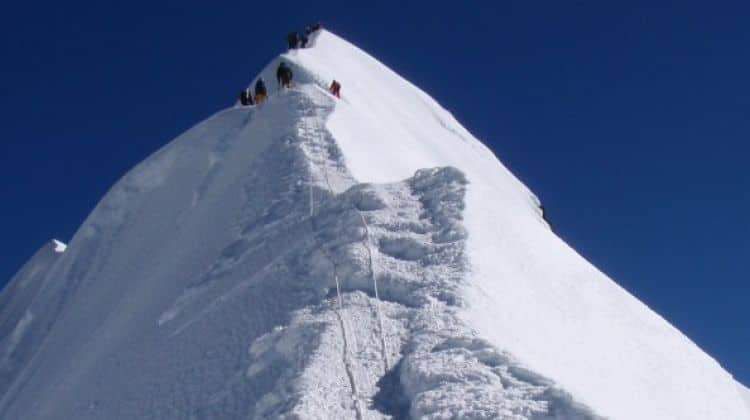
Island Peak, often called Imja Tse, is a well-liked climbing destination. With a modest degree of technical difficulty, it is regarded as one of the most accessible 6,000-meter summits. The well-known Everest Base Camp hike leads to the summit, which is situated in the Khumbu area.

The ascent is rather easy, and the top offers a broad perspective of the neighboring peaks, including Ama Dablam and Lhotse Sharr.

Chulu Far East (6,019 meters)

The Annapurna circuit region is home to the high-altitude hiking peak Chulu Far East. It’s a simple, non-difficult climb that even those without any prior technical climbing knowledge can do. However, the climb may be more difficult due to the steep terrain and scree slopes encountered throughout the approach. It is a lot like the journey to Mera Peak.

Climbers may experience the breathtaking natural splendor of the Annapurna area by following the Chulu Far East Peak climb schedule. In addition to the Tibetan plains to the north, the summit offers sweeping views of Annapurna II, III, and IV, Gangapurna, Manaslu 8163M, Pisang Peak, Chulu West Peak, and Dhaulagiri. You may also continue your journey by crossing the Thorong-la pass to reach the prohibited Kingdom of Upper Mustang and visiting the green Tilicho Lake, which is 4900 meters above sea level.

Yala Peak (5732 meters)

Yala Peak is located near the Tibetan border and is 5732 meters high. It is part of the Langtang Lirun Himal range. Because it is a non-technical climb, the peak is a great place for new climbers to get experience and learn about mountaineering.

At 4,500 meters above sea level, the expedition’s base camp provides breathtaking views of neighboring peaks, including Langtang Lirung, Lenpo Gang, Dorje Lakpa, and the majestic Sishapangma on the Tibetan side.

Intermediate

Chulu West Peak (6,419 meters)

The thrilling 6000-meter+ Chulu West Peak is located in Nepal’s midwestern region. There are fewer climbers and fewer visits to this summit. Climbers go via one of the most breathtaking hiking routes in the world as they set out from Ledar village to Chulu base camp, starting their ultimate climbing journey. With the Himlung Himal to the northeast and the spectacular Manaslu peak in the distance, the summit is set against the breathtaking background of the Annapurna massif range.

In conclusion, a great way to feel the exhilaration of Himalayan climbing is to ascend Nepal’s 6000-meter peaks in the spring. With stunning views of the surrounding landscapes and mountain peaks, the summits we highlighted above provide a strenuous but doable climb for both novices and experts. It should be noted that climbing any Himalayan mountain should not be done carelessly and that having the right equipment and an experienced guide are essential. Always remember to properly acclimate, enjoy yourself, follow the guide’s recommendations, and have a fantastic time climbing in the Himalayas.

Contact Us for More Details:

Top Attractions in Namche Bazaar Everest Region

Everest Base Camp

Top Attractions in Namche Bazaar, Everest Region. A famous destination on the Everest Base Camp trek is Namche Bazaar. It appears more like a town than a village cut into the side of a mountain. Being the hub of the Khumbu Valley’s economic heart, Namche is the capital of the Sherpa homeland. Except for roads, this mountain town has everything a tourist might want: stores, lodging, dining options, cafรฉs, pharmacies, banks, ATMs, excellent Himalayan views, and superb phone and internet access. Villagers from as far away as Tibet gather to barter and shop in the town’s biggest weekly open-air market in Khumbu.

To relax and acclimate, trekkers and mountaineers typically spend an additional day at Namche Bazaar. There are several things to do in the town to keep one busy while there. Museums, bars, internet cafรฉs, snooker halls, spas & wellness facilities, bakeries, and more may be found here. For day treks and quick outings, the villages and hills around Namche provide excellent destinations.

Although Namche Bazaar is frequently visited by trekkers in the Everest Region, it is also a stand-alone attraction. Here, visitors may take in the Himalayas’ stunning natural splendor and get fully immersed in its vibrant culture. What is there to do in Namche, then? Some of the best things to do in Namche Bazaar are listed below.

Hike to Shyangboche

There are expansive views of Mount Everest and other mountains from Shyangboche. One must ascend a steep staircase above Namche to reach Shyangboche. Shyangboche features an STOL airstrip and is situated on a level grassland field. The only activity at the airport is helicopter landings. Nonetheless, the location has been utilized for the Everest Skydive event since 2008. When Everest Skydive, billed as the world’s highest skydiving event, took place at the Shyangboche airport in 2008, it brought the airport into the public eye. Commercial skydiving activities continue to take place at the location.

Sherpa Museum

Directly above the hamlet is the Sherpa Museum. Here, you may view Sherpa traditional attire and old relics. The documentation of climbers who have climbed Mount Everest is the focus of one area of the museum. Old photos of Sherpa villages, their inhabitants, and their traditional Buddhist art may be seen in the Sherpa Culture Gallery and Sherpa Himal Art. It is a pleasure to view the extensive collection of Thangka paintings at the museum.

One can explore traditional architecture when visiting the museum, which is situated in a typical Sherpa dwelling.

Visit Sagarmatha Next to learn more about sustainable tourism.
One of the newest attractions in Namche Bazaar, Sagarmatha Next is a garbage management facility, museum, and art gallery. In addition to encouraging eco-friendly travel, the center seeks to implement a sustainable approach to mountain trash management and disposal. The facility has a shop, a cafรฉ, a waste lab, an art gallery, and a tourist learning center.

Waste materials from the Everest trails are used to produce sculptures, artwork, and digital exhibitions. As part of the center’s crowdsourcing project, Carry Me Back, visitors may return one kilogram of pre-packaged trash when they leave Khumbu.

The center provides a venue for innovative and creative artists to produce artwork using trash gathered from Mount Everest and the Khumbu hiking routes. Those who care about the environment and want to make it better should go there. Sagarmatha Next is situated above Namche Bazaar in Shyangboche at an elevation of 3775 meters.

Hike to Sherpa village

The nearby villages of Thame, Kunde, and Khumjung are excellent places to go on quick walks. A few hours’ walk will get you to these settlements, which are rather near to Namche Bazaar.

It is commonly known that the first school in the Solu Khumbu Region was located in the hamlet of Khumjung. The Himalayan Trust, owned by Sir Edmund Hillary, founded the school in Khumjung. In 1961, the school was founded with only two classrooms and a small number of Sherpa pupils. The school currently includes 17 buildings, 300 pupils, and a dormitory for students from far-off towns. Despite the opening of other schools in nearby Khumbu villages, the Khumjung school is still the only one providing higher education (up to the matriculation level).

The institution has seen several changes since it was initially founded. The infrastructure of the school has been developed with assistance from foreign donors and international relief groups. The Sir Edmund Hillary Visitors Center is located in the original school building, which was constructed to house the first group of Sherpa pupils.

The Khumjung Monastery, which displays a glass box containing a scalp thought to belong to the Yeti, the Abominable Snowman, is another point of interest in the hamlet. By paying a certain sum to the custodian at the monastery, one can view the scalp.

Khumjung is not far from Kunde village. Sir Edmund Hillary selected Kunde as the location for Khumbu’s first health clinic. Sir Edmund Hillary sought to assist the impoverished Sherpas, who were living a challenging existence without access to basic healthcare and education, after his historic summit of Mount Everest. He therefore made the decision to construct a medical facility in Kunde and a school in Khumjung. Volunteer medical staff from Canada and New Zealand worked at the medical facility. However, the hospital’s management was taken over by residents after 2013. The hospital employs lab techs, nurses, and two resident physicians. With 12 beds, the Kunde Hospital is the biggest in the region and provides healthcare to the residents of Namche, Kunde, Khumjung, Phortse, Thame, and other nearby villages.

Tucked away from the well-traveled hiking trails is Thame, one of the Khumbu’s least visited Sherpa communities. The historic settlement has maintained its rustic beauty since so few hikers pass by it. The village of Thame is quieter, smaller, and more serene than Namche Bazaar. Overlooking the town is a monastery worth seeing.

Trip to the Everest View Hotel

A must-see whilst in Namche Bazaar is Hotel Everest View. For sweeping views of Mount Everest, Ama Dablam, Nuptse, Lhotse, and other peaks, the majority of trekking parties climb to the hotel. Takashi Miyahari, a Japanese tourist and businessman who subsequently renounced his Japanese citizenship to become a Nepali citizen, founded the hotel in 1971. At the time, it was the highest luxury hotel in the world, earning the Guinness World Record. Constructed with timber, glass, and stone, the hotel’s tasteful yet understated architecture perfectly complements the stunning surroundings.

It takes around two or three hours to climb from Namche to Hotel Everest View. To reach the hotel, one first ascends to Shyangboche and then continues on a mildly inclining path via a lush meadow. The hotel provides breathtaking views of Ama Dablam, Khumbila, Kantega, Thamserku, Mount Everest, Nuptse, Lhotse, and other locations, and is surrounded by fir and pine trees. The hotel’s porch is a great place to enjoy a nice cup of coffee and the scenery.

Check out the local market.

Namche Bazaar’s Saturday Market is a major event. It is the largest market in this area, and traders come from as far away as Tibet and the lower villages to sell and exchange goods. To get to this market, Tibetans on the other side of the border must travel a challenging distance past the Nangpa La. They bring with them handcrafted handicrafts and Chinese goods that they may sell to the Sherpas or barter for.

This market is an excellent spot to see the locals and gain more knowledge about the local economy because it is where the majority of the Khumbu villagers gather to purchase and sell. This market sells a wide range of goods, including fresh meat, organic vegetables, cutlery, clothing, shoes, groceries, yak meat, cheese, and more. Only Saturdays are used for the market. Therefore, you must schedule your trip to Namche for the weekend if you want to explore this local market.

The main Namche market is open seven days a week, however, the Saturday market is only conducted on Saturdays. Shops in the daily market provide food, clothing, souvenirs and artwork, trekking gear and equipment, and more. However, keep in mind that because everything must be flown in or carried by mules or porters, the prices are far higher here than in the metropolis.

Relax in cafรฉs and bars.

At 3,000 meters above sea level, Namche Bazaar has some of the greatest cafรฉs, bakeries, and bars you will ever come across. It is the final location where you may genuinely have a satisfying dinner and a strong cup of coffee before continuing on into the high-altitude wilderness. Therefore, you may visit cafรฉs, restaurants, and pubs in Namche to get your fill of “feel-good” food.

The town also has some of Khumbu’s greatest cakes (carrot cake, cheesecake, etc.), brownies, apple pies, and muffins. Some of the most well-liked restaurants in Namche that are visited by hikers include the German Bakery (Hermann Helmar’s), Namche Bakery and Cafรฉ, Illy Espresso Bar, Sherpa Barista, and Tomodachi Japanese Restaurant.

While it is not advised to consume alcohol while traveling to EBC or any high-altitude location, you can celebrate your trip’s success with a few drinks on your way out. Guinness, Ireland’s national beer, and Jameson Whiskey are served in the Irish Pub. Additionally, there is a pool table where you may play snooker. Another excellent spot to relax in Namche is Cafรฉ Danphe. Along with free wi-fi and charging stations, the cafรฉ serves a large selection of food and beverages. T-shirts bearing the signatures of Mount Everest expedition groups adorn the cafรฉ. This cafรฉ offers free screenings of Everest documentaries and films.

Activities to do before departing Namche Bazaar

The following should not be overlooked if you are traveling to Gokyo Valley, the Three High Passes, Everest Base Camp, or any other high-altitude location:

  • Examine and stock up on life-saving medications (Diamox, anti-cold tablets, etc.).
  • If you are short on cash, get some at the ATM.
  • If you arrive in Namche without the necessary equipment, purchase or rent warm gear.
  • Get plenty of snacks.
  • Make contact with your loved ones and send that crucial email. The internet and phone connections will get shoddy as you leave Namche.

Contact us for more details

How to Plan Your Manaslu Circuit Trek: Key Information and Highlights

How to Plan Your Manaslu Circuit Trek: Key Information and Highlights. An intriguing trip across the isolated and breathtaking Himalayan landscapes, the Manaslu trekย provides trekkers with a distinctive and less-traveled option to popular routes like Everest or Annapurna. The eighth-highest peak in the world, Mount Manaslu, is encircled by this path, which offers stunning mountain vistas, fascinating cultural experiences in traditional Tibetan settlements, and a variety of habitats.

The trip blends cultural immersion with adventure, from traversing the difficult Larkya La Pass to finding secret monasteries. This blog includes the ideal times to go, necessary permits, must-see places, and helpful advice to help you organize and make the most of your Manaslu Trek. This trip guarantees an amazing Himalayan experience, regardless of your level of trekking expertise.

These include more specialized issues like the level of physical condition needed for the hike, the possibility of altitude sickness and how to avoid it, several trekking routes in the Manaslu region, and the availability of tea shops and accommodation along the way. The best ways to prepare for the weather, which can change dramatically throughout the trek, local traditions and etiquette in the isolated communities, and ways to get to and from the trailheads are other common questions asked by trekkers.

In addition, issues like the expense of hiring a guide or porter, trekking insurance, and the Manaslu region’s environmental conservation measures are frequently brought up. These extra factors provide hikers a more thorough grasp of the trip and guarantee that they are ready for all of the difficulties and perks of the Manaslu Circuit Trek.

1. Teahouses

Teahouses on the Manaslu Trail provide internet and electricity to their wifiย for a charge. Along this route, the coverage of the NTC (Nepal Telecom) SIM is superior to that of Ncell. But the higher you go, the weaker the signals are, and you can only send messages with your phone. Internet access is limited to Samagaon. Internet access is available at Dharapani after crossing the Larkya La.

    The route has access to electricity. The hamlets at higher elevations rely on solar power or micro-hydroelectric projects for their power supply, while the communities at lower elevations are linked to the national grid. At higher elevations, poor voltage and power outages are to be expected. Those teahouses that rely on solar energy could not have any electricity if the weather stays cloudy. As a result, it is advised that you trek with a power bank or a portable solar power charger. In most cases, teahouses charge $3 or $4 per hour for wifi and electrical device charging.

    2. Transportation

    The trailhead is reachable by road from Kathmandu. This removes the concern of having to fly across the mountains in a small airplane, which is dangerous, to reach the trailhead. To travel to the trailhead, you can take a shared Jeep, a private cab, or a public bus. It takes around seven or eight hours to drive from Kathmandu to the trail.

    3. Food and Water

    Simple dishes like momo (dumplings), chowmein (friedย noodles), Tibetan bread, Indian flat bread or chappati, bread toast, oatmeal, and the Nepali staple daal-bhaat (rice, lentil soup, vegetable curry, and pickles) are served in teahouses. If you pay more, you could get boiling or hot water. The majority of food products on the trek are costly since they must be carried by mules or porters from cities located far from the trail. You may buy bottles of mineral water at the teahouses. However, the original retail price may be four or five times more than this.

      You may bring a reusable water bottle with a filtration device, such as the Steripen, for drinking water. Alternatively, you may purchase some water purification tablets and use them to clean the local water. Direct consumption of water from open sources, such as rivers and streams, is not advised. Make sure your water is adequately filtered before drinking it.

      4. Costs and Methods of Payment at Teahouses

      The Manaslu Trail is located in a secluded area of the country. Most of the time, when trekking, you will be isolated from contemporary society. There are no large businesses or shops along the way, nor are there any banks or ATMs. You will only be able to spend money on meals, beverages, and snacks at teahouses. To purchase anything on the trail, you must have local cash on hand because teahouses do not take credit cards or international currencies.

      Local cash or Nepalese rupee is the only currency accepted at teahouses and shopsย along the path. Therefore, be sure you withdraw enough local cash from any ATM operated by the local bank (30 to 40 thousand would suffice) before departing Kathmandu. Visa, Mastercard, and American Express cards are often accepted at ATMs in Nepal. You will need local money to pay for hot showers, tipping the porter and guide after the trip, mineral water, charging your electronic equipment (phone, camera batteries, power bank, etc.), and other expenses in addition to buying food and beverages that are not covered by your trekking package.

      5. Packing Lists

      A detailed list of all the gear and equipment you will need for your journey will be sent to you by the organization you book it with. Remember to bring your paperwork (passport, Nepal visa, permits, etc.) along with weather-appropriate attire and equipment. There are several stores in Kathmandu where you may buy and rent trekking gear. If you are unsure about the quality of the items available in Nepal, you can carry your kit from home.

      You will undoubtedly need crampons and gaiters to traverse the snow-covered pass to cross Larkya La. Because the teahouse facilities are sometimes basic and lack indoor plumbing, you should also remember to include a couple of rolls of toilet paper when you prepare for your hike.

      6. Insurance for Travel

      This hike requires travel insurance. You have to purchase insurance that will pay for rescue and evacuation expenses at high altitudes. You should carefully read the small print before purchasing travel insurance, since some plans may not cover evacuation services or injuries at high altitudes. One that provides coverage for high-altitude rescue and evacuation over 5000 meters is the one you should pick.

        Detours & Interesting Places on the Manaslu Circuit

        Tsum Valley

        One of the undiscovered treasures of the Nepal Himalaya is Tsum Valley, which may be reached as a side excursion from the Manaslu journey. Tsum remained completely secluded because the Nepali government forbade people from entering in order to preserve the valley’s delicate ecosystem and culture. Only in 2008 was the Tsum Valley opened to tourists. Even the unrestricted flow of Nepalese nationals from other areas into the region used to be restricted.

        The atmosphere of Tsum Valley, which is close to Tibet and the Ganesh Himal mountain, seems to be timeless. Old Buddhist monasteries and nunneries that house the wisdom and culture of old Tibetan Buddhism may be found in the Tsum Valley. Because of the valley’s delicate cultural past and its proximity to Tibet, the authorities have chosen to designate the area as a restricted zone in order to prevent outside influences.

        There are two distinct areas in the Tsum Valley: Upper Tsum and Lower Tsum. The valley is home to thirty-three communities in all. The valley’s residents speak a dialect known as Tsumke or Tsumba. The Tsum Valley is unique in that all creatures, including birds and insects, are safeguarded and permitted to coexist without human intervention. There are numerous fascinating, valley-specific Buddhist customs observed by the valleyโ€™s thirty-three communities. For instance, the culture of’shyagyaโ€™.

        The “Shyagya” culture is followed by the inhabitants of Tsum. As a Buddhist practice, they have adopted “shyagya,” which translates to “a tradition of non-violence.” According to the “shyagya” culture, it is illegal to hunt and kill wild animals, gather honey, trade animals or their parts, remove trees and burn forests, and catch or kill insects, birds, or animals in the valley. According to the locals, Tsum Valley is a beyul, a hallowed place where all living things are allowed to remain and have been blessed by Guru Rinpoche.

        Tsum Valley’s cultural attractions include Mu Gompa, Rachhen Gompa, Piren Phu, and Milarepa Cave. You may incorporate a trip to Tsum Valley into your Manaslu Trek itinerary if you want to see this intriguing location.

        Valley of Nubri

        The culturally diverse Nubri Valley is traversed by the Manaslu trek. Similar to the Tsum Valley, Tibetan Buddhist culture and customs are well embedded in the Nubri Valley. The Nubri Valley is home to several of the region’s oldest monasteries. The villages of Bhi, Samagaon, Prok, Tsak, Samdo, Lhi, Li, Sho, Shayala, Namrung, Ghap, Shak, and Gyayul are all included in the valley. The Nubri Valley is believed to have formerly been a part of Western Tibet’s Ngari kingdom.

        The residents of the Nubri Valley have a distinctive custom of permitting lamas to be married, as they adhere to the Nyingmapa school of Tibetan Buddhism. Married lamas, known as Ngakpas, are permitted to serve as priests in both their houses and the monastery.

        One of the oldest and most significant monasteries in the Nubri Valley is the Pungyen Gompa, which is situated at an elevation of 4050 meters. The monastery is situated between Samagaon and Shayla, two Nubri villages. The first people to settle in the Nubri Valley constructed the monastery, which is almost 400 years old. The Nubri name for Mount Manaslu is the source of the monastery’s name, Pungyen. Manaslu, Pungyen, or Kutang are the names given by the people of Nubri Valley.

        Residents of the Nubri Valley periodically go to Tibet for supplies and for trade. The peasants find it simpler to obtain goods from the other side of the border because Tibet is closer to their hamlet than Nepal’s towns and cities. Yak caravans are used to carry goods from Tibet to the Nubri Valley.

        Rui La, Birendra Taal, and Manaslu Base Camp

        The Manaslu Trek allows you to climb to the foot of Mount Manaslu. Manaslu is the eighth-tallest peak in the world and one of the fourteen-eight thousanders, standing at 8,163 meters above sea level. A short ascent from Samagaon’s old town takes you close to Manaslu Base Camp (4,900 m), where you may see the stunning view of the snow-capped summit.

        Mount Manaslu, popularly referred to as the “Spirit Mountain,” is revered by the locals as a protective god. Killing or harming any living creature, including insects, birds, or animals, is strictly prohibited among the villages residing at the mountain’s foot since doing so would contaminate this hallowed space and call out the mountain deity’s wrath.

        The magnificent alpine lake, Birendra Taal, is encountered on the way to the Manaslu Base Camp. The blue lake is surrounded by snow-capped mountains. It is stunning to see the turquoise lake surrounded by snow-capped mountains.

        During the busiest climbing season, mountaineering participants trying to reach the top of Mount Manaslu set up tents near the base camp. Even though Mount Manaslu is not as big as Mount Everest, seasoned climbers say it is far harder and complex to reach the summit. From the Manaslu Base Camp, you can also see Himalchuli, Naike Peak, Ganesh Himal, and Shringri Himal, which are all nearby mountains.

        Rui La (4998 m), a difficult mountain pass along the Nepal-Tibetan border, is another great destination for day hikers. Samdo hamlet is where the trek to Rui La pass starts. There are no communities for miles along the Rui La Pass track, making it a secluded and desolate route. Yaks and yak herders are the only inhabitants of the desolate mountaintop. Yak caravans are seen moving back and forth from the border region, and Rui La also denotes the commercial route.

        A stone at the top of Rui La Pass marks the border between Nepal and the Tibet Autonomous Region of China. Rui La Pass is around a day’s trek from the closest Tibetan settlement. One will arrive at one of Tibet’s roadways after two days of walking.

        Annapurna Conservation Area and Manaslu Conservation Area

        You will traverse two natural conservation zones along the Manaslu trekking path, which are abundant repositories of Himalayan flora and fauna. The Manaslu Conservation Area is a conservation area that spans 1663 square kilometers. Among other species, the Manaslu Conservation Area safeguards the habitats of the Himalayan tahr, Himalayan marmot, snow leopard, blue sheep, black bear, lynx, and musk deer.

        The protected area is home to more than 100 bird species and more than 2,000 plant species. It has six distinct climatic zones (arctic, subarctic, temperate, tropical, and alpine) and eleven different types of wood. Because of the temperature variation, this region is one of the Himalayas’ hotspots for the greatest biodiversity.

        The Annapurna Conservation Area Project in the Annapurna Region spans 7629 square kilometers. There are 105 animal species, 518 uncommon bird species, and 1226 wildflower species in the protected area. High on the slopes of the Annapurna Range, this nature conservation area is home to the biggest rhododendron forest in the world.

        Conclusion

        The Manaslu Trek is the ideal way to combine trekking in the Himalayas with taking in the splendor of culture. You enter a wild setting with lush forests and high mountain passes along the trip. You may go through old villages that are populated by ethnic groups that haven’t interacted with outsiders much. You will surely remember the pristine landscape, vibrant culture, difficult hike, and intriguing encounters with the native mountain people.

        The Manaslu Trek is the greatest choice if you want to discover authentic culture and the pristine Himalayan scenery. The hike is less crowded and touristic as well. There are indigenous groups that still live the way their forefathers did. Another incentive to pick this journey is the breathtaking vistas of Himalchuli, Ganesh Himal, Singri Himal, and Manaslu, the eighth-highest peak in the world. We strongly advise you to go on the Manaslu Trek if it is on your bucket list. The information above should be useful to you while organizing a Manaslu Trek in Nepal.

        Contact US for more Information:

        How Mountain Climbing Can Improve Your Other Skills

        Winer Mountain Climbing

        How Mountain Climbing Can Improve Your Other Skills. When winter arrives, many climbers prepare to put away their equipment and wait for better weather. Winter climbing, however, presents the ultimate test of strength, determination, and adventure for those who dare. Climbers are pushed to their limits as the mountains change into a new realm of solitude, stillness, and harsh conditions.

        Please reconsider if you have ever considered putting off your goals till spring. Not only can cold-weather climbing help you stay alive, but it can also help you retrain your body, refine your abilities, and gain mental and physical power that summer climbs can’t match.

        What Makes Winter Climbing So Worth Taking?

        The Unspoken Advantages of Winter Treks

        The difficulty of winter ascents attracts most climbers, but the true advantages extend far deeper to the cellular level. Your body gets reset by winter climbing, becoming stronger, leaner, and better equipped to withstand harsh conditions.

        1. The Final Skill and Grit Test

        Winter mountain climbing is a whole different game fromย summer mountain climbing. Every step is a strategic one because of the intense cold, tricky ice portions, unexpected avalanches, and constantly shifting weather. Sharper navigation, skilled route-finding, and an unbreakable mentality are all needed for winter climbing. Winter ascents need greater self-sufficiency than the well-worn paths and routes seen during the busiest climbing season. Success is made more satisfying by the untamed, merciless, and raw nature of the mountains.

        2. More Adventure, Fewer Crowds

        Island Peak or Mera Peakย may be overrun with climbers during the busiest time of year. During the winter, you encounter very less climbers. A true, unbroken link to the mountains is provided by the unparalleled solitude.

        3. This is What Your Body Is Made For

        The way your body adjusts to harsh conditions is among the most intriguing features of mountaineering’s cold exposure. Brown fat enters the picture here. Brown fat produces heat instead of storing energy like regular fat does. It helps you keep your body temperature stable without experiencing excessive shivering since it is concentrated around your spine and collarbones and activates when exposed to cold.

          Spending more time in colder climates teaches your body to cope with stress, burn more calories, and keep warm on its own. In extremely low temperatures, seasoned winter mountaineers frequently feel more at ease due to their brown fat being completely active.

          The Best Way to Get Your Body Ready for Winter Mountaineering

          Adaptation to the cold takes time. Before embarking on a difficult winter ascent, you need to prepare your body to withstand harsh circumstances.

          Use Cold Exposure Training Before Climbing

          • For training treks, forego the extra layers to increase tolerance.
          • Brown fat can be activated by cold showers or ice baths.
          • To assist in training your body’s natural heat regulation, sleep in a more comfortable, cooler area that is about 65ยฐF.
          • Test your layering method by working out outside while wearing cold clothing.

          Master Your Layering Skills for Winter Travel

          • It’s a science to dress for winter treks at high elevations. In severe weather, wearing inappropriate clothes can result in freezing or overheating, both of which are hazardous. Base Layer: Synthetic or moisture-wicking merino wool
          • Mid Layer: For warmth, use synthetic or down insulation.
          • External Layer: Windproof and waterproof shell
          • Extremities: Double-layered socks, balaclavas, and insulated gloves

          Feed Your Body with Cold-Resistant, High-Calorie Foods

          Your calorie requirements rise dramatically during winter climbing due to the cold and greater exercise. Maintaining body temperature and energy levels requires regular eating.

          Get Ready for Snow and Ice Navigation

          Climbing in the winter requires navigating avalanche-prone slopes, icefalls, and glaciers. Before leaving, polish your technical abilities: Ice climbing: Learn how to use crampons and an ice axe on difficult terrain.
          Crevasse rescue instruction: Rope methods have the potential to save lives.
          Avalanche safety: Understand how to use a beacon and read the snow conditions.

            Reasons to at least try a Winter Ascent Once

            Winter mountaineering is about pushing oneself above your comfort zone and achieving new heights. Every obstacle, from extreme cold to complex ice climbing, pushes you to grow as a person, a climber, and your awareness of the natural world.

            Contact us for more details: