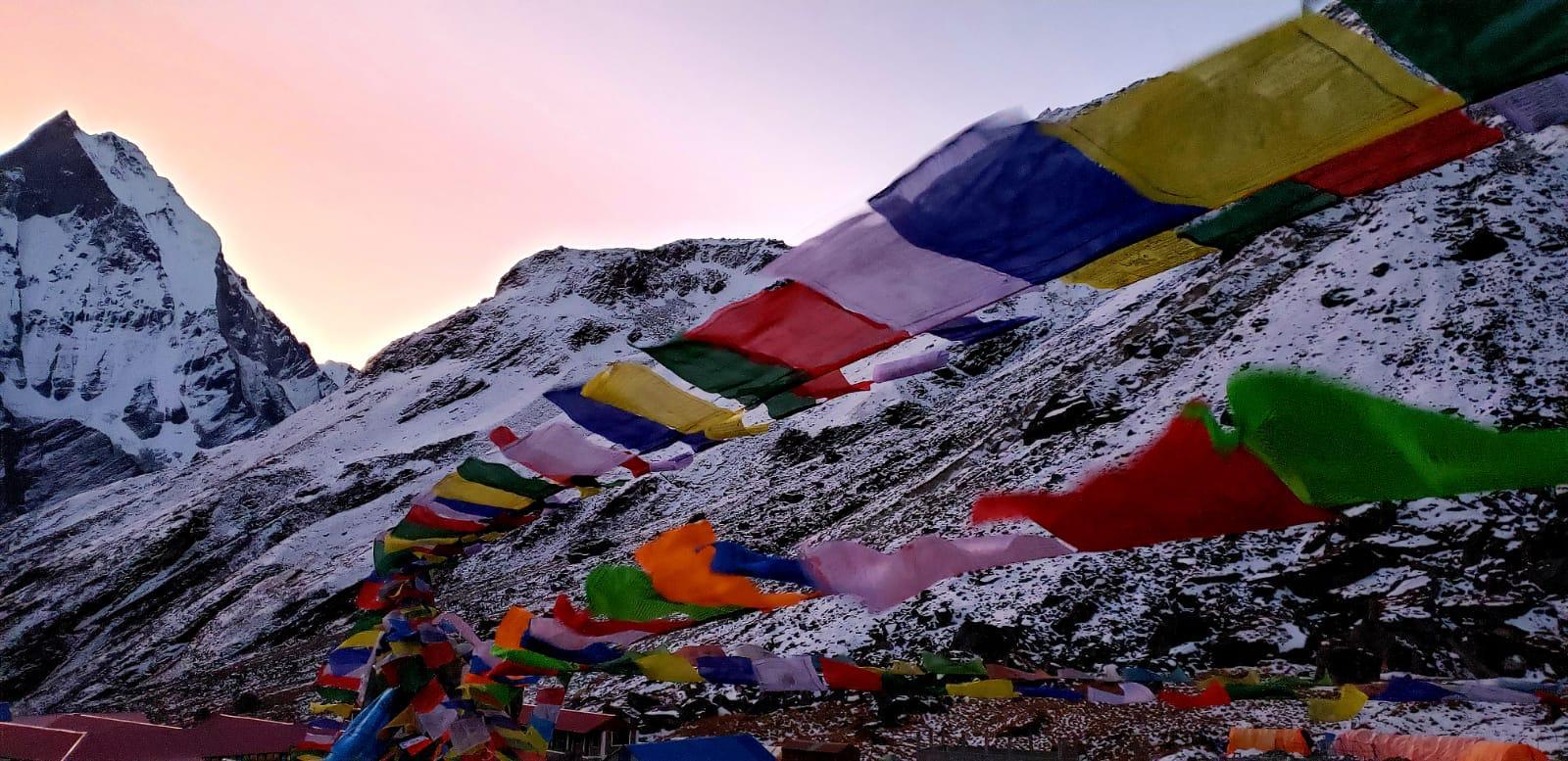
Nepal is an incredible trekking destination. Nepal is not a destination you can trek in one trip, with eight of the world’s tallest mountains rising beyond 8000m (26,246ft). As you uncover hidden valleys, new hiking trails open up, and your trekking experience develops year after year, this is a place you’ll want to come back to again and again. It’s no surprise that thousands of mountaineers and trekkers from all over the world visit each year.
What Are the Best Trekking Destinations in Nepal?
In Nepal, there are numerous places where you can go trekking. If you want to go on a famous and well-known trek, the Everest and Annapurna regions are ideal. Everest Base Camp Trek, Annapurna Base Camp Trek, and Annapurna Circuit Trek are among the most popular trekking treks. If you seek a remote trekking route, Manaslu, Kanchenjunga, Dolpo, Humla, and Upper Mustang are the best options. Find out the best trekking destination in Nepal.
When is the ideal time to visit Nepal for trekking?
Trekking in Nepal is possible throughout the year. The best times to trek in Nepal are in the spring (March to May) and Autumn (September to November), when the weather is clear and the sights are spectacular. This is also the busiest time on the trails. Winter (December to February) and summer (June to August) are other excellent times to visit; while the weather can be fickle, these months provide a different experience and fewer visitors. Check out more information on the best time to visit Nepal.
How Much Does Trekking in Nepal Cost?
The cost is determined by the trek and how you wish to complete it. Some treks are more expensive because of the higher cost of accommodation and food and the higher cost of commuting (EBC Trek) or some region require a special permit.
Is A Trekking Permit Required in Nepal?
A trekking permit is required for the majority of treks in Nepal. National Park/Conservation Area Project Permits are a common trekking permit that you will require if your trekking trail passes through a national park or conservation area.
Restricted Area Permits are required in certain remote and rural areas near Nepal’s borders, which the Nepalese government strictly controls. This permit is required in some areas, including Upper Mustang, Dolpo, Humla, and Kanchenjunga. It cannot be collected by an independent trekker. As a result, to obtain the permit, one should work with a registered Nepali travel agency.
How Difficult Is Trekking In Nepal?
Trekking in Nepal is divided into easy to moderate, moderate to difficult, and difficult to strenuous. Certain factors must be considered when determining the difficulty level of the trek. Trekking in Nepal’s Himalayas frequently entails walking on rugged trails with distant basic lodges, no transportation facilities in rural areas, the possibility of high altitude sickness, and unimaginable weather changes in the Himalayas. They add to the difficulty of trekking in Nepal.
Easy to moderate treks such as Poonhill, Ghorepani, and Annapurna Base Camp treks are ideal for novice trekkers. Moderate to difficult treks like Gokyo Lake and Manaslu are best for trekkers with good physical fitness and previous trekking experience. Pro trekkers with the right physique, high altitude trekking experience, and skills can choose from difficult to difficult level treks such as Everest Three Pass, Mustang Teri La Pass, and Nar Phu Valley.
As a result, the difficulty level of trekking in Nepal varies, and the desired trek can be chosen based on the number of days, trekking regions, time of year, and difficulty level.
How do I obtain an entry visa to Nepal?
All foreign nationals (except Indian nationals) must show a visa when entering Nepal. Nepalese visas can be obtained at the respective country’s embassy, at the International Airport in Kathmandu, or at Nepal’s border entry points in Kakadvitta, Birgunj, Bhairahawa, Nepalgunj, Gaddachowki on the Nepal-India border, and Kodari on the Nepal-China border.
Certain nationals are required to obtain a visa before arriving in Nepal. Afghanistan, Iraq, Cameroon, Ghana, Somalia, Swaziland, Palestine, Zimbabwe, Nigeria, Ethiopia, and Liberia are among the countries that cannot obtain a Nepalese visa on arrival.
One must be both mentally and physically prepared for the trek. The success of the trek is wholly dependent on you. We recommend that you choose trekking routes that are appropriate for your level of fitness. Shorter treks are obviously easier than longer ones. The longer treks will necessitate a higher level of fitness. So, being in great physical shape is crucial.
Do I need any prior experience to partake in the Himalayan trek?
Previous trekking experience is not mandatory to participate in our trekking trips. Having said that, there are still some factors to consider before embarking on your own journeys, such as altitude and length. The trekker’s physical condition should be excellent and they should be mentally prepared to participate in our challenging and tough trekking trips.
How many porters will accompany you on your trek?
The number of porters depends entirely on the type of trek, either tea house or camping. If the trek is a teahouse trek, our standard porter ratio is 1:2, which means that one porter carries two trekkers’ luggage/duffle bags. However, if the trek is camping, it is difficult to predict the number of porters, which frequently depends on the number of trekking days and team members. However, we always hire an adequate number of porters for each trek.
Do you provide airport pickup service on arrival and departure?
Yes, as an added benefit, our company provides a pick-up service. When you arrive, a representative from our company will meet you at the airport. You can easily identify us at the airport by our company’s placard with your name written on it. And when you finish your trek, we will drop you at the airport.
Trekking up to Everest’s base camp is the close one could get to the world’s tallest peak without climbing it. How much does the Everest base camp trek cost is the most asked question? In this article, we will cover all your queries regarding the cost of EBC. Trekking to the base camp is not as expensive as climbing Everest. The cost of the Everest Base Camp Trek depends on various factors. It might depend on the number of trekking days, trekking route, tour operator, and the kind of services they provide. The trip might cost from $1100 to $4000. If you are looking for a luxury trip such as an EBC package with helicopter return then it will cost a little more. The overall cost is mostly determined by the needs of trekkers.
Excluding international flights, the cost of trekking in Nepal’s different mountain terrains ranges from low-cost trips to extremely expensive luxury climbs. We’ll try to explain everything regarding the cost of trekking to Everest Base Camp, as well as the factors that lead to price differences between different operators throughout the world.
Factors that impact the overall cost of a trek to Everest base camp.
1. Kathmandu’s Costs
OLYMPUS DIGITAL CAMERA
The EBC Trek begins in Kathmandu, and the cost of staying in Kathmandu includes airport transportation, hotel accommodations, and additional touring costs if you wish to see the city. You can save some bucks on your trip by choosing your hotel level, which ranges from $15 bed economical hotels to 5-star or luxury Heritage hotels that cost roughly US$450 to $500 per night or more. If you decide to go on a day tour in your free time, it might cost you between $50 and $100, depending on the services you pick.
2. Transportation Costs
A round-trip flight from Kathmandu to Lukla costs approximately $380 per person. Flying from Kathmandu to Lukla is the best way to begin the trek. Only 10 kg of luggage is allowed on these domestic flights. You can leave your unnecessary stuff at the Kathmandu hotel.
3. Nepal Visa Fees
When entering Nepal, all foreign nationals (excluding Indian nationals) must provide a valid visa. Nepalese visas can be obtained at the individual country’s Nepalese embassy or upon arrival at Kathmandu’s International Airport.
VISA FACILITY DURATION FEES
Visa Facility
Duration
Fees
Multiple Entry
15 Days
US$ 30 or equivalent convertible currency
Multiple Entry
30 Days
US$ 50 or equivalent convertible currency
Multiple Entry
90 Days
US$ 125 or equivalent convertible currency
4. Permit Fees for Trekking
You’ll need two permits to undertake the Everest Base Camp trek: a Sagarmatha National Park entry permit and a Khumbu Pasang Lhamu Rural Municipality entrance permit. The regional fee for Solukhumbu is roughly $20 per person and can be obtained in Lukla or Monjo. The National Park admission permit will cost roughly $30, including 13% VAT, and will be available in Kathmandu and Monjo.
5. The cost of lodging on the Everest base camp trek
How much does the Everest Base Camp Trek Cost? 10
The cost of lodging ranges from affordable teahouses to comfy hotels and a few luxurious lodges. In a basic teahouse, a single bed costs around $5 per night per person, while a room with two beds costs $7. As you climb higher, the charge may increase, reaching up to $10 at Gorak Shep.
The teahouse rooms are simple, with two mattresses, a pillow, a blanket, and an adjoining bathroom (except at a few locations). Every teahouse has a huge dining hall where you may eat and socialize with other travelers. The dining area has a fireplace in the center that is used to heat the entire space during supper.
The cost of accommodation on the trip itself is quite low, but the expense of lodging in Kathmandu before and after your trek will contribute to a greater amount of your budget.
During your stay, you may be charged the following additional fees:
Unless you pay for an ensuite room, hot showers are not included. The cost of a hot shower might range from $2 to $5.
Electric blankets or heaters will cost roughly $20 per night, however they may or may not be available in all accommodations.
Battery charging is normally charged at a rate of $2 to $6 per hour, whereas a power bank is charged at a rate of $10.
Some lodgings may not provide free internet access. In the mountains, WiFi costs roughly $2 to $5 per hour, though the service is quite poor.
6. Food and water costs during the Everest base camp trek
How much does the Everest Base Camp Trek Cost? 11
The cost of food and water varies depending on where you are. The higher you ascend, the more expensive food and water become. Surprisingly, teahouses along the trail provide wide menus, with fewer options as you up the mountain.
The high-carbohydrate meal Dal Bhaat is the most common food along the trail, with prices ranging from $5 at the start to $15. The same can be said for bottled water. A liter of bottled water can cost anywhere from $1 to $5. The daily expense of food and water will be around $30 to $40 on average. Vegetarian dishes are also less expensive and are considered to be fresher and healthier.
7. Guide and porter fees for Everest base camp trek
How much does the Everest Base Camp Trek Cost? 12
While trekking in Nepal, having a guide and porter is usually beneficial. For starters, they are fluent in the local language and are familiar with the teahouse proprietors. They will enhance your trekking experience by providing you with a knowledge of route information.
Porters will carry your luggage for you, allowing you to move freely, especially at high altitudes where walking can be challenging.
The average cost of hiring a guide is $20 to $30 per day while hiring a porter is $20 to $25 per day. A single porter will be capable of handling up to 25 kilograms of luggage. The leading guides may charge upwards of $50 per day. Tipping is anticipated in Nepal, though it is not mandatory. A good basic tip for a guide or porter is 10% to 15% of the whole trip price.
8. Travel Insurance Costs
For a 30-day period, travel insurance with trekking authorized up to 6000m will cost roughly $150. However, the cost of insurance will vary depending on your age, country, and trek length.
You are required to carry travel insurance when visiting Nepal, which should cover any comprehensive expenses incurred as a result of medical conditions or accidents. T raveling in the Himalayas is full of adventure, it’s a wise idea to have a good insurance policy. Make absolutely sure your insurance coverage covers all of these unforeseen costs when purchasing a policy. Air ambulance, treatment charges, rescue and evacuation, product cancellation and refundable charges, airline delay, and cancellations must all be covered by your travel insurance. You must check that the policy you choose gives an acceptable level of protection, is familiar with your itinerary, and covers the activities you will be participating in.
9. Trekking Equipment Costs
How much does the Everest Base Camp Trek Cost? 13
It is crucial that you have all of the necessary equipment and gear with you before embarking on your trek into the Himalayan mountains. For a beginner, trekking equipment can cost anywhere from $200 to $500. This expense is not included in the price of our package.
High-quality boots, sleeping bags, thermal gear, trekking poles, warm gloves, and a waterproof jacket are just a few of the important items. Take a look at the comprehensive Everest Base Camp packing list to learn about the most important goods you’ll need on the climb.
Checkout the latest Nepal travel protocol 2022 for international visitors. The Nepalese government has removed the quarantine for fully vaccinated, partially vaccinated, and unvaccinated travelers and visa-on-arrival service has been resumed. According to the new guidelines, visitors are not required to quarantine and will be given visas upon arrival. A new protocol allows fully vaccinated travelers to visit Nepal without having to do any pre-arrival covid testing.
Documents Required For Fully Vaccinated
Travelers who have received both doses of COVID-19 Vaccines, you will be provided with a visa on arrival at the point of entry and will not have to stay in quarantine. But you will be required to submit the following documents in addition to the visa-related documents:
Vaccination Certificate
Visitors must complete the online form available at https://ccmc.gov.np/arms/person add en.php and hand in a printed copy at the airport. The form is used for contact tracing should there be any need.
Documents Required For Partially Vaccinated/ Un Vaccinated Travelers
A PCR negative report has taken 72 hours before boarding is all that is required for unvaccinated and partially vaccinated travelers. For children under the age of five, this is not required.
Visitors must complete the online form available at https://ccmc.gov.np/arms/person add en.php and hand in a printed copy at the airport. The form is used for contact tracing should there be any need.
Latest Nepal Travel Protocol 2022: For International Visitors 15
NOTE: All previous restrictions, including the quarantine requirement, are eliminated by this new protocol. Check with your airlines, transit countries, and any relevant parties to see if pre-arrival covid-19 testing is required.
How tough is the Everest Base Camp trek is the most asked question of all time. The Everest Base Camp Trek, as intimidating as the name may sound, is not a tough trek; with a little planning and effort, absolutely anyone can complete it. It could be easier for people who are experienced in trekking or have hiked long distances with a heavy backpack over many years. People who aren’t used to hiking or training on a regular basis, on the other hand, will need to train extensively for this trip and will certainly find it challenging. However, preparation is the key!
The Everest Base Camp Trek is one of Nepal’s most picturesque and well-known trekking routes. Along with the natural splendor of the Himalayas, the walk is also culturally appealing, making it a once-in-a-lifetime experience for hikers. The Everest Base Camp Trek leads you to Mt. Everest’s Base Camp, the main starting point for expeditions to the summit of the world’s highest mountain.
Everest Base Camp Difficulty
Trekking from the starting point at 2,850m / 9,000 ft to 5,364m / 17,500 ft is a difficult task that is more physically demanding than technically difficult. You won’t need any special mountaineering expertise or equipment; all you’ll need is a lot of endurance.
It’s reasonable to be concerned about the difficulties of this high-altitude activity. In terms of the terrain, you won’t be doing any sort of climbing, walking along narrow ridges with dangerous falls, or hauling oneself over rock faces with ropes. The journey to Everest Base Camp is a lengthy and steady one, punctuated by a precisely timed ascent in altitude.
Age Requirements
Over the years, people of all ages, shapes, and sizes have completed the journey. Trekking to Everest has no age limit as long as you are healthy and fit and have consent. The trek has been completed successfully by people as young as seven and as old as 70. Having said that, this does not indicate that anyone in this age group is capable of trekking to Everest Base Camp.
The only reason for drawing an age line for the Everest Base Camp trek is for health concerns. The age of a child trekking to Everest Base Camp should be at least ten years old. Since they are young and vulnerable, children can be exposed to many risks such as altitude sickness, cold, dehydration, etc.
Everest Base Camp Trek is dependent on the physical and mental condition of older people over the age of 60. Furthermore, if you have any illness that could make you sick while hiking, you should avoid it. When it comes to trekking in Nepal, fitness is key. The Everest Panoramic Heli option is also a good fit for you.
How to prevent Accute Mountain Sickness?
Altitude sickness is one of the most common and potentially fatal conditions that trekkers in the Himalayas face. There is no way of knowing how the body will react to decreasing oxygen levels while on the trail. Trekkers must acclimatize properly to avoid a life-threatening situation. The basic rule is to ascend gradually, sleeping no more than 500 meters higher than the night before. Climb high but sleep low is an unwritten rule for trekkers and climbers both. Diamox can also be used to treat or prevent AMS, and if symptoms do arise, go to a lower elevation to recover.
How to Train yourself for EBC trek?
To get in shape for the trek, spend some time in the gym and go on some long walks. This will help you prepare for the mountainous climb up to Everest Base Camp.
Spend some time in the gym working on leg strength exercises. You must carry yourself, even if you are not carrying your baggage. Squats are a wonderful exercise to do before the walk because you’ll be using your quads a lot.
Finally, cardiovascular exercise such as running, sprinting, and swimming will improve your endurance and increase your body’s ability to circulate oxygen, which becomes more difficult as you ascend higher in elevation.
Langtang Valley, a pristine valley north of Kathmandu, is a place of glacial lakes and picturesque traditional villages. The Langtang Circuit Trek offers a blend of magnificent vistas of the Himalayas soaring to the sky, scenic landscapes, and exposure to the indigenous Tamang community’s traditional lifestyle. The Langtang Circuit Trip passes through the scenic Langtang Valley, the sacred Gosainkunda Lake, Suryakunda, and the secret Helambu Valley, making it an intriguing and rewarding trek.
From the summit of the peak, you can enjoy a spectacular view of the Gosaikunda and amazing vistas of the majestic snowcapped peaks. The Gosaikunda provides a panoramic view of Mt. Langtang, Ganesh Himal, and the Annapurna range. With only a few individuals traveling past the path, the track to Surya Peak isn’t definite, and it’s easy to get lost. You’ll pass through villages where Sherpas and Tamangs live, each with their own culture, and you’ll get the opportunity to learn more about them.
Outline Itinerary
Day 01: Arrival at Tribhuwan international airport (1380m)
Day 02: Drive Kathmandu – SyabruBensis in local bus Altitude – 1450 meters | Drive: 6-8 hrs
Day 03: Trekking from SyabruBensi – Lama Hotel Altitude – 2480 meters | Trek – 6 hours
Day 04: Trek from Lama Hotel to Langtang Altitude – 3540 meters | Trek – 6 hours
Day 05: Trek from Langtang to KyanjinGompa Altitude – 3900 meters | Trek – 4 hours Activity – Trekking mostly on flat road
Day 06: Acclimatization, Rest and hiking day Altitude – 4984 meters | Trek – 45 minutes/1 hour hike
Day 07: Kyanjin Gompa to Lama Hotel Altitude – 2480 meters | Trek – 7 hours
Day 08: From Lama Hotel to ThuloSyabru Altitude – 2200 meters | Trek – 8 hours
Day 09: Syabru village to Singh Gompa Altitude – 3584 meters | Trek – 5 hours
Day 10: Singh Gomba to Gosainkund Lake Altitude – 4381 meters | Trek – 6 hours
Day 11: Gosaikunda village to Phedi, after passing SuryaKunda Pass Altitude – 4610/3780 meters | Trek – 6 hours
Day 12: Hiking from Phedi to Tharepati Altitude – 3690 meters | Trek – 5 hours
Day 13: Trek from Tharepati to Kutumsang Altitude – 2470 meters | Trek – 4/6 hours
Day 14: Trekking from Kutumsang to Chisapani Altitude – 2165 meters | Trek – 7 hours
Day 15: Trek to Sundarijal from Chisapani and drive to Kathmandu. Altitude – 1460/1380 meters | Trek – 4/5 hours hike | Drive – 2 hours
Day 16: Departure
Best Time to Trek Langtang Region
The Langtang Valley trip can be done at any time of year, although hiking in the off-season requires extra planning and being prepared for nature’s unexpected challenges. This trek is pleasant in any season, but the ideal seasons to go are spring and fall when you can enjoy the stunning scenery and pure surroundings.
This doesn’t imply that summer and winter trekking in the Langtang region isn’t worthwhile or impossible. They, too, have their own advantages. In the off-season, even a popular trail like the Langtang Valley trek can be fairly calm. In the winter, you may enjoy the clear views of the Mountains.
Langtang Circuit Trek Difficulty Level
The Langtang walking trail consists of a series of uphill and downhill trails, some of which are rather steep. The amount of difficulty varies depending on the route’s topography and the season you choose to trek.
If you plan to trek in the region during the spring (March-May) and autumn (September-November) months, you will have a lot easier experience. The excursions are made easier by the mild temperatures and stable weather conditions on the dry paths.
In the Winter (December-February) and Monsoon (June-August), unexpected snowfall or rainfall, severe winds, and cold temperatures may add to the difficulties of your trek.
Despite the rugged landscape and rocky trails, the Langtang trip difficulty may be conquered if you come physically and emotionally prepared and pack appropriately. If you are a beginner trekker, you can select to trek during the finest trekking season to lessen the difficulty of the trek.
Highlights of the trek
A great blend of stunning beautiful nature and culturally rich traditions and modes of living.
Sacred lakes and a forest of Rhododendrons
Magnificent forests, high alpine meadows, and yak pastures,
Kyanjin Ri Pass offers incredible mountain views of the Langtang Himalayas, valley, and across to Tibet.
Nepal is one of the most enthralling, beautiful, and exhilarating destinations. Trekking in Nepal has grown in popularity as a popular adventure activity for visitors. It’s no surprise that both travelers and hikers have been thronging for trekking in the mountain for decades. Trekking in the Himalayas is a once-in-a-lifetime experience, whether it’s your first visit or your curiosity has you coming back for more!
Talking about the season, Nepal has four seasons the whole year round; Spring, Summer, Fall, and Winter. The ideal seasons to visit Nepal are considered to be spring and fall, when the weather is mild and stable, with beautiful skies. However, your trekking experience in Nepal is determined by the season you choose to trek. Trekking is often more fun when the weather is pleasant, with warm forecasts in the mountains and good visibility.
Clear skies and moderate weather
In Nepal, the months of October and November are excellent for hiking and trekking since the weather is pleasant, the weather is usually consistent, and the fresh air allows for spectacular mountain views. The high mountains are still frigid, and the lower elevations are still hot, but walking temps throughout the day are the most pleasant. Bad weather can strike at any time of year, but the fall offers the most consistent weather for two months.
After the monsoon rains, neither continuous rain troubles you nor does the severe temperature annoy you. When trekking in the high mountains, the anticipation is always for beautiful weather, good visibility, and a warm forecast, which will make your walk more distinctive and delightful. Trekking in high mountains is usually a real challenge, and if the weather does not favor it, the traveler will have an even unsatisfactory experience.
What it's Like to Trek in Nepal in Fall? 25
Witness Nepal’s Major Festival
Manirimdu Festival
The biggest and most important festivals can be witnessed during the fall. Dashain, Tihar, Chhat Puja, Mani Rimdu, Indra Jatra, and other little festivals are widely celebrated in Nepal during the autumn season. As a result, travelers will have the opportunity to see Nepal’s culture, tradition, and festivals up close, as well as participate in and participate in such festivities.
Are you planning to go trekking in Nepal? Is this something you have been procrastinating about for a while? Stop procrastinating, and get out on the trails as sooner as you can. Nepal trekking trails are one of the best in the world. Trekking in Nepal offers a wide range of experiences, including high mountains, unique landscapes, cultures, deep valleys, lush forests, rare species, awe-inspiring scenery, glaciers, rivers, and hiking trails.
Overall, there is a cultural touch to explore along with the natural beauty. Thus, you should not delay any longer in trekking Nepal’s spectacular trail. Trekking in Nepal is a life-changing event from beginning to end.
Having said that, there are few things that you should consider before trekking in Nepal. Check the list below:
1. Find a reliable trekking company in Nepal.
In Nepal, you should find a reputable and professional trekking company. Choosing the best company, on the other hand, might be tricky. Because there are so many travel companies out there, this can be a daunting task. You can narrow down your choices by looking at their recent client reviews and how they respond to your inquiries. Hiring a local travel company for a smooth and successful trek is a wise option because they will help you with basically everything. They also have many connections to deal with immediate emergencies, such as airline delays and communication problems. Trekking companies will take care of everything for your trip so that trekkers can have a pleasant and trouble-free journey in the Himalayas.
2. Choose an itinerary that suits you best.
Not all itineraries, however, are ideal for everyone. Before planning an itinerary, one should consider their previous trekking experience. Despite their physical fitness, people who have never trekked should not choose a short-duration route. Trekking is more about adapting to the surroundings and shifting elevation than it is about being physically fit. Physical fitness, on the other hand, aids in smooth walking but does not account for adverse weather circumstances. As a result, know your body and your trekking experience before choosing an itinerary that is right for you.
3. Choose the best time for the trek.
Trekking in Nepal: Tips and Tricks 32
Trekking in Nepal is possible throughout the year. However, in terms of weather and mountain views, the spring and autumn seasons are the best. These are also the busiest times of the year. If you are looking for a peaceful trek and love solitude then avoid these seasons. Summer/monsoon and winter, on the other hand, are less busy seasons. Due to the harsh weather conditions, trekking during these seasons may include some technical difficulties however not impossible.
4. Do not Hurry and walk at your own pace
Trekking in Nepal: Tips and Tricks 33
Adapting to the environment is an important part of trekking. Allowing your body to adjust to a high-altitude environment. When your body doesn’t feel at ease in its surroundings, it might lead to problems like altitude sickness. Overall, keep in mind that you are not participating in the marathon to run or walk fast. You’ve come to admire the view, so take it all in while strolling gradually. Also, don’t overwork your body by hurrying through the journey.
5. Get the right travel insurance.
Travel insurance is a lifesaver while trekking in Nepal’s mountains. Travel insurance is required and strongly advised before going on any adventurous trips in Nepal. When traveling at high altitudes in a remote part of the world where there are no other modes of transportation accessible, medical evacuation insurance is necessary in case of Acute Mountain Sickness or any other cause at high elevations. Travel insurance is also highly suggested to protect your travel investment from unforeseen events that may occur during or before your trip. It can be hard to choose the right travel insurance for Nepal. High-altitude coverage is not included in many regular insurance policies. As a result, before leaving the house, double-check that your insurance policy covers all of the important issues.
6. Examine Your Trekking Equipment Before You Go
Trekking in Nepal: Tips and Tricks 34
The best way to prepare for a trek is to purchase all of the necessary gear before departing. In Katmandu, you may also rent or buy trekking equipment. Even if you’ve done trekking in other parts of the world, it’s a good idea to think about whether you have what you need to undertake Nepal’s incredible trails. You’ll need proper boots, a good backpack, weather-appropriate clothing, and supplies in case things don’t go as planned.
Slowly increasing altitude is the key to a successful trek. Climb high, sleep low is a mantra for hikers. Ascend to new heights during the day, then lower slightly at night to sleep. Your body can acclimatize to the reduced oxygen pressure by taking the zig-zag route. Make sure you choose an itinerary that allows you to spend more time acclimating rather than less. Taking the time to acclimate is crucial if you want to have a safe and successful trip to altitude. You should avoid going on a trip that tries to rush you up the path because this is the number one reason why people fail.
8. Foods
Trekking in Nepal: Tips and Tricks 35
In all of the major destinations you visit, there are a variety of western and Asian food specialties to choose from or a combination of both. On both tea-house and camping trips where food is freshly made every day, you can expect three complete meals each day as well as regular tea and coffee breaks. Local dishes such as dal bhat (lentil stew with rice and vegetable curries, potatoes or meat), Sherpa stew (meat, potatoes, and vegetables in a rich sauce), and curry with rice are recommended. These are the Sherpa people’s primary dishes, but every lodge will also serve a variety of western meals.
10. Toilets on the trail
Western-style flush toilets can be found in some of the lower lodges, but as you climb higher, lengthy drop toilets, which are holes in the ground, become more popular. Although every lodge will sell toilet paper, it is recommended that you have some with you at all times. If you need to use the restroom while on the journey, you may use any of the other lodges or businesses along the way. There may not be flushing toilets everywhere, and you may have to manually fill the toilet basin before flushing.
Dudhpokhari is situated at an altitude of 5300m in the boundary of Lamjung, Manang, and Kaski districts. The trekking path is fixed with an all-encompassing sight of Mt. Manaslu (8163 m), Himal chuli (7896 m), Dr. Harka Gurung Peak (7871 m), Lamjung Himal, and the Annapurna chain. Dudh Pokhari is arranged east of the Marshyangdi River, in the focal north of the Himalayan region. Dudhpokhari journey guarantees a stunning view on a thick grass field distinguished as Thorju, which is otherwise called Basecamp of Namun La (5560m), and Dudhpokhari. The journey takes you through old towns, green valleys, grand paths, pine trees, rice paddies, tundra, and questing for more.
Dudh Pokhari is wealthy in Culture, Nature, and has fantastic geological significance. Numerous devotees and travelers come to wash one’s sin in Dudh Pokhari during Janai Purnima. It has different attractions like snow-crested mountains and normal wonders. Khaling Rais who communicate in their own language is the prevailing locals of this zone, apart from the Gurung community whose presence is also strongly felt here. As indicated by legends, nearly 3,000 years back the Tamu people group, now commonly known as Gurungs entered this territory through Namun Bhanjyang from Tibet and settled there. The Tamu people group had its own lord in the old days. Its castle actually exists until nowadays. Accordingly, this spot is famous as Tamuwan.
Dudh Pokhari journey starts with a consistent move towards Rainas Kot in the Paudi Bazaar locale of Lamjung. The way at that point climbs more enthusiastically towards Lakhajung, liimpokhari, Bhadikharka prior to showing up at Dudhpokhari. Rather it slips to Kudi, Rabrachu, Ghalegaun and completes in Besishahar.
Outline Itinerary
Day 01: Pick up from Airport and drive to your hotel (1,300 m/4,264 ft) Hotel Accommodation. Day 02: Bus ride from Kathmandu to Paudi Bazaar 9-10 hrs, Tea House Accommodation. Day 03: Paudi Bazzar to Rainas Kot (2000 m/ 6560 ft) 3-4 hrs, Tea House Accommodation. Day 04: Rainas Kot to Lakhajung 5-6 hrs, Tea House Accommodation. Day 05: Lakhajung to Ilimpokhari 3-4 hrs, Tea House Accommodation. Day 06: Ilimpokhar to Bhadikharka 6-7 hrs, Tea House Accommodation. Day 07: Bhadikharka to Dudhpokhari (4,560 m/ 14,957 ft) 6-7 hrs, Tea House Accommodation. Day 08: Acclimatization in Dudhpokhari (4,560 m/ 14,957 ft), Tea House Accommodation. Day 09: Dudh Pokhari to Kudi (3,800 m/ 12,464 ft) 4-5 hrs, Tea House Accommodation. Day 10: Kudi to Rabrachu (3,150 m/ 10,332 ft) 5-6 hrs, Tea House Accommodation. Day 11: Rabrachu to Ghalegaun (2,100 m/ 6888 ft) 4-5 hrs, Tea House Accommodation. Day 12: Ghalegaun to Besishahar 4-5 hrs, Tea House Accommodation. Day 13: Drive from Besishahar to Kathmandu 6-7 hrs, Hotel Accommodation. Day 14: Transfer to the Airport for your onward destination
Dudh Pokhari journey introduces you to the native individuals’ nearby culture and exchange, getting a charge out of superb Himalayan all-encompassing views. Dudhpokhari is the best spot to travel on the off chance that you are a travel enthusiast or a casual traveler who is seeking new adventures.
Badimalika Trek: The Luscious Grassland In Bajura also known as Far West Heritage Trek. It is one of the best treks for experiencing high passes, ethnic villages, astonishing natural beauty, spiritual experience, the lifestyle of locals, evergreen hills, pearly white Himalayas, natural campsite among the wilderness, and landscape of the pristine part of Nepal.
Badimalika Temple, situated in the Bajura region of Seti Zone, is devoted to Bhagwati. Badimalika Temple is one of the significant sanctuaries of Nepal that is situated at a rise of 4,200 meters above ocean level. Situated at quite a high height affliction is one of the serious issues during the Badimalika Trek.
Neighborhood tea houses and cabins are accessible on the lower portions of the journey. However, during the upper portion of the journey, there are no human settlement territories and travelers need to carry their food and tented camps for convenience. It isn’t just a strict trip yet also there are numerous delightful spots with such a huge amount to investigate normally and socially.
The most distinguishing feature of the path is a visit to the sanctuary of Badimalika which lies on a hillock. Then, Api and Saipal mountain ranges add additional excellence to this trip. The most well-known trek that should be possible by combining with the Badimalika Trek is Khaptad National Park Trek. Being the smallest National Park of Nepal, the complete territory of Khaptad National Park is 225 square kilometers. Be that as it may, around 567 types of flora, 23 types of mammals, 287 types of birds, and 23 types of amphibians and reptiles have been recorded inside the Khaptad National Park. , however, Khaptad National Park is additionally home to the renowned holy person Khaptad Baba.
One can loosen up oneself while taking in the stunning perspectives of mountains and greenery. Take in the clear snow-capped air, and relax in the warm daylight at the foot of rousing mountains. The path to Badimalika is open consistently. In any case, just in winter substantial snowfall can hinder trekking.
Highlights Of Badimalika Trek
Visit and pray at the holy site Tribeni.
A visit to the old and historical Amargadhi Fort at Dadeldhura.
A wonderful perspective on Mt. Api and Mt. Saipal.
Seeing the delightful Dhawalpur Lake.
Experience the wonderful Grasslands.
Holy BadiMalika, Natyeshwori, and Silgadhi Temple Visit.
Alluring scenes, cascades, green timberlands, and mumbling streams.
Summary Of Badimalika Trek
The excursion starts with a trip to Dhangadhi, otherwise called the business and place of interest of the far-western locale of Nepal. A minimum of 4 hours drive through the Godavari will take you to Dadeldhura situated at a height of 2,000 meters. The renowned Ugratara temple, historical places like Amargadhi Fort and Alital are the main tourist attractions in Dadeldhura. The spot offers stunning perspectives on Api and Saipal mountains as well as nearby hills. The second day of the drive will take you to Jadang situated at a height of 3,827 meters above ocean level. It is additionally the starting point of the trek.
Budha Krodh is a lovely spot with alluring scenes, cascades, green woodlands, and mumbling streams. The spot is home to various types of vegetation. You will go through a major meadow to arrive at Bhito. Wonderful perspectives on the Api and Saipal can be seen from here. Triveni is a place of great religious importance. This little spot is confined with around 1,500 tents during major festivities like Janai Purnima. Individuals performing religious activities wash in the close by the stream and afterward heads towards the temple to worship. It may very well be probably the most ideal approach to preserve the culture and traditional way of life of this place.
Dhawalpur Lake is an exceptionally beautiful lake situated in thick woodland. Situated at a height of 2,556 meters, Dhawalpur lake is spread more than 500 sq meters. Lamagadh lies at a height of 2,195 meters above ocean level and stunning perspectives on the Bajura locale can be seen from this spot. Silgadhi is the region settled in the Bajura region. Shaileshwori temple devoted to Shiva and Parvati is the fundamental feature of this spot.
Additional Information On Badimalika Temple
Annually, on the festive occasion of Janai Purnima and Ganga Dashara, the temple receives an enormous number of guests. Loyal devotees from both Nepal and India assembled here as the festivity is truly marvelous here. Badi Malika’s journey is a trip with certain challenges and experiences. Nevertheless, numerous devotees go to the temple with the plan to satisfy their desires and receive boons from the goddess. As the path is new and there are no signs and other infrastructures. A local guide is an obvious requirement to visit this incredible place with an astounding view of the Api and Saipal mountain ranges. Bajura region is wealthy as far as the culture and customs of its local people. They perform various dance moves like Deuda, Bhuwo, Hudkeuli, Thadi, etc as indicated by Hindu folklore. While master Shiva wandered about carrying his better half Sati’s dead body, her body parts began to rot and fall into different places and in this cycle, her left shoulder fell in Mallagiri Mountain. The most extreme elevation move along this course is 4200m.
Nepal needs no introduction for its unique geographical topography, diverse wildlife and plants, majestic mountain peaks, and also unique seasons. The combination of all these features has made Nepal a perfect place for traveling and exploring. Let’s not forget about the rapid rivers that wind through various gorges of the hillsides that attract lots of adventure sport seekers for river rafting, kayaking, etc. A small country with such diverse ecological richness with a friendly and welcoming group of people. Anyone who has been to Nepal surely knows of all these traits. Anyone who is planning to visit for the first time can look forward to it.
Here is the list of the top 10 things to do while you’re in Nepal:
1. Cultural Heritage Tour in Nepal
Nepal’s Cultural Heritage Tour takes you to the ancient locales that are situated in three areas, in particular Kathmandu, Bhaktapur, and Lalitpur. This has been credited to the title of UNESCO World Heritage Sites. The tour additionally encourages you to explore rocky mountains and takes you to the lush marshland of the Chitwan National Park, Lumbini, the origin of Lord Buddha, and leads you to the delightful and inspiring places like Tansen and Pokhara.
Pokhara, thriving as the mainstream traveler spot of Nepal. The liveliest city, its shrouded delights were discovered by the foreign eyes, it has its buzz and appeal. Pokhara has beautiful lakes, and its backdrop includes the Annapurna Ranges, which seem to be far away, however its visibility makes us feel that it is within our reach. Other than witnessing these, you will furthermore visit Bindabasini sanctuary, world harmony stupa, and mountain historical center, and around this sanctuary, there is a lake, ideal for sailing.
There is such a great amount to see in Tansen as well through Nepal’s Cultural Heritage Tour because Tansen is a delightful hill station, and you will adore it from the first sight, and it is so liberal at offering you an awesome perspective on the Himalayas just as those of the plain area that you will cherish it for its commonness.
Of all, the most significant historical places of Nepal that you visit during the tour are the Maya Devi Temple, Ashoka Pillar, and monasteries. Also, with regards to the exploration of natural sites, Chitwan National Park offers you a chance to ride on an elephant and takes you close to wild creatures, for example, the one-horned rhino, Royal Bengal Tiger, langur monkeys, wild pig, sloth bear, wilderness felines, pythons, crocodiles, deer, and so forth.
Generally, all aspects of the Nepal Heritage Tour is inviting and is known for each strength from common delights to verifiable landmarks.
2. Pottery Classes In Nepal
All things considered, you may have some additional free time while traveling in Nepal. Why not learn the art of pottery making. You won’t just have lots of fun with the pottery wheel but also the craft of making something will get your innovative energies pumping. Furthermore, the individuals who have taken ceramics classes vouch that it is very therapeutic as well!
Aside from visiting Bhaktapur where you may have the option to persuade a potter to impart his abilities to you, there are different workshops you can go to that will train you this aptitude for nothing or a nominal expense. Backstreet Academy in Chandol, Kathmandu, is a decent spot to gain proficiency in this neat craft.
You will be instructed to plan your pot and once you have your essential shape pounded out, you can even decide to decorate your creation with delightful examples and engravings. Nonetheless, you must show restraint toward this type of workmanship as it takes two days for the stoneware to dry. Take an additional shirt with you however as it can get very sloppy and you may need to change after the class.
Making a vessel from mud is old workmanship however one that you can undoubtedly learn if you have some free time. The techniques aren’t that difficult to ace however the process of learning pottery will be fun regardless of if you can only make a misshapen vessel.
3. Peak Climbing In Nepal
The Himalayas have consistently been the focal point of exceptional accomplishments in the realm of mountain climbing or peak climbing. There are 1310 tops over 6000 meters and one-fourth of them are formally opened for mountaineering excursions. This offers the incredible chance of experiencing peak climbing in Nepal. By Himalayan guidelines, there are smaller mountains known as “trekking peaks” (ranging from 5587 to 6500 meters). These trekking peaks in the Himalayas suit best to any fit and sharp adventurers to begin the climbing experience. Climbing these mountain peaks in Nepal is the next step to experiencing true adventure and the thrill of peak climbing. Peak climbing incorporates basic mountain climbing over the snow line, utilizing ice axes, climbing boots with crampons, ropes, etc under the supervision and guidance from your expert climbing guides. All climbing guides have significant mountaineering expertise and experience including multiple ascents of Mt. Everest and other Himalayan peak climbing.
4. Trekking In Nepal
Nepal has managed to pull in adventurers/trekkers from around the world since the 1960s when Col Jimmy Robert’s organized the very first commercial trek. Trekking/hiking/mountain climbing has been the leading activity of tourists in Nepal and thousands take to the Himalayas, some doing a couple of long periods of climbing while others take on a month-long trek across valleys and high mountain passes. Two of the most mainstream trekking regions are the Everest and Annapurna where a wide range of trails can be followed while the other well-known trips are in the Langtang and Kanchenjunga areas. The most demanding and challenging is the Great Himalayan Trails, a broad path framework that covers Nepal from Humla and Darchula in the west to Kanchenjunga in the east. The diversity of trekking trails such as in Nepal can’t be found in other parts of the world. The lowest point of elevation in Nepal is 59 m above sea level in the Terai region while the most elevated point is Everest, 8,848 m above sea level.
5. Monastery Tour In Nepal
The Monastery Tour in Nepal will cover from the world’s tallest mountain Mt. Everest to the Birth Place of Lord Buddha. Your visit will begin from Kathmandu as you can hire an expert guide who will take you to places covered with many Temples, Stupas, and monasteries. Then after the 35 minutes trip to Lukla, you will begin our climb towards the significant monastery area. In Phakding, there is a Rumijung Monastery which was established by Khemp Dorje in the sixteenth century. On the way, you will visit a monastery, nearby villages, and explore their culture, tradition, way of life, landscapes, and mountain views.
Manirimdu Festival in Tengboche Monastery
Tengboche Monastery is the most significant religious community in the mountains of the Himalaya Kingdom. Tengboche has its own tremendous and one of a kind area which is on the main course to the headquarters of Mount Everest. Tengboche Monastery was worked by Lama Gulu in 1916 and has solid ties with the Rongbuk monastery in Tibet. This monastery has been damaged and rebuilt twice; it was harmed in 1934 by an earthquake. Again it was badly burnt in 1989, the monastery lost valuable old sacred texts, sculptures, wall paintings, and wood carvings. From Tengboche, we can see the world’s tallest mountains including Amadablam, Nuptse, Thamserku, Lhotse, Kantega, and numerous different peaks around.
After exploring the monasteries in the mountains of Nepal you can visit Lumbini the birthplace of Lord Buddha. As any monastery tour would be incomplete without visiting the most important place for Lord Buddha. Another place for monastery tours is Namobuddha which is close to Kathmandu.
6. Ziplining In Nepal
Zip-lining is an adventure sport guaranteeing that man can go any length for his amusement. A demonstration that at first began as a need to transport things utilizing gravity starting with one slope then onto the next turned into a sport crucial to some adventure seekers and thrillers. They utilized this science to fuel their adrenaline surge.
Thus began the idea of zip-line the longest, quickest and the tallest of which is arranged in Pokhara, Nepal. The flight is from a height of 2000 ft at a speed of 100 miles for each hour. It will take you around the Annapurna and the Machhapuchhre go as you slide to green slopes and inevitably to the marshes.
There are numerous other moderately less exciting yet incredibly energizing zip lines in Nepal. If you are out of an ideal opportunity to ascend the mountain without anyone else yet trying to get a brief look at it’s size, Ziplining is the sport for you.
7. Mountain Biking In Nepal
Nepal happens to be one of the most extravagant nations in freshwater bodies. Practically all the streams are sourced by the powerful Himalayas that make up the whole northern locale of the nation. Only one out of every odd stream is good for boating and kayaking on account of the speed it gains from the lofty plummet it needs to take while spilling out of This experience is for every one of those people who love the sport. Let your preferred sport take you to the absolute generally dangerous, challenging and deadliest routes just as the most magnificent, delicate looking but then strong perspectives on Nature.
Mountain biking is a well known experience sport in Nepal. The excursion normally starts from Kathmandu and heads towards the Himalayas. There are a few biking clubs that sort out different biking occasions consistently. Else you can follow alongside your very own gathering and take a short route of your liking to the mountains.
As you ride your way through, you will get an opportunity to familiarize yourself with the way of life and culture of the local inhabitants of Nepal. This experience will grant you challenge and adventure both by taking you closer to sublime view purposes of the powerful mountains. an extraordinary height. The ones that are, are a dream come true for every thrill seeker and adventure traveller.
From a quick streaming waterway with visit rapids to generally simple stream with barely any rapids, Nepal has waterways for all degrees of rafters. The simple waterways require no related knowledge. Be that as it may, on the off chance that you are rafting on a fast flowing river, it is desirable to have some information about it. The streams will take you to probably the most energizing perspectives on nature. The good to beat all are the sandy seashores you will go through your night in.
8. Rafting In Nepal
Nepal happens to be one of the most extravagant nations in freshwater bodies. Practically all the streams are sourced by the powerful Himalayas that make up the whole northern locale of the nation. Only one out of every odd stream is good for boating and kayaking on account of the speed it gains from the lofty plummet it needs to take while spilling out of such an extraordinary height. The ones that are, are a dream come true for every thrill seeker and adventure traveler.
From a quick streaming waterway with visit rapids to a generally simple stream with barely any rapids, Nepal has waterways for all degrees of rafters. The simple waterways require no related knowledge. Be that as it may, on the off chance that you are rafting on a fast-flowing river, it is desirable to have some information about it. The streams will take you to probably the most energizing perspectives on nature. The good to beat all are the sandy seashores you will go through your night in.
9. Bungee Jumping and Swing
Bungee jumping and swing are other exceptionally well known adventure sports of
Nepal. The most exciting one is arranged at 3 hrs drive from Kathmandu close to the
Tibetan outskirt. The Bridge is based on a chasm at a height of 160 m with the Bhotekoshi River flowing underneath. The other Bungee spot is in Pokhara which is generally less high nevertheless quite intimidating.
The swing from this extension is the world’s most noteworthy swing giving you the sort of adrenaline surge you presumably have never experienced. It is a free fall 100m of 240 curve at 150 km/hr middle green slopes and over a quick streaming waterway. What’s more, since candlelight dates and sea shore excursions are too standard, you would now be able to endeavor Tandem Swing with your accomplice and offer with him/her the most critical experience of a lifetime.
10. MotorBike Tour In Nepal
Nepal is extraordinary compared to other destinations for Motor Biking Tour. Nepal lies between India and the Tibetan plateau, secured with the marvelous Himalayas, rich valleys with various ethnic gatherings, and ancestral society. Annapurna, Langtang regions are well known classical traveling destinations for different Motorcycling Tour Routes in Nepal. Kathmandu – Muktinath Motorbiking is one of many visit which starts from Kathmandu which covers both on-street and rough terrain biking going through lovely urban areas and towns like Kathmandu, Pokhara, tatopani, jomsom, Muktinath, Kagbeni, kalopani, marpha, beni separately. One can hire a professional mechanic who will go with you for smooth travel.
Here are some motorbikes to take for the tour, for example, Royal Enfield exemplary 500 cc, Royal Enfield exemplary 350 cc, Electra, Honda XL.