Top Attractions in Namche Bazaar Everest Region

Everest Base Camp

Top Attractions in Namche Bazaar, Everest Region. A famous destination on the Everest Base Camp trek is Namche Bazaar. It appears more like a town than a village cut into the side of a mountain. Being the hub of the Khumbu Valley’s economic heart, Namche is the capital of the Sherpa homeland. Except for roads, this mountain town has everything a tourist might want: stores, lodging, dining options, cafés, pharmacies, banks, ATMs, excellent Himalayan views, and superb phone and internet access. Villagers from as far away as Tibet gather to barter and shop in the town’s biggest weekly open-air market in Khumbu.

To relax and acclimate, trekkers and mountaineers typically spend an additional day at Namche Bazaar. There are several things to do in the town to keep one busy while there. Museums, bars, internet cafés, snooker halls, spas & wellness facilities, bakeries, and more may be found here. For day treks and quick outings, the villages and hills around Namche provide excellent destinations.

Although Namche Bazaar is frequently visited by trekkers in the Everest Region, it is also a stand-alone attraction. Here, visitors may take in the Himalayas’ stunning natural splendor and get fully immersed in its vibrant culture. What is there to do in Namche, then? Some of the best things to do in Namche Bazaar are listed below.

Hike to Shyangboche

There are expansive views of Mount Everest and other mountains from Shyangboche. One must ascend a steep staircase above Namche to reach Shyangboche. Shyangboche features an STOL airstrip and is situated on a level grassland field. The only activity at the airport is helicopter landings. Nonetheless, the location has been utilized for the Everest Skydive event since 2008. When Everest Skydive, billed as the world’s highest skydiving event, took place at the Shyangboche airport in 2008, it brought the airport into the public eye. Commercial skydiving activities continue to take place at the location.

Sherpa Museum

Directly above the hamlet is the Sherpa Museum. Here, you may view Sherpa traditional attire and old relics. The documentation of climbers who have climbed Mount Everest is the focus of one area of the museum. Old photos of Sherpa villages, their inhabitants, and their traditional Buddhist art may be seen in the Sherpa Culture Gallery and Sherpa Himal Art. It is a pleasure to view the extensive collection of Thangka paintings at the museum.

One can explore traditional architecture when visiting the museum, which is situated in a typical Sherpa dwelling.

Visit Sagarmatha Next to learn more about sustainable tourism.
One of the newest attractions in Namche Bazaar, Sagarmatha Next is a garbage management facility, museum, and art gallery. In addition to encouraging eco-friendly travel, the center seeks to implement a sustainable approach to mountain trash management and disposal. The facility has a shop, a café, a waste lab, an art gallery, and a tourist learning center.

Waste materials from the Everest trails are used to produce sculptures, artwork, and digital exhibitions. As part of the center’s crowdsourcing project, Carry Me Back, visitors may return one kilogram of pre-packaged trash when they leave Khumbu.

The center provides a venue for innovative and creative artists to produce artwork using trash gathered from Mount Everest and the Khumbu hiking routes. Those who care about the environment and want to make it better should go there. Sagarmatha Next is situated above Namche Bazaar in Shyangboche at an elevation of 3775 meters.

Hike to Sherpa village

The nearby villages of Thame, Kunde, and Khumjung are excellent places to go on quick walks. A few hours’ walk will get you to these settlements, which are rather near to Namche Bazaar.

It is commonly known that the first school in the Solu Khumbu Region was located in the hamlet of Khumjung. The Himalayan Trust, owned by Sir Edmund Hillary, founded the school in Khumjung. In 1961, the school was founded with only two classrooms and a small number of Sherpa pupils. The school currently includes 17 buildings, 300 pupils, and a dormitory for students from far-off towns. Despite the opening of other schools in nearby Khumbu villages, the Khumjung school is still the only one providing higher education (up to the matriculation level).

The institution has seen several changes since it was initially founded. The infrastructure of the school has been developed with assistance from foreign donors and international relief groups. The Sir Edmund Hillary Visitors Center is located in the original school building, which was constructed to house the first group of Sherpa pupils.

The Khumjung Monastery, which displays a glass box containing a scalp thought to belong to the Yeti, the Abominable Snowman, is another point of interest in the hamlet. By paying a certain sum to the custodian at the monastery, one can view the scalp.

Khumjung is not far from Kunde village. Sir Edmund Hillary selected Kunde as the location for Khumbu’s first health clinic. Sir Edmund Hillary sought to assist the impoverished Sherpas, who were living a challenging existence without access to basic healthcare and education, after his historic summit of Mount Everest. He therefore made the decision to construct a medical facility in Kunde and a school in Khumjung. Volunteer medical staff from Canada and New Zealand worked at the medical facility. However, the hospital’s management was taken over by residents after 2013. The hospital employs lab techs, nurses, and two resident physicians. With 12 beds, the Kunde Hospital is the biggest in the region and provides healthcare to the residents of Namche, Kunde, Khumjung, Phortse, Thame, and other nearby villages.

Tucked away from the well-traveled hiking trails is Thame, one of the Khumbu’s least visited Sherpa communities. The historic settlement has maintained its rustic beauty since so few hikers pass by it. The village of Thame is quieter, smaller, and more serene than Namche Bazaar. Overlooking the town is a monastery worth seeing.

Trip to the Everest View Hotel

A must-see whilst in Namche Bazaar is Hotel Everest View. For sweeping views of Mount Everest, Ama Dablam, Nuptse, Lhotse, and other peaks, the majority of trekking parties climb to the hotel. Takashi Miyahari, a Japanese tourist and businessman who subsequently renounced his Japanese citizenship to become a Nepali citizen, founded the hotel in 1971. At the time, it was the highest luxury hotel in the world, earning the Guinness World Record. Constructed with timber, glass, and stone, the hotel’s tasteful yet understated architecture perfectly complements the stunning surroundings.

It takes around two or three hours to climb from Namche to Hotel Everest View. To reach the hotel, one first ascends to Shyangboche and then continues on a mildly inclining path via a lush meadow. The hotel provides breathtaking views of Ama Dablam, Khumbila, Kantega, Thamserku, Mount Everest, Nuptse, Lhotse, and other locations, and is surrounded by fir and pine trees. The hotel’s porch is a great place to enjoy a nice cup of coffee and the scenery.

Check out the local market.

Namche Bazaar’s Saturday Market is a major event. It is the largest market in this area, and traders come from as far away as Tibet and the lower villages to sell and exchange goods. To get to this market, Tibetans on the other side of the border must travel a challenging distance past the Nangpa La. They bring with them handcrafted handicrafts and Chinese goods that they may sell to the Sherpas or barter for.

This market is an excellent spot to see the locals and gain more knowledge about the local economy because it is where the majority of the Khumbu villagers gather to purchase and sell. This market sells a wide range of goods, including fresh meat, organic vegetables, cutlery, clothing, shoes, groceries, yak meat, cheese, and more. Only Saturdays are used for the market. Therefore, you must schedule your trip to Namche for the weekend if you want to explore this local market.

The main Namche market is open seven days a week, however, the Saturday market is only conducted on Saturdays. Shops in the daily market provide food, clothing, souvenirs and artwork, trekking gear and equipment, and more. However, keep in mind that because everything must be flown in or carried by mules or porters, the prices are far higher here than in the metropolis.

Relax in cafés and bars.

At 3,000 meters above sea level, Namche Bazaar has some of the greatest cafés, bakeries, and bars you will ever come across. It is the final location where you may genuinely have a satisfying dinner and a strong cup of coffee before continuing on into the high-altitude wilderness. Therefore, you may visit cafés, restaurants, and pubs in Namche to get your fill of “feel-good” food.

The town also has some of Khumbu’s greatest cakes (carrot cake, cheesecake, etc.), brownies, apple pies, and muffins. Some of the most well-liked restaurants in Namche that are visited by hikers include the German Bakery (Hermann Helmar’s), Namche Bakery and Café, Illy Espresso Bar, Sherpa Barista, and Tomodachi Japanese Restaurant.

While it is not advised to consume alcohol while traveling to EBC or any high-altitude location, you can celebrate your trip’s success with a few drinks on your way out. Guinness, Ireland’s national beer, and Jameson Whiskey are served in the Irish Pub. Additionally, there is a pool table where you may play snooker. Another excellent spot to relax in Namche is Café Danphe. Along with free wi-fi and charging stations, the café serves a large selection of food and beverages. T-shirts bearing the signatures of Mount Everest expedition groups adorn the café. This café offers free screenings of Everest documentaries and films.

Activities to do before departing Namche Bazaar

The following should not be overlooked if you are traveling to Gokyo Valley, the Three High Passes, Everest Base Camp, or any other high-altitude location:

  • Examine and stock up on life-saving medications (Diamox, anti-cold tablets, etc.).
  • If you are short on cash, get some at the ATM.
  • If you arrive in Namche without the necessary equipment, purchase or rent warm gear.
  • Get plenty of snacks.
  • Make contact with your loved ones and send that crucial email. The internet and phone connections will get shoddy as you leave Namche.

Contact us for more details

How Mountain Climbing Can Improve Your Other Skills

Winer Mountain Climbing

How Mountain Climbing Can Improve Your Other Skills. When winter arrives, many climbers prepare to put away their equipment and wait for better weather. Winter climbing, however, presents the ultimate test of strength, determination, and adventure for those who dare. Climbers are pushed to their limits as the mountains change into a new realm of solitude, stillness, and harsh conditions.

Please reconsider if you have ever considered putting off your goals till spring. Not only can cold-weather climbing help you stay alive, but it can also help you retrain your body, refine your abilities, and gain mental and physical power that summer climbs can’t match.

What Makes Winter Climbing So Worth Taking?

The Unspoken Advantages of Winter Treks

The difficulty of winter ascents attracts most climbers, but the true advantages extend far deeper to the cellular level. Your body gets reset by winter climbing, becoming stronger, leaner, and better equipped to withstand harsh conditions.

1. The Final Skill and Grit Test

Winter mountain climbing is a whole different game from summer mountain climbing. Every step is a strategic one because of the intense cold, tricky ice portions, unexpected avalanches, and constantly shifting weather. Sharper navigation, skilled route-finding, and an unbreakable mentality are all needed for winter climbing. Winter ascents need greater self-sufficiency than the well-worn paths and routes seen during the busiest climbing season. Success is made more satisfying by the untamed, merciless, and raw nature of the mountains.

2. More Adventure, Fewer Crowds

Island Peak or Mera Peak may be overrun with climbers during the busiest time of year. During the winter, you encounter very less climbers. A true, unbroken link to the mountains is provided by the unparalleled solitude.

3. This is What Your Body Is Made For

The way your body adjusts to harsh conditions is among the most intriguing features of mountaineering’s cold exposure. Brown fat enters the picture here. Brown fat produces heat instead of storing energy like regular fat does. It helps you keep your body temperature stable without experiencing excessive shivering since it is concentrated around your spine and collarbones and activates when exposed to cold.

    Spending more time in colder climates teaches your body to cope with stress, burn more calories, and keep warm on its own. In extremely low temperatures, seasoned winter mountaineers frequently feel more at ease due to their brown fat being completely active.

    The Best Way to Get Your Body Ready for Winter Mountaineering

    Adaptation to the cold takes time. Before embarking on a difficult winter ascent, you need to prepare your body to withstand harsh circumstances.

    Use Cold Exposure Training Before Climbing

    • For training treks, forego the extra layers to increase tolerance.
    • Brown fat can be activated by cold showers or ice baths.
    • To assist in training your body’s natural heat regulation, sleep in a more comfortable, cooler area that is about 65°F.
    • Test your layering method by working out outside while wearing cold clothing.

    Master Your Layering Skills for Winter Travel

    • It’s a science to dress for winter treks at high elevations. In severe weather, wearing inappropriate clothes can result in freezing or overheating, both of which are hazardous. Base Layer: Synthetic or moisture-wicking merino wool
    • Mid Layer: For warmth, use synthetic or down insulation.
    • External Layer: Windproof and waterproof shell
    • Extremities: Double-layered socks, balaclavas, and insulated gloves

    Feed Your Body with Cold-Resistant, High-Calorie Foods

    Your calorie requirements rise dramatically during winter climbing due to the cold and greater exercise. Maintaining body temperature and energy levels requires regular eating.

    Get Ready for Snow and Ice Navigation

    Climbing in the winter requires navigating avalanche-prone slopes, icefalls, and glaciers. Before leaving, polish your technical abilities: Ice climbing: Learn how to use crampons and an ice axe on difficult terrain.
    Crevasse rescue instruction: Rope methods have the potential to save lives.
    Avalanche safety: Understand how to use a beacon and read the snow conditions.

      Reasons to at least try a Winter Ascent Once

      Winter mountaineering is about pushing oneself above your comfort zone and achieving new heights. Every obstacle, from extreme cold to complex ice climbing, pushes you to grow as a person, a climber, and your awareness of the natural world.

      Contact us for more details:

      FLIGHT FROM THE USA TO NEPAL: JOURNEY TO THE HIMALAYAN LAND

      FLIGHT FROM THE USA TO NEPAL

      Flight from the USA to Nepal: Journey to the Himalayan Land. The first thing you usually think of when organizing your vacation to Nepal is the means of transportation. To address all of your possible inquiries, we have created carefully curated flight information from the USA to Nepal. All of your questions will be answered, from the typical cost and duration of the travel to the availability of direct and connecting flights and transit locations.

      An ideal trip requires careful planning. Even though it may appear exhilarating, traveling is a complex process that involves careful thought of every little element. Traveling necessitates striking a delicate balance between planning and spontaneity, whether in selecting the ideal location and schedule or organizing finances and transportation. Likewise, a good amount of planning is required for travel from the United States to Nepal, which is physically situated between China and India. Knowing the ins and outs of the flight is essential since your travel from the United States to Nepal is the first leg of your thrilling trip to the Himalayan country. With information about flight time, cost, visa requirements, flight routes to Nepal’s international airport (TIA), and more, reading this blog will give you the direction to choose the best flight.

      HOW MUCH TIME DOES IT TAKE TO FLY TO NEPAL FROM THE UNITED STATES?

      The length of your flight primarily depends on the route you take from the United States to Nepal. On the other hand, the flight usually lasts 16 hours and 30 minutes. The other affecting elements, in addition to the flight path, are the weather and air congestion.

      A long-haul trip spanning many time zones is necessary to go between the USA and Nepal, which are around 7,600 to 8,000 miles (12,231 to 12,875 kilometers) apart linearly.

      WHEN IS THE CHEAPS TIME TO PURCHASE A TICKET FROM THE UNITED STATES TO NEPAL?

      The best time to book a flight for a low-budget flight is around April. The airfare price is at its lowest this month. You may purchase the ticket for far less than the going rate. December, on the other hand, has the biggest increase in prices. This is mostly because December is a popular travel month in Nepal, whilst April is the off-season.

      HOW MUCH DOES A FLIGHT FROM THE UNITED STATES TO NEPAL USUALLY COST?

      Flights from the United States to Nepal usually range between $800 and $1,500 round-trip. It’s crucial to remember that ticket costs are subject to change and might vary depending on some factors. The following are some of the major factors that affect average cost changes:
      Time of year and booking
      City of departure in the USA
      Amenities and flight class
      Route and airline
      Length of flight and stops
      Reservations in advance
      Rate of exchange of currencies
      Influences of supply and demand

      DOES NEPAL HAVE DIRECT FLIGHTS FROM THE UNITED STATES?

      The United States and Nepal do not have direct flights. Connecting flights with layovers through several transit cities, such as Doha, Abu Dhabi, Singapore, Delhi, or Istanbul, are usually required for travelers from the USA. You will have to take a connecting trip via one of the Middle Eastern or Asian nations because there are no direct flights from the United States to Nepal.

      WHICH ARE THE MAIN US AIRPORTS THAT PROVIDE FLIGHTS TO NEPAL?

      Since Nepal does not have direct flights, all flights from the United States stop at least once. Nonetheless, a few of the main airports that provide flights to Nepal with stops in between are:

      New York City: John F. Kennedy International Airport (JFK)
      Los Angeles: Los Angeles International Airport (LAX)
      San Francisco: San Francisco International Airport (SFO)
      Dallas: Dallas Fort Worth International Airport (DFW)
      Chicago: Chicago O’Hare International Airport (ORD)

      There are smaller airports in the USA that provide flights to Nepal with one or more stops in addition to these main airports. These consist of:

      Seattle: Seattle-Tacoma International Airport (SEA)
      Denver: Denver International Airport (DEN)
      Washington, D.C.: Washington Dulles International Airport (IAD)
      Minneapolis: Minneapolis-Saint Paul International Airport (MSP)
      Philadelphia: Philadelphia International Airport (PHL)

      WHAT ARE THE REQUIREMENTS FOR OBTAINING A VISA TO ENTER NEPAL FROM THE UNITED STATES?

      To visit Nepal for pleasure or tourism as a US citizen, you would need a Nepal tourist visa. It may be acquired beforehand or when you arrive. The following are some crucial details about visa requirements.

      • At the time of arrival, your passport must be valid for at least six months.
      • Your passport must have one vacant visa page available for a visa.
      • When you arrive at Tribhuvan International Airport, you may apply for a tourist visa in person or online by visiting the specified website.

      The application procedure for a visa requires certain documents, including a passport-size photo, a National ID card or birth certificate, and a passport.

      For further information, you may also review Nepal’s passport and visa requirements. The following visa types, together with the most recent visa fees, are available for your stay in Nepal:

      Tourist visa for 15 days with multiple entries (around $30)
      Tourist visa for 30 days with multiple entries (around $50)
      Tourist visa for 90 days with multiple entries (around $125)

      FROM THE UNITED STATES TO NEPAL, ARE THERE ANY CONNECTING FLIGHTS?

      Indeed, some flights connect Nepal with the United States. Travelers are compelled to choose their preferred transit place because there are no direct flights between the two nations. The following are a few common transit cities for flights linking Nepal with the states:

      MIDDLE EASTERN HUBS:

      Connecting flights are available via Middle Eastern cities including Doha, Dubai, and Abu Dhabi on airlines like Emirates, Qatar Airways, and Etihad Airways.

      ASIAN HUBS:

      Airlines such as Air India and Singapore Airlines provide connecting flights via Asian cities, such as Delhi and Singapore.

      EUROPEAN HUBS:

      Turkish Airlines and other airlines provide transit flights via Frankfurt or Istanbul.

      WHICH FLIGHT ROUTE FROM THE US TO NEPAL IS THE BEST?

      The choice you make for the transit city on your flight to Nepal will heavily influence this. You have to make at least one stop in transit before arriving in Nepal because there are no direct flights. Any route you choose is safe and well-equipped in all of the key transit cities, such as Singapore, Doha, and Delhi. The majority of passengers, however, like traveling through Doha. Additionally, it is advised that you take into factors like airline, travel cost, and layover length while choosing the ideal route for you.

      HOW MUCH LUGGAGE IS ALLOWED ON FLIGHTS FROM THE UNITED STATES TO NEPAL?

      The airline, the service class, and the particular pricing regulations can all affect the amount of luggage allowed from the USA to Nepal. The following are some conditions for the flight’s luggage allowance:

      CARRY-ON BAGGAGE

      One standard-sized carry-on bag and one personal item, such as a laptop bag or handbag, are permitted in the cabin by the majority of airlines.
      The main bag’s maximum size for carry-on luggage is typically 22x14x9 inches, whereas the personal item’s dimensions are often less.
      The carry-on luggage weighs around 7 kg (15 lbs).

      LUGGAGE

      The airline and the service class (economy, business, or first class) might affect the amount of checked luggage allowed.
      Business class travelers are permitted to check up to 32 kilograms (70 lbs) of luggage, while economy class passengers are permitted to check up to 23 kg (50 lbs).
      It’s crucial to remember that these are only standard luggage restrictions. Before packing for your travel, we advise you to inquire with your airline about the most recent information.

      TIPS FOR TRAVELING TO NEPAL FROM THE USA

      Since this is the beginning of your incredible journey in Nepal, be sure to follow some important guidelines for a hassle-free flight:

      • To guarantee better prices and availability, book your flight in advance.
      • Verify the prerequisites for a visa to ensure a smooth application or acquisition procedure when you arrive.
      • Bring all the necessities for your trip and pack for Nepal’s climate and season.
      • Before you begin packing, make sure you have the appropriate quantity of luggage by checking the baggage limitations.
      • Since the flight is lengthy, remember to stay hydrated during the journey. You may also want to pack some food and entertainment, such as movies, music, or novels.
      • Prepare for possible jet lag by eating light meals.
      • Don’t forget to bring your passport, airline tickets, and travel insurance with you.
      • You can choose a stopover length that will give you a few hours to visit the transit city if you want to spice up your trip.

      FREQUENTLY ASKED QUESTIONS

      DO YOU PROVIDE FLIGHTS? CAN YOU MAKE TRAVEL ARRANGEMENTS FOR ME TO NEPAL?

      We regret to notify you that we do not organize international flights to Nepal from your home country, even if we do include local flights inside Nepal in your schedule. However, we would be more than pleased to assist you if you need any information or support with overseas flights

      WHAT IS THE PRICE OF A FLIGHT FROM THE USA TO NEPAL?

      The airline you select, the length of the journey, any transits, and the time of your reservation are some of the variables that might affect the price of a ticket to Nepal. For instance, the cost of a round-trip ticket on Qatar Airways from New York to Nepal might range from $1,400 to $1,600 if you book your tickets three months in advance.

      WHICH AIRLINES ARE HIGHLY RECOMMENDED BY YOU?

      Your departure city will determine which airlines are best for flights to Nepal. Qatar Airways, Emirates, Turkish Airlines, Etihad Airways, Singapore Airlines, and Air India are among the airlines that provide flights to Nepal from many locations worldwide. Singapore Airlines is handy for Australian travelers, whereas Qatar Airways is frequently regarded as the finest choice for American and European travelers.

      WHAT IS THE IDEAL TIME TO LAND IN NEPAL, AND HOW LONG DOES IT TAKE TO GO BACK?

      Arriving in Nepal early is usually advised to give yourself enough time to rest and acclimate to the new time zone. On the other hand, it could be OK to come late on the day of your arrival if you have a free day with no scheduled activities. The best time to book the return trip is either in the evening or at night. If your domestic flights are delayed or altered during your vacation, this gives you flexibility. You can be confident that we will always set up your hotel transfers, airport pickup, and drop-off, regardless of when you arrive or go.

      HOW CAN I GET A PLANE TICKET TO NEPAL? WHAT IS THE USUAL PATH? WHEN FLYING TO NEPAL, WHICH TRANSITS ARE CONSIDERED TO BE THE SAFEST?

      The city of departure determines the journey to Nepal. Unfortunately, most nations outside of Asia do not have direct flights to Nepal. Depending on the airline you choose, common transit cities include Doha, Qatar; Abu Dhabi, United Arab Emirates; Delhi, India; Istanbul, Turkey; and Singapore City, Singapore. Although all of these transit locations are regarded as safe, many passengers choose to use Qatar Airways to travel via Doha.

      WHICH AIRPORT IN NEPAL DO I LAND AT?

      Only one of Nepal’s three international airports—Tribhuvan International Airport (TIA), located in the country’s capital, Kathmandu—is presently fully functional. Another colloquial name for this airport is Kathmandu Airport. Since Kathmandu is where most journeys in Nepal start, landing at TIA is quite convenient.

      Nepal has many opportunities for adventure, making it one of the world’s most popular holidays.

      FEEL FREE TO REACH OUT FOR MPRE QUERIES

      Trekking Heaven: The Annapurna Conservation Area

      Annapurna Conservation Area

      Trekking Heaven: The Annapurna Conservation Area. The Annapurna Conservation Area, the largest conservation area in Nepal, was established in 2049 B.S. (1992 A.D.). The King Mahendra Trust of Nature Conservation, a non-governmental organization supported by many foreign trusts, launched the Annapurna Conservation Area Project (ACAP). The people who live here and the National Trust for Nature Conservation (NTNC) have worked together to maintain this region.

      One of the most popular trekking regions in Nepal is this region. Raising the local community’s standard of living has been greatly aided by the growth in revenue earnings and job possibilities in this area. The residents take an active part in the conservation efforts carried out in this region. The advancement of transportation coupled with the growing need for hydroelectric power has made conservation a challenge in recent times.

      The Annapurna conservation area includes five districts: Kaski, Lamjung, Myagdi, Mustang, and Manang. Its total size is 7629 sq. km. This protected area is situated in the northwest of the nation, under the shadow of Mount Annapurna. It is home to some of the highest peaks on Earth as well as the “Kali Gandaki Gorge,” the deepest valley in the world.

      The climate

      The region spans from dry alpine forests in the north to subtropical lowlands and lush subtropical rhododendron forests in the south. With elevation, the climate varies. The temperature drops by 6 degrees Celsius for every 1000 meters of altitude gain. The trans-Himalayan region averages 193 mm of rainfall, whereas the cis-Himalayan region’s Ghandruk receives 2987 mm.

      Getting There

      Pokhara to Jomsom, in the northern portion of the ACA, is readily accessible by bus or car. Alternatively, one can go by car to Phedi and then hike via Dhampus to Landruk.

      Wildlife and Vegetation

      This protected area has a varied range of plants and animals. The Annapurna Conservation area is between 1000 and 8000 meters above sea level. This region is home to 22 distinct woods with 1226 plant species, ranging from the permanent snow to the subtropical sal woodland. Of them, only 55 indigenous plant species are present in Nepal.

      About 101 different species of animals, including endangered ones like the snow leopard, musk deer, Tibetan argali, and Tibetan wolf, may be found living in the Annapurna Conservation Area. Only in this region do all six Himalayan Pheasants of Nepal are found.

      Local Community in the Protected Area

      This region is home to over 1200 individuals from different ethnic groups. The people who live in the buffer zone have benefited from tourism. There are entry fees for tourists that come to this location. These levies go for community service projects and environmental preservation. Situated in the western Himalayas, this place receives a higher number of visitors than locals. The major ethnic groups in the south are the Gurung and Magar, whereas the dominant ethnic groups in the north are the Thakali, Manange, and Loba. Since 60% of all trekkers in the nation visit this region, the majority of the residents now work in tourism. The locals’ way of life has improved along with agriculture and livestock raising thanks to tourism.

      Activities to do

      • Hiking
      • Climbing
      • Trekking
      • Kayaking – Marshyangdi
      • Hotspring
      • Sightseeing
      • Heli-tour
      • Pilgrimage
      • Rafting

      Annapurna Conservation Area during different seasons

      Summer/Monsoon (June to August)

      In Nepal, the monsoon season spans the three months that make up the summer season: June, July, and August. This area experiences year-round high levels of rainfall and warm temperatures. The Annapurna Circuit Trek and the Nar Phu Valley Trek are only two of the few treks that may still be undertaken in the Annapurna area during the rainy season as these regions are rain-shaded areas. Due to their location in a rain shadow, these trails receive comparatively less rainfall, making them ideal for trekking at this time of year.

      Though there are leeches and often muddy paths, the view of the mountains is magnificent when the clouds disperse. The greatest seasons to go trekking are those without rain or leeches.

      Fall Season: September to November

      The autumn months of September through November are the ideal times of year for trekking in the Annapurna area. The weather clears up after the rain, and there are stunning mountain views to see. Trekking is highly recommended due to the warm, mainly sunny, and minimal rainfall climate. Because of the large number of hikers that visit the mountains during this time of year, the atmosphere is vibrant. For trekking, the fall season is the finest time to see the Himalayan beauty, whether you’re going to the Annapurna Circuit, Annapurna base camp, or on any other trek or climbing in Nepal.

      Winter Season: December to February

      Winters are long and bitterly cold, with heavy snowfall in the Annapurna region in December, January, and February. Although the weather might be quite harsh during this season, trekking is still feasible with certain advantages and risks.

      Because there are less clouds in the sky and fewer people on the trails, this is the best time to see the mountain vistas. On the other hand, it is advised to pack appropriately for the cold if you are intending to do it in the winter.
      All of the treks are feasible, however, because the Annapurna Circuit Trek, the Annapurna Base Camp Trek, and the Nar Phu Valley Trek require crossing snow and ice, more caution should be used when doing them.

      What makes a trip to the Annapurna Conservation Area worthwhile?

      Several significant characteristics and attractions make the Annapurna Conservation Area (ACA) well-known:

      Top 5 Trekking Destinations in the Annapurna Region

      Trek to Annapurna Base Camp: Unleash Your Adventure Spirit

      Duration: 5-14 Days
      Difficulty: Moderate
      Maximum Altitude: 4130 meters
      Accommodations: Teahouses/Guesthouse
      Best Seasons: March-May & Sept-Dec

      Take a trek on the Annapurna Base Camp Trek, one of the most well-known routes in Nepal. This trip, which starts and ends in the charming town of Pokhara on the shores of Phewa Pokhara Lake, offers breathtaking views of some of the major Himalayan mountains, including Dhaulagiri, Annapurna, Machapuchhre, and Hiunchuli.

      A popular journey that draws adventurers from all over the world is the Annapurna Base Camp trek. Perched at 4,130 meters, the Annapurna base camp is the entry point to the imposing majesty of Mount Annapurna, which rises to 8,091 meters, the world’s tenth-highest summit. Trekkers are captivated by ABC Trek’s offer of an amazing experience as they set out on this well-known Himalayan journey.

      Poon Hill Trek: Experience the Himalayan Magic

      Duration: 3-5 Days
      Trekking Level: Easy to Medium
      Maximum Height: 3210m
      Accommodation: Teahouse
      Best Time: Mar-May & Sep-Dec

      If anyone is skeptical about their ability to trek for days on end while climbing mountainous terrain. If so, Poon Hill is a recommended hike that only requires three to five days and offers stunning scenery and culturally diverse settlements. This is the most rewarding short trek in Nepal with easy access from Pokhara.

      In terms of intensity, the Ghorepani Poon Hill Trek is moderate. Any time of year is a good time to trek to Poon Hill. Both experienced and novice hikers visit this hiking path and are enthralled by its natural beauty. The 3,210-meter Poon Hill Trek is a quick and very simple hike that offers a close-up view of the Dhaulagiri and Annapurna ranges. It is located in the Annapurna area. Poon hill is the most peculiar trek because of the expansive vista of the Kali Gandaki valley sandwiched between two 8,000-meter peaks, Annapurna and Dhaulagiri. This quick hike is also culturally rich, with Gurungs and “Pun Magar” settlements that are rife with tales of legendary Gorkha warriors.

      Trek the Annapurna Circuit: An Adventure To the Heart of the Mountains

      Duration: 14-21 Days
      Difficulty: Moderate to Strenuous
      Maximum Altitude: 5416 Meters
      Accommodations: Teahouse/Guesthouse
      Best Seasons: March-May & Sept-Dec

      Trekking across different landscapes, cultural riches, and stunning mountain vistas is the hallmark of the famous Annapurna Circuit Trek. An amazing trek across the Annapurna Conservation Area begins with lush subtropical woods and terraced farms and ascends to the barren, high-altitude deserts close to the Tibetan plateau.

      Tilicho Lake Trek: Uncover the Himalayas’ Hidden Treasures

      Duration: 11-15 Days
      Difficulty: Easy to Moderate
      Maximum Altitude: 4949m
      Accommodation: Tea house/Homestay Lodges
      Trekking Seasons: March, April, May, September, October, November, December

      The opportunity to explore a distinctive spot like Tilicho Lake, which is located at a height of 4949 meters, makes the Tilicho Base Camp Trek unique. The trek offers the finest of the Annapurna Conservation Area’s natural splendor, cultural exchanges, and trekking obstacles as it passes from the verdant foothills and into the bleak solitude of the high alpine meadows.

      Discover the Unspoiled Beauty of the Himalayas with the Mardi Himal Trek

      Duration: 5-7 Days
      Difficulty Level: Moderate
      Maximum Altitude: 4500 Meters
      Accommodations: Teahouse/Guesthouse
      Best Seasons: March-May & Sept-Dec

      A hidden treasure in the Annapurna area, the Mardi Himal Trek offers breathtaking vistas and a tranquil hiking experience. This journey begins in the bustling city of Pokhara and travels through the Annapurna Conservation Area, passing through pristine forests, quaint towns, and high hills offering expansive views of the spectacular Himalayas.

      For those who enjoy trekking and the great outdoors, the Annapurna Conservation Area is an absolute treasure trove of scenic splendor and cultural diversity. The ACA is a place that offers adventure, discovery, and a close relationship with nature, regardless of what draws you there: the difficulty of its trekking trails, the variety of its flora and fauna, or the richness of its cultural legacy.

      WHY CHOOSE ANNAPURNA CIRCUIT TREK IN NEPAL?

      Annaourna Circuit

      Why Choose Annapurna Circuit Trek in Nepal? Undoubtedly, the Annapurna Circuit is one of the most well-known treks in the Himalayas. Originally offered to trekkers who were making their first trip to Nepal over 50 years ago, the Annapurna Circuit has developed into one of the world’s top trekking routes. The circuit passes across every type of terrain and geography while encircling a sizable portion of the Nepal Himalayas.
      Many villages cultures, terrains, climates, and ecosystems are encountered along this trip. The Annapurna Circuit is a unique trekking experience due to these abundant and varied encounters.

      But most of the original footpaths throughout the circuit have now blended into the rugged jeep track as a result of road construction in recent years. Many passionate trekkers who enjoyed the traditional foot track have been dismayed by this, but new roads have improved the local quality of life and increased accessibility and flexibility for the hiking community. Now, depending on one’s preference, one can choose to walk the whole Annapurna Circuit or just a portion of it.

      Although there have been a lot of new trekking routes available recently, the Everest Base Camp trip and the Annapurna Circuit are still the two most popular treks in Nepal. Here are the Top Reasons for Choosing Annapurna Circuit Trekking if you’re on the fence about going on the Annapurna Circuit or another high-altitude trek.

      ABUNDANT CULTURAL EXPERIENCE

      IMG 44cc10b450aeebbcde4c6aff5ef1934f V
      WHY CHOOSE ANNAPURNA CIRCUIT TREK IN NEPAL? 15

      The fact that The Annapurna Circuit includes settlements from several communities is another excellent incentive to undertake it. You will stroll past the villages of the Gurung, Magar, and Chettri communities—who practice animism and Hinduism—in the lower levels.

      You will encounter Manangese and Thakkalis communities in the semi-desert region. Manangese originate from Tibet and have more cultural traits with Tibetans than with Hindu Nepalese. Bon practitioners can also be found in the isolated desert valleys. An earlier animistic religion than Buddhism is called Bon. Before Buddhism gained popularity, the majority of the population in the Trans Himalayan area of Tibet and Nepal practiced Bon. Each of these groups has its languages, traditions, and customs. In the nearby villages, you will pause for a break and some food, mingle with the locals, and discover more about their way of life.

      GORGEOUS VIEWS OF THE MOUNTAINS

      IMG 55af5665f54f569b639d34f174ace21c V
      WHY CHOOSE ANNAPURNA CIRCUIT TREK IN NEPAL? 16

      You will be treated to breathtaking vistas of the Annapurna I, II, III, and IV, Gangapurna, Nilgiri, Tarke Kang, Lamjung Himal, and other enormous mountains as the Annapurna Circuit trek winds around the Annapurna Range and other high ranges. From the path, one may get a close-up look of Dhaulagiri, the seventh-highest peak in the world, Manaslu, the eighth-highest mountain, and Annapurna I, the tenth-highest.

      OUTSTANDING DIVERSITY

      IMG 3ed7590a9416b16a491edf6eac132373 V
      WHY CHOOSE ANNAPURNA CIRCUIT TREK IN NEPAL? 17

      The Annapurna Circuit trip provides more variation and variety than any other climb in Nepal. When it comes to diversity in culture, topography, geography, and environment, the Annapurna Circuit has it all. Along the way, you’ll pass through ice passes, alpine valleys, and lush subtropical jungles. In a few days, you travel semi-arid deserts, rice fields, and lush river valleys. People of different religions and communities come into interaction with you. The Annapurna Conservation Area, home to an abundance of endangered Himalayan plants and animals, is traversed by the Annapurna Circuit.

      NATURAL WONDERS

      One of the highlights of the Annapurna Circuit is Thorung La, one of the world’s highest trekking mountain passes. The trek’s highest point is Thorung La Pass, at 5416 meters/17,769 feet. This pass is reached by a strenuous climb at a high height. Enjoy breathtaking vistas of the Tibetan Himalayas and Annapurna Range from the pass’s summit.

      The world’s deepest gorge, the Kali Gandaki Gorge, is also traversed along the circuit. Marine fossils called saligrams or ammonites, which originated in the Tethys Sea millions of years ago, can be found in the Kali Gandaki River.

      AFFORDABLE

      In contrast to other well-known high-altitude trekking routes in Nepal, the Annapurna Circuit is reasonably priced. Food and accommodation costs are lower on this side of the Nepalese Himalayas. For those seeking an affordable high-altitude adventure, the Annapurna Circuit is a fantastic choice.

      FLEXIBLE

      Thanks to the recently constructed roads, the Annapurna Circuit route is now more varied. Walking for many days before or after the Thorung La Pass crossing might be shortened if you have access to a motorized vehicle. For those who wish to walk the circuit but are short on time, this is an added benefit.

      EASY ACCESS

      Access to the beginning and finish of the Annapurna Circuit is made simple by the dirt roads that link most of the route’s communities. The construction of roads to Manang and Muktinath has facilitated the process of getting to the trailhead. You can now begin and finish your journey at places that are farther from the original locations. Access to vehicles has also made it simpler to obtain assistance in an emergency.

      COZY ACCOMMODATION

      Since the Annapurna Circuit has been a popular hiking destination for over 50 years, there is no shortage of high-quality lodging along the route. Modern conveniences like hot showers, wi-fi, comfortable mattresses, and Western toilets are provided by the majority of the lodges along the route. The extensive menus offer a wide variety of Tibetan, Nepalese, Indian, and continental meals.

      SPIRITUALISM OF THE HINDU AND BUDDHIST TRADITIONS

      IMG b6d2e6826aceeef4654ba0f7be11e5ce V
      WHY CHOOSE ANNAPURNA CIRCUIT TREK IN NEPAL? 18

      During your travels, you will pass by several revered Buddhist and Hindu sites. One of the main Hindu pilgrimage sites in the Himalayas, Muktinath, can be reached on the latter part of your trek if you complete the circle in a clockwise manner. Dedicated to Lord Vishnu, the universe’s protector, this ancient temple is situated at the base of the Thorung La Pass. Hindus hold that coming to this temple and taking a bath under its 108 water spouts can help one achieve “mukti,” or salvation, and atone for previous misdeeds.

      Near Manang is Tilicho Lake, which is revered by both Buddhists and Hindus. The sacred Kag Bhusundi Tal is what Hindus refer to when they read about it in the Hindu epic Ramayana. Buddhists hold this lake in high regard since it is believed that the saint Milarepa meditated here while traveling over the Himalayas. Along the way, there are several historic caves and Buddhist monasteries in the villages.

      IDEAL HIGH-ALTITUDE TREK FOR NOVICES

      For first-time hikers seeking their first high-altitude walking adventure, the Annapurna Circuit is an ideal introduction to high-altitude trekking. Compared to other high-altitude treks like the Manaslu Circuit and the Everest Base Camp Trek, the circuit is less difficult and more doable. Although altitude may be dangerous, the Annapurna Circuit trek is less strenuous, more mellow, and better signposted than other high-altitude climbs.

      SIDE TRIPS OPTIONS

      Other popular trekking routes in the area, like as the Upper Mustang Trek, Nar Phu Valley Trek, Mardi Himal Trek, Ghorepani Poon Hill Trek, Manaslu Circuit Trek, etc., have links to the Annapurna Circuit route. During the trek, one can divert off course, or after finishing the circuit, one can go on down the new path.

      The historic settlement of Kagbeni is where you may join the Upper Mustang trek route after descending from the Thorung La Pass. This region is home to the well-known sky caves, a significant Tibetan culture, and an arid desert terrain. The historic walled city of Lho, the former kingdom, is where the expedition comes to a head. For Upper Mustang, jeep trips are also offered.

      You may explore the secluded Nar-Phu Valley before going over the Thorung La peak. The valley is near Tibet, therefore entry requires special authorization. Nomadic yak herders are camped out in the open meadows here in this remote location, using traditional tents for lodging. Given that the majority of the population is descended from Tibetan migrants who migrated out of Tibet many years ago, the impact of Tibet is particularly strong. You take the Kang La Pass on your way back to Manang after seeing Nar Phu. You have the option to hike to Jomsom over the Meso Kanta Pass, avoiding the Thorong La Pass. Note that the Nar-Phu Valley with Annapurna Circuit trip is not suggested for novices because of its difficulty level.

      You may descend from Jomsom to Tatopani via the Thakkali villages of Marpha (the apple capital of Nepal), Tukuche, Larjung, Kalopani, and Ghasa to reach the routes to Ghorepani-Poon Hill, Mardi Himal, and Annapurna Base Camp.

      You can witness the distinctive Nepalese hill environment in the lower Annapurna region, where routes meander past rhododendron trees, terraced farms, and mountain villages home to Gurung and Magar populations. There are overlooks where you may take in breathtaking sunrises and sunsets, and nature is quite wonderful. The Ghorepani Poon Hill walk winds through one of the largest rhododendron forests in the world, which in the springtime becomes a paradise covered in a profusion of pink and red blossoms.

      Once the Annapurna Circuit is completed in an anticlockwise manner (by crossing Throng La from Muktinath and reaching Manang), the path to the Manaslu Circuit is accessible. After leaving Manang, you descend to Dharapani, where the Manaslu Circuit and the Annapurna Circuit connect.

      AMAZING WILDLIFE

      The largest conservation area in Nepal, the Annapurna Conservation Area Project (ACAP), contains the Annapurna Circuit. The Red Panda, Snow Leopard, Tibetan Antelope, Musk deer, Clouded Leopard, and several vibrant birds and butterflies’ habitats are all along the circuit’s meandering path. Alpine goats may be seen jumping up the sheer cliff faces, while herds of yaks can be seen grazing in the alpine meadows.

      The Himalayan plant known as Caterpillar Fungus, or Yarsagumba, is highly valued for its therapeutic characteristics and may be found hunting in the highlands of Manang. The plant, often referred to as Himalayan Viagra, is a common ingredient in traditional Tibetan and Chinese remedies. The people travel to Namke, Khangsar, and Narphu in the Upper Mustang highlands in May and June to harvest this herb.

      VIVID FESTIVALS

      Walking the Annapurna Circuit is also a great way to take in some of its distinctive and colorful celebrations. Among the intriguing celebrations observed in the mountain communities along the Annapurna Circuit are:

      Yarthung: Upper Manang celebrates Yarthung, also known as the Horse Racing Festival, in June or July. At a venue called Ta Khill Thang, horse racing competitions take place. Riders and spectators alike dress in traditional garb. People dance and sing in celebration following the race. They thereafter proceed to the Kargyu Gompa and Pocho Gumba to burn butter lamps and ask for blessings.

      Metha or Dhachang (Archery event): Held in Chame and other Lower Manang villages, this event showcases local archers’ prowess as they vie for awards. The four-day festival takes place in April/May. The lamas, or monks, hold a cleansing rite on the last day during which they dance in masks, or cham, to ward off evil spirits from the community.

      Badhe: The inhabitants of Nyeshang commemorate the ancient festival of Badhe every three years. The communities perform a complex performance in the open field during this event.

      Torkya: The Harvest festival is observed in early November following agricultural harvesting. In the hamlet of Ngawal, it is observed with thanksgiving to the Buddhist deities and offerings made to the lamas or monks.

      Dawa Dhukpa: The monks play drums, cymbals, trumpets, and conch shells while the people parade throughout the hamlet while carrying the sacred Buddhist scriptures on their heads. It is believed that attending this June celebration will bring abundant crops and pleasant weather.

      Nei Festival: Ngawal Village celebrates this Bon holiday. The peasants pray to the trees and stones in hopes of receiving benefits. At the Nen Cave, a ceremony is performed and the cave is revered. The Nen Cave has been revered by the locals for more than five hundred years.

      RELAX IN POKHARA, THE LAKE CITY

      The majority of hikers begin and complete their journey in Pokhara, a stunning lakeside city. After a strenuous hike, Pokhara is the ideal destination to decompress and rejuvenate since it is calmer and less hectic than Kathmandu. Situated in a lush valley, the city is encircled by snow-capped Machapucchre or Fishtail Peak and luscious hills. You may take a break to relax and revitalize yourself at spa resorts, yoga retreats, and meditation centers.

      In addition, Pokhara has exhilarating outdoor activities including sky diving, hot air ballooning, rafting, zip line, paragliding, and bungy jumping. Short-day treks may be taken to some of the Chettri and Gurung communities outside of the city, where you can stay in a homestay provided by a local family.

      CONCLUSION

      These are some of the strongest reasons in favor of doing the Annapurna Circuit tour. We advise you to cross the Annapurna Circuit off your bucket list. The scenery is as stunning as it gets in the Himalayas, and the trek is excellent. The Annapurna Circuit offers better accommodations, safety, prices, and accessibility than other high-altitude treks.

      CONTACT US FOR MORE DETAILS

      The Most Adventure Activities To Do in Nepal

      The Most Adventure Activities To Do in Nepal. With its diverse landscapes, Nepal is an ideal destination for adventure lovers, offering exhilarating experiences. From renowned treks and mountain climbing adventures to exciting activities like skydiving, bungee jumping, and paragliding, Nepal’s spirit of adventure enthralls travelers. Take part in ground activities like rock climbing, jungle safaris, and more, as well as water sports like white water rafting, canyoning, and kayaking.

      Every experience offers a different combination of culture, nature, and thrill. For those looking for an adrenaline rush, Nepal promises an amazing adventure. Check out the comprehensive list of all the thrilling things you can do in Nepal.

      FLYING IN THE SKY

      PARAGLIDING IN POKHARA

      In Pokhara, Nepal, where the spectacular Annapurna range sets the backdrop for an adventure mixed with adrenaline and breathtaking scenery, soar into the skies with the renowned paragliding sport. With mild thermals and bright skies, this place in Pokhara’s picturesque Sarangkot Hill is perfect for paragliders.

      Starting at 1,610 meters, the route takes one by car to Sarangkot Hill. The weightless climb starts with the passenger strapped into a tandem paraglider with an expert pilot. Witness the towering Himalayas, lush greenery, and Phewa Lake from above. Through the clouds are vistas of Dhaulagiri, Machhapuchhre, and the Annapurna range. Enjoy the thrilling freedom of flying for half an hour before softly landing on the lakeside of Phewa Lake. This is the perfect experience for everyone who likes adventure.

      SKY DIVING OVER MOUNT EVEREST

      The ultimate leap of faith from the top of the world is among the most exhilarating experiences on our list. For the boldly daring, skydiving over Everest is a stunning experience. Fly towards Earth at 8,839 meters with Everest as your magnificent backdrop. For genuinely courageous people, this is an opportunity of a lifetime.
      One of the world’s most daring airports, Lukla Airport, is where your adventure starts. As you reach the drop zone, leave the villages and monasteries below and board a helicopter above the skies. Prepare to jump at this perplexing altitude with a seasoned, reliable skydiving instructor. The wind howls at you during the first few seconds, which is pure adrenaline.

      ULTRALIGHT FLIGHT

      Experience flying like never before with ultralight flights in Nepal—a level of flying neither commercial nor helicopter travel can equal. You will ride between 3,000 and 5,000 meters over the snow-capped peaks, enjoying the sound of the wind and the alpine air.

      Airport Pokhara is where the adventure starts. Following a briefing, you and your expert pilot will belt up in an open-air cockpit. You’ll roll gently as you lift off above the picturesque Phewa Lake. In addition to the exhilaration of flight, you will see the expansive views of the Annapurna range for thirty minutes. Through the clouds are views of Dhaulagiri and Machhapuchhre. It will be thrilling to see the lake, vibrant boats, verdant surroundings, historic towns, and monasteries from above.

      KUSHMA’S ZIPLINE

      The experience of ZipLining amid verdant landscapes and spectacular mountain panoramas is a must for thrill-seekers. Take a zipline trip in Kushma, Nepal, and experience soaring across breathtaking countryside while harnessed into a line. Situated in the Annapurna area, close to Pokhara, Kushma offers breathtaking views of the Kali Gandaki River, waterfalls, and verdant woods.

      Before being launched down the zipline, you will be fastened to a strong harness. It’s one of Nepal’s longest ziplines, spanning 1.5 km in total. When you zoom down, you’ll feel your hair being brushed by the wind. Take on the incredible Zipline adventure in Kushma and experience the beauty and adrenaline thrill of Nepal.

      PEAK CLIMBING

      MERA PEAK CLIMBING

      Mera Peak is among the beginner-friendly peaks in Nepal where mountain climbing experiences typically begin. For those looking to have comparable experiences before embarking on a real, demanding mountain climbing expedition, ascending Mera Peak offers the ultimate rush.

      Mera Peak, located in the Khumbu area at 6,476 m, presents an exhilarating challenge for climbers looking for an experience apart from the usual route. Start with the flight to Lukla in the Khumbu area, followed by an exploration of Sherpa communities. Although physically taxing, the eighteen-day hike and ascent are worthwhile.

      The best parts of this experience include trekking through the Hinku Valley, sleeping at the foot of the peaks, learning how to use climbing equipment, and tackling a difficult glacier ascent. Also, you’ll see encouraging sights of Everest, Makalu, and Cho Oyu.

      ISLAND PEAK CLIMBING

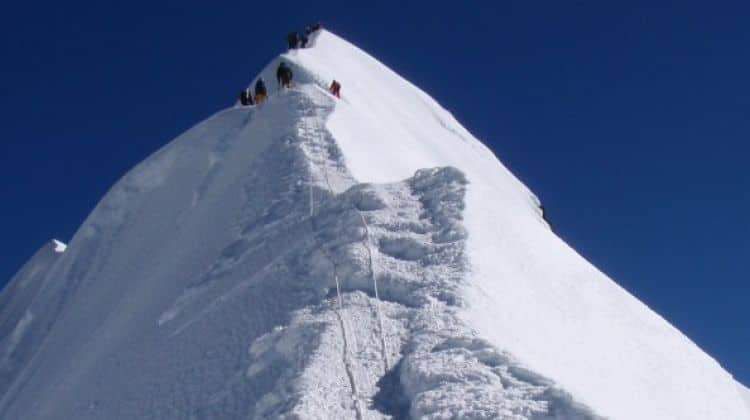
      Setting off on a daring expedition to Island Peak is another challenging experience. At 6,189 meters, the Island Peak in Nepal’s Khumbu area is one of the most well-liked mountain climbing destinations. For those seeking adventure and a higher 8,000-meter peak to climb, it’s the perfect challenge.

      The adventure starts with an exhilarating flight to Lukla, followed by trekking through verdant scenery and Sherpa communities. Reaching the summit provides amazing views of Lhotse, Nuptse, and Ama Dablam after navigating the treacherous ice and rock parts. This amazing trip, which usually lasts 15 to 18 days, combines breathtaking Himalayan scenery with challenging climbing.

      TREKKING

      EVEREST BASE CAMP TREK

      The Everest Base Camp Trek is a renowned worldwide adventure in the Himalayas. Throughout this incredible trip, which lasts between 12 and 16 days, you will cross difficult terrain and reach altitudes that will push your limits.
      Discover historic monasteries like Tengboche, pulsating with spiritual peace amidst the rough terrain, during your tour to the lap of the world’s highest peak. Explore lively Sherpa communities to create bonds with the community. The trek’s main features include an excursion to the famous Kala Patthar peak and breathtaking vistas of Everest, Lhotse, and Nuptse. An incredible trip is both a physical achievement and a mind-blowing encounter with the world’s tallest peaks.

      ANNAPURNA CIRCUIT TREK

      The Annapurna Circuit is a popular trekking route offering various trekking experiences and an unmatched sense of adventure in the center of western Nepal. This trek, which lasts for 15 to 20 days, takes you through various landscapes, including alpine meadows, lush subtropical forests, and even the deserts of Manang and Mustang. Enjoy the magnificent Machapuchare, Dhaulagiri, and Annapurna Massif. Explore the quaint towns of Manang and Pisang, home to historic temples and monasteries with a strong Himalayan cultural influence.

      The spiritual experience at Muktinath Temple and the tranquility of Tilicho Lake—one of the highest—showcase the circuit’s diversity beyond its physical features. Adventure seekers seeking a blend of natural beauty and cultural diversity must do this expedition.

      LANGTANG VALLEY TREK

      Famous for its proximity to Kathmandu and its unique combination of adventure and abundant flora and fauna, the Langtang Valley Trek is an exciting Himalayan escape. Ten to twelve days are needed for the trek, which passes through quiet Tamang settlements, thick forests of rhododendrons, and stunning scenery inside Langtang National Park.

      Explore the local way of life by touring historic monasteries such as Kyanjin Gompa, which is adorned with colorful prayer flags. With its breathtaking scenery, the walk provides sweeping vistas of the Langtang Lirung and Ganesh Himal peaks. Experience the spiritual tranquility of the holy Gosaikunda Lake and the kind welcome of the local people. Trekking in the Langtang Valley offers a brief yet remarkable experience with its breathtaking scenery and cultural immersion.

      CONTACT US FOR MORE QUERIES

      10 Fascinating Reasons Why Mustang Is So Unique and it made it to the New York Times 2024 List

      5

      10 Fascinating Reasons Why Mustang Is So Unique and it made it to the New York Times 2024 List. Mustang is an interesting place that combines natural and cultural features. Situated in the Himalayas of northern Nepal, it is a part of the Gandaki Province and shares borders with Tibet to the north. Rich culture, historic monasteries, stunning scenery, and the Upper Mustang Region’s capital, Lo Manthang, a protected city, are all well-known highlights of Mustang. The region is often referred to as Nepal’s “Forbidden Kingdom.”

      Similarly, the New York Times recently ranked Mustang 37th out of 52 attractive locations for 2024. Because of its alluring geographic distribution and natural consistency, it is also one of the most popular travel destinations for people of all ages worldwide. Mustang is an exciting trip for individuals who are curious about history, culture, and adventure.

      The following reasons may help you understand why Mustang is so unique and why it is one of the New York Times’ top 2024 travel destinations:

      Mustang Region’s Unique Terrain

      IMG f5a8b34625aea43fb8698dba10d69491 V
      10 Fascinating Reasons Why Mustang Is So Unique and it made it to the New York Times 2024 List 25

      The Mustang region of Nepal is a geographically varied region with a distinctive topography that varies from lush river valleys to high-altitude deserts. The Upper Mustang and Lower Mustang are its two primary divisions. With the world’s deepest valley formed by the Kali Gandaki River, Lower Mustang is an enchanting natural environment. The Dhaulagiri and Annapurna mountain ranges can be seen in this region.

      Upper Mustang is a magical, once-forbidden kingdom. The Lo people continue to practice their old customs and culture. High-altitude desert Upper Mustang has red cliffs, sandy dunes, dry plateaus, and narrow valleys around majesty valleys. In addition, this area’s landscape differs greatly from that of other well-known hiking routes, such as Everest Base Camp, Annapurna Base Camp, and Manaslu Base Camp.

      Diverse Culture

      Mustang is a region rich in culture, with a long history of Buddhism and a significant Tibetan influence. The region’s numerous historic monasteries, temples, and caverns display distinctive artwork and architectural design. This region’s inhabitants also celebrate several holidays and traditions that are indicative of their unique culture and perspective. A few of the celebrations are Yartung, Lhosar, and Tiji. The region’s distinctive food, attire, and handicrafts are influenced by its major surroundings and topography. Additionally, one of the major celebrations that the people of Mustang celebrate every year is the Tiji Festival.

      The Walled City of Lo Manthang

      Upper Mustang’s capital city is Lo Manthang. The city is fortified and has a lengthy past. The region’s numerous historic monasteries, temples, and caverns display distinctive artwork and architectural design. Furthermore, Lo Manthang is the last forbidden kingdom in Nepal since it preserves the old customs and culture of the Lo people. Tibetans are closely linked to the Lo people.

      The region boasts breathtaking scenery, including steep gorges, high-altitude deserts, and Himalayan vistas. The most vivid and colorful festivals, such as Tiji and Yartung, are also observed by the inhabitants here. It’s also a fascinating place to go hiking with a variety of routes and exciting experiences.

      Upper Mustang – A Restricted Area

      The Mustang region has been designated as a restricted area by authorities in order to provide protection, in recognition of its rich cultural history, distinctive traditions, and diversified topography. The Mustang region is recognized as a restricted area in order to preserve its varied topography, rich cultural legacy, and distinctive customs. Due to the presence of approximately 10,000 artificial sky caves, including sky tombs, monasteries, shelters, and more, Mustang has significant archeological importance. Similarly, enormous antique artifacts and works of art require preservation.

      Additionally, the Lo people’s customs and culture are preserved by Mustang’s unique and rich cultural legacy. The management of tourism in Upper Mustang is crucial for preserving and honoring these cultural components and keeping outside influences and changes at bay.

      Upper Mustang is the place with the greatest restrictions. Similarly, international visitors require permission and a guide from the Nepali government to access Mustang Valley, Upper Mustang.

      Ancient Monasteries

      IMG 33116a6a238dd4e59522c2dca97c8ad6 V
      10 Fascinating Reasons Why Mustang Is So Unique and it made it to the New York Times 2024 List 26

      The Mustang Valley has a long history of Buddhism and is heavily influenced by Tibet. The art and architecture of several old monasteries, or gompas, are in sight. The following are a few well-known monasteries in Mustang Valley:

      Dragkar Thegchen Ling Gompa

      Dragkar Thegchen Ling Gompa, constructed in the thirteenth century, is the biggest and most well-known monastery in the Lo Manthang area. Nevertheless, the monastery is home to a few of the strong lamas.

      Jampa Monastery

      Among the three monasteries situated in the heart of Lo Manthang, Jampa Monastery is one of the principal gompas. Built in the fourteenth century, it is embellished with 109 mandalas painted in turquoise, silver, and gold.

      Thubchen Gompa:

      The monastery was built in the fifteenth century, and its enormous assembly hall, which has a gilded dome and a 45-foot-tall statue of Lord Buddha, was one of its main features. It also has a library with several antiquated manuscripts.

      Luri Gompa:

      Located in the center of Yara, Luri Gompa is a 13th-century cave monastery. The monastery is home to a distinctive 13-ring stupa. It also features a large number of god statues and paintings.

      Ghar Gompa:

      Dating back to the eighth century, Ghar Gompa is one of Mustang’s oldest monasteries. The footprint of the Tibetan Buddhist founder, Guru Rinpoche, is thought to have mediated here in the past.

      In addition to being places of prayer, these monasteries serve as important historical and cultural reminders of the Lo people. These monasteries combine spirituality, culture, history, and scenic beauty to provide an exciting experience.

      Trekking in the Upper Mustang

      Through the Mustang Valley’s forbidden kingdom, the Upper Mustang Trek offers an unforgettable experience. Offering breathtaking views of the Himalayas, the Kali Gandaki River, and the valley, this walk is a secluded and culturally rich trekking path in Nepal that highlights the significance of Tibetan Buddhist culture. The Mustang District’s headquarters, Jomsom, is where the journey starts. You may see historic caverns and monasteries as well as a variety of scenic vistas throughout the trek. In addition, you may take part in vibrant celebrations and festivities and get a taste of the warmth and way of life of the Lo people.

      Isolated Region

      Behind the Annapurna and Dhaulagiri Himalayan peaks is Mustang, which is located in the nation’s north-central region. Because of its harsh terrain, historical significance, and geographic location, it is one of the most isolated regions. It is isolated from the outside world as it is also one of the least inhabited areas of the Himalayas.

      Yartung Festival and Tiji

      Two of Upper Mustang’s most well-known and vibrant festivals are Tiji and Yartung. Tiji is a three-day celebration that includes mask dancers honoring the triumph of virtue over evil, drumming, and the chanting of Buddhist monks. The Upper Mustang Tiji Festival is thought to have started about 500 years ago to commemorate Buddha’s triumph over local demons that caused droughts while he was a manifestation of Dorje Sonnu.

      Similarly, Yartung, which heralds the end of summer and the harvest season, is a celebration of the horsemanship of the people. This celebration features drinking, dancing, horse racing, and praying. On the August full moon, the Yartung celebration is held in several Mustang locations, including Lo Manthang, Khimkar, Jharkot, and Ranipauwa.

      Annapurna Circuit Trek

      1 1
      10 Fascinating Reasons Why Mustang Is So Unique and it made it to the New York Times 2024 List 27

      Trekking across Nepal’s varied landscapes is an exciting and fulfilling cultural experience, particularly the Annapurna Circuit Trek. The journey leads to the magnificent Thorong La Pass by round the magnificent Annapurna ranges. The journey will cross the world’s deepest gorge, the Kali Gandaki Gorge, through the Mustang Valley in addition to the Annapurna Circuit journey. The valley is encircled by the majestic peaks of Dhaulagiri and Annapurna. Along with experiencing other cultures, you’ll get to know Gurungs, Thakalis, and Lopas. In addition, you may take in the rich Tibetan Buddhist culture of Manang Village and see the revered Muktinath Temple.

      Muktinath Temple

      IMG 2a9750dbd6997ecd4ccb79411da71f5f V
      10 Fascinating Reasons Why Mustang Is So Unique and it made it to the New York Times 2024 List 28

      For Buddhists and Hindus, the Muktinath Temple in the Mustang area is a sacred place. At 3,800 meters (12467.19 feet) above sea level, it is one of the tallest temples in the world. The temple is also devoted to Vishnu, who is revered as the lord of freedom, Muktinath. The temple has a 45-foot figure of Vishnu and a pagoda-style building, complete with a golden roof. To atone for their sins and find salvation, travelers bathe at the 108 water spouts. In addition, it is surrounded by the Kali Gandaki River and the Himalayan Mountains. It is also the historic route used for salt commerce between India and Tibet.

      Ten Must-See Sites During the Mustang Tour

      The Mustang region is well-known for its striking scenery, historic monasteries, and dynamic Tibetan culture. On the other hand, the following are a few of the attractions you really shouldn’t miss while on the Mustang tour:

      Choser Cave, Ghar Gompa, Lo Manthang, Jomsom, Kagbeni, Muktinath Temple, Dhakmar, Tsarang, Mustang Eco Museum, Sky Cave

      Mustang is the place you should go if you want an experience that transports you back in time. Discover its breathtaking vistas, historic monasteries, and vibrant celebrations. Although Mustang is not easily accessible, the effort is worthwhile. This journey will test you, motivate you, and provide you with opportunities to create priceless memories once you finish it. Thus, don’t miss this chance to see one of Nepal’s most fascinating historical sites.

      The Top Ten Must Visit Sacred Places in Nepal 

      5

      We have listed the top ten must visit sacred places in Nepal. If you are in Nepal or planning to travel to Nepal, this might come in handy.

      PASHUPATINATH TEMPLE: THE HOLIEST HINDU TEMPLE

      It’s unlikely that any religious Hindu in Nepal has not yet visited this holy place. Dedicated to Lord Shiva, Pashupatinath Temple is a famous pilgrimage destination that is highly regarded by Hindus worldwide. It is located in the Kathmandu Valley, on the banks of the holy Bagmati River. The idea behind its holiness is that the cosmos is guarded by Pashupatinath, the Lord of Animals.

      The temple’s old pagoda-style architecture, which was restored by several reigning kings of Nepal after it was built in the fifth century, is a reflection of the region’s rich religious and cultural heritage. A site of UNESCO World Heritage. The structure is made of exquisite wood carvings of many gods and goddesses, and it features a renowned golden roof and a holy Lingam, representing the divine force that formed the universe.

      Non-Hindu tourists can see the temple’s magnificent figure from across the river but are not permitted to enter via the main gates. The temple has a significant, forested area surrounding it. It is one of Nepal’s revered places, drawing both domestic and foreign visitors looking for spiritual healing.

      LUMBINI: THE BIRTHPLACE OF LORD BUDDHA

      A UNESCO World Heritage Site, Lumbini is also a popular pilgrimage site for Buddhists all over the world. It is also known as the birthplace of Lord Buddha. For pilgrims who come to its sacred grounds to honor the enlightened, it is quite important. The traditions surrounding the miraculous events surrounding the birth of Buddha have added to the place’s mystical charm.

      The historic site is said to have been founded in the third century BCE and is situated in Nepal’s Rupandehi District in the southwest plains. The site is home to several unique temples and structures, the most well-known of which is the Maya Devi temple, which honors the place beneath a sacred sal tree where Queen Mother Maya Devi gave birth to Prince Siddhartha, who subsequently became Buddha. Ancient monasteries and stupa fragments may be found here because of the place’s archeological significance. The Ashoka Pillar, constructed in the third century BCE by Emperor Ashoka, is another incredible piece of architecture and evidence of the spread of Buddhism throughout Asia.
      With its serene gardens, neighboring temples, and ponds, Lumbini’s expansive surroundings offer a spiritual aura for tourists.

      MUKTINATH TEMPLE

      3 1
      The Top Ten Must Visit Sacred Places in Nepal  38

      Known for being one of the highest-located temples, Muktinath Temple is another well-known sanctuary for Buddhists and Hindus. Dedicated to Lord Vishnu, it is tucked away in Mustang, a district of western Nepal at 3,710 meters above sea level. Since Muktinath means “Lord of Liberation,” it is a significant destination for pilgrims pursuing enlightenment

      Muktinath has a unique pagoda-style architecture and is believed to have been built in the 19th century. The temple’s 108 bull’s-head-shaped water spouts, which are said to represent purity, are another interesting aspect. Additionally, there is a flame made of natural gas that is revered. Additionally, pilgrims go to the temple because they think that redemption is bestowed upon them by Lord Vishnu.

      The temple receives a lot of visits from tourists and hikers because of its unique location. Its spiritual appeal is increased by the close-up views of the Dhaulagiri and Annapurna mountain ranges that surround it. It is undoubtedly a nice place to combine religion with the natural world in the heart of the Himalayas.

      JANAKPUR: THE BIRTHPLACE OF SITA

      IMG 20210217 084952
      hdr

      Janakpur is widely recognized for being Sita’s birthplace and for being the site of Lord Ram’s (a manifestation of Lord Vishnu) marriage to Sita. The Hindu epic Ramayana also tells the story of this sacred location on the plains of southeast Nepal.

      The magnificent Janaki Mandir, built in 1910 by the Indian Queen, is another reason why Janakpurdham is significant. The shrine is devoted to Goddess Sita and features stunning Rajput and Mughal architecture. The mythical tale of Lord Ram and Sitabegan, as well as the birth of Goddess Sita to King Janak, are both beautifully shown in the museum. The walls also include colorful murals and elaborate sculptures with enthralling spirituality and creativity.

      MANAKAMANA TEMPLE

      The name Manakamana Temple means “the wish-fulfilling goddess.” It is devoted to the Hindu goddess Bhagwati, who is an incarnation of Parvati. The temple has become extremely important since it is thought that by praying to it, one may be granted their greatest wishes. The temple’s fame is also attributed to its location, which stands on a mountain in Nepal’s Gorkha district and is only accessible by cable cars

      The temple is mostly visited by Hindus, but because of its spirituality and beautiful surroundings, it is also frequented by tourists and members of other ethnic groups. The King found a miracle stone that represented the goddess Bhawani in the 17th century, which is when the temple first started to be built. The building has a distinctly pagoda-style construction with fine wood decorations.

      For those seeking benefits, the goddess’s distinctive surroundings and ethereal spiritual atmosphere give cultural value.

      BOUDHANATH STUPA:

      IMG 20210227 172922
      The Top Ten Must Visit Sacred Places in Nepal  39

      As a liberal nation with a healthy mix of religions, Nepal is also home to the most admired Buddhist temple. The Boudhanath Stupa is a famous representation of Tibetan Buddhism in Nepal and a work of spiritual beauty. Situated in the eastern suburbs of Kathmandu, this stupa dome is among the biggest in the world. The governing Licchavidynasty constructed the stupa in the fifth century. In addition to being a UNESCO World Heritage Site, it is a center for Tibetan Buddhist traditions in the Kathmandu Valley.

      The building’s dome is adorned with a large mandala that depicts the Buddha’s attentive eyes, which stand for compassion and wisdom. The Stupa is surrounded by prayer wheels and has prayer flags flying in the breeze. According to mythology, the Stupa holds the bones of Kassapa Buddha, connecting it to the prehistoric past and enhancing its ethereal appeal.

      It’s one of the calmest retreats, with worshippers making a circular round in the morning and evening as soft hymns play. The place attracts a lot of visitors, photographers, and believers due to its beauty and spiritual aura.

      SWYAMBHUNATH STUPA: THE MONKEY TEMPLE

      IMG 20200928 063051
      The Top Ten Must Visit Sacred Places in Nepal  40

      The Swayambhunath Stupa, also known as the Monkey Temple, is one of the most popular sacred tourist destinations. Situated atop a hill with an outstanding view of the Kathmandu Valley, the Stupa symbolizes the Buddha’s timeless knowledge. For pilgrims who practice Buddhism and Hinduism, it is a spiritual paradise.

      This UNESCO World Heritage monument is believed to have existed for more than 2,500 years, while an exact timeline is unknown. Legend has it that the Stupa sprang up out of the earth, earning the moniker “self-arisen.” It stands for both the voice of Buddhism and the primal Buddha.

      The whitewashed dome adorned with the “eyes of Buddha,” prayer flags, prayer wheels, and amusing monkeys playing in the background are all parts of the Stupa’s structure. The breathtaking views of the Kathmandu Valley from the top add to the temple’s unique attractiveness. Pilgrims and tourists both come here in search of serenity and spirituality.

      TENGBOCHE MONASTERY

      71757973 2397424687023603 6367924873343270912 o
      The Top Ten Must Visit Sacred Places in Nepal  41

      Tengboche Monastery is undoubtedly one of the holy places on the list of the most peculiar sites. The Buddhist temple is a fascinating visit, tucked away in Nepal’s Everest region. Built in 1916, the monastery has undergone renovations following significant earthquakes that have struck Nepal. For Tibetan Buddhists, it is among the most sacred places to be venerated. According to legend, Sangwa Dorge, one of the Lama, designated this location as a holy site after seeing visions of it.

      Tengoche has elaborate wood carvings, vibrant murals, and a huge prayer wheel, all characteristic of traditional Tibetan architecture. Large crowds of pilgrims visit the monastery during the yearly celebrations. The area around the temple provides sweeping views of the surrounding mountains, including Mt. Everest, the highest peak in the world.

      As a significant religious center for the ethnic indigenous community in the Everest area, you can watch monks and Sherpas going about their routine of praying and participating in religious rites within the monastery. On their way to the summit of Everest, you may see mountain climbers, trekkers, and hikers receiving blessings at the monastery. It provides an amazing perspective of how culture and environment meet when trekking Mount Everest.

      GOSAIKUNDA LAKE

      5
      The Top Ten Must Visit Sacred Places in Nepal  42

      Gosaikunda, a holy lake, is one of a kind on the list. It is thought that Lord Shiva resides in this immaculate alpine lake, which is tucked away in Nepal’s Langtang National Park. The lake is important to both Hindus and Buddhists because legend has it that Lord Shiva drank from it to soothe his sore throat after swallowing poison during the churning of the cosmic ocean.

      At 4,380 meters above sea level, Gosaikunda is a glacial lake where pilgrims are said to have washed away their sins by immersing themselves in the freezing water and praying.

      Even though the lake is associated with a variety of religions, it is an incredible spiritual location with views of the Himalayas in addition to being a center of spiritual pilgrimage. Several lakes and ponds, as well as snow-capped mountains, are seen in this region.

      Every year, during a festival, pilgrims swarm to the place, and travelers frequently stop by while trekking through the Langtang Valley. A serene atmosphere is created by the calm of the blue water and the prayer flags waving in the breeze.

      BUDANILKANTHA TEMPLE

      IMG 20210805 065944
      The Top Ten Must Visit Sacred Places in Nepal  43

      There is a mythology associated with the Budanilkantha temple that describes how the statue of Lord Vishnu appeared during the Lichchhavi reign. The monument is five meters long and exquisitely carved from stone. It depicts Lord Vishnu dozing off in a cosmic sleep atop the coils of the Shesha snake. Then, to further enhance the attraction of the holy place, the temple was built around the area where the statue was first observed in the fifth century. The magnificent figure of Vishnu dozing on a watery bed is currently housed at the temple.

      Devotees from a variety of ethnic origins, including Brahmins and Newars, assemble at this unique temple on the northern border of the Kathmandu Valley to offer prayers and seek blessings from Lord Vishnu.

      Celebrate Tiji Festival 2024 at Upper Mustang

      Upper Mustang Trek

      Celebrate Tiji Festival 2024 at Upper Mustang. Unexpected components of a regular trek include color, splendor, chanting, and dancing. You will, however, get to experience all of these and more on the Mustang Tiji Festival trek. Tenpa Chirim is the local term for the Tiji celebration, also known as the Tenchi festival. Tiji is a much-anticipated celebration that consists of prayers for a plentiful crop and commemorates the end of a protracted drought. It is thought that a demon that caused sickness and drought once afflicted the historic walled kingdom of Lo Manthang. According to mythology, Lo experienced prosperity after the Buddhist god Vajrakila, often referred to as Dorje Jono, slew the demon.

      One of Nepal’s most intriguing bordering regions with Tibet is Mustang, which is mostly populated by people of Tibetan ancestry. The whole Mustang region has been divided into Lower Mustang and Upper Mustang due to its sensitivity. Visitors must get a special permit to enter the Upper Mustang region, which has been designated as a restricted area. Natural resources, especially uranium, and scenic beauty are abundant across the region. Aside from this, the main draws of Mustang include the Himalayas, the source of the Kaligandaki River, which is well-known for fossils and ammonite and is considered sacred to both Buddhists and Hindus, as well as a plethora of monasteries and caves.

      Upper Mustang, commonly referred to as the last forbidden kingdom of Nepal, is a desolate region in the Himalayas and the oldest route for commerce with Tibet. With awe-inspiring views of the massif Himalayas, including Dhaulagiri (8091m/26545ft), Annapurna (8091m/26545ft), and Nilgiri (7061m/23166ft), Mustang is a highly sought-after destination for trekkers.

      What makes the Tiji festival trek worthwhile?

      The monks of Chhode monastery perform a unique Vajrakila rite in commemoration of a Buddhist miracle, which is intended to remove all bad aspects in Mustang and promote the well-being of all sentient creatures. Thus, sacred dances are presented annually in the Mustang Royal Palace courtyard over three days in the third month of the Tibetan calendar.

      About three months in advance, festival preparations begin. On the other hand, you will witness the once-forbidden kingdom of Lo Manthang uniting to celebrate this magnificent Buddhist festival whilst on your Tiji festival trip. You’ll be enthralled by the three days of festivities and Mustang’s distinct terrain.

      Dates of the Tiji Festival in 2024

      Nepal uses a lunar calendar; hence, the dates of religious or traditional celebrations might change based on the moon cycle of that particular year. It is customary to celebrate the event on the 27th, 28th, and 29th day of the third Tibetan month. These are the approximate dates, converted to the Gregorian calendar:

      05 May 2024: First Day of the Tiji Festival
      06 May 2024: Second day of the Tiji Festival
      07 May 2024: Third day of the Tiji Festival

      How do get there?

      Located in the Gandaki area of western Nepal, Lo Manthang is nestled in the northernmost corner of Mustang.

      1. Take a ride on the bus.

      Rumbling over the dusty countryside, the glorious Himalayas are always in the background. Currently, there is an even more affordable and enlightening option available: bus transportation to Upper Mustang. Opt for the ease of direct bus travel from Kathmandu to Muktinath, located around 45km south of Lo Manthang, and immerse yourself in the stunning sceneries along the route.

      Making the trip in two halves would be far more comfortable.

      • Travel to Pokhara by bus from Kathmandu (approximately 6-7 hours)
      • Jomsom to Pokhara (about 7 hours)
      • Travel through Ghami for around 7-8 hours to get from Jomsom to Lo Manthang.

      2. Take a Jeep ride

      Hiring a vehicle would be a more comfortable and pleasant way to get to Lo Manthang. There are also public jeeps available, but a little bit busier. Still, it’s among the easiest routes to reach the barren and rocky Upper Mustang.

      The jeep trip will take many days to complete. This is a general synopsis of the Jeep trip:

      Drive from Kathmandu to Pokhara (6-7 hrs drive).
      Drive from Pokhara to Jomsom  (6-7 hrs drive).
      Chuksang to Jomsom  6-hour drive)
      Chuksang to Lo Manthang  via Samar and Tsarang (about a 6-hour drive)

      Combine the best of both worlds by flying and trekking.

      Trek across the parched valleys and discover the captivating enchantment of the Upper Mustang Trek. Take in the expansiveness of the Himalayas, which makes it possible to thoroughly explore Upper Mustang, Nepal’s final Forbidden Kingdom. This is a sample of what to anticipate from these incredible treks:

      Flying to Pokhara from Kathmandu  (30-minute flight)
      Jomsom to Pokhara flight (approx. 30 min)
      Trek for around 4 hours from Jomsom to Kagbeni
      Chele to Kagbeni (around a 6-hour trek)
      Syanbochen to Chele (about a seven-hour trek)
      Syanbochen hikes to Ghami, around six hours.
      Ghami to Tsarang (approx. 6-hour trek)
      Lo-Manthang to Tsarang (about a 4-hour trek)

      Things to be aware of before traveling for the Tiji festival:

      Technicalities, delays, and ways to prepare.

      Flights to Mustang are known to be often delayed due to topographical and climate-related challenges. Still, it is preferable to take off a bit later than to have an unfavorable outcome. Be careful to pack light food and comfy clothing in case you have to wait longer than you anticipated at the airport.

      Discover more about Mustang

      The majority of people in Upper Mustang are Thakali and Tibetan in origin. They belong to one of the rare groups of people who practice authentic Tibetan Buddhism. Aside from religious rites, certain antiquated societal rituals are still in place. Specifically, there is the custom of fraternal polyandry, which involves brothers from the same family getting married to the same female. It’s still a widely accepted tradition.

      Make a friendship with locals!

      The majority of people living in the dry valley speak Nepali, while there are few forgotten dialects. To get to know the people, you may use any of the following greeting expressions:

      Namastey: Hello/Greetings
      Dhanyabaad: Thank you 
      Kasto cha?:  How are you?
      Huncha / Hudaina: Yes/no
      Mitho cha:  It’s tasty
      Vetera khusee laagyo: nice to meet you
      maaf garnu hos:  Sorry

      Climb to breathtaking altitudes

      In your desire to see the festival, don’t rush to get to Lo! At 3,730 meters (12,238 feet) above sea level, Lo Manthang is located in Upper Mustang. If you have never trekked at a high altitude in Nepal, make sure you take the appropriate safety measures. Remember to take your time while you soar! Acclimatize well!

      The Hidden Kingdom’s mystery

      Founded in 1380 AD, Lo Mathang is regarded as Nepal’s secret kingdom. Lo remained off-limits to tourists until the early 1990s. Replete with the enchantment of Tibetan Buddhism and the mystery of its people, it continues to be one of Nepal’s most exclusive trekking destinations even now. Just about 1,000 individuals are allowed to visit Lo Manthang every year due to the admission permission requirement only being granted to small, planned parties.

      The Tiji Festival’s highlights

      Walk through white-washed mountain towns and past vibrant Buddhist shrines and temples as you make your way to Mustang Pass in the shadows of Dhaulagiri and Annapurna along the Kali Gandaki River.
      After five days of trekking, arrive to Mustang’s renowned walled city, Lo Manthang.
      Attend the Tije Festival, a colorful Buddhist event with dance and traditional music, for three days while in Lo Manthang.
      Discover other people’s lifestyles.

      OUTLINE ITINERARY BY DRIVE/FLIGHT

      01 May 2024: Fly or Drive to Pokhara - 30 min / 8 hrs
      
      02 May 2024: 4WD Jeep Drive to Tatopani 1,341m (4,400 feet) – 5 hours
      
      03 May 2024: Jeep Drive to Muktinath to Kagbeni 2,804m (9,199 ft) -5 hours
      
      04 May 2024: Morning drive to ( Tsarang) Charang 3,570 m (11,710 ft) -6.5 hours
      
      05 May 2024: Drive to LOMANTHANG and explore the day-first TIJI Festival. (FESTIVAL BEGINNING) 3,840 m (12,600 ft) -
      
      06 May 2024: Observe and experience a full-day TIJI Festival.
      
      07 May 2024: Day 3rd of TIJI Festival. (officially festival closing ceremony).
      
      08 May 2024: Drive back to Jomsom 2,736 m (8,976 feet) - 5 hours
      
      09 May 2024: Drive back to Pokhara - 7 hours
      
      10 May 2024: Fly / Drive back to Kathmandu - 30 min / 8 hours

      Would you want further information about visiting Mustang and attending the Tiji festival? Do contact us via email or WhatsApp for more information. You can also fill up the form below to reach out.

      5 BEST EASY TREKS IN NEPAL FOR BEGINNERS 2024

      Easy Trek in Nepal

      5 Easy Treks In Nepal For Beginners 2024. People from all over the world travel to adventurous places to seek out new experiences and make amazing memories. Trekking has been rather popular in the last few years. Trekking may be enjoyable, but it can also be taxing if done erratically. Trekkers from all over the world go to Nepal because it is home to some of the most breathtaking and fascinating places. The ten easiest treks for novices to do in Nepal are listed below.

      1. PIKEY PEAK TREK

      IMG 2da0efe3647aa36e5211c371f55259eb V
      5 BEST EASY TREKS IN NEPAL FOR BEGINNERS 2024 53

      Pikey Peak Trek is a quick yet fantastic trek to see the breathtaking Himalayas, which include Mt. Everest. One of the most recently opened routes in Nepal’s Lower Everest region, the Pikey Peak climb ascends to a maximum elevation of 4070 meters. A week-long trek to the Pikey would reward one with breathtaking views of the world’s highest peak, Mount Everest, as well as Mt. Kanchenjunga, Mt. Nuptse, Mt. Dhaulagiri, Ama Dablam, Makalu, Numbur Himal, Gaurishankar, and Langtang in the far west. The pathways go through a thick forest of pine, sunpati, and rhododendron, which is home to a variety of species. The routes go through a dense forest of pine, sunpati, and rhododendron, which is home to a variety of species. Along with the Yak, Cow, and other farm animals, wildlife such as Lophophorus (Danfe), Crimson Horned Pheasant, Wild bear, Panda, Ghoral, and Tiger can be spotted in the trek to Pikey Peak. It is possible to reach the small, picturesque hamlet, which is home to many Sherpas, Tamang, Gurung, and Chhetris ethnic communities, by road or by air.

      OUTLINE ITINERARY:

      Day 01: Drive from Kathmandu to Dhap
      Altitude: 2,900m | Drive: 7-8 hrs

      Day 02: Trek to Jhapre
      Altitude: 2,930m | Trek:7-8hrs

      Day 03: Trek to Pikey Base Camp
      Altitude:3640m | Trek: 7-8hrs

      Day 04: Trek to Pikey Peak (4070 m) – Jase Bhanjyang
      Altitude: 4070 m | Trek: 4-5 hrs

      Day 05: Trek to Junbesi
      Altitude: 2680m | Trek: 6-7

      Day 06: Trek to Phaplu
      Trek: 5-6 hrs

      Day 08: Drive / Fly from Phaplu to Kathmandu

      2. LANGTANG VALLEY TREK

      8
      5 BEST EASY TREKS IN NEPAL FOR BEGINNERS 2024 54

      For those who want to explore less-traveled paths amid high alpine pastures and stunning mountain views, the Langtang Valley Trek is an excellent choice. Trekking these paths offers a chance to encounter the Tamang and Sherpa cultures, therefore this short trek in Nepal ensures cultural exchanges with local ethnic groups.

      Due to its popularity among trekkers in central Nepal, the Langtang Valley trip is the most often sought in the region. The Langtang trekking route is one of the most well-known and traditional trekking routes. Stunning and breathtaking alpine scenery may be seen all around Langtang Valley. Trekking in the Langtang region provides views of several alpine meadows, yak herds, and ancient monasteries influenced by Tibetan Buddhism. Poppy and other alpine flowers bloom abundantly in the summertime on Langtang’s mountainous valley floor and alpine slopes, creating a magnificent display of global flora. Langtang is home to several significant mountains, including Dorje Lakpa (6,966 m), Naya Kangri (5,846 m), Gang Chhenpo (6,388 m), and Langtang Lirung (7,246 m).

      OUTLINE ITINERARY
      Day 01: Arrive in Kathmandu and transfer to the hotel
      Altitude: 1,400 m

      Day 02: Kathmandu to Syabru Besi
      Altitude: 1,420m/4,658ft | Drive: 8/9 hrs.

      Day 03: Syabru Besi to Lama Hotel
      Altitude: 2340m/7,675ft. | Trek: 5-6 hrs.

      Day 04: Lama Hotel to Langtang Village
      Altitude: 3,480m/11,415ft. | Trek: 5-6 hrs.

      Day 05: Langtang Village to Kyangjin
      Altitude: 3,870m/12,697ft. | Trek: 3-4 hrs.

      Day 06: Trek back to Lama hotel
      Altitude: 2340m/7,675ft. | Trek: 6-7 hrs.

      Day 07: Trek from Lama Hotel to Syabru Besi and drive back to Kathmandu
      Altitude: 1,420m/4,658ft | Drive: 8/9 hrs.

      Day 08: Transfer to the International Airport for your Final Flight Departure.
      Meal: B

      3. GOSAIKUNDA LAKE TREK

      Gosaikunda Lake
      5 BEST EASY TREKS IN NEPAL FOR BEGINNERS 2024 55

      Along with the Langtang Valley treks, the Gosainkunda Lake trek is another popular trek in this region. A sacred lake in the Himalayas, Gosaikunda is a mountain lake that is a major Hindu pilgrimage site. It is said to have been formed by Lord Shiva using his “Trishul.” Every year on the Full Moon day in August, hundreds of Buddhists and Hindu pilgrims flock to Gosaikunda to worship Lord Shiva and take a bath in the hallowed lake. Witness sunrise at this sacred location over a plethora of sparkling lakes. With Saraswati Kunda and Bhairav Kunda in its center, you may see more than 108 smaller lakes here.

      OUTLINE ITINERARY
      Day 1: Drive to Dhunche | Trek to Deurali
      Altitude: 2,030m | Walking hours: 5-6 | Drive: 6hrs

      Day 2: Trek to Chandanbari
      Altitude: 3200m | Walking hours: 5-6

      Day 3: Trek to Gosaikunda and back to Laurebina
      Altitude: 4361m | Walking hours: 5-6

      Day 4: Trek back to Chandanwari
      Altitude: 3200m | Walking hours: 5-6

      Day 5: Trek back to Dhunche | Drive back to Kathmandu.

      4. MARDI HIMAL TREK

      5
      5 BEST EASY TREKS IN NEPAL FOR BEGINNERS 2024 56

      The picturesque Machhapuchhare (Fishtail) and Mardi Himal mountains are the backdrops of the short Iconic Mardi Himal trek in the Annapurna Region. Experience the splendor of the only snow-capped peaks in the world, the immense possibility of an amazing exchange of cultures, and the sheer awe of Machhapuchhre Base Camp. The vibrant and fascinating path winds through alpine meadows, lush valleys, forests covered in lichen, streams, and waterfalls, all while offering striking views of the surrounding skyline and the mountains. The route passes through scenic glacial valleys, and most of the walking pathways in Annapurna’s scenery are steep and challenging.

      OUTLINE ITINERARY
      Day 01: Drive from Pokhara to Kande and trek to Deurali
      Altitude: 2200m | Trek: 4hrs

      Day 02: Trek to Forest Camp
      Altitude: 2,600m | Trek: 5-6 hours

      Day 03: Trek to High Camp
      Altitude: 3,150m | Trek: 5-6 hours

      Day 04: Trek to Mardi Himal Base Camp
      Altitude: 4500m | Trek to Low Camp – Altitude: 2,900m | Trek: 5-6 hours

      Day 05: Trek to Siding village
      Altitude: 1,750m) | Trek: 6 hours

      Day 06: Trek to Lumre and drive to Pokhara
      Trek: 3 hours | Drive: 2 hours

      5. POON HILL TREK

      14
      5 BEST EASY TREKS IN NEPAL FOR BEGINNERS 2024 57

      The hiking on Poon Hill is sometimes referred to as the Annapurna Panorama or Annapurna Sunrise trekking. Out of all the hikes, this one is the most popular with visitors and is quite easy. The stunning trek’s destination is marked by the viewpoint atop Poon Hill (3210m). If you’re a novice traveling to Nepal, the Poonhill Trek is one of the most popular trekking routes. It is elevated 3210 meters above sea level. If you like to discover this amazing hiking path. There are several trekking packages available, such as the 3-day Poon Hill trip, the 5-day Ghorepani Ghandruk circuit trek, and the 4-day Poonhill trek.

      OUTLINE ITINERARY
      DAY 01: Drive from Pokhara to Nayapul and trek to Thikedhunga
      Altitude: 1,600M | Drive: 2hr | Trek: 4/5 hr

      DAY 02: Trek to Ghorepani
      Altitude: 2,800 M | Trek: 6 hrs

      DAY 03: Short hike to Poon Hill
      Altitude: 3,210 m and Trek to Tadapani – Altitude: 2630 m | Trek: 5/6 hr

      DAY 04: Short walk to Ghandruk
      Altitude:1,940 | Trek: 3 hr

      DAY 05: Trek down to Nayapul
      Trek: 5 Hrs & Drive back to Pokhara