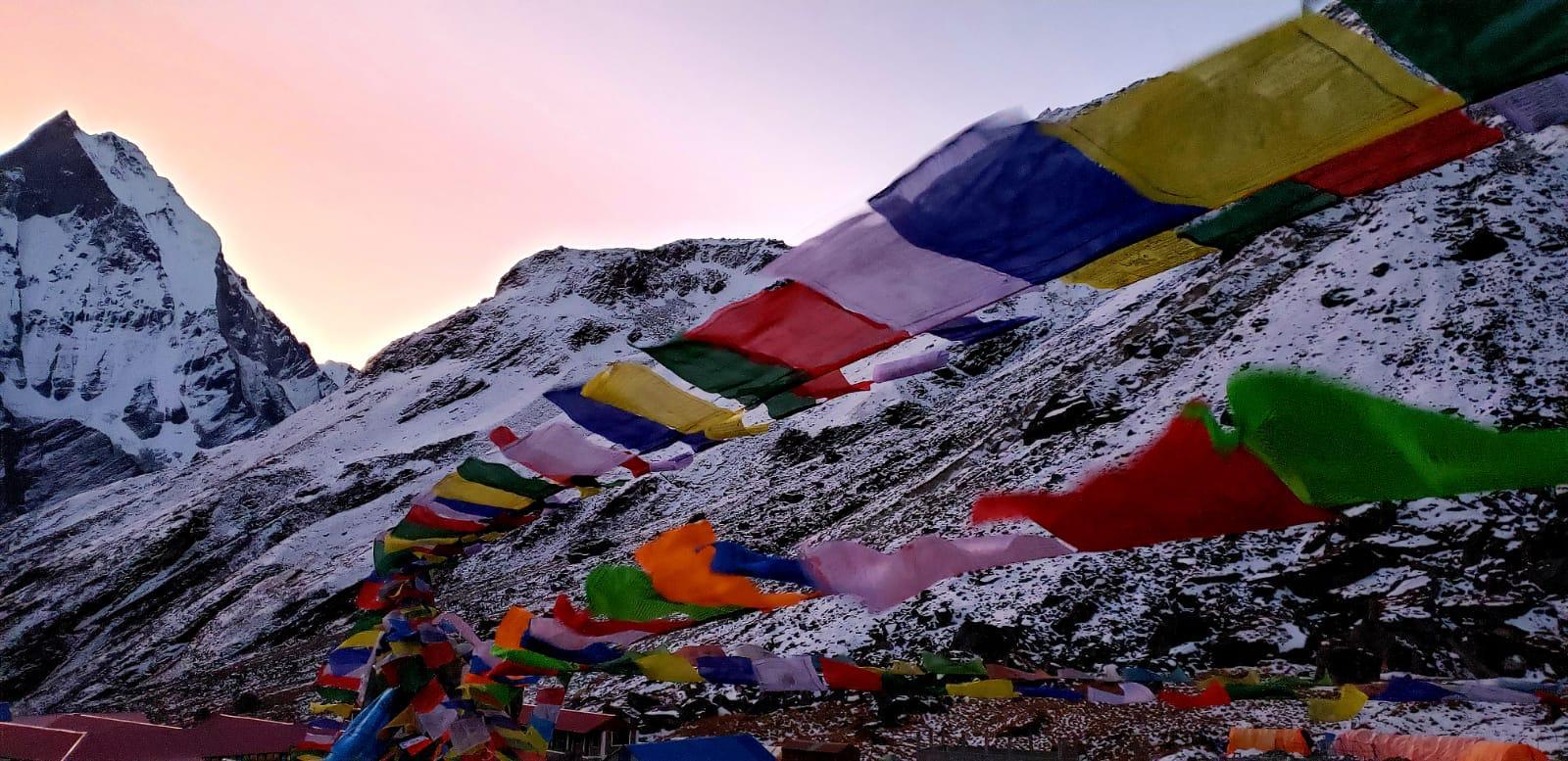
Essential Equipment to Pack for Peak Climbing in Nepal

Trekking Gears

Essential Equipment to Pack for Peak Climbing in Nepal. Every mountaineering adventure, whether technical or not, requires a range of climbing equipment that serves as a life support system to ensure a smooth ascent. Check out the list of essential equipment to pack for peak climbing in Nepal. We have carefully prepared a packing list to eliminate any doubt about what to pack for climbing in Nepal. This list is meant to serve as a general guide for all trekkers, including climbers. Your personal preferences and sense of judgment will also factor into your ultimate packing list for climbing in Nepal. 

Your personal belongings can only weigh a maximum of 15 kilograms per porter, which also happens to be the limit for all domestic flights in Nepal. The weight limit can be exceeded to some extent because you will have gear and equipment. If your luggage is significantly heavier than the allowed weight, be prepared to pay the additional fee. It would cost $ 1 to $ 2 per kg.

You need to arrange your trekking gear carefully so that you are comfortable at higher altitudes while trekking in the Himalayas of Nepal. Keep in mind that carrying extra baggage will probably be difficult for you and your support crew. Our mantra is “Pack light, but pack smart.” This will help you to travel comfortably while focusing all of your efforts and enthusiasm on exploring the beauty of the Himalayas. Please look over the list of clothing and equipment below.

HEAD AND HAND GEAR

SUN HAT

Any lightweight hat with a good brim or visor.

WOOL OR FLEECE HAT

Should cover your ears. Any brand should be fine.

BALACLAVA

This should fit underneath your wool or fleece hat or be thick enough to be worn alone. (It is best when you are above 5000m, as the winds can be really icy)

NECKBAND

Multi-use—can be worn as a scarf, facemask, and headband to keep your hair out of your face. However, this is Optional

LINER GLOVES

They should be lightweight and synthetic.

WIND STOPPER FLEECE GLOVES

Any brand of Wind stopper fleece

MITTENS W/ PILE LINERS

Esp. for climbing

FOOTWEAR

RUNNING SHOES

These are great for travel and easy walking.

HIKING BOOTS

Boots should be warm and fit well over light and heavy sock combinations. Fit is much more important than brand. (Asolo, Merrill, Scarpa, La Sportiva)

GAITERS

Short, simple gaiters are best, such as Outdoor Research’s Rocky Mountain Low Gaiters, and Gore-Tex gaiters- Recommended for winter trekking & climbing

SPORT SANDALS

For camp in lodges during the evenings.

LIGHTWEIGHT SOCKS

Pairs of synthetic/wool blend (Bridgedale, Patagonia, Wigwam, and Fox River)

HEAVY SOCKS

Pairs synthetic/wool blend (Smartwool, Bridgedale, Wigwam, Fox River)
Clothing:

LIGHTWEIGHT LONG UNDERWEAR TOP/ BOTTOM

(Patagonia-Capilene, REI, and Mountain Equipment Co-op)

MID-WEIGHT LONG UNDERWEAR TOP/ BOTTOM

The Zip T-neck design is good. Light colors are better for tops because they are cooler when hiking in direct sunlight and just as warm as dark colors when worn underneath other layers. (Patagonia, North Face, Mountain Hardware)

BRIEFS

4 pairs of synthetic or cotton. Running shorts also work well for underwear.

CLOTHING

SHORT-SLEEVED SHIRTS

Two synthetics; most nylon running shirts or athletic shirts work well. The shirt material should have vapor-wicking capabilities. (North Face, Patagonia-Capilene)

PAIR OF LONG-SLEEVE SHIRTS

LIGHTWEIGHT WINDPROOF FLEECE

For daytime trekking

JACKET SYNTHETIC OR FLEECE

Synthetic jackets or pullovers are a great alternative to fleece because they are lighter and more compressible. Primaloft type fill or Polartec 100 or 200 fleeces is recommended. (Wild Things Primaloft, Patagonia Puff Jacket)

SYNTHETIC INSULATED PANTS

Primaloft or Polarguard 3D. Full-side zips are recommended. Mountain Hardwear Chugach 3D pants are an example. An acceptable alternative is fleece pants like Polartec 100 or 200, but they are bulkier, heavier, and less versatile.

DOWN INSULATED JACKET

A medium-weight down-fill jacket with a hood. The hood is optional but highly recommended. (Marmot, North Face, Mountain Hardwear, Patagonia)

WATERPROOF BREATHABLE JACKET & PANTS

The jacket must have a hood, and the pants must have full-length side zips. (Arc’Teryx, Marmot, Mountain Equipment Co-op)
Accessories

EXTRAS

SUNGLASSES

For high altitudes. 1 pair of high-quality 100% UV and 100% IR sunglasses with a minimum of 80% light reduction, side shields such as those found on “glacier glasses” are not recommended, but the size and shape of the lens should offer maximum protection from bright light on snow.

One pair of high-quality 100% UV and 100% IR sunglasses, for lower elevations, also as a backup. It is important to have a spare pair of sunglasses.

HEADLAMP W/ SPARE BULB

AA or AAA battery-powered (Petzl or Black Diamond)

SPARE BATTERIES

Bring plenty for reading in tents at night.

BACKPACK

40L or more, internal frame. Top-opening mountaineer’s rucksack style is best.

PACK COVER

Recommended. To protect your gear on rainy days or snowy days etc

SLEEPING BAG

Minimum 10F to the maximum -10F (-12C to -24C) Down 700 fill minimum (Marmot, Mountain Hardwear) – We Provide if you do not have this!

WATER BOTTLES

Two 1-liter, leak-proof wide-mouth (Nalgene or Lexan type bottle)

TREKKING POLES

Recommended. Useful for going up and down trails, Adjustable poles are better for packing. (Leki, Black Diamond)

SWISS ARMY KNIFE

Remember not to leave in carry-on bags for any international or domestic flight.

SUNSCREEN

SPF 30 or higher, non-oily (Dermatone or Terrapin)

LIPSCREEN

SPF 30 or higher (any brand)

TOILETRY KIT

Toothbrush, toothpaste, skin lotion, alcohol-based hand sanitizer, soap, comb/brush, shave kit, (bring travel-size bottles to keep your kit small).

FIRST-AID KIT

Ibuprofen/Aspirin, assorted Band-Aids, moleskin, Neosporin-type suave, a small gauze pad, a roll of adhesive tape, tweezers, and safety pins. Include any prescription travel medications that your doctor may have prescribed (antibiotics, Diamox, sleep aids).

LARGE TRASH COMPACTOR BAGS

For waterproofing some items inside your duffel.

BABY WIPES

EARPLUGS

Very useful for sleeping in tents and lodges.

WATER PURIFICATION TABLETS

Such as Potable Aqua brand iodine tablets are available. You will be given plenty of purified water during your trek, but packing one bottle of backup purification tablets is always a good idea for your travels. They are especially useful in hotels on your way to Nepal. You should not drink untreated tap water anywhere in Asia, and bottled water in some rare cases might not be available.

TRAVEL ITEMS

TREK/ EXPEDITION DUFFEL BAG

Large size with strong zippers. (Wild Things, The North Face, etc.) We provide this.

SMALL TRAVEL BAG

You can also use a second duffel bag. For storing travel clothes and personal items at the hotel in Kathmandu- We could provide you with this

NYLON STUFF SACKS

Two or three, for organizing your gear and clothes. Lighter colors are preferable for easy labeling.

CLOTHES FOR KATHMANDU AND INTERNATIONAL TRAVEL

Two or three changes of comfortable simple travel clothes. Evenings in Kathmandu can be slightly cool in autumn and spring

SMALL PADLOCKS

For locking duffel bag(s)

BOOK(S) / JOURNAL

CAMERA

Digital and/or film camera. Bring plenty of extra batteries, and memory cards for your digital camera. If you recharge your batteries, power will be available in most of the lodges during the trek. Adaptors to fit the outlets in Nepal can be purchased easily in Kathmandu. Digital video camcorders are very useful. They allow you to record sounds and still images as well as video.

CLIMBING EQUIPMENT:

Ice axe
Crampons
Harness
Tape Slings (2)
Screw gate Karabiners (3 locks, 3 unlock)
Descender/Abseil Device
Plastic Mountaineering Boots
Ascender / Jumar
Helmet (optional)

These things are only suggestions; you should pack your clothes and equipment according to your travel history. It’s necessary to keep in mind that effective packing is essential for lowering your load on both domestic and international flights!

Top 5 Peak Climbing in Nepal for Novice Climbers

Island Peak

Top 5 Peak Climbing in Nepal for Novice Climbers. Have you hiked all over the world, visited Everest Base Camp, or the Annapurna region, and are now naturally drawn to higher ground? You might want to climb Everest one day, or perhaps all of the highest peaks on the earth, but where do you begin? There may be a thousand other reasons, or you may have the time and want to try mountain climbing.

Nepal is a wonderland for climbers. Whether you’re an expert mountaineer or a novice seeking a mountaineering introduction, the Himalayas of Nepal have it all. Several peaks in Nepal will give you a taste of basic mountaineering.

For physically fit yet inexperienced climbers, Nepal offers easier, as well as stunning, climbs. It’s important to keep in mind that just because a climb in Nepal is classified as “simple,” it doesn’t mean it won’t be difficult. Even if you don’t need technical climbing skills, you’ll need to give yourself enough time to acclimate to the altitude if you want to avoid being sick or exhausted.

Check out the list below:

1. Mera Peak Climbing (6,476 m)

15
Top 5 Peak Climbing in Nepal for Novice Climbers 8

The Mera peak climb provides novice climbers with the ideal introduction to climbing. It is one of Nepal’s simplest peaks to climb, with a trail that winds through pristine Nepali villages that are charming and attractive.

Mera Peak, Nepal’s highest permitted trekking peak, is a peak that every novice climber should attempt at least once. The peak is located in Nepal’s most popular location, the Khumbu region, and rises tall at 6,476 meters. Mera Peak is like a training base before the other tough climbs. The peak’s tough section is ideal for new climbers to improve their skills. Mera Peak is an excellent choice for novices, but it doesn’t have to be restricted to them. It’s also a great option for experienced climbers seeking a thrilling option in the Himalayas.

CHECK ITINERARY

2. Lobuche Peak Climbing (6,119 m)

Lobuche Peak Climbing
Top 5 Peak Climbing in Nepal for Novice Climbers 9

Have you ever wanted to climb an Everest region peak? Well, Lobuche West is located near the Khumbu glacier, at the foothills of Mount Everest. It provides you the grandeur of an 8000er with the ease of a 6000er peak and is regarded as one of the simpler mountains in Nepal to climb.

The Lobuche West, however, requires minimal technical expertise to reach its summit despite being a trekking peak. You should prepare well because it is a physically challenging mountain for a beginner.

CHECK ITINERARY

3. Pokalde Peak Climbing (5,806 m)

Pokalde, one of the most popular trekking peaks, is really among the simpler peaks to climb in Nepal. It is known as Dolma-ri and is located around 12 kilometers south of Mount Everest. One of the easiest and shortest climbs in the Everest region is this one. Additionally, Pokalde Mountain has all the majesty and mystique you’d anticipate from an Everest region peak. But its own trek is short and easy for novice climbers. You can never get enough of mountaineering in Nepal if you begin your ascent with Pokalde.

4. Island Peak Climbing (6,160 m)

6
Top 5 Peak Climbing in Nepal for Novice Climbers 10

One of the most well-known trekking peaks in Nepal is Island Peak. One of the first alternatives for beginners who are just starting off mountain climbing is this peak. The difficulty of climbing the Island peak makes it spectacular and thrilling. The remarkable challenge of scaling the enormous Island peak requires careful planning and preparation.

Island Peak is one of Nepal’s most well-known trekking peaks. This peak is one of the initial options for novices who are just getting started with mountain climbing. The difficulty of climbing the Island peak makes it spectacular and thrilling. Planning ahead is essential for the amazing challenge of scaling the massive Island summit.

CHECK ITINERARY

5. Yala Peak Climbing (5,500 m)

The Nepal Mountaineering Association categorizes the Yala summit as a trekking peak. It is a part of the Langtang Himalayas and is located around 51 kilometers (32 miles) north of Kathmandu. It is one of the less difficult peaks in Nepal and is rather simple to climb technically.
In addition, the pristine Langtang valley is breathtakingly beautiful. Yala is one of the best starting peaks for mountaineering in Nepal due to the beauty of the north-central Himalayas.

Contact us for more details

The Chulu West 6419M Climbing Expedition: Everything you need to know

Chulu West Peak 1

The Chulu West 6419M Climbing Expedition: Everything you need to know.Chulu West Peak is a 6000 meter+ climbing peak in Nepal’s midwestern region. The peak is situated in the beautiful Annapurna region. Climbers set aside Chulu base camp from Ledar village to undertake their peak climbing adventure, trekking through one of the world’s most beautiful trekking routes. The Annapurna massif range, Himlung Himal 7246M, Nemjung, and Manalsu 8163M, form the backdrop to the peak.

In comparison to the Everest region, the Annapurna region is less crowded with climbers and trekkers. Climbers looking for a remote and less traveled trail should consider this option. However, the beauty of the Himalayas is not diminished in the Annapurna region. It has a distinct beauty and leaves an impression of its own. The Annapurna circuit region is one of our favorites because of its access points, cultures, landscapes, massive mountains, remoteness, and so on.

Chulu West Highlights

  1. .Thorong-La Pass (5416m), the highest point on the Annapurna Circuit and the most physically demanding day. Its breathtaking views make everything worthwhile!
  2. Trekking through low subtropical forests to high alpine rocky terrain, with views of the Annapurna Massif and some of the world’s tallest peaks, including Annapurna 1, Manaslu, and Dhaulagiri.
  3. Muktinath Temple is one of Nepal’s most important Hindu and Buddhist shrines.
  4. It is challenging yet technically straightforward.
  5. 6000er Beginner/Intermediate Level

When is the best time to plan a climb to Chulu Peak?

The best times for Chulu East Peak climbing are March to May (Spring) and September to November (Fall) (Autumn). However, if you are well prepared for the cold weather, winter can be a great time to climb.

Meals

During the Chulu West Peak expedition, you will be able to taste traditional Nepali cuisine, various ethnic cuisines, and various types of international cuisine (Tibetan, Continental, Italian, and Indian). Breakfast will be served from the tea house or lodge menu where we stayed the night before. Lunch will be served on the way to the destination, followed by dinner and breakfast at the tea house or lodge where we will spend the night. During the climbing session, a freshly cooked, hygienic meal or a packed meal will be served. 

Is Chulu West Peak appropriate for novice climbers?

Yes, Chulu West is appropriate for all levels of climbers. The mountain itself is a non-technical high altitude trek/climb. You do not need any special climbing skills to reach the summit of 6476M. The mountain has few to no technical challenges; there are three or four small opening crevasses during the climb, but otherwise, the climb is straightforward.

Physical Fitness

The trekker’s physical condition should be excellent. You must also have been jogging or engaging in other strenuous physical activities for several weeks or months before the climb. We recommend that you train for an hour or more at least five days per week. Concentrate on high-volume, low-intensity training. If possible, plan a few weekends where you can work two or more full days in a row. Multi-day hikes with significant elevation gains are ideal. A positive mindset and mental preparation are both essential for success at any level.

Climbing Difficulty

Chulu West is labeled as Alpine Grade 1B. When it comes to expeditions, the fitter and stronger you are, the better your chances of summiting and, most importantly, enjoying the expedition. The weather and your fitness level are the most important factors in reaching Chulu West. The climb usually begins around 3/4 am in the morning and takes about 3-4 hours to reach the summit. It is a technically simple ascent for any climber. The primary challenge is proper acclimatization to the high altitude.