Peak Climbing in Nepal 2026 and 2027: Your Ultimate Guide to Himalayan Summits

Peak Climbing in Nepal 2026 and 2027

1. Introduction to Peak Climbing in Nepal

Peak Climbing in Nepal 2026 and 2027. Nepal, a land of unparalleled natural beauty, is home to eight of the world’s fourteen highest peaks, making it a revered destination for mountaineers and adventure seekers. Peak climbing in Nepal offers a unique blend of high-altitude trekking and technical mountaineering, providing an accessible yet challenging experience for those aspiring to summit Himalayan peaks.

It is a journey that combines breathtaking landscapes with profound cultural immersion, attracting thousands of adventurers annually. The allure of peak climbing in Nepal extends beyond the sheer physical demand of ascending towering peaks; it encompasses a deep engagement with the local cultures and traditions that thrive amidst these majestic mountains.

The experience of peak climbing in Nepal is enriched by the vibrant cultural tapestry encountered along the trails. Many routes pass through traditional villages where climbers can witness and participate in local life. For instance, the research highlights opportunities to explore the unique Magar and Gurung villages in the Annapurna region or the Tamang, Sherpa, and Bhote cultures in the Langtang and Khumbu valleys.

Furthermore, timing a climb during the autumn season allows participants to experience major Nepalese festivals like Dashain, Tihar, Chhath, Indra Jatra, and Mani Rimdu, adding a significant cultural dimension to the adventure. This integration of artistic exploration with the physical challenge transforms a mountaineering trip into a holistic journey, appealing to a broader range of individuals seeking more than just a summit. The dual appeal of physical achievement and cultural discovery contributes to the content being people-first, providing a richer narrative for potential climbers.

Why Nepal is the Premier Destination for Peak Climbing in Nepal 2026 and 2027

With more than one-quarter of its peaks officially opened for mountaineering activities, Nepal provides an unmatched variety of climbing experiences, ranging from technically straightforward “trekking peaks” to highly demanding expedition-style climbs. This diverse offering caters to various skill levels, from beginners looking for their first taste of high-altitude climbing to seasoned mountaineers seeking formidable challenges.

The established infrastructure of tea houses, local guides, and well-trodden trails, particularly in popular regions like Everest and Annapurna, makes peak climbing in Nepal relatively more accessible and logistically simpler compared to other high-altitude destinations globally.

The accessibility of peak climbing in Nepal is a key differentiating factor, largely attributable to the well-developed trekking infrastructure and the variety of peaks available. The presence of numerous “trekking peaks,” which are generally less technical but still offer significant altitude, allows individuals to transition into mountaineering without requiring extensive prior technical experience. Routes like the classic Everest Base Camp trek, which often serve as an approach to popular climbing peaks, benefit from a network of improved tea houses and commercial facilities, enhancing comfort and convenience for climbers.

The availability of experienced local guides and porters, often from the same regions as the peaks, further enhances safety and logistical support. This robust support system and varied peak selection solidify Nepal’s reputation as a top-tier destination for mountaineering, making the dream of peak climbing in Nepal a tangible reality for many.

2. Understanding the Landscape of Peak Climbing in Nepal 2026 and 2027

To embark on a journey of peak climbing in Nepal, it is essential to understand the categorization of its numerous summits. The Nepal Mountaineering Association (NMA), the governing body for many climbing activities, classifies peaks primarily into “trekking peaks” and higher “expedition peaks”. This classification helps climbers gauge the technical and physical demands of an ascent, guiding them toward suitable challenges.

Defining Trekking Peaks vs. Expedition Peaks

Trekking peaks in Nepal generally fall within the altitude range of 5000 meters to 7000 meters. These peaks, such as Island Peak and Mera Peak, typically require basic mountaineering skills, including the use of crampons, ice axes, and fixed ropes, but do not demand the extensive technical expertise or large-scale logistical support associated with higher expeditions.

They are often considered ideal for individuals transitioning from high-altitude trekking to more technical climbing, serving as a stepping stone for future, more challenging ascents. Expedition peaks, conversely, are generally above 7000 meters and demand advanced technical proficiency, a higher level of physical endurance, and comprehensive logistical planning, often involving larger teams and more specialized equipment.

The NMA classification system simplifies the decision-making process for aspiring climbers, enabling them to select a peak that aligns with their current skill level and experience. By providing a clear framework of difficulty, the NMA directly supports the safety principle of choosing the right peak, ensuring climbers are adequately prepared for the challenges they will face.

This structured approach to understanding peak difficulty also reflects a broader regulatory effort to manage inherent risks and promote responsible mountaineering. This ensures that individuals attempting peak climbing in Nepal are aware of the specific demands and potential hazards before committing to an expedition.

The Nepal Mountaineering Association (NMA) and its Role in Peak Climbing in Nepal 2026 and 2027

The NMA is the principal authority responsible for issuing permits for many of Nepal’s trekking peaks. Its mandate extends beyond mere permit issuance to encompass the comprehensive regulation of climbing activities, ensuring safety standards, and promoting environmentally responsible mountaineering practices. The NMA establishes guidelines concerning group size, environmental protection, and the mandatory use of guides, all of which are crucial for the sustainable development and safety of peak climbing in Nepal.

The comprehensive role of the NMA signifies a centralized effort to professionalize and regulate peak climbing in Nepal, moving beyond simple administrative tasks to encompass broader safety and environmental stewardship. The NMA not only grants the necessary permits but also mandates that climbing parties be accompanied by NMA-registered Sirdars or guides, and sets stringent environmental regulations, including proper waste disposal and load limits for high-altitude workers.

This proactive approach to managing the mountaineering industry aims to protect both the climbers and the delicate Himalayan ecosystem. For foreign climbers, this implies that engaging with a registered trekking agency is almost a necessity, as these agencies typically handle the intricate permit application process and ensure compliance with all NMA regulations. This regulatory framework contributes significantly to the overall safety and responsible conduct of peak climbing in Nepal.

3. Popular Destinations for Peak Climbing in Nepal 2026 and 2027

Nepal offers a diverse array of peaks suitable for climbing, each presenting unique challenges and rewards. Among these, several stand out for their popularity, accessibility, and the distinct experiences they offer. These peaks serve as excellent entry points into the world of high-altitude mountaineering and are central to the experience of peak climbing in Nepal.

Island Peak (Imja Tse): A Classic Introduction to Peak Climbing in Nepal 2026 and 2027

Island Peak, officially known as Imja Tse, stands at an altitude of 6,189 meters (20,305 feet). It is strategically located within the Sagarmatha National Park, in the Solukhumbu district of eastern Nepal, nestled close to the iconic Everest region. Its relative accessibility, with the journey typically commencing from Lukla, contributes significantly to its status as a highly sought-after destination for peak climbing in Nepal.

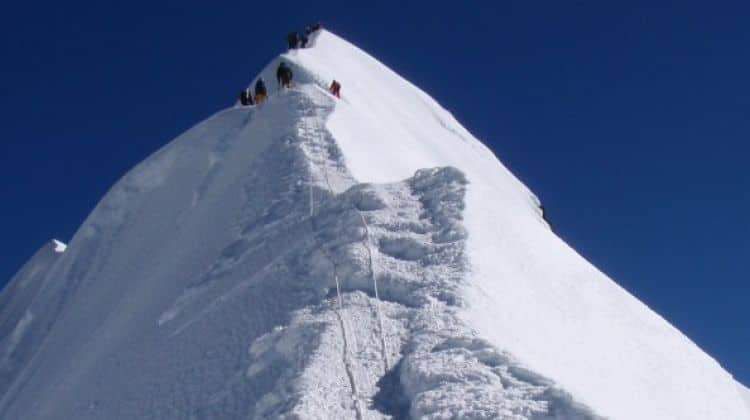
Despite its popularity and classification as a trekking peak, Island Peak is considered more technically demanding than Mera Peak, even with its slightly lower altitude. The summit day involves navigating a heavily crevassed glacier, necessitating the use of ladders to cross deep fissures, and ascending a steep 300-meter ice headwall with the aid of fixed ropes.

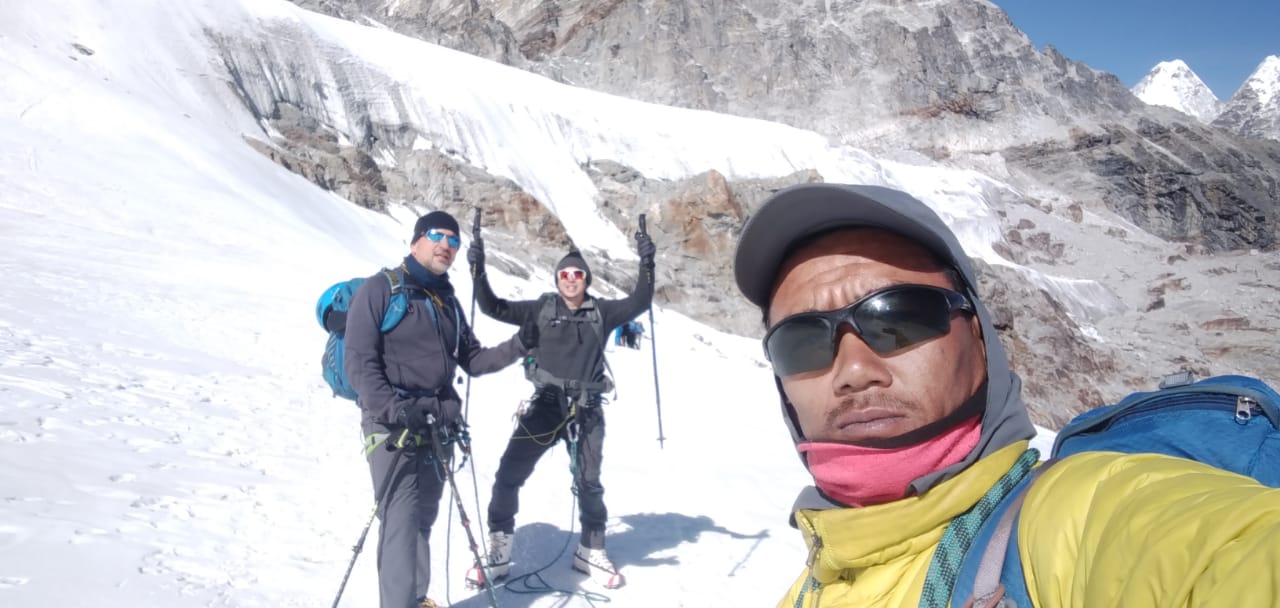
Climbers must demonstrate proficiency in using essential mountaineering tools such as an ice axe, crampons, a jumar (ascender) for fixed lines, and a descender for abseiling during the descent. While basic mountaineering training is often provided at base camp, prior winter mountaineering experience is highly recommended to ensure a safer and more successful ascent.

A typical Island Peak climb spans approximately 14 to 19 days, including crucial acclimatization periods. The expedition often follows the well-trodden classic Everest Base Camp trekking trail, passing through renowned Sherpa settlements such as Namche Bazaar, Tengboche, and Dingboche. This approach route is strategically designed to aid in gradual acclimatization, allowing climbers to adjust to the increasing altitude while immersing themselves in the rich Sherpa culture and stunning Himalayan landscapes.

An example itinerary for Island Peak climbing typically unfolds as follows:

  • Day 1: Arrival in Kathmandu (1400m), followed by transfer to a hotel and initial trek preparations.
  • Day 2: A rest day in Kathmandu for briefing and final checks.
  • Day 3: A scenic flight to Lukla (2840m), then a trek to Phakding (2650m).
  • Day 4: Trek from Phakding to Namche Bazaar (3440m), the bustling Sherpa capital.
  • Day 5: An essential acclimatization day at Namche Bazaar, with options for local hikes.
  • Day 6: Trek from Namche Bazaar to Tengboche (3855m), home to a famous monastery.
  • Day 7: Continue the trek from Tengboche to Dingboche (4360m).
  • Day 8: Another rest and acclimatization day at Dingboche, or a short trek to Chhukung (4735m).
  • Day 9: Trek from Chhukung to Island Peak Base Camp (5200m).
  • Day 10: Summit Island Peak (6189m) in the early morning, followed by descent back to Chhukung.
  • Day 11: A contingency day for climbing in case of unfavorable weather or an extra day for rest.
  • Day 12-14: Begin the descent, trekking back through Tengboche and Namche Bazaar to Lukla, and then flying back to Kathmandu.

The popularity of Island Peak as a “training peak” for Mount Everest expeditions highlights a strategic pathway for climbers to progressively build their skills and experience within Nepal’s diverse climbing landscape. The technical challenges encountered on Island Peak, such as crossing crevasses, using fixed lines, and jumaring, are representative of the skills required for higher expedition climbs.

This provides a natural progression for mountaineers, allowing them to gain confidence and refine their techniques in a relatively more controlled environment before attempting the formidable 8000-meter peaks. This also speaks to the quality of training and guiding available for peak climbing in Nepal, ensuring climbers are well-prepared for their ambitious endeavors.

Mera Peak: Nepal’s Highest Trekking Peak for Peak Climbing in Nepal 2026 and 2027

Mera Peak, standing majestically at 6,476 meters (21,247 feet), holds the distinction of being recognized as Nepal’s highest trekking peak. It is situated to the south of Mount Everest, within the Mahalangur section and Barun sub-section of the Himalayas, specifically in the remote Makalu Region. The mountain features three main summits: Mera North (6476m), Mera Central (6461m), and Mera South (6065m), with Mera Central being the most frequently chosen for ascents.

Mera Peak is widely regarded as a non-technical climb, making it an excellent choice for beginners seeking their inaugural high-altitude experience. The ascent primarily involves walking on snow-covered slopes, though the final push to the summit requires the proficient use of crampons, fixed ropes, and an ice axe on glaciated terrain.

While technically less demanding than Island Peak, its significantly higher altitude translates to considerably reduced oxygen levels, necessitating exceptional physical endurance and meticulous acclimatization. Furthermore, Mera Peak can be more exposed to strong winds and experience colder conditions compared to Island Peak, adding to its challenge.

A typical Mera Peak expedition spans approximately 14 to 20 days, including dedicated acclimatization days. The trek often commences from Lukla and proceeds through the secluded Hinku Valley, offering a more profound “expedition feel” in contrast to the more commercialized Everest Base Camp route.

An example itinerary for Mera Peak climbing typically includes:

  • Day 1: Arrival in Kathmandu (1400m), followed by hotel transfer and trek preparations.
  • Day 2: Fly to Lukla (2840m) and trek to Chutanga (3100m), a small settlement surrounded by cliffs and mountains.
  • Day 3: Trek from Chutanga to Thuli Kharka (4300m), crossing the Zatrwa La Pass (4600m).
  • Day 4: Descend from Thuli Kharka to Kothe (3691m), entering the scenic Hinku Valley.
  • Day 5: Trek from Kothe to Thaknak (4358m).
  • Day 6: Continue the trek from Thaknak to Khare (5045m), which serves as the Mera Peak Base Camp, offering magnificent views of Mera Peak’s north face.
  • Day 7: An essential acclimatization day at Khare, including pre-climb training sessions.
  • Day 8: Trek from Khare to Mera High Camp (5780m).
  • Day 9: Summit Mera Peak (6461m) in the early morning, then descend back to Khare.
  • Day 10: A contingency day reserved for the Mera Peak summit in case of adverse weather or other unforeseen circumstances.
  • Day 11-14: Begin the descent, trekking back through Kothe and Thuli Kharka to Lukla, followed by a flight back to Kathmandu.

The “non-technical” nature of Mera Peak, despite its considerable altitude, presents a unique opportunity for aspiring high-altitude climbers. It allows them to test their physical endurance and acclimatization capabilities without the immediate requirement for an extensive technical mountaineering background.

This highlights that the altitude itself, with its significantly reduced oxygen levels, is a primary challenge, independent of complex climbing maneuvers. Consequently, Mera Peak serves as an ideal stepping stone for those aiming for higher, more technical peaks in the future, by first mastering the physiological demands of extreme altitude. This positions Mera Peak as a crucial experience for progressive peak climbing in Nepal.

Lobuche East Peak: Acclimatization and Challenge in Peak Climbing in Nepal 2026 and 2027

Lobuche Peak comprises two prominent summits: Lobuche East (6,145m/20,161ft) and Lobuche West (6,119m/20,075ft). It is strategically located in the Khumbu region, majestically towering above the Khumbu Glacier. Among the two, Lobuche East is more frequently climbed due to its greater accessibility and classification by the NMA as a trekking peak.

Lobuche East is often undertaken by mountaineering teams preparing for expeditions on Mount Everest, serving as an excellent acclimatization climb. Its close proximity to Everest Base Camp and the unparalleled, sweeping views of iconic peaks such as Everest, Lhotse, Makalu, and Nuptse make it a highly popular choice for climbers seeking a challenging yet profoundly rewarding experience.

The role of Lobuche East as an acclimatization climb for Everest expeditions underscores the critical importance of progressive altitude exposure in high-altitude mountaineering. This practice directly aligns with broader safety principles of gradual ascent and proper acclimatization.

It demonstrates that even highly experienced climbers recognize the absolute necessity of allowing the body to adapt to increasing altitude, rather than rushing directly to the summit of higher peaks. This strategic use positions Lobuche East as a vital component in a comprehensive mountaineering plan for those serious about advanced peak climbing in Nepal.

Other Notable Peaks for Peak Climbing in Nepal 2026 and 2027

Beyond the most popular choices, Nepal boasts a multitude of other peaks that offer diverse climbing experiences, catering to various skill levels and regional preferences. These peaks contribute to the rich tapestry of opportunities for peak climbing in Nepal.

  • Yala Peak: Ideal for Beginner Peak Climbing in Nepal: Standing at 5,520 meters (18,110 feet), Yala Peak is recognized as one of the easier trekking peaks, making it an excellent option for first-time high-altitude climbers. Located in the picturesque Langtang region, it provides stunning panoramic views of the Langtang Range and, remarkably, even Shishapangma, the highest peak entirely within Tibet. Its accessibility by ground transport from Kathmandu further enhances its appeal for those new to peak climbing in Nepal.
  • Pisang Peak: Annapurna Region’s Scenic Peak Climbing in Nepal: Pisang Peak, with an altitude of 6,091 meters (19,978 feet), is frequently combined with the classic Annapurna Circuit trek, offering a comprehensive Himalayan adventure. From its summit, climbers are rewarded with magnificent panoramas of the Annapurna range, including Annapurna II, IV, and III. It is considered slightly more difficult to summit than Island Peak.
  • Tent Peak (Tharpu Chuli): Annapurna Sanctuary Views for Peak Climbing in Nepal: Also known as Tharpu Chuli, Tent Peak reaches 5,663 meters (18,575 feet) and is centrally located within the breathtaking Annapurna Sanctuary. Its position offers unparalleled close-up views of surrounding giants, including Machhapuchhre (Fish Tail) and Annapurna I. The climb to this peak is generally considered easier compared to other mountains in the Annapurna region.
  • Chulu West Peak: A Thrilling Annapurna Adventure in Peak Climbing in Nepal: Chulu West Peak, standing at 6,419 meters (21,055 feet), is a popular choice within the Annapurna region. It is renowned for its thrilling adventure and close panoramic views of numerous marvelous mountains, including Nilgiri, Dhaulagiri, and the Annapurna massif. It is not technically demanding, making it accessible to a broader range of climbers.

The geographical distribution of these popular trekking peaks across different regionsโ€”including the Everest (Khumbu) region, Annapurna region, and Langtang regionโ€”indicates the diverse cultural and scenic experiences available for peak climbing in Nepal.

This geographical variety means that climbers can select an expedition not only based on their desired level of difficulty but also on the specific type of cultural immersion and mountain vistas they wish to experience. This broadens the overall appeal of peak climbing in Nepal, catering to a wider range of interests beyond the sole objective of reaching a summit.

Table 1: Popular Peak Climbing Destinations in Nepal

Peak NameAltitude (m/ft)RegionGeneral DifficultyKey Highlight
Island Peak6,189m / 20,305ftEverestTechnicalMost popular, Everest training peak
Mera Peak6,476m / 21,247ftMakaluNon-technicalNepal’s highest trekking peak, panoramic views
Lobuche East6,145m / 20,161ftEverestModerate/TechnicalAcclimatization for Everest, Khumbu Glacier views
Yala Peak5,520m / 18,110ftLangtangEasyIdeal for beginners, close to Kathmandu
Pisang Peak6,091m / 19,978ftAnnapurnaModerateScenic Annapurna views, often with Annapurna Circuit
Tent Peak5,663m / 18,575ftAnnapurnaEasyAnnapurna Sanctuary views, unique formation
Chulu West Peak6,419m / 21,055ftAnnapurnaModerateThrilling Annapurna adventure, panoramic views

4. Best Seasons for Peak Climbing in Nepal 2026 and 2027

Choosing the right season is paramount for a successful and enjoyable peak climbing in Nepal expedition. The Himalayan weather patterns dictate the optimal windows for mountaineering, offering stable conditions that enhance both safety and the overall experience.

Spring Season (March-May): Optimal Conditions for Peak Climbing in Nepal 2026 and 2027

The spring season, spanning from March to May, is widely regarded as one of the two most favorable periods for peak climbing in Nepal. During these months, the Himalayas experience stable weather conditions, characterized by dry trekking trails and predominantly clear days, which collectively contribute to a comfortable and highly rewarding climbing experience.

Temperatures are generally warm and pleasant, making the arduous climbs more manageable. Beyond the favorable weather, spring offers unique natural allurements, including charming waterfalls and streams nourished by melting snow, opportunities for observing migratory birds, and vibrant, diverse landscapes brimming with life and color. This season is particularly ideal for climbing many high peaks, including Makalu, Baruntse, and Ama Dablam.

Autumn Season (September-November): Another Prime Window for Peak Climbing in Nepal 2026 and 2027

The autumn season, from September to November, represents the other prime window for peak climbing in Nepal, often considered the premier season for general trekking adventures in the country. This period is distinguished by moderate temperatures, typically averaging between 10ยฐC and 18ยฐC in the Himalayan region, accompanied by refreshing and crisp breezes, especially in the mornings and evenings.

Autumn is an ideal time for expeditions in the western part of the Himalayas, encompassing peaks like Mt. Manaslu and Mt. Annapurna. The attractions of this season extend to vibrant flora and fauna, the diverse delicacies of the harvest season, easily accessible high mountain passes, and exceptional opportunities for stargazing under clear night skies. Significantly, autumn also coincides with some of Nepal’s grandest festivals, such as Dashain, Tihar, Chhath, Indra Jatra, and Mani Rimdu, providing a unique chance for cultural immersion alongside the mountaineering adventure.

The distinct advantages offered by both the spring and autumn seasons for peak climbing in Nepal suggest that the “best” time to undertake an expedition is subjective and depends heavily on a climber’s priorities. While both seasons promise stable weather, spring is often highlighted for its natural beauty, including blooming rhododendrons and wildlife photography opportunities, whereas autumn is celebrated for its cultural prospects and festive atmosphere.

This implies that climbers should align their trip timing not just with optimal weather stability but also with their personal interests beyond the climb itself, adding a layer of nuanced planning to their peak climbing in Nepal adventure.

Considerations for Off-Season Peak Climbing in Nepal 2026 and 2027

While the peak seasons offer the most favorable conditions, some daredevil mountaineers undertake peak climbing in Nepal during the off-season, which presents significantly greater challenges and risks. Winter, from December to February, is the coldest season in the Himalayas, with daytime temperatures around 4ยฐC and night/early morning temperatures averaging between -4ยฐC and -12ยฐC on trekking trails, dropping even lower in alpine environments. This extreme cold dramatically increases the difficulty of climbing and elevates the risk of severe conditions such as frostbite and hypothermia.

The monsoon season, from June to August, brings heavy rainfall, making trekking trails exceedingly slippery and significantly increasing the risk of landslides and avalanches. The constant precipitation can also lead to rising river levels, making river crossings more perilous. The specific challenges of off-season peak climbing in Nepal, including extreme cold, heavy rainfall, and increased natural hazards, underscore the inherent dangers of high-altitude environments and emphasize the critical importance of choosing the right season for safety.

The detailed descriptions of winter and monsoon conditions serve as a strong cautionary note, reinforcing the safety principle of choosing the right season by clearly explaining why certain periods are dangerous. This directly links environmental factors to potential life-threatening risks, such as frostbite, hypothermia, landslides, and avalanches.

5. Essential Permits and Regulations for Peak Climbing in Nepal 2026 and 2027

Embarking on peak climbing in Nepal requires careful adherence to a series of permit requirements and government regulations. These measures are in place to ensure the safety of climbers, protect the fragile Himalayan environment, and regulate tourism activities.

Nepal Mountaineering Association (NMA) Permits for Peak Climbing in Nepal

Any individual or mountaineering team desirous of undertaking peak climbing in Nepal on peaks listed by the NMA must first obtain official permission from the Nepal Mountaineering Association.

Application Process and Required Documents

Applications for climbing permits can be submitted in person at the NMA or Department of Tourism (DoT) office in Kathmandu, or more commonly, through a registered trekking agency in Nepal. Permits are typically granted for one month, with the possibility of extension for an additional two weeks if necessary; this period specifically covers time spent climbing above the base camp, excluding the trek to and from it. The application process operates on a first-come, first-served basis, and the NMA reserves the right to grant permission to multiple parties for the same peak during the same period.

Required documents for obtaining a climbing permit include a valid passport with at least six months of remaining validity, a valid visa for Nepal, two passport-sized photographs, a completed application form, and comprehensive proof of insurance. This insurance must cover accidental injury (to the value of NPR 1,500,000), medical expenses (NPR 400,000), and helicopter rescue (USD 10,000).

Additionally, a letter of recommendation from a recognized mountaineering organization and details of climbing experience and qualifications may be required. It is mandatory for every individual or party granted a climbing permit to be accompanied by an NMA-registered Sirdar or Guide. A garbage deposit may also be required, which is refundable upon clearance from the relevant authorities.

Peak Climbing in Nepal Permit Fees by Altitude and Season (2025 Updates)

Permit fees for peak climbing in Nepal vary significantly based on the peak’s altitude and the climbing season, with updated rates effective from September 1, 2025. These tiered fees reflect the varying levels of challenge, demand, and logistical requirements associated with different peaks and times of the year.

Table 2: Peak Climbing Permit Fees for Foreigners (by Altitude and Season)

Mountain Altitude RangeSpring Season (USD)Autumn Season (USD)Winter & Summer Season (USD)
Up to 6,500m350175175
6,501m โ€“ 7,000m500250200
7,001m โ€“ 7,500m800400200
7,501m โ€“ 8,000m1,000500250
Above 8,000m (except Everest)3,0001,500750
Mount Everest (Normal Route)15,0007,5003,750

Note: The fees listed for Everest are for the South East Ridge Normal Route. Other routes have different fees. Manaslu Mountain has a unique fee structure as well, with Autumn being higher than Spring.

The tiered permit fee structure, with higher costs in peak seasons and for higher altitudes, represents a market-based approach to managing demand and generating revenue for the Nepalese government and the NMA. The varying fees are designed to potentially distribute climbers across different seasons and peaks, which could help reduce congestion on popular routes during peak times. The significantly higher fees for Mount Everest, for instance, underscore its premium status and the substantial resources required for its management and the associated rescue operations.

This financial system plays a crucial role in funding conservation efforts, maintaining trekking infrastructure, and promoting sustainable tourism, with funds often used to support local communities and development initiatives in rural areas. This financial aspect is a critical consideration for anyone planning peak climbing in Nepal.

Trekkers’ Information Management System (TIMS) Card: A Mandatory Requirement for Peak Climbing in Nepal 2026 and 2027

The Trekkers’ Information Management System (TIMS) Card, jointly implemented by the Nepal Tourism Board (NTB) and the Trekking Agencies’ Association of Nepal (TAAN), is a mandatory requirement for all trekkers, including those undertaking peak climbing in Nepal. This system serves a vital purpose in ensuring trekkers’ safety and security by maintaining a comprehensive record of their whereabouts, which is crucial for efficient rescue operations in case of emergencies or natural calamities.

The cost of an E-TIMS Card for international trekkers is NPR 2000 per person for Free Individual Trekkers (FITs) and NPR 1000 for group trekkers. Trekkers from South Asian Association for Regional Cooperation (SAARC) countries benefit from lower rates, paying NPR 600 for FITs and NPR 300 for group trekkers. To obtain a TIMS card, applicants typically need a valid passport, a valid visa for Nepal, two passport-sized photos, and a detailed trekking itinerary. The card is generally obtained through a government-registered trekking agency that is a member of TAAN, ensuring proper registration and compliance.

The TIMS card system represents a significant governmental effort to enhance safety and accountability within Nepal’s trekking and climbing industry, moving towards a more regulated and secure tourism environment. The primary objective of TIMS is to improve safety and security, particularly for rescue operations, by addressing past difficulties in locating missing trekkers due to a lack of proper record systems. By requiring all trekkers to register, the government gains better oversight and can facilitate more efficient emergency responses, thereby creating a safer environment for those engaging in peak climbing in Nepal.

National Park and Conservation Area Entry Permits

In addition to the NMA climbing permits and the TIMS card, climbers must also obtain entry permits for the specific National Parks or Conservation Areas their chosen peak is located within. For instance, climbers in the Everest region will require a Sagarmatha National Park Entry Permit, while those in the Annapurna region will need an Annapurna Conservation Area Permit (ACAP). The fees collected from these permits are crucial for the maintenance of trekking trails, the construction of basic infrastructure, and the promotion of sustainable tourism in the rural areas surrounding these protected zones.

Key Government Regulations for Peak Climbing in Nepal 2026 and 2027

Nepal’s government has implemented several key regulations to ensure the safety, environmental protection, and cultural integrity of mountaineering activities. These rules are vital for anyone planning peak climbing in Nepal.

Solo Climbing Ban and Mandatory Guide Requirement

Nepal has introduced strict new mountaineering regulations, specifically banning solo expeditions on Mount Everest and other peaks above 8000 meters. Under these new rules, climbers must be accompanied by a mountain guide, a measure designed to ensure stricter safety protocols and more regulated expeditions. This mandatory guide requirement extends to NMA-listed peaks, where every individual or party granted a climbing permit must be accompanied by a Sirdar or guide registered with the NMA.

The ban on solo climbing and the mandatory guide requirement for peak climbing in Nepal above certain altitudes signify a clear policy decision to prioritize safety and support local employment over individual autonomy in inherently high-risk environments. This explicit prohibition aims to mitigate the extreme dangers associated with solo climbing, where unpredictable conditions and the absence of immediate support can lead to fatal outcomes.

Furthermore, this regulation ensures guaranteed employment for local guides, directly channeling tourism revenue into local communities and contributing to the economic well-being of the region, aligning with broader sustainable tourism objectives. This policy directly impacts the planning and cost considerations for independent climbers interested in peak climbing in Nepal.

Environmental Protection and Responsible Peak Climbing in Nepal

Strict regulations are in place to protect the fragile Himalayan environment, which is susceptible to degradation from increased human activity. Base camps and other temporary camps must be left perfectly clean upon the conclusion of a climb, with no foreign materials such as fixed ropes or pitons left behind on the mountain. All rubbish and waste materials must be either burnt or disposed of properly, adhering to stringent environmental guidelines.

Climbers are strongly encouraged to practice “Leave No Trace” principles, minimizing their impact on the natural surroundings. These detailed regulations on environmental protection and local conduct reflect a growing awareness of the ecological and cultural impact of tourism, aiming for sustainable peak climbing in Nepal. The rules about proper waste disposal, avoiding damage to flora and fauna, and respecting local customs demonstrate a profound commitment to preserving Nepal’s natural and cultural heritage for future generations. This is crucial for the long-term sustainability of tourism and ensures that the economic benefits of peak climbing in Nepal are not outweighed by negative environmental or cultural consequences.

Load Limits and Communication Guidelines

Regulations also specify maximum load weights for high-altitude workers and porters to ensure their safety and well-being. For altitudes between 5000 and 6000 meters, the maximum load is 20 kilograms; for 6001 to 7000 meters, it is 17 kilograms; for 7001 to 8000 meters, 14 kilograms; and for altitudes above 8000 meters, the limit is 12 kilograms. Mountaineering teams are also restricted to using only approved means of communication and are prohibited from engaging in any activity that may be contrary to local customs, religious, social, or cultural traditions, or that could adversely affect Nepal’s security and reputation. They are also forbidden from damaging or destroying any natural heritage or environment along their route.

6. Comprehensive Preparation for Your Peak Climbing in Nepal 2026 and 2027 Adventure

Undertaking peak climbing in Nepal is a significant endeavor that demands thorough and multi-faceted preparation. Success and safety hinge not only on physical prowess but also on mental fortitude, meticulous gear planning, and a deep understanding of high-altitude physiology.

Physical Training and Conditioning for Peak Climbing in Nepal 2026 and 2027

High-altitude peak climbing in Nepal requires individuals to be in excellent physical, emotional, and psychological condition. A dedicated training program should ideally commence 3 to 4 months before the expedition, focusing on developing both stamina and strength.

Endurance and Strength Training Regimens

Recommended exercises for physical conditioning include weighted backpack uphill hiking, consistent walking, and stair climbing, which effectively simulate the sustained effort required during a climb. Cardiovascular training is essential for developing a robust cardiovascular system, which functions more efficiently in low-oxygen environments. This should involve aerobic activities such as running, jogging, swimming, or cycling, performed for 30 to 60 minutes, three to five times per week. While high-intensity interval training (HIIT) can be beneficial, the sustained nature of high-altitude treks suggests a focus on moderate, steady-state cardio to train the appropriate energy pathways and muscles for prolonged exertion.

Strength training is equally crucial, helping to prepare leg muscles and the upper body for carrying heavy loads, as well as strengthening the core for stability. Resistance training, whether through lifting weights, using resistance bands, or bodyweight exercises like squats, lunges, push-ups, and crunches, should be incorporated two to three times per week. It is often advised to perform resistance work before endurance training to maximize the energy available for muscle development. Gradual progression is key, increasing intensity and duration by about 10% per week to prevent injuries and allow the body to adapt.

Importance of Acclimatization for Peak Climbing in Nepal 2026 and 2027

Proper acclimatization is paramount to prevent Acute Mountain Sickness (AMS), High Altitude Pulmonary Edema (HAPE), and High Altitude Cerebral Edema (HACE), all of which are life-threatening conditions that can arise from reduced oxygen levels at high altitudes. The primary strategy for prevention involves a gradual ascent, ideally not exceeding 500 meters of elevation gain per day above 3000 meters.

Maintaining consistent hydration by drinking plenty of water, taking regular rest days to allow the body to adjust, and recognizing the early symptoms of AMS (such as headache, dizziness, nausea, and fatigue) are critical. If symptoms worsen, immediate descent is the most vital action. For those with access, altitude simulation through high-altitude gyms or hypoxic masks can also aid in preparing the body for reduced oxygen environments.

The emphasis on a holistic training approachโ€”encompassing physical conditioning, mental preparation, and strategic acclimatizationโ€”for peak climbing in Nepal highlights that success is not merely a function of raw strength but also strategic physiological adaptation and psychological resilience.

The detailed training guidelines, which include gradual progression, scheduled rest, and even altitude simulation, indicate that the body requires systematic preparation for the unique stresses of high altitude and low oxygen. The inclusion of mental health as a critical component further underscores that a successful climb is a profound mind-body challenge, where psychological resilience in the face of harsh conditions, exhaustion, and unforeseen difficulties is as vital as physical endurance.

Table 3: Sample Weekly Training Program for High-Altitude Climbing

DayAerobic TrainingStrength TrainingOther Conditioning
Day 130-60 minutes jogging or cycling (moderate intensity)Leg and core workout (squats, lunges, planks)15 minutes stair climbing
Day 2Rest dayRest dayRest day
Day 320-30 minutes HIIT workoutUpper body workout (push-ups, pull-ups, rows)2-3 hour hike (gradually increasing distance/duration)
Day 430-60 minutes jogging or cycling (moderate intensity)Leg workout (variations of squats, calf raises)15 minutes of stair climbing
Day 5Rest dayRest dayRest day
Day 6HIIT workoutCore workout (sit-ups, bicycle crunches)2-3 hour hike with gradually increasing backpack weight
Day 730-60 minutes jogging or cycling (moderate intensity)Light stretching/recovery15 minutes of stair climbing

Mental Preparation: The Psychological Aspect of Peak Climbing in Nepal 2026 and 2027

Peak climbing in Nepal is inherently as much a mental challenge as it is a physical one. Climbers must be prepared to face and overcome harsh environmental conditions, profound physical exhaustion, and prolonged exposure to high altitudes, which can significantly test one’s endurance. Developing a strong and resilient mentality is crucial for making critical, often life-saving, decisions under immense stress and for coping with psychological pressures such as loss of appetite at higher elevations. The ability to maintain focus, manage discomfort, and persevere through difficult moments is paramount for a successful and safe expedition.

Comprehensive Gear and Packing List for Peak Climbing in Nepal 2026 and 2027

A meticulous and comprehensive gear and packing list is indispensable for any peak climbing in Nepal adventure. The goal is to pack efficiently with lightweight, heavy-duty, and multi-purpose gear to ensure comfort, safety, and functionality in the cold, thin air of the Himalayas. Overburdening porters is also a practical concern, as they typically carry a maximum of 20 to 25 kilograms.

Essential Clothing Layers

Layering clothing is fundamental due to the unpredictable and rapidly changing weather conditions in the mountains. This system should include:

  • Moisture-wicking base layers: Short and long-sleeve Merino shirts to manage perspiration.
  • Insulating mid-layers: Wool or fleece sweaters and trousers, and a lightweight down jacket or vest for warmth.
  • Waterproof and windproof outer layers: A hardshell jacket and pants, or a full raincoat, to protect against precipitation and strong winds.
  • Additional items such as thermal bottoms, convertible trekking pants, and insulated pants are also necessary for varying conditions.

Specialized Climbing Equipment

Critical items of specialized climbing equipment are non-negotiable for safety and successful ascent:

  • Footwear: High-quality, waterproof trekking boots with ankle support, and mountaineering boots that are compatible with crampons.
  • Traction and Support: Crampons for ice and snow, an ice axe for balance and self-arrest, and trekking poles for stability.
  • Rope Work Gear: A UIAA-tested helmet for head protection, a climbing harness, an ascender (jumar) for fixed lines, a descender (figure of eight or ATC) for rappelling, screw gate/carabiners for connections, and prusik rope.
  • Some group climbing gear, such as fixed ropes, rock pickets, and snow bars, is often provided by reputable trekking agencies.

Personal, Safety, and Medical Items

A large waterproof duffel bag for main luggage and a medium daypack for daily essentials are crucial. Other vital personal and safety items include:

  • Lighting and Navigation: A headlamp or torch with extra batteries, and UV-protective sunglasses or glacier glasses.
  • Sleeping Gear: A down sleeping bag rated for sub-zero temperatures, an insulated sleeping pad, and sleepwear.
  • Head, Hand, and Foot Protection: A sun hat or cap, face mask or balaclava, thin liner gloves, waterproof outer gloves, and insulated gloves or mittens for extreme cold. Thick wool socks and liner socks are also essential.
  • Hygiene and Hydration: Personal hygiene items (toothbrush, toothpaste, wet wipes, hand sanitizer), a quick-dry microfiber towel, sunscreen (SPF 50+), and lip balm with SPF. A hydration bladder, water purification tablets or filter drops, and a refillable insulated water bottle are critical for hydration.
  • Medical and Emergency: A comprehensive first-aid kit, including Diamox for altitude sickness, pain killers, antihistamines, antibiotics, oral rehydration salts, and blister cream. An emergency blanket, thermometer, and any personal medications are also vital.
  • Food: Energy-rich snacks such as dried fruits, trail mix, nuts, and peanut butter are highly recommended for sustained energy.
  • Documents and Electronics: Valid passport, visa, trekking and climbing permits, travel insurance, airline tickets, credit/debit cards, and local currency. A smartphone, a camera with extra batteries, a power bank, and an adapter are also useful.

The extensive and specialized gear list required for peak climbing in Nepal underscores the extreme conditions encountered at high altitudes and the non-negotiable nature of proper equipment for ensuring safety and success. The emphasis on items like UIAA-tested helmets and crampon-compatible boots highlights the critical role of quality and specialized equipment in preventing injuries and ensuring survival in a challenging environment. This means that investing in or renting appropriate, high-quality gear is as important as physical training for a safe and successful peak climbing in Nepal expedition.

7. Risks and Safety Measures in Peak Climbing in Nepal 2026 and 2027

While peak climbing in Nepal offers unparalleled adventure and breathtaking beauty, it also comes with inherent risks. A thorough understanding of these dangers and adherence to stringent safety measures are crucial for a successful and injury-free expedition.

Understanding Altitude Sickness (AMS, HAPE, HACE) and Prevention

Altitude sickness is one of the most significant and potentially life-threatening risks encountered during peak climbing in Nepal. As climbers ascend to higher altitudes, the atmospheric pressure decreases, leading to a reduction in the amount of available oxygen. This physiological stress can manifest as Acute Mountain Sickness (AMS), characterized by mild symptoms such as headache, dizziness, nausea, fatigue, shortness of breath during exertion, and disturbed sleep.

If AMS is not promptly addressed, it can escalate into severe and life-threatening conditions. High Altitude Pulmonary Edema (HAPE) is marked by a dangerous buildup of fluid in the lungs, making breathing extremely difficult and leading to persistent coughing or chest congestion. High Altitude Cerebral Edema (HACE) involves swelling of the brain, resulting in severe headache, loss of coordination (ataxia), altered mental states, and potentially bluish discoloration of the skin or lips. Both HAPE and HACE require immediate medical attention and, most critically, immediate descent.

Prevention is paramount: climbers must ascend gradually, avoiding rapid gains in altitude (ideally no more than 500 meters per day above 3000 meters). Staying well-hydrated by drinking plenty of water, incorporating regular rest days into the itinerary, and recognizing the early symptoms of altitude sickness (such as headache, dizziness, nausea, and fatigue) are essential. If symptoms worsen, immediate descent is the most vital and often life-saving action. Eating a high-calorie diet, rich in carbohydrates, also helps maintain energy levels at high altitudes.

The detailed explanation of AMS progression from mild symptoms to severe conditions like HAPE and HACE, along with its underlying cause (reduced atmospheric pressure and oxygen levels), highlights the physiological fragility of the human body at extreme altitudes. This makes altitude sickness a primary safety concern for peak climbing in Nepal. The explicit breakdown of symptoms and the progression to life-threatening conditions serves as a critical warning. This underscores why meticulous acclimatization and prompt recognition of symptoms are non-negotiable safety measures, and why the advice to “descend if necessary” is the most vital recommendation for survival in these environments.

Navigating Glacial Hazards: Crevasses and Seracs

Glacial traverses are common features on many high-altitude peaks in Nepal, presenting inherent hazards that require careful navigation. These include hidden crevassesโ€”deep, open cracks in glaciers often deceptively covered by a thin layer of snowโ€”and seracs, which are towering blocks of ice that can collapse without warning. A wrong step over a hidden crevasse can lead to a fatal fall if climbers are not properly roped up. Effective rope work, constant vigilance, and the expertise of experienced guides are absolutely essential to mitigate these risks. Guides are skilled in identifying and navigating these treacherous features, ensuring the safety of the climbing party.

Weather Challenges and Environmental Risks in Peak Climbing in Nepal 2026 and 2027

Nepal’s mountain weather is notoriously unpredictable, with sudden and drastic changes posing significant dangers to climbers. Rapid weather shifts, including unexpected snowfall, strong winds, and extreme cold, can disorient climbers, leading them off their intended route. Such changes also significantly increase the risk of avalanches or landslides, particularly with fresh snow accumulation.

These conditions can create environments conducive to severe cold injuries like frostbite or hypothermia. Unforeseen storms can trap climbers at base camps or higher camps, forcing them to wait out bad weather, which can deplete essential supplies and increase the overall duration and risk of the expedition. Additionally, rockfall, caused by the sun heating up the mountain slopes, is another environmental risk that climbers must be constantly aware of, requiring swift movement across hazardous zones.

The unpredictable nature of Himalayan weather conditions adds a significant layer of risk to peak climbing in Nepal, making flexibility and constant vigilance crucial. The emphasis on “unpredictable weather” and its severe consequencesโ€”including disorientation, avalanches, frostbite, hypothermia, and being trappedโ€”highlights that external environmental factors are often beyond a climber’s control. This necessitates continuous monitoring of weather updates, maintaining flexibility in itineraries, and a willingness to turn back if conditions deteriorate. Such dynamic conditions underscore the importance of experienced guides who possess the expertise to interpret weather patterns and make critical decisions to ensure the safety of the climbing party.

Crucial Safety Tips for a Successful Peak Climbing in Nepal 2026 and 2027 Expedition

Beyond rigorous physical preparation and meticulous acclimatization, several crucial safety tips are indispensable for a successful and secure peak climbing in Nepal expedition. These measures collectively minimize inherent risks and enhance the overall safety profile of the adventure.

First, timing is critical; choosing the right season, typically spring or autumn, significantly reduces exposure to extreme weather conditions and associated hazards.

Second, hiring experienced guides and porters is paramount. These professionals possess invaluable local knowledge, mountaineering expertise, and the ability to make critical decisions in challenging situations.

Third, using only quality, well-fitting climbing gear is non-negotiable, as poor equipment increases risks and discomfort.

Fourth, consistently checking weather conditions before and during the climb is vital, as sudden changes can quickly turn a safe situation dangerous.

Fifth, obtaining all necessary permitsโ€”NMA permits, TIMS cards, and national park entry permitsโ€”ensures legal compliance and provides a safety net through official tracking systems.

Sixth, following a proper, high-calorie diet is essential to maintain energy levels and support the body’s functions at high altitudes.

Finally, climbing in groups is strongly advised, as it reduces risks by ensuring immediate help is available in emergencies; solo climbing is generally prohibited for higher peaks due to its inherent dangers. Maintaining communication devices like radios or satellite phones within the group is also highly recommended for emergency contact.

The comprehensive nature of these safety tips for peak climbing in Nepal indicates that a successful expedition is a multi-faceted endeavor requiring meticulous planning and unwavering adherence to best practices, rather than solely relying on individual prowess. The array of safety recommendations covers everything from individual physical readiness and essential gear to crucial logistical choices (season, guides, permits) and safe behaviors during the expedition (hydration, group adherence).

This holistic approach implies that safety is a collective responsibility and a continuous process throughout the entire expedition, rather than a one-time checklist. It underscores the profound value of engaging with reputable agencies that facilitate adherence to these guidelines, thereby enhancing the safety and likelihood of success for peak climbing in Nepal.

9. Conclusion: Embarking on Your Peak Climbing in Nepal 2026 and 2027 Journey

Peak climbing in Nepal offers an unparalleled adventure, a journey that transcends mere physical challenge to become a profound experience of self-discovery, cultural immersion, and awe-inspiring natural beauty. From the technically demanding glaciers of Island Peak to the high, non-technical snow slopes of Mera Peak, Nepal’s diverse summits cater to a wide spectrum of aspiring mountaineers, providing accessible yet challenging pathways into the heart of the Himalayas. The country’s well-established infrastructure, experienced local guides, and comprehensive regulatory framework, overseen by bodies like the NMA, ensure that these adventures are not only thrilling but also as safe and responsible as possible.

Embarking on a peak climbing journey in Nepal demands meticulous preparationโ€”physical conditioning, mental resilience, and a thorough understanding of the necessary permits, regulations, and safety protocols. By respecting the mountains, adhering to environmental guidelines, and embracing the cultural richness of the region, climbers can ensure their expedition is not only successful in reaching a summit but also deeply rewarding and unforgettable. The Himalayas await, offering an experience that will undoubtedly elevate the spirit and create memories to last a lifetime.

FREQUENTLY ASKED QUESTIONS:

What is the easiest peak for peak climbing in Nepal?

Yala Peak, standing at 5,520 meters (18,110 feet), is widely considered one of the easiest trekking peaks in Nepal and is an excellent option for first-time high-altitude climbers. It is located in the Langtang region and is easily accessible by ground transport from Kathmandu.

Which is harder, Island Peak or Mera Peak?

While Mera Peak is Nepal’s highest trekking peak at 6,476 meters (21,247 feet), Island Peak (6,189m/20,305ft) is generally considered more technically challenging. Island Peak requires proficiency in using an ice axe, crampons, jumar, and descender for navigating crevassed glaciers and a steep ice headwall. Mera Peak, though higher, involves a more straightforward ascent primarily on snow-covered slopes, making it less technical but still demanding high physical endurance due to the altitude.

What permits are required for Peak Climbing in Nepal 2026 and 2027?

Several permits are mandatory for peak climbing in Nepal:
Nepal Mountaineering Association (NMA) Permit: Required for NMA-listed trekking peaks.
Trekkers’ Information Management System (TIMS) Card: Mandatory for all trekkers for safety and tracking.
National Park/Conservation Area Entry Permit: Required for entry into protected areas like Sagarmatha National Park or Annapurna Conservation Area, where many peaks are located.

What is the best time for Peak Climbing in Nepal in 2026 and 2027?

The two best seasons for peak climbing in Nepal are spring (March-May) and autumn (September-November). Both seasons offer stable weather conditions, clear skies, and moderate temperatures, providing optimal climbing environments. Spring is noted for blooming landscapes and wildlife, while autumn offers cultural festivals and clear mountain views.

What kind of training is needed for Peak Climbing in Nepal 2026 and 2027?

Comprehensive physical training is essential for peak climbing in Nepal, typically starting 3-4 months before the expedition. This includes:
Endurance Training: Cardiovascular exercises like running, jogging, cycling, or swimming for 30-60 minutes, 3-5 times a week.
Strength Training: Focus on leg and core workouts (squats, lunges, planks) and upper body exercises (push-ups, pull-ups) 2-3 times a week.
Conditioning: Weighted backpack uphill hiking, walking, and stair climbing to simulate trek conditions.
Acclimatization: Gradual ascent, staying hydrated, taking rest days, and recognizing altitude sickness symptoms are crucial.

What are the main risks of Peak Climbing in Nepal in 2026 and 2027?

The primary risks associated with peak climbing in Nepal include:
Altitude Sickness: Acute Mountain Sickness (AMS), which can escalate to life-threatening High Altitude Pulmonary Edema (HAPE) or High Altitude Cerebral Edema (HACE) if not managed.
Unpredictable Weather Conditions: Sudden snowfall, strong winds, and extreme cold can lead to disorientation, frostbite, hypothermia, and increased risk of avalanches or landslides.
Glacial Hazards: Hidden crevasses and unstable seracs on glaciers pose significant dangers.
Physical and Mental Strain: The prolonged exertion and harsh conditions can lead to muscle fatigue, exhaustion, and psychological pressure.

Is solo Peak Climbing in Nepal 2026 and 2027 allowed?

No, Nepal has introduced strict new mountaineering regulations that ban solo expeditions on Mt. Everest and other peaks above 8000 meters. For NMA-listed peaks, climbers must also be accompanied by an NMA-registered Sirdar or guide. This regulation is in place to enhance safety measures and ensure regulated expeditions.

What is the average cost of a peak climbing expedition in Nepal?

The average cost for a peak climbing expedition in Nepal, such as Island Peak, typically ranges from $2,500 to $4,000 per person. This cost generally covers permits, guides, and porter fees, accommodation, food, and transportation. Prices can vary based on the chosen itinerary, services, and whether you join a group or opt for a private expedition.

How much does a flight to Lukla cost for peak climbing in Nepal?

A one-way flight from Kathmandu to Lukla, which is the gateway to the Everest region and many popular climbing peaks, costs approximately $200โ€“$250 per person. During peak seasons, early booking is recommended. A more budget-friendly option involves driving to Manthali and then flying to Lukla, costing around $150โ€“$200, though this adds a long drive from Kathmandu.

Can I rent climbing equipment in Nepal?

Yes, it is possible to rent climbing equipment in Nepal, which can be a cost-effective option compared to purchasing all gear. A complete set of climbing equipment, including items like crampons, ice axes, and harnesses, can cost approximately $100โ€“$200 for the entire trip. Rental options are available in Kathmandu and closer to the climbing regions, such as Chhukung for Island Peak.

Send us an Enquiry:

How Mountain Climbing Can Improve Your Other Skills

Winer Mountain Climbing

How Mountain Climbing Can Improve Your Other Skills. When winter arrives, many climbers prepare to put away their equipment and wait for better weather. Winter climbing, however, presents the ultimate test of strength, determination, and adventure for those who dare. Climbers are pushed to their limits as the mountains change into a new realm of solitude, stillness, and harsh conditions.

Please reconsider if you have ever considered putting off your goals till spring. Not only can cold-weather climbing help you stay alive, but it can also help you retrain your body, refine your abilities, and gain mental and physical power that summer climbs can’t match.

What Makes Winter Climbing So Worth Taking?

The Unspoken Advantages of Winter Treks

The difficulty of winter ascents attracts most climbers, but the true advantages extend far deeper to the cellular level. Your body gets reset by winter climbing, becoming stronger, leaner, and better equipped to withstand harsh conditions.

1. The Final Skill and Grit Test

Winter mountain climbing is a whole different game fromย summer mountain climbing. Every step is a strategic one because of the intense cold, tricky ice portions, unexpected avalanches, and constantly shifting weather. Sharper navigation, skilled route-finding, and an unbreakable mentality are all needed for winter climbing. Winter ascents need greater self-sufficiency than the well-worn paths and routes seen during the busiest climbing season. Success is made more satisfying by the untamed, merciless, and raw nature of the mountains.

2. More Adventure, Fewer Crowds

Island Peak or Mera Peakย may be overrun with climbers during the busiest time of year. During the winter, you encounter very less climbers. A true, unbroken link to the mountains is provided by the unparalleled solitude.

3. This is What Your Body Is Made For

The way your body adjusts to harsh conditions is among the most intriguing features of mountaineering’s cold exposure. Brown fat enters the picture here. Brown fat produces heat instead of storing energy like regular fat does. It helps you keep your body temperature stable without experiencing excessive shivering since it is concentrated around your spine and collarbones and activates when exposed to cold.

    Spending more time in colder climates teaches your body to cope with stress, burn more calories, and keep warm on its own. In extremely low temperatures, seasoned winter mountaineers frequently feel more at ease due to their brown fat being completely active.

    The Best Way to Get Your Body Ready for Winter Mountaineering

    Adaptation to the cold takes time. Before embarking on a difficult winter ascent, you need to prepare your body to withstand harsh circumstances.

    Use Cold Exposure Training Before Climbing

    • For training treks, forego the extra layers to increase tolerance.
    • Brown fat can be activated by cold showers or ice baths.
    • To assist in training your body’s natural heat regulation, sleep in a more comfortable, cooler area that is about 65ยฐF.
    • Test your layering method by working out outside while wearing cold clothing.

    Master Your Layering Skills for Winter Travel

    • It’s a science to dress for winter treks at high elevations. In severe weather, wearing inappropriate clothes can result in freezing or overheating, both of which are hazardous. Base Layer: Synthetic or moisture-wicking merino wool
    • Mid Layer: For warmth, use synthetic or down insulation.
    • External Layer: Windproof and waterproof shell
    • Extremities: Double-layered socks, balaclavas, and insulated gloves

    Feed Your Body with Cold-Resistant, High-Calorie Foods

    Your calorie requirements rise dramatically during winter climbing due to the cold and greater exercise. Maintaining body temperature and energy levels requires regular eating.

    Get Ready for Snow and Ice Navigation

    Climbing in the winter requires navigating avalanche-prone slopes, icefalls, and glaciers. Before leaving, polish your technical abilities: Ice climbing: Learn how to use crampons and an ice axe on difficult terrain.
    Crevasse rescue instruction: Rope methods have the potential to save lives.
    Avalanche safety: Understand how to use a beacon and read the snow conditions.

      Reasons to at least try a Winter Ascent Once

      Winter mountaineering is about pushing oneself above your comfort zone and achieving new heights. Every obstacle, from extreme cold to complex ice climbing, pushes you to grow as a person, a climber, and your awareness of the natural world.

      Contact us for more details:

      The Most Adventureย Activities To Doย in Nepal

      The Most Adventureย Activities To Doย in Nepal. With its diverse landscapes, Nepal is an ideal destinationย for adventure lovers, offering exhilarating experiences. From renowned treks and mountain climbing adventures to exciting activities like skydiving, bungee jumping, and paragliding, Nepal’s spirit of adventure enthralls travelers. Take part in ground activities like rock climbing, jungle safaris, and more, as well as water sports like white water rafting, canyoning, and kayaking.

      Every experience offers a different combination of culture, nature, and thrill. For those looking for an adrenaline rush, Nepal promises an amazing adventure. Check out the comprehensive list of all the thrilling things you can do in Nepal.

      FLYING IN THE SKY

      PARAGLIDING IN POKHARA

      In Pokhara, Nepal, where the spectacular Annapurna range sets the backdrop for an adventure mixed with adrenaline and breathtaking scenery, soar into the skies with the renowned paragliding sport. With mild thermals and bright skies, this place in Pokhara’s picturesque Sarangkot Hill is perfect for paragliders.

      Starting at 1,610 meters, the route takes one by car to Sarangkot Hill. The weightless climb starts with the passenger strapped into a tandem paraglider with an expert pilot. Witness the towering Himalayas, lush greenery, and Phewa Lake from above. Through the clouds are vistas of Dhaulagiri, Machhapuchhre, and the Annapurna range. Enjoy the thrilling freedom of flying for half an hour before softly landing on the lakesideย of Phewa Lake. This is the perfect experience for everyone who likes adventure.

      SKY DIVING OVER MOUNT EVEREST

      The ultimate leap of faith from the top of the world is among the most exhilarating experiences on our list. For the boldly daring, skydiving over Everest is a stunning experience. Fly towards Earth at 8,839 meters with Everest as your magnificent backdrop. For genuinely courageous people, this is an opportunity of a lifetime.
      One of the world’s most daring airports, Lukla Airport, is where your adventure starts. As you reach the drop zone, leave the villages and monasteries below and board a helicopter above the skies. Prepare to jump at this perplexing altitude with a seasoned, reliable skydiving instructor. The wind howls at you during the first few seconds, which is pure adrenaline.

      ULTRALIGHT FLIGHT

      Experience flying like never before with ultralight flights in Nepalโ€”a level of flyingย neither commercial nor helicopter travel can equal. You will ride between 3,000 and 5,000 meters over the snow-capped peaks, enjoying the sound of the wind and the alpine air.

      Airport Pokhara is where the adventure starts. Following a briefing, you and your expert pilot will belt up in an open-air cockpit. You’ll roll gently as you lift off above the picturesque Phewa Lake. In addition to the exhilaration of flight, you will see the expansive views of the Annapurna range for thirty minutes. Through the clouds are views of Dhaulagiri and Machhapuchhre. It will be thrilling to see the lake, vibrant boats, verdant surroundings, historic towns, and monasteries from above.

      KUSHMA’S ZIPLINE

      The experience of ZipLining amid verdant landscapes and spectacular mountain panoramas is a must for thrill-seekers. Take a zipline trip in Kushma, Nepal, and experience soaring across breathtaking countryside while harnessed into a line. Situated in the Annapurna area, close to Pokhara, Kushma offers breathtaking views of the Kali Gandaki River, waterfalls, and verdant woods.

      Before being launched down the zipline, you will be fastened to a strong harness. It’s one of Nepal’s longest ziplines, spanning 1.5 km in total. When you zoom down, you’ll feel your hair being brushed by the wind. Take on the incredible Zipline adventure in Kushma and experience the beauty and adrenaline thrill of Nepal.

      PEAK CLIMBING

      MERA PEAK CLIMBING

      Mera Peak is among the beginner-friendly peaks in Nepal where mountain climbing experiences typically begin. For those looking to have comparable experiences beforeย embarking on a real, demanding mountain climbing expedition, ascending Mera Peak offers the ultimate rush.

      Mera Peak, located in the Khumbu area at 6,476 m, presents an exhilarating challenge for climbers looking for an experience apart from the usual route. Start with the flight to Lukla in the Khumbu area, followed by an exploration of Sherpa communities. Although physically taxing, the eighteen-day hike and ascent are worthwhile.

      The best parts of this experience include trekking through the Hinku Valley, sleeping at the foot of the peaks, learning how to use climbing equipment, and tackling a difficult glacier ascent. Also, you’ll see encouraging sights of Everest, Makalu, and Cho Oyu.

      ISLAND PEAK CLIMBING

      Setting off on a daring expeditionย to Island Peak is another challenging experience. At 6,189 meters, the Island Peak in Nepal’s Khumbu area is one of the most well-liked mountain climbing destinations. For those seeking adventure and a higher 8,000-meter peak to climb, it’s the perfect challenge.

      The adventure starts with an exhilarating flight to Lukla, followed by trekking through verdant scenery and Sherpa communities. Reaching the summit provides amazing views of Lhotse, Nuptse, and Ama Dablam after navigating the treacherous ice and rock parts. This amazing trip, which usually lasts 15 to 18 days, combines breathtaking Himalayan scenery with challenging climbing.

      TREKKING

      EVEREST BASE CAMP TREK

      The Everest Base Camp Trek is a renowned worldwide adventureย in the Himalayas. Throughoutย this incredible trip, which lasts between 12 and 16 days, you will cross difficult terrain and reach altitudes that will push your limits.
      Discover historic monasteries like Tengboche, pulsating with spiritual peace amidst the rough terrain, during your tour to the lap of the world’s highest peak. Explore lively Sherpa communities to create bonds with the community. The trek’s main features include an excursion to the famous Kala Patthar peak and breathtaking vistas of Everest, Lhotse, and Nuptse. An incredible tripย is both a physical achievement and a mind-blowing encounter with the world’s tallest peaks.

      ANNAPURNA CIRCUIT TREK

      The Annapurna Circuit is a popular trekking route offering variousย trekking experiences and an unmatched sense of adventure in the center of western Nepal. This trek, which lasts for 15 to 20 days, takes you through variousย landscapes, including alpine meadows, lush subtropical forests, and even theย deserts of Manang and Mustang. Enjoy the magnificent Machapuchare, Dhaulagiri, and Annapurna Massif. Explore the quaint towns of Manang and Pisang,ย home to historic temples and monasteries with a strong Himalayan cultural influence.

      The spiritual experience at Muktinath Temple and the tranquility of Tilicho Lakeโ€”one of the highestโ€”showcase the circuit’s diversity beyond its physical features. Adventure seekers seeking a blend of natural beauty and cultural diversity must do this expedition.

      LANGTANG VALLEY TREK

      Famous for itsย proximity to Kathmandu and its unique combination of adventure and abundant flora and fauna, the Langtang Valley Trek is an exciting Himalayan escape. Ten to twelve days are needed for the trek, which passes through quiet Tamang settlements, thick forests of rhododendrons, and stunning scenery inside Langtang National Park.

      Explore the local way of life by touring historic monasteries such as Kyanjin Gompa, which is adorned with colorful prayer flags. With its breathtaking scenery, the walk provides sweeping vistas of the Langtang Lirung and Ganesh Himal peaks. Experience the spiritual tranquility of the holy Gosaikunda Lake and the kind welcome of the local people. Trekking in the Langtang Valley offers a brief yet remarkable experience with its breathtaking scenery and cultural immersion.

      CONTACT US FOR MORE QUERIES

      ANNAPURNA THREE PEAK EXPEDITION

      Annapurna Three Peaks Expedition. Set off on anย adventure in Nepal’s magnificent Annapurna region with our Annapurna Three Peaks Expedition. This exhilarating journey to a trio of peaks beyond 20,000 feet (6000+ meters) provides an amazing introduction to climbing in the Himalayas. Experience the vibrant mountain and Manang culture, which culminate in the exhilarating summit ascents of Pisang Peak (6091 meters), Chulu West (6419 meters), and Chulu Far East (6049 meters). Discover the hidden gems of the Annapurna circuit, such as the 4900-meter-high Tilicho Lake and the 5416-meter-high Thorong La high pass.

      An amazing combination of trekking and climbing across the breathtaking Annapurna mountain. The most technically difficult of the three peaks, Chulu West, requires climbers to navigate crevasse openings and ascend and descend a sheer 90-degree wall at the top. Pisang Peak, meanwhile, gives the trip a hint of moderate yet tricky climbing.

      The fairly tough climbs on the Annapurna Three Peaks Expedition are suited for anyone with a sense of great adventure. Chulu West rated a 2B, is achievable to those who are in good physical condition and have a strong desire for thrilling adventures. As we set out on this amazing adventure to conquer three unique and breathtaking peaks, our experienced team is committed to encouraging and enhancing your alpine climbing skills.

      EXPEDITION HIGHLIGHTS

      Pisang Peak (6091m), Chulu Far East (6059m), and Chulu West (6,419M)
      Thorong La Pass, Annapurna Valley, Turquoise Tilicho Lake 4900M, and 5416M
      During the excursion, the guide-to-client ratio will be 1:2.

      CHULU WEST 6419M

      Another 6000+ climbing mountain in Nepal’s mid-western region is Chulu West Peak. The summit lies in the stunning Annapurna region. Climbers go from Ledar village and hike via one of the most picturesque hiking routes on earth to reach Chulu base camp, where they begin their peak climbing journey. The magnificent Annapurna Massif range, Himlung Himal to the northeast, and the massive Manaslu summit surround the top.

      There are four summits on Chulu Peak: two on the west side and two on the east. When comparing climbing routes, west routes tend to be less technical and safer than east ones. Climbers with beginner and intermediate expertise levels can successfully reach this summit. Because there aren’t as many challenging areas, climbers will mostly rely on their physical strength and endurance. The entire ascent to the peak is on ice and snow terrain.
      Unlike the Everest region, the Annapurna region does not have as many climbers. Thus, this will be the best choice for climbers looking for a secluded location with less traffic on their trek. That being said, the Annapurna area of the Himalayas retains all of its natural splendor. It delivers a distinct beauty and makes a unique impact.

      CHULU FAR EAST 6049M

      According to the Nepal Mountaineering Association’s classification, Chulu Far East summit is a B-group summit. When it comes to climbing the famous Annapurna circuit, it’s regarded as the best option for those looking to expand their experience in the Himalayas. Climbing the Chulu Far East Peak is a simple yet enjoyable ascent that doesn’t require any prior technical climbing knowledge. However, the approach is a little difficult due to the steep terrain and steep slopes. This summit and theย Island summit in the Everest area are frequently compared.

      Climbers who complete the Chulu Far East Peak Climb will have the chance to see the amazing treasures of nature. From the top of Chulu Far East Peak, one may see sweeping views of the Himalayas, including Dhaulagiri, Pisang Peak, Annapurna II, III, and IV, Gangapurna, Manaslu, and Glacier Dome. As the sun sets, you can see the Tibetan plains to the north. The trail travels past Gurung communities, verdant forests, and peaceful scenery.

      PISANG PEAK 6091M

      The Pisang Peak Climb traverses one of the most well-known and traditional trekking routes in the Annapurna area, arriving at the picturesque Manang Village and finishing at the top of Pisang Peak. The main draws of this area are its varied sceneries and the glistening snow-capped peaks. The ascent continues to astound us as it takes us to holy pilgrimage sites frequented by both Hindus and Buddhists, as well as an incredible vista from the summit of the 5416-meter Thorong-La pass.

      Although climbing Pisang Peak is regarded as one of the easier mountain climbs in the Himalayan region, it is still highly advised that climbers have a fairly high level of fitness and health. Pisang Peak offers climbers an exciting journey through diverse ecosystems, cultures, and breathtaking landscapes. Among the trekking peaks of Nepal, it is regarded as one of the naturally formed climbing peaks. The trail from Pisang town to Kharka (4,380m), is the perfect location for putting up the base camp and climbs through meadows and scant woods. Situated at 5,400 meters, High Camp ascends to a shoulder situated on the South-West Ridge.

      OUTLINE ITINERARY

      Day 01: Arrival, pick up at the airport
      Day 02: Briefings and gear check.
      Day 03: Drive to Besi Sahar – Drive: 6-7 hours
      Day 04: Drive to Pisang
      Day 05: Acclimatization hike day Upper Pisang village (3250M)
      Day 06: Trek to Pisang base camp – Altitude: 4380M
      Day 07: Pisang High Camp – Altitude:5400M
      Day 08: Pisang Summit 6091M & back to BC – Altitude: 4380M
      Day 09: Pisang BC To Ngawal – Altitude:3650M
      Day 10: Ngawal to Yak Kharka – Altitude:3800M
      Day 11: Yak Kharka to Chulu Far East BC – Altitude:4600M
      Day 12: Chulu Far East high camp – Altitude:5400M
      Day 13: Chulu Far East Summit 6049M and back to BC
      Day 14: Trek to Manang village – Altitude:3540 m) 7-8 hours
      Day 15: Manang (3540M) – Tilicho BC – Altitude:4000M) : 4 – 5 hours
      Day 16: Tilicho BC to Tilicho Lake 4900M to Shree Kharka
      Day 17: Shree Kharka To Ledar – Altitude:4200M)
      Day 18: Ledar to Chulu Base Camp – Altitude:4900M)
      (4 Days of climbing, BC, porters up to HC high camps, rotations, summit, contingency and back to Ledar from HC)
      Day 19: High camp (Porters up to advanced BC)
      Day 20: To Camp 1 – Altitude:6100M)
      Day 21: Summit and Back to High Camp
      Day 22: Contingency (for bad weather days)
      Day 23: High camp to Ledar
      Day 24: Ledar – Thorong High Camp – Altitude:4800M
      Day 25: Thorung High camp (4800M) – via Thorung La pass (5416M)- Muktinath (3802M) – Jomsom Via flight or Jeep
      Day 26: Jomsom – Pokhara (Via Jeep)
      Day 27: Pokhara Rest Day
      Day 28: Fly back to Kathmandu
      Day 29: Departure

      ARE THREE PEAKS SUITABLE FOR BEGINNER CLIMBERS AND HOW TO PREPARE?

      Three Peaks are appropriate for climbers of any skill level. The actual Chulu Far East is a non-technical hike/climb at a high height. You don’t need any specialized climbing equipment, such as an ice axe or ropes, to reach the summit of Chulu Far East 6049M. The mountain offers few non-technical obstacles; aside from three or four minor opening crevasses, the ascent is straightforward. It is advised that all climbers participate in fitness training three to four months before the travel date. It is expected that you will be able to exert yourself throughout the summit ascent, walk up and downhill every day for 15 or 16 days, and carry 5-8 kg of your bag pack.

      The climbing peaks of Chulu West and Chulu Far East are semi-technical. It will be necessary for climbers to use fixed line ropes and abseil down from the peak. Climbers should be able to reach these summits with the assistance of our guides.

      All of the mountains’ summit climbs will be difficult. We thus strongly advise that you begin training at least 10 to 12 weeks before to your trip. You will require physical strength and endurance. Combining aerobic workouts with total body strength-building regimens should aid in your physical preparation for the journey. The power of your mind is another factor. Any mountaineering experience, in our opinion, is really more about pushing yourself mentally to take on the task of finishing a fantastic journey and being exposed to unfamiliar, difficult situations.

      WHAT LEVEL OF FITNESS IS REQUIRED FOR THIS CLIMB?

      You must be really fit to complete this climb. Despite the fact that Sherpa guides and ropes assist every aspect ofย peak climbing, your physical condition is crucial because of the mountain’s difficult nature.
      Climbers should at least be able to ascend and descend while using safety rope knots, abseiling, and ascending.

      THREE PEAK EXPEDITION DIFFICULTY

      Chulu Far East Peak has an alpine grade of 1B. Pisang Peak and Chulu West have a 2B grade. When it comes to an adventure, your chances of reaching the top and, most importantly, having fun are higher the more fit and stronger you are. The ascent typically begins around three or four in the morning and takes approximately four hours to reach the peak. It’s an easy climb technically for anyone who knows how to climb.

      ACCOMMODATIONS DURING THE EXPEDITION

      In every base camp and every high camp during mountain camping. We will spend the night at tea houses along the trails. The construction of nearly every home along Nepal’s hiking trails is identical. We will have to rely on our clothing, blankets, and sleeping bags to remain warm after we are in our rooms because the dining hall is heated and cozy but not all of the roomsย are.

      CONTACT US FOR MORE DETAILS

      Himlung Himal Expedition 7126M

      Himlung Himal

      Himlung Himal Expedition 7126M offers trekkers in the Manaslu Region with yet another surprise. Situated northeast of the Annapurna Range, Mt. Himlung boasts an impressive height of 7,126 meters. This mountain is located on the remote border between Tibet and Nepal. Himlung Himal is a classic Himalayan expeditionย renowned for being one of the least challenging and easiest 7000+ meter+ mountains to climb. Compared to other summits, it has the greatest documented summit success rate.ย This mountain has all the excitement of a real mountain climbing adventure on its own, and it’s a great warm-up for those looking to go higher. Himlung Himal is also well known for being one of the easiest summits to climb, requiring little technical skill. Since it is part of the same Himalayan belt as other formidable mountains like Manaslu and the Annapurna massif, the summit offers breathtaking views of the surrounding peaks.

      Located in the remote and secluded Nar-Phu area of Nepal, your base will be just above the Tibetan settlement of Phu Gaon (4250m), within the boundaries of the Manaslu Conservation Area and far from the busier and more popular Annapurna path. The trip starts with a ย trek toย Annapurna Trail before taking a detour to see the secluded and picturesque villages of Nar and Phu. At 4900 meters, the upper edge of Phu village, the expedition teams establish their base camp. The three higher camps are situated at elevations of 5,450 meters, 6,000 meters, and 6,350 meters, in that order. The path to the peak of the pinnacle is icy and steep in its last section. Reaching the base camp and summit of Himlung Peak usually takes ten to fifteen days. Climbing Himlung Peak demands a high degree of fitness even if it’s easier than other summits. Himlung Himal is a beautiful, remote peak that offers an amazing exploratory hike to the summit.

      HIGHLIGHTS:

      • Exploring the captivating off-the-beaten path before reaching the peak of Mt. Himlung, one of the Himalayan 7 thousanders.
      • Take in the breathtaking mountain peaks and exceptional beauty of the Manaslu area.
      • An eight-thousander summit guided excursion that allows you to climb with our knowledgeable Everest and other mountain guides and mountaineers
      • Discover charming towns and breathtaking scenery along the route.
      • Discover the amazing culture of Tibetan Buddhism in the area.
      • With the assistance of three higher camps and one base camp manned by highly skilled mountaineers, guides, and crew members
      Himlung Himal Expedition
      Himlung Himal Expedition 7126M 8

      OVERVIEW

      PEAK: Himlung
      ELEVATION: 7126 meters / 23,379 feet
      DURATION: 26 DAYS
      EXPERIENCE: Advanced
      ROUTE: South-West
      BEST TIME: AUTUMN
      ACCOMMODATION: Hotel/Lodge | Camping: Base Camp, Camp 1, Camp 2, Camp 3
      GRADE: Hard/Difficult

      OUTLINE ITINERARY

      Day 01: Arrival in Kathmandu and transfer to hotel.

      Day 02: Trip Preparation | Sightseeing of the UNESCO heritage sites in Kathmandu

      Day 03: Drive Kathmandu to Besisahar
      Altitude: 840m | Drive: 6-7 hrs | Accommodation: Lodge | Meal: BLD

      Day 04: Drive to Kodo
      Altitude: 2600m | Trek: 5-6 hrs | Accommodation: Lodge | Meal: BLD

      Day 05 : Trek to Meta
      Altitude: 3560m | Trek: 7-8 hrs | Accommodation: campsite | Meal: BLD

      Day 06: Meta to Phu
      Altitude: 4400m | Trek: 5-6 hrs | Accommodation: Campsite | Meal: BLD

      Day 07: Acclimatisation Day (unto 4200m)- Overnight in the lodge

      Day 08: Phu to Himlung Base Camp
      Altitude: 4850m | Trek: 4-5 hrs | Accommodation: Campsite | Meal: BLD

      Day 09 – 20: Climbing Period for Himlung Himal Summit (7,126m) (14 Days of climbing, Base Camp. Puja ritual ceremony, contingency day, Training, and preparation for a summit bid. Camp 1, Camp 2, and Summit)

      Day 21: Preparation, packing, and ready to return overnight camp.

      Day 22: Base camp at Phu Village
      Altitude: 4400m | Trek: 6-7 hrs | Accommodation: Lodge | Meal: BLD

      Day 23: Phu-Gaon to Meta
      Accommodation: Lodge | Meal: BLD

      Day 24: Mehta to Kodo
      Accommodation: Lodge | Meal: BLD

      Day 25: Drive to Kathmandu

      Day 26: Departure

      What prior climbing experience is required to summit Himlung Himal?

      Of all the 7000-meter peaks in Nepal, Himlung Himal may not be the most technically challenging, but it’s still a big job that needs a high degree of expertise and preparation. To begin your adventure into 7000M+ excursions, this peak might be a decent choice if you don’t have much climbing expertise. It is a good option for people who want to increase their confidence and skill set because of its comparatively high success rate and the need for enduring lines and equipment. You must beย both physically and psychologically fit for the demands of this trip, regardless of experience level.

      To successfully climb Himlung or other 7000-meter summits, climbers must have prior high-altitude alpine/mountaineering experience (at or above 4000 meters). Climbers should have experience using crampons on snow, ice, and steep surfaces; they should also be proficient in using fixed ropes to climb exposed and steep sections; and they should be familiar with using climbing gear and basic rope techniques, such as abseiling and tying safety knots. These skills don’t necessarily need to be acquired in Nepal. Climbers attempting the Himlung or other big expeditionsย in Nepal must also possess mental endurance and the capacity to endure wind and cold. To descend the mountain, climbers will need to use jumars and canย rappel and abseil. Climbers must haveย the strength and endurance to do these things for an extended period.

      Physical Fitness

      These trips are quite demanding, thus a very high level of general fitness will be needed to handle their intensity. It calls for an extraordinary degree of strength and endurance training. It is equally necessary to possess mental strength. Being able to lead tours of this physical grade requires experience.

      The tricky part is knowing how to prepare for such extraordinary circumstances. It’s going to take a lot of work to reach that level of fitness. Climbers should be able to bike for two to three hours or run a half marathon to qualify for a general fitness indicator. If you’re more of a hiker, you should be able to trek for three to four hours while carrying a burden of twenty kg. There are several ways to include goodย strength and endurance training regimens, like doing cross-fit workouts and kettlebell training.

      Best time to climb

      Although there are official records of more successful climbs during the fall, this mountain is appropriate for climbing in all seasons.

      SPRING

      You can ascend the mountains in the spring (late April to early May) since part of the winter snow will have gone. Don’t underestimate the amount of grit you will need to put in to reach the top of Himlung Himal; it is renowned for havingย more snow, especially in the spring. Although this is the ideal season to climb, theย weather in the mountains is never certain, so you should prepare for any weather-related disruptions throughout your ascent. Spring adventures can be your best option if you’re the type of person who likes a little additional challenge when it comes to severe altitude peak climbing.

      Every mountain is a true test of patience, particularly when plans don’t work out and teams have to improvise while waiting for favorable circumstances to climb. In comparison to fall, springtime sees fewer climbers than other summits (except Everest and Lhotse). One of the finest seasons to climb in Nepal is when spring finally arrives and there is a clear window of weather. In the spring, there are very few teams in Himlung Himal.

      AUTUMN

      The best time to climb Himlung Himal is in the fall, from mid-September to mid-October. When comparing this season to the spring one, a greater number of teams might be anticipated.ย According to guides, strong winds in the mountain begin to kick up as soon as November arrives. This has been the case for the previous several years, with the majority of summits occurring in October or during the first week of November.

      Among all the commercial 7000M+ expeditions operating in Nepal, Himlung Himal has the highest summit records during the fall season. Thus, Himlung Himal is theoretically the greatest 7000M+ adventure to climb in the fall, provided that the weather is excellent to ideal and the mountain is not too tough to climb.

      Himlung Himal Difficulty

      Climbers must be in optimal physical shape beforeย starting the Himlung Himal trip. With a total of 15 days of alpine climbing, the ascent will be mentally as well as physically taxing. Toย cope with difficulties and altitude, proper diet, hydration, and acclimatization are essential. When we leave the base camp, also called the French base camp, and climb up past glaciers and ice surfaces, that’s when the real alpine struggle starts. There are some slick, steep stretches and several crevasses to cross on the way to the peak. Because the campsites are spread out around the mountain, there is less chance of camping on dangerous cliff faces. There’s also a chance of fresh snow along the way. Your body should have been equipped to manage these demands by proper endurance and strength training.

      Contact us for more details:

      Island Peak vs Lobuche East Climbing in Nepal

      Lobuche Peak Climbing Nepal

      Island Peak vs Lobuche East Climbing in Nepal. The contrasts between climbing Island Peak vs Lobuche East that our experience revealed are what we’d want to look at in this article.ย The comparison isย based on experience and knowledge as a seasoned trekking andย adventure company in Nepal. The adventurous activity of mountaineering promotes a healthy lifestyle and physical fitness. The technicality, duration, and experience requirements for climbing Lobuche East and Island Peakย are almost identical. Even though everything appears to be the same, there are several hidden patterns on it. Therefore, we would like to share our expertise and experience on the subtle differences between climbing Lobuche East and Island Peak. The climber will select the appropriate peak based on the expert’s advice and their own experience. We hope that this essay will assist the climber in choosing the ideal trekkingย peak for them, taking into account their physical state and prior experience.

      LOBUCHE PEAK CLIMBING

      Lobuche Peak is located in theย Himalayas of Nepal. It is situated close to Mount Everest in Nepal’s Solu-Khumbu area. The beautifulย 6000-meter trekking mountain Lobuche (6119m) is located in the Khumbu area.ย The summit close to the Khumbu Glacier is perfect for mountaineering. The peak of the mountain offers a breathtaking view of the whole Himalayan region, including Mt. Everest (8848.86 m).

      The Lobuche Peak has two distinct peaks: Lobuche East and Lobuche West. At 6,119 meters (20,075 ft) above sea level, Lobuche East is a tough mountain with a challenging andย technical ascent to the top. However, Lobuche West, which towers at 6,145 meters (20,161 ft), is a little bit simpler to climb. Mount Everest, Lhotse, Nuptse, and Pumori are among the neighboring mountain ranges that can be seen from both of Lobuche’s summits. Rhododendron trees, yak herds, and Himalayan tahr may all be found in the region around Lobuche. In addition, the peak’s challenging trails provide an amazing adventure. As a result, climbers are particularly keen on Lobuche Peak.ย 

      ISLAND PEAK CLIMBING

      One of the most popular peaks in Nepal’s Everest area is Island Peak, which rises to an elevation of 6,189 meters. Between Amadablam and Lhoste Mountain, Island Peak stands on top of the Chhukung Glacier. From Dingboche, the summit, which is 6,189 meters above sea level, looks as though it’s an island surrounded by a sea of ice and gives breathtaking views of Everest and Lhotse.

      On the other side lies Island Peak, also known as ImjaTse, another well-known mountain in the Everest region that is accessible via trek. Another noteworthy fact about this mountain is that it was first scaled by the main climbers of Mt. Everest, such Sir Edmund Hillary and Tenzin Norgay, before Mt. Everest. Since then, it has also been used as a training groundย for the Everest expedition. An ascent of Island Peak is a fantastic place to start if you’re new to Himalayan climbs.

      ALTITUDE: LOBUCHE PEAK VS ISLAND PEAK CLIMBING

      Lobuche East PeakIsland Peak
      The Lobuche East summit is 6199 meters high, and the Lobuche West is 6114 meters high. On the Lobuche East climb, there are two camps. The High Camp is located at 5400 m, while the Lobuche Base Camp standsย at 4950 m. A small yet outstanding Sherpa village is located 4930 meters to the west of Lobuche.With its base camp located at a height of 5,087 meters, the island peak is situated at an altitude of 6,189 meters. Chhukung Village, which is 4,730 meters high, is located between the Lobuche East pinnacle and the Island peak.

      ROUTE: LOBUCHE PEAK VS ISLAND PEAK CLIMBING

      Lobuche East PeakIsland Peak
      Even though Southeast Ridge has many climbing routes, the conventional method for climbing Lobuche East Peak is through it. From the west face, we attempt to reachย Lobuche Peak, which is the highest point. Step by step, you will ascend to the high camp and the top. At the highest point, the routes are mildly dispersing. You won’t need any equipment to ascend to the top camp. Assistant sherpaย will set up the basic ropes that prepare for Lobuche East’s highest point once they arrive at the high camp.There is only one way to reach the summit of Island Peak which is the southeastย regularย route. Before attempting the summit, you should make High Camp at 5,500m (18,044 feet) and Base Camp at 5,100m (16,732 feet) above sea level on the Island Peak. On the Everest Base Camp trek, we spend three evenings at Namche Bazaar, which is located at a height of 3,500 m/11,500 ft.

      DIFFICULTY: LOBUCHE PEAK VS ISLAND PEAK CLIMBING

      Lobuche East PeakIsland Peak
      Climbing the Lobuche East summit is more challenging than the Island summit. The ascent is the trickiest and most difficult since it includes sudden drops. The slopes of theย snow are challenging, dangerous, and steep. Therefore, a climber must possess advanced knowledge of climbing. In addition, climbers need to be skilled and equipped to use their equipment. Crampons, ice tomahawks, pickets, and other gear must be appropriate while the ropes are being secured, and the descending should be used on established lines.The climbย to the Island’s peak is challenging, though not as difficult as the ascent to Lobuche Peak. It has a few technical sections and requires traversing multiple precipices and difficult, illusive wedges. The climbย to the Island’s peak is challenging, though not as difficult as the ascent to Lobuche Peak. It has a few technical sections and requires traversing multiple precipices and difficult, illusive wedges.

      A fundamental requirement is anย outstanding ability with ropes, an ice axe, and other equipment. Lobuche is lower in elevation than Island Peak. Lobuche, however, is far more difficult to climb than Island Peak.

      PHYSICAL FITNESS/PRIOR EXPERIENCE: LOBUCHE PEAK VS ISLAND PEAK CLIMBING

      Lobuche East PeakIsland Peak
      Both the ascents of Lobuche East and Island Peak are demanding. No prior climbing expertise is necessary to ascend Lobuche East. Experience of rock climbing and trekkingย at a high altitude is rewarding, nevertheless. Pre-climbing instruction on how to use climbing equipment like ice ax, ropes, harnesses, etc. You need to prepare your body to walk across difficult mountain terrain to ascend the Lobuche East Peak. Before ascending the Lobuche East summit, it would be beneficial if you were in good physical condition and had been walking daily for a month (15โ€“20 km). If you’re aiming to ascend Mount Everest, Lobuche East is the perfect start.Island Peak is strenuous and involves trekking and peak-climbing with all the necessary equipment. Although prior climbing experience is undoubtedly helpful, there is no required expertise for ascending Island Peak. Additionally, our climbing Sherpa guide will organize a climbing training sessionย at theย Island Peak Base Campย to train climbers on the necessary climbing skills and how to use their equipment. For a successful summit, physical preparation isย important.

      BEST SEASON: LOBUCHE PEAK VS ISLAND PEAK CLIMBING

      Lobuche East PeakIsland Peak
      Depending on your level of peak-climbing and trekking expertise, spring (March to May) and fall (September to November) are the finest times to climb the Island peak. A large amount of snow freezes throughout the winter.Compared to ascending Island peaks, Lobuche East is more difficult. Lobuche East Peak is best scaled in the spring (March to May) and fall (September to November). It isn’t easy in the winter and during the monsoon. A ladder and fixed ropes are needed to climb Lobuche East Peak.

      ACCOMMODATION: LOBUCHE PEAK VS ISLAND PEAK CLIMBING

      Lobuche East PeakIsland Peak
      You can take advantage of the basic lodging and dining options up to the Lobuche village while climbing the Lobuche peak. Many teahouses and lodges are available for you to rent. But as you make your way up to Lobuche Peak Base Camp, you’ll have to spend the nights in tents and make room for the necessary services that our team offers.As you ascend Island Peak, you spend the nights inย teahouses up toย Chhukung village. As you leave the village and headย for the Island Peak Base Camp, you go to the ice oceanย without any settlements. You will thus stay in the camps.

      ISLAND PEAK VS MERA PEAK CLIMBING: HOW TO CHOOSE THE RIGHT PEAK?

      Island Peak Climbing

      Island Peak Vs Mera Peak Climbing: How to Choose the right peak. One of the most popular trekking peaks in Nepal is theย Mera Peak andย Island Peak. These summits are among the top options for novice mountain climbers just getting started. These two mountains are among the most prominent trekking peaks in Nepal. But, many climbers find it difficultย to choose between these two peaks. We have created a thorough guide for Mera Peak and Island Peak to help beginner climbers to choose the right peak for them. Both peaks do not necessitate a specific level of mountaineering expertise, but many other characteristics set them apart. Mera Peak is consideredย to be the simpler one to scale from a safety perspective, while Island Peak offers more exhilaration from mountain climbing.

      QUICK FACTS: ISLAND PEAK VS MERA PEAK CLIMBING

      TOPICISLAND PEAKMERA PEAK
      ALTITUDE6189m/20305ftMera North: 6476m/ 21247ft
      Mera Central: 6461m/21198ft
      Mera South: 6065m/ 19898ft
      ACTIVITYTrekking/ClimbingTrekking Peak/Climbing
      DIFFICULTYModerate to StrenuousModerate
      REGIONKhumbu Mahalangur Himalaya
      CLIMBING GRADEThe French and Swiss Alpine Climbing Classification System – PD + ‘Per Difficult’The French and Swiss Alpine Climbing Classification System – F’ Facial Easy’
      NATIONAL PARKSagarmatha National ParkMakalu Barun National Park
      TREKKING PEAK2nd Highest Trekking PeakHighest Trekking Peak
      PERMITSIsland Peak Climbing Permit
      Sagarmatha National Park
      Khumbu Region
      TIMS Card
      Mera Peak Climbing Permit
      Makalu Barun National Park
      TIMS Card

      HIGHLIGHTS: ISLAND PEAK VS MERA PEAK CLIMBING

      ISLAND PEAK HIGHLIGHTSMERA PEAK HIGHLIGHTS
      1. Explore the amazing Khumbu region.1. Explore the isolated Hinku Valley.
      2. From Island Peak’s summit, you can see Makalu (8,475 meters) in the east, Baruntse, and Ama Dablam in the south, and the enormous peaks of Nuptse (7,879 meters), Lhotse (8,501 meters), Lhotse Middle Peak (8,410 meters), and Lhotse Shar (8,383 meters), which form a semicircle to the north.2. Witnessย five of the world’s tallest mountainsย above 8000 meters, including Cho Oyu (8,201 meters), Lhotse (8,516 meters), Everest (8,848 meters), Kanchenjunga (8,586 meters), and Makalu (8,463 meters).
      3. Discoverย Sherpa ethnic towns, some of the most endangered wildlife in the Himalayas, and magnificent Himalayan green forests with rhododendron, magnolia, birch, and pine.3. Discover the unique Himalayan species, rhododendron, magnolia, birch, and pine woods, as well as Sherpa culture, traditions, and customs.
      4. Wander through the revered religious places in the Khumbu valley, such as Tengboche Monastery, Khumbu Monastery, and a great number of chortens, and prayer wheels..4. Walk through sacred Buddhist temples, monasteries, chortens, gompas, mane walls, prayer wheels, and fluttering prayer flags.
      5. Cross Kongma La passย and then go across the Lhotse Glacier.5. Cross Zatrwa La Pass (4600 m/14720 ft.)

      SIMILARITIES BETWEEN MERA PEAK AND ISLAND PEAK CLIMBING

      The Barun sub-sectionย of the Mahalangur region of the Nepalese Himalayas contains Mera Peak and Island Peak. Both summits are almost the same height; Mera is 6,461 meters (21,190 feet) tall while Island is 6,189 meters (20,305 feet). The two summits are also quite close to one another. Both Mera and Island are trekkingย peaks that don’t call for specialized climbing expertise. Despite their many similarities, Island Peak and Mera Peak both have unique adventuresย to offer travelers.

      DIFFICULTY: ISLAND PEAK VS MERA PEAK CLIMBING

      ISLAND PEAKMERA PEAK
      The difficulty of Island Peak is somewhat higher than that of Mera Peak. In terms of technical difficulty, the summit is a little tougher than the Mera summit. Except that the two climbs are quite similar to one another.

      For beginning and novice climbers, a trekkingย peak is the best choice. If you have basicย knowledge of climbing it would be a plus point as island peak climbingย is a little tricky. There are headwall and icefall parts, as well as crevasses and narrow ridges. Therefore, you will not haveย any trouble using gearsย like ropes, ladders, crampons, axes, etc. Additionally, no specific prior technical knowledge is required to climb Island Peak.

      Major difficulties include trekking at high altitudes, lengthy trekking days, steep paths, harsh terrain, severe weather, and snowy terrain. Forย Island Peak climbing, you need toย be physically fit and have an excellent basis for climbing.
      According to the Nepal Mountaineering Association, Mera Peak is considered a trekking peak. Peaks in this category have little or no challenging aspects, which perfectly suit the requirements of beginners.

      The ascent is quite straightforward because this summit has noย challenging aspects. Climbers with some basic climbing experience and goodย stamina can opt for this climb. For Mera Peak, prior climbing experience is not necessary. Mera Peak is less complicated than Island Peak in comparison. There are no crevasses or narrowย ridges; only ice climbing and trekking.

      Trekking in the region’s high terrain for several weeks is required for the climb of Mera Peak. Its main difficulties are high altitude, steep hills, rugged terrain, icy and snowy trails, lengthy trekking hours, and isolated areas.

      ROUTE: ISLAND PEAK VS MERA PEAK CLIMBING

      ISLAND PEAKMERA PEAK
      An exceptional fusion of a mountaineering trip with trekkingย can be experiencedย in the Island Peak climbing. The route takes the traditional Everest Base Camp Trek route and adds a climbing route to High Camp and ultimately the summit. In comparison to climbing Mera Peak, the summit stage of this climb involves a vigorous rise and is thus a little more difficult and tricky. Island Peak ascent takes place over the course of 15ย days. Additionally, if you wish to hike to Kala Patthar and Everest Base Camp, the itinerary is extended to 18 or 20ย days.Prior to ascending the summit, climbers have to trek for almost a week to reachย Mera Peak High Camp (5,780m ). Through theย lush jungle and secluded valleys, the trekking trailsย extend to Hinku Valley. The path goes on from Lukla to Hinku Valley. The main resting areas before Mera High Camp are Paiya, Kothe, Panggom, Thankak, and Khare. From the camp, gradually climb to the peak using jumars and a fixed rope. The hike and ascent up Mera Peak may be completed in roughly 13 –ย 18 days.

      BEST SEASON FOR CLIMBING MERA AND ISLAND PEAK

      Mera Peak and Island Peak are said to be best conquered in the spring and fall. The best times to ascend toย the top are in late April, early May, as well as in September, October, and November. And if you want us to be more precise, the ideal months for a climbing excursion are October and May. Mountaineering is seen as being out of season during the winter and monsoon. Despite this, some climbers attempt to reach the summit during the winter. The disadvantages of climbing in the off-season include the need to be prepared for unanticipated events that are associated with adverse weather, such as heavy snowfall, the potential for aircraft delays and cancellations, and decreased visibility.

      Spring and fall offer the greatest views of the mountains since the weather is steady and the sky is clear. The best weather for climbing is present throughout the day in spring or fall. For the finest climbing experience, especially for beginning climbers, climbing during the ideal season is crucial.

      Why Nepal should be your next travel destination

      architecture city crowd 2177708 scaled

      Here, we have listed a few things why Nepal should be your next travel destination.

      Nepal is a country in South Asia renowned for its breathtaking landscapes, rich cultural history, and incredible natural wonders. Nepal has an exceptional array of geographical elements that make it genuinely unique. It is located in between the Tibetan Plateau and the lush plains of the Indian subcontinent. There are 125 different ethnic groups in Nepal, each with its own customs, dialects, and vibrant cultures. The richness and distinctive personality of the nation are enriched by the warm hospitality and eclectic lifestyle of the Nepalese people.

      Nepal is renowned for its religious importance in addition to its richness in natural resources and cultural diversity. The country is home to countless historic temples, monasteries, and pilgrimage sites in addition to being the birthplace of Lord Buddha.ย Particularly the Kathmandu capital city is well known for its UNESCO World Heritage Sites, which include the revered Hindu temples, medieval Durbar Squares, and exquisite Buddhist stupas. Most people are unaware that Nepal is home to both the world’s tallest mountain, Mount Everest, and the world’s deepest gorge, Kaligandaki Gorge.

      One of the top travel destinations in the world for people looking for budgetย travel is Nepal. Being one of the world’s well-known inexpensive vacation places, a trip to Nepal will not only be culturally enriching but also easy on your wallet. Isn’t knowing that your vacation in Nepal can delight your mind, body, and spirit an appealing reason to put Nepal among the top vacation spots? Let’s check out the list below:

      Trekker’s Paradise: Trekking and Climbing in Nepal

      WhatsApp Image 2022 12 05 at 5.24.20 PM
      Why Nepal should be your next travel destination 21

      The Everest Base Camp trek,ย one of the most famous treks in the world, provides a once-in-a-lifetime opportunity to see the towering Mount Everest up close among other magnificent enormous mountains. The majority of tourists come to Nepal to go trekking in and around the Himalayas since it has so many beautiful places for travelers of all ages and demographics to explore. Travelers can choose from a variety of treks ranging from moderate, adventurous, and strenuous, lasting anywhere from a single day to a week or more. The high Himalayan mountain range in Nepal is well-known for having the world’s eight tallest mountains, including Mt. Everest, Mt. Kanchenjunga, Mt. Lhotse, Mt. Makalu, Mt. Cho-Oyu, Mt. Dhaulagiri, Mt. Manaslu, and the tenth-highest mountain in the world, Mt. Annapurna. The world’s highest trekking peaks can be found in Nepal. From a wide range of options, one may select the ideal mountain to climb based on their preferences and level of experience.

      Adventure Sports and Activities in Nepal

      9
      Why Nepal should be your next travel destination 22

      Nepal also offers options for adventure sports activities such as canyoning, mountain biking, rock climbing, white water rafting, paragliding, and jungle safaris in its verdant national parks. Water resources areย abundant in Nepal. The high snow-capped mountains in Nepal are the source of many rivers. In fact, the Trishuli, Seti, and Bhote Koshi rivers, which flow through stunning landscapes and exhilarating rapids, provide white water rafting opportunities. Additionally, Nepal has the most exhilarating bungee jumping locations, with the Bhote Koshi Bridge Bungee ranking as one of the best.

      National Parks in Nepal: Nature and Wildlife Activities

      nepal 379 1920
      Why Nepal should be your next travel destination 23

      Along with its impressive peaks, Nepal is also known for its abundant and diversified flora and wildlife. Since Nepal has such a broad variety of elevations, it has practically every sort of climate as well as a diverse array of flora and fauna. Sagarmatha and Chitwan National Parks are two of the country’s twelve national parks, which were established to preserve the varied flora and wildlife. A significant number of the endangered one-horned rhinoceros can be found in the Chitwan National Park, which is a UNESCO World Heritage site. The forests of Nepal are also home to the Bengal tiger. Both Shuklaphanta Wildlife Reserve and Bardia National Park are home to these elusiveย creatures.
      Jungle safaris in Chitwan National Park areย a must if you enjoy wildlife. The chance to explore rich subtropical forests, streams, and grasslands isย offered by Chitwan National Park. Canoeing, jeep safaris, and elephant rides are other options.

      Chitwan National Park is home to an astonishing diversity of birds, including numerous endangered species like the Bengal florican and the great hornbill, which are popular with bird watchers. For bird watchers, Nepal’s avifauna offers a captivating experience with its vivid colors and melodic melodies.

      Festivals and Culture

      IMG 20210311 191319 scaled
      Why Nepal should be your next travel destination 24

      Nepal, which is regarded as a trekking paradise, is a great place for festivals. Cultural diversity is rich in Nepal. The foundation of Nepali culture has always beenย religion, which has been influenced by it. Dashain, Tihar, Maghe Sankranti, Lhosar, Maha Shivaratri, Fagu Poornima (Holi), Buddha Jayanti, and Teej are a few of the main festivals in Nepal.

      IMG20221102175205 scaled
      Why Nepal should be your next travel destination 25

      You will undoubtedly experience at least one of Nepal’s festivities whenever you come.
      Celebrations range from enormous national tugs of war to epic masked dances, which are absolutely a feast for the eyes. Attend the festivals with stunning chariot parades, such as Chaitra Dasain, Bisket Jatra, Indra Jatra, Rato Machhendranath, etc., if you wish to experience the relics of the Middle Ages. Hundreds of devoted followers can be seen here pushing the 20-meter-tall chariots through the crowded streets of Kathmandu and Patan. Visitors may immerse themselves in Nepal’s vibrant culture during these festivals by exploring local marketplaces, wearing traditional dresses, enjoying delectable cuisine, and taking part in a variety of cultural events.

      Local Cuisine

      IMG20230107143013
      Why Nepal should be your next travel destination 26

      The delicious taste combination of Nepalese cuisine is a result of the country’s rich cultural heritage and geographical diversity. The cuisine of Nepal is a feast for the taste buds, with everything from delectable street food to filling traditional meals. Dhal Baht is a popular Nepalese meal that is eaten regularly in Nepal. It can be eaten with meat but oftenย has rice, lentils, and veggies. Any genuine Nepalese restaurant will undoubtedly serve this, and the variations are so great that you won’t get tired. Another traditional dish is momos, a snack made of meat or vegetables wrapped in dough and steamed or fried. Pakodas will fulfill your appetite for fast cuisine if you like something a little more oily. It’s also simple to get delicious food with Indian or Chinese influences. Try Himalayan mountain coffee or sweet masala tea as a beverage. Additionally, Nepal produces a fantastic selection of lagers, including Everest, Ghorka, and Nepal.

      Hospitality and Friendly People

      The people of Nepal are well known for their generous hospitality and sincere compassion toward visitors. Anyone who travels to Nepal will never forget the friendly nature of the people, which can be found anywhere from the crowded town to the isolated mountain villages. In Nepali culture, the idea of “Atithi Devo Bhava” (Guest is God) is firmly engrained. The people of Nepal make visitors feel welcome by giving them a cup of tea and a warm smile. The people of Nepal are always willing to help, promote their culture, and make sure that guests have a special experience. The people of Nepal are proud to show off their culture, traditions, and heritage, and they frequently invite guests to take part in their festivals, rituals, and family festivities.

      Everest Three Peak Climbing: Everything You Need To Know

      Everest Three Peak Climbing

      Everest Three Peak Climbing: Everything You Need To Know. The Everest three peaks climbing in Nepal offers an exceptional start to classic Himalaya mountaineering by ascending three prominent six-thousand-meter peaksย in a single trip. We will climb three stunning peaks reaching over 6,000 meters (20,000 feet), providingย some of the most incredible views in theย world.

      Join the expedition for a trek across Gokyo Lake, three high passes, and other hidden jewels in the Everest area. Enjoy the incredible experience of climbing Mera Peak (6,476M), Island Peak (6189M), and Lobuche East (6119 m), as well as the mountain and Sherpa cultures.

      Mount Everest, Lhotse, Cho Oyu, Makalu, and Kangchenjunga are five 8,000-meter summits that can be seen from the top of Mera Peak, in addition to numerous other Himalayan peaks. The most difficult of the three summits above 6000 meters in this expedition is Island Peak, 6189 m.

      Before or after the summit, climbers will ascend or descend a steep 90-degree wall by passing via a steel ladder to span the crevasse holes. Another 6000M summit on the agenda, theย Lobuche summit, is moderately difficult yet technically challenging.

      Climbing on the Everest Three Peak Climbing of Nepal is aย little challenging, with Island Peak being the hardest (2B) climb. Anyone in decent physical shape who has a passion for great adventure can do it.

      Starting with Mera Peak and finishing with Lobuche Peak whilst passing via Amphu Lapcha Pass. The Pass connects Mera with the picturesque Island Peak-adjacent Chukung valley.

      Overview of the Everest Three Peak Climbing

      1. Mera Peak (6,476m) โ€“ The Highest Trekking Peak

      • Location: Hinku Valley, Makalu-Barun National Park
      • Difficulty: Moderate; physically demanding but technically less challenging
      • Highlights:
        • The highest trekking peak in Nepal
        • Panoramic views of Everest, Makalu, Lhotse, Cho Oyu, and Kanchenjunga
        • A great introduction to high-altitude climbing
      • Climb Style: Gradual ascent on snow slopes with crampons and an ice axe; minimal technical sections

      The Mera Peak Climb is for all adventure enthusiasts who have the desire and determination to get the most out of their trip in the Himalayas, since it is the highest trekking peak in Nepal and progresses through a non-technical route.

      All you need to get started is a healthy level of fitness. Views of Makalu, Cho Oyu, Kanchenjunga, and other summits and mountains are our reward for completing the climb. One of Nepal’s most beautiful places offers visitors a 360-degree panorama of the country’s shimmering mountains.

      2. Island Peak (Imja Tse, 6,189m) โ€“ Technical Training Ground

      • Location: Imja Valley near Everest Base Camp
      • Difficulty: More technical than Mera; requires rope use and glacier crossing
      • Highlights:
        • Known as a “training peak” for 7,000m and 8,000m expeditions
        • Features glacier walks, fixed ropes, ladders over crevasses, and a steep summit ridge
        • Stunning views of Ama Dablam, Lhotse, and Everest
      • Climb Style: Technical mountaineering skills neededโ€”using a jumar, a harness, and fixed ropes

      Island Peak, also known locally as Imja Tse, is a lively and well-known trekking mountain and the ideal starting place for the Everest Three Peak Climbing. Where we can see the stunning panorama of the south faces of Nuptse and Lhotse.

      As the path leads us through a scramble of rocks, ridges, and glaciers, climbing Island Peak needs technical expertise. To reach the summit, where we can see Lhotse, Amadblam, and other nearby peaks and summits, we must ascend through a strenuous portion of theย terrain.

      3. Lobuche East Peak (6,119m) โ€“ Rugged & Rewarding

      • Location: Near Everest Base Camp, above Lobuche village
      • Difficulty: Strenuous; rocky ridges and icy slopes
      • Highlights:
        • Close-up views of Everest, Nuptse, Pumori, and Khumbu Glacier
        • A combination of rock scrambling and ice climbing
        • Less crowded compared to Island Peak
      • Climb Style: Steep rocky start followed by snow ridges, requiring both rock and ice climbing skills

      At the end of the Everest Three Peak Climbing, we will embrace the great challenge of Lobuche, as it will be the most strenuous. Lobuche, which lies close to the Khumbu Glacier, features two noteworthy peaks: Lobuche Far East and Lobuche East. At 6145 meters, Lobuche East is 26 meters higher and somewhat more difficult than Island Peak, yet it is also incredibly rewarding.

      Additionally, this excursion will take you to some of the most well-known locations in the Everest area, which provide breathtaking views of Everest and other beautiful landscapes.

      The Adventure at a Glance

      • Duration: 25โ€“30 days (depending on itinerary and acclimatization days)
      • Maximum Elevation: 6,476m (Mera Peak)
      • Difficulty Level: Strenuous โ€“ requires high physical fitness and prior trekking/climbing experience
      • Best Seasons: Spring (Marchโ€“May) and Autumn (Septemberโ€“November)

      Highlights Of The Trip

      • Views of well-known peaks, including Mount Everest, Mount Makalu, Ama Dablam, Nuptse, and Baruntse.
      • Discover the Sherpa culture in this region.
      • experience camping in the Himalayas.
      • An exciting glacier walk experience.
      • Discover the mountains and glaciers in motion.
      • the breathtaking panoramas of the Alpine forests, and the extraordinary landscape.
      • Island Peak 6189, Lobuche East 6119, and Mera Peak 6476 meters
      • Emerald Lake Gokyo, Everest Base Camp, and Amphu Lhabtsa Pass, all located above 5000 meters

      Skills & Requirements

      The Everest Three Peak Climbing is demanding. Hereโ€™s what climbers should prepare for:

      • Physical Fitness: Ability to trek 6โ€“8 hours daily on steep terrain with a backpack
      • Altitude Experience: Prior trekking above 4,000m recommended
      • Technical Skills: Familiarity with crampons, ice axe, jumar, harness, and ropes
      • Mental Strength: Long days, extreme cold, and glacier conditions require resilience

      Tip: Many climbers use this expedition as preparation for future climbs like Ama Dablam or Everest itself.

      Climbing Difficulty: Everest Three Peak Climbing

      This expedition is regarded as challenging and physically taxing. Getting physically healthy is crucial before beginning a trek or climb. Mera Peak, in contrast to the other two summits, is a comparatively simple climb. If you’re in excellent physical shape, we can help and make the climb to the top quite easy. Also, if you’ve experienced higher altitudes before, this is the ideal challenge for you.

      The ascent is difficult since it is steep and the air is at its thinnest because you will be ascending the snow-covered peaks at around 6000 meters. Some sections might pose a risk as there will beย crevasses covered in snow; however,ย they will be equipped with ladders to assist you in getting across.

      Although it could be alarming, you will always be on safety lines. Fixed lines make the ascending path secure, but it will take a lot of persistence to reach the top ridge. It’s also necessary to use equipment like fixed ropes and crampons. Beginners will receive some crucial instructions.

      Accommodation & Logistics

      • Tea Houses: Comfortable lodges with meals in lower valleys and villages
      • Camping: Necessary for high camps on all three peaks
      • Support Team: Professional Sherpa guides, porters, and cook staff are essential for safety and logistics

      Meals usually consist of local Nepali dishes, rice, noodles, and soups, with extra emphasis on high-calorie foods at higher altitudes.

      Is This Trip Right For You?

      This expedition is ideal for adventure seekers who have already trekked at high altitude and want to elevate their climbing skills. Itโ€™s challenging but achievable with proper preparation and professional guidance. If your dream is to someday climb an 8,000m giant, this trilogy is the perfect stepping stone.

      The ultimate climbing trip, Everest Three Peak Climbing, consists of scaling three peaks above 6000 meters in height and traversing the 5,850-meter Amphu Laptcha Pass. Due to the lengthier duration of the trek/climb involved in the Everest Three Peak Climbing, great physical fitness is needed to participate. A major benefit while climbing a 6000m summit is prior expertise with high altitude excursions and climbing lower peaks.

      Although prior trekking or climbing expertise is required, our carefully prepared program also welcomes participants without such a background. We start the journey with an acclimatization hike to Mera Peak, cross the Amphu Lapcha, and then go to Island Peak and Lobuche Peak. For this journey, you also need toย be mentally and physically prepared.

      It takes teamwork,ย strongย determination, and an intense desire. Our schedule includes plenty of time for acclimatization and a contingency day, and there will also be climbing training at the base camp, so you get the necessary skills before the trip.

      Travel Insurance & Safety Measures

      All trekkers need travel insurance with helicopter evacuation. Mountain trekking and peak-climbing insurance are now available from several travel insurance companies worldwide. All of our guests are advised to get travel insurance that includes emergency helicopter evacuation in the event of AMS (Acute Mountain Sickness) or for any other reason in high elevations when there are no other transportation options.

      Before making a decision, it is recommended to thoroughly research the insurance and its coverages. Bring your insurance documentation with you on theย trip, and leave a copy next to your family. You must make sure that your insurance covers you for the relevant actions and offers an acceptable degree of protection.

      Gear Checklist

      It is advised to bring the equipment specified below on trips. We kindly request that you verify and test each piece of equipment before purchasing it for the trip. They are available in several hiking stores in Kathmandu from well-known brands to small local producers, so you can also buy or rent them there.

      Training

      Climbing and trekking at high altitudes, particularly in the Himalayas, is difficult and demands that you be in excellent physical, mental, and emotional shape. The trip will be more pleasurable the more fit you are.

      Itinerary:

      Day 01: Arrival in Kathmandu
      Day 02: Fly to Lukla | Trek to Paiya (Chutok)
      Day 03: Panggom
      Day 04: Ningsow
      Day 05: Chhatra Khola
      Day 06: Kothe
      Day 07: Thaknak
      Day 08: Khare
      Day 09: Khare: Acclimatization and pre-climb training
      Day 10: Mera High Camp
      Day 11: Mera High Camp to Summit and trek to Kongma Dingma (4,850m/15,913ft)
      Day 12: Kongma Dingma: rest day
      Day 13: Kongma Dingma to Seto Pokhari
      Day 14: Seto Pokhari to Amphu Labcha Base Camp (South)
      Day 15: Amphu Labcha Base Camp to Chhukung
      Day 16: Trek to Island Peak Base Camp
      Day 17: Island Peak Summit (6,189m/20,305ft) | Return to Chhukung
      Day 18: COntingency Day
      Day 19 : Trek to Lobuche
      Day 20: Trek to High Camp
      Day 21: Climb to the Summit (6, 119m/20,075ft) and back to the High Camp (5398m/17,712ft)
      Day 22: Contingency Day
      Day 23: Trek to Pangboche
      Day 24: Trek back to Namche Bazaar
      Day 25: Trek to Lukla
      Day 26: Fly back to Kathmandu
      Day 27: Buffer Day
      Day 28: Departure

      Feel Free to Reach Out!


      Everything you need to know about Amphu Lapcha Pass

      Mera Peak Climbing

      Everything you need to know about Amphu Lapcha Pass. Amphu Lapcha Pass Trekking is a challenging trek that offers impressive views of the mountains and lakes in the Khumbu region. It’s a perfect adventure for vacationers who are mountain lovers. The trek includes a journey through Seto Pokhari and Chukkung, behind Ama Dablam, and in front of Mt. Everest. The views are spectacular, and the feeling of being in the mountains is exhilarating. Immerse yourself in the serenity of the majestic mountains covered with snow.

      This trek gives you a thrill as you ascend the peak, and as you reach the top, it is a pure moment of happiness, bliss, and accomplishment. It gives the experience of crossing a high pass along with climbing expertise such as fixing ropes, using hammers, ice axes, and crampons, setting up climbing gear, and understanding safety procedures.

      This hike offers a spectacular view of the peaks of Makalu (8463 m), Everest (8848 m), Lhotse (8416 m), Pumori, Amadablam, Nuptse, Baruntse, Kanchenjunga, and other peaks. Makalu Barun National Park guards this trekking area. Trekkers can learn about the diverse flora and fauna and the ethnic people’s cultures throughout this walk.

      TREK HIGHLIGHTS

      • Enjoy stunning vistas of the Himalayas, lush green forests, and countless winding rivers as you travel from Kathmandu to Lukla.
      • In this exhilarating close-up flight, you can see Mount Everest, Makalu, Cho Oyu, Lhotse, and 19 other snowy mountains in the Everest region up close.
      • Discover the Sherpa culture, heritage, and way of life.
      • The 200-year-old Lungsumgba Gompa is home to one of the oldest monasteries at Pangboche Mera Peak, written in granite.
      • Discover the Himalayan landscape of Panch Pokhari Lakes, Hongu Lakes, and glacier lakes in Hinku Hongu Valley.

      MERA PEAK AND AMPHU LAPCHA PASS TREK

      OUTLINE ITINERARY:

      Day 01: Fly to Lukla, trek to Paiya (Chutok) | 2,730m/8,957ft | 5-6 hrs
      Day 02: Paiya to Panggom | 2,846m/9,338ft | 5-6 hrs
      Day 03: Panggom to Ningsow| 2,863m/9,394ft | 4-5 hrs
      Day 04: Ningsow to Chhatra Khola | 2,800m/9,187ft | 7-8 hrs
      Day 05: Chhatra Khola to Kothe | 3,691m/12,110ft | 6-7 hrs
      Day 06: Kothe to Thaknak | 4,358m/14,299ft | 3-4 hrs
      Day 07: Thaknak to Khare | 5,045m/16,553ft | 2-3 hrs
      Day 08: Khare: Acclimatization and pre-climb training | 5,045m/16,553ft
      Day 09: Khare to Mera High Camp | 5,780m/18,964ft
      Day 10: Summit Mera Peak | trek to Kongma Dingma | 6,461m/21,199ft
      Day 11: Kongma Dingma: rest day | 4,850m/15,913ft
      Day 12: Contingency | 4,850m/15,913ft
      Day 13: Kongma Dingma to Seto Pokhari| 5,035m/16,520ft | 5-6 hrs
      Day 14: Seto Pokhari to Amphu Labcha Base Camp (South)| 5,650m/18,538ft | 5-6 hrs
      Day 15: Amphu Labcha Base Camp to Chhukung | 4,730m/15,519ft | 9-10 hrs
      Day 16: Chhukung to Namche Bazaar| 3,438m/11,280ft | 5-6 hrs
      Day 17: Namche Bazaar to Lukla | 2,800m/9,187ft | 6-7 hrs
      Day 18: Fly back to Kathmandu | 1,350m/4,429ft

      MERA PEAK, AMPHU LAPCHA PASS, AND ISLAND PEAK CLIMBING

      OUTLINE ITINERARY:

      Day 01: Fly to Lukla and Trek to Puiyan – Altitude: 2800m/9184ft
      Day 02: Trek to Pangkongma – Altitude: 2,850m/9348ft
      Day 03: Trek to Nashing Dingma – Altitude: 2600m/8528ft
      Day 04: Trek to Chalem Kharka – Altitude: 3600m/11808ft
      Day 05: Trek to Chunbu Kharka – Altitude: 4200m/13776ft
      Day 06: Rest day at Chunbu Kharka
      Day 07: Trek to Hinku valley camp – Altitude: 3600m/11808ft
      Day 08 & 11: Trek to Tagnag – Altitude: 4400m/14432ft
      Day 09: Trek to Khare – Altitude: 4,940m/16203ft
      Day 10: Trek to Mera Base Camp – Altitude: 5000m/16400ft
      Day 11 – 16: Summit attempt on Mera – Altitude: 6,476m/21,247ft
      Day 12 & 13: Trek to the Hunku Valley
      Day 14: Rest day at Amphu Laptsa base camp
      Day 15 & 16: Cross Amphu Laptsa – (Altitude: 5845m/19171ft) to Island Base Camp – Altitude: 5100m/16728ft
      Day 17: Summit Island Peak – Altitude: 6,189m/20,305ft
      Day 18 – 20: Trek to Lukla
      Day 21: Fly to Kathmandu

      AMPHU LAPCHA PASS PACKAGE DETAILS

      TREK PREPARATION

      You must be both physically and mentally prepared to climb this summit. Our schedule provides adequate acclimatization, allowing us to ascend this physically demanding peak smoothly. If you want to climb Nepal’s peaks, you’ll need to know some basic mountaineering skills and knowledge, such as how to use climbing ropes, crampons on your boots, an ice axe, a harness, and carabiners. You’ll get a briefing from our climbing guide and instructions on the basics.

      We advise that you work out for an hour or longer at least five days a week. Focus on training with low intensity and great volume. Hikes lasting several days at a good altitude are ideal. Your success at any summit depends on both your mindset and your mental preparation.

      ACCOMMODATION

      The majority of places to stay in the Himalayas are local-run teahouses or lodges. They have simple, decent accommodations. Services like hot showers, Wi-Fi, device charging stations, and laundry are provided with an additional fee. At high altitudes and during the busiest times of the year, room sharing is common. Therefore, be prepared for it. Most restrooms are located outside the lodge or teahouse. In the Mera Base Camp, Hongu Valley, Panch Pokhari, and Amphu Lapcha Base Camps, trekkers stay in tents.

      AMPHU LAPCHA PASS PACKAGE DETAILS

      MEALS

      In Kathmandu, we only offer breakfast, and the entire trek includes three meals (breakfast, lunch, and dinner). Simple, organic, and healthy meals are served at the teahouses or lodges. In the tent camp, healthy food arrangements are made. A typical Nepali dish with fresh green vegetable curry, lentils, and rice is the most popular. In addition, hot beverages, bread, roti, soup, and sherpa stew are offered. At your own expense, you can enjoy continental food in Namche.

      DRINKING WATER

      The water is clean and fresh in the Himalayas. The Himalayan natural freshwater stream is drinkable right away. Or, for an additional fee, fill up a water bottle in the teahouses with boiled water. Always keep water purification supplies on hand for safety and effective water treatment. To avoid altitude sickness, drink plenty of water and keep yourself hydrated.

      INTERNET ACCESS AND MOBILE NETWORKS

      The Wi-Fi card from Everest Link offers internet access throughout the Everest region. So the lower regions have stable and easy access to internet connectivity. In the lower regions, the mobile network is also reliable. Additionally, you can buy a SIM card and use mobile data from it. Internet connectivity and cell networks are hard to locate at higher altitudes.

      AMPHU LAPCHA PASS PACKAGE DETAILS

      SAFETY

      Regarding safety, our top priority is the safety of our clients. Our trekking guides have years of experience in this field and are certified and well-trained. They have demonstrated exceptional safety performance and are technically proficient. They always have first aid supplies, safety gear, and other necessities with them. The itinerary is carefully planned, and the acclimatization rest days are strategically placed to help our trekkers and climbers acclimate to the high altitude and avoid altitude sickness for their safety.

      NECESSARY PERMITS

      In Nepal’s Himalayas, permits are required. Permits required for Mera, Amphu Lapcha Pass, and Island Peak Climbing:

      1. Khumbu Pasang Lhamu Rural Entrance Permit
      2. Sagarmatha National Park Permit (SNP)
      3. Makalu Barun National Park Permit

      PEAK CLIMBING PERMIT

      1. Mera Peak Climbing Permit
      2. Island Peak Climbing Permit

      TRAVEL INSURANCE

      In the Himalayas, travel insurance is essential. All emergency evacuations, medical emergencies, lost or stolen bags, canceled flights, altitudes exceeding 4,000 meters, and other emergencies must be covered. Therefore, you must purchase travel insurance from a trusted agency.

      TREKKING GEARS LIST

      Essential Equipment to Pack for trekking/Peak Climbing in Nepal. Every mountaineering adventure, whether technical or not, requires a range of climbing equipment that serves as a life support system to ensure a smooth ascent. Check out the list of essential equipment to pack for peak climbing in Nepal. We have carefully prepared a packing list to eliminate any doubt about what to pack for climbing in Nepal. This list is meant to serve as a general guide for all trekkers, including climbers. Your personal preferences and sense of judgment will also factor into your ultimate packing list for climbing in Nepal.