Why Island Peak Should Be Your First Himalayan Summit

Your First Himalayan Summit

Why Island Peak Should Be Your First Himalayan Summit. Standing at 6,189 meters (20,305 ft), Island Peak officially known as Imja Tse has earned its reputation as one of the best introductory Himalayan summits. Nestled in Nepal’s Everest region, this iconic peak offers aspiring mountaineers the rare opportunity to experience high-altitude climbing without the extreme technical demands of higher 7,000m or 8,000m giants. For many adventure lovers, the dream of climbing a Himalayan peak begins with one question: Where should I start? Among Nepal’s many trekking peaks, Island Peak (Imja Tse, 6,189m) stands out as the most popular and logical first choice. It offers a genuine Himalayan summit experience, technical skill development, and a gradual transition from trekking to mountaineering—all within one well-designed expedition.

If you’re looking for your first Himalayan summit that is challenging yet achievable, Island Peak deserves the top spot on your list.

1. Perfect Transition from Trekking to Mountaineering to Your First Himalayan Summit

Island Peak is often described as a trekking peak with real climbing elements. This makes it ideal for first-time climbers who want to move beyond trekking without stepping into overly technical terrain.

Key mountaineering elements include:

  • Walking on glaciers with crampons
  • Using an ice axe for balance and safety
  • Ascending fixed ropes on snow and ice
  • Basic rope and harness techniques

Most expeditions include a pre-climb training session at base camp, ensuring beginners feel confident before summit day.

2. Well-Established Route and Infrastructure for Your First Himalayan Summit

Unlike remote Himalayan peaks, Island Peak benefits from decades of climbing history. The route is clearly defined, and the logistics are highly organized.

Advantages include:

  • Reliable teahouses up to Chukhung
  • Designated base camp and high camp areas
  • Fixed ropes on the steep summit headwall
  • Easy access to rescue services if needed

This infrastructure significantly reduces risk for first-time climbers while maintaining the adventure factor.

3. Ideal Acclimatization Profile for Beginners for Your First Himalayan Summit

Altitude is often the biggest challenge in the Himalayas. Island Peak’s itinerary allows for slow, steady altitude gain, which is essential for beginners.

Typical acclimatization highlights:

  • Trekking through Namche Bazaar (3,440m)
  • Rest days with acclimatization hikes
  • Gradual ascent into the Imja Valley
  • Optional climbs of nearby hills like Chukhung Ri

This approach greatly reduces the chances of altitude sickness and improves summit success.

4. Breathtaking Himalayan Scenery from Start to Finish

image 1
Why Island Peak Should Be Your First Himalayan Summit 5

Island Peak delivers stunning views throughout the entire journey, not just from the summit. You’ll pass through:

  • Rhododendron forests and alpine landscapes
  • Sherpa villages such as Namche, Dingboche, and Chukhung
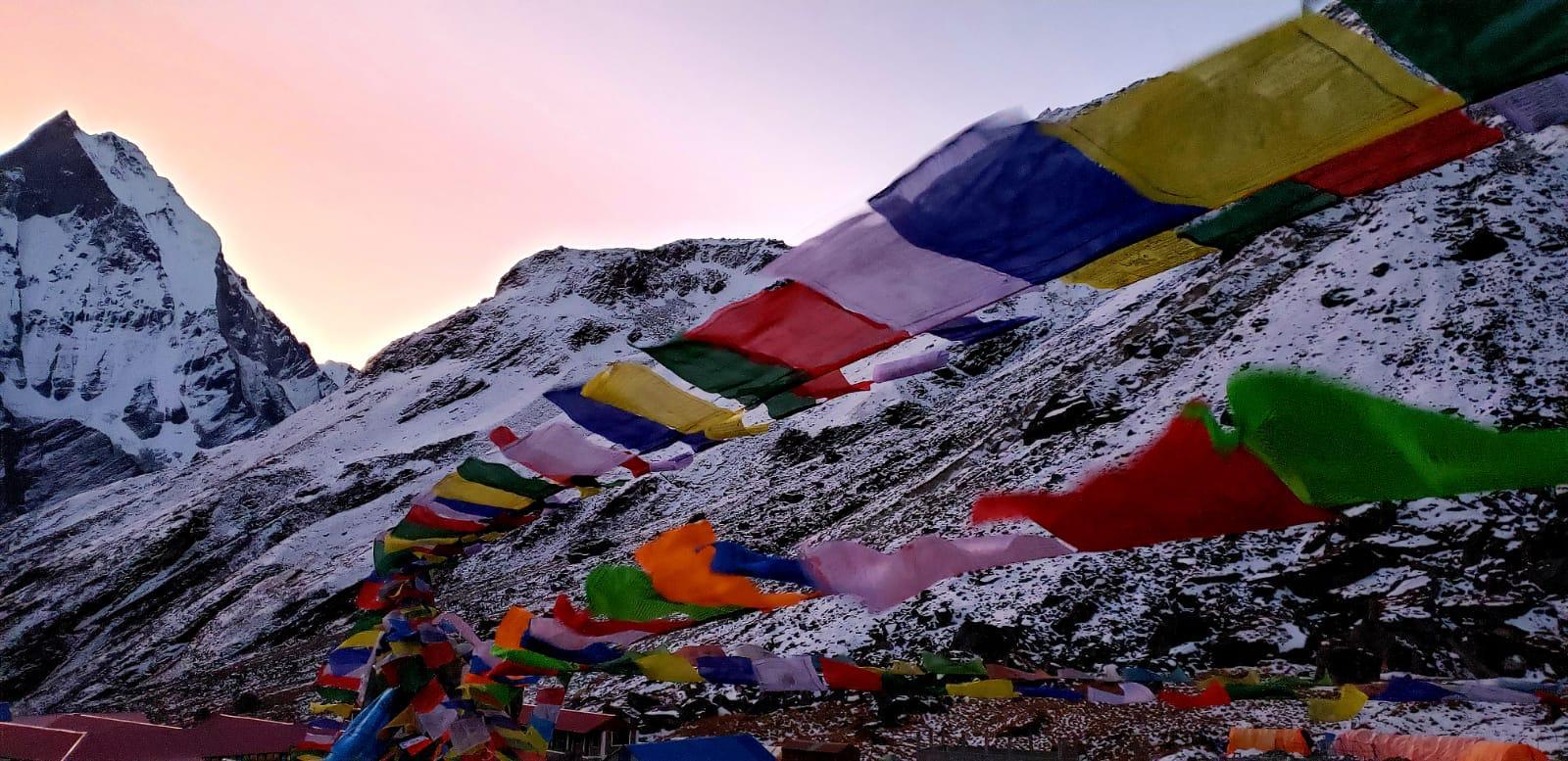
  • Ancient monasteries and prayer-flag-lined trails

From the summit, climbers are rewarded with a 360-degree panorama of some of the world’s highest mountains, making the effort more than worthwhile.

5. Suitable for a Wide Range of Adventurers

Island Peak is not just for climbers, it attracts people from diverse backgrounds.

Common successful climbers include:

  • Experienced trekkers
  • Marathon runners and endurance athletes
  • Rock climbers seeking altitude experience
  • Adventurous first-timers with good fitness

With proper preparation and mindset, Island Peak is achievable for anyone willing to train and commit.

6. Manageable Physical and Mental Challenge For Your First Himalayan Summit

While Island Peak is demanding, it’s not overwhelming for beginners. Summit day is long and strenuous, but the technical sections are short and well supported.

What makes it beginner-friendly:

  • Moderate slopes up to high camp
  • Steeper climbing limited to the final section
  • Professional guides managing ropes and pacing
  • Strong emphasis on safety and teamwork

This combination helps first-time climbers push their limits without feeling out of depth.

7. Rich Cultural Experience in the Everest Region

image
Why Island Peak Should Be Your First Himalayan Summit 6

Climbing Island Peak is not just about reaching the summit, it’s also a cultural journey. You’ll trek through the heartland of the Sherpa community, experiencing their traditions, hospitality, and Buddhist heritage.

Cultural highlights include:

  • Visits to Tengboche Monastery
  • Prayer wheels, mani walls, and chortens
  • Sherpa climbing stories and traditions
  • Local cuisine and mountain hospitality

This cultural immersion adds depth and meaning to the expedition.

8. Best Seasons Offer Stable Conditions

Island Peak is climbed mainly in two seasons:

  • Spring (April–May): Stable weather, warmer temperatures, excellent summit conditions
  • Autumn (September–November): Clear skies, crisp air, and outstanding mountain views

These windows offer predictable conditions, making planning easier for first-time climbers.

9. Strong Safety Record and High Success Rates

Thanks to its popularity and well-managed routes, Island Peak has one of the highest success rates among Nepal’s 6,000m peaks. Guided expeditions emphasize acclimatization, safety checks, and flexible summit windows.

For beginners, this balance of challenge and safety is extremely reassuring.

10. A Stepping Stone to Bigger Himalayan Goals

Island Peak is often the first summit in a longer mountaineering journey. Many climbers use it as preparation for:

The skills, confidence, and experience gained here are invaluable for future climbs.

Final Thoughts

Island Peak remains the gold standard for a first Himalayan summit. It offers the right mix of challenge, learning, safety, scenery, and cultural richness without the extreme risks of higher peaks.

If you’re ready to move from trekking trails to snow, ice, and ropes, Island Peak is not just a climb it’s your gateway into the Himalayas.

Contact Us

Island Peak Expedition: What It’s Really Like to Stand at 6,189m

Island Peak Expedition

Island Peak Expedition: What It’s Really Like to Stand at 6,189m. Standing on the summit of Island Peak (Imja Tse) at 6,189 meters, the world feels vast, silent, and impossibly close. Ama Dablam rises like a cathedral to the west, Lhotse’s icy face looms to the north, and the Khumbu Valley stretches far below in a maze of glaciers and moraines. It’s not just a climb it’s a moment earned step by step, breath by breath.

But what is an Island Peak expedition really like? Beyond the Instagram photos and summit statistics, here’s an honest look at the experience from acclimatization to the final push, and what it feels like to stand on top of your first Himalayan peak.

Why Island Peak Captures So Many Climbers

Island Peak is often described as a “beginner’s” trekking peak but don’t let that label mislead you. While technically accessible, it still demands fitness, mental resilience, and respect for altitude.

What makes Island Peak so popular is its perfect balance:

  • High Himalayan altitude without extreme technical difficulty
  • Stunning views of Everest, Lhotse, Nuptse, and Ama Dablam
  • A genuine mountaineering experience using ropes, crampons, and ice axe
  • Ideal as a first 6,000-meter peak
  • For many climbers, Island Peak is where trekking ends and mountaineering truly begins.

The Journey Before the Climb

An Island Peak expedition isn’t just summit day, it’s a gradual transition from green valleys to a frozen alpine world.

Trekking Through the Khumbu

58373561 2331005073851537 5118780476215001088 n
Island Peak Expedition: What It’s Really Like to Stand at 6,189m 11

Most expeditions begin with the classic trek through:

Lukla

Namche Bazaar

Tengboche

Dingboche

Chukhung

This phase is as important as the climb itself. The slow ascent allows your body to adapt to thinning air, while days are filled with prayer flags, suspension bridges, yaks, and views that never stop improving.

Acclimatization hikes above Dingboche and Chukhung prepare your lungs and legs for what’s ahead.

Life at Island Peak Base Camp

At around 5,100 meters, Island Peak Base Camp feels stark and remote. There are no teahouses here just tents, wind, and the sound of ice cracking in the glacier nearby.

Evenings are quiet:

  • Hot soup and simple meals
  • Gear checks and rope briefings
  • Early nights as temperatures drop fast

You feel the altitude constantly. Simple tasks, changing clothes, melting snow, tying boots, take more effort. Sleep is lighter. Breathing is louder. And tomorrow, the climb begins.

Summit Day: The Hardest and Most Rewarding Day

A Midnight Start

Summit day usually begins between 12:00 and 2:00 a.m. Headlamps glow as climbers rope up and step onto the frozen moraine.

The early hours are mentally demanding:

  • Steep rocky terrain
  • Cold biting through gloves
  • Slow, deliberate movement

Above 5,500 meters, every step feels heavier. This is where mental strength matters as much as physical fitness.

Crossing the Glacier and the Headwall

The climb transitions onto the glacier, where crampons bite into hard ice. Fixed ropes lead up the famous 40–45° ice headwall, the most technical section of the climb.

Here, climbers use:

Jumar (ascender)

Ice axe

Harness and rope

It’s not extreme climbing, but at this altitude, even simple movements feel intense.

Standing on the Summit of Island Peak (6,189m)

WhatsApp Image 2025 03 10 at 15.32.17 778186cc
Island Peak Expedition: What It’s Really Like to Stand at 6,189m 12

The summit is narrow, often just enough space for a few climbers at a time. And yet, the feeling is immense.

You’re surrounded by giants:

  • Lhotse towering above
  • Ama Dablam perfectly framed
  • Makalu in the distance
  • Glaciers flowing far below

Breathing is shallow. The air is thin. But the sense of achievement is overwhelming. For many, it’s the highest point they’ve ever stood—and one they’ll never forget.

Summit time is short. Safety comes first. After photos and quiet reflection, the descent begins.

The Descent: Often Harder Than the Climb

Most accidents happen on the way down, when fatigue sets in. Descending the headwall requires focus and steady movement. Once back at base camp, exhaustion turns into relief—and celebration.

That first hot drink after returning feels extraordinary.

Who Is Island Peak Really For?

Island Peak is ideal if you:

  • Have prior high-altitude trekking experience
  • Are comfortable hiking 6–8 hours a day
  • Want your first true mountaineering summit
  • Are prepared to train before the expedition
  • It’s challenging, but achievable with proper preparation and a responsible itinerary.

What Island Peak Teaches You

More than the summit, Island Peak teaches:

  • Patience with altitude
  • Respect for mountains
  • Trust in your team and guide
  • Confidence in your own limits

Standing at 6,189 meters changes how you see effort, discomfort, and reward.

Final Thoughts: More Than Just a Peak

An Island Peak expedition is not about ticking off a height, it’s about transformation. From your first step on the Khumbu trail to that quiet moment on the summit, the mountain strips life down to essentials: breath, movement, and purpose.

If you’ve ever wondered what it’s really like to stand at 6,189 meters Island Peak offers an answer you’ll carry for a lifetime.

GROUP JOINING IN ISLAND PEAK CLIMBING

Group Joining Island Peak

Group joining in Island Peak Climbing. One of the most popular summits among mountains above 6000 m in elevation is Island Peak, also known as Imja Tse in the local Sherpa language. The British Expedition gave this unusually formed peak the name “Island Peak” because, as seen from Dingboche, it appeared to be an island in the middle of a sea of snow and ice. Every climber who travels through the Everest region is enticed and drawn to it.

As it is easier than summits over 7,000 meters, Island Peak is one of the top targets for potential climbers yet it provides a similar sense of fulfillment and accomplishment upon summiting.

For those who have some high-altitude experience and wish to broaden their views of the Himalayas, Island Peak is the ideal choice. Although the Himalayas have an easier beginning, climbers must still have some stamina because they must traverse several crevasses that include parts of snow and ice. However, it is a great chance to develop climbing abilities and be ready for the peaks of 7000 and 8000 meters.

The trail to the island peak is the classic Everest Expedition trail till Dingboche. From there, climbers of Island Peak and other summits turn in the direction of Chhukung, while those of Everest, Lhotse, and other peaks turn in the direction of Lobuche, leading to the Everest Base Camp. The whole experience is captivating and intriguing. The ultimate delight of being in the Himalayas is seeing the magnificence of mountain panoramas right in front of you and the wind of the snow. The stunning plants and animals in the Sagarmatha National Park along the path will equally fascinate you.

BEST TIME FOR CLIMB

The months of September through November and March through May are the finest times of year to climb the Island Peak/Imja Tse. These times of year are ideal for climbing because the routes are unobstructed and clear, and the views are clear.

WHAT IS AN ISLAND PEAK TREKKING GROUP?

An exciting and gratifying way to begin a Himalayan trip is by joining a group on an Island Peak trek. A group joining trek enables individual trekkers and climbers to get together as a team for a particular trekking or climbing adventure, as opposed to private excursions where you establish your own group. These teams are typically put together by trekking organizations or travel agencies, who connect together explorers with similar interests to share the trip and expenses.

Group trekking provides a double adventure at a low cost. You’ll meet adventurous travelers from all over the world and socialize with multilingual and multicultural people. The language of communication for the group going on the walk will be English.
For several trekking regions, we have set group joining departure dates. It is the ideal choice for solo travelers looking for a group to hike with and climb in Nepal. Group joining trekking and climbing in Nepal will be less expensive than private treks or climbs since you will likely share all expenses that are associated with the whole expedition, including meals, housing, transportation, guides, and porters.

BENEFITS OF GROUP JOINING IN ISLAND PEAK CLIMBING:

COST EFFECTIVE:

Joining a group trip has several benefits, one of which is cost-sharing. The cost of an expedition might be high, but when you travel with a group, you can divide the cost of equipment, guides, and other fees, which makes the trip cheaper.

SAFETY AND SUPPORT

Climbing Island Peak demands technicality, acclimatization, and the proper equipment. Being a part of a group adds an extra layer of protection and support since you can lean on knowledgeable leaders and other climbers for encouragement when things become tough.

UNITY:

Group joining treks encourages participants to feel a sense of togetherness. Together, explorers from all over the world forge enduring friendships and cherishable experiences by experiencing the highs and lows of the trip together.

LOGISTICAL CONVENIENCE:

It might be difficult to plan a hike to a distant area like Island Peak on your own. Group joining treks simplify the procedure simpler because the tour operator handles the necessary paperwork and arranges for lodging, food, and transportation, freeing the participants to concentrate exclusively on the expedition.

GREATER ADVENTURE:

A group’s unity while embarking on a trip improves the entire adventure experience. The trip becomes more meaningful and joyful as people encourage one another and share inspiring experiences.

WHY ISLAND PEAK CLIMBING IS THE ULTIMATE CHOICE?

For climbers looking for a challenging and rewarding Himalayan journey, climbing Island Peak is perhaps the best option. Island Peak is regarded as a good choice for a number of reasons:

SPECTACULAR LOCATION:

Mount Everest, Lhotse, Nuptse, and Makalu are just a few of the highest and most famous mountains in the world that can be seen from Island Peak, which is situated in Nepal’s Everest region. The Khumbu Valley and the surrounding landscapes’ pristine beauty add to the climb’s attractiveness.

HIGH ALTITUDE:

Despite being a difficult climb, Island Peak’s altitude of 6,189 meters (20,305 feet) is reachable for climbers with some expertise and the right acclimatization. It is a great starting point for anyone who wants to climb greater peaks in the future.

CHALLENGING YET ACHIEVABLE

Island Peak is not an easy mountain to climb; it needs some technical climbing expertise, making it a desirable option for climbers looking to improve their mountaineering skills. Reaching the peak is an endeavor because the ascent includes ice and rock climbing parts.

MIXTURE OF TREKKING AND CLIMBING:

The Island Peak adventure involves both climbing the peak itself and trekking to Everest Base Camp. Climbers may enjoy the vibrant Sherpa culture, breathtaking scenery, and the rush of reaching a Himalayan peak all in one trip thanks to this special combination.

CULTURAL IMMERSION:

The walk to Island Peak passes via old monasteries, vibrant prayer flags, and traditional Sherpa settlements, providing a really cultural experience. The adventure takes on a unique dimension as a result of interactions with the local Sherpa community.

EXPERIENCED TEAM:

There is an additional layer of safety and support when climbing Island Peak with a knowledgeable guide and in a group. The guides are knowledgeable about the area and equipped to tackle any unanticipated difficulties that may arise.

GROUP JOINING OPTION:

Individual climbers who lack a committed team or who do not wish to cover the full expense of a private expedition can now climb Island Peak thanks to the availability of group joining treks. The friendship and encouragement of other climbers enhance the entire journey.

THE SENSE OF ACCOMPLISHMENT:

Reaching the summit of Island Peak is an impressive accomplishment that climbers will never forget. It offers a sense of achievement and empowerment, igniting the urge to embark on future excursions that are more difficult.

Climbing Island Peak is without a doubt the best option for climbers seeking an amazing trip that combines breathtaking scenery, technical difficulties, cultural immersion, and the exhilaration of achieving a Himalayan peak. Island Peak offers a thrilling adventure that will leave you with lasting memories and a great feeling of success, regardless of whether you are a seasoned climber or a passionate trekker with the goal of climbing higher.

GROUP JOINING DATES:

ISLAND PEAK 20 DAYS26 SEP 2023USD 2235/-
ISLAND PEAK 20 DAYS02 OCT 2023USD 2135/-
ISLAND PEAK 14 DAYS15 OCT 2023USD 2000/-
ISLAND PEAK 20 DAYS21 OCT 2023USD 2235/-
ISLAND PEAK 18 DAYS01 NOV 2023USD 2135/-
Group Joining Dates for Autumn 2023

CONTACT US FOR MORE DETAILS

Tips for Successful Island Peak Climbing in Nepal

island peak climbing

Check out the tips for successful Island Peak Climbing in Nepal. Peak climbing, a popular adventure activity in Nepal, allows climbers to reach the summit of peaks that are above 6000 meters. From novice to expert climbers, Nepal offers a wide range of peaks.

In Nepal’s Everest region, Island Peak Climbing is a famous peak that does not need technical expertise and is classified as Alpine PD+ in terms of grade. For many, it is the first option when attempting to climb a 6000-meter Himalayan mountain. Island Peak is a typical 6000-meter Himalayan peak that combines all the necessary elements to advance your climbing abilities.

After the mighty Everest, Island Peak is the mountain most sought-after in the Everest area. The summit, which is 6189 meters high, provides an authentic climbing experience with the use of a ladder and fixed ropes on 45-degree snow sleeves.

Here is some advice from the experts on how to climb a mountain successfully in Nepal, helping you to fulfill your climbing goals and build priceless memories.

Research

It may be a rewarding experience to climb a peak in Nepal, but it’s important to plan ahead and do your homework. You must pick the peak that best matches your experience and skill level. You should do your homework on the climbing route before undertaking a mountain climb in Nepal. Examine the peak’s technical requirements, difficulty level, height, climbing times, and other factors. You will be better able to manage the difficulties and dangers of high-altitude climbing if you do this.

Physical Preparation

For peak climbing in Nepal, physical preparation is essential. It involves strength training, altitude training, and cardiovascular exercise. To be able to handle the physical demands of climbing at high elevations, you must improve your cardiovascular fitness. Your training program will help you develop your stamina if you incorporate exercises like jogging, cycling, or swimming. Additionally, strength training will aid in the development of the muscles needed to maintain your body weight while climbing. Exercises like squats, lunges, push-ups, and pull-ups should be prioritized since they work your legs, core, and upper body. Since the mountains in Nepal are at a high altitude, altitude training is necessary to prepare your body for the lower oxygen levels that will occur. You can hike at greater elevations or use an altitude training mask.

Proper Trekking Gears

crampon gf9c0acd75 1280
Tips for Successful Island Peak Climbing in Nepal 20

Unquestionably, the most important tip for climbing peaks is to have the right equipment. Pack all of the necessary climbing equipment, and if you’re planning to buy mountaineering boots, make sure to break them in beforehand. Don’t compromise on the equipment’s quality. If you just want to use it once, you may also rent the equipment in Kathmandu. The weather in the mountains is unpredictable and subject to sudden changes. Therefore, be ready with warm clothing that works at temperatures as low as -30 degrees Celsius.

Proper Acclimatization

Give your body time to adjust to the altitude. We strongly advise you to add adequate acclimatization to your itinerary. Your journey will last 3–4 more days, but it will all be beneficial. While some may be successful, sometimes some climbers give up on their attempt to conquer the top because of the rapid increase in altitude. If acclimatization is neglected, even the most athletic and most experienced climbers do not succeed.

Train Well

Weight training
Tips for Successful Island Peak Climbing in Nepal 21

The experience will be better the more fit you are. You must be in excellent physical condition to complete the demanding 10- to 12-hour summit push and the multi-day walk to the base camp at a high altitude. At least three to four months before you want to hit the route, prepare yourself well. Develop your climbing abilities, strength, and cardiovascular fitness in preparation for the climb. Your stamina will be improved by frequent exercise and lifting weights. Make sure you work out regularly and progressively increase your training intensity.

Add Contingency Day

On the mountain, anything can cause a change in the plan, therefore it is always more practical to have a backup day in your schedule. Having a backup day will protect your schedule from being compromised by a variety of unanticipated events (health, weather, route, etc.). If everything goes according to plan, you may spend this day relaxing or maybe even treat yourself to something special.

Choose the Right Season

11
Tips for Successful Island Peak Climbing in Nepal 22

Starting your climb at the right season is essential for a successful summit. Seasons with heavy snowfall or melting snow are not recommended for climbing. Late April, May, and Late September to November are the best months to summit peak in Nepal. Peak Climbing is often advised during the spring and fall seasons. However, climbing is still doable at other times, but you must be prepared for unforeseen circumstances.

Complete Guide For Island Peak Climbing

Island Peak Climbing Package e1528428415370

Things to know about Island peak | Island Peak Facts

Island peak popularly well known as Imja Tse locates on Khumbu Region in eastern territory of Nepal holding the height of 6,189 m/ 20,305 ft besides the peak is really an expansion of the edge descending off the south end of Lhotse Shar. In fact, this peak was name in 1951 AD by Eric Shipton’s party because it appears as island in a sea of ice when viewed from distance. Later, the peak was renamed on 1983 AD to Imja Tse but Island peak remained the popular choice and now it’s able to hold both names. However, Island peak is also identified as the chief mountaineering peak of Khumbu region.

Check Island Peak Climbing Package 

Attractions of Island peak climbing
  • Thrilling and wonderful Himalayan flight to Tenzing Hillary Airport (rated on list of world’s adventurous airport).
  • Exploration of Namche Bazaar (Largest settlement/ Trading spot of Himalayan Sherpa’s) with wealthy culture, traditions norms and values.
  • Investigating Tengboche Monastery (antiquated/oldest religious spot of Khumbu region).
  • Experience of tented nights (base camp of Island peak) and Sagarmatha National park holding untold rare varieties of flora and fauna.
  • Glacial walk and climbing (Island peak) opportunity with 360° view from high elevation throughout zigzag peaks including Mt. Everest.

island peak climbing cost

Island peak climbing route

White Island peak climbing embraces ahead with adventure departure from Tribhuwan International Airport (Kathmandu) to Tenzing Hillary Airport (Lukla). Ahead, walking forward totally passing Phakding, Namche Bazaar, Tengboche, Dingboche, Chhukung on the way takes to base of Island peak via after strolling through rough and snowy trail. Confronting extensive 40-45 degree incline climb takes to summit for examining 360° amazing perspective from high elevation all through mammoth stands including Everest, Lhotse, Nuptse, Makalu and numerous more others. Therefore, retracing the same earlier developed chain comes at end.

 Check Island Peak Climbing Package

island peak weather

View from Island Peak

With 6,189 m of elevation, Island Peak is an appealing peak pinpointed in Sagarmatha zone of Khumbu region, Nepal. Heading up towards Island Peak Base Camp ahead along through glaciers takes to the summit itself. Sweeping into the view a magnificent sight displays from the top unfolding 360° landscape with some of the well-known peaks of the territory including Ama Dablam, Lohtse and Mera Peak.

island peak climbing difficulty

Essential packing for Island peak climbing

Head wears: Climbing helmet, Head lamp, Glacier glasses, Neoprene face mask, ski goggles, warm head and neck covers.

Hand wears: Synthetic gloves, expedition gloves and hand warmers.

Foot wears: Hiking or trekking shoes, tennis shoes, camp boots, over boots, altitude liner, liner and woolen socks, vapor barrier socks and trekking socks.

Personal equipments: Expedition and trekking bag packs, toiletry bag, gears and other varieties according to your need.

Climbing gears: Ice axe, crampons, Alpine climbing harness, carabineers, ascender, belay device and adjustable 3 Section Ski.

These are the normal essential info’s, addition requirements can be customized by discussing with trekking guide to establish your climb more painless and effortless.

NOTE: FREE CLIMBING GEARS PROVIDED

 island peak climbing distance

Difficulty level of Island peak climbing

Though, the word climbing isn’t a straightforward deal this Island peak is considered as the undemanding and uncomplicated peak for climbers. However, this peak is considered as perfect peak for climbing to amateur climbers. Normal hiking, cycling, uphill climbing, camping, muscles stretching and an aerobic workout directly assists you to establish as a capable climber for Island peak. Sometime, natural calamities and uncommon climate and temperature can be reason to attach difficulty en route besides strong dedication and hard efforts are the vital keys to descend difficulty level.

Check Island Peak Climbing Package

Island Peak death rate

Island peak (6,189 m) is considered safe and easy Mountain to ascend which can be attained by ordinary mountaineers and yearly there are numerous counting of succeed on summit of Island peak. Being itself typical peak for climbing, Island peak holds really very low death rate which seldom spots only by their negligently.

island peak climbing package

Suitable package for Island peak climbing

Because of various trekking course and trail, agencies are outlining contrast short to long packages for closing the excursion. Amateur climbers holding enough time can seize expanded bundle to establish effortless execute apart that short bundles are commendable and worthy for those experienced climbers holding less time but entire packages aren’t permanent, entire packages can be customized according to potential climber’s desire and preference.

Island Peak Climbing Itinerary

Day 01: Arrive Kathmandu, transfer to Hotel (Altitude: 1350/4428 ft. Meal: Dinner)
Day 02: Cultural tour in Kathmandu & Preparation Day (Altitude: 1350/4428 ft. Meal: Breakfast)
Day 03: Fly to Lukla, Trek to Phakding (Altitude: 2840/ 9372 ft. Phakding: 2610 m/8612 ft. Flight: 30 minutes Trek: 3/4 hrs. Meal: BLD)
Day 04: Trek to Namche Bazar (Altitude; 3440 m/11352 ft. Trek: 5/6 hrs. Meal: BLD)
Day 05: Rest day for acclimatization (Altitude; 3440 m/11352 ft. Meal: BLD)
Day 06: Trek to Dole (Altitude: 4200 m/13860 ft. Trek 5-6 hrs. Meal: BLD)
Day 07: Trek to Machhermo (Altitude: 4,470 m/14750 ft. Trek: 4-5 hrs. Meal: BLD)
Day 08: Trek to Gokyo (Altitude: 4,800 m/15840 ft. Trek: 4-5 hrs. Meal: BLD)
Day 09: Morning Excursion to Gokyo Ri, Trek to Thagnak (Altitude: Gokyo Ri: 5483m/18094 ft. Thagnak: 4700 m/15510 ft. Trek: 4/5 hrs. Meal: BLD)
Day 10: Trek to Cho La pass 5,367m to Dzongla (4830 m): 7 – 8 hours (Altitude: Cho-la pass: 5330 m/17589 ft. Dzongla: 4830 m/15939 ft. Trek: 6/7 hrs. Meal: BLD)
Day 11: Trek to Gorekshep, excursion to Kalapatthar and back to Gorekshep (Altitude: Kalapatthar: 5550 m/18315 ft. Gorakshep: 5140 m/16960 ft. Trek: 6/7 hrs. Meal: BLD)
Day 12: Trek to Everest Base Camp 5357m and back to Lobuche (Altitude: EBC: 5357m/17678 ft. Lobuche: 4910 m/16203 ft. Trek: 5/6 hrs. Meal: BLD)
Day 13: Trek to Chhukung (4,730m/15518ft) via Kongma-la pass (5535 m) (Altitude: Kongma-la: 5535 m/18265 ft. Chhukung: 4750 m/15675 ft. Trek: 6/7 hrs. Meal: BLD)
Day 14: Island Peak base camp (Altitude: 5,200m/17,060ft. Trek: 3/4 hrs. Meal: BLD)
Day 15: Climbing training course and preparation (Altitude: 5,200m/17,060ft. Meal: BLD)
Day 16: Island Peak Summit (6,189m/20305ft) back to Chhukung (Altitude: 6,189m/20305ft. Trek: 8/9 hrs. Meal: BLD)
Day 17: Trek to Namche (Altitude; 3440 m/11352 ft. Trek: 5/6 hrs. Meal: BLD)
Day 18: Trek to Lukla (Altitude: 2840/ 9372 ft. Trek: 4/5 hrs. Meal: BLD)
Day 19: Fly to Kathmandu (Altitude: 1350/4428 ft. Flight: 30 minutes Meal: B/D)
Day 20: Departure (Altitude: 1350/4428 ft. Meal: B)

island peak climbing itinerary

Perfect time to climb Island peak

Generally Island peak can be climbed throughout the year except during the monsoon months (June to August) besides spring (March to May) and autumn (September to November) are considered as the perfect seasons to scale Island peak. The clear sky with moderate temperature is the virtue of these months to succeed the summit. Likewise being easy to ascend, winter season is also acceptable for those rare climbers who are experienced and can neglect cold too. Honestly, justifying views and comfortable climbing along capturing the clear sceneries are marvelous rewards of this Island peak, if ascended on spring.

island peak climbing

 Check Island Peak Climbing Package

Altitude sickness and acclimatization For Island Peak

After deep study and research, it resulted that almost entire climbers are pursuing from low elevated territory nearly equal to sea level. Besides that, our destination is to achieve height equal to 6,189 m from sea level so due to this reason there is huge chance to suffer from altitude sickness issues. Thus, proper focus on acclimatization plays a vast role on succeed of desired destination likewise high range of professional climbers don’t need the period of acclimatization due to uncomplicated climbing track.

Request Custom Dates And itinerary

Cost and permit required for Island peak climbing

Remember entire climbing charge and royalties depends upon the season and time. Normally, Island peak climbing collects permit fee of USD350 for a group up to 4 climbers with an addition serially USD40 per person over that number besides there will be USD250 deposit to ensure complains with garbage regulations. Entire route and climbing permits will be operated by agency along deal with entire travelling tickets according to requirement.

island peak temperature


Climbing with us

Safety: The most focused reason uttered by potential and professional climbers after connecting with us is highly secured and successful expedition with safe departure.

Guide: Contribution of guide (qualities holding with powerful knowledge of throughout domain along with high range of English language) for establishing climbing journey more wonderful and awesome.

Proper adjustment: It’s not a piece of cake to find out the perfect destination for operating systematic and powerful acclimatization and camps. For that, climbing team can assist to the aimed destination with genuine adjustment. 

Information: In fact, there are multitudinous hidden attractions en route holding different facts and histories along missing is surely neglected while trekking with us.

I’m Interested, Send Me Free Package Details

Island peak climbing In Nepal

Island Peak Climbing

Island peak is one of the beautiful mountain peak located on the eastern part of Himalaya Nepal with the height of 6,189m above the sea level. This pick was name in 1951 AD by Eric Shipton’s party because it appears as island in a sea of ice when viewed from Dingboche. The peak was latterly renamed on 1983 AD to Imja Tse but island peak remained the popular choice. The peak is actually on extension of the rigid coming down off the south ends of Lhotse Shar. Much of the upper Khumbu valley is within the Sagarmatha National park. The park was created in 1976 AD and added to UNESCO world heritage list on 1979 AD. It was first climbed in 1953 AD as a part of training expedition that went on to summit Charles Evans, Alf Gregory, Charles Wylie and Tenzing Norgay Sherpa with seven Sherpa were the persons. Tenzing Norgay Sherpa was also the first person to climb up the Mount Everest. This peak is very popular for trekking on eastern region of Nepal. Island peak is a popular Mountaineering for climbers with its standard climbing routes and it’s considered as the easy climb and can be also climbed by the people have little experiences and little knowledge on climbing. This peak can be climbed on all the seasons. It’s possible to climb the peak on the winter season also but it may present little difficulties comparing to the other seasons due to the coldness. The peak is high than 6,000m so, there is very important to have your body fit and fine along with acclimatization process. Though it is easy to climb comparing to others but its summit is also at high point so attitude sickness is a very real concern.

There are several ways to approach Island Peak but for directly and commonly follows the same route to the Everest Base Camp route and separates the route near Dingboche. Although there is many climbers to summit this peak we can find many of them visiting the area as trekkers also. The trekkers and climbers can also see the view of the famous Mount Everest. There you can also summit this peak within the 12 days but you need a good health condition, proper fitness and experience with knowledge of climbing. For the 1st day the trip starts from Kathmandu to Lukla by a flight and continuous walk to Phakding, 2nd day follow guide towards Namche Bazaar, 3rd day is for the acclimatization day, 4th day the trip goes towards Tengboche, for the 5th day towards Dingboche, 6th day towards chhukhung, 7th day towards island peak Base Camp, after that 8th moves towards high camp, 9th day reach to the summit and return back the same way towards the base camp and continuous towards the Chhukhung, for 10th day move towards Namche Bazaar, 11th day towards Lukla and finally 12th day back to Kathmandu valley. For the relaxed and slow entertaining full pack there is of 18 days pack. For 18 days pack there also the journey starts from Kathmandu valley. 1st day, Kathmandu to Lukla through Flight and hike to Phakding, 2nd day the trip moves forward towards the Namche Bazaar, 3rd day rest and acclimatize on Namche Bazaar for full day, 4th day the journey starts towards Tengboche, 5th day hike towards Pheriche, 6th day rest and acclimatize in Pheriche, 7th day move forward towards Lobuche, 8th day hike to Gorakshep, spend the day hiking up to Everest base camp and back to Gorakshep, for the night. 9th day hike towards to KalaPathar a black hill with good view of Mount Everest than on to Lobuche, 10th day the trip towards Chhukhung, 11th day moves towards the Island peak base camp, 12th day towards the high camp, finally on 13th day summit to the peak and return back towards base camp, on 14th day trek to Dingboche, 15th day move towards Tengboche, 16th day towards Manjo, 17th day trek towards Lukla for overnight and last 18th day fly back to Kathmandu valley. These are the packs to summit the Island peak. There are many companies and agencies running around you to provide these services and after catching to the better and best agency or company they will provide you all the services and facilities after paying the certain amount. They will also provide you the guide and potters along with you.

Check Island Peak Climbing Package

Be well known about the weathers and climate of the region that you think the best for you to climb. Get chance to grab the better period for visiting the famous places of Eastern Himalaya Region and also know the chance to read the community and society of that place with many different castes and traditions along their occupation and praying flags. There are more cultural wonders on Everest Region. Before past days there were not the proper facilities on this field there it was very hard task to complete. There climbers and trekkers should take a large group with them as potters due to lack of facilities on hotels and other services which used to lead towards a heavy expenses on them. Now a day there are lots of hotels providing you there services so there you don’t need to carry a large mass of group which also helps to travel you a cheap journey comparing old days. There are lots of service providing agencies and companies have a better study on them check their websites and have a look to their services rates and taxes with experiences of the guide that they are providing and last don’t forget to have a look towards the comments and feedback’s of that company which can help you to find the best. You will have a delightful journey with awesome views and best time with beautiful captured moments as memories of your life time. Nepal is Paradise of Himalayas views and sceneries so if you are interested and thinking to have a climb or a trek on Island Peak it’s sure you can collect a best experience of your life.

Feel Free To Contact Us For Detail Island Peak Climbing Package Information, Price and any other useful information.