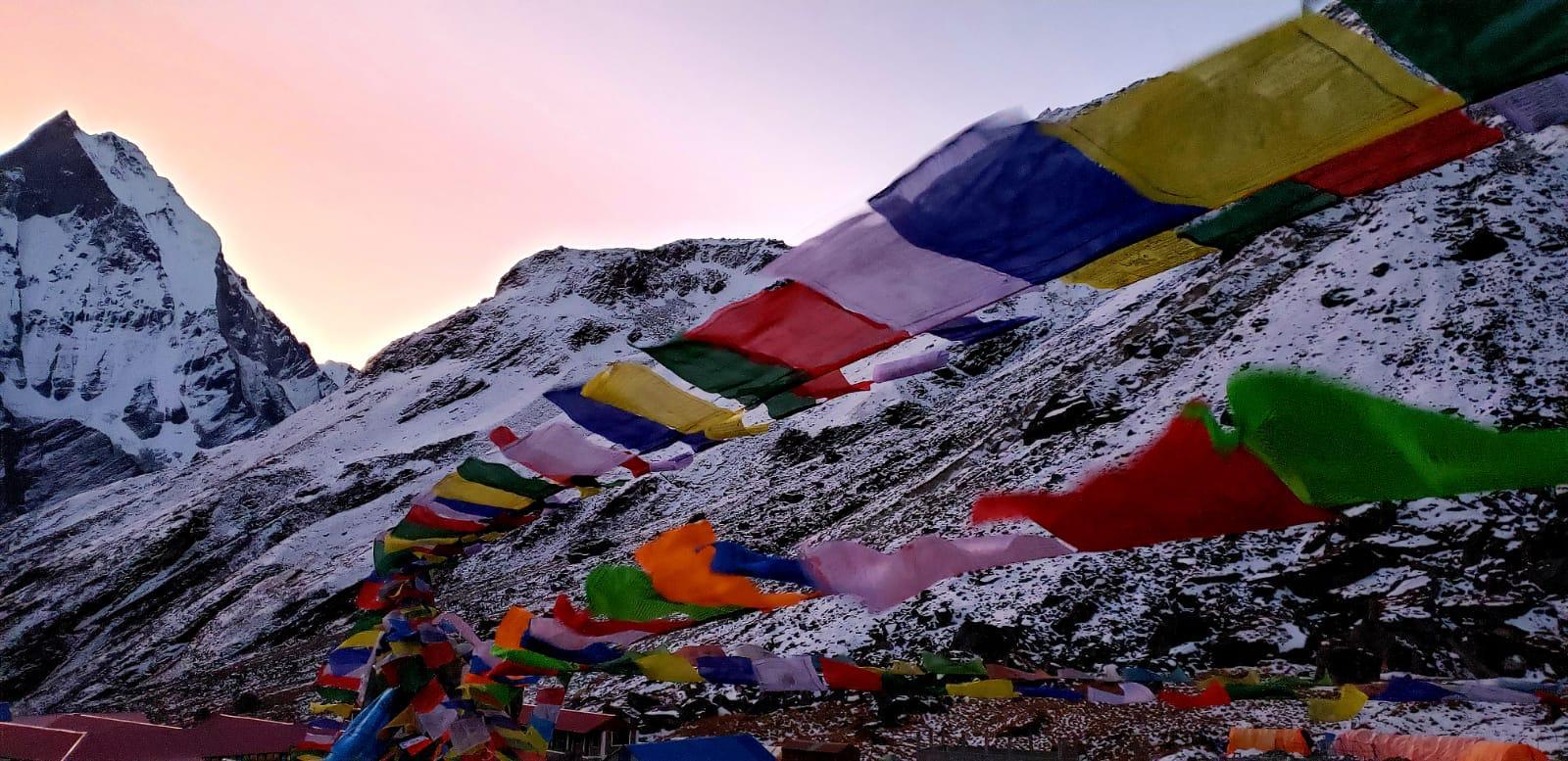

Nepal needs no introduction for its unique geographical topography, diverse wildlife and plants, majestic mountain peaks, and also unique seasons. The combination of all these features has made Nepal a perfect place for traveling and exploring. Let’s not forget about the rapid rivers that wind through various gorges of the hillsides that attract lots of adventure sport seekers for river rafting, kayaking, etc. A small country with such diverse ecological richness with a friendly and welcoming group of people. Anyone who has been to Nepal surely knows of all these traits. Anyone who is planning to visit for the first time can look forward to it.
Here is the list of the top 10 things to do while you’re in Nepal:
1. Cultural Heritage Tour in Nepal

Nepal’s Cultural Heritage Tour takes you to the ancient locales that are situated in three areas, in particular Kathmandu, Bhaktapur, and Lalitpur. This has been credited to the title of UNESCO World Heritage Sites. The tour additionally encourages you to explore rocky mountains and takes you to the lush marshland of the Chitwan National Park, Lumbini, the origin of Lord Buddha, and leads you to the delightful and inspiring places like Tansen and Pokhara.

Pokhara, thriving as the mainstream traveler spot of Nepal. The liveliest city, its shrouded delights were discovered by the foreign eyes, it has its buzz and appeal. Pokhara has beautiful lakes, and its backdrop includes the Annapurna Ranges, which seem to be far away, however its visibility makes us feel that it is within our reach. Other than witnessing these, you will furthermore visit Bindabasini sanctuary, world harmony stupa, and mountain historical center, and around this sanctuary, there is a lake, ideal for sailing.
There is such a great amount to see in Tansen as well through Nepal’s Cultural Heritage Tour because Tansen is a delightful hill station, and you will adore it from the first sight, and it is so liberal at offering you an awesome perspective on the Himalayas just as those of the plain area that you will cherish it for its commonness.
Of all, the most significant historical places of Nepal that you visit during the tour are the Maya Devi Temple, Ashoka Pillar, and monasteries. Also, with regards to the exploration of natural sites, Chitwan National Park offers you a chance to ride on an elephant and takes you close to wild creatures, for example, the one-horned rhino, Royal Bengal Tiger, langur monkeys, wild pig, sloth bear, wilderness felines, pythons, crocodiles, deer, and so forth.
Generally, all aspects of the Nepal Heritage Tour is inviting and is known for each strength from common delights to verifiable landmarks.
2. Pottery Classes In Nepal

All things considered, you may have some additional free time while traveling in Nepal. Why not learn the art of pottery making. You won’t just have lots of fun with the pottery wheel but also the craft of making something will get your innovative energies pumping. Furthermore, the individuals who have taken ceramics classes vouch that it is very therapeutic as well!
Aside from visiting Bhaktapur where you may have the option to persuade a potter to impart his abilities to you, there are different workshops you can go to that will train you this aptitude for nothing or a nominal expense. Backstreet Academy in Chandol, Kathmandu, is a decent spot to gain proficiency in this neat craft.
You will be instructed to plan your pot and once you have your essential shape pounded out, you can even decide to decorate your creation with delightful examples and engravings. Nonetheless, you must show restraint toward this type of workmanship as it takes two days for the stoneware to dry. Take an additional shirt with you however as it can get very sloppy and you may need to change after the class.
Making a vessel from mud is old workmanship however one that you can undoubtedly learn if you have some free time. The techniques aren’t that difficult to ace however the process of learning pottery will be fun regardless of if you can only make a misshapen vessel.
3. Peak Climbing In Nepal

The Himalayas have consistently been the focal point of exceptional accomplishments in the realm of mountain climbing or peak climbing. There are 1310 tops over 6000 meters and one-fourth of them are formally opened for mountaineering excursions. This offers the incredible chance of experiencing peak climbing in Nepal. By Himalayan guidelines, there are smaller mountains known as “trekking peaks” (ranging from 5587 to 6500 meters). These trekking peaks in the Himalayas suit best to any fit and sharp adventurers to begin the climbing experience. Climbing these mountain peaks in Nepal is the next step to experiencing true adventure and the thrill of peak climbing. Peak climbing incorporates basic mountain climbing over the snow line, utilizing ice axes, climbing boots with crampons, ropes, etc under the supervision and guidance from your expert climbing guides. All climbing guides have significant mountaineering expertise and experience including multiple ascents of Mt. Everest and other Himalayan peak climbing.
4. Trekking In Nepal

Nepal has managed to pull in adventurers/trekkers from around the world since the 1960s when Col Jimmy Robert’s organized the very first commercial trek. Trekking/hiking/mountain climbing has been the leading activity of tourists in Nepal and thousands take to the Himalayas, some doing a couple of long periods of climbing while others take on a month-long trek across valleys and high mountain passes. Two of the most mainstream trekking regions are the Everest and Annapurna where a wide range of trails can be followed while the other well-known trips are in the Langtang and Kanchenjunga areas. The most demanding and challenging is the Great Himalayan Trails, a broad path framework that covers Nepal from Humla and Darchula in the west to Kanchenjunga in the east. The diversity of trekking trails such as in Nepal can’t be found in other parts of the world. The lowest point of elevation in Nepal is 59 m above sea level in the Terai region while the most elevated point is Everest, 8,848 m above sea level.
5. Monastery Tour In Nepal

The Monastery Tour in Nepal will cover from the world’s tallest mountain Mt. Everest to the Birth Place of Lord Buddha. Your visit will begin from Kathmandu as you can hire an expert guide who will take you to places covered with many Temples, Stupas, and monasteries. Then after the 35 minutes trip to Lukla, you will begin our climb towards the significant monastery area. In Phakding, there is a Rumijung Monastery which was established by Khemp Dorje in the sixteenth century. On the way, you will visit a monastery, nearby villages, and explore their culture, tradition, way of life, landscapes, and mountain views.

Tengboche Monastery is the most significant religious community in the mountains of the Himalaya Kingdom. Tengboche has its own tremendous and one of a kind area which is on the main course to the headquarters of Mount Everest. Tengboche Monastery was worked by Lama Gulu in 1916 and has solid ties with the Rongbuk monastery in Tibet. This monastery has been damaged and rebuilt twice; it was harmed in 1934 by an earthquake. Again it was badly burnt in 1989, the monastery lost valuable old sacred texts, sculptures, wall paintings, and wood carvings. From Tengboche, we can see the world’s tallest mountains including Amadablam, Nuptse, Thamserku, Lhotse, Kantega, and numerous different peaks around.
After exploring the monasteries in the mountains of Nepal you can visit Lumbini the birthplace of Lord Buddha. As any monastery tour would be incomplete without visiting the most important place for Lord Buddha. Another place for monastery tours is Namobuddha which is close to Kathmandu.
6. Ziplining In Nepal
Zip-lining is an adventure sport guaranteeing that man can go any length for his amusement. A demonstration that at first began as a need to transport things utilizing gravity starting with one slope then onto the next turned into a sport crucial to some adventure seekers and thrillers. They utilized this science to fuel their adrenaline surge.

Thus began the idea of zip-line the longest, quickest and the tallest of which is arranged in Pokhara, Nepal. The flight is from a height of 2000 ft at a speed of 100 miles for each hour. It will take you around the Annapurna and the Machhapuchhre go as you slide to green slopes and inevitably to the marshes.
There are numerous other moderately less exciting yet incredibly energizing zip lines in Nepal. If you are out of an ideal opportunity to ascend the mountain without anyone else yet trying to get a brief look at it’s size, Ziplining is the sport for you.
7. Mountain Biking In Nepal
Nepal happens to be one of the most extravagant nations in freshwater bodies. Practically all the streams are sourced by the powerful Himalayas that make up the whole northern locale of the nation. Only one out of every odd stream is good for boating and kayaking on account of the speed it gains from the lofty plummet it needs to take while spilling out of This experience is for every one of those people who love the sport. Let your preferred sport take you to the absolute generally dangerous, challenging and deadliest routes just as the most magnificent, delicate looking but then strong perspectives on Nature.
Mountain biking is a well known experience sport in Nepal. The excursion normally starts from Kathmandu and heads towards the Himalayas. There are a few biking clubs that sort out different biking occasions consistently. Else you can follow alongside your very own gathering and take a short route of your liking to the mountains.
As you ride your way through, you will get an opportunity to familiarize yourself with the way of life and culture of the local inhabitants of Nepal. This experience will grant you challenge and adventure both by taking you closer to sublime view purposes of the powerful mountains. an extraordinary height. The ones that are, are a dream come true for every thrill seeker and adventure traveller.
From a quick streaming waterway with visit rapids to generally simple stream with barely any rapids, Nepal has waterways for all degrees of rafters. The simple waterways require no related knowledge. Be that as it may, on the off chance that you are rafting on a fast flowing river, it is desirable to have some information about it. The streams will take you to probably the most energizing perspectives on nature. The good to beat all are the sandy seashores you will go through your night in.
8. Rafting In Nepal

Nepal happens to be one of the most extravagant nations in freshwater bodies. Practically all the streams are sourced by the powerful Himalayas that make up the whole northern locale of the nation. Only one out of every odd stream is good for boating and kayaking on account of the speed it gains from the lofty plummet it needs to take while spilling out of such an extraordinary height. The ones that are, are a dream come true for every thrill seeker and adventure traveler.
From a quick streaming waterway with visit rapids to a generally simple stream with barely any rapids, Nepal has waterways for all degrees of rafters. The simple waterways require no related knowledge. Be that as it may, on the off chance that you are rafting on a fast-flowing river, it is desirable to have some information about it. The streams will take you to probably the most energizing perspectives on nature. The good to beat all are the sandy seashores you will go through your night in.
9. Bungee Jumping and Swing
Bungee jumping and swing are other exceptionally well known adventure sports of
Nepal. The most exciting one is arranged at 3 hrs drive from Kathmandu close to the
Tibetan outskirt. The Bridge is based on a chasm at a height of 160 m with the Bhotekoshi River flowing underneath. The other Bungee spot is in Pokhara which is generally less high nevertheless quite intimidating.
The swing from this extension is the world’s most noteworthy swing giving you the sort of adrenaline surge you presumably have never experienced. It is a free fall 100m of 240 curve at 150 km/hr middle green slopes and over a quick streaming waterway. What’s more, since candlelight dates and sea shore excursions are too standard, you would now be able to endeavor Tandem Swing with your accomplice and offer with him/her the most critical experience of a lifetime.
10. MotorBike Tour In Nepal
Nepal is extraordinary compared to other destinations for Motor Biking Tour. Nepal lies between India and the Tibetan plateau, secured with the marvelous Himalayas, rich valleys with various ethnic gatherings, and ancestral society. Annapurna, Langtang regions are well known classical traveling destinations for different Motorcycling Tour Routes in Nepal. Kathmandu – Muktinath Motorbiking is one of many visit which starts from Kathmandu which covers both on-street and rough terrain biking going through lovely urban areas and towns like Kathmandu, Pokhara, tatopani, jomsom, Muktinath, Kagbeni, kalopani, marpha, beni separately. One can hire a professional mechanic who will go with you for smooth travel.
Here are some motorbikes to take for the tour, for example, Royal Enfield exemplary 500 cc, Royal Enfield exemplary 350 cc, Electra, Honda XL.

