

How Mountain Climbing Can Improve Your Other Skills. When winter arrives, many climbers prepare to put away their equipment and wait for better weather. Winter climbing, however, presents the ultimate test of strength, determination, and adventure for those who dare. Climbers are pushed to their limits as the mountains change into a new realm of solitude, stillness, and harsh conditions.
Please reconsider if you have ever considered putting off your goals till spring. Not only can cold-weather climbing help you stay alive, but it can also help you retrain your body, refine your abilities, and gain mental and physical power that summer climbs can’t match.
What Makes Winter Climbing So Worth Taking?
The Unspoken Advantages of Winter Treks
The difficulty of winter ascents attracts most climbers, but the true advantages extend far deeper to the cellular level. Your body gets reset by winter climbing, becoming stronger, leaner, and better equipped to withstand harsh conditions.
1. The Final Skill and Grit Test
Winter mountain climbing is a whole different game from summer mountain climbing. Every step is a strategic one because of the intense cold, tricky ice portions, unexpected avalanches, and constantly shifting weather. Sharper navigation, skilled route-finding, and an unbreakable mentality are all needed for winter climbing. Winter ascents need greater self-sufficiency than the well-worn paths and routes seen during the busiest climbing season. Success is made more satisfying by the untamed, merciless, and raw nature of the mountains.
2. More Adventure, Fewer Crowds
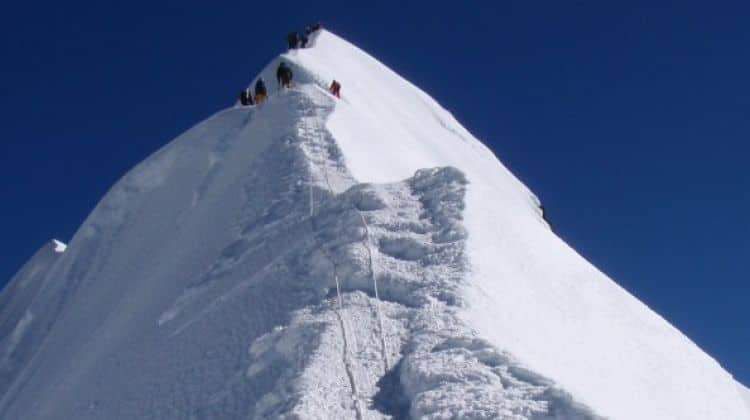
Island Peak or Mera Peak may be overrun with climbers during the busiest time of year. During the winter, you encounter very less climbers. A true, unbroken link to the mountains is provided by the unparalleled solitude.
3. This is What Your Body Is Made For
The way your body adjusts to harsh conditions is among the most intriguing features of mountaineering’s cold exposure. Brown fat enters the picture here. Brown fat produces heat instead of storing energy like regular fat does. It helps you keep your body temperature stable without experiencing excessive shivering since it is concentrated around your spine and collarbones and activates when exposed to cold.
Spending more time in colder climates teaches your body to cope with stress, burn more calories, and keep warm on its own. In extremely low temperatures, seasoned winter mountaineers frequently feel more at ease due to their brown fat being completely active.
The Best Way to Get Your Body Ready for Winter Mountaineering
Adaptation to the cold takes time. Before embarking on a difficult winter ascent, you need to prepare your body to withstand harsh circumstances.
Use Cold Exposure Training Before Climbing
- For training treks, forego the extra layers to increase tolerance.
- Brown fat can be activated by cold showers or ice baths.
- To assist in training your body’s natural heat regulation, sleep in a more comfortable, cooler area that is about 65°F.
- Test your layering method by working out outside while wearing cold clothing.
Master Your Layering Skills for Winter Travel
- It’s a science to dress for winter treks at high elevations. In severe weather, wearing inappropriate clothes can result in freezing or overheating, both of which are hazardous. Base Layer: Synthetic or moisture-wicking merino wool
- Mid Layer: For warmth, use synthetic or down insulation.
- External Layer: Windproof and waterproof shell
- Extremities: Double-layered socks, balaclavas, and insulated gloves
Feed Your Body with Cold-Resistant, High-Calorie Foods
Your calorie requirements rise dramatically during winter climbing due to the cold and greater exercise. Maintaining body temperature and energy levels requires regular eating.
Get Ready for Snow and Ice Navigation
Climbing in the winter requires navigating avalanche-prone slopes, icefalls, and glaciers. Before leaving, polish your technical abilities: Ice climbing: Learn how to use crampons and an ice axe on difficult terrain.
Crevasse rescue instruction: Rope methods have the potential to save lives.
Avalanche safety: Understand how to use a beacon and read the snow conditions.
Reasons to at least try a Winter Ascent Once
Winter mountaineering is about pushing oneself above your comfort zone and achieving new heights. Every obstacle, from extreme cold to complex ice climbing, pushes you to grow as a person, a climber, and your awareness of the natural world.