Lower Dolpo Trek Guide

1518157345 Lower Dolpo Trek 18 Days

Lower Dolpo(4465m) is situated north of Dhaulagiri, in the rain-shadow of the Himalayas and is a remote trekking destination in Nepal. One of the deepest Himalayan lakes -Shey-Phoksundo Lake is inside the Shey-Phoksundo National Park that protects the trans-Himalayan ecosystem, blue sheep, wolves, Himalayan black bear, and exclusive snow leopard. One of the highest human hamlets in the world -the Tarap Valley and their Bon PO tradition is also one of the significant affinities of the Lower Dolpo Trek. Exquisite views of the peaks like Kanjiroba and Dhaulagiri, barren slopes, deep gorges, pristine villages, ancient Buddhist monasteries, and high passes like Numa La and Baga La make Lower Dolpo trekking days more pleasant and enchanting. In the year 1990, lower Dolpo was opened to foreigners. Since then, the area has become a popular destination of trekkers, who are interested in exploring the remote lands of Nepal and who loves solitude.

Shey Phoksundo National park in this region is the largest trans-Himalayan National Park that preserves the endangered wildlife living such as snow leopard, musk deer, Tibetan wolf, and many more.

Lower Dolpo is also known as the hidden treasure of Nepal. This trek is ideal for trekkers who love to explore the remote lands of Nepal, wild adventure and solitude.

Check out Lower Dolpo Itinerary details.

Highlights of Lower Dolpo Trek

  • Trek in the remote areas of the Himalayas
  • Witness the deepest turquoise Shey Phoksundo lake of Nepal
  • Ancient monasteries
  • Stunning landscapes
  • Traditional villages
  • Walkthrough Shey Phoksundo National Park
  • Explore the untouched parts of Dolpo

Outline Itinerary

Day 01: Arrival in Kathmandu (1,300m/4,264ft)

Day 02: Kathmandu valley sightseeing tour and trek preparation (1,300m/4,264ft)

Day 03: Fly from Kathmandu to Nepalgunj (150m/492ft) 1 hour

Day 04: Fly from Nepalgunj to Jhupal (Dolpa) and trek to Dunai (2140m/7,021ft) 2-3 hour

Day 05: Trek from Dunai to Tarakot (2,537m/8,323ft) 5-6 hour

Day 06: Trek from Tarakot to Laini (3,370m/11,056ft) 6-7 hour

Day 07: Trek from Laini to Nawarpani (3,475m/11,400ft) 5-6 hour

Day 08: Trek from Nawarpani to Dho Tarap (3,944m/12,939ft) 7-8 hour

Day 09: Acclimatization day at Dho Tarap (3,944m/12,939ft)

Day 10: Trek from Dho Tarap to Numa La Base Camp (4,440m/14,563ft) 6-7 hour

Day 11: Cross Numa La (5,238m) and trek to Phelung Tang (4,465m/14,645ft) 6-7 hour

Day 12: Cross Baga La (5,070m) and trek to Dajok Tang (4,080m/13,382ft) 6-7 hour

Day 13: Trek from Dajok Tang to Ringmo (3,600m/11,808ft) 5 hour

Day 14: Exploration day at Ringmo and a hike to Phoskundo (3,600m/11,808ft)

Day 15: Trek from Ringmo to Shyanta (2,520m/8,265ft) 5-6 hour

Day 16: Trek from Shyanta to Jhupal (2,475m/8,120ft) 4-5 hour

Day 17: Fly from Jhupal to Nepalgunj and then to Kathmandu (1,300m/4,264ft) 1 hour 45 mins

Day 18: Departure day (1,300m/4,264ft)

Check out Lower Dolpo Itinerary details.

What are the Necessary Prerequisites to consider while Trekking to the Annapurna Region?

Necessary Permits Required?

The necessary permits required for trekking to Mustang Region are:

  1. TIMS card
  2. ACAP (Annapurna Conservation Area Permit) 
  3. Lower Dolpo Restricted Area Permit

Why Do You Need Permits?

The trekking permits for Lower Dolpo Region Trek have their own significance.

 The permit helps to maintain the safety and security of the trekkers by keeping the trekker’s record inside the National Park. In case of any emergencies such as earthquakes, landslides, etc. the information can then be gathered to help the authorities help you. Rules and Regulations are also maintained with the help of these permits.

Necessary Documents for Permit?

You just need your passport details, two photos, and you also need to fill up a short form to obtain the permit. All these fees are payable in local currency only.

Important documents and items:

  • Valid passport, 2extra passport size photos, airline tickets
  • Separate photocopies of passport, visa form( easily obtained at Kathmandu airport), proof of insurance
  • Dollars, pounds or Euros in cash for purchasing Nepalese visa at Kathmandu airport, for paying for restaurants and hotels, for gratuities, snacks, and to purchase your own drinks and gifts
  • Credit cards, Bank/ATM/Cash machine cards for withdrawing funds from cash machines(bring a photocopy of your cards), traveler’s checks, etc.

The necessity of Insurance:

While traveling to Nepal, you are requested to have travel insurance that should cover any comprehensive expenses possible to acquire due to medical issues or accidents. Your travel insurance must protect air ambulance, treatment charges, rescue and evacuation, product cancellation and refundable charges, flight delays, and cancellations.

Insurance Policy:

Traveling in the Himalayas is full of adventure; hence it is wise to choose a proper insurance policy. While choosing your insurance policy, make sure that it will protect all such unforeseen expenses. You must ensure that the policy you do take provides an adequate level of protection, well familiar with your itinerary, and covers you for the activities involved. You must carry proof of insurance (e.g. your insurance certificate) with you on holiday or send us a scanned copy and it must be issued from your homeland. 

What are the Minimum and Maximum Time frame of the Lower Dolpo Trek?

Well this generally depends upon the trekker preference if the trekkers are physically fit and can manage a 6-7 hours trek daily up the mountains then he/she can normally complete the trek in  18/20 days. But normally this journey takes 23 days trek(Max) and compacts it for a shorter trek which eventually hikes up the trekking hours per day. So, if you are someone who hasn’t had much experience of trekking and wants to trek enjoying each and every moment in the region then an 18 days time frame would be appropriate as it gives you the proper time to acclimatize and enjoy the scenic beauties of the trek.

Check out Lower Dolpo Itinerary details.

How much do you tip Guides and Porter?

In Nepal tipping is not mandatory but it is expected as major earning or saving funds are the tips for the guide/porter. Tipping is based on the experience you had with your trekking team. It totally depends upon how you felt about the services and overall hospitality that was provided to you so if you are satisfied you can tip them accordingly. Generally, 12-15% of the trip cost is considered ideal for tipping. You can divide the cost amongst the guide and porter as per your level of satisfaction.

Lower Dolpo Trek Route Difficulty

The Lower Dolpo Trek is categorized as a moderate level trek. This trek is suitable for both experienced as well as novice trekkers. This trek can be quite harsh and difficult if it’s your first time trekking. But if you have gone trekking before it will be quite easy.

This trek will be taking you to the remote and untouched areas of the Dolpo district. On this trek, you will be making up and downhill walks that are steep and uneven. So, for beginners, this will be quite challenging. But with proper physical training, you can overcome this difficulty.

How to prepare yourself for Trekking To Lower Dolpo Region?

It is very important to be fully prepared before undertaking any trips or going on a long journey.

It is vital for any traveler or trekker to always have a list of important prerequisites with them at all times. Here is the list of things one needs to consider while going on a trek.

Physical Condition and Preparation:

It is very important that one should be of sound health before undertaking any kind of trek. Most treks are suitable for passionate walkers who have the ability to walk at least 6-7 hours a day with a light rucksack. It’s not necessary that the trek is going to be 6-7 hours a day, sometimes it might even be 7-8 hours. Walking in higher altitudes is more physically demanding than walking in the lower altitudes; however, if we are in excellent health with average physical fitness, have a positive attitude and strong determination, we can accomplish the trek successfully. Exercising and jogging regularly is a good idea to enhance our strength and stability. If one has past experiences with hiking then that would be an asset but no technical skills are required for this trip. Also, we advise you to consult with your doctor(s) before undertaking the trip.

Check out Lower Dolpo Itinerary details.

How to Prevent Altitude Sickness?

Altitude sickness is caused by ascending too quickly. It is wise to climb slower to prevent it. As, it is very common on most of the treks and can happen to anybody, irrespective of how old or fit you are or if you have previous trekking experience. So, here are some ways to prevent Altitude Sickness:

  1. Hydration– Drink plenty of water, it’s very important to stay hydrated.
  2. Trekking Pace– Walk at your own pace, take your time, don’t go too fast.
  3. Eat carbs– It’s not often we’re told to eat extra carbohydrates but when you’re at higher altitudes, you need more calories.
  4. Avoid Alcohol– Alcohol, cigarettes, and medications like sleeping pills can make altitude sickness symptoms worse. So, avoid it.
  5. Medication– Taking acetazolamide(Diamox)two days before the trip and during your trip can help prevent altitude sickness. Acetazolamide is a medication typically used to treat glaucoma. But it is also used to prevent altitude sickness.

Best Time To Travel To Lower Dolpo

Trekking in Lower Dolpo can be done at any time of the year. But the best time to visit lower Dolpo is during the Spring and Autumn season.

You can visit it during other seasons as well but you can face many complications during that time. So, for a better experience, it is best to visit Lower Dolpo Trek during the recommended seasons.

Autumn Season

Autumn is the peak season for trekking in the lower Dolpo. This is the month for September, October, and November. During these months everything in this route is at its peak.

The weather and temperature are more than perfect in this season. The skies are clear giving out the scenic views of mountains and landscapes. The walks are warm during the day and chilly during the night.

As for the temperature it ranges from -3 to 14 degrees and can rise up to -11 degrees over high passes. This season is also harvesting time so it adds more excitement in your trek. The festive months also fall during this season which will add extra enjoyment for you.

Spring Season

Spring season is another peak time to trek in the routes of lower Dolpo. This is the month for March, April, and May. During this time you can see valleys get their greenery back and buds of flowers ready to bloom.

This season is the beginning of the new year and a new environment. The weather and temperature are favorable for trekking. This time of the year is the perfect time for nature lovers to visit these routes.

The view of the mountain top under the clear blue sky is quite a sight. Also, the forest paths filled with buds ready to bloom will mesmerize you. To enhance your experience you can visit Lower Dolpo from mid-April.

The temperature ranges from -10 to -13 degrees during this season. The days are hot and sunny while the nights are cool. So, sweat-absorbent clothes are a must for this time.

Monsoon Season

Usually, trekkers don’t trek in high altitudes during Monsoon due to slippery and muddy roads. But for lower Dolpo, you can trek during this season as well.

Lower Dolpo is a rain shadow area so there are less to no chances of rain. This is the month for June, July, and August.

But reaching Dolpo can be quite challenging. As there is an occurrence of heavy rainfall in other parts of Nepal. So, your flights may get canceled or delayed due to bad weather conditions.

Yet, the weather is clear during this month with no obstruction from dark rain clouds. Also, the temperature ranges from -4 to 17 degrees during this time. It is better to keep your schedule flexible during this season.

Winter Season

Winter season in comparison to other seasons is the least preferred time for trekking in the routes of Lower Dolpo. This is the month for December, January, and February. This is the coldest time of the year.

During this season, there are high chances of road blockage due to heavy snowfall. The skies are clear giving the best view of snow-capped mountains. But due to blockage, you might not be able to complete your trek.

The climatic condition in high altitudes is never predictable. Also, it gets freezing cold during these months. The temperature ranges up to -14 degrees during this season. Thus, It is recommended not to trek during this season for safety matters.

This trek is truly one of the most fascinating and rewarding experiences in Nepal. The trekkers will get an opportunity to experience the close view of primitive society that has remained unaffected and unchanged by modernization for centuries. To experience the multicultural and the panorama of spectacular high mountains, different lifestyles, and amazing view of natural beauty,  is worth it and is a must recommend trek in Nepal.

Check out Lower Dolpo Itinerary details.

Camping Trek to Dudhkunda

Dudh Kunda Trekking is a uniquely new trek route that has been discovered recently. Sitting on Mt. Numbur’s lap in the Solukhumbu district, the trail for this trek passes through various traditional villages, very unique in their own rights. This trek is not short of an adventure and is also well-suited first-timers and skilled trekkers as well. The literal Nepali translation of Dudh Kunda is milky situated at the base of Nubur Himal which is also known as Shorong Yul Lha, “Protector of Solu Region”. As the special and beautiful Dudh Kunda lake has its own importance for both the Buddhist and Hindu Pilgrims alike. It is believed that if you take a dip in this holy lake, all of one’s sins will be washed away and all one’s wishes will be granted as well!
The trek not only provides one with the splendid views of the world’s tallest mountains but also the equally captivating sight of the mystically reddened rhododendron. And if luck favors one can also get a visit from the mountain leopard, Thars, Pheasants, etc.

As it is not as commercialized and explored as the other trekking routes of this area. There are very few numbers of tourists visit every year. But one cannot come to the conclusion that it is less audacious and gratifying. But recently it is getting the recognition that it deserves. As the route here is mostly off-beaten and the shadows of commercialization have not been cast the area has very few teahouses and lodges. Most part of the trekking endeavor provides the trekking with camping experience. One can expect to be trekking through the classical trek route to Everest Base Camp, crossing the river valleys, slender ridges and lusty hills to the mountains up close.

Away from the most visited trails, camping treks presents a wilderness adventure in both natural and cultural aspect. Untouched by modern civilization, you would witness the remote mountain villages of Nepal.

OUTLINE ITINERARY:

Day 1: Arrival
Day 2: Drive to Phaplu – Altitude: 2,413 m
Day 3: Trek from Phaplu to Takshindu – Altitude: 2931m
Day 4: Trek to Timba
Day 5: Trek to Dudhkunda – Altitude: 4600 m
Day 6: Trek to Sarsar Beni
Day 7: Trek to Phaplu.
Day 8: Drive back to Kathmandu

Mustang’s Vibrant Festival: Tiji

1581056758 Mustang

The Tiji Festival is one of its kind and is an auspicious festival in the Upper Mustang Region of Nepal. The festival is mainly celebrated to celebrate the victory of good triumphing over evil. According to the ancient myth there once lived a demon who spread disease and took away the water. And during that time there lived a deity named Dorje Jono who fought and defeated the demon and since then this festival has been celebrated with prayer chants and colorful dances.

Check out more details on Tiji Festival

The Tiji Festival celebrated in Upper Mustang only started from the 17th century, when the Mustangi King Samdup Rabten invited Sakya Trizin Ngawang Kunga Sinam to come to Lo Manthang. During his stay at Lo Manthang’s Chhode Monastery he performed the special Vajrakila ritual for the wellbeing of all sentient beings.

Rituals During The Festival

Like any other festival the Tiji Festival of the Upper Mustang region also has certain rituals that need to be followed while celebrating.

During the 1st day of the festival a dance called ‘Tsa Chaam’ is performed which tells a story of the birth of the deity ‘Dorji Sonam’(reincarnation of Buddha) . The dance depicts the fight of good with evil as the enactment of the event is performed in front of the people. 

On the 2nd day another ritual is performed which is called ‘NgaCham’. During the performance of ‘NgaCham’ Dorjee Sonam tries to return the demon to the realm of Buddha.

And lastly on the 3rd and final day of the festival a different dance named ‘Rha Chham’ takes place. During this ceremony Dorjee Sonam triumphs over the evil demon and banishes it from Mustang. The enactment is done by throwing an effigy by the monk who is in the role of Dorjee Sonam. The effigy is made from Tsampa (barley) representing the demon ‘Ma Tam Ru Ta’. By defeating the evil demon this brings peace and prosperity to the land of Mustang. And every year the festival takes place in hope of spreading peace throughout the world.

Tiji Festival Date For The Year 2020

For the year 2020 the Tiji Festival will be celebrated from 19th May to 21st May. One can experience the colorful festival along with strolling through the stunning and beautiful surroundings of Upper Mustang.

Check out the itinerary for Tiji Festival 2020

Why Trekking in The Himalayas Nepal is a Adventure of a life time ?

everest base camp weather and Altitude

Trekking is a combination of hiking and walking, and people are traveling in rural, undeveloped areas for day trips. In other words, trekking is walking on foot, especially for trekking in the mountainous areas for days, along the charming mountain villages, enjoying natural or close contact with people in remote villages, and styles of life are sometimes constant .Trekking is also carried out in dangerous mountainous areas, so it will help to get more adventurous builders of trekking. The Trekker will gain more adventures with knowledge of real-life scenes in the mountains or remote areas. Nepal has plenty of places where people can easily travel for three days in three months. To be a walker, you must have those budgets, holidays, and willingness to take risks. Trekking trips will not be free by hiking companies, so most of them pay for the trip, they must have such a travel vacation, and the last is that the hiker should be able to do a hike and he / she must be willing to do the work of adventure.

Types of Trek
A. Tea House Trek
B. Camping Trek
Nepal is one of the most spectacular and beautiful countries on earth. It has a white mountain with a place where the sun touched the monks who meditated peacefully in the old monastery of the hillside, and the clumsy yaks transported the goods to the picturesque town that was largely broken with the outside world. In simple terms, Nepal is the land which changes the dream of a backpacker into reality.
Travel in Nepal is not as difficult as you think. Travelling into Nepal has been popular for decades, and Nepal is an excellent host country. Kathmandu has hundreds of quality Management Company, “Tea House” cottage for the field to bring a new degree of comfort. Even those who have bad backpacking experience, Nepal trekking is also affordable, affordable, and absolutely unforgettable.
Technically, you can walk in Nepal all year round, but most hikers choose the two climbing season in fall and spring. If this is your first trip to Nepal, we recommend you visit one of the peak times. Autumn (October to November): This is the most popular trekking season in Nepal. During this period, you will have the best opportunity, unobstructed Mountain View, sunny sky, mild temperature, almost no precipitation. Unfortunately, you will share trails with many other visitors, and tea houses will explode, especially along the most popular routes.
Spring (March – April): Spring is the second most popular time on the Nepal trek. With snow capped mountains and mountains, huge rhododendron trees all over the slope of Nepal. The temperature at this time of year is usually very mild, which is a good time to look at wild animals. The two major shortcomings of spring hiking are the possibility of busy trails and cloudy skies, which can mask the view of the mountain.
Experienced winter travelers (December through February) can find sunny days and magnificent mountain views in a year. In other words, the temperature can be very cold, shorter during the day; the winter cold can lead to interference from the travel plan. In addition, due to high altitude snow, the trails may be tough to cross. Walking during the monsoon months (May to September) is often not recommended. Monsoon rains have brought landslides and sediments to Nepal. At this time of year, the climate is damp; the mountains are often covered by clouds.

Eventually to have the life long memory of the Nepal, trekking is the god gift and learning in your life .Hiking in Nepal is one of the most beautiful cultural experiences on earth. Through distant isolated villages of race and culture, located in foothills, they travel to distant valleys and regions around the world and offer a unique perspective for the country’s natural and cultural appearance, landscape and the Himalayan .Nepal offers you the various Mountains different from anything else on earth, Walk through the serpent-like treks of the emerald mountain forest, open grasslands, open meadows and lots of farmland and beautiful village houses. The Himalayan tapestry, made up of Blue Mountains and Himachles sapphires, offers picturesque vistas, wide valleys and corrosive hills, trekking along its monuments and hiking trails.

Trekking in Nepal Consider This First

everest base camp difficulty 1Nepal is one of the most beautiful countries on the planet. It is about a towering white peaks touching the sky, the monks meditate quietly in the ancient temple on the mountain, and drag the people for various sorts of communication from the mountainous life to rustic life. Mingle of various sorts of experiences. Eventually, the dream of backpackers will be turned into reality if you come to Nepal.
Despite its greatness, planning to walk in Nepal is not as difficult as you think. For decades, trekking has been very popular in Nepal, and Nepalese people are also excellent hosts. Kathmandu has hundreds of high quality tour and travel companies. The hotel “teahouse” offers a new experience and taste for the field. Even for those having little experience in backpacking, hiking in Nepal is easy, affordable and memorable.
So, if you like gorgeous landscapes, radiant culture and epic adventures, you’re likely to fall in love with Nepal. We hope you find this short description useful for planning your next trip.
The various adventure, nature and culture lover, trekking is the best way to see the changing landscape and beauty of Nepal. If you like to walk, this is one of the most inspiring places in the world. While Hiking in Nepal the Himalayas offer many possibilities to challenge the snowy mountains for a short and easy time. Their culture and diversity have become a hiker’s paradise.so we can call Nepal as a land of diversity.
From the perspective of the Himalayas to the deep spiritual culture, you will witness the beliefs of the local people and experience the aura of life. If you do not want to climb also this is not a problem, you can have the proper observation of those things easily. You do it without having to be a climber. No matter what your level of fitness or experience, you can find life-long adventures in Nepal.
Trekking in Nepal is one of the most wonderful, sublime and culturally rich experiences on this planet. For very isolated ethnic and cultural village at the foot of the mountain walk, trips in the valleys and unbeatable area, overlooking the scenic Himalayas and mountainous landscape, offers a unique perspective of the natural and cultural national landscape of these valleys and regions. Other things on earth walk through the winding hiking trails through the Emerald Alpine Forest, open pastures, and farms full of farmland and beautiful country houses. Tapestry of the Himalayan Mountains and blue composition of the trail overlooking the wide valley and mountains create the real vibe of paradise.
Trekking in Nepal offers a wide range of comprehensive travel packages that combine the best of all regions with the perfect opportunity to experience the best natural and cultural elements of the area. These travel packages will land and the natural style of the mountain settlements and villages of the traditional and tribal religious and ancestral atmosphere, rich in temples perfect harmony. Our company has always been committed to providing quality assistance and changing the dream of the customers in to a pleasant reality. Our tour guides and highly trained and well trained staff will always make sure you have a carefree vacation. Our range of services ranges from the planning and preparation of your trip to the careful planning of your trip. You will get the best accommodation, transportation, food and guidance services.
While doing trekking in Nepal you can add some tour packages to Tibet and Bhutan. In addition to hiking, cultural visits and spectacular climbing, we also offer adventure activities such as Bungee jumping, paragliding and rafting. We always take customer satisfaction and safety as our top priority. Together, you will get the perfect team for trekking in Nepal. You will be immersed in the views of the stunning mountains and magnificent natural environment, these beautiful yet unprecedented natural environment, has increased the land and the traditional Essence culture!

The following are the Useful tips for trekking in Nepal

1. Plan the proper date
Whether you are planning your own trip or travel arrangements, be sure to schedule for 2-3 days earlier. Internal flights in Lukla, Jomsom, Pokhara, Taplejung and other parts of Nepal can be delayed and canceled. The last thing you need is to miss the international contact of Kathmandu! By adding a few extra days, you can be sure of having some energy before flying long distances. A great advantage of working through travel agencies is that they (in your name) can help you book the next flight to Kathmandu. Remember: if your flight is canceled in one day, it will not be given priority on the second day
2. Local guides and porters
If you go trekking at Everest or Annapurna you do not need any local guide. Your travel company will arranged you all sorts of the facilities while booking your trip. The routes are quite famous in these areas and there are many other hikers on these routes if you need help. Local guides can add a sense of connection and regional understanding and when using porters, you only have to make a package of approximately 12 to 15 kg per day. If you are on your first trek in Nepal, it may be worth the help of these experienced locals, and the additional cost is insignificant in relation to the hard work they do. They believe on the hard work, respect and honesty.

3. Sherpa
“Sherpa” is actually a Nepalese caste. In general, they are Buddhist devotees, they even have their own language, similar to Tibet (but without written form). The people who help hikers to climb the mountain are not all the Sherpas . However, many tour guides and shippers fall into this category, since the Sherpa agreements have historically come from high altitudes (and, therefore, are well adapted to the environment).They have glorious history in the mountain.

4. Yaks
These furry beasts over 10,000 feet (3,000 meters) are plentiful. These loaded animals get up, transporting goods at high altitudes and farming in rural areas. Some of these animals are not always yaks. The short-haired race found on the Namche Bazaar trail in Khumbu is actually an artificial cow / yak hybrid “dzomo”. The higher living yaks are very clever. When they are on a hiking trail, everyone can have huge horns. Keep ample parking space and always keep the road uphill trying to pass . Listen to the next yak tones and pay attention to a lot of yak dung!

5. Drinking water
During the most popular trek, you can buy bottled water along the line (ie the Everest base camp, the Annapurna circuit, the Annapurna protected area …). Many villages now have water purification stations where you can fill water bottles for $ 0.5 and keep them in plastic. Bottled water is sold in every hut, teahouse and store. Usually $ 1.00 per liter bottle. On these trips, water filters and water purification pills are not really necessary. During the walk in remote areas, the chef’s staff will boil the water while camping. It is recommended that you bring two bottles of water or a large hydration bladder full in the camp. When camping, the thermos is also a good place to stay warm at night.

Buddhist traditions on the road
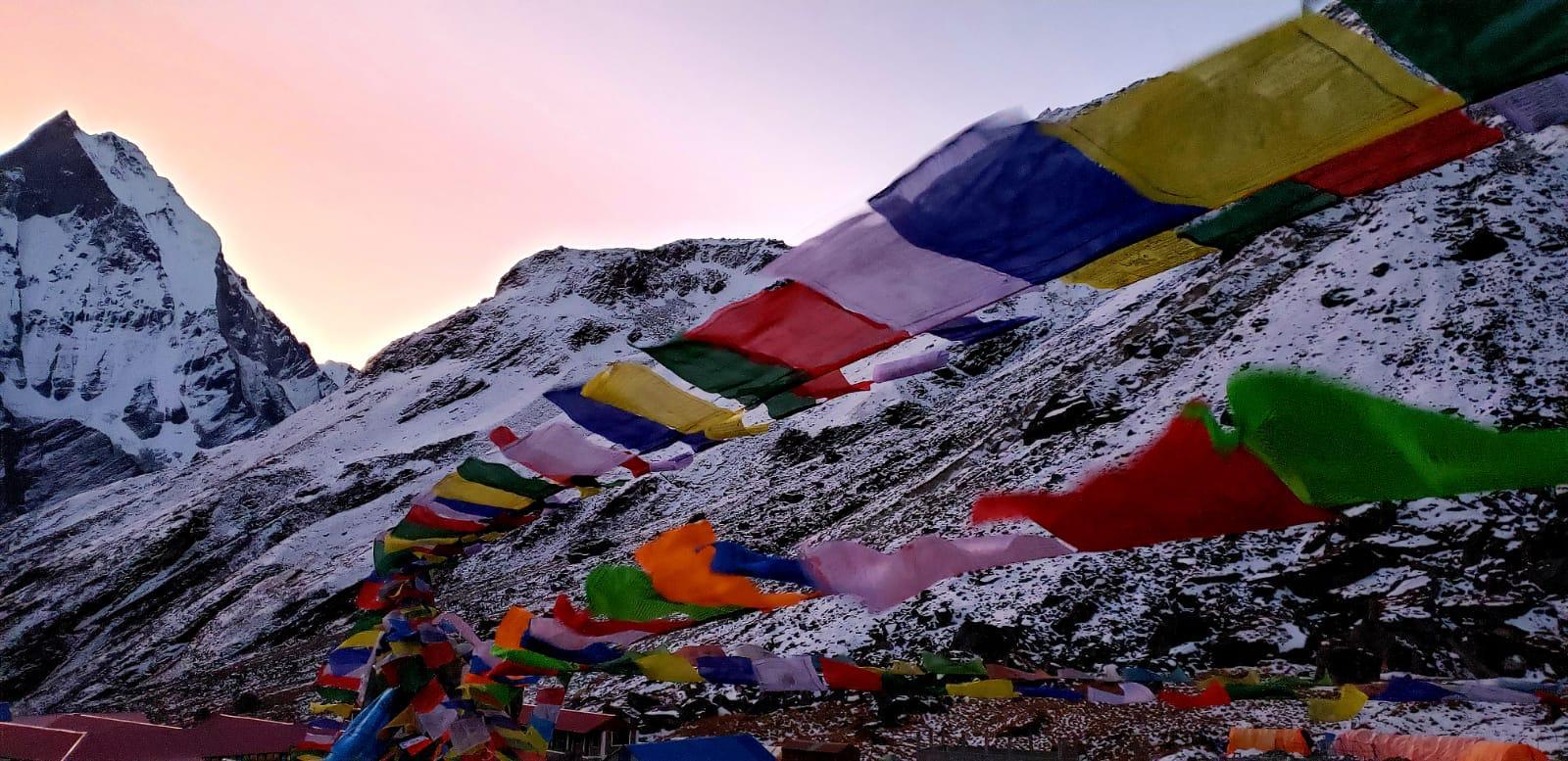
Most of the trekking will enter a region of greater Buddhism. The first sign of their entry into a Buddhist village are the colorful prayer flags that plow through the houses, the monasteries and the peaks in the wind. You will also reach the stupa (Buddhist shrine), the walls of Mani (Sanskrit mantras on large stone walls and slate) or the long walls of prayer wheels. Always walking through these religious monuments on the left is a sign of custom and respect.
Acute mountain sickness (AMS)
AMS is a big problems for new hikers at relatively high altitudes. How is your body responding? Are you sick? Since it is difficult for most of us to train and prepare at that level, it is a real concern for everyone, but without any undue attention. After 22 years of guided tours in the Himalayas, the key to giving yourself the keys to a safe, comfortable and successful trip.
a) Self-control: it should be a fun party, not a sporting event. Stop at the hotel for a cup of tea, take pictures and sit on the snowy peaks with having fun.
b) Maintain adequate humidity: drink liquid until it comes out through the nose and ears. Try to keep your body warm by drinking the various soups and hot water.

These are the some information about the trekking in Nepal. After you arrived into to airport, if you have already booked your trip you will get the enough facilities. Your company will do all the help for you so you should not be worried about your trek. Moreover, Nepal is safe land for travel .We just belief on the peace. If you want to book the trip it’s better to consult with the tour operator of the Nepal.
Finally, you should be updated about the latest changes of Nepal. After October 28, the traffic police has made one good rules with the collaboration with ministry of tourism. This is best for many tourists in Nepal. They have announced Thamel as a Vehicle free Zone. You can walk around the Thamel without any anxiety .This is latest information about the Thamel. Now, you need to walk some minutes to enter your Hotel from the main street. Nepal always welcome and respect the visitors with the lofty tone NAMASTE

Feel Free To Contact Us For Package Details, Price and Any Other Useful InformationContact Us