Top Reasons to go to Everest Base Camp Trek in Nepal

Everest Base Camp

Top Reasons to go to Everest Base Camp Trek in Nepal. Have you ever had thoughts of reaching the top of the world? Trekkersย from all over the world are drawn to the exhilarating trip to Everest Base Camp. On this amazing adventure, you will reach a breathtaking altitude of around 5,644 meters (18,267 feet). You will be astounded by the natural scenery changes, fascinating snow-capped mountains, glaciers, and deep valleys as you stroll through lush rhododendrons and pine woods. Trekking to Everest Base Camp has several benefits, this being one of them.

The journey offers you the opportunity to learn about the unique Sherpa culture in addition to taking in the breathtaking surroundings. Along the way, you will experience the stunning customs of the deep sherpa communities and be welcomed with their gracious warmth.

The best part is the feeling of achievement you receive when you make it to base camp. The trek to Everest Base Camp transforms into an incredible journey filled with cultural immersion and breathtaking natural beauty with every step taken.

Are you prepared to create a moment that will last a lifetime and be inspired and amazed? Check out below the main reasons that will encourage you to go off on this exciting and unique adventure.

Crazy Flight to Lukla

Lukla
Top Reasons to go to Everest Base Camp Trek in Nepal 4

Nestled in the Himalayas, the Everest Base Camp represents the spirit of adventure. This amazing experience begins with an exhilarating flight from the chaotic streets of Kathmandu to the breathtaking Lukla landing runway.

After flying for 30 to 45 minutes at an altitude of around 2,860 meters (9,383 feet), the plane reaches Lukla. The flight’s steep ascent gives the adventure a thrilling element, while the untamed scenery below never ceases to astound.

Witness Nepal’s breathtaking scenery as a plane takes off, including the imposing Himalayan mountains, profound Sherpa valleys, verdant forests, and charming vistas. The plane turns as it travels over little valleys between the Himalayan ranges. It’s similar to being on a roller coaster ride when you get in awe with every curve and twist.

The runway of Tenzing-Hillary Airport, also known as Lukla Airport, is renowned for being short and inclining. Trekkers will have an amazing and thrilling experience at this airport because of the spectacular takeoff and landing. Thus, the trip to Lukla establishes the mood for the exciting experience that lies ahead.

Teahouses Along the Trail

One fascinating aspect of trekking to Everest Base Camp is spending time at teahouses amidst the breathtaking Himalayan scenery. In addition to offering trekkers a place to dine and rest, these small lodges provide guests withย a unique opportunity to encounter the friendly hospitality and customs of the Sherpa people.

When compared to other Nepalese trekking routes like the Annapurna Base Camp, Manaslu Trek, and Langtang Trek, teahouses and lodges are better in the Everest region. In addition, these teahouses provide Nepali cuisine (dal, bhat, pickles, veggies, and meat), hot soups (vegetables and noodles), bread, eggs, and fruits, and some will serve regional delicacies like shyakpa, thukpa, rildok, and tsampa.

Travelers from all over the world feel that they are part of a close-knit community when they encounter the hospitable and cheerful Sherpa family and their warm smiles. Despite their simplicity, they provide hikers with the ease and comfort they require following an exciting day of trekking. Tender meals and comfortable mattresses allow hikers to rejuvenate for the following day’s exploration.

Trekkers may truly appreciate the delight of discovery by lodging in these modest lodges amidst the stunning Himalayan environment. In addition, you may take advantage of the Everest Base Camp trek’s nutritious meals and lodging, which alone makes the entire journey an amazing experience.

Take a Close Look at Sherpa Culture

Sherpas are honored for their vital roles in the climbing community as well as for guidingย hikers and climbers in the Himalayan area. In addition, their kindness and genuine welcome make the region a friendly place for trekkers. Interacting with them enhances the experience overall by allowing trekkers to fully immerse themselves in the customs and culture of the area.

As they lead trekkers across the difficult Himalayan terrain, Sherpas inspire trust in them with their knowledge and experience in mountaineering. In addition, sherpa guides are frequently chosen by hikers who want to learn more about the natural history and geography of the Everest region in addition to offering route guidance.

Sherpas are therefore well-known for their contributions to climbing, as well as for their abilities, knowledge, and friendliness in the mountains.

The first person to ascend Mount Everest on May 29, 1953, was Sir Edmund Hilary and the renowned Sherpa climber Tenzing Norgay. His accomplishment made the Sherpa people and their skills known around the world.

Enthralling View of Dramatically High Peaks

Trekkers can glimpse the highest and most stunning mountain peaks in the world as they set out on a physically demanding trip to reach Everest base camp. The journey provides a broad perspective of some of the highest and most well-known mountain peaks in the world. Here is a list of some of the mountains that may be observed when trekking: Mount Everest, Mount Lhotse, Mount Nuptse, Ama Dablam (the Himalayan Matterhorn), Thameserku, Cho Oyu, and Taboche

Gokyo Ri offers breathtaking views of Cho Oyu, Everest, Lhotse, and other magnificent peaks. You may get a close-up look at Mount Everest and the surrounding mountains from Kalapatthar. Tengboche monastery also provides a breathtaking view of Ama Dablam, sometimes known as the Mother of the Himalayas. In the same way, Namche Bazaar’s Everest View Hotel offers a captivating view of Mount Everest.

There are breathtaking views of the surrounding scenery and these snow-capped peaks at every turn on the trail. Trekkers are left speechless by the Himalayas’ pristine, unspoiled splendor.

The Sagarmatha National Park

The primary destination for those who trek to the summit of Everest is Sagarmatha National Park. It is included in the World Heritage List of UNESCO. Travelers are also drawn to this park by its breathtaking scenery, which includes the snow-capped Himalayas, verdant woods, and lovely rivers.

Sagarmatha National Park hasย paths leading to Everest base camp. It includes the tallest mountain in the world, Mount Everest. It also has a diverse range of wildlife, including blossoming rhododendrons, elusive snow leopards, and flora and fauna.

Sagarmatha National Park has a wide range of plants and animals, including birds, flowers, and animals. It is rich in biodiversity. The National Flower of Nepal, the rhododendron, blooms in a variety of colors throughout the spring, bringing vivid hues to the surrounding scenery. Similar to this, other flower species including edelweiss, blue poppies, and primula, often known as primroses, are major attractions during the trekking season.

While trekking, trekkers can observe a variety of species, including the Himalayan Monal, sometimes referred to as the Danphe, the national bird of Nepal. It’s a vibrant bird with feathers that shimmer. Other species such as the Lammergeier, Golden Eagle, and Blood Pheasant are visible in response.

The Himalayan Tahr (wild goats), Himalayan Marmots, Musk Deer, Himalayan Black Beer, Red Pandas (endangered species), and Snow Leopards (elusive and hard to detect) all live in the park.

Trekkers will have an amazing experience amidst the Himalayan splendor thanks to Sagarmatha National Park, which adds the appeal and adventure of the Everest Base Camp Trek.

Magnificent vistas from Kalapatthar

While trekking to Everest Base Camp, Kala Patthar is a must-see because of the amazing vistas of Mount Everest. In the same way, you may see the expansive vistas of Changtse, Nuptse, and Mount Lhotse. It provides hikers with a spectacular 360-degree vista of the whole Everest area. One of the most magnificent and intimate views of Mount Everest can be seen at Kalapatthar.

You may see a captivating dawn over the Himalayas while trekking Kalapatthar, which gives the peaks a golden tint. From this spot, you may also see breathtakingly serene and beautiful sunsets. To take breathtaking photos of the Himalayan landscape, Kalapatthar is a must-visit location for photographers who enjoy nature. Early morning and sunset light play with the shadows and sunshine on the mountains making for a great canvas.

Ancient Monasteries in the Himalayas

Enwayย to Everest Base Camp, there are several monasteries to be seen. Tengboche, Pangboche, Khumjung, Thame, and Debuche are a few of them.

The monasteries of Tengboche, Pangboche, Khumjung, and Thame.

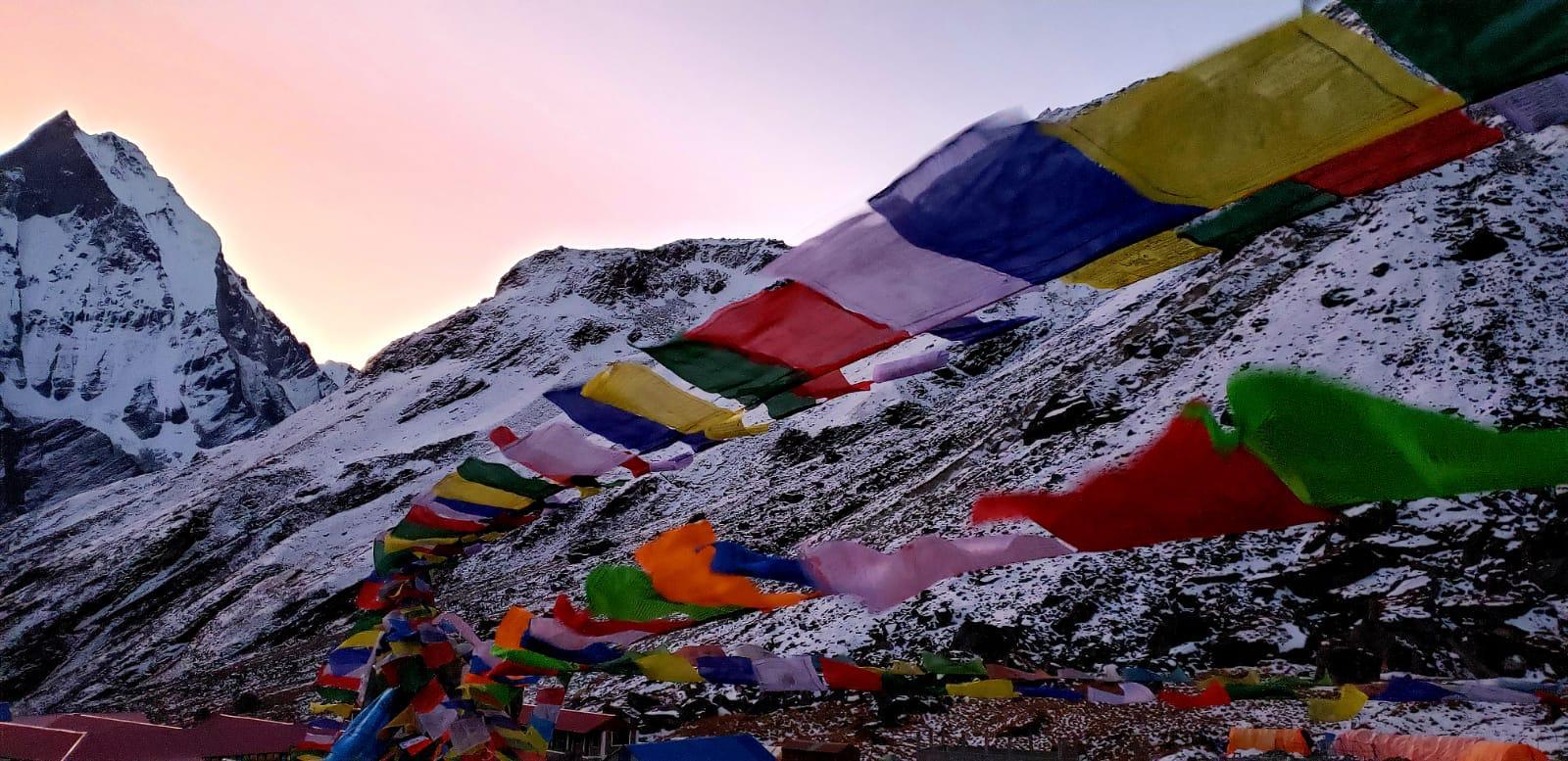
These monasteries are also embellished with beautiful sculptures of Buddhist deities, vibrant prayer flags, and elaborate paintings. The trail is made more culturally rich by the artwork and architectural design of these monastery structures.

Trekkers have the chance to engage with the spiritual and cultural history of the region through the particular charm, historic importance, and stunning settings of each monastery.

Trek to Everest Base Camp

The trek to Everest Base Camp is the main attraction of the entire trip. Explorers and mountaineers are drawn to Mount Everest, the tallest peak in the world, by its temptation to see its magnificent presence up close.

The stunning vistas of the snow-capped Himalayas, the Sherpa Valley, monasteries, blossoming landscapes, and glaciers greet hikers as they set out on their expedition. The pleasant teahouses and the exhilarating and daring path add to the journey’s unforgettable and exciting appeal.
A wave of triumph, amazement, and gratitude sweeps over them as they eventually arrive at the foot of the Himalayas. Similar to this, trekkers will find that being at the foot of the world’s tallest peak is a gratifying experience that leaves them with priceless memories that will last a lifetime. It is an intense and emotional moment.

Ultimately, the trek to Everest Base Camp becomes an incredible trip filled with cultural immersion and breathtaking natural beauty with every step taken.

Conclusion

An unforgettable moment and experience awaits you as you set out on the legendary trek to reach Everest Base Camp. Therefore, every step that people who dare to walk this incredible route take leaves an indelible stamp on their hearts, from the views of snow-capped peaks and the cultural immersion in Sherpa Village to the sense of success that comes with arriving at Everest Base Camp.

Put on your hiking boots, focus on the horizon, and answer the call of the Himalayas to embark on the Everest Base Camp Trek, which is sure to be a once-in-a-lifetime experience you will never forget.

10 guidelines to help you be geared for high-altitudeย trekking

IMG 16c68e2da2645cdba0345fbe702f8565 V

10 guidelines to help you be geared for high-altitudeย trekking. The tallest peaks in the world, including Mount Everest, Annapurna, Dhaulagiri, Manaslu, and Kanchenjunga, are all situated in Nepal. Trekking in Nepal entails crossing stunning terrain with breathtaking views of snow-capped mountains, rocky valleys, glaciers, and tranquil alpine lakes. Nepal is a country with a diversified ethnic people and a rich cultural heritage. You’ll encounter picturesque villages, monasteries, and temples along the hiking trails where you may meet the locals, discover their customs, and take in vibrant festivals. Areย you considering going on a trek in Nepal to see the breathtaking mountains and the rich culture? If so, here are 10 guidelines to help you be geared for high-altitudeย trekking

1. PLAN AHEAD

To effectively climb at higher elevations, you must be in good physical and mental shape. Your trip can be ruined by hamstring pain, muscle cramps, and altitude sickness symptoms. 

Physical Preparation

You should start strength training for trekking if you don’t travel much. Practice your hiking at a slightly higher altitude than you are used to. You could go to the gym. One of the greatest activities for hiking preparation is going for a 30-minute run outside at least four to five times each week. Even if you enjoy being outside and frequently hike, we advise that you warm up for the journey by doing some exercise.

Ideally, you should begin planning your hike three months in advance. Give your body ample time to recover for the approaching flight by stopping any strenuous exercise 7-8 days before taking off.

Mental Preparation

Embrace the mountains after you’ve planned it! Have faith that you’ll finish your trip successfully.

Yoga breathing exercises are a great method to keep your thoughts in check. The more you know about maintaining control, the less panicked you could feel if something goes wrong while you’re traveling.

In addition, you may do some mild stretching and yoga before starting your day’s walking. Don’t overdo the workouts, though.

2. CLIMB GRADUALLY

You are constantly at risk for Acute Mountain Sickness when you are at high elevations. The higher elevation’s thin air is mostly accountable for this. So, the wisest course of action is to go slowly.

You shouldn’t climb more than 500 to 700 meters in one day. This equates to a daily hike of about 5 to 6 hours. Your body can adjust to the greater altitude by moving gently. Make sure to include time in your trip schedule for your body to acclimate to the mountain air.

3. WATCH WHAT YOU EAT

Trekking at a high altitude requires a lot of energy. You must consume a lot of calorie-rich, light meals. To refuel while walking, you can pack a couple of your favorite goodies, such as chocolates, almonds, and sweets. Be very cautious if you have any food sensitivities. Always double-check with the hotel staff and your trekkingย guide since the menu could use local names for ingredients used in the food.

4. DRINK PLENTY OF WATER

This is a crucial piece of hiking advice to remember. The mountain area has dry air. To prevent moisture loss, you must keep your body hydrated.
Bring two 1-liter water bottles and a 3-liter water bladder similar to a CamelBak that you can fill each morning before you set out on the trip. To purify the water on the trails, we also advise that you bring water purification pills or water filters. Due to the lack of recycling facilities in the mountains, we do not recommend purchasing water while trekking.

5. USE PROPER MEDICATIONS

Always consult your doctor before making trekking plans. Before you begin your trek, you must be aware of the crucial do’s and don’ts for your medical issues. Additionally, keep your prescription on hand in case you need to buy any prescriptions. Tablets for altitude sickness: Diamox or acetazolamide can be quite helpful in preventing AMS. Additionally, we suggest that you travel with a few standard medications, such as antibiotics, painkillers, paracetamol, ibuprofen, aspirin, Advil, and cough lozenges. Since sleeping pills are respiratory depressants, you should never take them while hiking. Depending on your needs, you can pack hand sanitizer, foot powder, and insect repellents.

6. CHOOSE RIGHT TREKKING GEARS

Little things like the size of your water bottles, the buckles on your trekking backpack, and the zipper on your coats may have a significant impact on how enjoyable your treks are overall. ย  It may feelย absurd to micromanage it to make sure nothing goes wrong on your journey, You may, however, pick and choose whatever equipment you bring with you. Choosing the best trekking equipment is crucial while climbing at higher altitudes and on different terrains. To help you choose the appropriate gear, we have created a thoroughย trip packing list for any high-altitude trekking in Nepal.

7. STAY AWAY FROM ALCOHOL AND TOBACCO

This might be the ideal moment to stop if you’re hooked on either smoking or drinking. Your body is continually reacting to the dwindling oxygen and growing cold at the alpine height. Alcohol and cigarettes will make it harder for your body to adjust to the rising altitude. Starting to restrict your intake while you are training for a hike is even better. Make sure to include that in your hiking training routine so that you are well-prepared to trek without using tobacco or alcohol.

8. COMMUNICATE WITH THE GUIDE

Effective communication might save your life! We advise that you inform your trek leader or guide right away if you need assistance. Altitude sickness is one of the most frequent issues we experience at high elevations. You should be familiar with the fundamentals of treating acute mountain sickness when hiking. For now, the following are some typical signs: Headache, dizziness, blurry vision, nausea, vomiting, exhaustion and low energy, shortness of breath, breathing difficulties, sleep issues, and loss of appetite. Even though it’s typical to have trouble falling asleep right away and to have a little headache, we strongly advise reporting any unease. If you are showing severe signs of acute mountain sickness, you need to descend to a lower altitude right away.

9. BRACE YOURSELF FOR CHANGING WEATHER

While trekking in Nepal is an amazing experience, it’s necessary to be ready for unforeseen weather changes, particularly in the higher altitude areas. You are likely to be more protected if you trek in the well-known trekking areas of Everest and the Annapurna since most teahouses supply duvets and blankets forย visitors, and some big villages have shops selling trekking equipment. The weather in the Himalayas is influenced by the constantly shifting weather patterns in the Indian Ocean, so if you are planning a trip to a more remote location, you should be ready for bad weather. A safe trip in Nepal depends on being well-prepared, therefore having the right gear is crucial.

10. EMBRACE THE BASICS WHILE TREKKING IN NEPAL

It takes an “Open Mind” to experience Nepal’s daring terrain and rich cultural diversity when trekking there. Being able to accept some hardships and occasionally “rough it out” requires being psychologically and physically prepared. The following advice will assist you in preparing for a more challenging trip to Nepal:
In remote areas while on treks, accommodations could be modest with few amenities. Be prepared for outdoor or shared restroom facilities, which may include squat toilets or basic pit toilets. There will be basic guesthouses, teahouses, or even camping options. Since there won’t be much food available, especially on longer or more isolated walks, frequent simple meals of rice, lentils, veggies, and regional delicacies like momo dumplings will be served. While trekking, be prepared to be disconnected because there won’t always be a phone or internet service because Nepal is a mountainous country. The most enjoyable aspect of your vacation in Nepal may sometimes be the untamedness and simplicity of the trip. Embrace the beauty of nature, get in touch with it, and spend time in it.

CONTACT US FOR MORE DETAILS:

Things to know before climbing Lobuche Peak

Lobuche Peak

Things to know before climbing Lobuche Peak. For those who are looking to reach the top of a Himalayan Peak higher than 6,000 meters in the Everest region, Lobuche Peak Climbing is a challenging option. From the peak of Lobuche East, you will get spectacular panoramic views of the Everest region. Climbing Lobuche Peak is a fantastic way for experienced mountaineers to prepare for a climb of a much higher peak, such as Mount Everest, Lhotse, Ama Dablam, etc. For trekkers and first-timers who are accustomed to high-altitude walking, this Peak is extremely reachable. It would be advantageous however not necessary to have prior expertise with mountain climbing (using ropes, harnesses, and jumars). The most stunning views of Everest and other nearby mountains may be seen from the peak’s summit. Many climbers attempt this mountain as a warm-up for the Everest Expedition because it is situated on the route to Everest Base Camp.

West Lobuche and East Lobuche

Two summits, Lobuche East and Lobuche West, make up the prominent trekking mountain known as Lobuche Mountain. Lobuche East is easier and more approachable than Lobuche West, which offers a more technical and challenging terrain. However, Lobuche Peak Climbing is more complicated and needs fixed ropes, ascenders, etc. as compared to Island Peak and Mera Peak Climbing. The climbing program presents the ideal challenge for travelers looking for a technical challenge over 20,000 feet in the Himalayas when combined with a high-altitude trek to Everest Base Camp.

Lobuche Peak Climbing Difficulty

In Nepal, there are over 2,000 high peaks, but only 414 of them are accessible for mountaineering. Similar to this, Nepal’s high peaks and mountains are situated in a stunning area of the Himalayas. 8 of the 14 peaks in the world that are higher than 8000 meters are found in Nepal. Trekking and high-peak expeditions are thrilling and daring activities in Nepal. Trekking in the mountains is also a thrilling experience. You should take into account all Lobuche Peak Climbing Difficulty factors in addition to its appeal.

Lobuche Peak is a mountain peak in Nepal’s Himalayas. It is located in the Sagarmatha National Park in the Khumbu District of Nepal, rising tall at a height of 6,119 meters (20,075 feet). While Lobuche Village is located to the southwest of Mount Everest, The Peak is located in the southeast. The Lobuche summit was officially climbed for the first time in 1984. One of Sagarmatha National Park’s most difficult and exhilarating peaks is this one. Many people enjoy taking the route because of its distinctive landscape. Technically, climbing Lobuche Peak is fairly simple for anybody to undertake. However, we advise that you possess just aย basic knowledge of how to use all of the climbing gear. It is also more challenging than Island Peak. Also, your mental and physical strength enables you to complete this adventureย successfully.

Highlights of the trip

  • To reach Everest Base Camp, you have to ascend more than 5,000 meters, and then climb Lobuche East.
  • Ideal for trekkers lookingย  forย high altitudes adventureย and beginners looking for a more difficult climb
  • The peak offers breathtaking views of Mount Everest, Lhotse, Makalu, and Khumbu Valley.
  • Hike past Buddhist temples and lovely Sherpa settlements.
  • If you’re planning to climb an eight-thousander like Mount Everest or Lhotse, Lobuche East is the perfect peak to get acclimated to altitude and refine your climbing techniques.
  • At Lobuche High Camp, pre-climb training is provided by an experienced Sherpa guide.

Is This Trip Right For You?

  • You can get to the peak of Lobuche East if you’ve done high-altitude trekking and have some skill with wall or rock climbing.
  • You need to be physically fit to climb Lobuche Peak since you’ll be walking across glaciers, snow, and ice in below-freezing conditions.
  • Requires technical climbing. Use fixed ropes to ascend and descend at various places.
  • Reached maximum altitude: 6119 m/20070 ft
  • You walk for 5 to 6 hours daily on average. A strenuous climb lasting 9 to 11 hours was required on summit day.
  • This journey is not recommended if you have issues with your heart, knees, or ankles.

Climate, weather, and temperature

In the Himalayas, it is usually too chilly in the early morning and late at night. So, no matter the season, you need warm clothing to climb Lobuche Peak. The Lobuche area has an average fall temperature of about 5 degrees Celsius. In the same way, it is about -2o Celsius in the spring. Similarly, while it is roughly -9ยฐC in the winter and around 5ยฐC in the summer, respectively. Additionally, it is a little warmer at lower altitudes than it is at higher elevations. Therefore, the temperature will decrease as you go to greater elevations. Thus, one of the factors that make the ascent challenging is the mountain’s icy temperature. And up the difficulty of your climb to Lobuche Peak.

Steep Trail

You are aware that the approach to Lobuche East Peak is a Himalayan trek. If so, you are also familiar with what a Himalayan trail looks like. There are several rocky and steep portions. The route gets steeper and more difficult as we ascend.

Get used to strolling along these routes if you’ve never done it before. Otherwise, the trip will be difficult for you. There will occasionally be steep ascents and swift descents. You will also have to go over rocky, snowy, and difficult terrain. If you don’t have any recollections of walking on such routes, the nature of the trail may be an additional obstacle.

It can be a bit difficult to ascend Lobuche Peak due to the steep and unsteady nature of the climbing routes. As a result, you must trek from Lukla to Lobuche Base Camp before starting the Lobuche Peak ascent. You will thus need an average of 5 to 6 hours of walking every day for that stretch of the expedition. The trails are challenging, steep, and exhausting. Beginners who have never hiked may encounter some difficulty while attempting this climb. And, can increase the difficulty of your climb up Lobuche Peak. The terrain becomes difficult, rocky, and steady until you reach Lobuche town. As you go closer to Lobuche Base Camp, the challenging paths become increasingly difficult. The Lobuche Peak Climb is therefore rather challenging due to this as well.

Accommodation Options

Nepal’s high-altitude area is underdeveloped. Therefore, it might be difficult to find suitable lodging options. Most of the time, the Lobuche Peak Climbing climbing itinerary includes a camping plan for some of the climb days. You must spend some nights in the camp tent until youย return to the settlement, where you must eat meals the assistant has prepared. So, for individuals who have never scaled a mountain before, this circumstance may be a bit difficult. And, can increase the difficulty of your climb to Lobuche Peak.

Nepal is a trekking paradise, and its mountains are among the most beautiful in the world. Nepal is located in a subtropical region. Nepal thus experiences the summer monsoon. Nepal’s excellent weather and temperature make it possible to undertake any activity. The weather in Nepal is often pleasant and moderate. However, it seems that before undertaking any expedition in Nepal, climbers frequently worry about the climate.

In this country, you may do trekking, hiking, and mountaineering any time of year. However, the best seasons for such trips in Nepal are spring and fall. The ascent of Lobuche Peak is a time-limited ascent. You cannot choose when to prepare for this peak. There are two optimal seasons for climbing the Lobuche East: March through May (spring) and September through November (fall). These seasons provide you with the best opportunity to climb the Lobuche Peak.

Travel Insurance For Climbing

You need an excellent travel insurance plan that covers you for all of the activities and altitudes on your schedule if you plan to climb the Lobuche Peak. When you ascend to a height of 6,119 meters, your travel insurance should provide enough coverage up to that altitude.

Even though your safety is our first priority, accidents and emergencies might still happen at this height. Since there is less oxygen in the air, hikers frequently get acute mountain sickness, which can be fatal if not treated quickly.

You run the risk of getting hurt physically when walking and climbing in a dangerous alpine environment. Therefore, be sure that your insurance will cover the expense of any crises or injuries you may experience while on your hiking and climbing expedition.

In the event of an accident or medical emergency, your insurance coverage should cover the expense of hospitalization and helicopter evacuation in particular, as these are both costly options. In order to qualify for certain travel insurance policies, you may need to have the necessary vaccinations before departing the country.

Choose the most appropriate climbing route

It is crucial to have a balanced schedule with enough time for acclimatization, relaxation, and emergency days. The schedule should take proper acclimatization and the necessary daily elevation gain into account. For the climb to the top of Lobuche, you will require at least 3 weeks. Do not in any way shorten the planned schedule.

Choosing Right Gears

Don’t cut corners when it comes to gear quality. Having high-quality equipment is completely under your control out of the numerous controllable and uncontrolled aspects that go into making a climb successful. In the mountains, high-quality equipment will perform better and offer excellent comfort. Make sure you have all the equipment you’ll need for the climb, including personal first aid supplies and all attachments.

Purchasing high-quality equipment may be a wise move if you intend to keep climbing in the future. However, if this is your first and final time, renting equipment can end up saving you a lot of money. High-quality equipment will also be comfortable and last a long time. You should be equipped to deal with climate extremes, and The right equipment may make the trip much more comfortable. You should be ready to endure climate extremes. Visit our page for essential gear for peak climbing in Nepal for more details.

Listen to your body

Listen to your guides, pay attention to your body, and pay attention to the mountain. A peak’s climb involves a number of variables that might lead to unpredictable outcomes and potentially challenging circumstances. The climbing experience will be unique to each climber. Everyone is affected by the thin air at high elevations in a different way. Always take your guide’s recommendations to heart and be open and honest when you share your own. Pay attention to how your body is adjusting to the altitude. Make the necessary preparations and constantly ask the guide and other knowledgeable team members for help

Physical /Mountaineering Training

In general, Lobuche East Peak is reachable yet challenging. It encounters some challenges. You’ll need to walk for 7 to 10 hours a day, climb and descend quickly, climb vertical snow cliffs, and do other things. To perform all of these, you must be in good physical condition.

You must engage in physical training at that point. By engaging in various forms of cardio and weight exercise, you may train your body. Your cardio may be built by going to the gym, going on hikes, cycling, running, jogging, etc. The same goes for workouts like squats, deadlifts, walking lunges, push-ups, etc. Where and how to begin physical training might be discussed with an expert climber or physical trainer.

Although Lobuche Peak is a trekking peak, climbing is required to reach it. Your ability as a climber will eventually lead you to Lobuche. To get to the peak, you have to climb a vertical snow wall. There will also be rocky, snowy routes. Those can be simple if you haven’t had any climbing instruction or expertise. For Lobuche Peak, climbing preparation is essential.

At least three months beforeย the event, you can begin mountaineering training. For this excursion, basic climbing skills will suffice. You will learn how to use ropes, knots, harnesses, and other things throughout basic training. Along with other skills, it will teach hill trekking and glacier ice climbing.

What is the cost of this trip?

For trekking trips in Nepal, Lobuche Peak Climbing is a less expensive peak. Lobuche is a stunning mountain that perfectly captures the atmosphere of the Everest area. The cost of climbing Lobuche Peak ranges from USD 2300 to 3500. The total cost of the Lobuche Peak Climbing includes lodging, meals, permits, and other costs. The price of climbing Lobuche Peak might vary depending on the season. The price will also be lower if you go in a group since you will receive a discount. Independent or alone travel, however, will be a little pricey.

The cost of the trip is determined by the group size and the services our clients select. Because we consider travelers to be unique people with unique requirements and interests, each trip we plan has a distinct price.

Whether you’re searching for a lavish retreat or a budget-friendly excursion, be ready for an unforgettable experience that is personalized to your interests and preferences. Leave the planning to us, and we’ll handle every last detail to make sure your ideal vacation comes true. You can relax and concentrate on making cherished memories that will last a lifetime.

The Most Frequently Asked Questions About Mera Peak Climbing

Mera Peak

The most frequently asked questions about Mera Peak Climbing are listed below. We really hope that you will find some of these helpful, but if you have a specific query that isnโ€™t addressed in the FAQs, please do not hesitate to contact us. Please visit this website about our Mera Peak Climbing for additional details.

Mera Peak 6476m is the highest trekking peak in Nepal that has been approved by the Nepal Mountaineering Association (NMA), yet it is still physically achievable in comparison to other 6000m trekking peaks in Nepal. Mera Peak is a great option for anyone looking for their first climbing adventure in Nepal’s Himalayas as a result. Since the climb’s height of 6476m makes up for the requisite lack of technical skills, good physical and mental preparation is required.

Mera Peak Climbing can be your turning point if you are a climber who is seriously engaged in exploration. Another important factor in people choosing to climb Mera Peak is the stunning summit view of the over-8000-meter peaks, including Mt. Everest, 8848m, Mt. Lhotse, 8516m, Mt. Cho Oyu, 8201m, Mt. Makalu, 8463m, and Mt. Kanchenjunga, 8586m.

WHERE IS THE MERA PEAK?

Mera Peak isย located in Nepal’s Sagarmatha region in the Solukhumbu district and is situated in the Mahalangur district in the Barun sub-district of the Himalayas. It is categorized as a trekking peak with a height of 6,476 meters. Mera North, at 6,476 meters, Mera Central, at 6,461 meters, and Mera South, at 6,065 meters, are its three main summits.

WHAT IS THE BEST TIME TO CLIMB?

Like the rest of Nepal, the Everest Region experiences four distinct seasons. Winter, spring, summer, and fall. The busiest times for trekking trips to climb Mera Peak are from March to May, before the monsoon, and from October to December, after the monsoon. Even if Mera Peak is possible during the monsoon season, it will be far less crowded. It should be noted that each trekking season has its own unique thrill and environment for hikers, but if you want to feel more certain about the weather throughout the journey, be sure to stick to the peak season.

HOW DO I PREPARE MYSELF FOR THE CLIMB??

If you have prior climbing experience, it would be advantageous for you to attempt this climb, and quite beneficial. Because your body tends to shut down once you are over 5500 meters, you need proper training and acclimatization. Exercise and rest days are essential for adjusting to low oxygen levels at high altitudes. You can climb Mera Peak if you have the necessary technical expertise and great physical conditioning.

There are still a few things to think about, such as altitude and length, before you set off on your own trek. The trekker should be in top physical shape. Additionally, for weeks or months prior to the climb, you must have been jogging or performing other physically demanding activities. We suggest that you exercise for at least an hour five days a week. Focus on training with high volume and low intensity. Plan a few weekends when you can work two or more straight full days if you can. Several-day hikes at a suitable height are fantastic. Your mentality and mental preparation are equally essential for your achievement at any peak.

WHO AM I CLIMBING WITH?

If you don’t sign up for a private trip or if we don’t have a group on the day you choose, you’ll be climbing with others who have similar interests. An experienced local mountaineer who has successfully reached the peak will lead you. Your mentor will assist you right away, provide you withย sound counsel, and teach you the necessary skills. He will also offer you pre-climbing coaching at base camp the day before the summit.

HOW HARD IS MERA PEAK CLIMBING?

Adventure sports enthusiasts may scale mountains as part of Mera Peak Climbing. One of the highest climbing peaks in Nepal is Mera Peak. At a high height of 6,461 m (21,190 ft), the ascent is not challenging, with the exception of the last peak, which rises 100 m (328 ft) abruptly. Climbing Mera Peak is the best way to get started with high-altitudeย climbing and the best warm-up climb before undertaking more difficult mountain trips. The challenging aspect is really making the long walk from Lukla to Mera Peak’s base camp on a standard hiking track. You must be prepared to cope with exhausting days of hiking for multiple days, maintain good physical condition, and deal with altitude sickness throughout the trekking portion.

As simple as it may appear, ascending to the summit of Mera Peak requires careful consideration of a number of elements. Technical climbing expertise, high physical stamina, and a strong mind are required. Because of the fixed ropes, the climbing phase is simple and secure, thus we heartily suggest this climb to anybody looking to climb an ice peak for the first time.

IS MY TRIP GUARANTEED?

Without a doubt, yeah! We guarantee that the trips you have reserved will go on as planned. If other hikers decide not to go, you will still go on the trek. This is how weย differ from other tour operators that frequently cancel their entire trip a month or even a week prior to the departure date. We are a custom business, thus the number of participants has no bearing on how we operate. Feel free to reserve your stress-free vacations with us. Unless there is an uncontrollable event, such as a political protest, natural calamity, pandemic, or epidemic our trips are guaranteed to run.

MERA PEAK CLIMBING ROUTES

One of the most well-known mountains in Nepal is the Mera Peak. It is the perfect place to unwind and take in the natural beauty for many days. There are two approaches you can take to get to Mera Peak. They are the trailsย to the southwest and northeast. The Mera range’s southern portion is reached through the southeast route, which begins at Lukla. It enters the highlands after passing through the Paiya village. As it approaches Mera Peak, it finally crosses the streams.

The northern route: The Mera range’s northern section begins at Lukla. It crosses the Zatra La pass to get to Mera Peak.

ALTITUDE SICKNESS AT MERA PEAK

Altitude sickness can occur when trekkingย Mera Peak, which is 6,476 meters high. AMS symptoms, which include nausea, breathlessness, headaches, and an inability to move, begin to appear a few hours after reaching a high altitude. All the joy you were feeling before things became terrible would be taken away by an overwhelming sensation of exhaustion. You can have trouble falling asleep, feel lightheaded, and have a really bad headache. Additionally, you can become uncoordinated, have problems walking, and develop a tight chest. If the condition worsens to HAPE or HACE, you can have confusion, shortness of breath when at rest, and most likely won’t be able to move at all.

Your symptoms could be more acute at higher altitudes. There are several grading methods available to determine altitude sickness. Guides have immediate therapeutic experience and are trained in these methods. Although many people will suffer some altitude sickness symptoms, it doesn’t always need to get worse. You may take several steps to ensure your health at a high altitude if you are aware of the signs.

HOW TO PREVENT ALTITUDE SICKNESS WHILE CLIMBING MERA PEAK?

You may prevent yourself from getting altitude sickness by adhering to the following general guidelines. They may also aid in controlling the symptoms.

Careful Planning

Have a thorough physical examination and inform your doctor of your activities. Buy the prescription that your doctor has prescribed.

Learn to be your fittest self.

Exercise for around 3 to 6 hours each week while carrying a 10kg backpack to simulate a typical day in the Himalayas.

Listen toย your body.

When you need to rest, your body will tell you. Pay close attention to it. Understand the signs of altitude sickness and discuss it with others. As soon as your body tells you to stop, listen to your companions, your guide, and your porters. Keep things from becoming worse.

Sleep Low, Climb High

Climbing high but sleeping low is an unspoken rule for trekkers and climbers.ย That explains why it takes those climbers on Everest so long to reach the summit; they make several trips up and down the mountain before making a last push. They sleep low yet ascend high. This explains why your schedule may occasionally include a descent in the middle. This is being done to make sure that you thoroughly acclimate after dealing with elevation.

Eat a lot and drink more water

Consume as much food as you can, then some more. Likewise with drinking.ย Hydration! Consume as much food and liquid as you can. Even if you are not hungry, don’t miss a meal.

TRAVEL INSURANCE FOR MERA PEAK

Trips during an expedition or when climbing are quite risky. There is aย significant chance of dangerย for your life since you will be climbing with ropes on ice and snow on mountain cliffs. You must get advanced rescue insurance for these trips, which often has a little higher rate.

We advise gettingย coverage that covers mountain air ambulances at least up to the Mera Peak’s altitude of 6,461m (21,190ft), which is a peak that is higher than 6,000m (19,685ft). Additionally, we advise you to get insurance to cover medical emergencies, travel delays or cancellations, and trip cancellations brought on by pandemics, political unrest, intergroup conflict, and natural disasters.

CONTACT US FOR MORE DETAILS:

ISLAND PEAK VS MERA PEAK CLIMBING: HOW TO CHOOSE THE RIGHT PEAK?

Island Peak Climbing

Island Peak Vs Mera Peak Climbing: How to Choose the right peak. One of the most popular trekking peaks in Nepal is theย Mera Peak andย Island Peak. These summits are among the top options for novice mountain climbers just getting started. These two mountains are among the most prominent trekking peaks in Nepal. But, many climbers find it difficultย to choose between these two peaks. We have created a thorough guide for Mera Peak and Island Peak to help beginner climbers to choose the right peak for them. Both peaks do not necessitate a specific level of mountaineering expertise, but many other characteristics set them apart. Mera Peak is consideredย to be the simpler one to scale from a safety perspective, while Island Peak offers more exhilaration from mountain climbing.

QUICK FACTS: ISLAND PEAK VS MERA PEAK CLIMBING

TOPICISLAND PEAKMERA PEAK
ALTITUDE6189m/20305ftMera North: 6476m/ 21247ft
Mera Central: 6461m/21198ft
Mera South: 6065m/ 19898ft
ACTIVITYTrekking/ClimbingTrekking Peak/Climbing
DIFFICULTYModerate to StrenuousModerate
REGIONKhumbu Mahalangur Himalaya
CLIMBING GRADEThe French and Swiss Alpine Climbing Classification System – PD + ‘Per Difficult’The French and Swiss Alpine Climbing Classification System – F’ Facial Easy’
NATIONAL PARKSagarmatha National ParkMakalu Barun National Park
TREKKING PEAK2nd Highest Trekking PeakHighest Trekking Peak
PERMITSIsland Peak Climbing Permit
Sagarmatha National Park
Khumbu Region
TIMS Card
Mera Peak Climbing Permit
Makalu Barun National Park
TIMS Card

HIGHLIGHTS: ISLAND PEAK VS MERA PEAK CLIMBING

ISLAND PEAK HIGHLIGHTSMERA PEAK HIGHLIGHTS
1. Explore the amazing Khumbu region.1. Explore the isolated Hinku Valley.
2. From Island Peak’s summit, you can see Makalu (8,475 meters) in the east, Baruntse, and Ama Dablam in the south, and the enormous peaks of Nuptse (7,879 meters), Lhotse (8,501 meters), Lhotse Middle Peak (8,410 meters), and Lhotse Shar (8,383 meters), which form a semicircle to the north.2. Witnessย five of the world’s tallest mountainsย above 8000 meters, including Cho Oyu (8,201 meters), Lhotse (8,516 meters), Everest (8,848 meters), Kanchenjunga (8,586 meters), and Makalu (8,463 meters).
3. Discoverย Sherpa ethnic towns, some of the most endangered wildlife in the Himalayas, and magnificent Himalayan green forests with rhododendron, magnolia, birch, and pine.3. Discover the unique Himalayan species, rhododendron, magnolia, birch, and pine woods, as well as Sherpa culture, traditions, and customs.
4. Wander through the revered religious places in the Khumbu valley, such as Tengboche Monastery, Khumbu Monastery, and a great number of chortens, and prayer wheels..4. Walk through sacred Buddhist temples, monasteries, chortens, gompas, mane walls, prayer wheels, and fluttering prayer flags.
5. Cross Kongma La passย and then go across the Lhotse Glacier.5. Cross Zatrwa La Pass (4600 m/14720 ft.)

SIMILARITIES BETWEEN MERA PEAK AND ISLAND PEAK CLIMBING

The Barun sub-sectionย of the Mahalangur region of the Nepalese Himalayas contains Mera Peak and Island Peak. Both summits are almost the same height; Mera is 6,461 meters (21,190 feet) tall while Island is 6,189 meters (20,305 feet). The two summits are also quite close to one another. Both Mera and Island are trekkingย peaks that don’t call for specialized climbing expertise. Despite their many similarities, Island Peak and Mera Peak both have unique adventuresย to offer travelers.

DIFFICULTY: ISLAND PEAK VS MERA PEAK CLIMBING

ISLAND PEAKMERA PEAK
The difficulty of Island Peak is somewhat higher than that of Mera Peak. In terms of technical difficulty, the summit is a little tougher than the Mera summit. Except that the two climbs are quite similar to one another.

For beginning and novice climbers, a trekkingย peak is the best choice. If you have basicย knowledge of climbing it would be a plus point as island peak climbingย is a little tricky. There are headwall and icefall parts, as well as crevasses and narrow ridges. Therefore, you will not haveย any trouble using gearsย like ropes, ladders, crampons, axes, etc. Additionally, no specific prior technical knowledge is required to climb Island Peak.

Major difficulties include trekking at high altitudes, lengthy trekking days, steep paths, harsh terrain, severe weather, and snowy terrain. Forย Island Peak climbing, you need toย be physically fit and have an excellent basis for climbing.
According to the Nepal Mountaineering Association, Mera Peak is considered a trekking peak. Peaks in this category have little or no challenging aspects, which perfectly suit the requirements of beginners.

The ascent is quite straightforward because this summit has noย challenging aspects. Climbers with some basic climbing experience and goodย stamina can opt for this climb. For Mera Peak, prior climbing experience is not necessary. Mera Peak is less complicated than Island Peak in comparison. There are no crevasses or narrowย ridges; only ice climbing and trekking.

Trekking in the region’s high terrain for several weeks is required for the climb of Mera Peak. Its main difficulties are high altitude, steep hills, rugged terrain, icy and snowy trails, lengthy trekking hours, and isolated areas.

ROUTE: ISLAND PEAK VS MERA PEAK CLIMBING

ISLAND PEAKMERA PEAK
An exceptional fusion of a mountaineering trip with trekkingย can be experiencedย in the Island Peak climbing. The route takes the traditional Everest Base Camp Trek route and adds a climbing route to High Camp and ultimately the summit. In comparison to climbing Mera Peak, the summit stage of this climb involves a vigorous rise and is thus a little more difficult and tricky. Island Peak ascent takes place over the course of 15ย days. Additionally, if you wish to hike to Kala Patthar and Everest Base Camp, the itinerary is extended to 18 or 20ย days.Prior to ascending the summit, climbers have to trek for almost a week to reachย Mera Peak High Camp (5,780m ). Through theย lush jungle and secluded valleys, the trekking trailsย extend to Hinku Valley. The path goes on from Lukla to Hinku Valley. The main resting areas before Mera High Camp are Paiya, Kothe, Panggom, Thankak, and Khare. From the camp, gradually climb to the peak using jumars and a fixed rope. The hike and ascent up Mera Peak may be completed in roughly 13 –ย 18 days.

BEST SEASON FOR CLIMBING MERA AND ISLAND PEAK

Mera Peak and Island Peak are said to be best conquered in the spring and fall. The best times to ascend toย the top are in late April, early May, as well as in September, October, and November. And if you want us to be more precise, the ideal months for a climbing excursion are October and May. Mountaineering is seen as being out of season during the winter and monsoon. Despite this, some climbers attempt to reach the summit during the winter. The disadvantages of climbing in the off-season include the need to be prepared for unanticipated events that are associated with adverse weather, such as heavy snowfall, the potential for aircraft delays and cancellations, and decreased visibility.

Spring and fall offer the greatest views of the mountains since the weather is steady and the sky is clear. The best weather for climbing is present throughout the day in spring or fall. For the finest climbing experience, especially for beginning climbers, climbing during the ideal season is crucial.

Perks of Trekking in Nepal in Autumn

IMG 20211010 091136 scaled

Perks of trekking in Nepal in Autumn. Nepal, located in the Himalayas, is a fascinating country with a rich culture, history, and stunning natural beauty. Nepal offers a huge range of climates due to its latitude and highest mountains in the world. Tropical lowland plains, temperate midland hills, and subarctic and arctic climates in the high mountains. It will be a dream come true to see the magnificent Himalayan range and other natural beauty in Nepal. This dream would be much more pleasant if the weather favors you and offer clear visibility.

There are four seasons in Nepal: spring, summer, autumn, and winter. The best time of year to travel to Nepal is in autumn. This time of year is quite pleasant both in terms of the weather and the environment. The monsoon comes to an end as fall ushers in winter. From mid-September until late November, Nepal experiences its autumn. You might be wondering why fall. Let’s find out why?

Why Autumn?

In Nepal, autumn begins in the middle of September and lasts until November. Autumn stands out as the best season for trekking in Nepal for a number of reasons. Moderate temperatures, clear nights, pleasant days, and the appearance of clouds in the late afternoon are features of the fall season. The environment is painted in beautiful shades of russet, gold, and crimson during this season, which lasts from late September to late November. This creates an eye-catching background for your trekking trip. But autumn’s fascination extends beyond aesthetics.

A clear view

20
Perks of Trekking in Nepal in Autumn 25

Clear autumn sky and rain-washed mountains are at their peak, giving you stunning views of the trek regions. This is the perfect time of year to take photographs if you enjoy doing so. The views from the viewpoints are very vibrant and beautiful.
Autumn in Nepal starts around the middle of September and lasts through early November. The fall season is characterized by moderate temperatures, bright nights, nice days, and the development of clouds in the late afternoon.

Greenery

WhatsApp Image 2019 09 27 at 8.00.32 AM1
Perks of Trekking in Nepal in Autumn 26

Right after the monsoon ends, autumn begins. The vegetation is able to draw moisture from the earth, which results in lush, beautiful plants. Even the high-altitude fields appear to be green. Animals in hibernation begin to consume food from the abundance of nature as they get ready for lengthy winter snoozes. While the greenery appears vibrant, it is possible to observe the grains maturing on the terraced farms in the hills, particularly in the valleys.

Perfect Weather

WhatsApp Image 2019 09 27 at 8.00.24 AM1
Perks of Trekking in Nepal in Autumn 27

This period of time has dry, clear weather that is neither very hot in Nepal’s Terai plains nor very cold in the higher elevations. In fact, the days are warmer and the evenings are rather chilly throughout these months. But the day is nice because of the brilliant sun. At an altitude of between 1000 m and 3500 m, the temperature often hovers around 20 ยฐC while occasionally dropping to 5 ยฐ C at night. At higher altitudes, the temperature drops to negative degrees during the daytime range of 20ยฐ C. Even if it gets chilly at night on the peaks, the temperature is mild and pleasant throughout the day. In general, mornings are clear, with clouds forming and then quickly vanishing to reveal a breathtakingly glittering sky.

Major Festival Time

IMG 20211010 091136
Perks of Trekking in Nepal in Autumn 28

As Nepal celebrates the important Hindu holidays Dashain and Tihar, often known as the “festival of victory” and “festival of lights,” as well, autumn is also a joyous season. Tihar is celebrated by illuminating homes brilliantly with multiple oil-wick or trendy lamps, whereas Dashain is a 10-day holiday that is commemorated each day with a few religious rites. You could also get to see Chhath Parva, which is a festival honoring the Sun God and intended to extend human life on Earth via worship.

This time of year is also when other regional celebrations like Indra Jatra take place. Since the harvest season is coming to a close and agricultural operations are taking a rest, it is most likely that these festivals are observed at this time of year. Festivals allow you to take part in various events, observe Nepali customs, and eat unique foods.

Uninterrupted Domestic  Flight

Lukla Airport
Perks of Trekking in Nepal in Autumn 29

If you have domestic flights on your itinerary in the fall, there is very little possibility that they will be delayed or canceled. A flight to Lukla is usually included on Everest Region Trek, and local flights are often included in treks in the Annapurna region. The likelihood of diverting from the original schedule decreases if you travel in the autumn.

Best Autumn Trekking and Peak Climbing in Nepal

1. Peak Climbing in Nepal 6000 M and Above

cholatse summit
Perks of Trekking in Nepal in Autumn 30

Peaks in Nepal range in elevation from (5357m/to 8848m), making it a popular destination for trekkers, climbers, and travelers. There are 297 peaks with an elevation of 6,000 meters or more that are open for climbing, including climbed and unclimbed peaks. The Nepal Mountaineering Association (NMA) owns 27, while the Department of Tourism owns 270 of the 297 peaks. For amateur and inexperienced climbers looking to test themselves on a high Himalayan mountain without having to deal with the hassle of planning a lengthy expedition, Nepal offers a potential prospect. One can get a taste of high-altitude climbing without having trouble going through the lengthy time/financial commitments of 7000m-8000m expeditions.

2. Trek to the Everest Three Passes: 7 Reasons Why

4
Perks of Trekking in Nepal in Autumn 31

Trek to the Everest Three Passes: 7 Reasons Why you should opt for it. For those seeking a comprehensive trekking experience in the Everest area, the Everest Three Passes Trek offers an outstanding itinerary. One of the toughest and most rewarding trips that can be done in the Himalayas is the Everest Three Passes Trek, which lasts 18 to 20 days. The trekkers may explore the perennially famous Everest Base Camp while also traveling off the beaten road to some of Nepalโ€™s most breathtaking (and sometimes underrated) places.

3. Annapurna Base Camp Trek Complete Guide

12
Perks of Trekking in Nepal in Autumn 32

Annapurna base camp at the elevation of (4,130 m/13,549 ft) on the lap of the worldโ€™s tenth highest peak, Annapurna I (8,091 m/26,545 ft) locates on the Annapurna massif in the north central territory of Nepal. The Annapurna base camp sphere rewards 360ยฐ panorama eyeshot throughout incredible neighboring peaks including Machhapuchhare (6,993 m), Hiunchuli (6,441 m), Annapurna south (7,219 m), Annapurna III (7,555 m) and Annapurna I (8,091 m) from close. However, the phenomenal massif is encircled by Kali Gandaki George on the west, Pokhara Valley on the south, and Marsyangdi River in both remaining directions east and north. In fact, according to the script of Hinduism, Annapurna Peak is considered the Goddess of the Harvest.

4. Manaslu The Untouched and Pristine Trekking Region of Nepal

IMG 20190314 164953
Perks of Trekking in Nepal in Autumn 33

Manaslu region is located in the west-central part of Nepal. Trekking in the Manaslu region is adventurous, trekkers will be fascinated and mesmerized by its untouched beauty and wilderness. It is one of the most remote and off-beaten treks among all the treks of Nepal famous for its unspoiled nature, authentic cultural heritage, and different stages of the natural landscape. The 8th highest peak in the world Mt Manaslu (8,156m) becomes visible as trekkers start to trek in this region. The people of this region also believe Mt Manaslu that it has spiritual deities and is considered a Spirit-mountain. One can also enjoy the views of Annapurna and Dhaulagiri on the way to trekking.

This is a trek for someone who loves solitude and off-beaten trails, something different in Nepal but still offers the most stunning and jaw-dropping landscape. Manaslu region trek will not disappoint the trekkers as it has a lot to offer.

5. A Complete Langtang Valley Trek Guide

1 1
Perks of Trekking in Nepal in Autumn 34

Langtang is a beautifully decorated region in the Himalayas of Nepal to the north of Kathmandu valley circumscribing Tibet possessing more than 70 glaciers of various shapes and sizes, extending Himal Mountain and high elevation lakes including Parvatikunda, Bhairavkunda, Dudhkunda, and even most famous Gosainkunda with a surface area of 13.8 ha, surface elevation of 14,370 ft and water volume of 1,472,000 m3. According to the living group, Langtang Valley is extended in an east-west direction and is located 30 km away from Kathmandu Valley occupied by Tamang and moreover Tibetan origin ethnic groups.

Trekking is possible year-round in Nepal. However, the aforementioned above gives you an idea of the perks of trekking in Nepal in the autumn. Therefore, we consider that the months of September through November are the ideal ones for trekking in Nepal.

Feel Free to Contact us

Activities To Do in Manang Valley – Annapurna Region

Annapurna Region

If you are wondering about the activities to do in Manang Valley – Annapurna Region, then you have landed on the right page. You should take part in the activities that we have listed in this article. Manang is a stunning hidden valley that is 3,519 meters above sea level and is situated in the Gandaki Zone. Manang is located in a wide valley surrounded to the east by the Marshyangdi River, to the west by the Thorong La Pass, and to the north by the Chulu East Peak. Manang Valley, located high in the Himalayas, is a traditional rest station on the Annapurna Circuit Trek because it is ideal for acclimatization. Famous hiking routes, mountains, secret caverns, spiritual gumbas, and colorful cultures may all be found in abundance in the Manang Valley.

The Manang trekking trail is strenuous, with a deep valley and high cliffs. Starting the journey with an offroadย Jeep ride from Chame to Manang. Manang’s scenery is unique since it has no sign of trees. Upper Manang and Lower Manang are the two sections of the Manang district. Locals from the lower Manang region are influencedย by Lamjung, while those from the upper Manang region are influenced by the Tibetan plateau. One visit is insufficient if you want to experience all ofย Manang. The top activities to do in Manang Valley are listed below.

1. Ice Lake


The Ice Lake, also known as Kicho Tal, is a high-alpine lake in Nepal’s Manang Valley. The lake is located at 4620m (15157ft) and often stays frozen because of its high altitude. From the towns of Manang or Braga, a hike leads to the Ice Lake. The hikeย normally takes 7 to 10 hours. In addition to offering the chance to explore Ice Lake (4600m), Ice Lake Trek offers excellent vistas of snow-capped mountains in Nepal’s Annapurna area. Except for May through October, when it transforms into a brilliant blue lake.

2. Tilicho Lake

DSC 0197
Activities To Do in Manang Valley - Annapurna Region 38

Tilicho Lake is situated in the Manang district at a height of 4919 meters. One of the highest lakes in the world, it is located at the highest elevation. This lake was formed by melting glaciers on Thorung Peak and Annapurna Mountain’s northern side. Hindus from all over theย world come to Tilicho Lake to take sacred baths as it is one of theย holiest lakes. Since this lake is situated in a remote area of the Annapurna region, the Tilicho Lake trek is one of the more challenging trekking. The Tilicho Lake Trek is appropriate for trekkers looking for thrilling hikes in Annapurna.

3. Milarepa Cave

At an elevation of approximately 4,100 meters, Milarepa Cave, also known as Milarepa’s Meditation Cave or Milarepa’s Hermitage, is a respected spiritual place in Nepal’s Manang region. It has great meaning in Tibetan Buddhism and is connected to Milarepa’s life and teachings, a significant figure in the development of Tibetan Buddhism. The small village of Nyesyang, which is located above Manang, is close to the cave. Visitors usually set out on a trip that requires a long hike up the hillside to reach the cave. Beautiful views of the surrounding mountains, valleys, and Marsyangdi River can be seen from the route that leads to the cave.

The settlement of Nyesyang, which is located above Manang, is close to the cave. Visitors usually set out on a walk that requires a long hike up the mountainside to reach the cave. Beautiful views of the surrounding mountains, valleys, and Marsyangdi River can be seen from the route that leads to the cave.ย Many tourists are unaware of the side trip known as Milarepa Cave, which is part of the Annapurna Circuit Treks. Despite the full isolation of this cave, the surroundings’ geology and environment are fascinating. From Baraka village, it willย takeย two hours to reach there.

4. Braga Monastery

Braga is a tiny village located 45 minutes from Manang. One of the oldest monasteries in the area, it has a distinctive appearance. Numerous Buddha sculptures may be seen within, and the roof view is a highlight. In October, the monks travel to Kathmandu to lecture, while the nearby locals look after the monastery.

5. Parkenย Gompa

Not far from Manang lies Parken Gompa (3,945m). To get to the Gompa, you must hikeย up a challenging hill. Incredible views of Annapurna II, Annapurna IV, Gangapurna, and Tarke Gang can be seen from the Gompa.

Honey Hunting in Nepal – Annapurna Region

Honey Hunting in Nepal

Honey hunting in Nepal- Annapurna Region is an ancient tradition that involves extracting honey from swarms of wild bees in Nepal’s western region. Bhujung, Nai Chi, Pasgaon, Naya Gaun, Ludhi, Lamjung, and Dare are the most well-liked locations in Nepal for honey-hunting. The native Gurung and Magar tribes of the villages of Bhujung and Pasgaon fiercely preserve the tradition. There have been hundreds of years of this practice.

Local jobs are the only source of income for the isolated village of Bhujung and Pasgaon. Through potential tourists, the honey-hunting trekย gives them an opportunity to make a living. The trekย is planned with sensitivity, aย way of life, and theย culture of the region. Starting in Besi Sahar, you will travel slowly to the far-off regions of Bhujung and Pasgaon. Throughout your time at Bhujung and Pasgaon, you would resideย at a homestay. Possibly, a night of camping may be required. You can join the localsย in their feasting and story-telling, honey-hunting, and celebration for a day or two.

The local traditions of the world are becoming more widely known thanks to modern advances in technology. Himalayan Honey Hunting, which was formerly solely practiced within the nation but has now become a thriving tourist industry in Nepal.ย Without a doubt, honey is consumed and used for a number of reasons all over the world. However, honey hunting in Nepal is an old custom of the indigenous people who live in the foothills of the Himalayas, far from modern honey farming.ย 

Although they do not make a living from harvesting honey, they do it expertly, courageously, and with complete confidence without using any modern harnesses, equipment, or tools. A homemade ladder, ropes, and other items are their only means of support.

In Nepal, honey hunting takes place twice a year in the spring and the fall. The Rai people of eastern Nepal and the Gurung people of western Nepal typically gather huge honeycombs that are hanging in the crevices of the cliffs. Before harvesting them, specific processes must be carried out. The ritual is conducted differently based on the locals’ cultural traditions. A shaman who worships nature and sacrifices cocks does it elsewhere, and the team members who are taking part in it somewhere else. Wherever the ceremonies are held, they express respect for the natural world and hope for success while avoiding bad omens. Furthermore, the hunter cannot be a random one.

The honey hunter is believed to be chosen for the job by their deity and must be skillful, self-assured, and daring. The team must hike quite a distance through theย hilly, dark green forest to get there while carrying all the necessary tools from home, including a long handwoven ladder, rope, bamboo basket, bamboo strainer, some buckets or gallons to store the honey, and other tools to cut and hold the honeycombs. The trip itself is thrilling. They initially worship the cliff and the surrounding nature there. Some of them climb the cliffs, drop the ladder and rope, lower themselves, light a fire, and create a smoky environment to drive the bees away.

2
Honey Hunting in Nepal - Annapurna Region 42

The daring hunter ascends the cliff-hanging handwoven ladder, cuts the honeycombs with a long bamboo knife, and puts the pieces into bamboo baskets. People who make them down squeeze and filter them through a bamboo strain before storing them in gallons or buckets. They finally worship the cliff and ask for the bounty of nature after harvesting as well. It’s very stunning to see people ascend the handwoven ladder on the precarious ledge without any harnesses. They hardly ever use gloves or bee-protection netting. Therefore, tourists must travel to Nepal to witness this spontaneous stuntย of mountain people, learn about the diversity of our world, and taste the natural Himalayanย bees’ honey.

OUTLINE ITNERARY:
Day 1: After arriving in Kathmandu, drive to the hotel. Meet the guide and get a briefing on honey-hunting trips.
Day 2: Drive to Besisahar then hike or take a jeep to Tangring Village
Day 3: After breakfast, we'll go on a short hike through the neighborhood villages, go on an excursion to Tangring or Ghermu villages,. The Honey Hunting location and hunting process will be described and shown by our guide. Then you all take part in this activity. Back to Tangring Village Homestay in the evening.
Day 4: After breakfast, go on a trek or take a local jeep to Ghalegaon, a well-known Gurung community renowned for its rich heritage of culture.
Day 05: Drive from Ghalegaon to Besisahar in a Jeep, then continue on to Pokhara or Kathmandu.

Pikey Peak: The Lower Everest Trek

Pikey Peak

Pikey Peak: The Lower Everest Trek in Solukhumbu region. A sacred place called Pikey Peak is situated in Nepal’s Solukhumbu region. It offers amazing panoramic views of the Himalayan mountain range, including Mount Everest, from its elevation of about 4,065 meters – Pikey Peak, aย lesser-known trek that provides an exceptional view of Tibetan Sherpa culture and breathtaking surroundings. The Sherpas are widely recognized for their warmth and perpetually sincere smiles. The area is full of historical structures like stupas and the ubiquitous, vibrant prayer flags.

Many believe that Pikey Peak offers one of Nepal’s top viewpoints for seeing Mount Everest. That’s a strong claim, but Sir Edmund Hillary said it was one of his favorites.ย You pass through lovely meadows and forests on the Pikey Peak Trek and views of several massive mountain ranges blanketed in snow.ย The Mt.ย Makalu, Kanchenjunga, Annapurna, Gaurishankar, Lhotse, Nuptse, Numbur, Sishapangma, Thamserku, and Mera peaks can all be seenย in breathtaking clarity. The finest times of day to observe and properly appreciate these viewsย are at sunrise and sunset. Your journey begins with a route that crosses the Himalayas and enters the secluded Solu Khumbu Region. To Pikey Peak (4065m), the path passes through rhododendron woods, which are at their prettiest in the spring when they are in full bloom with pink blooms.

PIKEY PEAK HIGHLIGHTS

  • A less-traveledย path that is rich in culture and scenic beauty.
  • Hike Pikey Peak for a spectacularย sunrise or sunset.
  • Watch the dawn over Mt. Everest and six more impressive peaks that are higher than 8000 meters.
  • Discover why Sir Edmund Hillary deemed this to be one of Everest’s greatest vistas.
  • A tranquil journey in the Solu Khumbu area withย fewer other hikers and the tranquility of fresh mountain air.
  • Close experience with traditional Tamang, Magar, and Sherpa cultures.
  • Visit the Thupten Choling Buddhist Monastery from the 19th century.
  • Beautiful views of the dawn and sunset
  • Discover prayer flags, mani walls, and chortens.

HOW TO GET THERE?

1. A Road Trip

The most popular option is to take a beautiful drive from Kathmandu to Dhap or Phaplu, where the trek begins. The driving time is between 8 and 10 hours, depending on the traffic and the state of the roads. On this route, you can take a shared public bus or hire a private vehicle. If you have more time or want to save money, you can opt for the drive option.

2. Flight

Pikey Peak treks begin with a short, 30-minute flight from Kathmandu to Phaplu. Take a quick domestic flight from Kathmandu to Phaplu Airport. The route is often flown by Summit Air, Tara Air, and Nepal Airlines. The flight duration is around 35 to 40 minutes. However, there are no regular flights to Phaplu, only two times a week. It’s better to fly into and out of Phaplu, where the journey begins if you’re short on time or wish to choose a shorter route.

TREK DIFFICULTY AND PREPARATION:

In comparison to other treks in the Everest area, the Pikey Peak Trek is classified as being somewhat tricky. The trekking route is mostly off the usual path, ย and there are fewย difficult or steep inclines. There is no specific training required, and even inexperienced trekkers can opt for this trek. The usual daily trekking hours are similarly 5 to 6 hours. The maximum height reached during the 6-7 day trip is 4065m. Regular physical activity,ย as well as additional activities like jogging, cycling, and swimming,ย might help you gain greater stamina for the trek.

ACCOMMODATION: TEAHOUSES AND HOMESTAY

In the Everest area, the Pikey Peak Trekking route is still not widely known. Since the trekking route is in such a remote area, the majority of the lodging options are lodges or locally owned and operated homestays. Two-bed bedrooms with a set of blankets and pillows are available for you here. All visitors often share the restrooms. Staying at these homestays and tiny lodges is the ideal opportunity to interact with the locals and get a close-up look at their culture and way of life.

ORGANIC FOOD

Packaged meals are hardly accessible due to the area’s remoteness. The localย vegetation will be a part of everyday meals. The typical meal for guests is dal, bhat, and curry. Vegetables are often cultivated close to home without the use of chemicals, thus being organic. Consequently, the trip is reviving for your stomach as well. The greatest treatment for altitude sickness is also recognized to be these local foods. Enjoy delicious seasonal food, which includes organic veggies, wild mushrooms, and traditional meals that are well-cookedย and reflect the tastes of the season. Enjoying these local delicacies gives your trekking adventure an exquisite touch.

RURAL LIFESTYLE

Pikey Peak, in contrast to other well-known hiking routes, offers a genuine view of rural Nepal. You’ll pass through traditional villages and terraced farmlands as you travel the route, where people make their livelihood amidst stunning views.

Peaceful moments and opportunities for spiritual meditation can be experienced when visiting calm monasteries and praying flags flapping in theย wind. The people you encounter will make an everlasting impression on you, reminding you of the beauty of a simpler existence through their simplicity and resilience.

TREKKING IN DIFFERENT SEASONS

Like the majority of treks in Nepal, the Pikey Peak Trek is ideal during the spring and fall, when the weather is known to be lovely and steady and the landscape to be beautiful.

SPRING

As the king of the seasons, spring is also known as the flower-blooming season. It is during this time that you can go trekking in the Himalayas and see vivid rhododendrons. With the beautiful weather, rhododendron woods are ablaze with pink, scarlet, and white blossoms, and the mountains shine against deep blue skies.

AUTUMN

Fall is the best season for trekking since there are fewer chances of rain, and the landscape is greener due to the growth of numerous crops. It is also a joyful period in Nepal since Dashain and Tihar, two of the nation’s most significant holidays, fall around this time.

WINTER

Pikey Peak Trekking is also feasible in the winter. However, not all hikers may find the freezing temperatures to be suitable. But the views can be breathtaking, particularly when the mountains are covered with snow. If you intend to hike Pikey Peak in the winter, be sure to confirm whether there are any teahouses at higher altitudes.

MONSOON

June throughย August is the monsoon seasonย in Nepal. It is wise to prepare for consistent rain throughout the month. Rain showers, which can range from gentle drizzles to intense downpours, might happen at any moment.ย The monsoon season is distinguished by its overcast and foggy weather. Views of the mountains and the surroundings can frequently be obscured by clouds. The Solu-Khumbu area is transformed into a lush wonderland in monsoon. You’ll be surrounded by beautiful green forests that are painted with a brilliant palette of flora as you make your way down the winding routes.
The hills and valleys are given fresh life during the monsoon season by a symphony of trickling waterfalls, blooming wildflowers, and sparkling leaves. You are drawn further into the healing spirit of nature with each step.

PERMIT

Pikey Peak Trek requires TIMS (Trekkers’ Information Management System) Permits, the same as many other treks in Nepal. The Pikey Peak Trek does not require any further permissions besides TIMS.

ITINERARY AND ROUTE

If you have limited time and are physically fit, we can create a 4-5 day itinerary for you, but a more relaxing trip of 6-7 days allows you to hike without much physical demand and trek without stress while enjoying some of the best landscape by including some extraย days on the Pikey Peak trek with a well-organizedย itinerary that allows you to walkย at your own pace while soaking up the vacation with peace of mind and no rush.

OUTLINE ITINERARY:

Short Pikey Peak Trek (Flight OPtion) – 5 DAYS

Day 1: Kathmandu to Phaplu by flight and trekking to Ghunsa. (Flights on Mon & Fri)
Day 2: Trek to Pikey Peak Base Camp
Day 3: Pikey Peak Base Camp to Junbesi trekking. Visit Thupten Chholing Monastery
Day 4: Junbesi to Phaplu or Salleri trekking.
Day 5: Phaplu to Kathmandu by flight or ground transportation.

Pikey Peak Trek (Drive Option) – 6 DAYS

Day 01: Drive to Dhap from Kathmandu. 8/9 hrs drivev(240km)km
Day 02: Trek to Jhapre (2820 m) 5-6 hrs walk
Day 03: Trek to Pikey Peak Base Camp (3540m), 5 to 6 hrs walk.
Day 04: Trek to Junbesi via Pikey Peak (4065)
Day 05: Trek to Salleri (2960 m)
Day 06: Drive to Kathmandu (275km)

The pleasant, short trek to Pikey Peak offers everythingย you could hope for. A blessing in and of itself is having the gorgeous mountain ranges as a background for the entire trip. When the trip is accompanied by rich natural diversity and distinctive cultural appeal, it becomes even more enjoyable and intriguing. You cannotย missย out on the serene Pikey Peak Trek, one of Nepal’s top mountain treks.

Please Feel Free to Contact us!

How to Identify and Prevent Acute Mountain Sickness?

Mountains of Nepal

How to Identify and Prevent Acute Mountain Sickness? Mountaineering is a challenging and enjoyable outdoor activity that pushes your physical and mental limits. Nepal is referred to as the “Trekker’s Paradise” and offers some of the best treks in the world. Many trekkers travel to Nepal every year to begin their trek into the Himalayas.

Altitude sickness, often known as acute mountain sickness (AMS), is one of the most severe risks whileย trekking in Nepal. Trekkers should be aware of altitude sickness and how to treat it if they experience it while trekking in Nepal because it may lead to potentially fatal conditions if not treated properly. While trekking in Nepal, it is crucial to be aware of the hazards of altitude sickness and take the appropriate precautions to avoid them.

Causes of AMS (Acute Mountain Sickness)

The combination of lowered oxygen levels and lower air pressure experienced at high elevations results in acute mountain sickness. Each breath consists of fewer oxygen molecules as you continue to ascend, and the body needs to work harder to make up for this deficiency, which causes AMS symptoms.

Anyone can get AMS. However, some people are more prone than others to encounter the condition as a result of certain risk factors. People who reside at sea level, have experienced the condition before, or have a health condition affecting the heart, lungs, or central nervous system are all more likely to develop AMS.

The likelihood of getting AMS gets higher if ascending too rapidly without giving your body enough time to adapt, drinking alcohol, and using other drugs.

There is a common misconception that those who are physically fit will not be impacted by AMS, even though certain people may be more likely than others to develop the sickness. Contrary to popular belief, physically fit persons are more prone to get the condition because they are more inclined to disregard their symptoms and keep ascending.

What signs or symptoms indicate severe mountain sickness?

The symptoms of AMS can take many different forms. The degree to which the symptoms are felt will primarily rely on how fast and aggressively you ascend the mountain as well as any additional preconditions you may bring with you (such as arriving from sea level, having previous lung issues, etc.).

Almost everyone who climbs above 3000 meters experiences mild symptoms, such as light headaches, dizziness, and difficulty sleeping. Lethargy, nausea, shortness of breath, and appetite loss are some more indications of altitude sickness. Another symptom is trouble sleeping; however, many individuals experience this even when they don’t have any of the other symptoms.

Mild altitude sickness often subsides quickly and is mainly your body’s attempt to adjust to the reduced oxygen levels at altitude. If you have these minor symptoms, rest, drink plenty of water, or make some ginger tea, and they should go away rather fast.
Moderate to severe altitude sickness is likely to be striking if symptoms worsen or continue, especially if a severe headache and vomiting start. This is far more dangerous. Thus the best course of action is to quickly descend to a lower height, even if it’s the middle of the night.

MILD AMS SYMPTOMS

  • The feeling of faintness or dizziness
  • Fatigue
  • Headache
  • Sleeplessness
  • Lethargy
  • Lack of appetite
  • Muscle pain
  • Nausea/diarrhea
  • Quick heartbeat
  • Breathing difficulty
  • Hands, feet, or swelling in the face

SERIOUS AMS SYMPTOMS

  • Stiffness or congestion in the chest
  • Confusion
  • Coughing up blood
  • Having difficulty walking
  • Lack of balance
  • Loss of color, darkening of the skin, or cyanosis (blueness)
  • Breathing difficulty even while at rest
  • Detachment from society or a loss of consciousness

Acute mountain sickness prevention

Before embarking on a mountaineering excursion, there are a few crucial precautions you should take to lessen your risk of developing acute mountain sickness or a more severe type of altitude sickness.

Go to the doctor to get a physical as a first step. Making a strategy to climb as safely as you can requires checking to see whether you have any prior illnesses that make you more susceptible to AMS or recognizing the ones you do. Additionally, doctors may recommend medications to aid with your adaptation. Never self-medicate, though, and always get specific directions from your doctor on how and when to take your prescription before trekking.

The next best method for preventing AMS is to gradually increase altitude while ascending from sea level. Spend a few days at 3,000 meters (9,850 feet) to kick-start the acclimatization process. Spend a little longer time acclimating if you experience any of the mild AMS symptoms. It is preferable to go back if these don’t start to get better.
From the 3,000-meter level upward, it is recommended to climb gradually. Many guides advise using a route that climbs high but sleeps low. Additionally, many professionals advise sleeping no higher than 500 vertical meters (1,640 feet) from your starting elevation at night.

Always remember to stay hydrated since everything your body accomplishes at altitude requires much more water than usual, along with adequate acclimatization. Keep in mind that you are already dehydrated if you feel thirsty.

Finally, check your health before beginning your day’s walking or climbing. You probably already have AMS, and shouldn’t climb much higher if you wake up with a headache or any other AMS symptoms.

Acute mountain sickness treatment

When treating acute mountain sickness, early diagnosis is crucial, just like with any condition. Early AMS is almost often simpler to cure.

The simplest therapy for its mildest manifestations is to just descend the mountain to lower elevations as rapidly as you can. The signs should go away on their own as soon as you leave the danger area.
However, if the symptoms do not go away, it could be required to give more oxygen. Only a licensed mountain guide or another individual with the necessary training should perform this. People with AMS may need to be transferred to a hospital and treated by doctors if their symptoms are more severe.

Altitude Sickness Medication

Some visitors to Nepal bring the drug Diamox with them. If you are just going to stay at altitude for a day or two and don’t have enough time to properly acclimate, this can be used to prevent and cure altitude sickness. However, we do not advise using drugs as a substitute for rising slowly and cautiously when trekking in general in Nepal. Such medicines can give you a false sense of security, which, if you use them for an extended period, can cause significant problems.

There are many great motives to travel to the mountains. However, it’s equally crucial to be aware of all the hazards that might arise and take all reasonable precautions to avoid them.

Feel Free to Contact us: