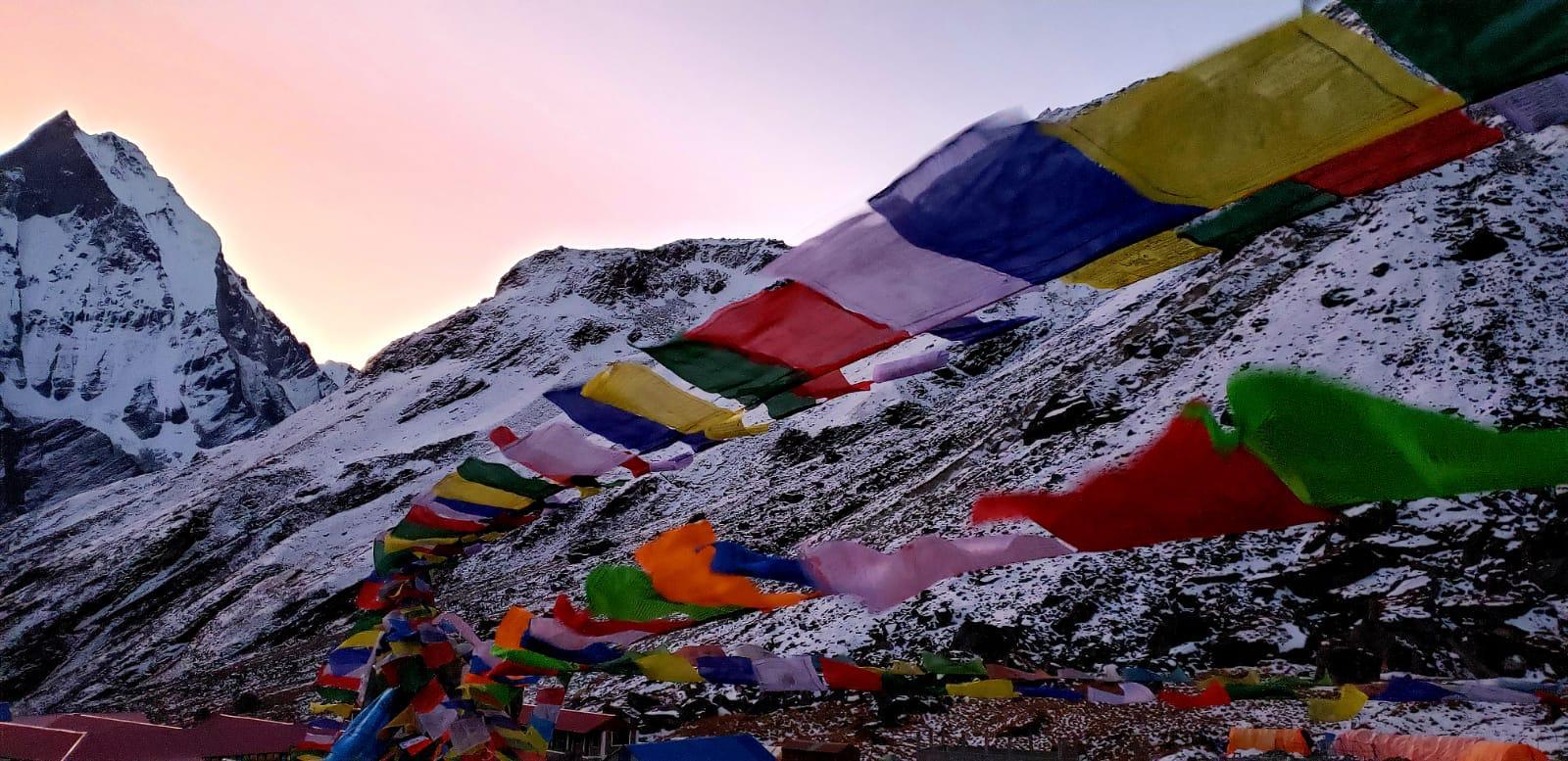
An overview of climbing 6000-meter peaks in Nepal in the spring for novices and intermediates. Many adventurous people dream of scaling the Nepalese Himalayas. These summits, which may be as high as 8,000 meters, are difficult to climb and need careful planning and preparation. But for novices and experts, scaling summits of about 6,000 meters may be a fulfilling experience, particularly in Nepal’s springtime.
Since the weather is pleasant and the snow is hard enough for climbing, March through May and mid-October through mid-December are the ideal times to climb these peaks. Clear vistas and amiable hikers may be found throughout the paths during this time.
The top beginner and intermediate 6,000-meter peaks in Nepal to climb in the spring will be explored in this blog.
Beginners/novice
Mera Peak (6,476 meters)
The highest trekking peak in Nepal is Mera Peak, which is situated in the Makalu region. For novice climbers who like to feel the excitement of climbing in a secluded location, the peak is an excellent option. A stunning panorama of the surrounding peaks, including Mount Everest, Lhotse, and Makalu, can be seen from the summit of the difficult climb, which includes steep ice and snow slopes.
Lobuche East (6,119 meters)
Lobuche East 6119M is a well-known summit in the Khumbu region. The path is rather simple and is regarded as a moderate ascent. A stunning view of the neighboring peaks, including as Mount Everest, Lhotse, and Nuptse, can be seen from the summit. The Gokyo and Everest Base Camp hike leads to the summit.
Island Peak (6,189 meters)
Island Peak, often called Imja Tse, is a well-liked climbing destination. With a modest degree of technical difficulty, it is regarded as one of the most accessible 6,000-meter summits. The well-known Everest Base Camp hike leads to the summit, which is situated in the Khumbu area.
The ascent is rather easy, and the top offers a broad perspective of the neighboring peaks, including Ama Dablam and Lhotse Sharr.
Chulu Far East (6,019 meters)
The Annapurna circuit region is home to the high-altitude hiking peak Chulu Far East. It’s a simple, non-difficult climb that even those without any prior technical climbing knowledge can do. However, the climb may be more difficult due to the steep terrain and scree slopes encountered throughout the approach. It is a lot like the journey to Mera Peak.
Climbers may experience the breathtaking natural splendor of the Annapurna area by following the Chulu Far East Peak climb schedule. In addition to the Tibetan plains to the north, the summit offers sweeping views of Annapurna II, III, and IV, Gangapurna, Manaslu 8163M, Pisang Peak, Chulu West Peak, and Dhaulagiri. You may also continue your journey by crossing the Thorong-la pass to reach the prohibited Kingdom of Upper Mustang and visiting the green Tilicho Lake, which is 4900 meters above sea level.
Yala Peak (5732 meters)
Yala Peak is located near the Tibetan border and is 5732 meters high. It is part of the Langtang Lirun Himal range. Because it is a non-technical climb, the peak is a great place for new climbers to get experience and learn about mountaineering.
At 4,500 meters above sea level, the expedition’s base camp provides breathtaking views of neighboring peaks, including Langtang Lirung, Lenpo Gang, Dorje Lakpa, and the majestic Sishapangma on the Tibetan side.
Intermediate
Chulu West Peak (6,419 meters)
The thrilling 6000-meter+ Chulu West Peak is located in Nepal’s midwestern region. There are fewer climbers and fewer visits to this summit. Climbers go via one of the most breathtaking hiking routes in the world as they set out from Ledar village to Chulu base camp, starting their ultimate climbing journey. With the Himlung Himal to the northeast and the spectacular Manaslu peak in the distance, the summit is set against the breathtaking background of the Annapurna massif range.
In conclusion, a great way to feel the exhilaration of Himalayan climbing is to ascend Nepal’s 6000-meter peaks in the spring. With stunning views of the surrounding landscapes and mountain peaks, the summits we highlighted above provide a strenuous but doable climb for both novices and experts. It should be noted that climbing any Himalayan mountain should not be done carelessly and that having the right equipment and an experienced guide are essential. Always remember to properly acclimate, enjoy yourself, follow the guide’s recommendations, and have a fantastic time climbing in the Himalayas.
Peak Climbing for Novices: Choosing the Right Peak to Climb 6
Peak Climbing for Novices: Choosing the Right Peak to Climb. The best place to start discovering more about this thrilling activity if you’re new to mountaineering is with a thorough guide for beginners on mountain climbing. Climbing mountains is a physical challenge that fuels a closer bond with the natural world. Mountaineers want expertise in scaling a mountain’s top and overcoming obstacles. Similarly, for practically all mountaineers, reaching the top of the world’s tallest peak, Mount Everest, is their ultimate goal. However, reaching this extreme adventure milestone is not an easy feat.
Among the numerous challenges a climber must face are feet-deep snow, strong snow gusts, a drop in oxygen levels, and slippery slopes. In the mountains, even a small mistake might put your life in danger. Patience, determination, and some experience are necessary for mountaineering to become familiar with the varied and difficult terrain. As a result, choosing the appropriate peak to climb is essential for novice climbers. Not all mountains are suitable for beginners, and climbing difficult summits increases the chance of serious mishaps or even death. Without patience and experience, mountains might pose a serious threat to one’s life. As a result, we’ll go over some beginning climbing advice in this article along with a list of some of the more accessible summits for beginners.
Choosing the First Peak to Climb
It is best to have a complete awareness of all factors to be taken into account for this attempt while making plans for your first climb. You can’t randomly choose a mountain. To make your peak choice a safe and instructive experience, it must meet certain beginner-friendly requirements. Thus, the following are some things to consider before choosing your first peak climb:
Difficulty:
It is advised that you choose a mountain with a low difficulty rating if you are a novice. Choose the peaks that are recognized as being suitable for beginners.
Elevation:
You can choose peaks with lower elevations to make the trip less strenuous.
Safety:
The most important element is safety. Confirm that there are few chances of avalanches, snowstorms, and rockfalls on the peak.
Conditions of the paths:
Examine if there has been enough maintenance done on the routes that go to the peak. A well-kept trail improves the likelihood of a straightforward and successful ascent. One of the main elements that determines whether a climb is successful is the season and weather. Research when is the best time to climb the mountain to reduce the chance of weather risks like intense cold, deep snow, and rain. Since weather conditions can vary greatly between mountains, it’s important to plan.
Duration:
If you’re a newbie, choose the peaks that will take you less time to reach the top. To reduce the dangers, consider holding the summit on a single day.
Peak climbing with a guide:
Climbing the peak with a guide not only increases your safety but also provides you with additional climbing expertise.
Experience and physical fitness:
Before choosing your first peak, determine whether or not you have the required knowledge and physical fitness to make the ascent.
Popular Peaks for Novice Mountain Climbers
Every mountain has a different elevation, climbing duration, topography, and climate. The majority of well-known peaks are rather difficult. However, certain peaks are ideal for novice climbers and may be used to improve one’s climbing technique. The peaks on the list below are among the greatest options for novice climbers. Most of the world’s beginner-friendly mountains are included in this.
Buying the appropriate climbing equipment is a good place to start if you’re wondering how to begin peak climbing. However, you may rent the climbing equipment to continue your trip if you don’t want to buy everything at once. In order to be safe in the challenging alpine terrain, you need to have the appropriate equipment. Climbing equipment can provide extra support and ease the adjustment into climbing, particularly for novices. As a result, you must not overlook these mountain climbing essentials:
Climbing helmet
Harness
Climbing shoes
Carabiners
Belay device
Climbing rope
Slings and quickdraws
Chalk bag and chalk
Climbing nuts and cams
Prusik cord
Backpack
Climbing clothing
Headlamp
Nutrition and hydration
First aid kit
Navigation tools
Emergency communication devices
Sunglasses
Climbing guidebook
How to Get Ready and Trained for Your First Climb
The key to climbing peaks successfully is planning and training. It assesses your level of preparedness for the thrilling mountain experience. Appropriate training enhances your capacity to respond to demanding circumstances and aids in overcoming hard obstacles. The only way to effectively climb the mountains is to concentrate on improving your skills via training and planning. Therefore, for better planning and training, below is the beginner’s guide to mountain climbing:
Take your time learning about the terrain, weather conditions, route, and other aspects of the mountain you are about to climb.
Make regular exercise a priority and build up your endurance by riding a bike, hiking, or rock climbing.
To become used to the harsh air conditions that surround the mountains, expose yourself to high-altitude territory often.
When navigating difficult terrain, pay close attention to safety procedures such as anchor building and positioning strategies for protective equipment.
Acquire proficiency in handling mountain climbing equipment, including crampons, ice axes, harnesses, carabiners, safety devices, and so on.
Discover how to use navigational aids including a GPS gadget, map, and compass.
Learn how to administer first aid.
Focus on developing your mental toughness and endurance, since these are necessary traits to keep you going when things become tough on the ascent.
Safety Measures to Take While Climbing Peaks
Disregarding safety precautions is not going to help you succeed in mountain climbing. Adhering to safety procedures guarantees your health and reduces the likelihood of catastrophic mishaps. In light of this, we’ve compiled a list of some crucial safety tips for inexperienced climbers to ensure a successful ascent:
Invest a significant amount of time in getting ready for the climb.
Make sure you are ready for the climb by familiarizing yourself with the mountain route.
Make sure the weather is suitable for climbing by consulting the weather forecast before beginning.
For safety, be sure you properly organize the trip by creating a thorough schedule and following it.
During the ascent, be careful to use the appropriate safety equipment.
Make sure the ropes are securely fastened, and check the knots often.
Before you begin climbing, ensure sure all of your climbing equipment is in excellent working order and do a safety check.
Bring along enough energy food, and drink plenty of water as you ascend.
When necessary, acclimate, and take your time climbing.
Climb in groups for more direction and assistance.
In difficult circumstances, maintain your composure and resist the need to panic. You can handle the problem more skillfully if you remain composed.
Peak Climbing with a Guide
A qualified guide oversees or provides direction during guided peak climbing. For your safety and growth as a novice climber, you have to choose guided climbing. For further information, explore the advantages and disadvantages.
Advantage of Peak Climbing with a Guide
Using qualified and experienced guides when climbing will guarantee safety and assist with risk management.
Guides share their extensive expertise in mountain climbing methods.
By using specialized equipment, guided climbing helps you save effort.
helps you feel a feeling of community and social connection with other climbers.
Allows you to climb without any problems and gives you enough time to appreciate the beautiful scenery as you climb.
This trip has a greater success rate and is well-structured and planned.
The disadvantage of Guided Peak Climbing
usually costs extra since it requires specialist equipment and directed guidance.
Must adhere to the schedule and prearranged route, making little space for own discovery.
Lack of solitude.
Trusting a guide too much might impede confidence and self-sufficiency.
Some common risks and hazards regarding peak climbing?
Aside from being harder than other adventures, mountain climbing has its own set of difficulties. Climbing the mountain presents many risks and hazards since you are always exposed to adverse conditions in high-altitude regions. Extreme cold, snowstorms, rain, avalanches, rockfall, crevasses, altitude-related illnesses, and technical climbing obstacles are some of the many dangers associated with mountain climbing. However, you can reduce the risk and overcome the obstacles with good risk management abilities if you have proper instruction and preparation.
For novices, mountain climbing offers an endless supply of excitement and rewards. Even though it’s not an easy task, anyone with a committed attitude may go on this amazing adventure with the proper instruction and support. We are here to help if you are a novice climber in need of support for your first ascent. Your goal of scaling majestic peaks can come true when you team up with us!