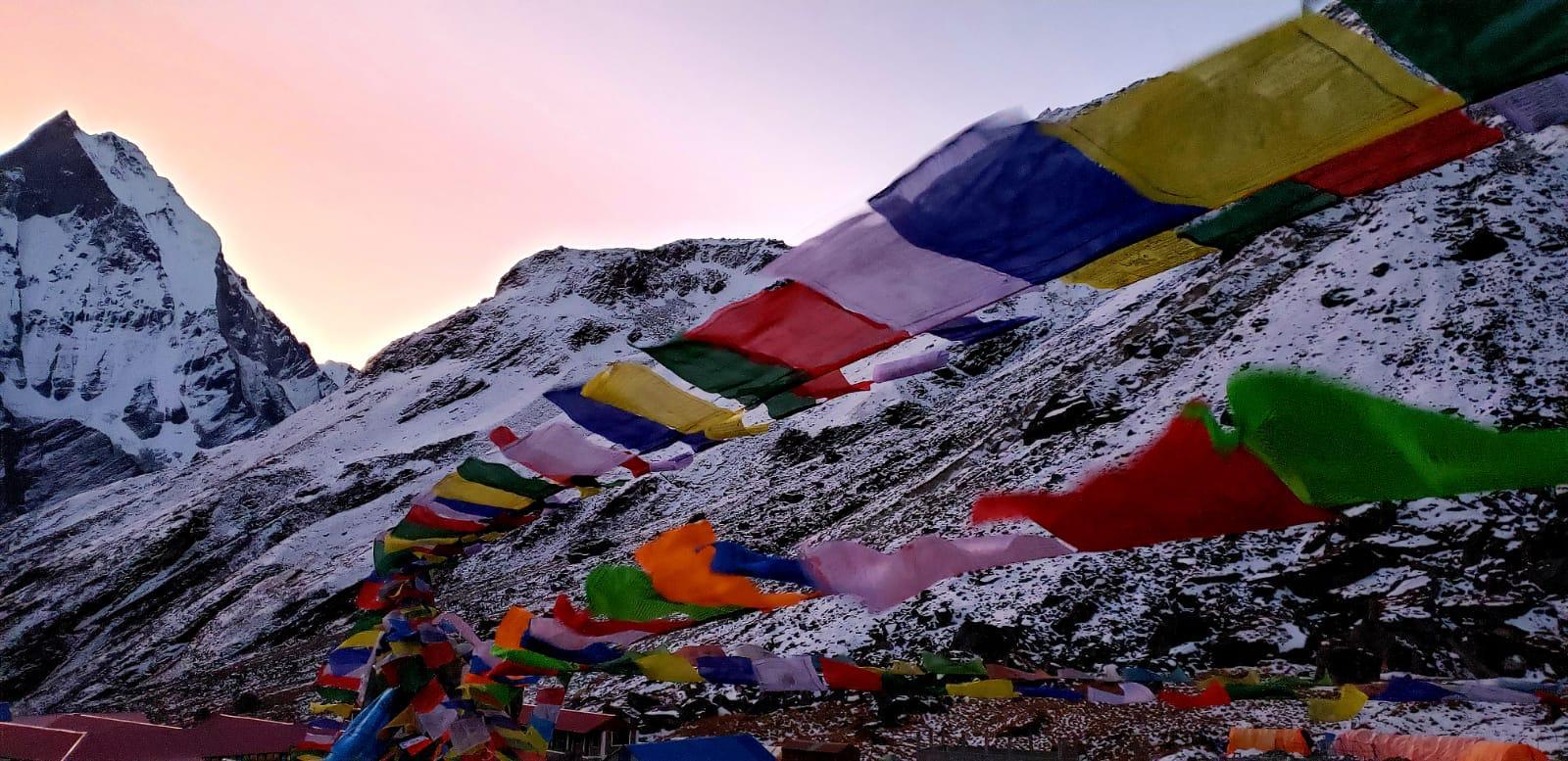
6,476 Reasons to Fall in Love with Mera Peak (Here Are 10 of Them)

Mera Peak

Mera peak – 6,476 Reasons to Fall in Love with isnโ€™t just a catchy phrase, it reflects the magic of standing at 6,476 meters on Nepalโ€™s highest trekking peak, surrounded by some of the worldโ€™s tallest mountains and an experience that changes how you see the Himalayas forever.

Mera Peak is often described as the perfect introduction to high-altitude mountaineering, but that simple label doesnโ€™t do it justice. Below are 10 powerful reasons why Mera Peak captures the hearts of trekkers and climbers from around the world.

1. Nepalโ€™s Highest Trekking Peak at 6,476m – Mera Peak

At 6,476 meters, Mera Peak is the highest trekking peak in Nepal. While it doesnโ€™t require advanced technical climbing skills, the altitude alone makes the achievement deeply rewarding. Reaching this height gives you a true taste of Himalayan mountaineering without the extreme technical demands of 7,000m or 8,000m expeditions.

2. One of the Best First 6,000m Peaks – Mera Peak

Mera Peak is widely considered the best first Himalayan peak. The climb involves glacier travel, basic crampon use, rope techniques, and an ice axeโ€”making it ideal for beginners who want to step into mountaineering in a controlled, guided environment.

No prior climbing experience is required, but good fitness and preparation are essential.

3. Jaw-Dropping Views of Five 8,000m Giants from Mera Peak

From the summit, youโ€™re rewarded with one of the widest panoramic views in Nepal. On a clear day, you can see:

  • Everest (8,848m)
  • Lhotse (8,516m)
  • Makalu (8,485m)
  • Cho Oyu (8,188m)
  • Kangchenjunga (8,586m, in the distance)

Very few peaks in the world offer such an incredible lineup in a single view.

4. A Remote and Less-Crowded Route – Mera Peak

Unlike Everest Base Camp or Annapurna Circuit, this Peak route is quieter and more remote. After leaving Lukla, the trail heads into the less-traveled Hinku Valley, where youโ€™ll experience peaceful forests, isolated villages, and untouched alpine landscapes.

This sense of wilderness is a major reason climbers fall in love with Mera Peak.

5. Gradual Acclimatization for Better Safety

The itineraries are designed with excellent acclimatization profiles. The slow ascent through villages like Paiya, Panggom, and Khote allows your body to adapt properly to altitude, reducing the risk of Acute Mountain Sickness (AMS).

Extra acclimatization days at Khare and Mera High Camp play a crucial role in summit success.

6. A True Expedition Experience without the Chaos

While still accessible, it feels like a real Himalayan expedition. Youโ€™ll stay in teahouses during the trek and transition to tented camps higher up. Fixed ropes, early-morning summit pushes, glacier crossings, and teamwork all combine to create an authentic mountaineering experienceโ€”without the extreme logistics of bigger peaks.

7. Ideal for Training and Future Big Mountains

Many climbers use Mera Peak as preparation for higher goals such as Island Peak, Ama Dablam, or even Everest. The altitude, endurance demands, and cold conditions make it excellent physical and mental training.

It builds confidence at high altitude, something no gym or lower trek can replicate.

8. Spring and Autumn Offer Near-Perfect Conditions

The best seasons for Mera Peak climbing are:

  • Spring (Marchโ€“May): Stable weather, warmer temperatures, clear summit mornings
  • Autumn (Septemberโ€“November): Crisp air, excellent visibility, and dramatic mountain views

During these seasons, summit success rates are high when proper acclimatization and experienced guides are involved.

9. Strong Safety Record with Professional Guidance

Mera Peak has a good safety record when climbed with licensed guides and a well-planned itinerary. Professional expeditions include:

  • Experienced climbing guides
  • Fixed ropes on the summit section
  • Emergency oxygen and first-aid kits
  • Clear evacuation protocols

This makes it a responsible and safe choice for motivated trekkers stepping into mountaineering.

10. A Personal Victory That Stays with You Forever

Summiting Mera Peak isnโ€™t just about altitude, itโ€™s about self-belief. The long days, cold mornings, and final push in the dark test your patience and determination. Standing on the summit at sunrise, with the Himalayas glowing around you, is a moment that stays with you for life.

Many climbers say Mera Peak is the moment they truly fell in love with the mountains.

Practical Information: What You Should Know

Typical Duration

  • 13โ€“18 days (Kathmandu to Kathmandu)

Difficulty Level

  • Physically demanding due to altitude
  • Technically moderate
  • Requires strong cardiovascular fitness

Required Permits

  • Mera Peak Climbing Permit
  • Makalu Barun National Park Permit

Accommodation & Meals

  • Teahouses during the trek
  • Tented camps above Khare
  • Hot meals prepared by support staff at higher camps

Cost Range

  • Generally, USD 2,200โ€“3,500, depending on services, group size, and inclusions

Final Thoughts

Mera Peak is not the hardest mountain in Nepal, but it might be one of the most rewarding. It offers altitude, beauty, solitude, and challenge in perfect balance. Whether youโ€™re a strong trekker dreaming of your first summit or an aspiring mountaineer building experience, there are truly 6,476 reasons to fall in love with Mera Peak and these 10 are just the beginning.

Can Beginners Climb Mera Peak? The Ultimate 2026 Beginnerโ€™s Success Guide

Can Beginners Climb Mera Peak?

Can Beginners Climb Mera Peak? Full Preparation Breakdown: this is one of the most common questions asked by first-time mountaineers dreaming of standing on a Himalayan summit, and the short answer is yes, beginners can successfully do Mera Peak Climbing with the right preparation, mindset, and support.

Mera Peak Climbing is often described as Nepalโ€™s best introduction to high-altitude mountaineering. While it is not technically difficult, it is still a serious expedition that demands respect, training, and planning. Below is a complete, honest, and beginner-focused preparation breakdown.

What Makes Mera Peak Climbing Suitable for Beginners?

Mera Peak (6,476 m) is classified as a trekking peak, not a technical alpine climb. This makes Mera Peak Climbing ideal for beginners who have strong trekking experience but limited or no mountaineering background.

Key beginner-friendly factors:

  • No steep rock or ice walls
  • Straightforward glacier travel
  • Fixed rope only on the final summit section
  • Gradual ascent profile allowing acclimatization
  • Strong support infrastructure (lodges + high camps)

That said, altitude is the real challenge in Mera Peak Climbing, not technical skill.

Do You Need Previous Climbing Experience?

You do not need prior peak-climbing experience to attempt Mera Peak Climbing. However, beginners should ideally have:

  • Multi-day trekking experience
  • Comfort hiking 6โ€“8 hours per day
  • Mental resilience in cold and remote environments

Basic mountaineering skillsโ€”such as using crampons, ice axe, harness, and jumarโ€”are usually taught during the expedition itself.

Mental Preparation: The Hidden Key to Mera Peak Climbing – Can Beginners Climb Mera Peak?

Physical training alone is not enough. Mental preparation is critical for beginners in Mera Peak Climbing.

Common mental challenges:

Slow pace due to altitude

Cold hands and feet

Fear of the unknown on summit day

Fatigue near high camp

How beginners can prepare mentally: Can Beginners Climb Mera Peak?

Practice patience during training hikes

Learn controlled breathing

Accept slower progress at altitude

Focus on process, not summit obsession

Strong mental resilience often matters more than raw fitness in Mera Peak Climbing.

Physical Fitness Required for Mera Peak Climbing – Can Beginners Climb Mera Peak?

While beginners can climb Mera Peak, poor fitness cannot be compensated by guides alone.

Recommended fitness baseline:

  • Able to hike uphill with a 8โ€“10 kg pack
  • Strong legs and cardiovascular endurance
  • Good balance and coordination
  • Ability to recover well overnight

Ideal training timeline (8โ€“12 weeks):

  • Cardio: hiking, stair climbing, cycling, running (3โ€“4x/week)
  • Strength: squats, lunges, step-ups, core work
  • Endurance hikes: progressively longer treks with elevation gain

Proper fitness dramatically increases your success rate in Mera Peak Climbing.

Altitude Acclimatization: The Biggest Factor – Can Beginners Climb Mera Peak?

For beginners, altitude is the single most important challenge in Mera Peak Climbing.

At over 6,000 meters:

  • Oxygen levels drop by nearly 50%
  • Simple movements feel exhausting
  • Sleep and appetite are affected

How beginners acclimatize safely -Can Beginners Climb Mera Peak?

  • Gradual ascent via the Hinku Valley
  • Scheduled acclimatization days
  • โ€œClimb high, sleep lowโ€ strategy
  • Strict hydration and pacing

A well-designed itinerary makes Mera Peak Climbing achievable even for first-timers.

Technical Skills Beginners Must Learn – Can Beginners Climb Mera Peak?

During Mera Peak Climbing, beginners will learn:

  • Walking with crampons
  • Using an ice axe for balance
  • Clipping into fixed ropes
  • Using a harness and safety system
  • Basic glacier awareness

These skills are simple but essential. On guided Mera Peak Climbing trips, training is usually provided at base camp or high camp.

Best Season for Beginner – Friendly Mera Peak Climbing

Choosing the right season greatly affects beginner success.

Best seasons:

  • Spring (Marchโ€“May): stable weather, warmer nights
  • Autumn (Septemberโ€“November): clear skies, colder but stable

Avoid winter and monsoon seasons if you are a beginner, as conditions become significantly more demanding.

Guided vs Independent: What Beginners Should Choose

For beginners, guided Mera Peak Climbing is strongly recommended.

Why guided Mera Peak Climbing is safer: Can Beginners Climb Mera Peak?

  • Professional guides manage altitude and pace
  • Fixed ropes and safety systems are handled
  • Emergency response and evacuation planning
  • Gear checks and technical instruction included

Independent Mera Peak Climbing is better suited for experienced alpinists, not first-time climbers.

Essential Gear for BeginnersCan Beginners Climb Mera Peak?

Having the right gear is critical in Mera Peak Climbing.

Must-have items:

  • Double or high-altitude boots
  • Crampons and ice axe
  • Harness, helmet, and jumar
  • Down jacket and insulated layers
  • High-quality sleeping bag (-20ยฐC or lower)

Most beginners rent technical gear in Kathmandu, which is perfectly acceptable for Mera Peak Climbing.

Common Beginner Mistakes to Avoid

Many beginners fail not because Mera Peak Climbing is too hard, but because of avoidable errors:

  • Rushing the itinerary
  • Ignoring early altitude symptoms
  • Underestimating cold and wind
  • Inadequate training before arrival
  • Poor hydration and nutrition

Awareness and preparation prevent most problems.

Food, Hydration, and Energy Management

Nutrition plays a huge role in beginner success during Mera Peak Climbing.

What beginners eat on Mera Peak Climbing:

  • Dal bhat (rice, lentils, vegetables)
  • Pasta, noodles, soups
  • Porridge, eggs, potatoes
  • Tea, ginger drinks, electrolyte fluids

Hydration rules:

  • 3โ€“4 liters of water per day minimum
  • Warm fluids preferred at altitude
  • Avoid alcohol entirely during Mera Peak Climbing

Poor hydration is one of the top reasons beginners struggle with altitude.

Why Some Beginners Failโ€”and How to Avoid It

Even though Mera Peak Climbing is beginner-friendly, not everyone reaches the summit.

Common reasons for turning back:

  • Ignoring early altitude symptoms
  • Overconfidence due to โ€œeasy peakโ€ reputation
  • Inadequate pre-trip training
  • Poor pacing and exhaustion

Success Rate: Can Beginners Climb Mera Peak?

With proper planning and guidance, beginner success rates for Mera Peak Climbing are very high, often above 85โ€“90% on well-run expeditions.

How beginners increase success rate:

  • Choose longer itineraries
  • Rest when advised by guides
  • Train for endurance, not speed
  • Listen to your body, not ego

Smart decisions matter more than strength in Mera Peak Climbing.

Final Verdict: Can Beginners Climb Mera Peak??

Yes, beginners can successfully complete Mera Peak Climbing, provided they:

  • Prepare physically and mentally
  • Choose a proper itinerary
  • Climb with experienced guides
  • Respect altitude and weather
  • Invest in correct gear

Mera Peak Climbing is not a casual trek, but it is one of the most achievable Himalayan summits for motivated beginners. For many, it becomes the first step into a lifelong passion for mountaineering.

If you approach it with humility, preparation, and patience, Mera Peak Climbing can be your first true Himalayan summit and an unforgettable one.

Guided vs Independent Mera Peak Climb: Route and Preparation Explained 2026-2027

Guided vs Independent Mera Peak

Guided vs Independent Mera Peak Climb: Route and Preparation Explained is a crucial topic for anyone planning to summit Nepalโ€™s highest trekking peak, as the decision you make directly impacts safety, preparation level, cost, and summit success. Although Mera Peak (6,476 m) is often marketed as a non-technical mountain, the reality involves high-altitude exposure, glacier travel, unpredictable Himalayan weather, and remote logistics that require serious planning.

This complete guide explains the Mera Peak climbing route, compares guided and independent climbing styles, outlines preparation requirements, and helps you choose the option best suited to your experience and goals.

Overview of the Mera Peak Climbing Route – Guided vs Independent Mera Peak Climb

The standard Mera Peak route offers stunning scenery and gradual altitude gain, making it ideal for acclimatization when done properly.

Standard Route Breakdown

  • Kathmandu โ€“ Lukla (Flight)
  • Lukla โ€“ Paiya โ€“ Panggom
  • Panggom โ€“ Khote
  • Khote โ€“ Thangnak
  • Thangnak โ€“ Khare (Acclimatization)
  • Khare โ€“ Mera High Camp
  • Summit Day โ€“ Mera Peak (6,476 m)
  • Return via same route or optional extension

Key Route Challenges

  • Long trekking days in remote valleys
  • Glacier travel above Khare
  • Fixed rope sections near the summit
  • Cold temperatures and high winds
  • Limited rescue infrastructure

While the route itself is straightforward, how you approach itโ€”guided or independentlyโ€”makes a major difference.

What Is a Guided Mera Peak Climb?

A guided Mera Peak climb is led by a licensed climbing guide, supported by assistant guides and porters. This option is designed for trekkers transitioning into high-altitude mountaineering.

Whatโ€™s Included in a Guided Climb

  • Climbing permits and paperwork
  • Domestic flights and ground logistics
  • Experienced guide and support staff
  • Accommodation and meals
  • Pre-climb training at Khare
  • Fixed ropes and glacier safety systems
  • Emergency and evacuation coordination

Preparation for a Guided Mera Peak Climb

  • Good trekking fitness
  • Prior high-altitude trekking (4,500โ€“5,500 m recommended)
  • Willingness to follow acclimatization schedules
  • No technical climbing experience required

Pros of a Guided Climb

  • Higher summit success rate
  • Professional altitude monitoring
  • Reduced logistical stress
  • Emergency response support
  • Ideal for first-time 6,000 m climbers

Climb with certified guides, proper acclimatization, and full logistical support.

What Is an Independent Mera Peak Climb?

An independent Mera Peak climb means organizing permits, logistics, and safety yourselfโ€”without a professional guide.

Preparation Requirements for Independent Climbers

  • Strong high-altitude experience
  • Glacier travel and crevasse rescue skills
  • Rope handling and crampon proficiency
  • Navigation and weather assessment ability
  • Emergency decision-making skills

Pros of an Independent Climb

  • Full control over pace and itinerary
  • More flexible acclimatization
  • Lower upfront cost
  • Strong sense of self-reliance

Risks of Independent Mera Peak Climbing

  • Higher exposure to altitude illness
  • No professional safety oversight
  • Complicated permit and rescue logistics
  • Lower margin for error in extreme conditions

Independent climbs are best suited for experienced alpinists, not first-time Himalayan climbers.

Guided vs Independent Mera Peak Climb: Key Differences

FactorGuided ClimbIndependent Climb
SafetyHighModerate to Low
LogisticsFully managedSelf-managed
Skill RequirementModerateHigh
Success RateHighVariable
FlexibilityModerateHigh
Best ForFirst-time climbersExperienced alpinists

Mera Peak Packing List – Guided vs Independent Mera Peak Climb

Clothing

  • Thermal base layers (top & bottom)
  • Fleece or light insulated jacket
  • Down jacket (โ€“20ยฐC or lower)
  • Waterproof shell jacket & pants
  • Insulated gloves (inner & outer)
  • Warm hat, buff, balaclava

Footwear

  • Double or insulated mountaineering boots
  • Trekking boots
  • Gaiters
  • Wool socks (4โ€“5 pairs)

Technical Gear

  • Crampons
  • Ice axe
  • Harness
  • Helmet
  • Ascender (Jumar)
  • Locking carabiners
  • Tape slings (120 cm & 240 cm)
  • Headlamp with spare batteries

(Most guided climbs provide shared technical gear, but personal-fit items are recommended.)

Essentials

  • Sleeping bag (โ€“20ยฐC comfort)
  • Sunglasses (UV400 / Category 4)
  • Trekking poles
  • Water bottles or insulated flasks
  • Personal first-aid kit
  • Sunscreen & lip balm (SPF 50+)

12-Week Training Plan for Mera Peak

Weeks 1โ€“4: Base Fitness

  • Cardio 4โ€“5 days/week (45โ€“60 min)
  • Strength training (legs & core)
  • Weekend hikes with light pack

Weeks 5โ€“8: Strength & Endurance

  • Longer cardio sessions (60โ€“90 min)
  • Stair climbing with backpack (8โ€“10 kg)
  • Weekend hikes (5โ€“7 hours)

Weeks 9โ€“12: Peak Conditioning

  • Long hikes with elevation gain
  • Back-to-back training days
  • Pack weight 10โ€“12 kg
  • Taper in final week

Optional but recommended: basic mountaineering or crampon skills training.

FAQs โ€“ Guided vs Independent Mera Peak Climb

Is Mera Peak suitable for beginners?
Yes, with a guide. Itโ€™s one of the best first 6,000 m peaks when climbed responsibly.

Do I need technical climbing experience?
Not for guided climbs. Independent climbers must already have glacier skills.

How long is the expedition?
Typically 16โ€“18 days including acclimatization and contingency days.

What is the best season?
Spring (Aprilโ€“May) and Autumn (Octoberโ€“November).

How cold does it get?
Up to โ€“25ยฐC with wind chill on summit day.

Final Thoughts: Which Option Should You Choose? Guided vs Independent Mera Peak Climb?

Choosing between a guided or independent ascent defines your entire Mera Peak experience. While independent climbing offers freedom, a guided Mera Peak climb provides safety, structure, and a far higher chance of standing on the summitโ€”especially for first-time climbers.

Preparation, patience, and respect for altitude matter more than speed or strength.

Guided vs Independent Mera Peak? What do you Think? Inquire Now

The Most Adventureย Activities To Doย in Nepal

The Most Adventureย Activities To Doย in Nepal. With its diverse landscapes, Nepal is an ideal destinationย for adventure lovers, offering exhilarating experiences. From renowned treks and mountain climbing adventures to exciting activities like skydiving, bungee jumping, and paragliding, Nepal’s spirit of adventure enthralls travelers. Take part in ground activities like rock climbing, jungle safaris, and more, as well as water sports like white water rafting, canyoning, and kayaking.

Every experience offers a different combination of culture, nature, and thrill. For those looking for an adrenaline rush, Nepal promises an amazing adventure. Check out the comprehensive list of all the thrilling things you can do in Nepal.

FLYING IN THE SKY

PARAGLIDING IN POKHARA

In Pokhara, Nepal, where the spectacular Annapurna range sets the backdrop for an adventure mixed with adrenaline and breathtaking scenery, soar into the skies with the renowned paragliding sport. With mild thermals and bright skies, this place in Pokhara’s picturesque Sarangkot Hill is perfect for paragliders.

Starting at 1,610 meters, the route takes one by car to Sarangkot Hill. The weightless climb starts with the passenger strapped into a tandem paraglider with an expert pilot. Witness the towering Himalayas, lush greenery, and Phewa Lake from above. Through the clouds are vistas of Dhaulagiri, Machhapuchhre, and the Annapurna range. Enjoy the thrilling freedom of flying for half an hour before softly landing on the lakesideย of Phewa Lake. This is the perfect experience for everyone who likes adventure.

SKY DIVING OVER MOUNT EVEREST

The ultimate leap of faith from the top of the world is among the most exhilarating experiences on our list. For the boldly daring, skydiving over Everest is a stunning experience. Fly towards Earth at 8,839 meters with Everest as your magnificent backdrop. For genuinely courageous people, this is an opportunity of a lifetime.
One of the world’s most daring airports, Lukla Airport, is where your adventure starts. As you reach the drop zone, leave the villages and monasteries below and board a helicopter above the skies. Prepare to jump at this perplexing altitude with a seasoned, reliable skydiving instructor. The wind howls at you during the first few seconds, which is pure adrenaline.

ULTRALIGHT FLIGHT

Experience flying like never before with ultralight flights in Nepalโ€”a level of flyingย neither commercial nor helicopter travel can equal. You will ride between 3,000 and 5,000 meters over the snow-capped peaks, enjoying the sound of the wind and the alpine air.

Airport Pokhara is where the adventure starts. Following a briefing, you and your expert pilot will belt up in an open-air cockpit. You’ll roll gently as you lift off above the picturesque Phewa Lake. In addition to the exhilaration of flight, you will see the expansive views of the Annapurna range for thirty minutes. Through the clouds are views of Dhaulagiri and Machhapuchhre. It will be thrilling to see the lake, vibrant boats, verdant surroundings, historic towns, and monasteries from above.

KUSHMA’S ZIPLINE

The experience of ZipLining amid verdant landscapes and spectacular mountain panoramas is a must for thrill-seekers. Take a zipline trip in Kushma, Nepal, and experience soaring across breathtaking countryside while harnessed into a line. Situated in the Annapurna area, close to Pokhara, Kushma offers breathtaking views of the Kali Gandaki River, waterfalls, and verdant woods.

Before being launched down the zipline, you will be fastened to a strong harness. It’s one of Nepal’s longest ziplines, spanning 1.5 km in total. When you zoom down, you’ll feel your hair being brushed by the wind. Take on the incredible Zipline adventure in Kushma and experience the beauty and adrenaline thrill of Nepal.

PEAK CLIMBING

MERA PEAK CLIMBING

Mera Peak is among the beginner-friendly peaks in Nepal where mountain climbing experiences typically begin. For those looking to have comparable experiences beforeย embarking on a real, demanding mountain climbing expedition, ascending Mera Peak offers the ultimate rush.

Mera Peak, located in the Khumbu area at 6,476 m, presents an exhilarating challenge for climbers looking for an experience apart from the usual route. Start with the flight to Lukla in the Khumbu area, followed by an exploration of Sherpa communities. Although physically taxing, the eighteen-day hike and ascent are worthwhile.

The best parts of this experience include trekking through the Hinku Valley, sleeping at the foot of the peaks, learning how to use climbing equipment, and tackling a difficult glacier ascent. Also, you’ll see encouraging sights of Everest, Makalu, and Cho Oyu.

ISLAND PEAK CLIMBING

Setting off on a daring expeditionย to Island Peak is another challenging experience. At 6,189 meters, the Island Peak in Nepal’s Khumbu area is one of the most well-liked mountain climbing destinations. For those seeking adventure and a higher 8,000-meter peak to climb, it’s the perfect challenge.

The adventure starts with an exhilarating flight to Lukla, followed by trekking through verdant scenery and Sherpa communities. Reaching the summit provides amazing views of Lhotse, Nuptse, and Ama Dablam after navigating the treacherous ice and rock parts. This amazing trip, which usually lasts 15 to 18 days, combines breathtaking Himalayan scenery with challenging climbing.

TREKKING

EVEREST BASE CAMP TREK

The Everest Base Camp Trek is a renowned worldwide adventureย in the Himalayas. Throughoutย this incredible trip, which lasts between 12 and 16 days, you will cross difficult terrain and reach altitudes that will push your limits.
Discover historic monasteries like Tengboche, pulsating with spiritual peace amidst the rough terrain, during your tour to the lap of the world’s highest peak. Explore lively Sherpa communities to create bonds with the community. The trek’s main features include an excursion to the famous Kala Patthar peak and breathtaking vistas of Everest, Lhotse, and Nuptse. An incredible tripย is both a physical achievement and a mind-blowing encounter with the world’s tallest peaks.

ANNAPURNA CIRCUIT TREK

The Annapurna Circuit is a popular trekking route offering variousย trekking experiences and an unmatched sense of adventure in the center of western Nepal. This trek, which lasts for 15 to 20 days, takes you through variousย landscapes, including alpine meadows, lush subtropical forests, and even theย deserts of Manang and Mustang. Enjoy the magnificent Machapuchare, Dhaulagiri, and Annapurna Massif. Explore the quaint towns of Manang and Pisang,ย home to historic temples and monasteries with a strong Himalayan cultural influence.

The spiritual experience at Muktinath Temple and the tranquility of Tilicho Lakeโ€”one of the highestโ€”showcase the circuit’s diversity beyond its physical features. Adventure seekers seeking a blend of natural beauty and cultural diversity must do this expedition.

LANGTANG VALLEY TREK

Famous for itsย proximity to Kathmandu and its unique combination of adventure and abundant flora and fauna, the Langtang Valley Trek is an exciting Himalayan escape. Ten to twelve days are needed for the trek, which passes through quiet Tamang settlements, thick forests of rhododendrons, and stunning scenery inside Langtang National Park.

Explore the local way of life by touring historic monasteries such as Kyanjin Gompa, which is adorned with colorful prayer flags. With its breathtaking scenery, the walk provides sweeping vistas of the Langtang Lirung and Ganesh Himal peaks. Experience the spiritual tranquility of the holy Gosaikunda Lake and the kind welcome of the local people. Trekking in the Langtang Valley offers a brief yet remarkable experience with its breathtaking scenery and cultural immersion.

CONTACT US FOR MORE QUERIES

A Lifetime Experience: Group Joiningย Trek to Mera Peak

Group joining trek to Mera Peak

A Lifetime Experience: Group Joiningย Trek to Mera Peak. Have you ever imagined yourself perched atop the world, looking out at the immense Himalayas? Imagine completing a challenging yet spectacular trip to the summit of Mera Peak, one of Nepal’s highest points of elevation. The vistas from the summit, at a height of 21,247 feet, will absolutely take your breath away. Without previous mountaineering expertise, a guided group trip is the ideal way to feel the adrenaline rush of high-altitudeย climbing. On your ascent, you’ll pass past isolated mountain villages, lush forests, and even a lake at a high elevation. All you need is an adventurous spirit as you will have an experienced Sherpa guide and porters to carry your camping supplies.

You will be physically drained and exhausted, but it will be worth it when you stand on the snow-capped top and witness the flags flutter in the breeze. On Mera Peak, a once-in-a-lifetime adventure is waiting for you. Ready to embark on a group trek and see the world from a higher viewpoint? The once-in-a-lifetime experience is calling.

WHAT IS A GROUP JOINING TREK OR CLIMB IN NEPAL?

Are you wondering, what is a group joining trek in Nepal? Trekking in a group offers a double adventure at a minimal cost. You will get to know adventurous travelers from all over the world and interact with multilingual and multicultural individuals. For the group joining the trek, English will be the language of communication. Trekking wouldn’t seem monotonous if you were among other trekkers.

We have fixed group joining departure dates for different trekking regions. It is the best optionย forย solo travelers searching for a group to accompany them while they trek and climb in Nepal. Due to the fact that you will likely share all costs that accompany the whole journey, including food, lodging, transportation, guides, and porter, group joining trekking and climbing in Nepal will be less expensive than private treks or climbs. Therefore, trekking in Nepal with a group is one of the most inflectingย trips in Nepal.

Group joining trekking in Nepal is safer and more secure when trekking in the mountains. If you hike in the mountains alone, you run the risk of getting lost on the trail, experiencing an avalanche, falling rocks from the mountain, and many other accidents. However, if you hike in the mountains with a guide and other groups, you are much more likely to have a safe and enjoyable experience.

Additionally, if anyone is interested in joining a group for peak climbing and trekking in Nepal, please send us a message at any time and we would be delighted to assist you.

GETTING READY FOR THE TREK: WHAT TO EXPECT?

It takes a lot of work to be ready for an ascent toย Mera Peak, but the benefits of succeeding in scaling this Himalayan beast are well worth the effort.

You must make reservations with a trustworthy trekking agency at least 6 to 12 months in advance if you want to join a group trip. They’ll take care of the equipment, permits, and technicalities so you can focus on the training. And you must train! With aerobic, strength training, and long treks with a heavy pack, dedicate many months to getting in the greatest form of your life.

A warm sleeping bag, an insulated jacket, base layers, hiking boots, crampons, an ice ax, gloves, a cap, and high-altitude medicine are extra bits of important gear you’ll need to get. Keep your camera handy to record the spectacular vistas!

The Most Frequently Asked Questions About Mera Peak Climbing

You will generally trek across difficult, high-altitude terrain for 6 to 8 hours a day for around 2 weeks while on the journey. Expect harsh weather, such as wind, rain, and snow. Along the way, you’ll stay at simple teahouses and eat traditional Nepali food. For the first several days until your body adjusts, the thin air and vigorous exertion can cause altitude sickness.

It feels like a dream to arrive at Mera Peak High Camp after a lengthy final effort. In the dead of night, you’ll set out for the top while using a headlamp to climb across ice rocks and ridges. When you reach the summit at daybreak, the breathtaking 360-degree view of snow-capped Himalayan giants like Everest makes the effort worthwhile. Your enthusiasm for high-altitude hiking will undoubtedly be sparked by this life-altering journey to the top of the world!

Is Mera peak suitable for novice climbers? How difficult is Mera Peak Climbing?

HOW TO BE FIT AND TRAIN YOURSELF FOR THE CLIMB

You must be in excellent physical condition to climb Mera Peak. A minimum of 4-6 months beforeย your expedition, begin your training. To increase endurance, concentrate on aerobic exercises like jogging, swimming, or bicycling 3โ€“4 times per week. Build up to 60โ€“90 minutes of continuous exercise. Hill training is essential as well. Find some challenging trails, then set out with a heavy pack. Strengthen your legs in addition to your cardio by performing workouts like squats, lunges, calf raises, and step-ups. Don’t forget to doย sit-ups and other core exercises. For climbing and descending the mountain, you need to have powerful legs and a strong core. If you can, practice at altitude. Even while nothing can completely prepare you for 18,000 feet, being up there beforehand can be beneficial.

HOW TO STAY HEALTHY WHILE TREKKING TO MERA PEAK

Walk slowly, keep hydrated by drinking lots of water, and steer clear of alcohol and caffeine to prevent altitude sickness. Bring the drugs that your doctor has prescribed. It’s essential to have trekking poles, the right clothing, sun protection, and a durable backpack. To stay energized, bring high-calorie foods that are also healthy. For inexperienced climbers in good form, summiting Mera Peak is definitely possible with the correct planning and equipment. But if the altitude becomes too high, pay attention to your body and don’t push yourself. Your safety is our main priority, therefore if you need to turn around, do so since the mountain isn’t going anywhere. This may be a once-in-a-lifetime adventure with the right preparation and safety measures. All the work is rewarding once you reach the summit.

MERA PEAK ITINERARY:

OUTLINE ITINERARY:

Day 01: Arrival in Kathmandu – Altitude: 1,300m/4,264ft
Day 02: Fly to Lukla | Trek to Paiya (Chutok) – Altitude: 2,730m/8,956ft) | Flight: 40 mins | Trek: 5-6 hours
Day 03: Panggom – Altitude: 2,846m/9,337ft | Trek: 5-6 hours
Day 04: Ningsow – Altitude: 2,863m/9,393ft | Trek: 4-5 hours
Day 05: Chhatra Khola – Altitude: 2,800m/9,186ft | Trek: 7-8 hours
Day 06: Kothe – Altitude: 3,691m/12,109ft | Trek: 6-7 hours
Day 07: Thaknak – Altitude: 4,358m/14,297ft | Trek: 3-4 hours
Day 08: Khare – Altitude: 5,045m/16,486ft | Trek: 2-3 hours
Day 09: Khare: Acclimatization and pre-climb training
Day 10: Mera High Camp – Altitude: 5,780m/18,958ft | Trek: 6-7 hours
Day 11: Mera High Camp to Summit and back to Khare – Altitude: 6,461m/21,1907ft | Trek: 8-9 hours
Day 12: Reserve Day for Contingency
Day 13: Trek to Gothey – Altitude: 3600m/11,812ft. | Trek: 4/5 hrs.
Day 14: Trek to Tuli Kharka – Altitude: Tuli Kharka: 4,250m/13,944ft. | Trek: 4/5 hrs.
Day 15: Trek to Lukla – Altitude: 2,800m/9,186 ft. | Trek: 3/4 hrs.
Day 16: Fly back to Kathmandu – Altitude: 1350/4428 ft. | Flight: 30 minutes
Day 17: Spare Day – Meal: B
Day 18: Departure from Kathmandu – Altitude: 1350/4428 ft.

GROUP JOINING DATES

MERA PEAK 18 DAYS10 SEP 2023USD 1995/-
MERA PEAK 18 DAYS26 SEP 2023USD 2185/-
MERA PEAK 18 DAYS06 OCT 2023USD 2185/-
MERA PEAK 18 DAYS11 OCT 2023USD 2185/-
MERA PEAK 18 DAYS21 OCT 2023USD 2185/-
MERA PEAK 18 DAYS26 OCT 2023USD 2185/-
Group Joining Dates for Autumn 2023

FINAL SAY

Now that you know the details, what are you waiting for? A group trip to Mera Peak is a once-in-a-lifetime experience. You’ll endure physical effort inย thin air, enjoying the rush of climbing higher and higher every day. With new companions in your group, you’ll connect over the difficulties and victories of the climb. And at the top, awestruck by your accomplishments and encircled by the Himalayas’ towering giants, you’ll stand. Photos and videos can not do justice to the vast 360-degree panorama that stands out in front of you; the vistas will etch themselves into your mind. A trip to Mera Peak is more than simply a holiday; it’s an opportunity to find out who you truly are.

CONTACT US FOR MORE DETAILS

The Most Frequently Asked Questions About Mera Peak Climbing

Mera Peak

The most frequently asked questions about Mera Peak Climbing are listed below. We really hope that you will find some of these helpful, but if you have a specific query that isnโ€™t addressed in the FAQs, please do not hesitate to contact us. Please visit this website about our Mera Peak Climbing for additional details.

Mera Peak 6476m is the highest trekking peak in Nepal that has been approved by the Nepal Mountaineering Association (NMA), yet it is still physically achievable in comparison to other 6000m trekking peaks in Nepal. Mera Peak is a great option for anyone looking for their first climbing adventure in Nepal’s Himalayas as a result. Since the climb’s height of 6476m makes up for the requisite lack of technical skills, good physical and mental preparation is required.

Mera Peak Climbing can be your turning point if you are a climber who is seriously engaged in exploration. Another important factor in people choosing to climb Mera Peak is the stunning summit view of the over-8000-meter peaks, including Mt. Everest, 8848m, Mt. Lhotse, 8516m, Mt. Cho Oyu, 8201m, Mt. Makalu, 8463m, and Mt. Kanchenjunga, 8586m.

WHERE IS THE MERA PEAK?

Mera Peak isย located in Nepal’s Sagarmatha region in the Solukhumbu district and is situated in the Mahalangur district in the Barun sub-district of the Himalayas. It is categorized as a trekking peak with a height of 6,476 meters. Mera North, at 6,476 meters, Mera Central, at 6,461 meters, and Mera South, at 6,065 meters, are its three main summits.

WHAT IS THE BEST TIME TO CLIMB?

Like the rest of Nepal, the Everest Region experiences four distinct seasons. Winter, spring, summer, and fall. The busiest times for trekking trips to climb Mera Peak are from March to May, before the monsoon, and from October to December, after the monsoon. Even if Mera Peak is possible during the monsoon season, it will be far less crowded. It should be noted that each trekking season has its own unique thrill and environment for hikers, but if you want to feel more certain about the weather throughout the journey, be sure to stick to the peak season.

HOW DO I PREPARE MYSELF FOR THE CLIMB??

If you have prior climbing experience, it would be advantageous for you to attempt this climb, and quite beneficial. Because your body tends to shut down once you are over 5500 meters, you need proper training and acclimatization. Exercise and rest days are essential for adjusting to low oxygen levels at high altitudes. You can climb Mera Peak if you have the necessary technical expertise and great physical conditioning.

There are still a few things to think about, such as altitude and length, before you set off on your own trek. The trekker should be in top physical shape. Additionally, for weeks or months prior to the climb, you must have been jogging or performing other physically demanding activities. We suggest that you exercise for at least an hour five days a week. Focus on training with high volume and low intensity. Plan a few weekends when you can work two or more straight full days if you can. Several-day hikes at a suitable height are fantastic. Your mentality and mental preparation are equally essential for your achievement at any peak.

WHO AM I CLIMBING WITH?

If you don’t sign up for a private trip or if we don’t have a group on the day you choose, you’ll be climbing with others who have similar interests. An experienced local mountaineer who has successfully reached the peak will lead you. Your mentor will assist you right away, provide you withย sound counsel, and teach you the necessary skills. He will also offer you pre-climbing coaching at base camp the day before the summit.

HOW HARD IS MERA PEAK CLIMBING?

Adventure sports enthusiasts may scale mountains as part of Mera Peak Climbing. One of the highest climbing peaks in Nepal is Mera Peak. At a high height of 6,461 m (21,190 ft), the ascent is not challenging, with the exception of the last peak, which rises 100 m (328 ft) abruptly. Climbing Mera Peak is the best way to get started with high-altitudeย climbing and the best warm-up climb before undertaking more difficult mountain trips. The challenging aspect is really making the long walk from Lukla to Mera Peak’s base camp on a standard hiking track. You must be prepared to cope with exhausting days of hiking for multiple days, maintain good physical condition, and deal with altitude sickness throughout the trekking portion.

As simple as it may appear, ascending to the summit of Mera Peak requires careful consideration of a number of elements. Technical climbing expertise, high physical stamina, and a strong mind are required. Because of the fixed ropes, the climbing phase is simple and secure, thus we heartily suggest this climb to anybody looking to climb an ice peak for the first time.

IS MY TRIP GUARANTEED?

Without a doubt, yeah! We guarantee that the trips you have reserved will go on as planned. If other hikers decide not to go, you will still go on the trek. This is how weย differ from other tour operators that frequently cancel their entire trip a month or even a week prior to the departure date. We are a custom business, thus the number of participants has no bearing on how we operate. Feel free to reserve your stress-free vacations with us. Unless there is an uncontrollable event, such as a political protest, natural calamity, pandemic, or epidemic our trips are guaranteed to run.

MERA PEAK CLIMBING ROUTES

One of the most well-known mountains in Nepal is the Mera Peak. It is the perfect place to unwind and take in the natural beauty for many days. There are two approaches you can take to get to Mera Peak. They are the trailsย to the southwest and northeast. The Mera range’s southern portion is reached through the southeast route, which begins at Lukla. It enters the highlands after passing through the Paiya village. As it approaches Mera Peak, it finally crosses the streams.

The northern route: The Mera range’s northern section begins at Lukla. It crosses the Zatra La pass to get to Mera Peak.

ALTITUDE SICKNESS AT MERA PEAK

Altitude sickness can occur when trekkingย Mera Peak, which is 6,476 meters high. AMS symptoms, which include nausea, breathlessness, headaches, and an inability to move, begin to appear a few hours after reaching a high altitude. All the joy you were feeling before things became terrible would be taken away by an overwhelming sensation of exhaustion. You can have trouble falling asleep, feel lightheaded, and have a really bad headache. Additionally, you can become uncoordinated, have problems walking, and develop a tight chest. If the condition worsens to HAPE or HACE, you can have confusion, shortness of breath when at rest, and most likely won’t be able to move at all.

Your symptoms could be more acute at higher altitudes. There are several grading methods available to determine altitude sickness. Guides have immediate therapeutic experience and are trained in these methods. Although many people will suffer some altitude sickness symptoms, it doesn’t always need to get worse. You may take several steps to ensure your health at a high altitude if you are aware of the signs.

HOW TO PREVENT ALTITUDE SICKNESS WHILE CLIMBING MERA PEAK?

You may prevent yourself from getting altitude sickness by adhering to the following general guidelines. They may also aid in controlling the symptoms.

Careful Planning

Have a thorough physical examination and inform your doctor of your activities. Buy the prescription that your doctor has prescribed.

Learn to be your fittest self.

Exercise for around 3 to 6 hours each week while carrying a 10kg backpack to simulate a typical day in the Himalayas.

Listen toย your body.

When you need to rest, your body will tell you. Pay close attention to it. Understand the signs of altitude sickness and discuss it with others. As soon as your body tells you to stop, listen to your companions, your guide, and your porters. Keep things from becoming worse.

Sleep Low, Climb High

Climbing high but sleeping low is an unspoken rule for trekkers and climbers.ย That explains why it takes those climbers on Everest so long to reach the summit; they make several trips up and down the mountain before making a last push. They sleep low yet ascend high. This explains why your schedule may occasionally include a descent in the middle. This is being done to make sure that you thoroughly acclimate after dealing with elevation.

Eat a lot and drink more water

Consume as much food as you can, then some more. Likewise with drinking.ย Hydration! Consume as much food and liquid as you can. Even if you are not hungry, don’t miss a meal.

TRAVEL INSURANCE FOR MERA PEAK

Trips during an expedition or when climbing are quite risky. There is aย significant chance of dangerย for your life since you will be climbing with ropes on ice and snow on mountain cliffs. You must get advanced rescue insurance for these trips, which often has a little higher rate.

We advise gettingย coverage that covers mountain air ambulances at least up to the Mera Peak’s altitude of 6,461m (21,190ft), which is a peak that is higher than 6,000m (19,685ft). Additionally, we advise you to get insurance to cover medical emergencies, travel delays or cancellations, and trip cancellations brought on by pandemics, political unrest, intergroup conflict, and natural disasters.

CONTACT US FOR MORE DETAILS:

Everest Three Peak Climbing: Everything You Need To Know

Everest Three Peak Climbing

Everest Three Peak Climbing: Everything You Need To Know. The Everest three peaks climbing in Nepal offers an exceptional start to classic Himalaya mountaineering by ascending three prominent six-thousand-meter peaksย in a single trip. We will climb three stunning peaks reaching over 6,000 meters (20,000 feet), providingย some of the most incredible views in theย world.

Join the expedition for a trek across Gokyo Lake, three high passes, and other hidden jewels in the Everest area. Enjoy the incredible experience of climbing Mera Peak (6,476M), Island Peak (6189M), and Lobuche East (6119 m), as well as the mountain and Sherpa cultures.

Mount Everest, Lhotse, Cho Oyu, Makalu, and Kangchenjunga are five 8,000-meter summits that can be seen from the top of Mera Peak, in addition to numerous other Himalayan peaks. The most difficult of the three summits above 6000 meters in this expedition is Island Peak, 6189 m.

Before or after the summit, climbers will ascend or descend a steep 90-degree wall by passing via a steel ladder to span the crevasse holes. Another 6000M summit on the agenda, theย Lobuche summit, is moderately difficult yet technically challenging.

Climbing on the Everest Three Peak Climbing of Nepal is aย little challenging, with Island Peak being the hardest (2B) climb. Anyone in decent physical shape who has a passion for great adventure can do it.

Starting with Mera Peak and finishing with Lobuche Peak whilst passing via Amphu Lapcha Pass. The Pass connects Mera with the picturesque Island Peak-adjacent Chukung valley.

Overview of the Everest Three Peak Climbing

1. Mera Peak (6,476m) โ€“ The Highest Trekking Peak

  • Location: Hinku Valley, Makalu-Barun National Park
  • Difficulty: Moderate; physically demanding but technically less challenging
  • Highlights:
    • The highest trekking peak in Nepal
    • Panoramic views of Everest, Makalu, Lhotse, Cho Oyu, and Kanchenjunga
    • A great introduction to high-altitude climbing
  • Climb Style: Gradual ascent on snow slopes with crampons and an ice axe; minimal technical sections

The Mera Peak Climb is for all adventure enthusiasts who have the desire and determination to get the most out of their trip in the Himalayas, since it is the highest trekking peak in Nepal and progresses through a non-technical route.

All you need to get started is a healthy level of fitness. Views of Makalu, Cho Oyu, Kanchenjunga, and other summits and mountains are our reward for completing the climb. One of Nepal’s most beautiful places offers visitors a 360-degree panorama of the country’s shimmering mountains.

2. Island Peak (Imja Tse, 6,189m) โ€“ Technical Training Ground

  • Location: Imja Valley near Everest Base Camp
  • Difficulty: More technical than Mera; requires rope use and glacier crossing
  • Highlights:
    • Known as a “training peak” for 7,000m and 8,000m expeditions
    • Features glacier walks, fixed ropes, ladders over crevasses, and a steep summit ridge
    • Stunning views of Ama Dablam, Lhotse, and Everest
  • Climb Style: Technical mountaineering skills neededโ€”using a jumar, a harness, and fixed ropes

Island Peak, also known locally as Imja Tse, is a lively and well-known trekking mountain and the ideal starting place for the Everest Three Peak Climbing. Where we can see the stunning panorama of the south faces of Nuptse and Lhotse.

As the path leads us through a scramble of rocks, ridges, and glaciers, climbing Island Peak needs technical expertise. To reach the summit, where we can see Lhotse, Amadblam, and other nearby peaks and summits, we must ascend through a strenuous portion of theย terrain.

3. Lobuche East Peak (6,119m) โ€“ Rugged & Rewarding

  • Location: Near Everest Base Camp, above Lobuche village
  • Difficulty: Strenuous; rocky ridges and icy slopes
  • Highlights:
    • Close-up views of Everest, Nuptse, Pumori, and Khumbu Glacier
    • A combination of rock scrambling and ice climbing
    • Less crowded compared to Island Peak
  • Climb Style: Steep rocky start followed by snow ridges, requiring both rock and ice climbing skills

At the end of the Everest Three Peak Climbing, we will embrace the great challenge of Lobuche, as it will be the most strenuous. Lobuche, which lies close to the Khumbu Glacier, features two noteworthy peaks: Lobuche Far East and Lobuche East. At 6145 meters, Lobuche East is 26 meters higher and somewhat more difficult than Island Peak, yet it is also incredibly rewarding.

Additionally, this excursion will take you to some of the most well-known locations in the Everest area, which provide breathtaking views of Everest and other beautiful landscapes.

The Adventure at a Glance

  • Duration: 25โ€“30 days (depending on itinerary and acclimatization days)
  • Maximum Elevation: 6,476m (Mera Peak)
  • Difficulty Level: Strenuous โ€“ requires high physical fitness and prior trekking/climbing experience
  • Best Seasons: Spring (Marchโ€“May) and Autumn (Septemberโ€“November)

Highlights Of The Trip

  • Views of well-known peaks, including Mount Everest, Mount Makalu, Ama Dablam, Nuptse, and Baruntse.
  • Discover the Sherpa culture in this region.
  • experience camping in the Himalayas.
  • An exciting glacier walk experience.
  • Discover the mountains and glaciers in motion.
  • the breathtaking panoramas of the Alpine forests, and the extraordinary landscape.
  • Island Peak 6189, Lobuche East 6119, and Mera Peak 6476 meters
  • Emerald Lake Gokyo, Everest Base Camp, and Amphu Lhabtsa Pass, all located above 5000 meters

Skills & Requirements

The Everest Three Peak Climbing is demanding. Hereโ€™s what climbers should prepare for:

  • Physical Fitness: Ability to trek 6โ€“8 hours daily on steep terrain with a backpack
  • Altitude Experience: Prior trekking above 4,000m recommended
  • Technical Skills: Familiarity with crampons, ice axe, jumar, harness, and ropes
  • Mental Strength: Long days, extreme cold, and glacier conditions require resilience

Tip: Many climbers use this expedition as preparation for future climbs like Ama Dablam or Everest itself.

Climbing Difficulty: Everest Three Peak Climbing

This expedition is regarded as challenging and physically taxing. Getting physically healthy is crucial before beginning a trek or climb. Mera Peak, in contrast to the other two summits, is a comparatively simple climb. If you’re in excellent physical shape, we can help and make the climb to the top quite easy. Also, if you’ve experienced higher altitudes before, this is the ideal challenge for you.

The ascent is difficult since it is steep and the air is at its thinnest because you will be ascending the snow-covered peaks at around 6000 meters. Some sections might pose a risk as there will beย crevasses covered in snow; however,ย they will be equipped with ladders to assist you in getting across.

Although it could be alarming, you will always be on safety lines. Fixed lines make the ascending path secure, but it will take a lot of persistence to reach the top ridge. It’s also necessary to use equipment like fixed ropes and crampons. Beginners will receive some crucial instructions.

Accommodation & Logistics

  • Tea Houses: Comfortable lodges with meals in lower valleys and villages
  • Camping: Necessary for high camps on all three peaks
  • Support Team: Professional Sherpa guides, porters, and cook staff are essential for safety and logistics

Meals usually consist of local Nepali dishes, rice, noodles, and soups, with extra emphasis on high-calorie foods at higher altitudes.

Is This Trip Right For You?

This expedition is ideal for adventure seekers who have already trekked at high altitude and want to elevate their climbing skills. Itโ€™s challenging but achievable with proper preparation and professional guidance. If your dream is to someday climb an 8,000m giant, this trilogy is the perfect stepping stone.

The ultimate climbing trip, Everest Three Peak Climbing, consists of scaling three peaks above 6000 meters in height and traversing the 5,850-meter Amphu Laptcha Pass. Due to the lengthier duration of the trek/climb involved in the Everest Three Peak Climbing, great physical fitness is needed to participate. A major benefit while climbing a 6000m summit is prior expertise with high altitude excursions and climbing lower peaks.

Although prior trekking or climbing expertise is required, our carefully prepared program also welcomes participants without such a background. We start the journey with an acclimatization hike to Mera Peak, cross the Amphu Lapcha, and then go to Island Peak and Lobuche Peak. For this journey, you also need toย be mentally and physically prepared.

It takes teamwork,ย strongย determination, and an intense desire. Our schedule includes plenty of time for acclimatization and a contingency day, and there will also be climbing training at the base camp, so you get the necessary skills before the trip.

Travel Insurance & Safety Measures

All trekkers need travel insurance with helicopter evacuation. Mountain trekking and peak-climbing insurance are now available from several travel insurance companies worldwide. All of our guests are advised to get travel insurance that includes emergency helicopter evacuation in the event of AMS (Acute Mountain Sickness) or for any other reason in high elevations when there are no other transportation options.

Before making a decision, it is recommended to thoroughly research the insurance and its coverages. Bring your insurance documentation with you on theย trip, and leave a copy next to your family. You must make sure that your insurance covers you for the relevant actions and offers an acceptable degree of protection.

Gear Checklist

It is advised to bring the equipment specified below on trips. We kindly request that you verify and test each piece of equipment before purchasing it for the trip. They are available in several hiking stores in Kathmandu from well-known brands to small local producers, so you can also buy or rent them there.

Training

Climbing and trekking at high altitudes, particularly in the Himalayas, is difficult and demands that you be in excellent physical, mental, and emotional shape. The trip will be more pleasurable the more fit you are.

Itinerary:

Day 01: Arrival in Kathmandu
Day 02: Fly to Lukla | Trek to Paiya (Chutok)
Day 03: Panggom
Day 04: Ningsow
Day 05: Chhatra Khola
Day 06: Kothe
Day 07: Thaknak
Day 08: Khare
Day 09: Khare: Acclimatization and pre-climb training
Day 10: Mera High Camp
Day 11: Mera High Camp to Summit and trek to Kongma Dingma (4,850m/15,913ft)
Day 12: Kongma Dingma: rest day
Day 13: Kongma Dingma to Seto Pokhari
Day 14: Seto Pokhari to Amphu Labcha Base Camp (South)
Day 15: Amphu Labcha Base Camp to Chhukung
Day 16: Trek to Island Peak Base Camp
Day 17: Island Peak Summit (6,189m/20,305ft) | Return to Chhukung
Day 18: COntingency Day
Day 19 : Trek to Lobuche
Day 20: Trek to High Camp
Day 21: Climb to the Summit (6, 119m/20,075ft) and back to the High Camp (5398m/17,712ft)
Day 22: Contingency Day
Day 23: Trek to Pangboche
Day 24: Trek back to Namche Bazaar
Day 25: Trek to Lukla
Day 26: Fly back to Kathmandu
Day 27: Buffer Day
Day 28: Departure

Feel Free to Reach Out!


Everything you need to know about Amphu Lapcha Pass

Mera Peak Climbing

Everything you need to know about Amphu Lapcha Pass. Amphu Lapcha Pass Trekking is a challenging trek that offers impressive views of the mountains and lakes in the Khumbu region. It’s a perfect adventure for vacationers who are mountain lovers. The trek includes a journey through Seto Pokhari and Chukkung, behind Ama Dablam, and in front of Mt. Everest. The views are spectacular, and the feeling of being in the mountains is exhilarating. Immerse yourself in the serenity of the majestic mountains covered with snow.

This trek gives you a thrill as you ascend the peak, and as you reach the top, it is a pure moment of happiness, bliss, and accomplishment. It gives the experience of crossing a high pass along with climbing expertise such as fixing ropes, using hammers, ice axes, and crampons, setting up climbing gear, and understanding safety procedures.

This hike offers a spectacular view of the peaks of Makalu (8463 m), Everest (8848 m), Lhotse (8416 m), Pumori, Amadablam, Nuptse, Baruntse, Kanchenjunga, and other peaks. Makalu Barun National Park guards this trekking area. Trekkers can learn about the diverse flora and fauna and the ethnic people’s cultures throughout this walk.

TREK HIGHLIGHTS

  • Enjoy stunning vistas of the Himalayas, lush green forests, and countless winding rivers as you travel from Kathmandu to Lukla.
  • In this exhilarating close-up flight, you can see Mount Everest, Makalu, Cho Oyu, Lhotse, and 19 other snowy mountains in the Everest region up close.
  • Discover the Sherpa culture, heritage, and way of life.
  • The 200-year-old Lungsumgba Gompa is home to one of the oldest monasteries at Pangboche Mera Peak, written in granite.
  • Discover the Himalayan landscape of Panch Pokhari Lakes, Hongu Lakes, and glacier lakes in Hinku Hongu Valley.

MERA PEAK AND AMPHU LAPCHA PASS TREK

OUTLINE ITINERARY:

Day 01: Fly to Lukla, trek to Paiya (Chutok) | 2,730m/8,957ft | 5-6 hrs
Day 02: Paiya to Panggom | 2,846m/9,338ft | 5-6 hrs
Day 03: Panggom to Ningsow| 2,863m/9,394ft | 4-5 hrs
Day 04: Ningsow to Chhatra Khola | 2,800m/9,187ft | 7-8 hrs
Day 05: Chhatra Khola to Kothe | 3,691m/12,110ft | 6-7 hrs
Day 06: Kothe to Thaknak | 4,358m/14,299ft | 3-4 hrs
Day 07: Thaknak to Khare | 5,045m/16,553ft | 2-3 hrs
Day 08: Khare: Acclimatization and pre-climb training | 5,045m/16,553ft
Day 09: Khare to Mera High Camp | 5,780m/18,964ft
Day 10: Summit Mera Peak | trek to Kongma Dingma | 6,461m/21,199ft
Day 11: Kongma Dingma: rest day | 4,850m/15,913ft
Day 12: Contingency | 4,850m/15,913ft
Day 13: Kongma Dingma to Seto Pokhari| 5,035m/16,520ft | 5-6 hrs
Day 14: Seto Pokhari to Amphu Labcha Base Camp (South)| 5,650m/18,538ft | 5-6 hrs
Day 15: Amphu Labcha Base Camp to Chhukung | 4,730m/15,519ft | 9-10 hrs
Day 16: Chhukung to Namche Bazaar| 3,438m/11,280ft | 5-6 hrs
Day 17: Namche Bazaar to Lukla | 2,800m/9,187ft | 6-7 hrs
Day 18: Fly back to Kathmandu | 1,350m/4,429ft

MERA PEAK, AMPHU LAPCHA PASS, AND ISLAND PEAK CLIMBING

OUTLINE ITINERARY:

Day 01: Fly to Lukla and Trek to Puiyan – Altitude: 2800m/9184ft
Day 02: Trek to Pangkongma – Altitude: 2,850m/9348ft
Day 03: Trek to Nashing Dingma – Altitude: 2600m/8528ft
Day 04: Trek to Chalem Kharka – Altitude: 3600m/11808ft
Day 05: Trek to Chunbu Kharka – Altitude: 4200m/13776ft
Day 06: Rest day at Chunbu Kharka
Day 07: Trek to Hinku valley camp – Altitude: 3600m/11808ft
Day 08 & 11: Trek to Tagnag – Altitude: 4400m/14432ft
Day 09: Trek to Khare – Altitude: 4,940m/16203ft
Day 10: Trek to Mera Base Camp – Altitude: 5000m/16400ft
Day 11 – 16: Summit attempt on Mera – Altitude: 6,476m/21,247ft
Day 12 & 13: Trek to the Hunku Valley
Day 14: Rest day at Amphu Laptsa base camp
Day 15 & 16: Cross Amphu Laptsa – (Altitude: 5845m/19171ft) to Island Base Camp – Altitude: 5100m/16728ft
Day 17: Summit Island Peak – Altitude: 6,189m/20,305ft
Day 18 – 20: Trek to Lukla
Day 21: Fly to Kathmandu

AMPHU LAPCHA PASS PACKAGE DETAILS

TREK PREPARATION

You must be both physically and mentally prepared to climb this summit. Our schedule provides adequate acclimatization, allowing us to ascend this physically demanding peak smoothly. If you want to climb Nepal’s peaks, you’ll need to know some basic mountaineering skills and knowledge, such as how to use climbing ropes, crampons on your boots, an ice axe, a harness, and carabiners. You’ll get a briefing from our climbing guide and instructions on the basics.

We advise that you work out for an hour or longer at least five days a week. Focus on training with low intensity and great volume. Hikes lasting several days at a good altitude are ideal. Your success at any summit depends on both your mindset and your mental preparation.

ACCOMMODATION

The majority of places to stay in the Himalayas are local-run teahouses or lodges. They have simple, decent accommodations. Services like hot showers, Wi-Fi, device charging stations, and laundry are provided with an additional fee. At high altitudes and during the busiest times of the year, room sharing is common. Therefore, be prepared for it. Most restrooms are located outside the lodge or teahouse. In the Mera Base Camp, Hongu Valley, Panch Pokhari, and Amphu Lapcha Base Camps, trekkers stay in tents.

AMPHU LAPCHA PASS PACKAGE DETAILS

MEALS

In Kathmandu, we only offer breakfast, and the entire trek includes three meals (breakfast, lunch, and dinner). Simple, organic, and healthy meals are served at the teahouses or lodges. In the tent camp, healthy food arrangements are made. A typical Nepali dish with fresh green vegetable curry, lentils, and rice is the most popular. In addition, hot beverages, bread, roti, soup, and sherpa stew are offered. At your own expense, you can enjoy continental food in Namche.

DRINKING WATER

The water is clean and fresh in the Himalayas. The Himalayan natural freshwater stream is drinkable right away. Or, for an additional fee, fill up a water bottle in the teahouses with boiled water. Always keep water purification supplies on hand for safety and effective water treatment. To avoid altitude sickness, drink plenty of water and keep yourself hydrated.

INTERNET ACCESS AND MOBILE NETWORKS

The Wi-Fi card from Everest Link offers internet access throughout the Everest region. So the lower regions have stable and easy access to internet connectivity. In the lower regions, the mobile network is also reliable. Additionally, you can buy a SIM card and use mobile data from it. Internet connectivity and cell networks are hard to locate at higher altitudes.

AMPHU LAPCHA PASS PACKAGE DETAILS

SAFETY

Regarding safety, our top priority is the safety of our clients. Our trekking guides have years of experience in this field and are certified and well-trained. They have demonstrated exceptional safety performance and are technically proficient. They always have first aid supplies, safety gear, and other necessities with them. The itinerary is carefully planned, and the acclimatization rest days are strategically placed to help our trekkers and climbers acclimate to the high altitude and avoid altitude sickness for their safety.

NECESSARY PERMITS

In Nepal’s Himalayas, permits are required. Permits required for Mera, Amphu Lapcha Pass, and Island Peak Climbing:

  1. Khumbu Pasang Lhamu Rural Entrance Permit
  2. Sagarmatha National Park Permit (SNP)
  3. Makalu Barun National Park Permit

PEAK CLIMBING PERMIT

1. Mera Peak Climbing Permit
2. Island Peak Climbing Permit

TRAVEL INSURANCE

In the Himalayas, travel insurance is essential. All emergency evacuations, medical emergencies, lost or stolen bags, canceled flights, altitudes exceeding 4,000 meters, and other emergencies must be covered. Therefore, you must purchase travel insurance from a trusted agency.

TREKKING GEARS LIST

Essential Equipment to Pack for trekking/Peak Climbing in Nepal. Every mountaineering adventure, whether technical or not, requires a range of climbing equipment that serves as a life support system to ensure a smooth ascent. Check out the list of essential equipment to pack for peak climbing in Nepal. We have carefully prepared a packing list to eliminate any doubt about what to pack for climbing in Nepal. This list is meant to serve as a general guide for all trekkers, including climbers. Your personal preferences and sense of judgment will also factor into your ultimate packing list for climbing in Nepal.

Top 5 Peak Climbing in Nepal for Novice Climbers

Island Peak

Top 5 Peak Climbing in Nepal for Novice Climbers. Have you hiked all over the world, visited Everest Base Camp, or the Annapurna region, and are now naturally drawn to higher ground? You might want to climb Everest one day, or perhaps all of the highest peaks on the earth, but where do you begin? There may be a thousand other reasons, or you may have the time and want to try mountain climbing.

Nepal is a wonderland for climbers. Whether you’re an expert mountaineer or a novice seeking a mountaineering introduction, the Himalayas of Nepal have it all. Several peaks in Nepal will give you a taste of basic mountaineering.

For physically fit yet inexperienced climbers, Nepal offers easier, as well as stunning, climbs. It’s important to keep in mind that just because a climb in Nepal is classified as “simple,” it doesn’t mean it won’t be difficult. Even if you don’t need technical climbing skills, you’ll need to give yourself enough time to acclimate to the altitude if you want to avoid being sick or exhausted.

Check out the list below:

1. Mera Peak Climbing (6,476 m)

15
Top 5 Peak Climbing in Nepal for Novice Climbers 20

The Mera peak climb provides novice climbers with the ideal introduction to climbing. It is one of Nepal’s simplest peaks to climb, with a trail that winds through pristine Nepali villages that are charming and attractive.

Mera Peak, Nepalโ€™s highest permitted trekking peak, is a peak that every novice climber should attempt at least once. The peak is located in Nepalโ€™s most popular location, the Khumbu region, and rises tall at 6,476 meters. Mera Peak is like a training base before the other tough climbs. The peakโ€™s tough section is ideal for new climbers to improve their skills. Mera Peak is an excellent choice for novices, but it doesnโ€™t have to be restricted to them. Itโ€™s also a great option for experienced climbers seeking a thrilling option in the Himalayas.

CHECK ITINERARY

2. Lobuche Peak Climbing (6,119ย m)

Lobuche Peak Climbing
Top 5 Peak Climbing in Nepal for Novice Climbers 21

Have you ever wanted to climb an Everest region peak? Well, Lobuche West is located near the Khumbu glacier, at the foothills of Mount Everest. It provides you the grandeur of an 8000er with the ease of a 6000er peak and is regarded as one of the simpler mountains in Nepal to climb.

The Lobuche West, however, requires minimal technical expertise to reach its summit despite being a trekking peak. You should prepare well because it is a physically challenging mountain for a beginner.

CHECK ITINERARY

3. Pokalde Peak Climbing (5,806 m)

Pokalde, one of the most popular trekking peaks, is really among the simpler peaks to climb in Nepal. It is known as Dolma-ri and is located around 12 kilometers south of Mount Everest. One of the easiest and shortest climbs in the Everest region is this one. Additionally, Pokalde Mountain has all the majesty and mystique you’d anticipate from an Everest region peak. But its own trek is short and easy for novice climbers. You can never get enough of mountaineering in Nepal if you begin your ascent with Pokalde.

4. Island Peak Climbing (6,160 m)

6
Top 5 Peak Climbing in Nepal for Novice Climbers 22

One of the most well-known trekking peaks in Nepal is Island Peak. One of the first alternatives for beginners who are just starting off mountain climbing is this peak. The difficulty of climbing the Island peak makes it spectacular and thrilling. The remarkable challenge of scaling the enormous Island peak requires careful planning and preparation.

Island Peak is one of Nepal’s most well-known trekking peaks. This peak is one of the initial options for novices who are just getting started with mountain climbing. The difficulty of climbing the Island peak makes it spectacular and thrilling. Planning ahead is essential for the amazing challenge of scaling the massive Island summit.

CHECK ITINERARY

5. Yala Peak Climbing (5,500 m)

The Nepal Mountaineering Association categorizes the Yala summit as a trekking peak. It is a part of the Langtang Himalayas and is located around 51 kilometers (32 miles) north of Kathmandu. It is one of the less difficult peaks in Nepal and is rather simple to climb technically.
In addition, the pristine Langtang valley is breathtakingly beautiful. Yala is one of the best starting peaks for mountaineering in Nepal due to the beauty of the north-central Himalayas.

Contact us for more details

The Top Ten 6000m Above Peaks to Climb in Nepal

Ama Dablam

Check out the top ten 6000m above peaks to climb in Nepal. Trekking is without a doubt the most adventurous activity in Nepal, especially when it entails climbing 6000m peaks. Climbing peaks over 6000 meters, the stunning beauty of the Himalayas draws adrenaline enthusiasts from all over the world to Nepal. Trekkers come from all over the world to climb the snowy peaks and take in the breathtaking vistas. Nepal is a trekker’s heaven, with peaks of various ranges, including the world’s highest mountain.

Nepal has numerous peaks that stand above 6000 meters. Many of these 6000m summits are open to mountaineering. The Nepal Mountaineering Association (NMA) and the Nepalese government are in charge of these 6000m climbing peaks. The 6000m Climbing Peak allows amateur climbers to conquer a Himalayan high-altitude peak without planning a big expedition that takes a lot of time and money. Climbing activities may include a difficult glacier ascent or rock climbing. The technical difficulties of the ascent to the summit include pitching terrain and fixing ropes.

Check out the 6000m above peak list below.

Mera Peak Climbing (6,476 m)

Mera Peak has long been a major choice for climbers seeking a 6,000-meter peak in Nepal’s Himalayas. The view from the peak is breathtaking, and it is considered one of the best in the Himalayas. A panoramic vista of five 8,000-meter peaks can be seen. Mount Kanchenjunga, at a height of 8,848 meters, can be seen from afar to the east, while Mount Everest, at an altitude of 8,848 meters, can be seen from afar to the north.

Island Peak Climbing (6,189 m)

Island Peak, also known as Imja Tse Peak, is the best opportunity for novice and intermediate climbers to tackle a tough glacier climb above 20,000 feet in the heart of the Everest Himalayas. Trekkers may trek the famous Everest Base Camp Trek along the route. The Island Peak Climbing excursion can be a training ground to prepare for peaks higher than 7000 meters.

Chulu West Peak Climbing (6,419 m)

The 6000m+ Chulu West Peak is situated in Nepal’s mid-western region. The summit is nestled in the Annapurna region, which is known for its beauty. Climbers set off from Ledar village towards Chulu base camp, one of the world’s most picturesque trekking routes, to begin their peak climbing adventure. The Annapurna massif range, Himlung Himal 7246M, Nemjung, and Manalsu 8163M, form the backdrop to the mountains.

Cholatse Peak Climbing ( 6,440 m)

Cholatse Peak, 6440m, a technically challenging climbing peak in the Everest Region, is also known among climbers as Jobo Lhaptshan. Climbing Cholatse is a great way to extend your Gokyo Cho La Pass Trek. The summit, which is located inside the Mahalangur Himalayan Range of the Everest Region, offers spectacular views of Himalayan giants like Everest, Nuptse, Lhotse, Lhotse Shar, Makalu, Baruntse, and Ama Dablam, among others.

Lobuche Peak Climbing (6, 119 m)

Lobuche Peak, at 6119 meters, is a magnificent climbing peak that stands just above Lobuche Village in Khumbu, near the world’s highest peak, Everest. The climbing expedition to the summit of Lobuche Peak begins after the amazing Everest Base Camp Trek, which features the base camp and Kalapatthar 5545m.

As a result, Lobuche Peak covers the majority of the Everest Base Camp Trek. We head towards the base camp of Lobuche Peak and eventually climb its summit to give an extra excitement to our high attitude trek into the Himalayan environment after successfully reaching all essential sites of EBC Trek.

Pisang Peak Climbing (6,091 m)

Pisang Peak, a stunning peak that soars high above Annapurna II, is one of Nepal’s most popular climbing peaks. It is well-known not only for the climbing adventure that this peak offers. If you’re seeking a thrilling experience in the Annapurna Region, Pisang peak climbing is a fantastic option.

Climbing Pisang Peak is a popular 6000 m trek ideal for climbers of all levels. You’ll be trekking through magnificent forest paths while taking in the views of several mountain peaks. This trip’s paths are linked to those of the Annapurna Circuit. As a result, you’ll be able to meet a lot of hikers along the path. Along with reaching the peak, you will have to traverse the Thorong La pass, which is a high pass. On these roads, you can stop at popular towns like Jomsom and Muktinath.

Kyajo Ri Peak Climbing (6,186 m)

Kyajo Ri, a magnificent mountain in the Khumbu region, is suitable for climbers looking for an exciting, hard, and rewarding experience while sharpening their Alpine Mountaineering skills. The world’s most iconic mountain ranges provide a unique opportunity to climb an Alpine Expedition on steep mixed terrain.

All of your efforts will be rewarded when you reach the top of the mountain, where you will be rewarded with breathtaking panoramic views of the Khumbu. The descent will include several abseils as well as technical down climbing through rock and snow in frigid weather, but you’ll always be rewarded by the sweet hot tea waiting for you at camp.

Larkya Peak Climbing (6,249 m)

Larkya Peak Climbing is a trekking and climbing adventure. Through the trail that runs through Nepal’s Gorkha and Manang regions, you can reach the right sub-peak of the magnificent Manaslu mountain. This climbing trail is ideal for climbers who want to warm up before tackling the Himalayas’ other higher peaks. From the peak of Larkya. However, you may take in the beautiful views of the higher mountains that surround it all the way to the horizon. The climb to the Peak’s base camp is one to remember. It also takes the same path as the Manaslu Circuit.

Dhampus Peak Climbing (6, 012 m)

Extension of two days to the thrilling Dhaulagiri Circuit, the Dhampus Peak Climbing Adventure is a fantastic and exciting climbing experience in Nepal’s remote Himalayas. Dhampus Peak 6012m, located northeast of the massive Dhaulagiri range, is a truly easy and non-technical climbing peak. The summit of Dhampus Peak, however, provides the best view of the magnificent Annapurna and brilliant Dhaulagiri massifs, as well as their altitude differences. The summit of Dhampus Peak also provides magnificent views of thirty Himalayan peaks in the region, making it an unforgettable experience.

Saribung Peak Climbing (6,328 m)

Mount Saribung, at 6,328 meters, is an intriguing mountaineering destination in a remote and little explored area. Saribung Peak Climbing is in Nepal’s mid-western region. The Saribung peak is located near Damodar Himal in a remote section of Mustang. Upper Jomsom, Mustang, Naar Phu Valley, and Hidden Valley are all included in one excellent adventure. We will pass through various communities on the Saribung Peak Trek, allowing us to learn about the diverse and fascinating cultures of the region.

Saribung Peak’s summit has been summited by very few climbers. Saribung Peak is an ideal choice for individuals looking to develop climbing expertise while also exploring Nepal’s less traveled regions. The ascent to the summit of Saribung Trekking is also regarded as a comparatively simple peak ascension with fewer challenging aspects.

The peaks of the Nilgiri Himal, Himlung Himal, Lamjung Himal, Mt Manaslu, and Annapurna II reward us with wonderful vistas during this trek. March to May and September to November are the best months to go on this trek. This trip requires physical and mental fitness due to the hard nature of the terrain and the presence of hazardous ice.