Guided vs Independent Mera Peak Climb: Route and Preparation Explained 2026-2027

Guided vs Independent Mera Peak

Guided vs Independent Mera Peak Climb: Route and Preparation Explained is a crucial topic for anyone planning to summit Nepal’s highest trekking peak, as the decision you make directly impacts safety, preparation level, cost, and summit success. Although Mera Peak (6,476 m) is often marketed as a non-technical mountain, the reality involves high-altitude exposure, glacier travel, unpredictable Himalayan weather, and remote logistics that require serious planning.

This complete guide explains the Mera Peak climbing route, compares guided and independent climbing styles, outlines preparation requirements, and helps you choose the option best suited to your experience and goals.

Overview of the Mera Peak Climbing Route – Guided vs Independent Mera Peak Climb

The standard Mera Peak route offers stunning scenery and gradual altitude gain, making it ideal for acclimatization when done properly.

Standard Route Breakdown

  • Kathmandu – Lukla (Flight)
  • Lukla – Paiya – Panggom
  • Panggom – Khote
  • Khote – Thangnak
  • Thangnak – Khare (Acclimatization)
  • Khare – Mera High Camp
  • Summit Day – Mera Peak (6,476 m)
  • Return via same route or optional extension

Key Route Challenges

  • Long trekking days in remote valleys
  • Glacier travel above Khare
  • Fixed rope sections near the summit
  • Cold temperatures and high winds
  • Limited rescue infrastructure

While the route itself is straightforward, how you approach it—guided or independently—makes a major difference.

What Is a Guided Mera Peak Climb?

A guided Mera Peak climb is led by a licensed climbing guide, supported by assistant guides and porters. This option is designed for trekkers transitioning into high-altitude mountaineering.

What’s Included in a Guided Climb

  • Climbing permits and paperwork
  • Domestic flights and ground logistics
  • Experienced guide and support staff
  • Accommodation and meals
  • Pre-climb training at Khare
  • Fixed ropes and glacier safety systems
  • Emergency and evacuation coordination

Preparation for a Guided Mera Peak Climb

  • Good trekking fitness
  • Prior high-altitude trekking (4,500–5,500 m recommended)
  • Willingness to follow acclimatization schedules
  • No technical climbing experience required

Pros of a Guided Climb

  • Higher summit success rate
  • Professional altitude monitoring
  • Reduced logistical stress
  • Emergency response support
  • Ideal for first-time 6,000 m climbers

Climb with certified guides, proper acclimatization, and full logistical support.

What Is an Independent Mera Peak Climb?

An independent Mera Peak climb means organizing permits, logistics, and safety yourself—without a professional guide.

Preparation Requirements for Independent Climbers

  • Strong high-altitude experience
  • Glacier travel and crevasse rescue skills
  • Rope handling and crampon proficiency
  • Navigation and weather assessment ability
  • Emergency decision-making skills

Pros of an Independent Climb

  • Full control over pace and itinerary
  • More flexible acclimatization
  • Lower upfront cost
  • Strong sense of self-reliance

Risks of Independent Mera Peak Climbing

  • Higher exposure to altitude illness
  • No professional safety oversight
  • Complicated permit and rescue logistics
  • Lower margin for error in extreme conditions

Independent climbs are best suited for experienced alpinists, not first-time Himalayan climbers.

Guided vs Independent Mera Peak Climb: Key Differences

FactorGuided ClimbIndependent Climb
SafetyHighModerate to Low
LogisticsFully managedSelf-managed
Skill RequirementModerateHigh
Success RateHighVariable
FlexibilityModerateHigh
Best ForFirst-time climbersExperienced alpinists

Mera Peak Packing List – Guided vs Independent Mera Peak Climb

Clothing

  • Thermal base layers (top & bottom)
  • Fleece or light insulated jacket
  • Down jacket (–20°C or lower)
  • Waterproof shell jacket & pants
  • Insulated gloves (inner & outer)
  • Warm hat, buff, balaclava

Footwear

  • Double or insulated mountaineering boots
  • Trekking boots
  • Gaiters
  • Wool socks (4–5 pairs)

Technical Gear

  • Crampons
  • Ice axe
  • Harness
  • Helmet
  • Ascender (Jumar)
  • Locking carabiners
  • Tape slings (120 cm & 240 cm)
  • Headlamp with spare batteries

(Most guided climbs provide shared technical gear, but personal-fit items are recommended.)

Essentials

  • Sleeping bag (–20°C comfort)
  • Sunglasses (UV400 / Category 4)
  • Trekking poles
  • Water bottles or insulated flasks
  • Personal first-aid kit
  • Sunscreen & lip balm (SPF 50+)

12-Week Training Plan for Mera Peak

Weeks 1–4: Base Fitness

  • Cardio 4–5 days/week (45–60 min)
  • Strength training (legs & core)
  • Weekend hikes with light pack

Weeks 5–8: Strength & Endurance

  • Longer cardio sessions (60–90 min)
  • Stair climbing with backpack (8–10 kg)
  • Weekend hikes (5–7 hours)

Weeks 9–12: Peak Conditioning

  • Long hikes with elevation gain
  • Back-to-back training days
  • Pack weight 10–12 kg
  • Taper in final week

Optional but recommended: basic mountaineering or crampon skills training.

FAQs – Guided vs Independent Mera Peak Climb

Is Mera Peak suitable for beginners?
Yes, with a guide. It’s one of the best first 6,000 m peaks when climbed responsibly.

Do I need technical climbing experience?
Not for guided climbs. Independent climbers must already have glacier skills.

How long is the expedition?
Typically 16–18 days including acclimatization and contingency days.

What is the best season?
Spring (April–May) and Autumn (October–November).

How cold does it get?
Up to –25°C with wind chill on summit day.

Final Thoughts: Which Option Should You Choose? Guided vs Independent Mera Peak Climb?

Choosing between a guided or independent ascent defines your entire Mera Peak experience. While independent climbing offers freedom, a guided Mera Peak climb provides safety, structure, and a far higher chance of standing on the summit—especially for first-time climbers.

Preparation, patience, and respect for altitude matter more than speed or strength.

Guided vs Independent Mera Peak? What do you Think? Inquire Now

Mera Peak Climbing Explained 2026: From Lukla to Summit Day

Mera Peak Climbing Explained 2026

Mera Peak Climbing Explained 2026: From Lukla to Summit Day is not just a guide, it’s the story of a journey that begins with a short mountain flight and ends on one of the most breathtaking viewpoints in the Himalayas.

At 6,476 meters, Mera Peak is Nepal’s highest trekking peak. Yet what makes it truly special is not just the altitude, it’s the gradual unfolding of landscapes, cultures, silence, and self-belief as you move step by step toward the summit.

This is where trekking slowly transforms into mountaineering—and where many climbers experience their first Himalayan summit.

The Journey at a Glance: Mera Peak Climbing Explained 2026

  • Region: Remote Hinku Valley, Everest region
  • Maximum Elevation: 6,476 m (Mera Peak Summit)
  • Trip Duration: 16–20 days
  • Accommodation: Teahouses + High-altitude camps
  • Best Seasons: April – May | October–November
  • Ideal For: Fit trekkers, first-time climbers, photographers, adventure seekers

From Lukla – Where the Story Begins: Mera Peak Climbing Explained 2026

Day 1–2: Lukla to Paiya – Leaving the Crowds Behind

The adventure begins with a thrilling mountain flight to Lukla. While most trekkers turn left toward Everest Base Camp, you turn right into quieter trails and deeper valleys.

Forested ridges, suspension bridges, and the first taste of isolation mark these early days. Nights are spent in small teahouses where warmth comes from both the fire and the smiles of your hosts.

This is where the noise fades—and the journey inward begins.

Day 3–6: Through Panggom to Khote – Into the Wild

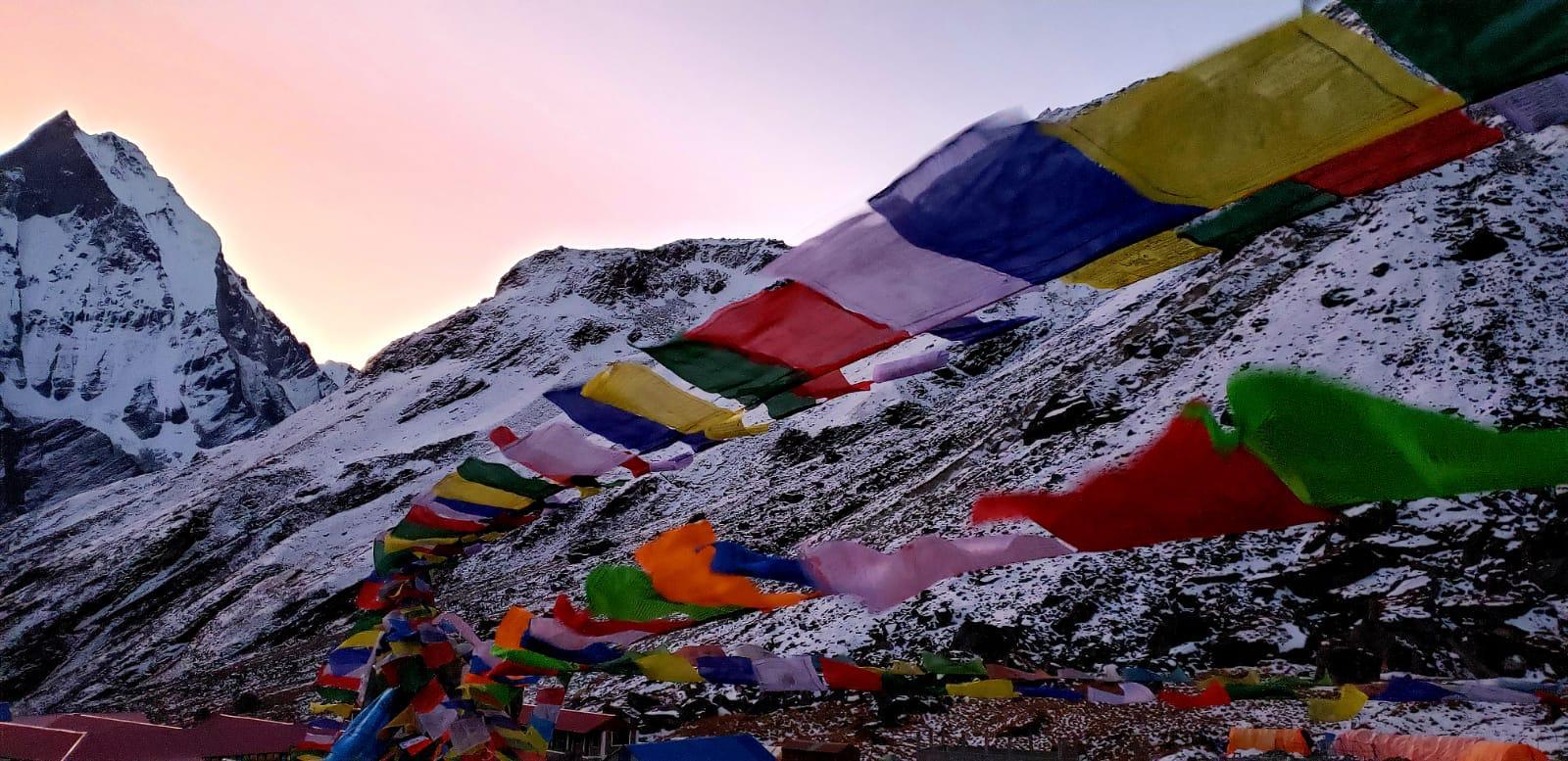
As the trail weaves through Rai and Sherpa villages, prayer flags flutter above stone homes, and terraced fields disappear behind you. Crossing high passes and dense forests, you finally enter the untouched Hinku Valley.

Khote, set beside a glacial river, becomes your first true acclimatization hub. The air is thinner now, the mountains closer, and the pace slower—by design.

Day 7–10: Khote to Khare – When Mountains Take Over

Forests give way to alpine terrain. Glaciers appear. Snow peaks dominate the horizon.

Thangnak feels raw and dramatic, but Khare—Mera Peak Base Camp—is where everything becomes real.

Here, you:

  • Train with crampons and ice axes
  • Practice rope techniques
  • Rest, hydrate, and mentally prepare

Every step now has intention.

Day 11–12: High Camp – Touching the Edge

Crossing the Mera Glacier roped together, you move deliberately toward High Camp. The world below feels distant. Nights are quiet, stars impossibly bright.

This is not luxury in the traditional sense, it’s earned luxury. Simplicity, safety, and expert support become the highest form of comfort.

Summit Day: Standing Above the Himalayas

Day 13: Mera Peak Summit (6,476 m)

You wake before midnight. Headlamps glow like constellations moving across ice.

The climb is steady, controlled, and calm. As the sun rises, the Himalayas reveal themselves in full:

  • Everest
  • Lhotse
  • Makalu
  • Cho Oyu
  • Kanchenjunga

Few places on Earth offer such a panorama.

Standing on the summit of Mera Peak isn’t about conquering a mountain—it’s about realizing how far you’ve come.

After photos and quiet celebration, you descend safely back to Khare.

Day 14–16: The Way Back to Lukla

With altitude behind you, the return feels lighter. Laughter returns easily. Meals taste better. Lukla greets you with celebration and reflection.

You arrived as a trekker. You leave as a climber.

Mera Peak Climbing – Pricing Overview: Mera Peak Climbing Explained 2026

Mera Peak Climbing Cost (Indicative)

Package TypePrice (USD)
Full Board (Group)USD 2,300 – 2,700
Private / Luxury ServiceUSD 2,900 – 3,500
Custom / Expedition-StyleOn Request

Price Includes:

  • Domestic flights (Kathmandu–Lukla–Kathmandu)
  • Experienced climbing guide (IFMGA / NMA trained)
  • Porters, cooks, and high-camp staff
  • Teahouses & full board meals
  • Camping gear (tents, ropes, safety equipment)
  • Mera Peak permit & park fees
  • Pre-climb training and summit support

Packing List: Mera Peak Climbing Explained 2026

Clothing

  • Down jacket (–20°C rated)
  • Waterproof shell jacket & pants
  • Thermal base layers (top & bottom)
  • Fleece or softshell mid-layers
  • Insulated gloves + liner gloves
  • Warm hat & sun hat

Mountaineering Gear

  • Double or insulated mountaineering boots
  • Crampons
  • Ice axe
  • Climbing harness
  • Helmet
  • Ascender (Jumar)
    (All technical gear can be hired in Kathmandu)

Accessories

  • Sleeping bag (–20°C to –30°C)
  • Sunglasses (UV protection)
  • Headlamp + spare batteries
  • Trekking poles
  • Personal first-aid & medications

Altitude Chart: Mera Peak Route: Mera Peak Climbing Explained 2026

LocationElevation
Lukla2,860 m
Paiya2,730 m
Panggom2,846 m
Khote3,600 m
Thangnak4,350 m
Khare (Base Camp)5,045 m
High Camp5,800 m
Mera Peak Summit6,476 m

Frequently Asked Questions (FAQs): Mera Peak Climbing Explained 2026

Is Mera Peak suitable for beginners?

Yes, fit trekkers with no prior climbing experience can attempt Mera Peak with proper training and a guided expedition.

How difficult is Mera Peak?

Technically moderate. The main challenge is altitude, not climbing difficulty.

Do I need prior mountaineering experience?

No, but prior high-altitude trekking experience is strongly recommended.

What is the summit success rate?

With proper acclimatization and weather, success rates are very high (70–90%).

Can I hire gear in Nepal?

Yes. Kathmandu has excellent rental options for all technical equipment.

Ready to Climb Mera Peak? Mera Peak Climbing Explained 2026

If you’re looking for:

  • A safe, well-paced route
  • Expert local guides
  • Flexible dates and private options
  • A life-changing Himalayan summit

Contact us today to receive:

  • A personalized itinerary
  • Best season advice
  • Detailed cost breakdown
  • Group or private departure options

Mera Peak Climbing Explained 2026 for Non-Mountaineers and Trekkers

When people hear the word “peak climb,” they often imagine steep ice walls, technical rope work, and years of mountaineering experience. Mera Peak (6,476 m) breaks that myth completely.
It is one of the most achievable 6,000-meter peaks in the world, designed by nature for strong trekkers not professional climbers.

If you can trek for several days at altitude and are willing to learn a few basic skills, Mera Peak is within reach.

Why Mera Peak Is Ideal for Non-Mountaineers? Mera Peak Climbing Explained 2026

Mera Peak is often described as a “trekking peak with a summit day.” Here’s why it works so well for first-time climbers:

  • No technical rock climbing
  • No vertical ice walls
  • Gentle glacier gradients
  • Ropes used mainly for safety
  • Slow, acclimatization-focused itinerary

What matters most is endurance, mental strength, and altitude adaptation, not prior climbing credentials.

Trekking Comes First, Climbing Comes Last: Mera Peak Climbing Explained 2026

More than 80% of the Mera Peak journey is pure trekking.

You walk through:

  • Remote Sherpa villages
  • Dense rhododendron and pine forests
  • Wide alpine valleys
  • High Himalayan passes
  • Glacier-fed rivers and yak pastures

The actual “climb” only begins near the end after your body has already adapted to the altitude.

For trekkers, this feels like a natural progression, not a sudden leap into mountaineering.

What Kind of Fitness Do You Really Need? Mera Peak Climbing Explained 2026

You do not need:

  • Prior summit experience
  • Advanced climbing skills
  • Extreme upper-body strength

You do need:

  • Comfort with 5–7 hours of walking per day
  • Basic cardiovascular fitness
  • The ability to hike uphill with a backpack
  • Mental patience for slow days at altitude

If you’ve completed treks like:

  • Everest Base Camp
  • Annapurna Base Camp
  • Langtang Valley
  • Manaslu Circuit

…then you already have the right foundation.

But I’ve Never Used Crampons or an Ice Axe…

That’s completely normal and expected.

Before summit day, your guides will teach you:

  • How to walk in crampons
  • How to use an ice axe for balance
  • How to move safely on a rope team
  • How to pace yourself on snow

The terrain is non-technical, meaning you’re walking—not climbing vertically.

Think of it as learning to walk differently, not learning a dangerous new sport.

Summit Day: Challenging but Not Technical

Summit day starts early (usually around midnight or 1 AM) and is the toughest part—but for endurance reasons, not technical ones.

Expect:

  • Slow, steady uphill walking on snow
  • Fixed ropes in steeper sections
  • Frequent breaks
  • A long but achievable push

At sunrise, the reward is extraordinary:
You stand higher than Mont Blanc, looking out over Everest, Makalu, Kanchenjunga, Cho Oyu, and Lhotse.

For many trekkers, this is their first true Himalayan summit—and often the most emotional moment of their lives.

Altitude: The Real Challenge (and Why It’s Managed Well)

Altitude—not climbing—is the main difficulty.

That’s why Mera Peak itineraries include:

  • Gradual ascent
  • Extra acclimatization days
  • A dedicated climbing training day
  • Conservative summit attempts

With proper pacing and guidance, most healthy trekkers adapt well.

What Mera Peak Is Not

Let’s clear up a few misconceptions:

  • Not a technical mountaineering expedition
  • Not suitable for rushed itineraries
  • Not about speed or strength
  • Not for people ignoring altitude advice

Mera Peak rewards patience, discipline, and respect for the mountains.

Who Should Consider Mera Peak?

Mera Peak is perfect if you are:

  • A trekker wanting a first summit
  • An adventurer seeking something beyond base camps
  • A non-mountaineer curious about high-altitude climbing
  • Someone who values scenery, isolation, and achievement over risk

Final Thoughts: A Bridge Between Trekking and Climbing

Mera Peak is not about becoming a mountaineer overnight.
It’s about stepping slightly beyond trekking, guided carefully, safely, and responsibly.

For non-mountaineers, it offers something rare:

  • A real Himalayan summit
  • Without technical intimidation
  • Without extreme risk
  • With lifelong memories

If you can trek, you can train.
If you can train, you can climb Mera Peak.

Mera Peak is not just a climb, it’s a milestone.
And we’re here to take you there.