Mera Peak Climbing – 10 most common mistakes first-time climbers make (And How to Avoid Them)

Mera Peak Climbing

Mera Peak Climbing (6,476m) is one of the best ways to experience high-altitude mountaineering in Nepal. As Nepal’s highest trekking peak, it attracts trekkers from around the world who are ready to step beyond classic trekking routes and into true Himalayan climbing.

However, many first-time Mera Peak climbers underestimate the challenges involved. At high altitude, small mistakes can have a big impact on safety, comfort, and summit success. Based on our experience guiding Mera Peak expeditions, here are the 10 most common mistakes first-time climbers make and how professional planning helps avoid them.

1. Underestimating the Altitude of Mera Peak Climbing

Although Mera Peak is considered a non-technical climb, 6,476 meters is extreme altitude. Oxygen levels are significantly lower, and even fit trekkers can struggle above 5,500m.

Our approach:
We design itineraries with gradual altitude gain, proper acclimatization days, and continuous guide monitoring to help your body adapt safely.

2. Choosing a Short or Rushed Itinerary

Trying to complete Mera Peak too quickly is one of the main reasons climbers fail to summit or experience altitude issues.

Our approach:
We recommend 16–18 day itineraries, allowing sufficient rest days and flexibility for weather and acclimatization.

3. Inadequate Physical Preparation

Mera Peak requires long trekking days, cold conditions, and endurance at altitude. Many climbers arrive without proper training.

Our approach:
We provide a detailed pre-trip fitness and training guide so climbers arrive physically and mentally prepared.

4. Ignoring Acclimatization Guidelines

Skipping acclimatization hikes or hiding early symptoms of altitude discomfort can be dangerous.

Our approach:
Our guides follow strict acclimatization protocols, encourage open communication, and prioritize client health over summit pressure.

5. Wearing Incorrect Mountaineering Boots

Lightweight trekking boots are not suitable for Mera Peak, especially on summit day when temperatures are extremely low.

Our approach:
We advise all climbers on proper double or insulated high-altitude boots and equipment well before arrival.

6. Poor Cold-Weather Clothing Choices

Temperatures on Mera Peak can drop dramatically, particularly during early morning summit pushes.

Our approach:
We provide a complete gear checklist and rental options in Kathmandu to ensure climbers are fully equipped for extreme cold.

7. Skipping Technical Skills Practice

Although Mera Peak is not highly technical, climbers must be comfortable with crampons, harnesses, and fixed ropes.

Our approach:
We include basic mountaineering training at Khare, covering glacier travel, rope techniques, and summit safety procedures.

8. Choosing the Cheapest Mera Peak Climbing Package

Low-cost expeditions often compromise on guide experience, acclimatization days, safety equipment, or logistics.

Our approach:
We focus on safety, experienced local guides, quality equipment, and proper support, ensuring a responsible and successful climb.

9. Not Planning for Weather Delays

High-altitude weather in the Himalayas is unpredictable. Fixed schedules without contingency days often lead to rushed or unsafe decisions.

Our approach:
Our itineraries include buffer days to wait for the safest summit window.

10. Measuring Success Only by the Summit

Focusing solely on reaching the top can lead to unnecessary risk. The mountain always decides.

Our approach:
We emphasize a safety-first, experience-focused approach, where a well-managed climb and safe return define success.

Why Climb Mera Peak Climbing with a Professional Operator?

When properly planned, Mera Peak is an achievable and deeply rewarding climb. A professional guiding team ensures:

  • Safe acclimatization
  • Experienced climbing guides
  • Proper equipment and logistics
  • Emergency preparedness
  • Higher summit success rates

Choosing the right operator makes the difference between a stressful experience and a truly unforgettable Himalayan adventure.

Plan Your Mera Peak Climbing with Confidence

If you are planning your first Mera Peak climb, expert guidance, proper acclimatization, and responsible planning are essential. With the right preparation, Mera Peak becomes the perfect introduction to high-altitude mountaineering in Nepal.

Contact us today to receive a detailed itinerary, gear list, and personalized advice for your Mera Peak expedition.

1. Common Mera Peak Mistakes at a Glance

  • Rushing the itinerary
  • Underestimating altitude (6,476m)
  • Inadequate fitness and training
  • Wrong boots and cold-weather gear
  • Poor acclimatization habits
  • Choosing budget operators over safety

Pro tip: A well-planned itinerary and experienced guides significantly improve summit success and safety.

2. This guide is ideal for:

  • First-time Mera Peak climbers
  • Strong trekkers moving into mountaineering
  • Everest Base Camp trekkers planning a higher goal
  • Climbers comparing Mera Peak vs Island Peak

3. Mera Peak Climbing Difficulty Explained

  • Altitude: Very high (major challenge)
  • Technical level: Moderate
  • Fitness required: High endurance
  • Climbing skills: Basic (crampons, rope use)
  • Best for: First-time 6,000m climbers

4. Common Gear Mistakes on Mera Peak Climbing

  • Using trekking boots instead of mountaineering boots
  • Inadequate down jacket for summit day
  • Poor glove layering (cold hands = failed summit)
  • Sleeping bag not rated for extreme cold

Packing list or gear guide page.

5. Why Proper Itinerary Design Matters


A typical safe Mera Peak itinerary includes

  • Gradual ascent through the Hinku Valley
  • Acclimatization days at Khote and Khare
  • Pre-climb training day at Khare
  • High Camp setup before summit push
  • Buffer day for weather

6. How Professional Expeditions Reduce Risk

  • Certified climbing guides
  • Fixed ropes on summit section
  • Emergency oxygen availability
  • First-aid and altitude response training
  • Clear helicopter evacuation procedures

7. Avoiding Seasonal Mistakes

  • Best seasons: Spring (Mar–May), Autumn (Sep–Nov)
  • Avoid: Monsoon and extreme winter conditions

Many mistakes happen simply because climbers choose the wrong season.

8. Frequently Asked Questions

Is Mera Peak suitable for beginners?

Yes, for strong trekkers with proper training and acclimatization.

Do I need prior climbing experience?

No advanced experience is required, but basic training is provide

How long does Mera Peak climbing take?

Typically 17–19 days, depending on the itinerary.

What happens if I cannot summit?

Safety comes first. Turning back is sometimes the correct decision.

9. Plan Your Mera Peak Climb the Right Way

Avoiding common mistakes starts with proper planning. Our experienced local guides design itineraries focused on safety, acclimatization, and long-term success in the Himalayas.

Contact us for a detailed Mera Peak itinerary, training advice, and packing checklist.

Mera Peak Climbing Explained 2026: From Lukla to Summit Day

Mera Peak Climbing Explained 2026

Mera Peak Climbing Explained 2026: From Lukla to Summit Day is not just a guide, it’s the story of a journey that begins with a short mountain flight and ends on one of the most breathtaking viewpoints in the Himalayas.

At 6,476 meters, Mera Peak is Nepal’s highest trekking peak. Yet what makes it truly special is not just the altitude, it’s the gradual unfolding of landscapes, cultures, silence, and self-belief as you move step by step toward the summit.

This is where trekking slowly transforms into mountaineering—and where many climbers experience their first Himalayan summit.

The Journey at a Glance: Mera Peak Climbing Explained 2026

  • Region: Remote Hinku Valley, Everest region
  • Maximum Elevation: 6,476 m (Mera Peak Summit)
  • Trip Duration: 16–20 days
  • Accommodation: Teahouses + High-altitude camps
  • Best Seasons: April – May | October–November
  • Ideal For: Fit trekkers, first-time climbers, photographers, adventure seekers

From Lukla – Where the Story Begins: Mera Peak Climbing Explained 2026

Day 1–2: Lukla to Paiya – Leaving the Crowds Behind

The adventure begins with a thrilling mountain flight to Lukla. While most trekkers turn left toward Everest Base Camp, you turn right into quieter trails and deeper valleys.

Forested ridges, suspension bridges, and the first taste of isolation mark these early days. Nights are spent in small teahouses where warmth comes from both the fire and the smiles of your hosts.

This is where the noise fades—and the journey inward begins.

Day 3–6: Through Panggom to Khote – Into the Wild

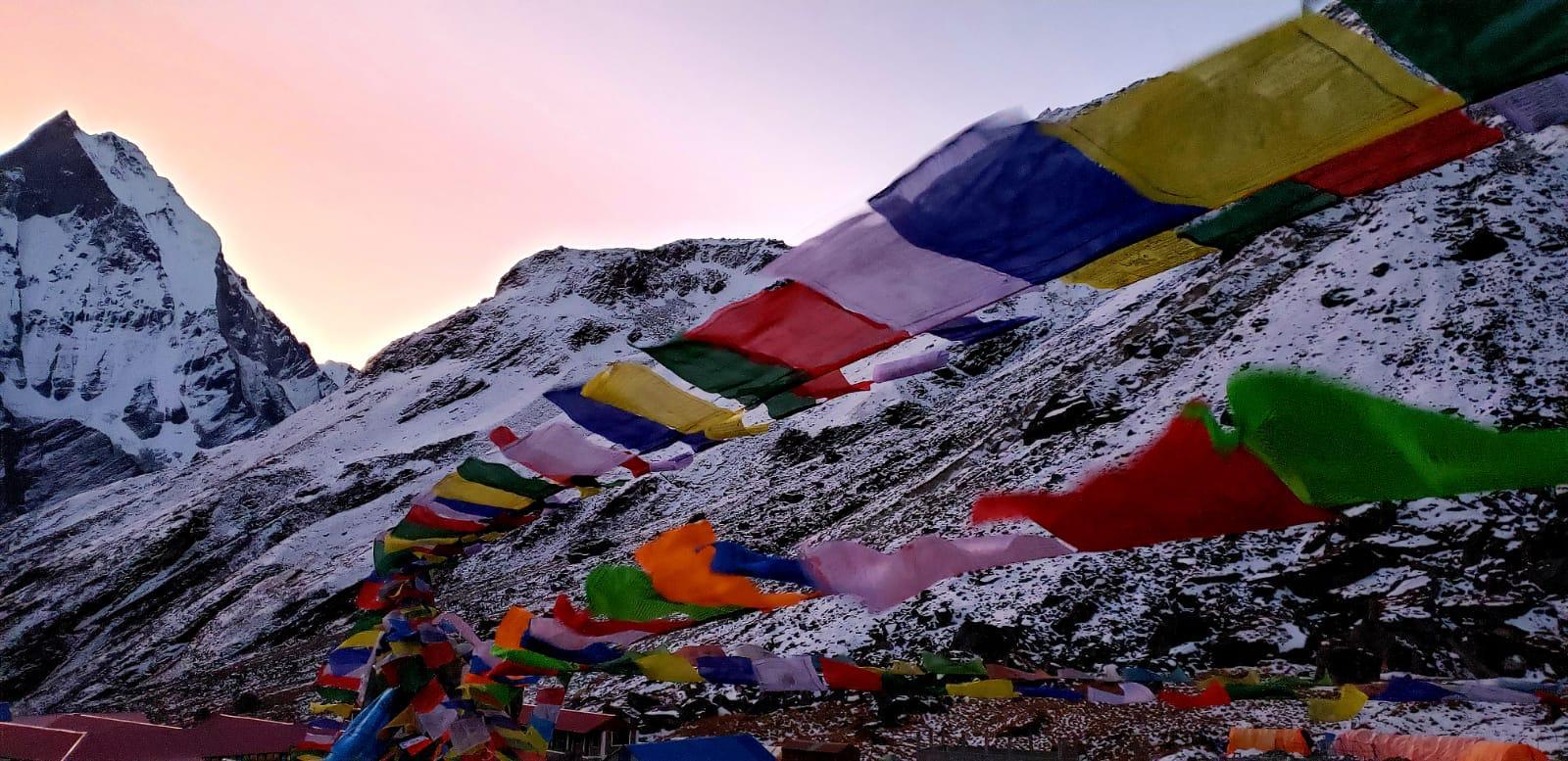
As the trail weaves through Rai and Sherpa villages, prayer flags flutter above stone homes, and terraced fields disappear behind you. Crossing high passes and dense forests, you finally enter the untouched Hinku Valley.

Khote, set beside a glacial river, becomes your first true acclimatization hub. The air is thinner now, the mountains closer, and the pace slower—by design.

Day 7–10: Khote to Khare – When Mountains Take Over

Forests give way to alpine terrain. Glaciers appear. Snow peaks dominate the horizon.

Thangnak feels raw and dramatic, but Khare—Mera Peak Base Camp—is where everything becomes real.

Here, you:

  • Train with crampons and ice axes
  • Practice rope techniques
  • Rest, hydrate, and mentally prepare

Every step now has intention.

Day 11–12: High Camp – Touching the Edge

Crossing the Mera Glacier roped together, you move deliberately toward High Camp. The world below feels distant. Nights are quiet, stars impossibly bright.

This is not luxury in the traditional sense, it’s earned luxury. Simplicity, safety, and expert support become the highest form of comfort.

Summit Day: Standing Above the Himalayas

Day 13: Mera Peak Summit (6,476 m)

You wake before midnight. Headlamps glow like constellations moving across ice.

The climb is steady, controlled, and calm. As the sun rises, the Himalayas reveal themselves in full:

  • Everest
  • Lhotse
  • Makalu
  • Cho Oyu
  • Kanchenjunga

Few places on Earth offer such a panorama.

Standing on the summit of Mera Peak isn’t about conquering a mountain—it’s about realizing how far you’ve come.

After photos and quiet celebration, you descend safely back to Khare.

Day 14–16: The Way Back to Lukla

With altitude behind you, the return feels lighter. Laughter returns easily. Meals taste better. Lukla greets you with celebration and reflection.

You arrived as a trekker. You leave as a climber.

Mera Peak Climbing – Pricing Overview: Mera Peak Climbing Explained 2026

Mera Peak Climbing Cost (Indicative)

Package TypePrice (USD)
Full Board (Group)USD 2,300 – 2,700
Private / Luxury ServiceUSD 2,900 – 3,500
Custom / Expedition-StyleOn Request

Price Includes:

  • Domestic flights (Kathmandu–Lukla–Kathmandu)
  • Experienced climbing guide (IFMGA / NMA trained)
  • Porters, cooks, and high-camp staff
  • Teahouses & full board meals
  • Camping gear (tents, ropes, safety equipment)
  • Mera Peak permit & park fees
  • Pre-climb training and summit support

Packing List: Mera Peak Climbing Explained 2026

Clothing

  • Down jacket (–20°C rated)
  • Waterproof shell jacket & pants
  • Thermal base layers (top & bottom)
  • Fleece or softshell mid-layers
  • Insulated gloves + liner gloves
  • Warm hat & sun hat

Mountaineering Gear

  • Double or insulated mountaineering boots
  • Crampons
  • Ice axe
  • Climbing harness
  • Helmet
  • Ascender (Jumar)
    (All technical gear can be hired in Kathmandu)

Accessories

  • Sleeping bag (–20°C to –30°C)
  • Sunglasses (UV protection)
  • Headlamp + spare batteries
  • Trekking poles
  • Personal first-aid & medications

Altitude Chart: Mera Peak Route: Mera Peak Climbing Explained 2026

LocationElevation
Lukla2,860 m
Paiya2,730 m
Panggom2,846 m
Khote3,600 m
Thangnak4,350 m
Khare (Base Camp)5,045 m
High Camp5,800 m
Mera Peak Summit6,476 m

Frequently Asked Questions (FAQs): Mera Peak Climbing Explained 2026

Is Mera Peak suitable for beginners?

Yes, fit trekkers with no prior climbing experience can attempt Mera Peak with proper training and a guided expedition.

How difficult is Mera Peak?

Technically moderate. The main challenge is altitude, not climbing difficulty.

Do I need prior mountaineering experience?

No, but prior high-altitude trekking experience is strongly recommended.

What is the summit success rate?

With proper acclimatization and weather, success rates are very high (70–90%).

Can I hire gear in Nepal?

Yes. Kathmandu has excellent rental options for all technical equipment.

Ready to Climb Mera Peak? Mera Peak Climbing Explained 2026

If you’re looking for:

  • A safe, well-paced route
  • Expert local guides
  • Flexible dates and private options
  • A life-changing Himalayan summit

Contact us today to receive:

  • A personalized itinerary
  • Best season advice
  • Detailed cost breakdown
  • Group or private departure options

Mera Peak Climbing Explained 2026 for Non-Mountaineers and Trekkers

When people hear the word “peak climb,” they often imagine steep ice walls, technical rope work, and years of mountaineering experience. Mera Peak (6,476 m) breaks that myth completely.
It is one of the most achievable 6,000-meter peaks in the world, designed by nature for strong trekkers not professional climbers.

If you can trek for several days at altitude and are willing to learn a few basic skills, Mera Peak is within reach.

Why Mera Peak Is Ideal for Non-Mountaineers? Mera Peak Climbing Explained 2026

Mera Peak is often described as a “trekking peak with a summit day.” Here’s why it works so well for first-time climbers:

  • No technical rock climbing
  • No vertical ice walls
  • Gentle glacier gradients
  • Ropes used mainly for safety
  • Slow, acclimatization-focused itinerary

What matters most is endurance, mental strength, and altitude adaptation, not prior climbing credentials.

Trekking Comes First, Climbing Comes Last: Mera Peak Climbing Explained 2026

More than 80% of the Mera Peak journey is pure trekking.

You walk through:

  • Remote Sherpa villages
  • Dense rhododendron and pine forests
  • Wide alpine valleys
  • High Himalayan passes
  • Glacier-fed rivers and yak pastures

The actual “climb” only begins near the end after your body has already adapted to the altitude.

For trekkers, this feels like a natural progression, not a sudden leap into mountaineering.

What Kind of Fitness Do You Really Need? Mera Peak Climbing Explained 2026

You do not need:

  • Prior summit experience
  • Advanced climbing skills
  • Extreme upper-body strength

You do need:

  • Comfort with 5–7 hours of walking per day
  • Basic cardiovascular fitness
  • The ability to hike uphill with a backpack
  • Mental patience for slow days at altitude

If you’ve completed treks like:

  • Everest Base Camp
  • Annapurna Base Camp
  • Langtang Valley
  • Manaslu Circuit

…then you already have the right foundation.

But I’ve Never Used Crampons or an Ice Axe…

That’s completely normal and expected.

Before summit day, your guides will teach you:

  • How to walk in crampons
  • How to use an ice axe for balance
  • How to move safely on a rope team
  • How to pace yourself on snow

The terrain is non-technical, meaning you’re walking—not climbing vertically.

Think of it as learning to walk differently, not learning a dangerous new sport.

Summit Day: Challenging but Not Technical

Summit day starts early (usually around midnight or 1 AM) and is the toughest part—but for endurance reasons, not technical ones.

Expect:

  • Slow, steady uphill walking on snow
  • Fixed ropes in steeper sections
  • Frequent breaks
  • A long but achievable push

At sunrise, the reward is extraordinary:
You stand higher than Mont Blanc, looking out over Everest, Makalu, Kanchenjunga, Cho Oyu, and Lhotse.

For many trekkers, this is their first true Himalayan summit—and often the most emotional moment of their lives.

Altitude: The Real Challenge (and Why It’s Managed Well)

Altitude—not climbing—is the main difficulty.

That’s why Mera Peak itineraries include:

  • Gradual ascent
  • Extra acclimatization days
  • A dedicated climbing training day
  • Conservative summit attempts

With proper pacing and guidance, most healthy trekkers adapt well.

What Mera Peak Is Not

Let’s clear up a few misconceptions:

  • Not a technical mountaineering expedition
  • Not suitable for rushed itineraries
  • Not about speed or strength
  • Not for people ignoring altitude advice

Mera Peak rewards patience, discipline, and respect for the mountains.

Who Should Consider Mera Peak?

Mera Peak is perfect if you are:

  • A trekker wanting a first summit
  • An adventurer seeking something beyond base camps
  • A non-mountaineer curious about high-altitude climbing
  • Someone who values scenery, isolation, and achievement over risk

Final Thoughts: A Bridge Between Trekking and Climbing

Mera Peak is not about becoming a mountaineer overnight.
It’s about stepping slightly beyond trekking, guided carefully, safely, and responsibly.

For non-mountaineers, it offers something rare:

  • A real Himalayan summit
  • Without technical intimidation
  • Without extreme risk
  • With lifelong memories

If you can trek, you can train.
If you can train, you can climb Mera Peak.

Mera Peak is not just a climb, it’s a milestone.
And we’re here to take you there.