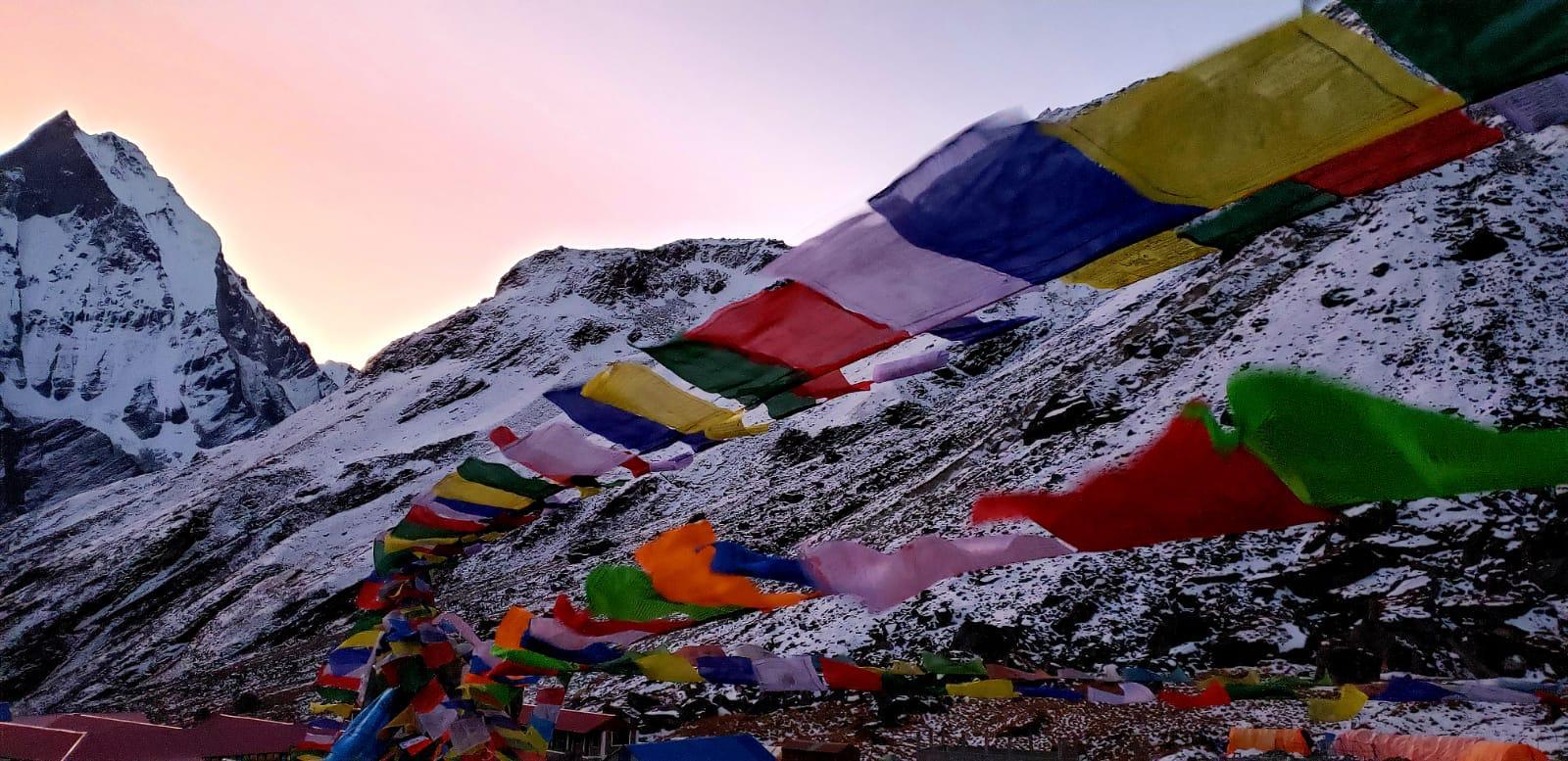
6,476 Reasons to Fall in Love with Mera Peak (Here Are 10 of Them)

Mera Peak

Mera peak – 6,476 Reasons to Fall in Love with isn’t just a catchy phrase, it reflects the magic of standing at 6,476 meters on Nepal’s highest trekking peak, surrounded by some of the world’s tallest mountains and an experience that changes how you see the Himalayas forever.

Mera Peak is often described as the perfect introduction to high-altitude mountaineering, but that simple label doesn’t do it justice. Below are 10 powerful reasons why Mera Peak captures the hearts of trekkers and climbers from around the world.

1. Nepal’s Highest Trekking Peak at 6,476m – Mera Peak

At 6,476 meters, Mera Peak is the highest trekking peak in Nepal. While it doesn’t require advanced technical climbing skills, the altitude alone makes the achievement deeply rewarding. Reaching this height gives you a true taste of Himalayan mountaineering without the extreme technical demands of 7,000m or 8,000m expeditions.

2. One of the Best First 6,000m Peaks – Mera Peak

Mera Peak is widely considered the best first Himalayan peak. The climb involves glacier travel, basic crampon use, rope techniques, and an ice axe—making it ideal for beginners who want to step into mountaineering in a controlled, guided environment.

No prior climbing experience is required, but good fitness and preparation are essential.

3. Jaw-Dropping Views of Five 8,000m Giants from Mera Peak

From the summit, you’re rewarded with one of the widest panoramic views in Nepal. On a clear day, you can see:

  • Everest (8,848m)
  • Lhotse (8,516m)
  • Makalu (8,485m)
  • Cho Oyu (8,188m)
  • Kangchenjunga (8,586m, in the distance)

Very few peaks in the world offer such an incredible lineup in a single view.

4. A Remote and Less-Crowded Route – Mera Peak

Unlike Everest Base Camp or Annapurna Circuit, this Peak route is quieter and more remote. After leaving Lukla, the trail heads into the less-traveled Hinku Valley, where you’ll experience peaceful forests, isolated villages, and untouched alpine landscapes.

This sense of wilderness is a major reason climbers fall in love with Mera Peak.

5. Gradual Acclimatization for Better Safety

The itineraries are designed with excellent acclimatization profiles. The slow ascent through villages like Paiya, Panggom, and Khote allows your body to adapt properly to altitude, reducing the risk of Acute Mountain Sickness (AMS).

Extra acclimatization days at Khare and Mera High Camp play a crucial role in summit success.

6. A True Expedition Experience without the Chaos

While still accessible, it feels like a real Himalayan expedition. You’ll stay in teahouses during the trek and transition to tented camps higher up. Fixed ropes, early-morning summit pushes, glacier crossings, and teamwork all combine to create an authentic mountaineering experience—without the extreme logistics of bigger peaks.

7. Ideal for Training and Future Big Mountains

Many climbers use Mera Peak as preparation for higher goals such as Island Peak, Ama Dablam, or even Everest. The altitude, endurance demands, and cold conditions make it excellent physical and mental training.

It builds confidence at high altitude, something no gym or lower trek can replicate.

8. Spring and Autumn Offer Near-Perfect Conditions

The best seasons for Mera Peak climbing are:

  • Spring (March–May): Stable weather, warmer temperatures, clear summit mornings
  • Autumn (September–November): Crisp air, excellent visibility, and dramatic mountain views

During these seasons, summit success rates are high when proper acclimatization and experienced guides are involved.

9. Strong Safety Record with Professional Guidance

Mera Peak has a good safety record when climbed with licensed guides and a well-planned itinerary. Professional expeditions include:

  • Experienced climbing guides
  • Fixed ropes on the summit section
  • Emergency oxygen and first-aid kits
  • Clear evacuation protocols

This makes it a responsible and safe choice for motivated trekkers stepping into mountaineering.

10. A Personal Victory That Stays with You Forever

Summiting Mera Peak isn’t just about altitude, it’s about self-belief. The long days, cold mornings, and final push in the dark test your patience and determination. Standing on the summit at sunrise, with the Himalayas glowing around you, is a moment that stays with you for life.

Many climbers say Mera Peak is the moment they truly fell in love with the mountains.

Practical Information: What You Should Know

Typical Duration

  • 13–18 days (Kathmandu to Kathmandu)

Difficulty Level

  • Physically demanding due to altitude
  • Technically moderate
  • Requires strong cardiovascular fitness

Required Permits

  • Mera Peak Climbing Permit
  • Makalu Barun National Park Permit

Accommodation & Meals

  • Teahouses during the trek
  • Tented camps above Khare
  • Hot meals prepared by support staff at higher camps

Cost Range

  • Generally, USD 2,200–3,500, depending on services, group size, and inclusions

Final Thoughts

Mera Peak is not the hardest mountain in Nepal, but it might be one of the most rewarding. It offers altitude, beauty, solitude, and challenge in perfect balance. Whether you’re a strong trekker dreaming of your first summit or an aspiring mountaineer building experience, there are truly 6,476 reasons to fall in love with Mera Peak and these 10 are just the beginning.

Climbing 6000m peaks in Nepal in the spring for novices and intermediates

Island Peak

An overview of climbing 6000-meter peaks in Nepal in the spring for novices and intermediates. Many adventurous people dream of scaling the Nepalese Himalayas. These summits, which may be as high as 8,000 meters, are difficult to climb and need careful planning and preparation. But for novices and experts, scaling summits of about 6,000 meters may be a fulfilling experience, particularly in Nepal’s springtime.

Since the weather is pleasant and the snow is hard enough for climbing, March through May and mid-October through mid-December are the ideal times to climb these peaks. Clear vistas and amiable hikers may be found throughout the paths during this time.

The top beginner and intermediate 6,000-meter peaks in Nepal to climb in the spring will be explored in this blog.

Beginners/novice

Mera Peak (6,476 meters)

The highest trekking peak in Nepal is Mera Peak, which is situated in the Makalu region. For novice climbers who like to feel the excitement of climbing in a secluded location, the peak is an excellent option. A stunning panorama of the surrounding peaks, including Mount Everest, Lhotse, and Makalu, can be seen from the summit of the difficult climb, which includes steep ice and snow slopes.

Lobuche East (6,119 meters)

Lobuche East 6119M is a well-known summit in the Khumbu region. The path is rather simple and is regarded as a moderate ascent. A stunning view of the neighboring peaks, including as Mount Everest, Lhotse, and Nuptse, can be seen from the summit. The Gokyo and Everest Base Camp hike leads to the summit.

Island Peak (6,189 meters)

Island Peak, often called Imja Tse, is a well-liked climbing destination. With a modest degree of technical difficulty, it is regarded as one of the most accessible 6,000-meter summits. The well-known Everest Base Camp hike leads to the summit, which is situated in the Khumbu area.

The ascent is rather easy, and the top offers a broad perspective of the neighboring peaks, including Ama Dablam and Lhotse Sharr.

Chulu Far East (6,019 meters)

The Annapurna circuit region is home to the high-altitude hiking peak Chulu Far East. It’s a simple, non-difficult climb that even those without any prior technical climbing knowledge can do. However, the climb may be more difficult due to the steep terrain and scree slopes encountered throughout the approach. It is a lot like the journey to Mera Peak.

Climbers may experience the breathtaking natural splendor of the Annapurna area by following the Chulu Far East Peak climb schedule. In addition to the Tibetan plains to the north, the summit offers sweeping views of Annapurna II, III, and IV, Gangapurna, Manaslu 8163M, Pisang Peak, Chulu West Peak, and Dhaulagiri. You may also continue your journey by crossing the Thorong-la pass to reach the prohibited Kingdom of Upper Mustang and visiting the green Tilicho Lake, which is 4900 meters above sea level.

Yala Peak (5732 meters)

Yala Peak is located near the Tibetan border and is 5732 meters high. It is part of the Langtang Lirun Himal range. Because it is a non-technical climb, the peak is a great place for new climbers to get experience and learn about mountaineering.

At 4,500 meters above sea level, the expedition’s base camp provides breathtaking views of neighboring peaks, including Langtang Lirung, Lenpo Gang, Dorje Lakpa, and the majestic Sishapangma on the Tibetan side.

Intermediate

Chulu West Peak (6,419 meters)

The thrilling 6000-meter+ Chulu West Peak is located in Nepal’s midwestern region. There are fewer climbers and fewer visits to this summit. Climbers go via one of the most breathtaking hiking routes in the world as they set out from Ledar village to Chulu base camp, starting their ultimate climbing journey. With the Himlung Himal to the northeast and the spectacular Manaslu peak in the distance, the summit is set against the breathtaking background of the Annapurna massif range.

In conclusion, a great way to feel the exhilaration of Himalayan climbing is to ascend Nepal’s 6000-meter peaks in the spring. With stunning views of the surrounding landscapes and mountain peaks, the summits we highlighted above provide a strenuous but doable climb for both novices and experts. It should be noted that climbing any Himalayan mountain should not be done carelessly and that having the right equipment and an experienced guide are essential. Always remember to properly acclimate, enjoy yourself, follow the guide’s recommendations, and have a fantastic time climbing in the Himalayas.

Contact Us for More Details:

A Complete Mera Peak Climbing Guide

Mera Peak Climbing Package

Things to know about Mera peak | Mera Peak Facts

Mera peak administratively locates in Solukhumbu district of Sagarmatha zone, in Mahalangur section, Barun sub-section of eastern Nepal. Mera peak contains 3 main summits: Mera North 6,476m, Mera central 6,461m and Mera south 6,065m. In fact, almost entire climbers attempt to the central Mera peak 6,461m which is bit easy comparing to the other parts of Mera peak besides it’s very challenging and complicated to climb the north Mera peak so only few climbers dare to summit Mera peak. However, getting to point of summit is the achievement for Mera peak climbers. Likewise, five peaks above height of 8,000 m are noticed from summit including: Mt. Everest (highest peak of the world), Lhotse, Cho Oyu, Kanchenjunga and Makalu while numerous of others below 8,000 m are spotted throughout with snow caps.

View from Mera Peak

With 6,476 m of height, Mera Peak is a great pinnacle pinpointed in Sagarmatha zone, south to Everest. Heading up towards Mera Peak Base Camp and after that onwards along awesome glaciers takes to the summit itself. Sweeping into the view, with a magnificent display from the top unfolds 360° sight of throughout snowy kingdom together with awe-inspiring mountains of the region – including Mt. Everest, Lhotse, Cho Oyu, and Makalu.

mera peak pictures mera peak view

Check Mera Peak Climbing Package

Attractions of Mera peak climbing
  • Thrilling and spectacular Himalayan flight to Tenzing Hillary Airport (included on list of world’s adventurous airport).
  • A visit to 200 years old monastery nearby Tangnag with Mera peak scripted rock en route.
  • Experience of tented camp (at base camps of Mera peak) and Glacial walk at (Mera Glacier).
  • Mountain climbing opportunity (Mera peak) with 360° view from high elevation including five peaks holding height above 8,000 m.
  • Morning view from high elevation of sunrise striking on those unbelievable zigzag peaks of decorated Himalayas.

Check Mera Peak Climbing Package

mera peak base camp picture mera peak climb

Mera peak climbing route/trail

Actually, there are opposed chains to achieve and conclude the summit of Mera peak based upon the different packages designed but normally standard route is followed by maximum scalars. Mera Peak climbing trip develops with thrilling and wonderful flight to the mountain airstrip of Lukla (hazardous airstrip of the planet). We at that point stroll forward being completely passing through Lukla, Paiya, Pangkoma, Nigmsa, Chetra Khole, Kothe, Tangnang, Khare before achieving base camp of Mera peak. Therefore attending a climb, 360° landscape from lofty elevation including five peaks above height of 8,000 and many more below establishes the different sense. Likewise, pursuing the same earlier developed trail till the emerging destination normally trip ends.

mera peak base camp

Essential packing info’s for Mera peak climbing

Head wears: Climbing helmet, Head lamp, Glacier glasses, Neoprene face mask, ski goggles, warm head and neck covers.

Hand wears: Synthetic gloves, expedition gloves and hand warmers.

Foot wears: Hiking or trekking shoes, tennis shoes, camp boots, over boots, altitude liner, liner and woolen socks, vapor barrier socks and trekking socks.

Personal equipments: Expedition and trekking bag packs, toiletry bag, gears and other varieties according to your need.

Climbing gears: Ice axe, crampons, Alpine climbing harness, carabineers, ascender, belay device and adjustable 3 Section Ski.

These are the normal essential info’s, addition requirements can be customized by discussing with trekking guide to establish your climb more painless and effortless.

NOTE: FREE CLIMBING GEARS PROVIDED

mera peak views

Check Mera Peak Climbing Package

Mera peak climbing difficulty level

As, we already mentioned above that Mera Peak holds three different summits so due to that reason range of difficulty are also in different scales. On behalf of comparison, central peak is considered as the easiest and uncomplicated peak likewise Mera south is moderate and unexceptional peak and Mera north is the most difficult peak to encounter its summit. Normally being easy to ascend, most of the climbers conquer central peak and normal physical workout without experience is enough to ascend the center peak. South Mera peak demands normal trekking experiences with high range of stamina likewise North Mera Peak demands high range of climbing experience with same level of other requirements.

Mera peak death rate

Challenging Mera peak (6,476 m) is strenuous with lots of steps and many ups and downs. Though, climbing higher on Mera peak through lower realm of death zone 5,500 m/ 18,044ft is unpredictable, indeed there is very minimum death rate. Yearly thousands of climbers ascend Mera peak but deaths on Mera peak are noticed rarely.

mera peak climbing

Perfect time to climb Mera Peak | Mera Peak Climbing Season

Actually, central Mera peak can be ascended throughout a year excluding the time of monsoon (June to August) besides spring (March to May) and autumn (September to November) are considered as the ideal seasons to scale center Mera top likewise south Mera peak is also almost possible excluding monsoon for those who can adjust with cold but North Mera Peak is only possible to ascend at the time of spring and autumn. Truly, defending perspectives and happy with moving along catching the reasonable views are superb prizes of entire Mera crest, if climbed on spring.

mera peak weather

Check Mera Peak Climbing Package

Altitude sickness possibility and Importance of acclimatization Mera Peak

Relatively whole climbers are pursuing from a low hoisted area about equivalent to sea level. Other than that, our goal is to accomplish lofty equivalent to above 6,000 from ocean level so because of this reason there is tremendous opportunity to be caught the ill effects of height ailment issues if carelessness take place. Accordingly, appropriate spotlight on acclimatization assumes a tremendous part on prevail of desired goal in like manner more attention should be placed while targeting north Mera peak. Remember, neglecting acclimatization is the foremost reason to establish issues of altitude sickness.

Check Mera Peak Climbing Package

Perfect Package for achieving Mera peak

Due to different trekking course and trail, agencies are delineating contrast short to long packages for shutting the trip. Beginner climbers holding enough time can seize extended package to set up easy execute separated that short packages are honorable and commendable for those accomplished climbers holding less time yet whole packages aren’t lasting, packages can be tweaked according to the desire and want of potential climber’s. Besides if they are well close with territory than climbers can design their desired itinerary by self according to plan.

Mera Peak Climbing Itinerary

Day 01: Arrival day in Kathmandu (Altitude: 1,300m/4,264 ft. Meal: Dinner)
Day 02: Fly to Lukla & trek to Chutanga (Altitude: Chutanga: 3,450m/11,320 ft. Lukla: 2,800m/9,186 ft. Flight: 35 min Trek: 3/4 hrs. Meal: BLD)
Day 03: Trek to Tuli Kharka via Zatrwa La (Altitude: Tuli Kharka: 4,250m/13,944ft. Zatrwa la: 4600 m/14720 ft. Trek: 5/6 hrs. Meal: BLD)
Day 04: Trek to Gothey (Altitude: 3600m/11,812ft. Trek: 5/6 hrs. Meal: BLD)
Day 05: Trek to Thagnag (Altitude: 4,350m/14,272ft. Trek: 5/6 hrs. Meal: BLD)
Day 06: Acclimatization day at Thagnag (Altitude: 4,350m/14,272ft. Meal: BLD)
Day 07: Trek to Khare (Altitude: 5,025m/16,486ft. Trek: 3/4 hrs. Meal: BLD)
Day 08: Ice climbing practice near Khare (Altitude: 5,025m/16,486ft. Meal: BLD)
Day 09: Trek to Mera base camp (Altitude: Mera La : 5,415m/17,766ft. Base Camp: 5,350m/17,552ft. Trek: 3/4 hrs. Meal: BLD)
Day 10: Climb to Mera high camp (Altitude: 5,750m/18,865ft. Trek: Meal: BLD)
Day 11: Summit day and descend to Khare (Altitude: 6476m/21,241ft. Trek: 8/9 hrs. Meal: BLD)
Day 12: Contingency Day
Day 13: Trek to Gothey (Altitude: 3600m/11,812ft. Trek: 4/5 hrs. Meal: BLD)
Day 14: Trek to Tuli Kharka (Altitude: Tuli Kharka: 4,250m/13,944ft. Trek: 4/5 hrs. Meal: BLD)
Day 15: Trek to Lukla (Altitude: 2,800m/9,186 ft. Trek: 3/4 hrs. Meal: BLD)
Day 16: Fly back to Kathmandu (Altitude: 1350/4428 ft. Flight: 30 minutes Meal: B/D)
Day 17: Departure from Kathmandu (Altitude: 1350/4428 ft. Meal: B)

Check Mera Peak Climbing Package

Climbing Mera Peak with us

Safety: The most engaged reason uttered by potential and expert climbers in the wake of interfacing with us is profoundly secured and effective undertaking with safe takeoff.

Proper adjustment: It is anything but not a joke to discover the ideal destination for working efficient and effective acclimatization and camps. For that, climbing group can help to the pointed goal with real alteration.

Guide: Commitment of guide (characteristics holding with capable learning of all through space alongside high scope of English language) for building up climbing venture more great and wonderful.

Information: Truth be told, there are endless concealed attractions on the way holding distinctive certainties and accounts along missing is without a doubt disregarded while trekking with us.

I’m interested, Send Me Free Package Details