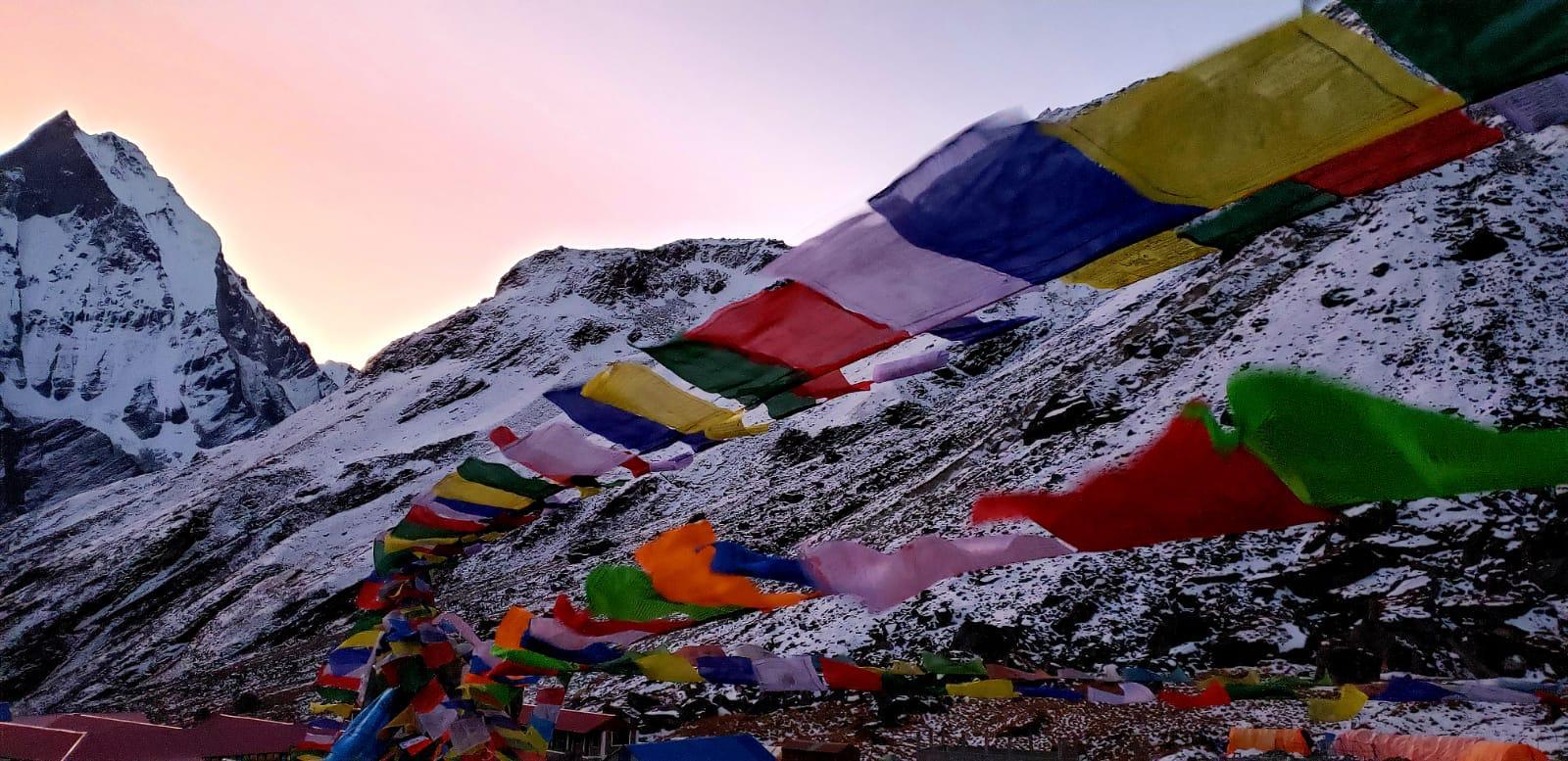


Lobuche Peak Difficulty Explained: Altitude, Training & a Truly Rewarding Adventure begins with a question many aspiring mountaineers ask is Lobuche Peak difficult, and am I capable of climbing it? The honest and encouraging answer is that Lobuche Peak is a challenging yet highly achievable Himalayan climb, especially for fit trekkers who prepare well and respect altitude.
Lobuche Peak: Where Trekkers Become Climbers
Lobuche Peak is often described as the moment when a trekker crosses an invisible line and truly becomes a climber. Nestled in the heart of the Everest region, this iconic 6,119-meter peak offers more than altitude it offers transformation. The journey begins on familiar trekking trails, but gradually introduces snow, ice, and technical terrain that demand new skills and confidence.
For many adventurers, Lobuche Peak is their first real mountaineering experience. Here, trekking boots meet crampons, and walking poles are replaced by ice axes. Under the guidance of experienced mountain professionals, climbers learn rope techniques, glacier travel, and summit strategy. It’s not about speed or strength alone—it’s about adapting, learning, and discovering what you’re capable of at high altitude.
By the time you step onto the summit ridge, you’re no longer just a trekker passing through the Himalayas you’re a climber standing among them.
Above the Khumbu Glacier: The Challenge of Lobuche Peak
Rising dramatically above the vast Khumbu Glacier, Lobuche Peak commands respect from every angle. The challenge here is not extreme technical difficulty, but the combination of altitude, terrain, and endurance. As climbers move higher, oxygen thins, temperatures drop, and every step requires focus and controlled breathing.
The route involves crossing glacial moraines, ascending steep snow slopes, and navigating exposed sections near the summit. The final climb, often completed in the early hours of the morning, is both demanding and exhilarating. Headlamps illuminate the frozen landscape as climbers steadily gain height, with Everest, Lhotse, and Nuptse towering silently nearby.
Above the Khumbu Glacier, the mountain tests patience and determination but rewards those who move steadily, listen to their bodies, and trust the process. It’s a challenge that feels earned, not overwhelming.
Lobuche Peak Climbing: More Than Just a Summit
Reaching the summit of Lobuche Peak is a powerful moment, but the true value of the climb goes far beyond standing at the top. The experience is about personal growth, resilience, and perspective. Long before summit day, climbers form strong bonds with their team, share stories in teahouses, and learn to move in harmony with the mountains.
The climb teaches respect for altitude, for weather, and for the strength of the human body when given time to adapt. Every acclimatization hike, every early morning start, and every careful step builds confidence that stays with you long after the expedition ends.
When you finally descend, the memories linger: the crunch of snow under crampons, the sunrise over the Himalayas, and the quiet pride of having pushed beyond your comfort zone. Lobuche Peak is not just a summit it’s a milestone in an adventurer’s journey, marking the beginning of a lifelong connection with the high mountains.
Understanding Lobuche Peak and Its Altitude Challenge : Lobuche Peak Difficulty Explained
Lobuche East Peak rises to an impressive 6,119 meters (20,075 ft) in Nepal’s Everest region, placing it firmly in the high-altitude mountaineering category. While it is not among the most technical peaks in the Himalayas, the thin air above 5,000 meters is the primary challenge.
As climbers ascend through the Khumbu Valley passing iconic places like Namche Bazaar, Dingboche, and Lobuche village the body must gradually adapt to lower oxygen levels. This is why well-designed itineraries include acclimatization days, which significantly reduce the risk of altitude sickness and improve summit success.
Key altitude facts:
Base Camp: approx. 4,950 m
High Camp: approx. 5,400 m
Summit: 6,119 m
With proper acclimatization, the altitude becomes manageable rather than overwhelming.
How Technical Is Lobuche Peak Climbing? Lobuche Peak Difficulty Explained
When it comes to technical difficulty, Lobuche Peak is considered moderately challenging. The climb involves:
- Steep snow slopes
- Glacier travel
- Use of crampons, ice axe, fixed ropes, and harness
The final summit ridge is the most demanding section, requiring steady footwork and mental focus rather than advanced climbing skills. The good news? You’ll receive pre-climb training at Base Camp, where experienced guides teach and refresh essential mountaineering techniques.
This makes Lobuche Peak an excellent first Himalayan peak for trekkers looking to step into mountaineering.
Training: How Fit Do You Need to Be? Lobuche Peak Difficulty Explained
Physical preparation plays a huge role in how difficult the climb feels. You don’t need to be a professional climber, but you should be comfortably fit and mentally resilient.
Recommended training focus (8–12 weeks before the climb):
Cardio endurance: hiking, stair climbing, cycling, or running
Leg strength: squats, lunges, step-ups
Core stability: planks and balance exercises
Backpack training: hiking with a loaded pack
Previous high-altitude trekking experience such as Everest Base Camp or Annapurna Base Camp is a big advantage, though not mandatory.
Mental Strength & Experience Level: Lobuche Peak Difficulty Explained
Lobuche Peak rewards climbers who are patient, positive, and adaptable. Summit day often starts around midnight and can last 8–10 hours round trip, testing determination more than technical ability.
Ideal candidates include:
- Fit trekkers seeking their first 6,000m peak
- Adventurers with basic snow and ice experience
- Those ready to challenge themselves beyond trekking
- A strong mindset, trust in your guide, and willingness to move at a steady pace make all the difference.
Why the Challenge Is Truly Worth It: Lobuche Peak Difficulty Explained
Despite the effort, Lobuche Peak delivers one of the most breathtaking summit experiences in Nepal. From the top, climbers are rewarded with panoramic views of:
- Mount Everest
- Lhotse
- Nuptse
- Ama Dablam
- The vast Khumbu Glacier
The sense of achievement standing above 6,000 meters surrounded by the world’s highest peaks is deeply empowering and unforgettable.
Final Verdict: Is Lobuche Peak Difficult?
Yes, Lobuche Peak is challenging but in the best possible way. With proper training, gradual acclimatization, and professional guidance, it is a safe, achievable, and incredibly rewarding adventure. It bridges the gap between trekking and technical mountaineering, making it a perfect goal for those ready to push their limits in the Himalayas.