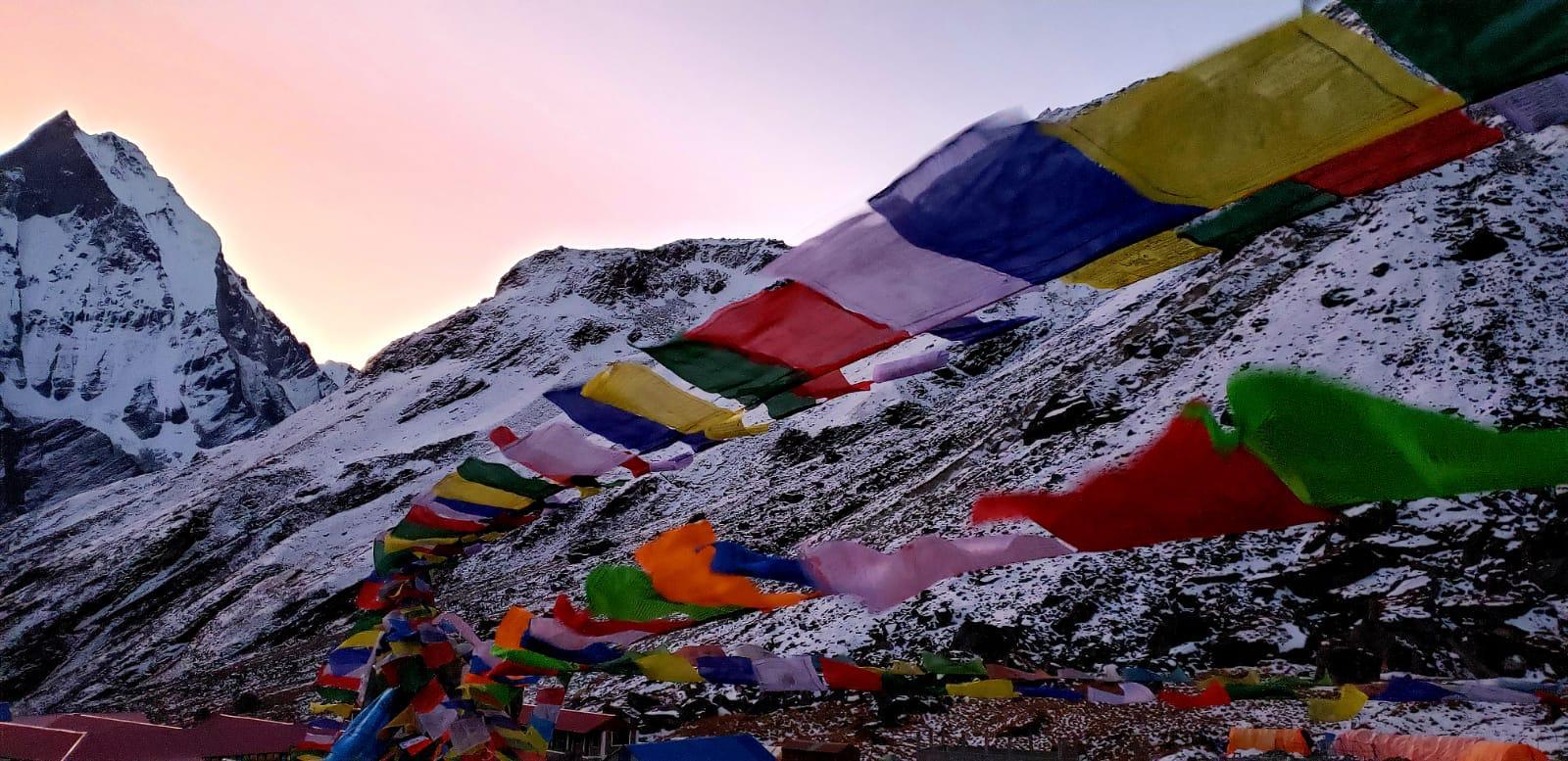


An overview of climbing 6000-meter peaks in Nepal in the spring for novices and intermediates. Many adventurous people dream of scaling the Nepalese Himalayas. These summits, which may be as high as 8,000 meters, are difficult to climb and need careful planning and preparation. But for novices and experts, scaling summits of about 6,000 meters may be a fulfilling experience, particularly in Nepal’s springtime.
Since the weather is pleasant and the snow is hard enough for climbing, March through May and mid-October through mid-December are the ideal times to climb these peaks. Clear vistas and amiable hikers may be found throughout the paths during this time.
The top beginner and intermediate 6,000-meter peaks in Nepal to climb in the spring will be explored in this blog.
Beginners/novice
Mera Peak (6,476 meters)
The highest trekking peak in Nepal is Mera Peak, which is situated in the Makalu region. For novice climbers who like to feel the excitement of climbing in a secluded location, the peak is an excellent option. A stunning panorama of the surrounding peaks, including Mount Everest, Lhotse, and Makalu, can be seen from the summit of the difficult climb, which includes steep ice and snow slopes.
Lobuche East (6,119 meters)
Lobuche East 6119M is a well-known summit in the Khumbu region. The path is rather simple and is regarded as a moderate ascent. A stunning view of the neighboring peaks, including as Mount Everest, Lhotse, and Nuptse, can be seen from the summit. The Gokyo and Everest Base Camp hike leads to the summit.
Island Peak (6,189 meters)
Island Peak, often called Imja Tse, is a well-liked climbing destination. With a modest degree of technical difficulty, it is regarded as one of the most accessible 6,000-meter summits. The well-known Everest Base Camp hike leads to the summit, which is situated in the Khumbu area.
The ascent is rather easy, and the top offers a broad perspective of the neighboring peaks, including Ama Dablam and Lhotse Sharr.
Chulu Far East (6,019 meters)
The Annapurna circuit region is home to the high-altitude hiking peak Chulu Far East. It’s a simple, non-difficult climb that even those without any prior technical climbing knowledge can do. However, the climb may be more difficult due to the steep terrain and scree slopes encountered throughout the approach. It is a lot like the journey to Mera Peak.
Climbers may experience the breathtaking natural splendor of the Annapurna area by following the Chulu Far East Peak climb schedule. In addition to the Tibetan plains to the north, the summit offers sweeping views of Annapurna II, III, and IV, Gangapurna, Manaslu 8163M, Pisang Peak, Chulu West Peak, and Dhaulagiri. You may also continue your journey by crossing the Thorong-la pass to reach the prohibited Kingdom of Upper Mustang and visiting the green Tilicho Lake, which is 4900 meters above sea level.
Yala Peak (5732 meters)
Yala Peak is located near the Tibetan border and is 5732 meters high. It is part of the Langtang Lirun Himal range. Because it is a non-technical climb, the peak is a great place for new climbers to get experience and learn about mountaineering.
At 4,500 meters above sea level, the expedition’s base camp provides breathtaking views of neighboring peaks, including Langtang Lirung, Lenpo Gang, Dorje Lakpa, and the majestic Sishapangma on the Tibetan side.
Intermediate
Chulu West Peak (6,419 meters)
The thrilling 6000-meter+ Chulu West Peak is located in Nepal’s midwestern region. There are fewer climbers and fewer visits to this summit. Climbers go via one of the most breathtaking hiking routes in the world as they set out from Ledar village to Chulu base camp, starting their ultimate climbing journey. With the Himlung Himal to the northeast and the spectacular Manaslu peak in the distance, the summit is set against the breathtaking background of the Annapurna massif range.
In conclusion, a great way to feel the exhilaration of Himalayan climbing is to ascend Nepal’s 6000-meter peaks in the spring. With stunning views of the surrounding landscapes and mountain peaks, the summits we highlighted above provide a strenuous but doable climb for both novices and experts. It should be noted that climbing any Himalayan mountain should not be done carelessly and that having the right equipment and an experienced guide are essential. Always remember to properly acclimate, enjoy yourself, follow the guide’s recommendations, and have a fantastic time climbing in the Himalayas.