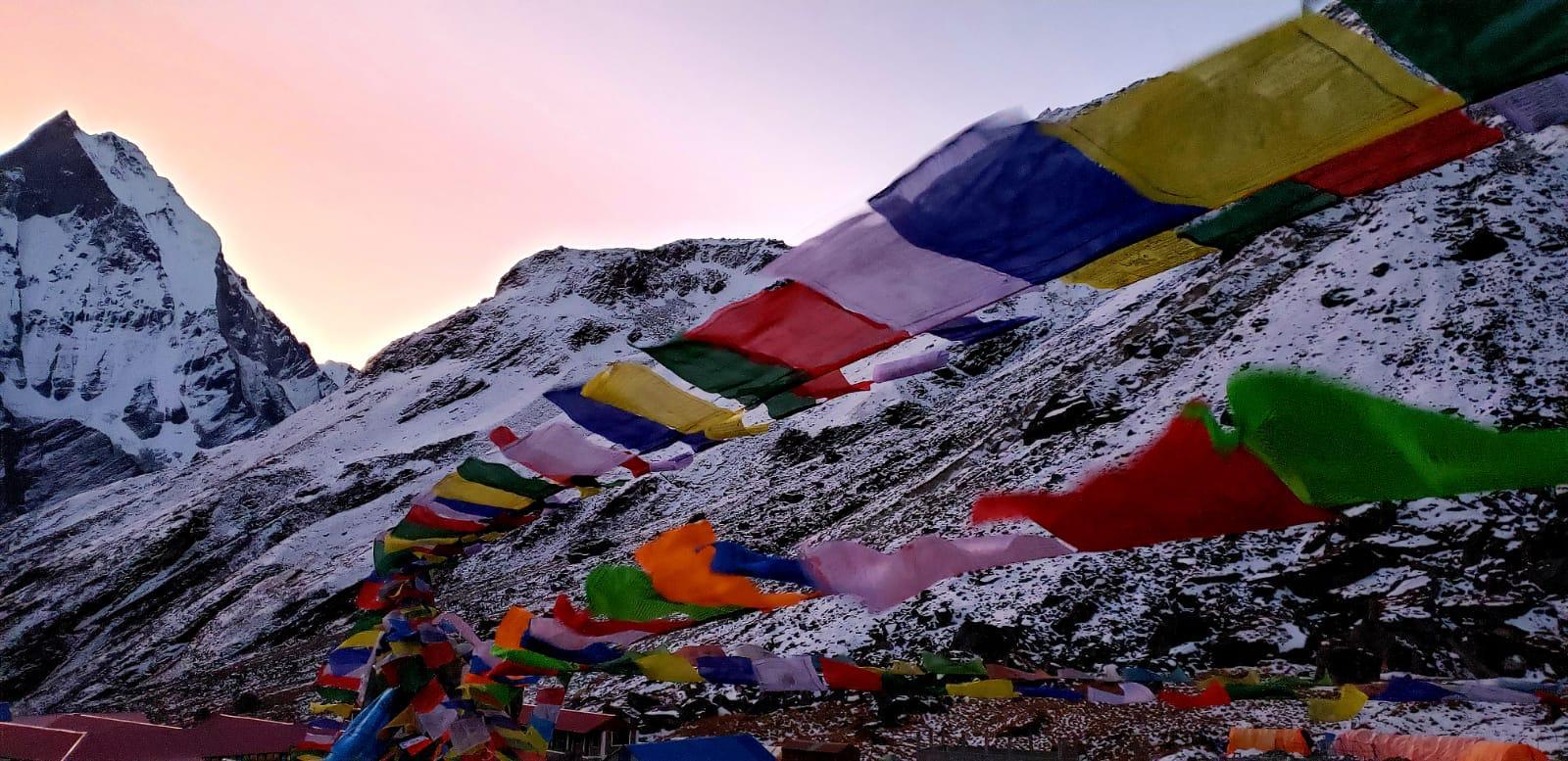


Ultimate 2026 Guide to Island Peak: Where Trekking Ends and Mountaineering Begins. Prayer flags flutter above stone villages, yaks move steadily along the path, and the great Himalayan giants rise higher with every step. You’ve trekked before maybe even to Everest Base Camp. But Island Peak is different. This is the moment where walking trails give way to ropes, ice, and altitude… where trekking ends and real mountaineering begins.
At 6,189 meters, Island Peak (Imja Tse) isn’t just a summit, it’s a rite of passage. For thousands of adventurers each year, Island Peak is the first real step beyond trekking trails and into the world of ropes, ice, crampons, and high-altitude decision-making.
Set in the heart of the Khumbu, surrounded by giants like Lhotse, Nuptse, and Ama Dablam, Island Peak perfectly bridges the gap between trekking peaks and technical expeditions.
Why Island Peak Marks the Shift from Trekking to Mountaineering
Unlike trekking routes that rely mainly on endurance and acclimatization, Island Peak introduces climbers to mountaineering skills without overwhelming technical difficulty.
On this climb, you will:
- Use crampons on snow and ice
- Ascend fixed ropes with jumars
- Practice rope travel and glacier crossing
- Experience an exposed summit ridge
- Learn high-altitude movement and pacing
This combination makes Island Peak the ideal training ground for bigger Himalayan ambitions.
From Iconic Trails to Untouched Alpine Terrain – Ultimate 2026 Guide to Island Peak
Your journey starts on the legendary Everest route, moving through Lukla, Namche Bazaar, Tengboche, and Dingboche. The comfort of teahouses, the rhythm of trekking, and the warmth of Sherpa hospitality make the early days feel almost effortless.
These well-established trekking routes allow gradual acclimatization while offering rich Sherpa culture, panoramic views, and comfortable teahouse stays. For many climbers, this familiarity builds confidence before entering the more demanding alpine terrain.
But as you turn toward Chhukung Valley, the crowds thin, the air sharpens, and the mountain takes center stage. Ahead lies a peak that demands more than endurance. It demands commitment. This is where the adventure truly begins.
Base Camp to High Camp: Stepping Into the Climber’s World – Ultimate 2026 Guide to Island Peak

Once you leave Chhukung and reach Island Peak Base Camp, the experience changes noticeably. At Island Peak Base Camp, trekking comforts are left behind. Tents replace lodges. Helmets, harnesses, crampons, and ice axes become part of your daily routine. Under the guidance of experienced climbing Sherpas, you learn the fundamentals of alpine climbing skills that transform trekkers into mountaineers.
You’re no longer just walking in the Himalayas. You’re climbing them.
- Terrain becomes rocky and glaciated
- Temperatures drop significantly
- Nights are spent in tents, not lodges
- Early alpine starts (1–3 AM) become standard
At High Camp, climbers receive final training on fixed ropes, ice axe use, and safety techniques, this is where trekkers truly become climbers.
Summit Day: A Real Mountaineering Experience

Summit day begins long before sunrise. Headlamps cut through the darkness as you step onto the glacier. Crampons bite into the ice. Fixed ropes lead you up steep snow slopes, your breath slow and deliberate in the thin air above 6,000 meters.
You will face:
- A steep snow and ice headwall (45–50 degrees)
- Fixed rope ascents using jumars
- A narrow and exposed summit ridge
- Thin air above 6,000 meters
And then you’re there.
From the summit of Island Peak, the world opens up. Lhotse towers above you. Ama Dablam stands proud. Makalu glows in the distance. This is not just a view, it’s proof that you’ve crossed a line few dare to cross.
Why Island Peak Is the Perfect First Himalayan Climb? Ultimate 2026 Guide to Island Peak
Island Peak is challenging, but achievable making it one of the best introductory mountaineering peaks in the world.
It’s ideal for:
- Trekkers ready to push beyond trails
- Adventurers seeking their first technical summit
- Climbers preparing for higher peaks like Mera Peak, Lobuche East, or beyond
- Anyone who wants to experience real Himalayan mountaineering without extreme technical demands
- You don’t need prior climbing experience, just strong fitness, determination, and the desire to go higher.
Training & Preparation: What You Really Need – Ultimate 2026 Guide to Island Peak
To succeed on Island Peak, focus on:
- Cardiovascular endurance (long hikes, stair climbing
- Strength training (legs and core)
- Familiarity with basic mountaineering gear
- Acclimatization discipline and hydration
- Many climbers underestimate summit day—Island Peak is forgiving, but it demands respect.
Best Seasons to Climb Island Peak: Ultimate 2026 Guide to Island Peak
The most popular climbing seasons are:
Spring (April–May) – Stable weather, warmer temperatures
Autumn (September–November) – Clear skies, crisp conditions
Winter climbs are possible but more technical, while monsoon season increases risk due to snow and visibility issues.
More Than a Summit: A Beginning
Island Peak is not just about reaching 6,189 meters, reaching the top of Island Peak changes how you see yourself. It builds confidence, resilience, and belief qualities that stay with you long after the descent.
For many climbers, Island Peak is not the final goal.
It’s the moment they realize they’re capable of more.
It is a classroom in the mountains, wrapped in spectacular scenery.
Ready to Take the Next Step?
If you’ve ever dreamed of climbing in the Himalayas but wondered where to begin, Island Peak is your answer. It’s where trekking ends, fear turns into focus, and an ordinary journey becomes an extraordinary story.
For many, it’s not the last peak, it’s the first. Your first Himalayan summit is waiting.


