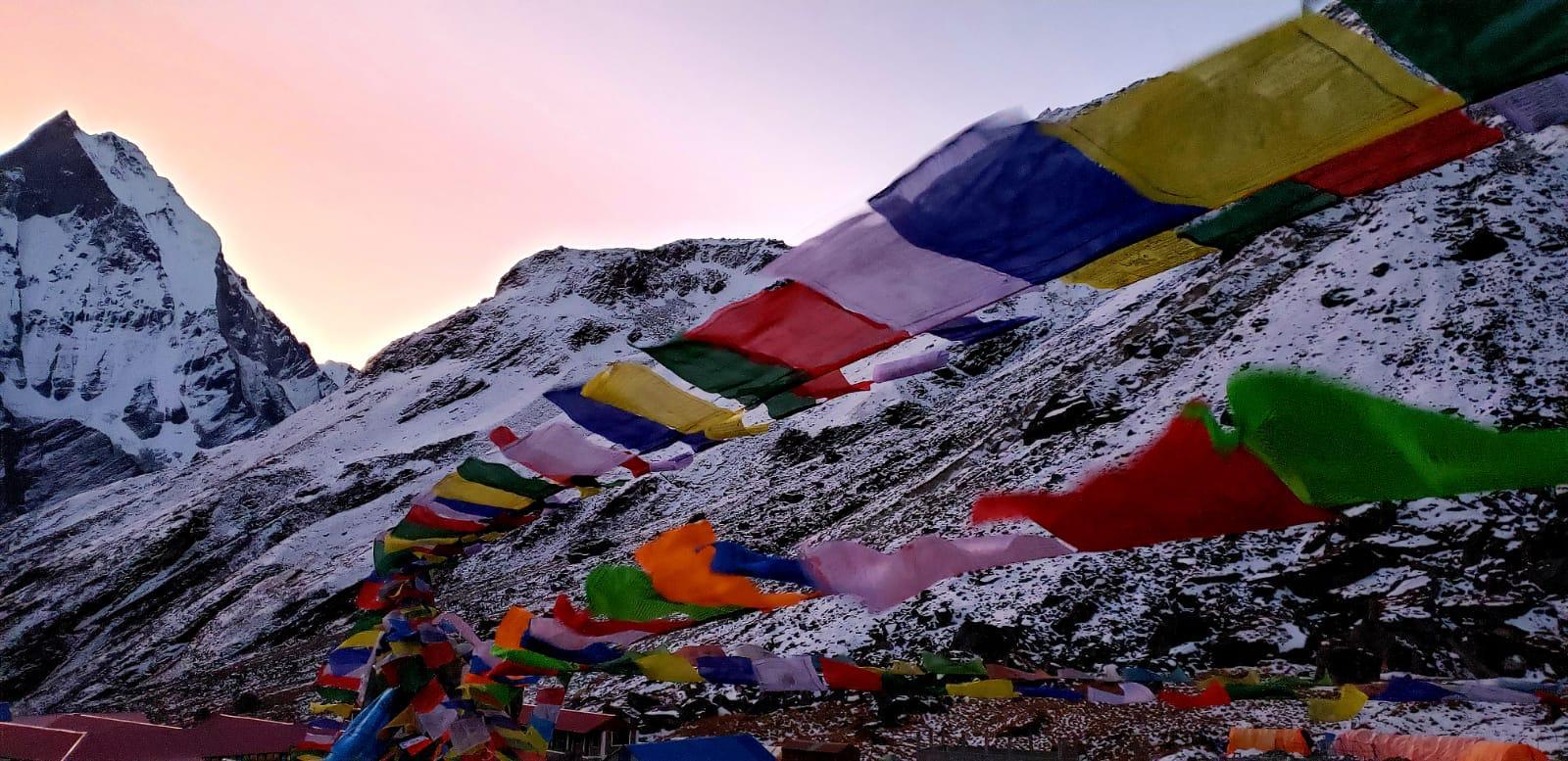


How Difficult is the Annapurna Base Camp Trek? The Annapurna Base Camp (ABC) Trek is one of Nepal’s most iconic Himalayan journeys, offering lush valleys, traditional Gurung villages, rhododendron forests, and a dramatic 360° snow-capped amphitheatre at 4,130m. While ABC is considered a moderate-difficulty trek, the experience varies widely depending on your fitness level, preparation, and expectations.
Below is a detailed breakdown of difficulty levels, contributing factors, preparation requirements, and whether beginners can realistically achieve it.
1. How Difficult is the Annapurna Base Camp Trek?
Overall Difficulty Level: Moderate
Best for: Beginners with preparation, intermediate trekkers, and fit hikers.
ABC is easier than Everest Base Camp and Manaslu, but harder than Poon Hill or Mardi Himal’s first viewpoint. The primary challenge comes from long walking days, steep staircases, and altitude. However, the trek is non-technical—meaning no climbing equipment, ropes, or crampons are needed in normal seasons.
Most trekkers rate it as:
30% physical challenge
30% endurance challenge
40% mental persistence
The trail is well-established, teahouses are frequent, and altitude gain is gradual, making it one of Nepal’s most accessible high-altitude treks.
2. Factors That Contribute to the Difficulty
Below is a detailed explanation of the main challenges you should expect.
The most physically demanding part of the ABC trek is the constant up-and-down stair sections.
2.1. The Infamous Stone Staircases
Key challenging segments:
Ghandruk to Chhomrong: Long stair descents
Chhomrong to Sinuwa: A steep staircase climb
Bamboo to Himalaya: Continual mixed ascent
Deurali to MBC: Steady elevation gain
Some days, trekkers climb the equivalent of 60–90 floors. These steps can feel endless, especially on days 1–3.
2.2. Altitude Gain & Acclimatization
While ABC (4,130m) is lower than Everest Base Camp, altitude-related symptoms can still occur after 3,000m.
Possible issues:
- Shortness of breath
- Headaches
- Difficulty sleeping
- Fatigue
- Light dizziness
The last two days – Deurali to MBC to ABC are where altitude is most noticeable. However, risk remains low due to the gradual ascent profile.
2.3. Long Walking Hours (5–8 Hours Daily)
Expect to walk:
- 5–7 hours on most days
- 8 hours on the day you reach ABC
- 6–8 hours when descending long distances
The continuous daily hiking can be tiring for those not used to multi-day treks.
2.4. Weather Conditions
Weather changes dramatically in the Annapurna Sanctuary:
Possible challenges:
- Rain and slippery trails (spring monsoon tails)
- Snow or frost at higher altitudes in early spring or late autumn
- Cold nights (down to -10°C at ABC)
- Fog reducing visibility in forested sections
- Wind chill above 3,000m
- Trekkers must be prepared for all seasons in one trek.
2.5. Narrow, Rocky Trails in Dense Forests
Between Bamboo, Dovan, Himalaya, and Deurali, the trail becomes:
- Rocky
- Uneven
- Moss-covered and slippery
- Surrounded by waterfalls and streams
- These sections require good balance and proper trekking shoes.
3. Factors That Make the ABC Trek More Manageable
Despite its challenges, ABC is considered a beginner-friendly Himalayan trek because of the following advantages:
3.1. Well-Marked Trail
The route is extremely well-marked with:
- Signboards
- Stone steps
- Clearly defined paths
- Frequent villages
- Navigation is easy even for first-timers.
3.2. Frequent Teahouses and Rest Stops
- Every 1–2 hours, you will find:
- Teahouses
- Places to rest
- Meals and snacks
- Safe drinking water options
This makes the trek flexible trekkers can stop whenever tired.
3.3. Moderate Maximum Altitude
At 4,130m, ABC is manageable for most trekkers.
Comparatively:
Everest Base Camp: 5,364m
Thorong La Pass (Annapurna Circuit): 5,416m
Gokyo Ri: 5,357m
The lower altitude reduces AMS risk.
3.4. Gradual Elevation Inside the Sanctuary
Once you pass Himalaya toward Deurali and MBC, the trail becomes:
- Less steep
- More open and gradual
- Scenic and motivating
- The final stretch to ABC feels long but not steep.
3.5. No Technical Skills Required
Unlike Mera Peak, Island Peak, Lobuche Peak, or even high passes, ABC requires:
- No ropes
- No crampons (except rare winter conditions)
- No glacier skills
- Just good boots and endurance.
4. How to Prepare for the ABC Trek
Preparation is key. A beginner with proper training can complete ABC comfortably.
4.1. Physical Training (6–8 Weeks Recommended)
A. Cardio Training
- Do at least 30–60 minutes, 4–5 times a week:
- Fast walking
- Jogging
- Stair climbing
- Cycling
- Swimming
- Goal: build lung capacity and stamina.
B. Strength Training
- Focus on legs, core, and stability:
- Squats (3–4 sets)
- Lunges
- Step-ups
- Deadlifts
- Planks & side planks
- Calf raises
- Stronger legs = easier climbing and descending.
C. Stair-Climbing Practice
The most effective preparation for ABC.
Train on:
- Office or home staircases
- Stadium steps
- Hills
- Practice climbing 40–60 minutes at a moderate pace.
D. Weekend Hikes
- Try at least two long hikes (8–12 km) before the trek.
- This prepares your knees, hips, and muscles for multi-day endurance.
4.2. Gear Preparation
Essential items:
- Good hiking boots (broken in)
- Moisture-wicking layers
- Fleece jacket
- Down jacket for higher altitude
- Gloves, wool hat
- Trekking poles (reduce knee impact on steps)
- 30–40L daypack
- Refillable water bottle/hydration bladder
- Proper gear minimizes fatigue and discomfort.
4.3. Mental Preparation
Even fit trekkers struggle if mentally unprepared.
ABC requires:
- Patience with long stair sections
- Ability to walk slow but steady
- Adjusting to cold mornings and early starts
- Staying positive on repetitive forest trails
- Mental endurance is often more important than physical strength.
5. Can a Beginner Do the Annapurna Base Camp Trek?
- YES, ABC is one of the best treks for beginners.
- Thousands of first-time trekkers complete this route every year.
- ABC is suitable for beginners because:
- Accommodation and food are available everywhere
- No technical skills required
- Altitude is moderate
- Trail is well-established
- You can hire a guide and porter
- Daily walking distances are manageable
- Beginners only need basic fitness, a steady pace, and proper acclimatization.
6. What Level of Fitness is Needed for the ABC Trek?
You don’t need to be extremely fit—just comfortably fit.
You should be able to:
- Walk 10–15 km in a day
- Climb 1,000–1,500 steps with breaks
- Walk 5–7 hours a day for several days
- Carry a light backpack (5–8 kg)
- If you can do this, you’re fit enough for ABC.
Fitness Level Breakdown
Beginner Level:
- Slow-paced trek
- Guide + porter recommended
- More rest stops
- 6–8 weeks of preparation needed
Intermediate Level:
- Can complete ABC easily
- Enjoys long hikes
- Can travel with light gear
Advanced Fitness:
- Can finish faster
- Can carry own backpack
- Ideal for combining with Mardi Himal or Poon Hill extensions
Final Summary
The Annapurna Base Camp trek is:
- Moderate difficulty
- Beginner-friendly with preparation
- Challenging mainly due to steps, altitude, and long walking days
- Rewarding because of its scenery and accessibility
- With the right training plan, gear, and mindset, almost anyone can reach Annapurna Base Camp safely and enjoy the journey.
