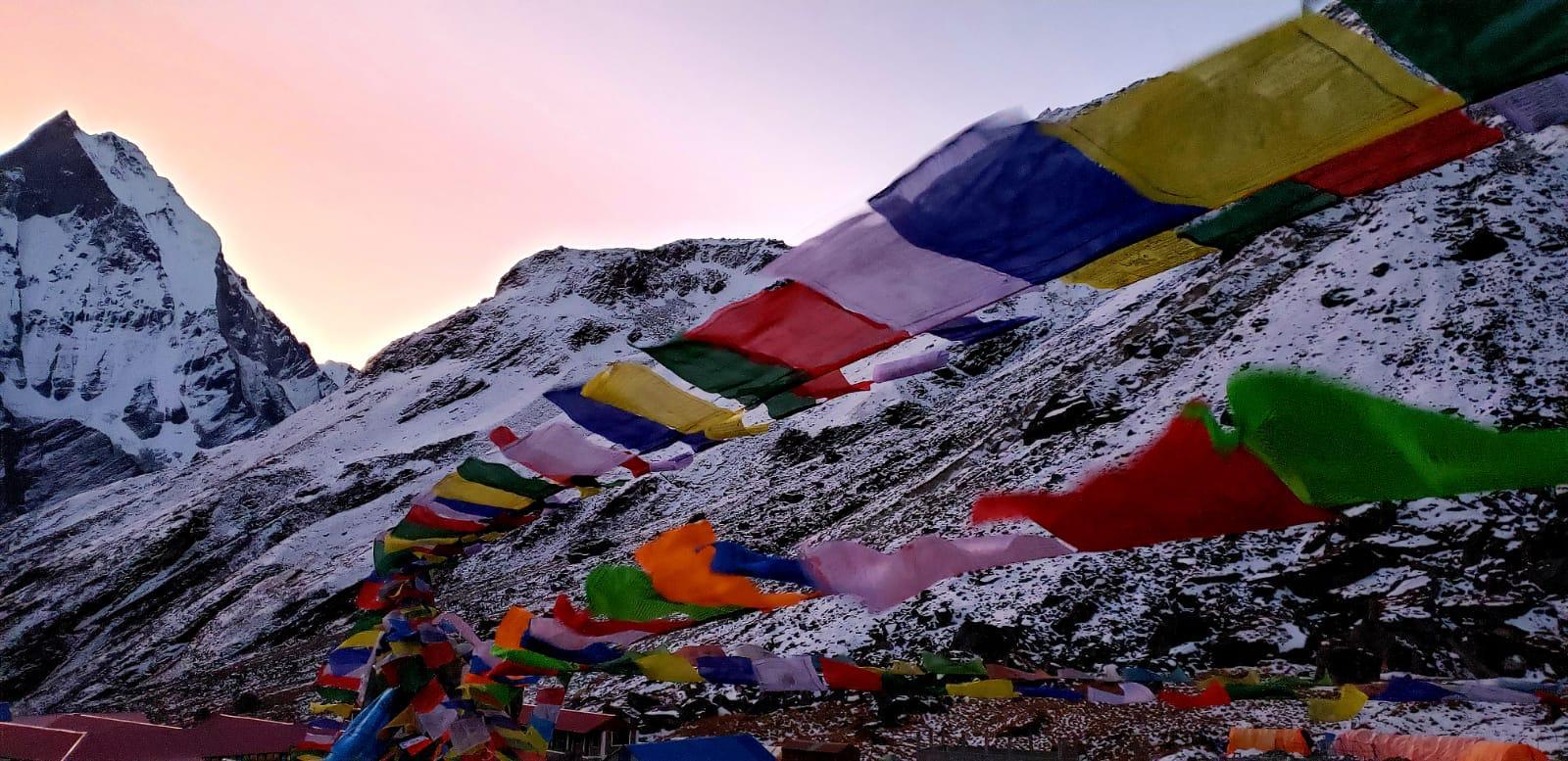
Planning the Annapurna Base Camp (ABC) Trek? Whether you’re a first-time trekker or a seasoned hiker exploring Nepal’s Himalayas, having your key questions answered beforehand can make all the difference. The ABC Trek is one of Nepal’s most scenic and culturally rich journeys offering a perfect combination of mountain vistas, warm Gurung hospitality, hot springs, and diverse landscapes.
This Traveler’s Questionnaire guide covers all the essential questions trekkers typically ask before committing to the trek—with practical, clear, and updated answers to help you plan confidently.
Your starting point (Nayapul, Siwai, or Ghandruk) also affects the total duration.
2. What is the total distance of the Annapurna Base Camp Trek?
The ABC Trek covers around 70–110 km (45–68 miles) in total. The exact distance varies depending on the chosen route and whether you include places like Ghandruk or Jhinu Danda hot springs.
13. Is travel insurance required for Annapurna Base Camp Trek?
Yes, especially one that covers:
Up to 4,500 m altitude
Helicopter rescue
Medical emergencies
Trip cancellation
Nepal’s mountains can be unpredictable, and insurance is essential.
14. What is the accommodation and meal cost at Annapurna Base Camp Trek?
Typical daily expenses:
Room: USD 5–10
Meals: USD 20–35 per day
Charging/Wi-Fi: USD 1–3 each
Hot shower: USD 2–3
Expect higher prices above Deurali.
15. Are hot showers and charging available at Annapurna Base Camp Trek?
Yes, until about Machhapuchhre Base Camp (MBC). But expect:
Gas showers below 3,000 m
Bucket showers at high altitudes
Charging is usually solar-powered and chargeable per device
16. Can beginners do the Annapurna Base Camp trek?
Absolutely! ABC is one of Nepal’s most beginner-friendly high-altitude treks. As long as you are reasonably fit and take it slow, ABC is achievable for first-time trekkers.
17. Is the Annapurna Base Camp Treksafe?
Ye, generally very safe. Risks include:
Weather changes
Occasional landslides (monsoon)
Slippery trails in winter
Minor altitude symptoms
Using a guide significantly increases safety.
18. Is the Annapurna Base Camp Trek crowded?
It depends on the season:
Autumn & Spring: Busy, especially Chhomrong and Deurali
Winter: Quiet
Monsoon: Very few trekkers
If you prefer a peaceful trek, choose December or early March.
19. Can I do Annapurna Base Camp Trek solo?
With Nepal’s latest trekking rules, solo trekking is not recommended and often restricted. Most trekkers go with a guide for safety and compliance.
20. What is unique about the Annapurna Base Camp trek?
Traveler’s Questionnaire: Annapurna Base Camp Trek 8
ABC is one of the few treks that brings you right into the heart of a 360° mountain amphitheater. Highlights include:
Annapurna I (8,091 m) up close
Machhapuchhre (Fishtail) towering overhead
Natural hot springs
Gurung culture and villages
Rhododendron forests
Sunrises and sunsets at base camp
It’s a trek that combines scenery, comfort, culture, and challenge perfectly.
21. Can I do the Annapurna Base Camp trek in winter?
Yes, you can trek in winter (Dec–Feb) if you’re comfortable with cold temperatures and occasional snowfall. Trails may be quieter but require proper winter gear.
22. Are there ATMs along the Annapurna Base Camp Trek?
No ATMs are available after Pokhara. Carry enough Nepalese Rupees for the entire trek (typically NPR 25,000–35,000 depending on your style).
23. Can I charge my phone and camera at Annapurna Base Camp Trek?
Yes, charging is available in most teahouses for a small fee. Solar charging is common in higher villages. Bring a power bank as backup.
24. Is Wi-Fi available on the Annapurna Base Camp Trek?
Wi-Fi is available in most teahouses, but the quality decreases as you go higher. Expect to pay USD 1–3 per connection.
25. Is drinking water safe at Annapurna Base Camp Trek?
You should not drink tap or stream water directly. Use water purification tablets, filtration bottles, or buy boiled water at teahouses.
26. How much money should I carry for Annapurna Base Camp Trek?
Most trekkers carry around NPR 25,000–35,000 for meals, tea, snacks, showers, and charging. On guided trips, carry extra only for personal expenses.
27. What is the accommodation like at Annapurna Base Camp?
Rooms are simple, clean, and shared (twin room). At Annapurna Base Camp and MBC, accommodation is basic with limited heating and hot water.
28. What happens if I get altitude sickness during Annapurna Base Camp Trek?
Notify your guide immediately. Rest, hydrate, and descend if symptoms worsen. Helicopter rescue is available if needed (insurance required).
29. What kind of food is available at Annapurna Base Camp Trek?
Traveler’s Questionnaire: Annapurna Base Camp Trek 9Traveler’s Questionnaire: Annapurna Base Camp Trek 10
Teahouses offer dal bhat, rice, noodles, soups, pasta, chapati, potatoes, eggs, porridge, tea, and coffee. Food becomes simpler at higher altitudes.
30. Can I store luggage in Pokhara or Kathmandu?
Yes! Hotels and trekking agencies in both cities offer free luggage storage for trekkers.
31. What network works best on the Annapurna Base Camp Trek?
Ncell and Nepal Telecom both work in many lower areas, but the signal is patchy in higher regions.
Many trekkers rely mainly on teahouse Wi-Fi.
32. Do I need prior trekking experience for Annapurna Base Camp Trek?
No—ABC is suitable for beginners, as long as you prepare physically and trek at a comfortable pace.
33. Are there risks of avalanches at Annapurna Base Camp Trek?
The areas between Deurali and Machhapuchhre Base Camp have occasional avalanche zones, especially in winter and spring. A guide helps you choose the safest time and route.
34. What is the maximum altitude of the Annapurna Base Camp Trek?
Annapurna Base Camp sits at 4,130 meters (13,550 ft).
Final Thoughts
The Annapurna Base Camp trek is an unforgettable journey suitable for trekkers of all levels. With proper preparation, realistic expectations, and the right guidance, anyone can reach the base camp and experience the magic of standing beneath the Annapurna massif.
Annapurna Base Camp Trek: A Journey Through the Heart of the Himalayas. If you’re dreaming of dramatic landscapes, cozy mountain lodges, and a trek that feels both accessible and awe-inspiring, let me introduce you to one of Nepal’s greatest trekking gems: the Annapurna Base Camp (ABC) Trek.
Tucked into the heart of the Annapurna Sanctuary at 4,130 meters, this trek offers a perfect balance of natural beauty, cultural richness, and adventure—without the extreme altitude of Everest. Whether you’re a first-time trekker or a seasoned hiker, the ABC trek promises an experience that lingers long after the trail ends.
Annapurna Base Camp Trek: A Journey Through the Heart of the Himalayas 16
Overview
Location: Annapurna Region, Nepal
Altitude: Up to 4,130 meters (13,550 feet)
Duration: 7 to 12 days (depending on itinerary and pace)
Trek Difficulty: Moderate
Best Seasons: Spring (March–May) and Autumn (September–November)
Located in North-Central Nepal, within the Annapurna Conservation Area, ABC lies directly below the majestic Annapurna I (8,091 m)—the 10th highest mountain in the world. The trek typically begins from Pokhara, Nepal’s beloved lakeside city, and winds through forests, rice terraces, and remote villages before reaching the glacier-ringed amphitheater known as the Annapurna Sanctuary.
Annapurna Base Camp Trek: A Journey Through the Heart of the Himalayas 17
The classic Annapurna Base Camp route typically begins from Nayapul or Jhinu Danda, winding through terraced fields, rhododendron forests, and quaint Gurung and Magar villages. As trekkers ascend, the landscapes transition from lush subtropical forests to alpine meadows and glacial moraines.
The highlight, of course, is reaching Annapurna Base Camp trek itself—a natural amphitheater surrounded by towering Himalayan giants like Annapurna I (8,091m), Machapuchare (6,993m), Hiunchuli (6,441m), and Annapurna South (7,219m). The 360-degree mountain panorama, particularly at sunrise, is both humbling and awe-inspiring.
Cultural Immersion
Beyond the natural beauty, the trek offers a chance to connect with Nepal’s rich cultural fabric. Villages such as Chhomrong and Ghandruk are home to warm-hearted Gurung communities known for their hospitality and unique traditions. Teahouses along the trail offer simple yet cozy accommodations, often with delicious local food and an opportunity to engage with fellow trekkers from around the world.
Challenges and Preparation
While the ABC trek is considered moderate and does not require technical climbing skills, it does involve significant altitude gain and daily hikes of 5–7 hours. Adequate physical preparation, proper gear, and a gradual ascent are essential to minimize the risk of altitude sickness. Hiring a local guide or porter can also enhance safety and provide deeper insights into the region.
The ABC trek is moderately challenging, making it suitable for beginners with good fitness and equally rewarding for seasoned hikers. The altitude tops out at 4,130 m—high enough for stunning mountain views, low enough to reduce altitude risk compared to Everest Base Camp.
Ever-Changing Landscapes
In a matter of days, you’ll pass through:
Lush bamboo and rhododendron forests
Sparkling waterfalls and hot springs
Traditional Gurung and Magar villages
Snow-covered mountain valleys
It’s like walking through four seasons in one trek.
Rich Cultural Encounters
From sharing tea with local families to hearing Buddhist prayers whispered on the wind, the trek immerses you in Nepal’s mountain culture, hospitality, and spirituality.
Annapurna Base Camp Trek Difficulty
Annapurna Base Camp trek is a moderate type of trek that is relatively easy even for unseasoned trekkers. It is an amazing walk through the diverse landscapes and unique culture, complete with rich mountain panorama, terrace fields, local Gurung villages, and a wide variety of flora and fauna. The trek takes you to the feet of the wonderful Annapurna Mountain. Annapurna Base Camp (4,310m) lies in the Annapurna Region in the northwestern part of Nepal.
Annapurna Base Camp Trek is one of the most popular trekking destinations in Nepal, where you can ensure a full adventure without technical ascent to the Himalayan region. Known for its diversified trekking trails consisting of both greens from the grassland and vegetation to whites from the Himalayan massifs, Annapurna is visited by hundreds of trekkers every year. Some cherish it for its diverse beauty, while some cherish it for the warm-hearted and welcoming locals.
The trek starts from Nayapul to Tikhedhunga in the hilly topography. You need to cross 3200 steps on the way to Ghorepani Poon Hill. These steps will test your ability on this trek. Next, you will cross several villages to reach a high elevation. The two-day trek at the high altitude will be a bit difficult for the trekker, but the majestic vista of this region will not even give you time to think about difficulties.
Considering the Annapurna Base Camp difficulty level, it is regarded as an easy trek. Since the Annapurna Base Camp Trek doesn’t demand any advanced physical fitness level, a normal person with good health conditions can go for this trek. Trekkers still need to work on taking precautions, being aware of the current situation, and being prepared for the trek. In fact, this trek is not difficult.
It is accessible to all age groups, even for children and older people. Annapurna trekking is famous for a closer view of the high Himalayas above 7000meters. This trek is absolutely magnificent and quite easy in terms of the altitude, but the constant up and down in the Himalaya might be a challenge.
Annapurna Base Camp trek provides you with a 360-degree panorama of snowy mountains and Machhapuchhare (Fishtail) Base Camp, which is a bonus for this trek. This trek is one of the comfortable destinations for travelers. This moderate trek sometimes becomes strenuous for those who are not healthy and physically fit. An average amount of fitness and prior walking practice is needed to take full advantage of the trek.
You can get local accommodations every few hours of hiking. Here, you can take a rest, and you can sleep if you are tired of walking. It takes about 5-6 hours of walking per day. However, the altitude climb is gradual, and the height of the base camp of Annapurna is only 4,130 meters, which allows a fairly easy acclimatization. The trek may be tiring, but it’s a worthwhile experience. Just be slow and steady.
One must be aware of altitude sickness, which may occur at a certain altitude. Some people often experience headaches and nausea; the Sherpa’s are available with you to help you out and guide you towards uphill over 3000 meters. Annapurna Base Camp trek is the perfect and amazing destination to experience a low-risk but life-changing adventure, full of unexplainable accomplishments.
Annapurna Base Camp Weather and Altitude Factor
Annapurna Base Camp is also quite a bit lower in elevation, 4,130m vs. 5,380 m or about 4000 feet difference, so if you anticipate problems with altitude, it might be the better trek. The Everest trek is also colder and drier because of the higher elevations. So, considering that the village of Nayapul, at the start of the Annapurna Sanctuary trek, is at 1060m and the highest point of the trek, Annapurna Base Camp, is at 4130m, you could expect an average temperature drop of around 19˚C or 10˚F. And that’s not accounting for more unpredictable weather at higher altitudes.
The altitude climb is gradual, and the height of the base camp of Annapurna is only 4,130 meters/13,549 feet, which allows a fairly easy acclimatization. A good Sherpa guide is far from essential for this trek. You will find a fantastic local Sherpa guide for this trek. You must also be aware of altitude sickness; it may occur at a certain altitude. Some people begin to experience headaches and nausea. If this happens, the Sherpa guide and staff will help you out until the symptoms subside.
It is important to follow the Sherpa guide’s advice & some steps uphill over 3,000 meters; the body often needs a little time to get used to it, and one should not ignore the symptoms of altitude sickness if they appear. To protect from high-altitude sickness, if tourists walk slowly and steadily with many breaks on the way to trek, they can acclimatize easily, and the trek will be easy.
The Annapurna region tends to get more snowfall, and because the trail to Annapurna Base Camp lies low in the canyon, it is susceptible to avalanches coming from the peaks above. Avalanches are not normally an issue, but it’s certainly something one should be thinking of if you’re visiting during a period of heavy snow. The weather in Annapurna Base Camp varies from one season to another.
During the spring (Mar-Apr), the day starts nice and clear but progressively gets windier and cloudier, which leads to frequent afternoon showers. The landscape seems to be newly designed and lush.
Monsoon seasons signal a grinding halt to the trekking sector of the Annapurna region, but in contrast, the wildlife is in full vigor. Wild flowers eagerly anticipate the monsoon, Himalayan Tahr get busy tending to their newborns, and Himalayan Monal work hard displaying to prospective mates. The whole land rejuvenates during the Monsoon season, which ends in September.
When September rolls around, the clouds leave their hold on the sky, creating a perfect backdrop of clear and blue skies. The mountains wake up from their deep slumber during the Monsoon season and display their full bloom of beauty. This makes for a perfect trekking season up until November, which is a bit crowded.
By December, winter is in full swing with occasional heavy snow. Since there are a lot fewer people and more wildlife, it is a perfect time to trek for the prepared. However, caution must be exercised to the fullest to prepare completely for the winter weather of the Himalayas. It is possible to do this trek in all seasons; however, in the winter, the Base Camp can sometimes be closed due to the snow level. In springtime, the huge rhododendron forests are in full bloom, which gives the trek an extra appeal. Despite various difficulties, Annapurna Base Camp is a lifetime achievement and is full of unexplainable accomplishments.
Annapurna Base Camp Trekking Season
Annapurna Base Camp Trek: A Journey Through the Heart of the Himalayas 18
Nepal is a small country; a blessing of the creator is poured in this place. Nepal has four different seasons with different weather and climate. Those four seasons are spring, monsoon, autumn, and winter. The spring season holds from March to May, which is also known as the blooming season. The blooming wild flora, such as Rhododendron, and warm weather bring more trekkers during this period, but not as many as in the autumn season.
The daytime temperature is good, but it is common to freeze at night. This season makes Annapurna trekking comfortable with clear weather to view the beautiful sceneries of snow-capped mountains, glaciers, blooming wild flora, and many more. Monsoon season (summer) runs from June to August. This period contains rainy seasons with high warm temperatures and humidity compared to other seasons.
During this time, mountain regions are enveloped in clouds, and lower areas are muddy. This doesn’t mean that the experience of trekking is impossible. It doesn’t rain for a long time, and it doesn’t rain every day, so we can trek being well prepared. Luckily, you can view all the scenery at this period also, and you can view greenery from the height, too, during the rainy season.
Those unique cultures, traditions, and lifestyles of this area are also offered for you. You can have wonderful and weather-challenging trekking in the monsoon season. The autumn season runs from September to November. This season carries a large number of trekkers in this period. This season offers clean and fresh weather with the best weather for trekking. Normally, at this time, the dust and smut are also cleared. Clear and warm days and cold nights are the favor of this season.
There are no more clouds roaming at this period for rainfall, so clear mountain views and scenery can be observed from the high elevations. The bright night sky is also really good at this time, and this is also the part to be amazed by. Because of the favorable weather and temperature, this season is the busiest period for trekking. Winter is triggered from December to February. This winter season is the coldest season. Normally, in the Annapurna region, the snow falls heavily at the top of the Annapurna region. The temperature decreases and goes towards minus.
Winter time is really cold, but it offers foggy mornings and cloudy days sometimes, but most of the days are clear to view the scenery of tall mountains. Trekking trails carry fewer trekkers at this time of year. Trekking to the Annapurna Base Camp is also challenging, but it is available to trek at this time. The trail is not crowded, and you can trek in a pleasing environment. Everest base camp trek, Annapurna base camp trek, Dhaulagiri trek, and many other trekking routes of the Himalayas are challenging and open at this time. At this time, you can also celebrate Christmas and the New Year in the Himalayas of Nepal with local people.
These are the weather and temperature in the Himalayan region of Nepal. Compared to all the climates and conditions, I prefer the autumn season (September to November) to trek to Annapurna Base Camp. The clear sky, warm weather, and cool evenings are awesome offerings of this autumn season. This can help to view the best scenery of the giant mountains and clear sky at night. Rain and humidity are also prohibited. Some rain lovers love to trek in summer also, and many rain haters move towards northern trekking parts, which are very dry areas of Nepal, like upper Mustang and others but that doesn’t mean Annapurna base camp trek is closed.
We can see many rain lovers trekking on the way towards Annapurna Base Camp. If cold does not bother you, then you can also trek in the winter season. The blooming season is also the best one. So, you need to have proper information and knowledge about different seasons and weather before heading on a trek towards the Himalayas of Nepal. If you wish to trek to the Himalaya Annapurna base camp, then, as I already defined all those seasons with their distinct features, you can just choose the time that you think is suitable for you. It is best to choose the Annapurna region because it is much drier compared to the Everest region.
You can get a real chance to know the beauty of nature by trekking on this trail. The great and beautiful places are offered by this trail. If you are interested in having a trekking journey on a trail, then don’t rush; you can just go and visit the agencies for all the information and guidance. There are lots of agencies to select from so that you can collect the proper satisfaction, and also you may save some bucks too. Honestly, you can collect new experiences through the Annapurna Base Camp trek.
Avoid the monsoon season (June–August) due to slippery trails and leeches, and winter (Dec–Feb) unless you’re prepared for snow and cold.
Is Altitude Sickness a Concern?
At 4,130 meters, the risk is lower than treks like Everest, but you should still acclimatize properly, stay hydrated, and listen to your body. Most itineraries naturally allow gradual elevation gain.
Sustainable Trekking
With increasing foot traffic, preserving the natural and cultural integrity of the Annapurna region is more important than ever. Trekkers are encouraged to follow Leave No Trace principles, use refillable water bottles, and support locally owned lodges and services.
How Much Does It Cost to Trek To Annapurna Base Camp?
Do you want to know how much it costs to trek to Annapurna Base Camp? Are you unsure whether or not hiring a guide is a viable option? Don’t worry; we’ll go over everything you need to know about the Annapurna Base Camp trip cost, including a full breakdown of the total cost.
The Annapurna Base Camp Trek is undeniably one of Nepal’s best treks. It is also undoubtedly less expensive than the most popular Everest Base Camp Trek due to its average trekking length. The Annapurna Base Camp trip (ABC) can cost somewhere between US$500 and US$2500, depending on the route, service, and trek operator. You may personalize the trip and add a luxury service like a helicopter ride from Base Camp to Pokhara. As a result, the price of the Annapurna Base Camp trek is dependent entirely on the preferences of guests.
So, what factors determine the cost of the Annapurna Base Camp trek?
Cost Breakdown of Trekking to Annapurna Base Camp
It is crucial that you have a general understanding of the Annapurna Base Camp trek cost and the factors that affect it. From the international flight to the cost of a guide and porter, we’ll go over each component that contributes to the Annapurna Base Camp trek cost.
1. Pokhara Costs
The ABC Trek starts in Pokhara, and the cost of staying there includes airport transfer, hotel accommodations, and any additional sightseeing fees. Choose your hotel level to save costs on your trip, which ranges from $ 15-bed budget hotels to 5-star or luxury Heritage hotels that cost around US$450 to $500 per night or more. A day tour in your spare time could cost you around $50 to $100, depending on the services and activities you opt for.
2. Costs of Transportation
The cost of a round-trip flight from Kathmandu to Pokhara is around $150 per person. Private as well as local drive options are also available from Kathmandu to Pokhara. A private car can cost somewhere between USD 100 and USD 130. You can also get a tourist sharing coach, which may cost USD 10 per perso,n and for a local sharing vehicle, it may cost USD 6 per person.
3. Nepal Visa Fees
When entering Nepal, all foreign nationals (excluding Indian nationals) must provide a valid visa. Nepalese visas can be obtained at the individual country’s Nepalese embassy or upon arrival at Kathmandu’s International Airport.
VISA FACILITY DURATION FEES
Visa Facility
Duration
Fees
Multiple Entry
15 Days
US$ 30 or equivalent convertible currency
Multiple Entry
30 Days
US$50 or equivalent convertible currency
Multiple Entry
90 Days
US$125 or equivalent convertible currency
4. Cost of a Trekking Permit
For the Annapurna Base Camp trek, you’ll need two permits: TIMS and ACAP
Permit TIMS (Tourist Information Management System) Card for the Annapurna Conservation Area Project (ACAP) If you are trekking with a guide, the ACAP permit is Rs. 3000 (25 USD equivalent) per person, plus Rs. 1000 (9 USD equivalent) for a TIMS card.
5. Trekking equipment and gear
You must have all of the necessary trekking gear and equipment for the Annapurna Base Camp Trek. We’re certain you have at least a pair of trekking shoes, a trekking pole, a quality hiking bag, a water bottle, and some warm clothing. If not, you can buy or rent for as little as $1 per day in Kathmandu.
The Thamel area sells and rents many types of trekking gear and equipment, from trekking poles to down jackets. The streets are crowded with brightly colored businesses selling everything you need for a hiking or climbing trip. You don’t have to spend a lot of money on equipment. You can purchase pretty much everything you don’t already have in Kathmandu or Pokhara.
So, how much would it cost you to buy all of the necessary gear and equipment for the ABC trek? That is debatable. If we had to give you a figure, it would be in the range of $200 to $500.
6. Miscellaneous expenses
Did you know you’ll have to pay for Wi-Fi on the trails? Although Wi-Fi is easily available almost everywhere, certain tea houses may charge a fee. They are anticipated to charge a small fee (US$5) per day or hourly for Wi-Fi, which is affordable. Please don’t expect fast or consistent signals. In Ghandruk and Ghorepani, internet and Wi-Fi are not a problem on the trip to Annapurna Base Camp.
You will not be changing your clothes every day. A hot shower is, therefore, a gift for your body. However, you will have to spend between $5 and $10 on it. You can charge your electrical devices for free, but don’t be surprised if you see a sign that says “US$5 for mobile charging.”
In terms of SIM cards, you can get them through NCell or Nepal Telecom in Kathmandu or Pokhara. For identification, you’ll need a passport-size photo and your passport. We recommend purchasing a Nepal Telecom SIM card for your trip to Annapurna Base Camp because it provides greater coverage.
You’ll go to the mountains after spending a few days in Kathmandu and Pokhara, where teahouses and lodges are the only places to stay. The facilities are really basic up there. Expect a wooden bed, a wooden table, a pillow, a blanket, and squat or western toilets, which are usually located outside the sleeping room.
The amenities, on the other hand, are surprisingly good in the lower part of the trail. You might find yourself in a tea house with a hot shower, flush toilet, and free Wi-Fi. The facilities grow more rudimentary as you rise higher, and you may have to pay extra for basic service.
In the Annapurna region, a tea house offers a variety of food and beverages. During the trek, the average cost of lodging and meals would be roughly US$20 to 30 per day.
The cost of a room and dal bhat differs from one place to another. Dal bhat may cost roughly US$4 in the lower stretch of the path, but it may cost up to US$6 farther up.
8. Guide and Porter Cost
The cost of a guide and porter for the Annapurna Base Camp trek is from US$20 to US$40 per day for the guide and US$20 to US$30 per day for the porter, respectively.
Throughout the trip, a guide will look after you and guide you. A guide with a thorough understanding of the trekking route and local culture will not only enhance your trekking experience. Hiring a guide means you’ll be helping to support the local economy as well as the guide’s livelihood.
A porter can also carry your extra luggage and equipment, which can weigh up to 25 kg, leaving you with only your light backpack. And this makes trekking much easier, especially at higher altitudes. By employing a porter, you are contributing to the local economy and assisting the porter in maintaining his livelihood.
9. Tips for Guides and Porters.
If your guide and porter provided excellent service and enhanced your trekking experience, feel free to tip them. When it comes to tipping your guide and porter, how much should you give? Although there is no set charge and tipping is not required, the common guideline is to tip the guide and porter at approximately 15% of the total cost.
However, it is entirely up to you; if you are completely delighted with your job, you can pay less/more. At the end of the trek, tips are usually given.
10. Travel Insurance Costs
The cost of your travel insurance would vary according to your age, country, and duration of the trek.
When visiting Nepal, you must have travel insurance, which should cover any expenses incurred as a result of medical illnesses or accidents. Traveling in the Himalayas is full of adventure; therefore, having a decent insurance policy is a good idea. When choosing an insurance policy, make certain that it covers all of these unforeseen expenses.
Your travel insurance must cover air ambulance, treatment charges, rescue and evacuation, product cancellation and refundable charges, airline delay, and cancellations. You should make sure that the policy you purchase provides adequate coverage, is familiar with your itinerary, and covers the activities you will be participating in.
Final Thoughts: A Trek That Touches the Soul
The Annapurna Base Camp trek is more than just a trail—it’s a journey into the soul of the Himalayas. It’s where rugged terrain meets spiritual stillness, and where every sunrise over Annapurna feels like a private blessing from the mountains.
Whether you’re chasing your first Himalayan summit or returning for a second round of soul-refreshing scenery, ABC is the kind of trek that fills your camera—and your heart.
Pro Tip:For an extended adventure, consider combining ABC with the Poon Hill trek to enjoy even more panoramic sunrise views and cultural experiences.
Preparation for the successful Annapurna Base Camp Trek. Nepal offers amazing trekking experiences. One of the most breathtaking trails in the area is the ABC Trek. The Annapurna Base Camp (ABC) Trek is one of Nepal’s most rewarding adventures, blending breathtaking Himalayan scenery, diverse landscapes, and rich cultural encounters. Standing at 4,130 meters (13,550 ft), Annapurna Base Camp offers trekkers a front-row seat to Annapurna I (8,091m), the 10th highest mountain in the world, along with Machapuchare, Hiunchuli, and Gangapurna.
Annapurna Base Camp trek takes trekkers through the Annapurna Conservation Area. The path begins by winding its way through picturesque rice paddies and forests before ascending to Annapurna Base Camp, which is located at an elevation of 4100 meters. As you ascend, the landscape rapidly shifts from a tropical jungle to knee-deep snowshoeing amidst breathtaking snow-capped peaks.
One of the most breathtaking treks in the world, the Annapurna Base Camp Trek passes through several climates, varied scenery, and culturally rich communities. Views of Fishtail, Hiunchuli, Annapurna Massif, Dhaulagiri, Tilicho, Pisang, Pungda Danda, and many more peaks are breathtaking from the Annapurna Base Camp. You will stop at the well-known Poon Hill viewpoint and unwind at Jhinu Danda’s natural hot spring pool along the route. This path is a popular substitute for the Everest Base Camp trip since it is shorter and less expensive. There are many trailheads from where you may access the trekking trail to Annapurna Base Camp. Depending on your route, the hike can take anywhere from six to twelve days.
Highlights of the Annapurna Trek in Nepal:
Annapurna I (8,091m / 26,545m), Dhaulagiri I (8,167m / 26,795ft), and Nilgiri (7,061m / 23,166ft) emerge in the morning light from the Poon Hill viewpoint.
Annapurna Base Camp (4,130m)
Rich wildlife and flora
Springtime in Jhinu Danda
Magnificent vistas of Machhapuchhare, Hiunchuli, Gangapurna, Annapurna III, South Annapurna I, and Khangsar
Ghandrunk’s charming villages and farmlands
A glimpse of life in rural Nepal
Natural Hotspring
Fitness and Physical Training: Preparation for Successful Annapurna Base Camp Trek
The Annapurna Base Camp Trek is categorized as a moderately challenging trek. You don’t need to have any prior expertise with technical mountain climbing or alpine trekking; you’ll be trekking 5–7 hours a day, often on steep and uneven terrain. It is important to note that the Annapurna Base Camp trek is a high-altitude hike; thus, some preparation is advised.
Cardio Training: Focus on running, cycling, or swimming 3–4 times a week to build endurance.
Leg Strength: Include squats, lunges, step-ups, and stair climbing in your workout.
Hiking Practice: If possible, go on local hikes carrying a backpack to simulate trekking conditions.
Flexibility & Core: Yoga or stretching helps prevent injuries and keeps your body agile.
Aim to start training at least 6–8 weeks before your trek.
Cardiovascular Aerobic Training: Preparation for Successful Annapurna Base Camp Trek
As one ascends higher into the atmosphere, the concentration of oxygen begins to fall. Additionally, your heart is working hard to pump blood and oxygen throughout your entire body when you are walking in such thin air.
For your body to operate properly, your heart must pump twice as hard. Aerobic exercise is, therefore, the most important thing you should do before hitting the trail. It is best to begin planning six months before the trip if you are a novice. You need to have strong cardiovascular endurance if you plan to hike for several days or for short days.
Aerobic refers to the need for free oxygen. It describes using oxygen to sufficiently fulfill energy needs when exercising through aerobic metabolism.
Aerobic exercise mostly involves light to moderately intensive activities such as cycling, swimming, running, or any other activity that gets your heart and lungs pumping.
Aerobic exercise will help you adopt the maximum volume of oxygen that your body can use. This is very important for the trek.
As you gain altitude, there will be less oxygen in the air for you to consume, and each breath counts.
Alternatively, it’s also good to include hill training in your cardio training.
If you’re one of those people who go to the gym regularly, you can keep going at your own pace.
You can extend the workout time a month or so before to improve your endurance level.
Thus, aerobic training will be a key factor in a comfortable Annapurna Base Camp trek experience in Nepal.
No matter how fit you are, your body needs time to adjust to the altitude. So, never rush up during your trekking period.
Try to ascend at your own pace.
Strength and Endurance: Preparation for Successful Annapurna Base Camp Trek
The purpose of strength training is to improve endurance. Your body will have to move you, your bag, and yourself up and down uneven terrain while you go trekking. It involves your quadriceps, calves, hamstrings, and hips.
Strength training is best accomplished with weights, bands, or gym machines in addition to quick hikes. This is essential if you want to hike for an extended length of time. Your body will become more resilient, and you’ll encounter fewer challenges. The goal of proper stretching exercises is to increase your body’s flexibility. You are less likely to sprain or strain yourself if your body is flexible.
Altitude Training: Preparation for Successful Annapurna Base Camp Trek
High altitude sickness is the most common situation while trekking. At higher elevations, the air becomes thinner and the oxygen content naturally drops. Your body, however, finds this intolerable; it suffers and needs to be comfortable. You experience nausea, vertigo, and dyspnea as a result—these are the classic signs of altitude sickness.
You might have altitude sickness even if you are physically fit. This is reliant on how your body adapts to the elevation change.
You can only imitate the training; it is very difficult to train at an actual altitude. One kind of exercise can involve sprinting back up flights of stairs. You may even take shorter hikes in your own country. Additionally, the packages you select will include days set aside for acclimatization. Altitude sickness is less likely to occur as a result. If you keep climbing higher, altitude sickness might get worse; you should stop and come down right away. However, the prevalence of altitude sickness is rather low.
Training: Preparation for the successful Annapurna Base Camp Trek
You need to train regardless of the mountain you want to climb. Being physically fit makes things a lot more enjoyable. Feeling powerful, all you have to do is concentrate on savoring the scenery and the journey.
Make sure you stay hydrated by consuming a lot of water. Altitude sickness symptoms can be reduced by drinking water.
Steer clear of coffee and alcohol. You become dehydrated from them.
A sharp decline in temperature might hurt your health. Decide to dress in layers. This allows you to remove it at any time.
Communicate effectively at all times. Discuss your physical state with your companion or ask the tour guide or leader. Never assume that any symptom is normal.
Remember, this isn’t a race, so don’t rush things. Hike slowly and steadily, taking your time. This is the ideal hiking technique. Your body won’t be exerting itself excessively and you’ll arrive at your destination on schedule.
Preparation for Successful Annapurna Base Camp Trek with the Right Gear, Supplies, and Equipment
Good clothing and equipment are necessary for any high-altitude hikes to fully enjoy the experience without being interrupted by difficulties, weather, climate, or temperature. A few essentials you should have ready for Annapurna Base Camp
Excellent hiking socks that shield your feet from the cold and frostbite, and sturdy, waterproof hiking shoes that assist you on your daily walks in challenging terrain.
Warm and well-fitting coats. You should always have a warm jacket on hand in case the tea house or lodge doesn’t have heaters in the rooms. All you can hope for is a fireplace inside.
Having a sleeping bag will come in handy during the chilly nights in the high-altitude region.
A quality water bottle with pills for water filtration. Dehydration can strike suddenly and result in headaches, rashes in the upper body, and discomfort. Although there may be water stations along the way, the water is not particularly pure and can lead to several dangerous illnesses; therefore, you should have tablets for water purification when trekking.
sunglasses and a sunhat. Sunburn happens faster in the higher altitudes of the hike.
Thus, ensure that you have all of the personal necessities, including supplies, gear, and equipment that you can affordably buy or rent in Kathmandu and Pokhara.
Tips: Preparation for successful Annapurna Base Camp Trek
Walk at a steady pace—don’t rush.
Keep snacks handy for energy boosts.
Respect local culture and traditions.
Stay eco-friendly: use refillable bottles, avoid plastic, and carry back your waste.
Enjoy the journey—the trek itself is as rewarding as reaching base camp.
Conclusion
Every hike to the high altitude zone requires preparation. Even though the Annapurna Base Camp trip is a popular, moderate trip that anybody can finish with many memories and experiences, you should be ready and train yourself to walk for four to six hours each day at an altitude of an incline. The secret to any hike in the mountainous area is to go slowly and steadily. The trekkers themselves will benefit from this journey.
The Annapurna region offers a wide range of trails from which to select one that best suits your needs and comfort level. In case you have any questions about trekking in Nepal, you may also get in touch with us.
Visit Nepal 2025 / 2026 is Nepal’s initiative to bring about changes in its competitiveness in the World Tourism Sector through investment, innovation, infrastructure development, regulatory reform, new product offerings, environment and wildlife conservation, and greater efficiencies and excellence in service standards with the sole agenda of developing the tourism industry as a key economic development strategy of the country.
As there is so much to be discovered here in this small but diversely inhabited country with rich heritage, adventure, spirituality, regional diversity, warm and welcoming people, abundance in wildlife and natural resources, A place where the people and Gods share the same roads. A real-life Shangri La to be precise, hidden amidst the two giant countries in the world.
So, we welcome you to our beautiful country i.e, Nepa,l in hopes that we can make your experience here memorable.
Visit Nepal 2025 / 2026: Beautiful Places That Need To Be Visited This Year
Visit Nepal 2025 / 2026: Tilicho Lake Trek
Tilicho Lake – the highest lake in the world is located in the Manang district of Nepal. It is situated at an altitude of 4,919 meters (16,138 ft) in the Annapurna range of the Himalayas. Tilicho Lake Trek starts from Besisahar, which goes along the Marshyangdi River, with great views of Manaslu and Himal Chuli to the east. This magnificent Tilicho lake trek leads you to a fine village inhabited by a wide diversity of people from different ethnic groups, offering spectacular and majestic views of the white Himalayas.
Manaslu region trekking is one of the most highlighted camping treks among all the treks of Nepal, with its nature and cultural heritage and having countless trekking trials like Manaslu circuit, Tsum valley and more which is located on Manaslu region. The 8th highest peak of the world MT Manaslu (8,156m) becomes visible as trekkers start to trek on this region. The people of this region also believe MT Manaslu that it has spiritual deities and consider as a Spirit-mountain. On the past old days there was restriction to these routes of Manaslu trekking, and only from 1992 AD the government of Nepal opened this routes for trekking. It is located to the border of Nepal alongside. There is no any doubt that trekking in Manaslu Himalayan region is one of the awesome and delightful adventurous one among the treks of Nepal. You can also enjoy with the views of Annapurna and Dhaulagiri on the way of trekking. Trekking in the Manaslu region trek is also considered as one of the finest adventurous destinations of Nepal. View of Annapurna is awesome that includes one of them 8,000m and more than 13 peaks of more than 7,000m and 16 more over of 6,000m bounded by kali Gandaki Gorge, Pokhara valley and Marsyangdi river.
Visit Nepal 2025 / 2026: Everest Circuit Trek via Gokyo Lake
VISIT NEPAL 2025 / 2026
The alternate trail that takes you to Everest Base Camp & Kalapattar, Gokyo Everest Base Camp Trek has a lot more to offer. Gokyo Everest Base Camp Trek is probably the most challenging and intriguing trekking adventure in Khumbu that comprises scores of natural and cultural delights of Khumbu & Gokyo Valley. The trek of course highlights all the major highlights of Everest Base Camp Trek. Plus the highlights of Gokyo Valley that include turquoise lakes of Gokyo, Gokyo Ri & most importantly crossing over Cho La Pass are additional highlights. Needless to say, the floral & faunal biodiversity of Sagarmatha National Park, the matchless views of Himalayan giants including Everest, incredibly authentic Sherpa culture & Tibetan Buddhism at its best and highland monasteries are the obvious highlights of the trek.
Mardi Himal trekking trail at an elevation of 4500m takes trekkers to the base camp of Mardi Himal offering an extraordinary view of the majestic Annapurna massif, Dhaulagiri, Machhapuchhre and Manaslu. It also offers breathtaking view of blue glaciers of the Annapurna sanctuary. The location lies east of the Annapurna Base Camp in the Annapurna region of Nepal. This, off beaten trail takes the trekkers away from the other busy trail through the forest of Rhododendron and Juniper and the pristine little settlements of Tamang and Gurung people, all the way up to the base of Mardi Himal. Camping every night, sleeping under the stars and the mighty Himalayas offer utmost adventure to the trekkers.
Everest Base Camp Trek is one of the most searched and preferred trekking destinations by the trekkers around the world and this trekking could be a combo of both adventure and challenge for you.Everest base camp trek will walk you downhill through the forest of rhododendron, magnolia, and pine. Ahead lie small settlements and flat trails with pleasant alpine vegetation, monasteries, colorful prayer flags and so does the valley, which is so beautiful that you are bound to click your camera. Another beauty is the Dudh Kosi River, a glaciated river, which is as white as milk and which you cross often by the high suspension bridges that will make the trek livelier.
Annapurna base camp trek is an amazing walk through diverse landscape and culture complete with rich mountain vistas, terraced fields, quaint Gurung villages and a wide variety of flora and fauna. Mt. Annapurna (8091m) of Nepal is the 10th highest mountain in the world and the journey to its base camp, which is at 4130m/13549ft height, is one of the most popular walks on earth. Moreover, we reach our destination via Mt. Machhapuchhare (Fishtail) which is revered by the Nepalese for its unique beauty. Furthermore, thanks to the well groomed itinerary of the Annapurna Base Camp trekking package, it is a popular choice among diverse outdoor enthusiasts, from a solo female traveler to hikers travelling in groups to Nepal. It is regarded probably one the best legendary and classical treks in the world which offers majestic mountain View, give opportunity to experience the typical Nepali village, local people and their way of living traditional life in Himalaya of Nepal. The Annapurna Base Camp route goes passing through spectacular and tranquil landscapes, charming Gurung and Magar villages, lush green Rhododendron, bamboo and alpine forests to the trip’s last and final destination, Annapurna Base Camp at the height of 4130m (13546ft. the trek offers a beauty of mother nature at its real best.
Visit Nepal 2025 / 2026: Langtang Valley, Gosaikunda Trek and Helambu Trek
Langtang valley, Gosaikunda and Helambu trek is the closest trip on the Himalayan region from Kathmandu valley. A few hours’ drives from Kathmandu will take you to the beautiful Langtang valley, where you will see the tranquil remote landscape, people following Himalayan Buddhism with living style and culture similar to Tibet. The area is naturally as well as culturally outstanding, though becomes one of the popular destination nearby Kathmandu. This trek will offer a variety of Rhododendron, huge Bamboo forest, beautiful landscape, snow capped mountains range and rich wildlife including Red Pandas.
Following local trail upstream Bhote Koshi River through the ethnic Tamang villages, lush green forest and the widespread Langtang valley with a view of splendid mountains from all sides. Retrace the trail to the Shin Gompa to a high plateau at the sacred lake Gosaikunda. The trail even is in habitat by the shy Red Pandas. Watch the sunrise over a multitude of sparkly lakes of this holy site. The place Gosaikunda is believed to be created by Lord Shiva with his “Trishul”. Here you can see more than 108 small lakes including Bhairav Kunda and Saraswati Kunda as the core.
Visit Nepal 2025 / 2026: Annapurna Circuit Trek via Thorung La Pass
Annapurna Circuit trek is a trekking route within the Annapurna mountain range of central Nepal. The Annapurna area was opened to foreign trekkers in 1977 AD. Before that, there was a restriction by the government of Nepal. The total length of the routes varies between 160-230km), depending upon the motor transportation is used where the track ends. This trek way crosses two different river valleys and encircles the Annapurna massif. This path reaches the highest point at Thorung La pass touching the edge of the Tibetan Plateau. All the trekkers goes through anti-clockwise as traveling this way the daily attitude gain comes slower and slower and crossing the high Thorung La pass will also be easier and safer.
Nepal is one of the most famous destinations in the world for trekking. Trekking in Nepal proves to be one of the most popular activities in for adventure lovers. Annapurna region of Nepal is one of the most popular trekking regions in the world with majestic trekking routes. It is the breathtaking section of the Himalayas in Nepal. It is also regarded as home of treks in Nepal. Trekking in Annapurna region covers a wide range of cultural and geographical varieties. Trekking to this region showcases every little aspect of the region’s natural and cultural beauty. It is also regarded as the best option for short and long trekking. Short treks to Sikles and Ghandruk are just as popular. The Annapurna region is an area of contrasts comprising the wettest, driest and windiest places in Nepal. The famous Annapurna circuit trek, Annapurna sanctuary trek, Jomsom Muktinath trek, extraordinary diversity of flora, fauna, awesome landscapes, unique cultures, terrace farmlands, glacial areas, diverse ethnicity, friendly people, lush forests are some of the major attractions and most famous hiking and trekking trails within the Annapurna region.
This is the middling trek which requires no age limit but physical fitness of the trekkers to complete the trek with great accomplishments and unexplainable experience. It is regarded as paradise that offers beautiful views of the mountains and wonders of nature. Also known to be natural habitat of hundreds of flora and fauna, government of Nepal has declared Annapurna region as one of the conservation areas. The Annapurna region trekking is a home to spectacular peaks likes Annapurna I, II, III, IV, Mt. Dhaulagiri, Mt. Machhapuchhare and several other high mountains. The region has an extraordinary diversity of flora, fauna, majestic landscapes and even more extraordinary cultures. Terraced farmlands, lush forest, hot springs, glacial areas, rivers and rivulets, diverse ethnicity, friendly people, rich flora and fauna are some of the attractions of the region. Taking us through lush green foothills, barren of the world’s deepest Kaligandaki gorge and subtropical forest adorned with rhododendrons and other wild flowers, it showcases other unique species of flora and fauna. Every trekkers and adventure lovers must experience trekking in Annapurna region once in a lifetime.