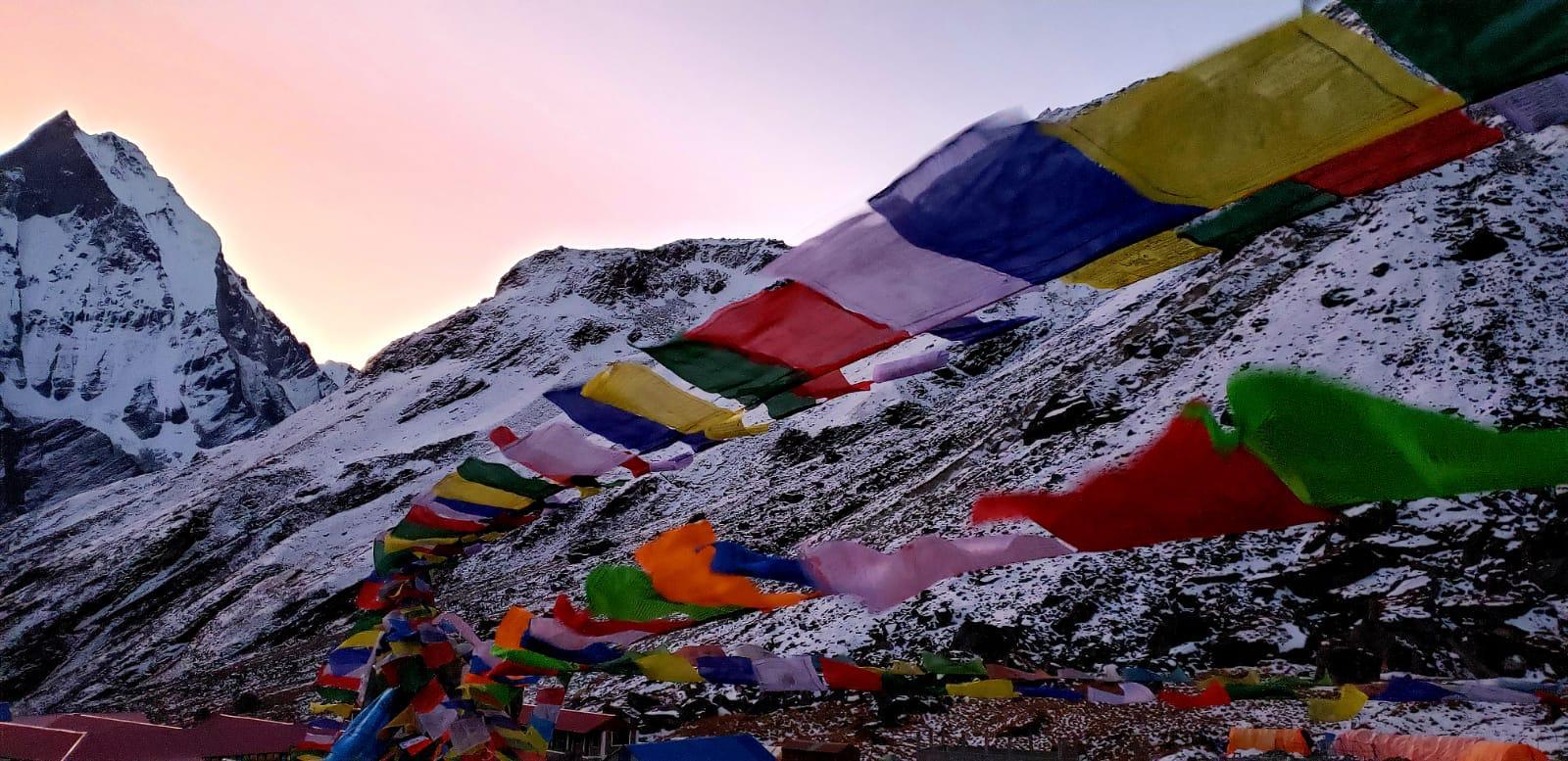


Planning the Annapurna Base Camp (ABC) Trek? Whether you’re a first-time trekker or a seasoned hiker exploring Nepal’s Himalayas, having your key questions answered beforehand can make all the difference. The ABC Trek is one of Nepal’s most scenic and culturally rich journeys offering a perfect combination of mountain vistas, warm Gurung hospitality, hot springs, and diverse landscapes.
This Traveler’s Questionnaire guide covers all the essential questions trekkers typically ask before committing to the trek—with practical, clear, and updated answers to help you plan confidently.
1. How long is the Annapurna Base Camp Trek?
The classic Annapurna Base Camp trek takes 7–12 days, depending on the route, pace, and acclimatization needs.
Shortest option: 6–7 days
Standard itinerary: 10–11 days
Comfort/slow pace: 12+ days
Your starting point (Nayapul, Siwai, or Ghandruk) also affects the total duration.
2. What is the total distance of the Annapurna Base Camp Trek?
The ABC Trek covers around 70–110 km (45–68 miles) in total. The exact distance varies depending on the chosen route and whether you include places like Ghandruk or Jhinu Danda hot springs.
3. How difficult is the Annapurna Base Camp Trek?
ABC is considered a moderate trek. There are no technical sections or high-altitude passes, but you will face:
- Daily 5–7 hours of walking
- Long stone staircases (especially Ulleri and Chhomrong)
- Steep ascents and descents
- Altitude up to 4,130 m
- Anyone with basic fitness and preparation can complete it.
4. What level of fitness is required for Annapurna Base Camp Trek?
You don’t need to be an athlete, but you should comfortably walk uphill for several hours. Recommended preparation includes:
- 3–4 weeks of cardio (jogging, cycling, swimming)
- Strength training (legs + core)
- Practice hikes carrying a light backpack
- Beginners with determination can do it.
5. Do I need a guide or porter for Annapurna Base Camp Trek?
Hiring a licensed guide is strongly recommended and now practically required for most trekking routes in Nepal.
Benefits of a guide:
- Ensures safety in altitude and weather changes
- Handles logistics, permits, and accommodation
- Shares local culture, stories, and mountain knowledge
- Supports navigation during fog or winter conditions
- A porter makes your trek much easier by carrying your bag so you can enjoy walking comfortably.
6. Is altitude sickness a risk on the Annapurna Base Camp Trek?
Yes, but the risk is moderate because the trek stays below 4,200 m. Common precautions include:
- Ascend slowly
- Stay hydrated
- Avoid alcohol before reaching base camp
- Rest immediately if symptoms appear
- Most trekkers complete ABC without altitude issues if they pace properly.
7. When is the best time to do the Annapurna Base Camp Trek?
The two best seasons:
October–November (Autumn)
- Clear skies
- Stable weather
- Best mountain views
- Most popular season
March–April (Spring)
- Rhododendrons in full bloom
- Mild temperatures
- Good visibility
Other possible months:
December–February: Cold but quiet
May–June: Warm but hazy
July–September: Rainy, risk of landslides
8. What permits do I need for Annapurna Base Camp Trek?
You will need:
1. TIMS Card (Trekkers’ Information Management System)
2. ACAP Permit (Annapurna Conservation Area Project)
Your guide or agency usually arranges these.
9. What accommodation is available on the Annapurna Base Camp Trek?
You’ll stay in teahouses/basic lodges run by locals. Facilities include:
- Clean rooms (twin beds)
- Blankets (but carry your own sleeping bag)
- Dining halls with wood heaters
- Hot showers (paid)
- Charging facilities (paid)
- Wi-Fi in many areas (paid)
- Accommodation gets more basic as you go higher.
10. What food is available during the Annapurna Base Camp Trek?

Teahouse menus are surprisingly varied. Expect dishes like:
- Dal Bhat (unlimited refills)
- Noodles, pasta, fried rice
- Soups and Tibetan bread
- Pizzas (in lower regions)
- Eggs and potatoes
- Tea/coffee/ginger lemon honey
- Pricing increases with altitude.
11. How cold does it get at Annapurna Base Camp Trek?
Temperature varies with season:
Autumn/Spring:
Days: 10–20°C
Nights: -3 to 5°C
Winter:
Days: 5–10°C
Nights: -10°C or lower at base camp
A warm -10°C comfort rating sleeping bag is recommended.
12. What should I pack for Annapurna Base Camp Trek?
Key essentials:
- Layered clothing (base, fleece, down jacket)
- Trekking boots
- Gloves, beanie, sunhat
- UV sunglasses
- Trekking poles
- Water purification tablets
- Headlamp
- First-aid kit
- Power bank
- Rain jacket
- Lightweight towel
- Keep your backpack under 8–10 kg.
Annapurna Base Camp Trek: Packing Lists
CLOTHING
✔ Base layer (thermal top & bottom)
✔ Mid-layer fleece jacket
✔ Down jacket (warm)
✔ Waterproof jacket & pants
✔ Trekking pants (2 pairs)
✔ Quick-dry t-shirts (3–4)
✔ Warm hat + sunhat
✔ Buff / neck gaiter
✔ Gloves (inner + outer)
✔ Wool socks (3–4 pairs)
✔ Sports bra / innerwear

FOOTWEAR
✔ Trekking boots (broken-in)
✔ Lightweight camp shoes
✔ Extra laces

GEAR
✔ 40–50L backpack
✔ Sleeping bag (-10°C rating)
✔ Trekking poles
✔ Headlamp + batteries
✔ Sunglasses (UV protection)
✔ Water bottles / hydration bladder
✔ Rain cover for backpack

TOILETRIES
✔ Sunscreen (SPF 50)
✔ Lip balm
✔ Wet wipes
✔ Toothbrush/toothpaste
✔ Quick-dry towel
✔ Hand sanitizer

HEALTH & SAFETY
✔ First-aid kit
✔ Diamox (if needed)
✔ Water purification tablets
✔ Blister care (band-aids, tape)
✔ Personal medications

ELECTRONICS
✔ Power bank
✔ Phone + charger
✔ Camera + extra batteries
✔ Adapter (Nepal plug)

DOCUMENTS & MONEY
✔ Passport & permits (TIMS + ACAP)
✔ Travel insurance details
✔ Cash (NPR 25,000–35,000)
✔ Emergency contact list

OPTIONAL ITEMS
✔ Gaiters (winter)
✔ Snacks (energy bars)
✔ Journal & pen
✔ Buff/face mask
✔ Lightweight crampons (winter)

Pack light. Pack smart. Trek happy!
13. Is travel insurance required for Annapurna Base Camp Trek?
Yes, especially one that covers:
- Up to 4,500 m altitude
- Helicopter rescue
- Medical emergencies
- Trip cancellation
- Nepal’s mountains can be unpredictable, and insurance is essential.
14. What is the accommodation and meal cost at Annapurna Base Camp Trek?
Typical daily expenses:
Room: USD 5–10
Meals: USD 20–35 per day
Charging/Wi-Fi: USD 1–3 each
Hot shower: USD 2–3
Expect higher prices above Deurali.
15. Are hot showers and charging available at Annapurna Base Camp Trek?
Yes, until about Machhapuchhre Base Camp (MBC).
But expect:
- Gas showers below 3,000 m
- Bucket showers at high altitudes
- Charging is usually solar-powered and chargeable per device
16. Can beginners do the Annapurna Base Camp trek?
Absolutely! ABC is one of Nepal’s most beginner-friendly high-altitude treks. As long as you are reasonably fit and take it slow, ABC is achievable for first-time trekkers.
17. Is the Annapurna Base Camp Trek safe?
Ye, generally very safe.
Risks include:
- Weather changes
- Occasional landslides (monsoon)
- Slippery trails in winter
- Minor altitude symptoms
- Using a guide significantly increases safety.
18. Is the Annapurna Base Camp Trek crowded?
It depends on the season:
Autumn & Spring: Busy, especially Chhomrong and Deurali
Winter: Quiet
Monsoon: Very few trekkers
If you prefer a peaceful trek, choose December or early March.
19. Can I do Annapurna Base Camp Trek solo?
With Nepal’s latest trekking rules, solo trekking is not recommended and often restricted. Most trekkers go with a guide for safety and compliance.
20. What is unique about the Annapurna Base Camp trek?

ABC is one of the few treks that brings you right into the heart of a 360° mountain amphitheater. Highlights include:
- Annapurna I (8,091 m) up close
- Machhapuchhre (Fishtail) towering overhead
- Natural hot springs
- Gurung culture and villages
- Rhododendron forests
- Sunrises and sunsets at base camp
It’s a trek that combines scenery, comfort, culture, and challenge perfectly.
21. Can I do the Annapurna Base Camp trek in winter?
Yes, you can trek in winter (Dec–Feb) if you’re comfortable with cold temperatures and occasional snowfall. Trails may be quieter but require proper winter gear.
22. Are there ATMs along the Annapurna Base Camp Trek?
No ATMs are available after Pokhara. Carry enough Nepalese Rupees for the entire trek (typically NPR 25,000–35,000 depending on your style).
23. Can I charge my phone and camera at Annapurna Base Camp Trek?
Yes, charging is available in most teahouses for a small fee. Solar charging is common in higher villages. Bring a power bank as backup.
24. Is Wi-Fi available on the Annapurna Base Camp Trek?
Wi-Fi is available in most teahouses, but the quality decreases as you go higher. Expect to pay USD 1–3 per connection.
25. Is drinking water safe at Annapurna Base Camp Trek?
You should not drink tap or stream water directly. Use water purification tablets, filtration bottles, or buy boiled water at teahouses.
26. How much money should I carry for Annapurna Base Camp Trek?
Most trekkers carry around NPR 25,000–35,000 for meals, tea, snacks, showers, and charging. On guided trips, carry extra only for personal expenses.
27. What is the accommodation like at Annapurna Base Camp?
Rooms are simple, clean, and shared (twin room). At Annapurna Base Camp and MBC, accommodation is basic with limited heating and hot water.
28. What happens if I get altitude sickness during Annapurna Base Camp Trek?
Notify your guide immediately. Rest, hydrate, and descend if symptoms worsen. Helicopter rescue is available if needed (insurance required).
29. What kind of food is available at Annapurna Base Camp Trek?


Teahouses offer dal bhat, rice, noodles, soups, pasta, chapati, potatoes, eggs, porridge, tea, and coffee. Food becomes simpler at higher altitudes.
30. Can I store luggage in Pokhara or Kathmandu?
Yes! Hotels and trekking agencies in both cities offer free luggage storage for trekkers.
31. What network works best on the Annapurna Base Camp Trek?
Ncell and Nepal Telecom both work in many lower areas, but the signal is patchy in higher regions.
Many trekkers rely mainly on teahouse Wi-Fi.
32. Do I need prior trekking experience for Annapurna Base Camp Trek?
No—ABC is suitable for beginners, as long as you prepare physically and trek at a comfortable pace.
33. Are there risks of avalanches at Annapurna Base Camp Trek?
The areas between Deurali and Machhapuchhre Base Camp have occasional avalanche zones, especially in winter and spring. A guide helps you choose the safest time and route.
34. What is the maximum altitude of the Annapurna Base Camp Trek?
Annapurna Base Camp sits at 4,130 meters (13,550 ft).
Final Thoughts
The Annapurna Base Camp trek is an unforgettable journey suitable for trekkers of all levels. With proper preparation, realistic expectations, and the right guidance, anyone can reach the base camp and experience the magic of standing beneath the Annapurna massif.
