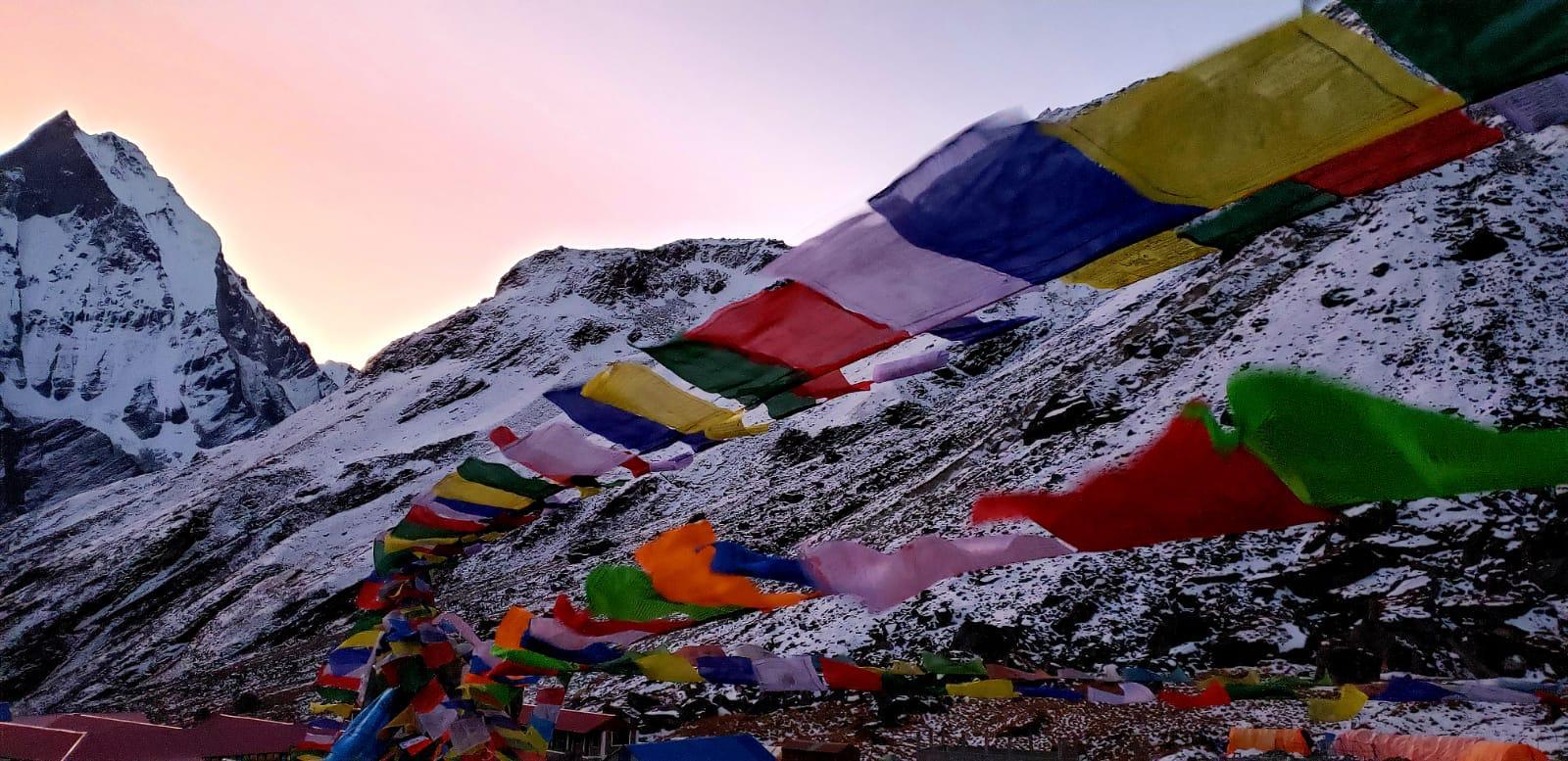


Island Peak Expedition: What It’s Really Like to Stand at 6,189m. Standing on the summit of Island Peak (Imja Tse) at 6,189 meters, the world feels vast, silent, and impossibly close. Ama Dablam rises like a cathedral to the west, Lhotse’s icy face looms to the north, and the Khumbu Valley stretches far below in a maze of glaciers and moraines. It’s not just a climb it’s a moment earned step by step, breath by breath.
But what is an Island Peak expedition really like? Beyond the Instagram photos and summit statistics, here’s an honest look at the experience from acclimatization to the final push, and what it feels like to stand on top of your first Himalayan peak.
Table of Contents
Why Island Peak Captures So Many Climbers
Island Peak is often described as a “beginner’s” trekking peak but don’t let that label mislead you. While technically accessible, it still demands fitness, mental resilience, and respect for altitude.
What makes Island Peak so popular is its perfect balance:
- High Himalayan altitude without extreme technical difficulty
- Stunning views of Everest, Lhotse, Nuptse, and Ama Dablam
- A genuine mountaineering experience using ropes, crampons, and ice axe
- Ideal as a first 6,000-meter peak
- For many climbers, Island Peak is where trekking ends and mountaineering truly begins.
The Journey Before the Climb
An Island Peak expedition isn’t just summit day, it’s a gradual transition from green valleys to a frozen alpine world.
Trekking Through the Khumbu

Most expeditions begin with the classic trek through:
- Lukla
- Namche Bazaar
- Tengboche
- Dingboche
- Chukhung
This phase is as important as the climb itself. The slow ascent allows your body to adapt to thinning air, while days are filled with prayer flags, suspension bridges, yaks, and views that never stop improving.
Acclimatization hikes above Dingboche and Chukhung prepare your lungs and legs for what’s ahead.
Life at Island Peak Base Camp
At around 5,100 meters, Island Peak Base Camp feels stark and remote. There are no teahouses here just tents, wind, and the sound of ice cracking in the glacier nearby.
Evenings are quiet:
- Hot soup and simple meals
- Gear checks and rope briefings
- Early nights as temperatures drop fast
You feel the altitude constantly. Simple tasks, changing clothes, melting snow, tying boots, take more effort. Sleep is lighter. Breathing is louder. And tomorrow, the climb begins.
Summit Day: The Hardest and Most Rewarding Day
A Midnight Start
Summit day usually begins between 12:00 and 2:00 a.m. Headlamps glow as climbers rope up and step onto the frozen moraine.
The early hours are mentally demanding:
- Steep rocky terrain
- Cold biting through gloves
- Slow, deliberate movement
Above 5,500 meters, every step feels heavier. This is where mental strength matters as much as physical fitness.
Crossing the Glacier and the Headwall
The climb transitions onto the glacier, where crampons bite into hard ice. Fixed ropes lead up the famous 40–45° ice headwall, the most technical section of the climb.
Here, climbers use:
- Jumar (ascender)
- Ice axe
- Harness and rope
It’s not extreme climbing, but at this altitude, even simple movements feel intense.
Standing on the Summit of Island Peak (6,189m)

The summit is narrow, often just enough space for a few climbers at a time. And yet, the feeling is immense.
You’re surrounded by giants:
- Lhotse towering above
- Ama Dablam perfectly framed
- Makalu in the distance
- Glaciers flowing far below
Breathing is shallow. The air is thin. But the sense of achievement is overwhelming. For many, it’s the highest point they’ve ever stood—and one they’ll never forget.
Summit time is short. Safety comes first. After photos and quiet reflection, the descent begins.
The Descent: Often Harder Than the Climb
Most accidents happen on the way down, when fatigue sets in. Descending the headwall requires focus and steady movement. Once back at base camp, exhaustion turns into relief—and celebration.
That first hot drink after returning feels extraordinary.
Who Is Island Peak Really For?
Island Peak is ideal if you:
- Have prior high-altitude trekking experience
- Are comfortable hiking 6–8 hours a day
- Want your first true mountaineering summit
- Are prepared to train before the expedition
- It’s challenging, but achievable with proper preparation and a responsible itinerary.
What Island Peak Teaches You
More than the summit, Island Peak teaches:
- Patience with altitude
- Respect for mountains
- Trust in your team and guide
- Confidence in your own limits
Standing at 6,189 meters changes how you see effort, discomfort, and reward.
Final Thoughts: More Than Just a Peak
An Island Peak expedition is not about ticking off a height, it’s about transformation. From your first step on the Khumbu trail to that quiet moment on the summit, the mountain strips life down to essentials: breath, movement, and purpose.
If you’ve ever wondered what it’s really like to stand at 6,189 meters Island Peak offers an answer you’ll carry for a lifetime.