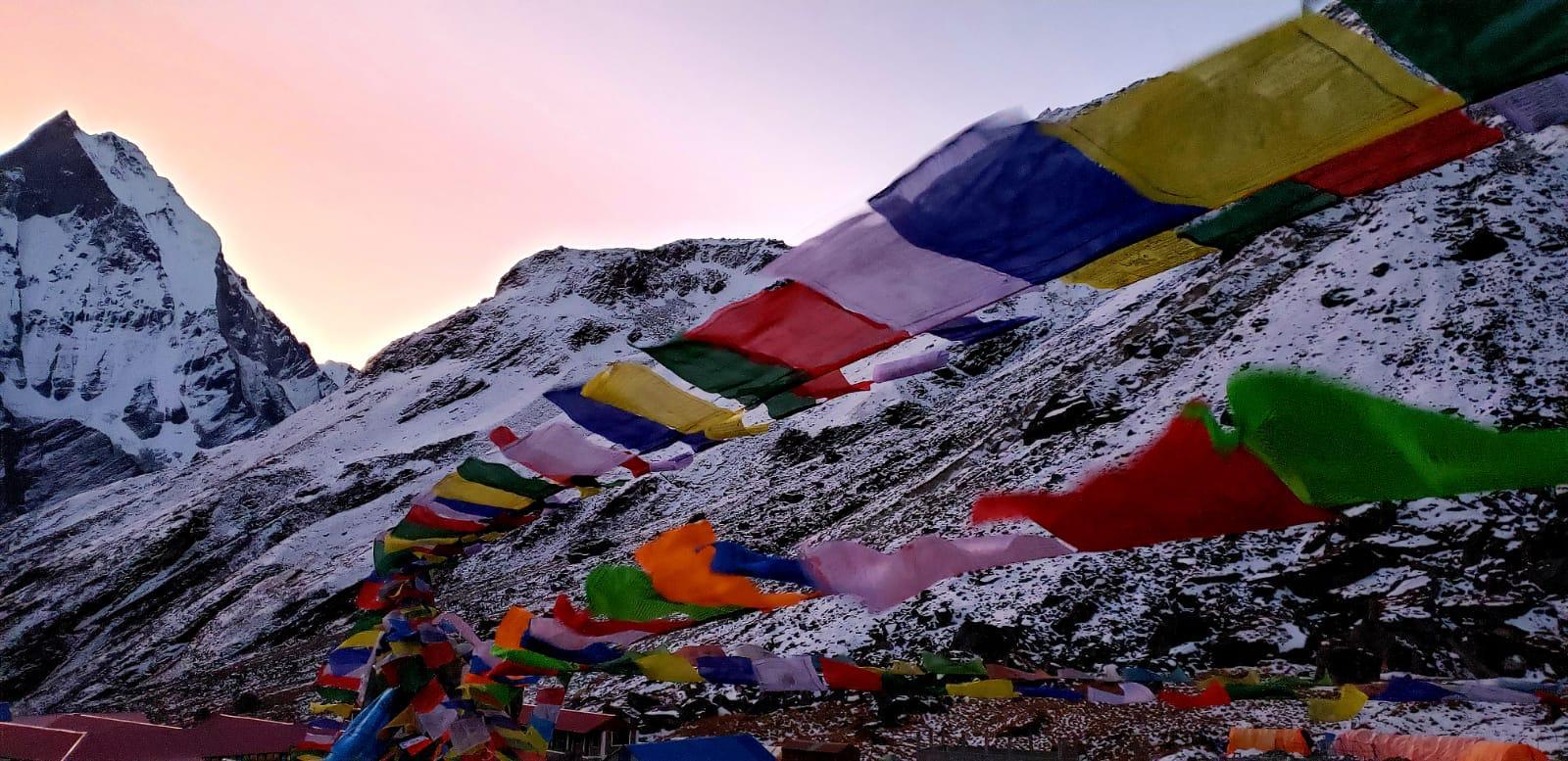


Island Peak Climb Explained: Route, Preparation, & Training. Island Peak (6,189m), locally known as Imja Tse, is one of Nepal’s most iconic trekking peaks—famous for its dramatic glacier approach, steep headwall, and unforgettable summit ridge overlooking Everest, Lhotse, Makalu, Ama Dablam, and Baruntse. For many climbers, Island Peak is the perfect stepping stone into the world of Himalayan mountaineering.
Whether you’re aiming for your first 6,000m summit or preparing for bigger expeditions in the future, this complete guide covers everything you need to know: routes, cost, itinerary, training, gear, preparation, and how difficult Island Peak truly is.
Table of Contents
What Makes Island Peak Special: Island Peak Climb Explained
Island Peak stands in the Imja Valley, appearing like an “island” of ice between towering 8,000m giants. It combines:
- A classic Everest Base Camp–style trek
- Glacier training
- A real mountaineering experience (ropes, crampons, ice axes)
- A spectacular, narrow summit ridge
- It is challenging but achievable for fit and determined trekkers with basic climbing preparation.
Island Peak Climbing Itinerary (Most Popular 17–18 Days Plan)
Here is the standard, well-paced itinerary recommended for safe acclimatization:
Day 1: Arrival in Kathmandu
Day 2: Gear check, permits, briefing
Day 3: Fly to Lukla (2,840m) – Trek to Phakding
Day 4: Trek to Namche Bazaar (3,440m)
Day 5: Acclimatization day in Namche
Day 6: Trek to Tengboche
Day 7: Trek to Dingboche
Day 8: Acclimatization hike to Nangkartshang Peak
Day 9: Trek to Chhukung (4,730m)
Day 10: Pre-climb training at Island Peak Base Camp
Day 11: Trek to Island Peak Base Camp (5,100m)
Day 12: Summit Day (6,189m) – Return to Chhukung
Day 13: Trek to Namche
Day 14: Trek to Lukla
Day 15: Fly back to Kathmandu
Day 16–17: Spare / departure day
Optional add-on:
- Everest Base Camp before Island Peak (adds 3–4 days)
- Kongma La Pass for a more technical approach
- Everest 3 Passes and Island Peak (adds 3–4 days)
Island Peak Climbing Route Explained
The climb has four main sections:
1. Base Camp to High Camp (optional)
Mostly rocky terrain. Some groups skip High Camp due to limited space.
2. High Camp to Crampon Point
- Pre-dawn climb
- Steep rocky trail
- Scrambling on loose rock and sandy slopes
- Requires helmets and harness
3. Glacier Section
At crampon point, you gear up with:
- Crampons
- Ice axe
- Harness
- Jumar / ascender
- Carabiners
You walk across the glacier passing:
- Crevasses (fixed ladders sometimes used)
- Seracs – A gentle slope leading to the headwall
4. The Famous Island Peak Headwall
This is the most technical part:
- 45–55° steep snow/ice slope
- Fixed ropes used with ascenders
- Hard physical push to reach the ridge
5. Final Summit Ridge
A knife-edge snow ridge with incredible views of:
- Lhotse (8,516m)
- Nuptse
- Ama Dablam
- Baruntse
- Makalu
Short but exposed—one of the most iconic moments of the climb.
How Difficult Is Island Peak Climb Explained? (2025–2026 Difficulty Breakdown)
Island Peak is graded PD+ (Peu Difficile+) in the Alpine system.
Difficulty Factors
1. Altitude
6,189m is significantly high—thin air makes every step harder.
2. Technical skills
- Basic mountaineering required:
- Jumar/ascender use
- Rappelling with figure-8 or ATC
- Walking on fixed lines
- Crampon footwork
3. Headwall & Summit Ridge
This section is physically demanding and the reason many people turn back.
4. Long Summit Day
10–14 hours of climbing.
Who Can Climb Island Peak?
You can do it if you:
- Are fit (able to hike 6–7 hours/day)
- Have basic climbing training
- Are comfortable with exposure
- Have completed high-altitude treks before (Everest region, Annapurna, etc.)
Ideal for:
- Intermediate trekkers
- Beginners with training
- Climbers preparing for Lobuche, Ama Dablam, Aconcagua, or 7-summits
Training & Preparation for Island Peak
A 6–8 week training plan is recommended.
Training Components
1. Cardio (3–4 times/week)
Stair climbing, long hikes, running, cycling.
2. Strength Training
Focus on:
- Legs
- Core
- Shoulders (rope work)
3. Altitude Preparation
Multi-day treks or sleeping at increasing altitude if possible.
4. Technical Training
Learn:
- Jumar use
- Fixed rope techniques
- Crampon footwork
- Rappelling
You can train in Nepal, Chamonix, Colorado, New Zealand, or local indoor climbing gyms.
Expert Tips for a Successful Summit
- Choose late April–May or October–November for best weather
- Avoid summiting right after reaching Base Camp, take your time
- Hydrate well (3–4 liters/day)
- Practice using your gear before the climb
- Stay mentally strong on the headwall—slow and steady
- Use layering to manage cold during the long pre-dawn ascent
- Respect your guide’s instructions at all times
Final Thoughts
Island Peak is the perfect blend of trekking and mountaineering. It’s challenging but incredibly rewarding, offering a real glimpse of high-altitude climbing in the Himalayas without the extreme risks of major expeditions. With proper preparation, patience, and a skilled Sherpa guide, reaching the summit of Island Peak is absolutely achievable for motivated adventurers.