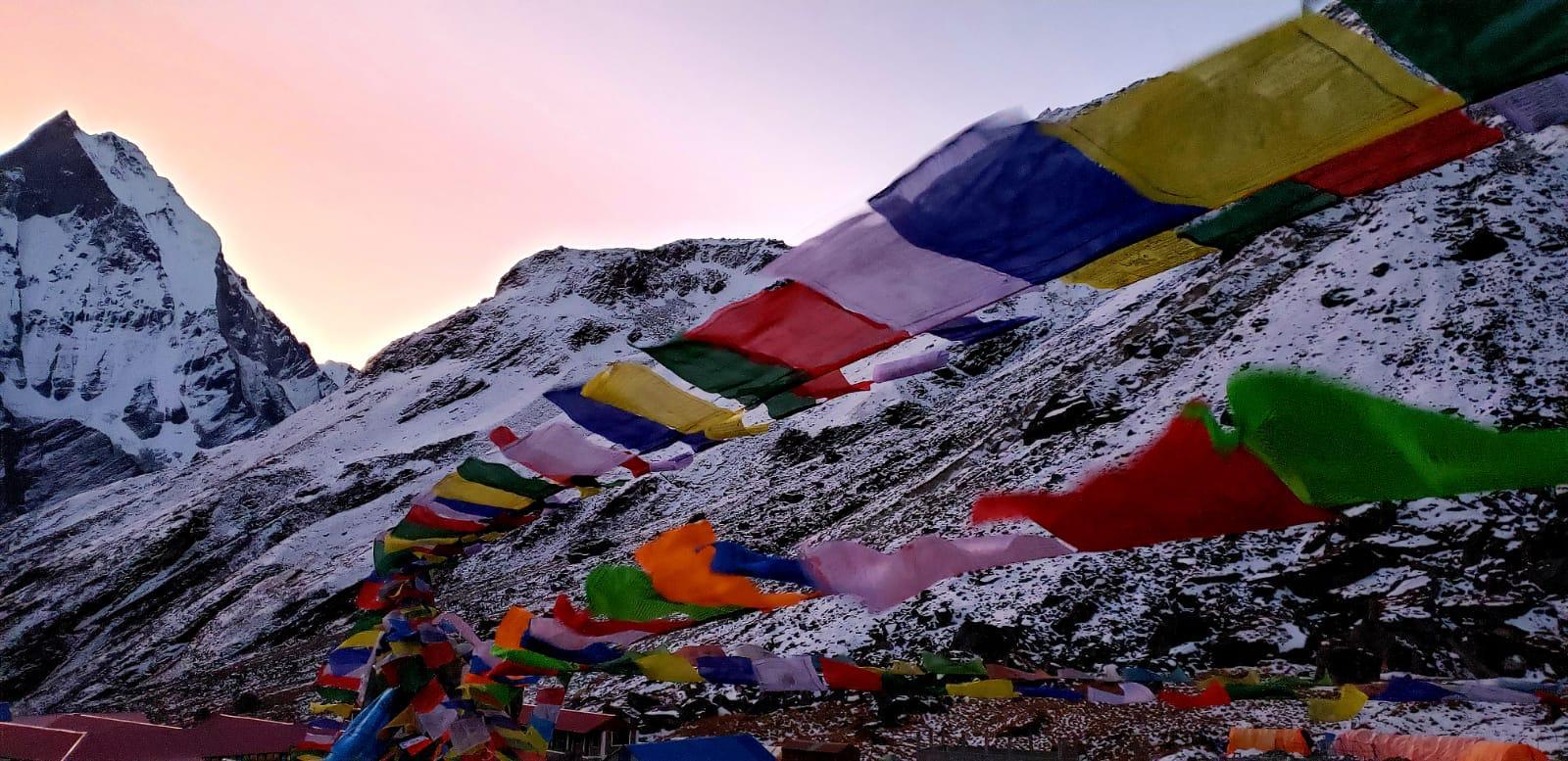


Mera peak – 6,476 Reasons to Fall in Love with isn’t just a catchy phrase, it reflects the magic of standing at 6,476 meters on Nepal’s highest trekking peak, surrounded by some of the world’s tallest mountains and an experience that changes how you see the Himalayas forever.
Mera Peak is often described as the perfect introduction to high-altitude mountaineering, but that simple label doesn’t do it justice. Below are 10 powerful reasons why Mera Peak captures the hearts of trekkers and climbers from around the world.
Table of Contents
1. Nepal’s Highest Trekking Peak at 6,476m – Mera Peak
At 6,476 meters, Mera Peak is the highest trekking peak in Nepal. While it doesn’t require advanced technical climbing skills, the altitude alone makes the achievement deeply rewarding. Reaching this height gives you a true taste of Himalayan mountaineering without the extreme technical demands of 7,000m or 8,000m expeditions.
2. One of the Best First 6,000m Peaks – Mera Peak
Mera Peak is widely considered the best first Himalayan peak. The climb involves glacier travel, basic crampon use, rope techniques, and an ice axe—making it ideal for beginners who want to step into mountaineering in a controlled, guided environment.
No prior climbing experience is required, but good fitness and preparation are essential.
3. Jaw-Dropping Views of Five 8,000m Giants from Mera Peak
From the summit, you’re rewarded with one of the widest panoramic views in Nepal. On a clear day, you can see:
- Everest (8,848m)
- Lhotse (8,516m)
- Makalu (8,485m)
- Cho Oyu (8,188m)
- Kangchenjunga (8,586m, in the distance)
Very few peaks in the world offer such an incredible lineup in a single view.
4. A Remote and Less-Crowded Route – Mera Peak
Unlike Everest Base Camp or Annapurna Circuit, this Peak route is quieter and more remote. After leaving Lukla, the trail heads into the less-traveled Hinku Valley, where you’ll experience peaceful forests, isolated villages, and untouched alpine landscapes.
This sense of wilderness is a major reason climbers fall in love with Mera Peak.
5. Gradual Acclimatization for Better Safety
The itineraries are designed with excellent acclimatization profiles. The slow ascent through villages like Paiya, Panggom, and Khote allows your body to adapt properly to altitude, reducing the risk of Acute Mountain Sickness (AMS).
Extra acclimatization days at Khare and Mera High Camp play a crucial role in summit success.
6. A True Expedition Experience without the Chaos
While still accessible, it feels like a real Himalayan expedition. You’ll stay in teahouses during the trek and transition to tented camps higher up. Fixed ropes, early-morning summit pushes, glacier crossings, and teamwork all combine to create an authentic mountaineering experience—without the extreme logistics of bigger peaks.
7. Ideal for Training and Future Big Mountains
Many climbers use Mera Peak as preparation for higher goals such as Island Peak, Ama Dablam, or even Everest. The altitude, endurance demands, and cold conditions make it excellent physical and mental training.
It builds confidence at high altitude, something no gym or lower trek can replicate.
8. Spring and Autumn Offer Near-Perfect Conditions
The best seasons for Mera Peak climbing are:
- Spring (March–May): Stable weather, warmer temperatures, clear summit mornings
- Autumn (September–November): Crisp air, excellent visibility, and dramatic mountain views
During these seasons, summit success rates are high when proper acclimatization and experienced guides are involved.
9. Strong Safety Record with Professional Guidance
Mera Peak has a good safety record when climbed with licensed guides and a well-planned itinerary. Professional expeditions include:
- Experienced climbing guides
- Fixed ropes on the summit section
- Emergency oxygen and first-aid kits
- Clear evacuation protocols
This makes it a responsible and safe choice for motivated trekkers stepping into mountaineering.
10. A Personal Victory That Stays with You Forever
Summiting Mera Peak isn’t just about altitude, it’s about self-belief. The long days, cold mornings, and final push in the dark test your patience and determination. Standing on the summit at sunrise, with the Himalayas glowing around you, is a moment that stays with you for life.
Many climbers say Mera Peak is the moment they truly fell in love with the mountains.
Practical Information: What You Should Know
Typical Duration
- 13–18 days (Kathmandu to Kathmandu)
Difficulty Level
- Physically demanding due to altitude
- Technically moderate
- Requires strong cardiovascular fitness
Required Permits
- Mera Peak Climbing Permit
- Makalu Barun National Park Permit
Accommodation & Meals
- Teahouses during the trek
- Tented camps above Khare
- Hot meals prepared by support staff at higher camps
Cost Range
- Generally, USD 2,200–3,500, depending on services, group size, and inclusions
Final Thoughts
Mera Peak is not the hardest mountain in Nepal, but it might be one of the most rewarding. It offers altitude, beauty, solitude, and challenge in perfect balance. Whether you’re a strong trekker dreaming of your first summit or an aspiring mountaineer building experience, there are truly 6,476 reasons to fall in love with Mera Peak and these 10 are just the beginning.