

Kori Trek in Nepal, check the complete Guide to Sikles, Kori Danda & Kahphuche Lake. When people think of trekking in Nepal, the Everest Base Camp and Annapurna Circuit usually steal the spotlight. Yet, tucked away in the serene folds of the Annapurna region lies a trail that few outsiders know about – the Kori Trek. A journey that blends mountain wilderness with rich Gurung heritage, the Kori Trek is a secret worth uncovering.
The Kori Trek is a newly opened, off-the-beaten-path trek in the Annapurna region of Nepal. It’s less crowded compared to popular routes like Annapurna Base Camp Trek or Ghorepani Poon Hill Trek, but it offers equally breathtaking mountain views and authentic cultural experiences.
Where is Kori Trek?
The Kori Trek is a hidden gem in the Annapurna region, located northeast of Pokhara in the Kaski district. The Kori Trek begins from Sikles, a picturesque Gurung village about a hour’s drive from Pokhara. From there, the trail winds through forests, alpine pastures, and ridges, eventually reaching Kori Danda (3,800m) – a natural balcony with some of the best Himalayan panoramas in Nepal.
Why Choose Kori Trek in Nepal?
Panoramic Himalayan Views
- From Kori Danda, you can see Annapurna II, Lamjung Himal, Annapurna IV, Machhapuchhre (Fishtail), and even distant Manaslu peaks.
Authentic Cultural Experience
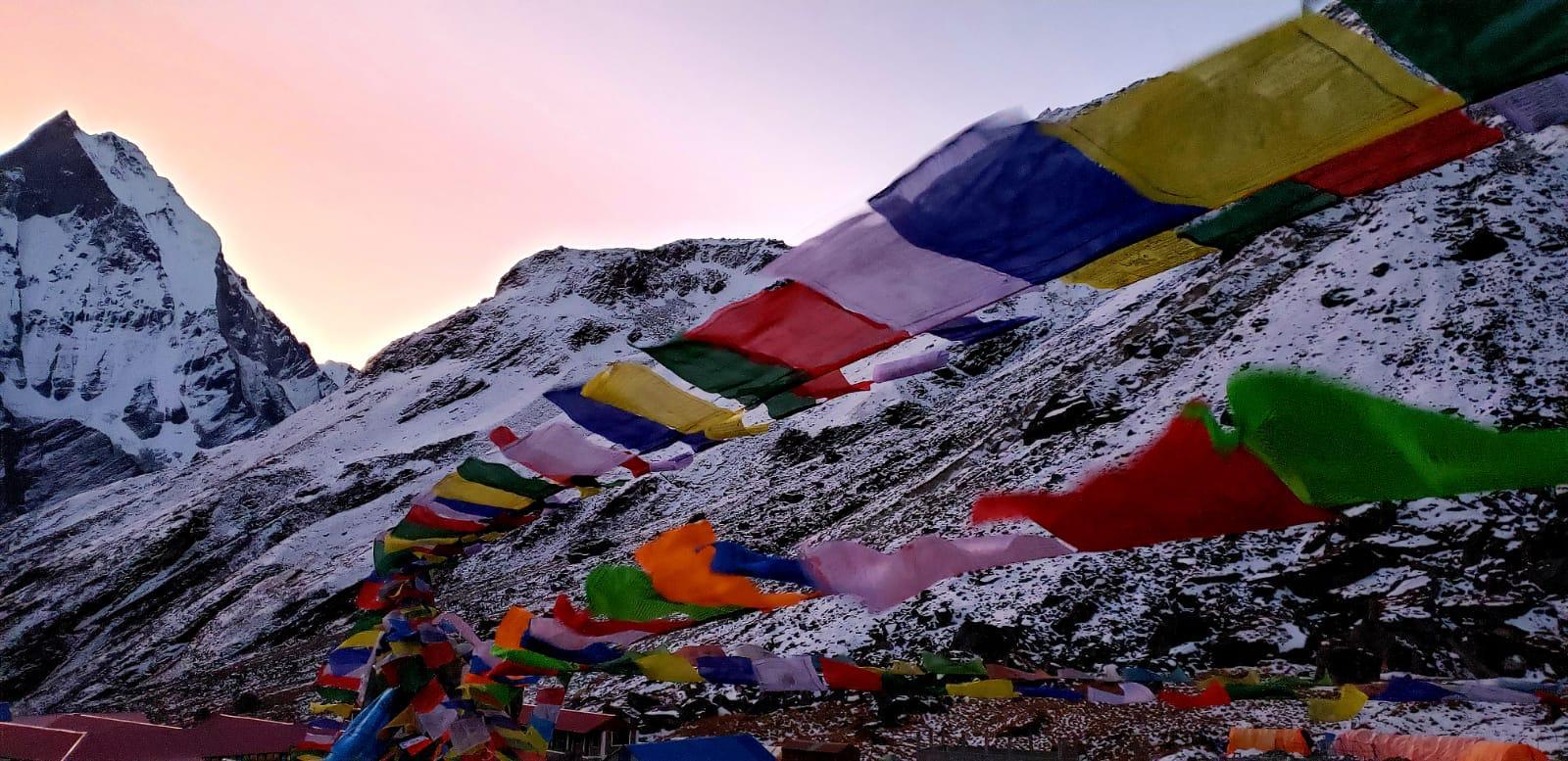
- The trek passes through traditional Gurung villages with stone-roofed houses, prayer flags, and a way of life that feels centuries old.
Kahphuche Lake (Optional Side Trip)
- At 2,450m, Kahphuche is Nepal’s lowest glacial lake. Its turquoise-blue water surrounded by cliffs makes it one of the trek’s highlights.
Off-the-Beaten-Path
- Unlike the crowded Annapurna Base Camp or Ghorepani Poon Hill, the Kori Trek sees very few trekkers, making it peaceful and authentic.
The Experience on the Trail
The trek starts gently, weaving past terraced fields and traditional villages. As you gain height, rhododendron and oak forests take over, often bursting with colors in spring. Higher up, the trail opens into alpine meadows where yaks graze and the silence is broken only by the wind.
On clear mornings at Kori Danda, the first rays of sunlight paint the snow-capped peaks golden – a view that rivals Poon Hill, but without the crowds.
Overview of the Kori Trek in Nepal
- Region: Annapurna region (Kaski district, Gandaki Province)
- Starting Point: Sikles village (one of the largest Gurung settlements)
- Highest Point: Kori Danda (~3,800m)
- Duration: 6–8 days (flexible depending on route)
- Difficulty: Moderate (well-suited for trekkers with average fitness)
- Best Season: Spring (Mar–May) & Autumn (Sep–Nov)
Highlights of the Kori Trek in Nepal
- Kori Danda Viewpoint: Panoramic views of Annapurna II, IV, Lamjung Himal, Machhapuchhre (Fishtail), and Manaslu ranges.
- Sikles Village: Rich Gurung culture, traditional stone-roof houses, and warm hospitality.
- Wildlife & Nature: Lush forests, rhododendron blooms, and highland pastures.
- Less Crowded: A hidden gem with fewer trekkers, offering a peaceful Himalayan experience.
Outline Itinerary for Kori Trek in Nepal
Day 1: Drive Pokhara → Sikles
Day 2: Trek Sikles → Tasa
Day 3: Tasa → Kori Danda
Day 4: Excursion to Kahphuche Lake (optional)
Day 5: Kori → Sikles
Day 6: Explore Sikles Village
Day 7: Drive back to Pokhara
Detailed Itinerary for Kori Trek in Nepal
Day 1: Pokhara → Sikles (1,980m)
- Drive: 4–5 hours by jeep/bus.
- Explore the village of Sikles, one of the oldest Gurung settlements. Overnight in community lodge/homestay.
Day 2: Sikles → Tasa (2,500m)
- Trek time: 5–6 hours.
- The trail passes through terraced fields, oak and rhododendron forests. Tasa is a small settlement with basic teahouses.
Day 3: Tasa → Kori Danda (3,800m)
- Trek time: 6–7 hours.
- Gradual climb through alpine pastures. The viewpoint at Kori offers spectacular Himalayan panoramas.
Day 4: Kori Danda → Kahphuche Lake (2,450m) → Return to Kori
- Trek time: 6–7 hours (round trip).
- Descend to Kahphuche Lake for a side trip. Enjoy the glacial lake and return to Kori for an overnight.
Day 5: Kori → Sikles
- Trek time: 6–7 hours downhill. Overnight in Sikles.
Day 6: Explore Sikles Village
- Immerse in Gurung culture, visit traditional houses, museums, and interact with locals.
Day 7: Drive Sikles → Pokhara
- Return by jeep/bus.
Itinerary can be extended to 8–9 days with camping at higher ridges.
Accommodation for Kori Trek in Nepal
The trek is perfect if you want something less commercial, rich in culture, and naturally stunning.
Sikles: Community-run homestays and guesthouses.
Tasa & Kori: Limited teahouses, sometimes camping required.
Kori Danda: Few community lodges, so booking in advance or carrying tents is recommended.
Food on the Kori Trek in Nepal
- Mostly local Nepali meals (Dal Bhat, noodles, potatoes, bread, tea).
- Limited menu compared to commercial treks, but very organic and homely.
- Carry snacks and energy bars for higher sections.
Best Time to Go to Kori Trek in Nepal
- Spring (March–May): Forests filled with rhododendron blooms and clear skies.
- Autumn (September–November): Crisp weather, best visibility of the mountains.
- Winter (December–February): Cold but peaceful, with snow-dusted ridges.
Trek Difficulty of the Kori Trek in Nepal
- Grade: Moderate
- Altitude is not extreme (below 4,000m), so the risk of AMS (Altitude Mountain Sickness) is low.
- Trails involve steep climbs and long walking days (5–7 hours).
- Suitable for trekkers with average fitness.
How to Reach the Trailhead of the Kori Trek in Nepal
- From Pokhara (822m) → Drive to Sikles (1,980m) by local bus or private jeep (4–5 hours).
- The trek begins from Sikles.
Costs & Permits Kori Trek in Nepal
Permits Required:
- TIMS Card (Trekkers Information Management System)
- ACAP (Annapurna Conservation Area Permit)
- Cost Estimate: $30–40/day (basic homestays, food, permits, transport).
Who is Kori Trek For?
This trek is moderate in difficulty – perfect for trekkers who want something offbeat without going extreme. If you’re looking for solitude, cultural connection, and raw Himalayan beauty, Kori might just become your favorite trek in Nepal.
Kori Trek in Nepal vs Other Treks in Nepal
Kori Trek vs Poon Hill
- Poon Hill (3,210m) is famous for its sunrise view of the Annapurna and Dhaulagiri ranges. It’s short, accessible, and very popular among beginners.
- Kori Trek (3,800m) offers an equally spectacular (and higher) viewpoint at Kori Danda, but without the large crowds. The trail is wilder, with more forest and cultural immersion.
If you want a quick trek with comfort and lots of fellow trekkers, Poon Hill is best. But if you prefer solitude, authentic Gurung villages, and fewer tourists, Kori Trek wins.
Kori Trek vs Annapurna Base Camp (ABC)
- ABC Trek (4,130m) is one of Nepal’s most popular treks, leading into the heart of the Annapurna Sanctuary with dramatic glacier views. It’s busier, has better infrastructure, and takes 7–10 days.
- Kori Trek (3,800m) is shorter (6–8 days), lower in altitude, and far less crowded. While you don’t walk into a glacier basin, the views of Annapurna II, IV, Lamjung Himal, and Machhapuchhre are still breathtaking.
Choose ABC if you want iconic “bucket-list” scenery and don’t mind sharing the trail. Choose Kori if you prefer peace, simplicity, and raw Himalayan landscapes.
Why Choose Kori as a Hidden Alternative
- Less Crowded: Unlike Poon Hill and ABC, you might trek for hours without meeting another group.
- Cultural Depth: Sikles village is one of the oldest Gurung settlements, offering a more authentic cultural stay.
- Adventure Feel: Limited teahouses and optional camping make Kori feel like a true wilderness trek.
- Perfect for Repeat Trekkers: If you’ve already done ABC, EBC, or Poon Hill, Kori offers something fresh and undiscovered.
In short, the Kori Trek is ideal for trekkers seeking authenticity, quiet trails, and hidden beauty, while still enjoying stunning views of Annapurna.
Kori Trek vs Poon Hill vs Annapurna Base Camp
| Feature | Kori Trek | Poon Hill Trek | Annapurna Base Camp (ABC) Trek |
| Highest Point | Kori Danda – 3,800m | Poon Hill – 3,210m | Annapurna Base Camp – 4,130m |
| Duration | 6–8 days | 4–5 days | 7–10 days |
| Difficulty | Moderate | Easy–Moderate | Moderate |
| Scenery | Annapurna II, Lamjung Himal, Machhapuchhre | Sunrise over Annapurna & Dhaulagiri | Annapurna Sanctuary & glaciers |
| Crowds | Very few trekkers | Very crowded (popular short trek) | Crowded in peak seasons |
| Culture | Authentic Gurung village (Sikles) | Gurung & Magar villages | Mixed ethnic villages (Gurung, Magar, Chhetri) |
| Accommodation | Basic homestays, some camping | Well-developed teahouses | Good teahouse infrastructure |
| Best For | Offbeat trekkers, culture & solitude seekers | Beginners, families, short-time trekkers | Bucket-list trekkers, iconic scenery seekers |
Conclusion: Kori Trek in Nepal
The Kori Trek is Nepal’s best-kept trekking secret. It offers everything — culture, landscapes, adventure, and views — but without the commercialization of popular treks. For those who dare to wander off the beaten path, Kori will reward them with memories that last a lifetime.