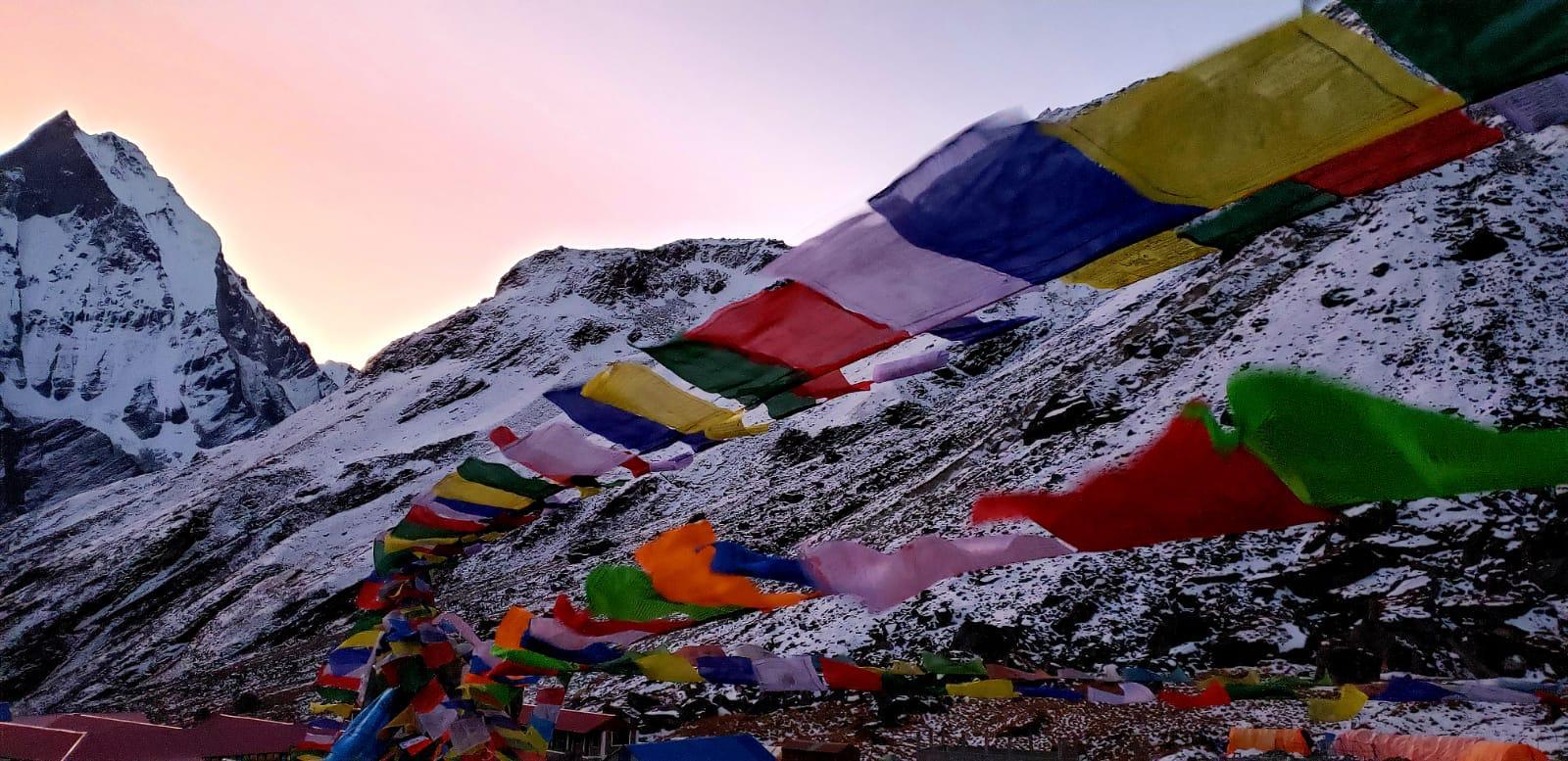
Ultimate High-Success Lobuche Peak Climbing Program 2026: Professionally Guided for a Safe and Successful Summit

Lobuche Peak Climbing Program 2026

The Ultimate High-Success Lobuche Peak Climbing Program 2026 is a professionally designed Himalayan expedition to Lobuche Peak (6,119m), created to maximize summit success through expert guidance, proper acclimatization, and strong logistical support in Nepal’s Everest region. Set in the heart of the Khumbu, this climb offers a true introduction to Himalayan mountaineering with spectacular views of Everest, Lhotse, Nuptse, Ama Dablam, and surrounding peaks.

The program is ideal for climbers seeking a safe, structured, and results-focused ascent, where careful planning and climber well-being take priority over rushed schedules or unnecessary risk.

Why Choose Our High-Success Lobuche Peak Climbing Program 2026?

Summit success on Lobuche Peak depends on preparation, pacing, and professional decision-making. Our program is built around proven strategies that significantly improve the chances of reaching the summit safely.

Key advantages include:

  • Extended acclimatization and rest days
  • Conservative ascent profile
  • High guide-to-client ratio
  • Flexible summit planning based on weather and health
  • Strong safety and evacuation systems

We prioritize climber well-being first—because healthy climbers summit more often.

Route & Climbing Experience: Lobuche Peak Climbing Program 2026

Lobuche Peak involves glacier travel, snow slopes, and a short but steep technical section near the summit. Fixed ropes are used where necessary, and climbers move as a team under the guidance of experienced mountain professionals.

Highlights of the climb:

  • Glacier crossing above Lobuche village
  • Snow and ice climbing near high camp
  • Technical summit ridge with panoramic Himalayan views
  • Views of Everest, Lhotse, Nuptse, Pumori, and Ama Dablam

This climb offers an excellent introduction to Himalayan mountaineering.

Acclimatization & Itinerary Design: Lobuche Peak Climbing Program 2026

Proper acclimatization is the foundation of our high-success approach. Our itinerary includes multiple adaptation days at key elevations to reduce altitude-related risks and improve performance on summit day.

Strategic acclimatization stops include:

  • Namche Bazaar
  • Dingboche
  • Lobuche High Camp

Our guides closely monitor each climber’s condition and adjust the pace or schedule when needed.

Technical Training & Preparation: Lobuche Peak Climbing Program 2026

Before the summit attempt, climbers receive practical, hands-on training to ensure confidence and safety on technical terrain.

Training covers:

  • Use of crampons and ice axe
  • Fixed rope climbing techniques
  • Glacier travel and rope movement
  • High-altitude safety awareness

No advanced technical experience is required, but prior high-altitude trekking experience is recommended.

Professional Guides & Safety Standards

Our Lobuche Peak expeditions are led by licensed, highly experienced mountain guides, supported by skilled Sherpa climbers and trekking staff.

Safety measures include:

  • Daily health and oxygen-level monitoring
  • Emergency medical kits and oxygen supply
  • Satellite communication systems
  • Clear evacuation and rescue plans

Safety decisions are never compromised for summit ambition.

Best Time to Climb Lobuche Peak in 2026

We operate Lobuche Peak climbs during the most reliable seasons:

Spring (March–May):

  • Stable weather
  • Warmer temperatures
  • Excellent climbing conditions

Autumn (September–November):

  • Clear skies and crisp visibility
  • Cooler temperatures
  • Ideal post-monsoon conditions

Fitness Requirements & Preparation

Lobuche Peak is physically demanding. Participants should be capable of long trekking days at altitude and maintain endurance over multiple weeks.

Recommended preparation includes:

  • Cardiovascular endurance training
  • Strength training for legs and core
  • Practice hikes with elevation gain

A good fitness base greatly increases summit success and enjoyment.

Equipment & Gear Support

We provide all group climbing equipment, including ropes and safety gear. Climbers must bring personal gear such as boots, harness, helmet, crampons, and cold-weather clothing.

A detailed packing list and gear rental assistance in Kathmandu are provided after booking.

Permits & Documentation

We handle all required permits and paperwork, including:

  • Lobuche Peak climbing permit
  • Sagarmatha National Park entry permit
  • Local trekking permits

This ensures a smooth and legally compliant expedition.

Responsible & Sustainable Climbing

Our program follows ethical and environmentally responsible practices:

  • Leave No Trace principles
  • Proper waste management
  • Fair wages and insurance for staff
  • Support for local communities

Who Is This Program For?

This program is ideal for:

  • Trekkers aiming for their first 6,000m peak
  • Climbers preparing for higher Himalayan objectives
  • Adventure travelers seeking a well-supported ascent

Frequently Asked Questions (FAQs)

Is Lobuche Peak suitable for beginners?

Lobuche Peak is suitable for fit trekkers with prior high-altitude experience. No advanced technical climbing background is required, as training is provided.

What is the success rate of this program?

Our success rate is higher than average due to extended acclimatization, experienced guides, and flexible summit planning based on real-time conditions.

How long is the Lobuche Peak expedition?

The full program typically lasts 18–20 days, including acclimatization and contingency days.

Do I need travel or rescue insurance?

Yes. Comprehensive travel and high-altitude rescue insurance is mandatory for all participants.

What happens if I cannot summit?

Safety comes first. If conditions or health do not allow a summit attempt, our guides will make the safest decision. Partial refunds are not generally available, but the experience remains valuable and professionally guided.

Book Your Lobuche Peak Climb 2026

Ready to Summit with Confidence?

Join our High-Success Lobuche Peak Climbing Program 2026 and experience a Himalayan ascent built on preparation, professionalism, and proven results.

  • Small group sizes
    • Expert guides & high safety standards
  • Carefully designed high-success itinerary

Contact us today for detailed itinerary, dates, pricing, and availability and take your next step into Himalayan mountaineering with confidence.

Send us a Inquiry

Peak Climbing for Novices: Choosing the Right Peak to Climb

Peak Climbing in Nepal
Jim
Peak Climbing for Novices: Choosing the Right Peak to Climb 6

Peak Climbing for Novices: Choosing the Right Peak to Climb. The best place to start discovering more about this thrilling activity if you’re new to mountaineering is with a thorough guide for beginners on mountain climbing. Climbing mountains is a physical challenge that fuels a closer bond with the natural world. Mountaineers want expertise in scaling a mountain’s top and overcoming obstacles. Similarly, for practically all mountaineers, reaching the top of the world’s tallest peak, Mount Everest, is their ultimate goal. However, reaching this extreme adventure milestone is not an easy feat.

Among the numerous challenges a climber must face are feet-deep snow, strong snow gusts, a drop in oxygen levels, and slippery slopes. In the mountains, even a small mistake might put your life in danger. Patience, determination, and some experience are necessary for mountaineering to become familiar with the varied and difficult terrain. As a result, choosing the appropriate peak to climb is essential for novice climbers. Not all mountains are suitable for beginners, and climbing difficult summits increases the chance of serious mishaps or even death. Without patience and experience, mountains might pose a serious threat to one’s life. As a result, we’ll go over some beginning climbing advice in this article along with a list of some of the more accessible summits for beginners.

Choosing the First Peak to Climb

It is best to have a complete awareness of all factors to be taken into account for this attempt while making plans for your first climb. You can’t randomly choose a mountain. To make your peak choice a safe and instructive experience, it must meet certain beginner-friendly requirements. Thus, the following are some things to consider before choosing your first peak climb:

Difficulty:

It is advised that you choose a mountain with a low difficulty rating if you are a novice. Choose the peaks that are recognized as being suitable for beginners.

Elevation:

You can choose peaks with lower elevations to make the trip less strenuous.

Safety:

The most important element is safety. Confirm that there are few chances of avalanches, snowstorms, and rockfalls on the peak.

Conditions of the paths:

Examine if there has been enough maintenance done on the routes that go to the peak. A well-kept trail improves the likelihood of a straightforward and successful ascent.
One of the main elements that determines whether a climb is successful is the season and weather. Research when is the best time to climb the mountain to reduce the chance of weather risks like intense cold, deep snow, and rain. Since weather conditions can vary greatly between mountains, it’s important to plan.

Duration:

If you’re a newbie, choose the peaks that will take you less time to reach the top. To reduce the dangers, consider holding the summit on a single day.

Peak climbing with a guide:

Climbing the peak with a guide not only increases your safety but also provides you with additional climbing expertise.

Experience and physical fitness:

Before choosing your first peak, determine whether or not you have the required knowledge and physical fitness to make the ascent.

Popular Peaks for Novice Mountain Climbers

Every mountain has a different elevation, climbing duration, topography, and climate. The majority of well-known peaks are rather difficult. However, certain peaks are ideal for novice climbers and may be used to improve one’s climbing technique. The peaks on the list below are among the greatest options for novice climbers. Most of the world’s beginner-friendly mountains are included in this.

MOUNTAINSELEVATIONDURATION
Mera Peak6,476 m/ 21,247 feet15 Days
Island Peak6,189 m/ 20,306 feet16 Days
Yala Peak5,700 m/ 18,700 feet14 Days
Thorung Peak6,144 meters/20,160 feet18 Days
Lobuche Peak6,119m/ 20,075 feet16 Days

Equipment for Novice Peak Climbers

Buying the appropriate climbing equipment is a good place to start if you’re wondering how to begin peak climbing. However, you may rent the climbing equipment to continue your trip if you don’t want to buy everything at once. In order to be safe in the challenging alpine terrain, you need to have the appropriate equipment. Climbing equipment can provide extra support and ease the adjustment into climbing, particularly for novices. As a result, you must not overlook these mountain climbing essentials:

  • Climbing helmet
  • Harness
  • Climbing shoes
  • Carabiners
  • Belay device
  • Climbing rope
  • Slings and quickdraws
  • Chalk bag and chalk
  • Climbing nuts and cams
  • Prusik cord
  • Backpack
  • Climbing clothing
  • Headlamp
  • Nutrition and hydration
  • First aid kit
  • Navigation tools
  • Emergency communication devices
  • Sunglasses
  • Climbing guidebook

How to Get Ready and Trained for Your First Climb

The key to climbing peaks successfully is planning and training. It assesses your level of preparedness for the thrilling mountain experience. Appropriate training enhances your capacity to respond to demanding circumstances and aids in overcoming hard obstacles. The only way to effectively climb the mountains is to concentrate on improving your skills via training and planning. Therefore, for better planning and training, below is the beginner’s guide to mountain climbing:

  • Take your time learning about the terrain, weather conditions, route, and other aspects of the mountain you are about to climb.
  • Make regular exercise a priority and build up your endurance by riding a bike, hiking, or rock climbing.
  • To become used to the harsh air conditions that surround the mountains, expose yourself to high-altitude territory often.
  • When navigating difficult terrain, pay close attention to safety procedures such as anchor building and positioning strategies for protective equipment.
  • Acquire proficiency in handling mountain climbing equipment, including crampons, ice axes, harnesses, carabiners, safety devices, and so on.
  • Discover how to use navigational aids including a GPS gadget, map, and compass.
  • Learn how to administer first aid.
  • Focus on developing your mental toughness and endurance, since these are necessary traits to keep you going when things become tough on the ascent.

Safety Measures to Take While Climbing Peaks

  • Disregarding safety precautions is not going to help you succeed in mountain climbing. Adhering to safety procedures guarantees your health and reduces the likelihood of catastrophic mishaps. In light of this, we’ve compiled a list of some crucial safety tips for inexperienced climbers to ensure a successful ascent:
  • Invest a significant amount of time in getting ready for the climb.
  • Make sure you are ready for the climb by familiarizing yourself with the mountain route.
  • Make sure the weather is suitable for climbing by consulting the weather forecast before beginning.
  • For safety, be sure you properly organize the trip by creating a thorough schedule and following it.
  • During the ascent, be careful to use the appropriate safety equipment.
  • Make sure the ropes are securely fastened, and check the knots often.
  • Before you begin climbing, ensure sure all of your climbing equipment is in excellent working order and do a safety check.
  • Bring along enough energy food, and drink plenty of water as you ascend.
  • When necessary, acclimate, and take your time climbing.
  • Climb in groups for more direction and assistance.
  • In difficult circumstances, maintain your composure and resist the need to panic. You can handle the problem more skillfully if you remain composed.

Peak Climbing with a Guide

A qualified guide oversees or provides direction during guided peak climbing. For your safety and growth as a novice climber, you have to choose guided climbing. For further information, explore the advantages and disadvantages.

Advantage of Peak Climbing with a Guide

  • Using qualified and experienced guides when climbing will guarantee safety and assist with risk management.
  • Guides share their extensive expertise in mountain climbing methods.
  • By using specialized equipment, guided climbing helps you save effort.
  • helps you feel a feeling of community and social connection with other climbers.
  • Allows you to climb without any problems and gives you enough time to appreciate the beautiful scenery as you climb.
  • This trip has a greater success rate and is well-structured and planned.

The disadvantage of Guided Peak Climbing

  • usually costs extra since it requires specialist equipment and directed guidance.
  • Must adhere to the schedule and prearranged route, making little space for own discovery.
  • Lack of solitude.
  • Trusting a guide too much might impede confidence and self-sufficiency.

Some common risks and hazards regarding peak climbing?

Aside from being harder than other adventures, mountain climbing has its own set of difficulties. Climbing the mountain presents many risks and hazards since you are always exposed to adverse conditions in high-altitude regions. Extreme cold, snowstorms, rain, avalanches, rockfall, crevasses, altitude-related illnesses, and technical climbing obstacles are some of the many dangers associated with mountain climbing. However, you can reduce the risk and overcome the obstacles with good risk management abilities if you have proper instruction and preparation.

For novices, mountain climbing offers an endless supply of excitement and rewards. Even though it’s not an easy task, anyone with a committed attitude may go on this amazing adventure with the proper instruction and support. We are here to help if you are a novice climber in need of support for your first ascent. Your goal of scaling majestic peaks can come true when you team up with us!

Contact us for more details