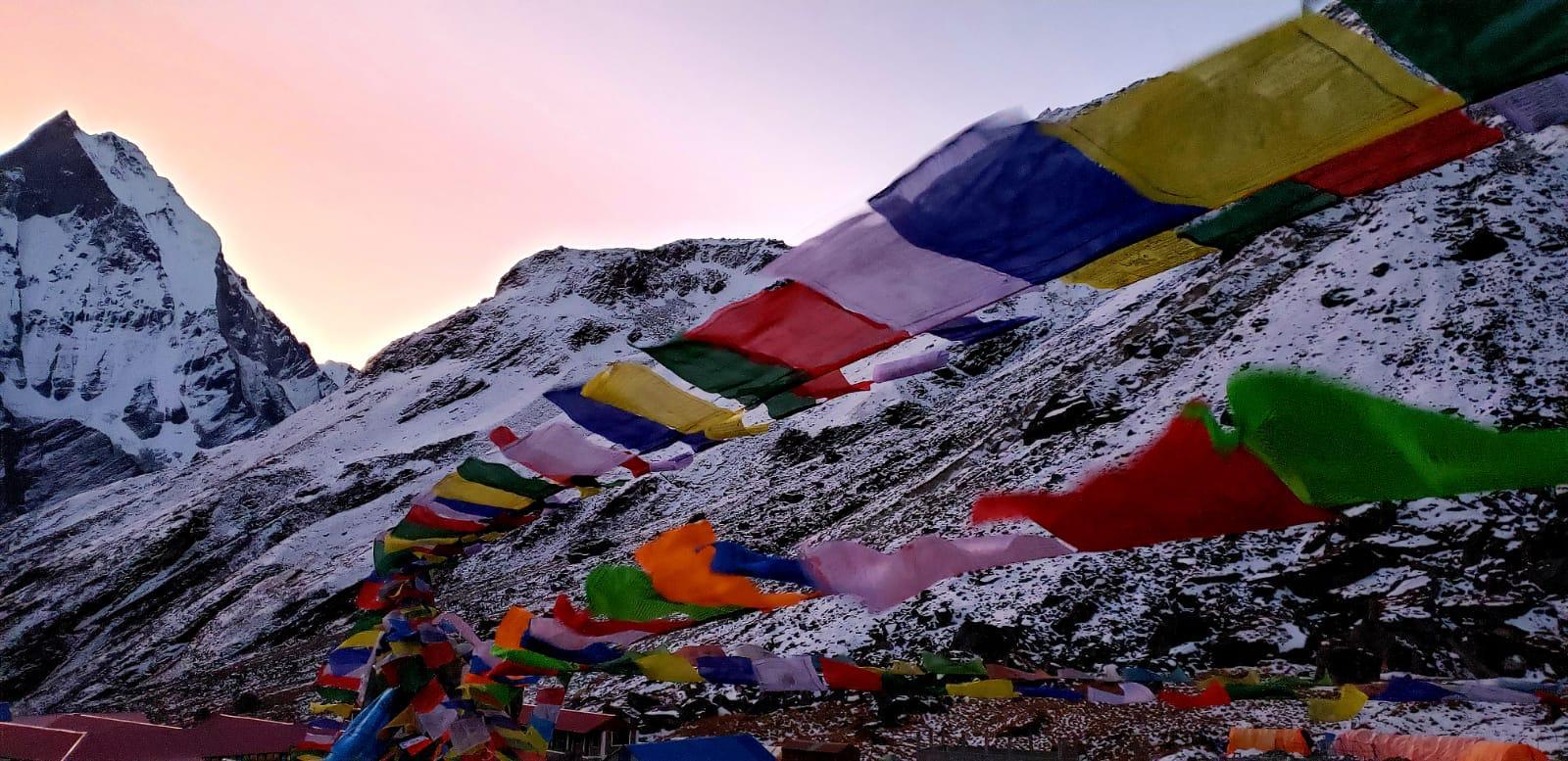


Thinking about the classic Annapurna Base Camp trek? Smart choice, stunning mountain views, rhododendron forests, friendly teahouses and a compact, doable route. This guide walks you through everything you need to book the trek: permits, transport, guide vs solo decisions, sample itinerary, realistic costs, gear checklist and booking tips so you can go from “I want to” to “I’m on the trail” with confidence.
Table of Contents
Quick Overview:

The ABC trek is normally done in 7–14 days depending on pace and route. Major must-haves when booking ABC trip are the ACAP permit and a TIMS card; after 2023 Nepal requires foreign trekkers to be accompanied by a licensed guide.
1) Decide trip length & season before you book Annapurna Base Camp
Typical options:
Short / fast: 6–8 days (Pokhara → Jhinu → ABC → return). Requires very good fitness and less acclimatization.
Classic: 10–12 days — comfortable pace, room for acclimatization and contingency days.
Laid-back: 13–14+ days — includes side hikes (Poon Hill), rest days or buffer for bad weather.
Best seasons:
Spring (Mar–May): wildflower season, great views.
Autumn (Sep–Nov): clearest skies, stable weather.
Winter and monsoon: are doable but have tradeoffs (cold, snow, or rain/mud).
Nepal Trekking Routes:
- Pick your dates first, flights and permits depend on them.
2. Choose: guided trek vs independent (and why booking matters)
Guided trek (recommended for most foreigners)
Nepal’s rules require foreign trekkers to register and generally to trek with a licensed guide; TIMS issuance and enforcement mean many travelers hire a registered guide/agency. Guides handle permits, local logistics, safety and cultural liaison.
Independent (with local support)
More freedom but you still need permits and possibly a guide for TIMS; small local companies or freelance licensed guides are often cheaper than big international operators.
Booking tip: If you want local guides (lower cost, more authentic), search for reputable Pokhara-based operators or ask for referrals from Nepal-based travel forums. Always verify licensing and read recent reviews.
3) What permits & documents are required and how to obtain them
Permit Required for ABC:
ACAP (Annapurna Conservation Area Permit) — required to enter the Annapurna Conservation Area. Current standard fee for foreign nationals is NPR 3,000 (~USD 25); SAARC nationals pay less. You can get ACAP at tourism offices in Pokhara or Kathmandu or via some agencies/online portals.
How to obtain:
Via a licensed agency: they usually arrange both ACAP and TIMS as part of the booking. This is easiest.
Self-arrange in Pokhara/Kathmandu: bring passport + passport photo(s), pay the fee at the tourism office.
Online e-permit option: some conservation areas offer e-permits (verify before relying on this).
Important: Always carry passport + permit copies during the trek,checkpoints are frequent.
4. Book transportation (international + domestic) and start point
International flight – Kathmandu (KTM): Most flights land in Kathmandu. From there, you’ll take a tourist bus or a short domestic flight to Pokhara.
Kathmandu to Pokhara:
Domestic flight (25–30 min) — fastest, weather dependent.
Tourist bus / private car (6–8 hours) — cheaper, scenic.
Trail start: Most itineraries start from Pokhara to Nayapul (drive 1.5–2 hrs) or Ghorepani route for Poon Hill options. Confirm your agency’s preferred start point when you book.
Booking tip: Book international flights early for best price, and reserve the Kathmandu – Pokhara leg at least a few weeks ahead in high season (Oct–Nov, Mar–May).
5. How to choose and book a guide / agency — step by step for Annapurna Base Camp
Research:
Look for local operators based in Pokhara or Kathmandu with recent reviews.
Ask for references, ask to see guide license and insurance details.
Compare inclusions:
Typical agency inclusions: permits, TIMS, guide (licensed), porter (optional), accommodation during trek (teahouses), meals on the trail, some transport (Pokhara ↔ trailhead).
Exclusions to watch for: international flights, trekking insurance, personal gear, hot showers/charging fees on trail.
Request a written quote (email or WhatsApp) specifying:
Start/end dates, itinerary, number of trekkers.
Emergency evacuation plan / contact.
Confirm payment method:
Reputable operators accept bank transfer, PayPal, or card. Avoid paying full amount in cash without receipt. A deposit (20–50%) is common.
Before final confirmation:
Check guide’s English level, experience, and first-aid training.
Ask about contingency days for bad weather.
Booking locally in Pokhara often gives good value; booking online ahead guarantees guide availability in high season.
6. Sample 10–12 day itinerary Annapurna Base Camp
Day 01: Arrive at Kathmandu International Airport – hotels, last minute shopping, buy/confirm permits if needed.
Day 02: Drive to Pokhara (flight or bus).
Day 03: Drive to Ghandruk or Ulleri
Day 04: Trek to Ghorepani
Day 05: Early Morning Excursion to Poon Hill for sunrise view and trek to Tadapani
Day 06: Trek to Chhomrong
Day 07: Trek to Dovan or Himalaya
Day 08: Trek to Machhapuchhre Base Camp or ABC
Day 09: Trek to Annapurna Base Camp and back to Dovan or Bamboo
Day 10: Trek to Jhinu Danda – Jhinu Hot Spring
Day 11: Trek to Nayapul, drive to Pokhara/ Drive or flight back to Kathmandu
Day 12: Departure transfer
(You can extend or compress these days depending on fitness and route.) Many agencies offer 7–14 day packaged itineraries.
7. Budget estimate & cost breakdown (approximate, per person) Annapurna Base Camp
All numbers are approximate, local price variation, group size and booking time affect cost.
Local guide (per day): NPR 2,000–4,000 (guide rate varies by experience) — group/shared charges reduce per-person cost.
Porter (per day): NPR 1,500–3,000 (shared among trekkers).
Permits: ACAP NPR 3,000.
Accommodation on trail: NPR 800–2,000 per night depending on village and season (basic teahouses cheaper, ABC area more expensive).
Food on trail: NPR 2000–3,500 per day (teahouse meals).
Transport (Pokhara to Nayapul): NPR 1,000–3,000 depending on private taxi vs local bus.
Trekking agency package (10–12 days): USD 700–1000) depending on inclusions (guide + porter + permit + transportation + some meals).
Insurance with helicopter evacuation: highly recommended, cost depends on policy and duration.
Be explicit with your agency about what’s included to avoid surprises.
8. Health, insurance & safety (book these before you go) Annapurna Base Camp
Travel insurance: Must cover high-altitude trekking and emergency helicopter evacuation (recommended up to 4500m). Verify exact altitude limits in your policy.
Altitude sickness: ABC reaches 4,130 m (ABC). Allow acclimatization days and know AMS symptoms. Carry Diamox only after consulting a doctor.
Vaccinations & meds: Basic travel vaccines and a small trek kit (painkillers, antibiotics, oral rehydration, blister care).
Emergency plan: Ask your guide/agency for evacuation procedures and nearest rescue contacts.
9. Packing checklist — what to book/arrange before leaving home
- Essentials to buy/arrange before departure:
- Valid passport + copies, recent passport photo(s) for permits.
- Trekking insurance documents with emergency contact.
- Quality boots, down jacket, thermal layers, waterproof shell, gaiters.
- Headlamp, sunglasses, sunscreen, water purification (tablets or Steripen).
- Lightweight sleeping bag (many teahouses provide blankets but it’s safer to take your own rated to –10°C for shoulder seasons).
- Powerbank (charging available in teahouses for a fee).
- Small daypack and main duffel (porters can carry bigger bags).
- Cash in NPR (many teahouses don’t accept cards).
- Agency will typically provide a detailed packing list — follow it.
10. How to finalize booking — step-by-step checklist
- Select dates and itinerary (10–12 days recommended).
- Compare 2–4 operators, ask for written quotes and inclusions.
- Confirm permits: ensure the agency will arrange ACAP
- Check cancellation & refund policy — what happens if flights are canceled or weather prevents flights to Jomsom/Pokhara.
- Pay deposit (secure method) — get a receipt and contact details for your guide.
- Send passport + photos to the agency ahead of time (they will need them for permits).
- Buy insurance that explicitly covers trekking to 5,000m+, rescue & helicopter.
- Confirm transport (Kathmandu ↔ Pokhara) and hotel in Pokhara the night before trail start.
- Pack & print important docs: permit copies, insurance, agency contacts, emergency contacts.
11. Common booking FAQs – Annapurna Base Camp
Can I get permits online?
Some permit systems support e-permits or online pre-registration, but many trekkers still obtain ACAP/TIMS via agency or at Pokhara. Confirm with your operator or the official e-permit portals.
Do I need a guide?
Yes,current regulations and safety policies mean foreign trekkers typically use licensed guides. Always verify current local rules before planning a self-guided trek.
How safe is booking a local guide?
Very safe if you choose licensed, well-reviewed operators and get contracts/receipts. Ask explicitly about guide licensing and emergency protocols.
12. Final practical tips for booking success
- Book early for high season (Oct–Nov and Mar–May), guides and teahouse rooms fill up fast.
- Ask for itemized costs so you know what to tip for and what to pay on trail.
- Carry extra cash (NPR): many remote lodges charge for hot showers, charging devices, bottled water, and wifi.
- Be flexible: mountain weather can delay flights; allow buffer days or be prepared to travel by road.