How the Manaslu Circuit Trek Offers an Authentic Cultural Experience

Manaslu Circuit Trek

How the Manaslu Circuit Trek Offers an Authentic Cultural Experience. One of Nepal’s most culturally immersive trekking routes is the Manaslu Circuit Trek, which provides a unique window into the daily life of isolated Himalayan settlements. Trekkers may engage with centuries-old customs in the Manaslu region, which is very unspoiled in contrast to the more crowded Annapurna or Everest routes.

Staying at local teahouses is one of the most fulfilling ways to explore the culture here. In addition to providing lodging, these family-run lodgings provide glimpses into the inhabitants’ everyday life. You can truly understand the traditions and warmth that define this area by dining with your hosts, interacting with them, and spending time by the fire. Learning a few local expressions or just saying “Namaste” can help to break down barriers and foster memorable connections.

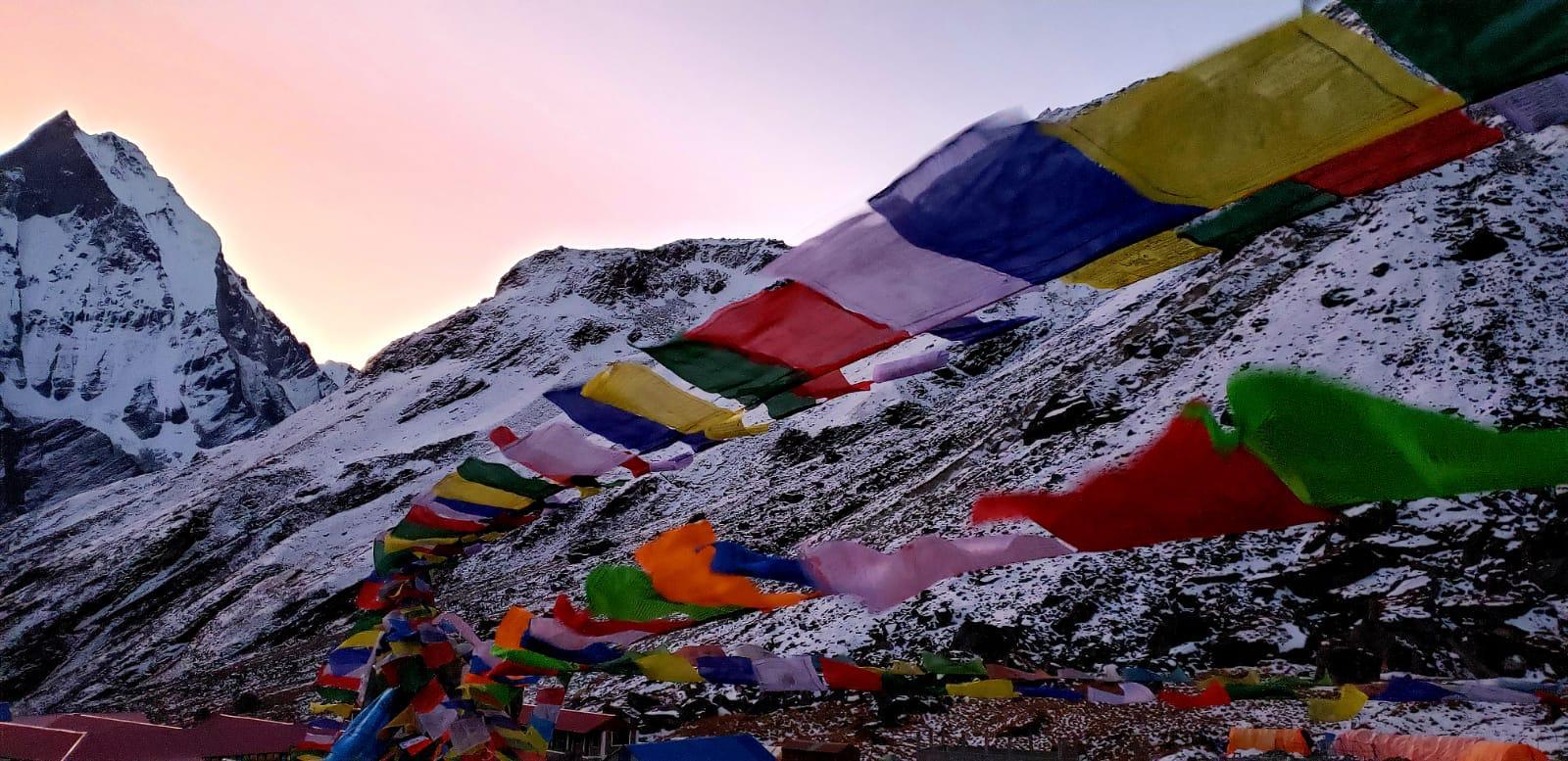
Villages with distinct cultural characteristics, such as Jagat, Deng, Namrung, and Sama Gaun, will be encountered along the route. The ancient mani walls, the finely carved prayer wheels that line the walkways, and the fluttering prayer flags all demonstrate the tremendous impact of Tibetan Buddhism here. In addition to being considerate, taking the time to visit a modest monastery or spin a prayer wheel helps you better comprehend the spiritual heritage of the area.

Trekking during a festival, such as Lhosar or Dumje, would allow you to see people in traditional attire rejoicing with religious rites, dancing, and music. These are authentic community festivities rather than tourist activities, allowing you to see and value living culture. Being a courteous visitor is enough to participate in a cross-cultural interaction.

A cultural highlight is the village of Sama Gaun, which is encircled by tall peaks and features traditional stone homes and antique gompas. Time appears to slow down here, and you can fully enjoy the rhythm of Himalayan life, from the distant chanting of monks to the spinning of prayer wheels.

Embrace a slower pace if you want to truly immerse yourself in the culture on the Manaslu Circuit. Engage in conversation with the people, enjoy local favorites like yak butter tea or tsampa, and pay attention. This journey is about connecting with a way of life that is based on perseverance, spirituality, and simplicity rather than merely high passes and picturesque vistas. If you take the time to appreciate it, the Manaslu region’s cultural diversity is just as stunning as its natural beauty.

Sure! Here’s a paraphrased version of the content on how the Manaslu Circuit Trek offers an authentic cultural experience:

1. Remote and Unspoiled

WhatsApp Image 2023 10 29 at 13.48.08 aa8886d3
How the Manaslu Circuit Trek Offers an Authentic Cultural Experience 5

Unlike the more frequented treks in Nepal, the Manaslu Circuit remains relatively untouched by mass tourism. Its remoteness gives trekkers a rare opportunity to witness traditional Himalayan lifestyles in their most genuine form.

2. Rich Ethnic Mix

The trek takes you through regions inhabited by various ethnic groups:
Gurungs in the lower areas, known for their warm hospitality and colorful traditions.
Nubri and Tsum communities in higher altitudes, who are of Tibetan origin and follow Tibetan Buddhist customs.

This diversity makes for a culturally rich journey with distinct languages, customs, clothing styles, and architecture.

3. Authentic Mountain Villages

Villages like Lho, Sama Gaon, and Samdo offer an unfiltered view of daily life in the Himalayas. Visitors can:
Explore centuries-old Buddhist monasteries
Observe stone houses with Tibetan-style construction
Interact with locals involved in farming, herding, and trading.

These are real communities, not tourist setups, offering a truly immersive experience.

4. Deep Spiritual Presence

WhatsApp Image 2023 10 29 at 13.48.07 64f466e0
How the Manaslu Circuit Trek Offers an Authentic Cultural Experience 6

The Manaslu region is steeped in Buddhist spirituality

Prayer wheels, mani walls, and chortens are a common sight along the trail.
Many monasteries welcome visitors to observe their rituals.
The Tsum Valley extension, in particular, is considered a sacred Buddhist site and adds even more spiritual depth to the journey.

5. Local Accommodations

Staying in locally run teahouses and homestays allows trekkers to engage closely with residents. Meals often include local dishes like dal bhat, Tibetan bread, or tsampa, and visitors might witness local festivals or traditions firsthand.

6. Preservation through Regulation

The Manaslu Circuit is in a restricted area, requiring special permits and a registered guide. This controlled access helps protect both the cultural integrity of the region and its natural beauty by preventing overtourism.

Conclusion

The Manaslu Circuit Trek stands out as a culturally enriching trek due to its:

  • Isolation from mass tourism
  • A variety of ethnic groups
  • Traditional village experiences
  • Strong spiritual influence
  • Genuine local interaction

It’s perfect for those looking to go beyond scenery and truly connect with Himalayan culture.

Manaslu Circuit Trek Itinerary:

Day 01: Private Jeep Drive from Kathmandu to Soti Khola via Arughat
Altitude: 700-m/2296 ft. 6/7 hour’s drive.

Day 02: Trek from Soti Khola to Machhakhola
Altitude: 870 m/2952 ft. Trek: 5/6 hrs.

Day 03: Trek from Machhakhola Gaon to Jagat
Altitude: 2340 m/7676 ft. Trek: 6/7 hrs.

Day 04: Trek to Deng
Altitude: 1870m/6170 ft. Trek: 6-7 hrs.

Day 05: Trek to Namrung
Altitude: 2,630m/8626ft. Trek: 6-7 hrs.

Day 06: Trek to Lho
Altitude: 3150m/10395 ft. Trek: 6/ hrs.

Day 07: Trek to Shyala
Altitude: 3500m Trek: 3-4 hrs.

Day 08: Trek to Sama Gaon | Rest day at Sama Gaon
Altitude: 3500m/11550 ft. Trek: 1 hr.

Day 09: Trek to Samdo
Altitude: 3,690m/12,106 ft. Trek: 4/5 hrs.

Day 10: Trek to Larkya Phedi
Altitude: 4,470m/14,665ft. Trek: 4/5 hrs.

Day 11: Trek to Bimtang crossing Larkya La Pass
Altitude: Larkya La Pass: 5153 m/ 17005 ft. Bimtang: 3,720m/12,204ft. Trek: 8/9 hrs.

Day 12: Trek to Dharapani
Altitude: 1,860m/6,102ft. Trek: 6/7 hrs.

Day 13: Sharing Jeep drive from Dharapani to Besisahar and private drive back to Kathmandu in a car
Altitude: 60 m/2,493ft) and drive back to Kathmandu in private vehicles. End of the trip.

Climbing 6000m peaks in Nepal in the spring for novices and intermediates

Island Peak

An overview of climbing 6000-meter peaks in Nepal in the spring for novices and intermediates. Many adventurous people dream of scaling the Nepalese Himalayas. These summits, which may be as high as 8,000 meters, are difficult to climb and need careful planning and preparation. But for novices and experts, scaling summits of about 6,000 meters may be a fulfilling experience, particularly in Nepal’s springtime.

Since the weather is pleasant and the snow is hard enough for climbing, March through May and mid-October through mid-December are the ideal times to climb these peaks. Clear vistas and amiable hikers may be found throughout the paths during this time.

The top beginner and intermediate 6,000-meter peaks in Nepal to climb in the spring will be explored in this blog.

Beginners/novice

Mera Peak (6,476 meters)

The highest trekking peak in Nepal is Mera Peak, which is situated in the Makalu region. For novice climbers who like to feel the excitement of climbing in a secluded location, the peak is an excellent option. A stunning panorama of the surrounding peaks, including Mount Everest, Lhotse, and Makalu, can be seen from the summit of the difficult climb, which includes steep ice and snow slopes.

Lobuche East (6,119 meters)

Lobuche East 6119M is a well-known summit in the Khumbu region. The path is rather simple and is regarded as a moderate ascent. A stunning view of the neighboring peaks, including as Mount Everest, Lhotse, and Nuptse, can be seen from the summit. The Gokyo and Everest Base Camp hike leads to the summit.

Island Peak (6,189 meters)

Island Peak, often called Imja Tse, is a well-liked climbing destination. With a modest degree of technical difficulty, it is regarded as one of the most accessible 6,000-meter summits. The well-known Everest Base Camp hike leads to the summit, which is situated in the Khumbu area.

The ascent is rather easy, and the top offers a broad perspective of the neighboring peaks, including Ama Dablam and Lhotse Sharr.

Chulu Far East (6,019 meters)

The Annapurna circuit region is home to the high-altitude hiking peak Chulu Far East. It’s a simple, non-difficult climb that even those without any prior technical climbing knowledge can do. However, the climb may be more difficult due to the steep terrain and scree slopes encountered throughout the approach. It is a lot like the journey to Mera Peak.

Climbers may experience the breathtaking natural splendor of the Annapurna area by following the Chulu Far East Peak climb schedule. In addition to the Tibetan plains to the north, the summit offers sweeping views of Annapurna II, III, and IV, Gangapurna, Manaslu 8163M, Pisang Peak, Chulu West Peak, and Dhaulagiri. You may also continue your journey by crossing the Thorong-la pass to reach the prohibited Kingdom of Upper Mustang and visiting the green Tilicho Lake, which is 4900 meters above sea level.

Yala Peak (5732 meters)

Yala Peak is located near the Tibetan border and is 5732 meters high. It is part of the Langtang Lirun Himal range. Because it is a non-technical climb, the peak is a great place for new climbers to get experience and learn about mountaineering.

At 4,500 meters above sea level, the expedition’s base camp provides breathtaking views of neighboring peaks, including Langtang Lirung, Lenpo Gang, Dorje Lakpa, and the majestic Sishapangma on the Tibetan side.

Intermediate

Chulu West Peak (6,419 meters)

The thrilling 6000-meter+ Chulu West Peak is located in Nepal’s midwestern region. There are fewer climbers and fewer visits to this summit. Climbers go via one of the most breathtaking hiking routes in the world as they set out from Ledar village to Chulu base camp, starting their ultimate climbing journey. With the Himlung Himal to the northeast and the spectacular Manaslu peak in the distance, the summit is set against the breathtaking background of the Annapurna massif range.

In conclusion, a great way to feel the exhilaration of Himalayan climbing is to ascend Nepal’s 6000-meter peaks in the spring. With stunning views of the surrounding landscapes and mountain peaks, the summits we highlighted above provide a strenuous but doable climb for both novices and experts. It should be noted that climbing any Himalayan mountain should not be done carelessly and that having the right equipment and an experienced guide are essential. Always remember to properly acclimate, enjoy yourself, follow the guide’s recommendations, and have a fantastic time climbing in the Himalayas.

Contact Us for More Details:

Top Attractions in Namche Bazaar Everest Region

Everest Base Camp

Top Attractions in Namche Bazaar, Everest Region. A famous destination on the Everest Base Camp trek is Namche Bazaar. It appears more like a town than a village cut into the side of a mountain. Being the hub of the Khumbu Valley’s economic heart, Namche is the capital of the Sherpa homeland. Except for roads, this mountain town has everything a tourist might want: stores, lodging, dining options, cafés, pharmacies, banks, ATMs, excellent Himalayan views, and superb phone and internet access. Villagers from as far away as Tibet gather to barter and shop in the town’s biggest weekly open-air market in Khumbu.

To relax and acclimate, trekkers and mountaineers typically spend an additional day at Namche Bazaar. There are several things to do in the town to keep one busy while there. Museums, bars, internet cafés, snooker halls, spas & wellness facilities, bakeries, and more may be found here. For day treks and quick outings, the villages and hills around Namche provide excellent destinations.

Although Namche Bazaar is frequently visited by trekkers in the Everest Region, it is also a stand-alone attraction. Here, visitors may take in the Himalayas’ stunning natural splendor and get fully immersed in its vibrant culture. What is there to do in Namche, then? Some of the best things to do in Namche Bazaar are listed below.

Hike to Shyangboche

There are expansive views of Mount Everest and other mountains from Shyangboche. One must ascend a steep staircase above Namche to reach Shyangboche. Shyangboche features an STOL airstrip and is situated on a level grassland field. The only activity at the airport is helicopter landings. Nonetheless, the location has been utilized for the Everest Skydive event since 2008. When Everest Skydive, billed as the world’s highest skydiving event, took place at the Shyangboche airport in 2008, it brought the airport into the public eye. Commercial skydiving activities continue to take place at the location.

Sherpa Museum

Directly above the hamlet is the Sherpa Museum. Here, you may view Sherpa traditional attire and old relics. The documentation of climbers who have climbed Mount Everest is the focus of one area of the museum. Old photos of Sherpa villages, their inhabitants, and their traditional Buddhist art may be seen in the Sherpa Culture Gallery and Sherpa Himal Art. It is a pleasure to view the extensive collection of Thangka paintings at the museum.

One can explore traditional architecture when visiting the museum, which is situated in a typical Sherpa dwelling.

Visit Sagarmatha Next to learn more about sustainable tourism.
One of the newest attractions in Namche Bazaar, Sagarmatha Next is a garbage management facility, museum, and art gallery. In addition to encouraging eco-friendly travel, the center seeks to implement a sustainable approach to mountain trash management and disposal. The facility has a shop, a café, a waste lab, an art gallery, and a tourist learning center.

Waste materials from the Everest trails are used to produce sculptures, artwork, and digital exhibitions. As part of the center’s crowdsourcing project, Carry Me Back, visitors may return one kilogram of pre-packaged trash when they leave Khumbu.

The center provides a venue for innovative and creative artists to produce artwork using trash gathered from Mount Everest and the Khumbu hiking routes. Those who care about the environment and want to make it better should go there. Sagarmatha Next is situated above Namche Bazaar in Shyangboche at an elevation of 3775 meters.

Hike to Sherpa village

The nearby villages of Thame, Kunde, and Khumjung are excellent places to go on quick walks. A few hours’ walk will get you to these settlements, which are rather near to Namche Bazaar.

It is commonly known that the first school in the Solu Khumbu Region was located in the hamlet of Khumjung. The Himalayan Trust, owned by Sir Edmund Hillary, founded the school in Khumjung. In 1961, the school was founded with only two classrooms and a small number of Sherpa pupils. The school currently includes 17 buildings, 300 pupils, and a dormitory for students from far-off towns. Despite the opening of other schools in nearby Khumbu villages, the Khumjung school is still the only one providing higher education (up to the matriculation level).

The institution has seen several changes since it was initially founded. The infrastructure of the school has been developed with assistance from foreign donors and international relief groups. The Sir Edmund Hillary Visitors Center is located in the original school building, which was constructed to house the first group of Sherpa pupils.

The Khumjung Monastery, which displays a glass box containing a scalp thought to belong to the Yeti, the Abominable Snowman, is another point of interest in the hamlet. By paying a certain sum to the custodian at the monastery, one can view the scalp.

Khumjung is not far from Kunde village. Sir Edmund Hillary selected Kunde as the location for Khumbu’s first health clinic. Sir Edmund Hillary sought to assist the impoverished Sherpas, who were living a challenging existence without access to basic healthcare and education, after his historic summit of Mount Everest. He therefore made the decision to construct a medical facility in Kunde and a school in Khumjung. Volunteer medical staff from Canada and New Zealand worked at the medical facility. However, the hospital’s management was taken over by residents after 2013. The hospital employs lab techs, nurses, and two resident physicians. With 12 beds, the Kunde Hospital is the biggest in the region and provides healthcare to the residents of Namche, Kunde, Khumjung, Phortse, Thame, and other nearby villages.

Tucked away from the well-traveled hiking trails is Thame, one of the Khumbu’s least visited Sherpa communities. The historic settlement has maintained its rustic beauty since so few hikers pass by it. The village of Thame is quieter, smaller, and more serene than Namche Bazaar. Overlooking the town is a monastery worth seeing.

Trip to the Everest View Hotel

A must-see whilst in Namche Bazaar is Hotel Everest View. For sweeping views of Mount Everest, Ama Dablam, Nuptse, Lhotse, and other peaks, the majority of trekking parties climb to the hotel. Takashi Miyahari, a Japanese tourist and businessman who subsequently renounced his Japanese citizenship to become a Nepali citizen, founded the hotel in 1971. At the time, it was the highest luxury hotel in the world, earning the Guinness World Record. Constructed with timber, glass, and stone, the hotel’s tasteful yet understated architecture perfectly complements the stunning surroundings.

It takes around two or three hours to climb from Namche to Hotel Everest View. To reach the hotel, one first ascends to Shyangboche and then continues on a mildly inclining path via a lush meadow. The hotel provides breathtaking views of Ama Dablam, Khumbila, Kantega, Thamserku, Mount Everest, Nuptse, Lhotse, and other locations, and is surrounded by fir and pine trees. The hotel’s porch is a great place to enjoy a nice cup of coffee and the scenery.

Check out the local market.

Namche Bazaar’s Saturday Market is a major event. It is the largest market in this area, and traders come from as far away as Tibet and the lower villages to sell and exchange goods. To get to this market, Tibetans on the other side of the border must travel a challenging distance past the Nangpa La. They bring with them handcrafted handicrafts and Chinese goods that they may sell to the Sherpas or barter for.

This market is an excellent spot to see the locals and gain more knowledge about the local economy because it is where the majority of the Khumbu villagers gather to purchase and sell. This market sells a wide range of goods, including fresh meat, organic vegetables, cutlery, clothing, shoes, groceries, yak meat, cheese, and more. Only Saturdays are used for the market. Therefore, you must schedule your trip to Namche for the weekend if you want to explore this local market.

The main Namche market is open seven days a week, however, the Saturday market is only conducted on Saturdays. Shops in the daily market provide food, clothing, souvenirs and artwork, trekking gear and equipment, and more. However, keep in mind that because everything must be flown in or carried by mules or porters, the prices are far higher here than in the metropolis.

Relax in cafés and bars.

At 3,000 meters above sea level, Namche Bazaar has some of the greatest cafés, bakeries, and bars you will ever come across. It is the final location where you may genuinely have a satisfying dinner and a strong cup of coffee before continuing on into the high-altitude wilderness. Therefore, you may visit cafés, restaurants, and pubs in Namche to get your fill of “feel-good” food.

The town also has some of Khumbu’s greatest cakes (carrot cake, cheesecake, etc.), brownies, apple pies, and muffins. Some of the most well-liked restaurants in Namche that are visited by hikers include the German Bakery (Hermann Helmar’s), Namche Bakery and Café, Illy Espresso Bar, Sherpa Barista, and Tomodachi Japanese Restaurant.

While it is not advised to consume alcohol while traveling to EBC or any high-altitude location, you can celebrate your trip’s success with a few drinks on your way out. Guinness, Ireland’s national beer, and Jameson Whiskey are served in the Irish Pub. Additionally, there is a pool table where you may play snooker. Another excellent spot to relax in Namche is Café Danphe. Along with free wi-fi and charging stations, the café serves a large selection of food and beverages. T-shirts bearing the signatures of Mount Everest expedition groups adorn the café. This café offers free screenings of Everest documentaries and films.

Activities to do before departing Namche Bazaar

The following should not be overlooked if you are traveling to Gokyo Valley, the Three High Passes, Everest Base Camp, or any other high-altitude location:

  • Examine and stock up on life-saving medications (Diamox, anti-cold tablets, etc.).
  • If you are short on cash, get some at the ATM.
  • If you arrive in Namche without the necessary equipment, purchase or rent warm gear.
  • Get plenty of snacks.
  • Make contact with your loved ones and send that crucial email. The internet and phone connections will get shoddy as you leave Namche.

Contact us for more details